
Pedagogy: David A. Kolb – experiential learning.
David A. Kolb’s model of experiential learning can be found in many discussions of the theory and practice of adult education, informal education, and lifelong learning. Much of the literature on experiential learning, as Peter Jarvis comments (1995: 75), ‘is actually about learning from primary experience, that is learning through sense experiences’.
The learning in this project with the Grammar Fair is geared towards students “creating” a teaching tool from scratch without technology. Here the learning process begins first with deep-diving into Grammar research to be able to teach the Grammar point. Students use the FUMP model: Form, Use, Meaning, and Presentation. Then, students create a trifold with the prime examples and teaching points. The trifolds get showcased at the school-wide Grammar Fair where students now present and peer teach other students adding to free L2 use in an authentic situation.
A video Collage of the successful Grammar Fair at EF – Education First, NY
Here a great resource for the Common App video tutorial by Evelyn Alexander. A major “Thank you” to Evelyn for letting me share this!
Source: Long Term Water Storage
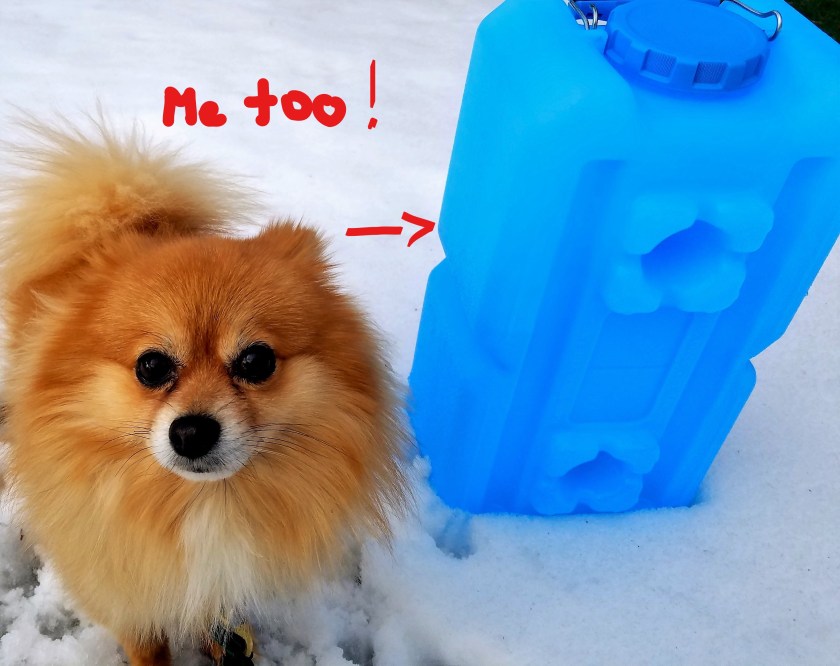 The first thing off the shelves in the advent and aftermath of a disruptive event is bottled water. Clean water must be part of your family’s emergency preparedness plans.
Recommendation for drinking and cooking water per person per month:
Drinking: 15 gallons of clean water for drinking per person per month.
Cooking: Freeze-dried food uses 3/4 to 1 cup of water to rehydrate.
Recommended: 7.5 gallons of cooking water per person per month.
Total of drinking and cooking: 22.5 gallons
This is roughly the size: L 22 x W 11 x H 30″
Hygiene: Grey water, not quality drinking water is fine.
Don’t forget drinking water for your pet!
See instructions:
Long Water Storage
reblogged from the German Center for Research and Innovation The Internet of Things (IoT), Jetsons’ lifestyle is a possible future scenario for many of us. Read our interview on the future of smart…
reblogged from the German Center for Research and Innovation
The Internet of Things (IoT), Jetsons’ lifestyle is a possible future scenario for many of us. Read our interview on the future of smart homes with Prof. Dr. Elisabeth André, Chair of Human-Centered Multimedia at Augsburg University. Smart homes contain devices designed to connect to the Internet in order to learn about their owners’ habits. The “magic” happens when data that is gathered by the devices is fed back into the software infrastructure. This results in improved accuracy of the device and, in turn, is more convenient for users.
A short tutorial on how to change your cover photo on PeopeMovers.
Source: PeopleMovers Tips
A short tutorial on how to change your cover photo on PeopeMovers.


 Dr. J's Education Blog