Touro TESOL Candidate Michelle Velez on Program Options for English Language Learners/Multilingual Learners with Personal Teaching Illustrations

EDPN 673 Methods and Materials for Teaching English as a Second Language provides a historical overview of second language acquisition theories and teaching methods. Students learn how to apply current approaches, methods and techniques, with attention to the effective use of materials, in teaching English as a second language. Students will engage in the planning and implementation of standards-based ESL instruction which includes differentiated learning experiences geared to students’ needs. Emphasis is placed on creating culturally responsive learning environments. Ms. Velez submitted an outstanding Discussion Board Contribution.

Michelle Velez is a 1st grade teacher in the South Bronx. She has worked in the education field since 2015, holding various titles. Ms. Velez feels that “obtaining an advanced certificate in TESOL is my goal in order to better assist my students on their language acquisition journey.”

What are the basic tools and techniques for effective second language/foreign language teaching?

There are three main parts to effective second language/foreign language teaching, which are approach, design, and procedure. The grouping of students plays a large role in an ENL classroom for the students. One type of grouping depends on the L2 language of one of the students. If a student acquiring the L2 is paired with another who has some grasp on the L2 it is helpful. The student is able to work with another in the target language that is accessible to them, and not going to frustrate them because they are able to understand each other. It is more valuable to ELL students to work in pairs or groups than individually because they are able to have valuable conversation in the L2 with their peers, which fosters growth. From personal experience I found that ELL students prefer and become excited when paired with peers because it is a greater benefit in learning the L2 and fosters growth over time. A student’s classmate can help in ways us educators cannot sometimes because they have their own way of communicating and understanding each other. Another important part of the classroom is the different types of talk the teacher has with the students. Whether it’s small talk about the weather or the past weekend, pre-lesson talks about the upcoming lesson or the previous one. Another important aspect in the classroom is providing feedback when needed. Wait time when asking a question to ELL students is very important and much needed. ELL students need a longer wait time in order to process the questions being asked. Asking multiple questions in a short amount of time can potentially overwhelm and cause a student to shut down. I have seen this first hand while I was student teaching years ago. The student put his head down and refused to talk because it was too much information coming at him at once.

Give specific illustrative example examples of YOUR PERSONAL teacher classroom discourse IN YOUR CLASSES

In a third grade classroom we started our mystery unit by drawing the student in. We had a class plant that was watered by the students when needed. To get the students hooked we hid the plant in the closet with dirt left behind. The students noticed the plant was gone and we asked if anything they have has went missing before and what were the steps they used to try and find it. We talked a little about this to make a relatable connection to their lives. As this question was opened to the class, we had a short turn and talk with their assigned partners. Our ELL students were paired with two others, one ELL and non-ELL student to foster and encourage conversations. Later in this unit we read a mystery book (3rd Grade Detective Series) and students were asked to answer comprehension questions based on what was read following in each chapter. As a class we would start the discussion about the chapters then students were asked to go back and answer a few on their own or in pairs. While the students are working we did provide visual supports or modified questions when needed. Most common visual supports are sentence starters.

PRETEND THAT YOU OBSERVE YOUR OWN CLASS – use the sample classroom observation feedback form p. 361 in your textbook and reflect on what you learned about your planning, teaching and assessment.

Lesson Quality: The lesson achieved its initial objectives to introduce the next unit of study, mystery. Michelle was able to pace the lesson appropriately for all of the students, taking her time and not rushing through any questions students may have about the topic. Students were engaged and able to be apart of the opening of the lesson, which helped draw student’s interest.

Teacher Presentation: All aspects of the presentation were clear for students to understand. Students were engaged and focused on the lesson presentation and class conversations. Students were grouped not based on academic levels, but students were grouped based on abilities to bring out the best in their peers, especially with ELL students.

Student Participation: Students showed a high interest level in the lesson, especially the pre-lesson introduction with the missing class plant. While reading the book students also showed a high interest in class discussions sharing their thoughts about the mystery present in the book.

Looking back on this particular lesson I think engaging the students in the pre-lesson “the missing class plant” was very effective in getting the students excited about mysteries. They were able to somehow connect it to their own lives, which is important for all students, even more so for ELL students. Students were also given ample opportunity to converse and work on their verbal language with peers. Students worked in several grouping opportunities, whole class, pair, and small groups. Students were also provided with visual supports and modified questions.

If I had to change anything for this lesson I would break down the chapters a little more instead of asking comprehension questions about the entire chapter. Some of the chapters were long, making some students frustrated when trying to find answers and evidence to support those answers.

On p 389 in your textbook -391 you will find textbook evaluation checklists.  Take one book YOU USE CURRENTLY in YOUR classroom and analyze it with those checklists. Reflect on what you learned in your answer in the DB with specific, descriptive examples.

The book I picked is the enVision Math book we use in first grade. In the first section of the checklist, curriculum this book covers the topics needed for my first grade students, however the time frame for each section feels rushed. Students do not get enough time to work on their skills for each topic instead each topic is rushed. Often I find myself spending more than one day on topics rather than rushing just to get through the topics we need to be covered in the school year. One example of this can be found in topic 3, where we cover addition facts to 20 by using various strategies. Each lesson adds upon the last, for example, the first lesson’s focus is counting on to add followed by counting on to add using an open number line. It is a positive that each concept builds upon the previous, but there is not a sufficient number of examples for the students to refer to if needed support. In the lesson using a number line, there is one example given for the students to refer back to. Another issue students can face is the students need to then create their own number lines in order to solve 9 questions. If the students were not exposed to number lines prior to this lesson it may be a lot to assume students will understand the concept of using a number line so quickly. One part of the checklist that stood out and is often not represented well in the textbooks we use in schools is the cultural & age group sensitivities. For example, one of the word problems in this topic mentions the zoo, pounds, and tortoises. Some of my students have no prior experience with going to zoos or they have no idea what tortoises are. This word problem is supposed to be completed independently. If they are not able to read the words how are they supposed to be able to solve the problem. Often I notice the students either completely skip the word problems provided in this textbook or they get stuck on the words and concepts not familiar to them. This textbook has its positive aspects but also many negatives that make it difficult for my students to grasp concepts.

Gather some information on student assessment from your school district. What kinds of student assessments are regularly administered, and in what language? If the district includes non-native speakers of English, are testing and assessment requirements modified or altered in any way to accommodate them? If so, how?

Prior to the pandemic one assessment administered was the MOSOL, which is supposed to measure student learning in the beginning of the year and at the end of the year. The MOSOL is given to students in English. If students need translation of the questions we try to provide that if we can. In some cases we do not have an adult that speaks a certain language and able to translate for the student. Often we encourage the students to try their best, sometimes we do have the ENL teacher to take her group of students to administer the MOSOL assessment. She will read each question and answers in the student’s L1. Another assessment given to students is the NYSESLAT at the end of each school year. This assessment measures an ELL student’s English proficiency. This assessment is given to students in English, as it’s purpose to measure student’s ability in English.

In NYS, what are the Program Options for English Language Learners/Multilingual Learners?

Students can be in a Transitional Bilingual Education Program (TBE). Students in this program learn to read, write, speak, and understand in English. Simultaneously, students are learning content in their L1. It is the goal of these students to eventually learning in only English. Dual language programs give students the opportunity to become multilingual. One-way dual programs instruction is given in the student’s L1 and in English. In two-way dual programs is for native English speakers and ELL students. Instruction is in both English and the new language. ENL programs focuses on acquiring English. Some students receive push-in instruction and other received pullout instruction in the core content.

What is the purpose of Commissioner’s Regulations – Sections 117

The purpose of Sections 117 is to screen new students in a school to see if they are gifted, having a disability, and or an ELL student.

How do the BLUEPRINT FOR ENGLISH LANGUAGE LEARNER/MULTILINGUAL LEARNER (ELL/MLL) SUCCESS and CR Part 154 Comprehensive ELL Education Plan (CEEP) and ENL staffing requirements connect with each other? 

These three connect with each other because they focus on the success of the ELL students. All of these outline ways to help better assist ENL students on their way through the journey of language acquisition. Depending on the level of the ELL student determines how often the ENL teacher will meet with them per week.

Celce-Murcia, M. (2001). Teaching English as a second or foreign language. Heinle & Heinle.

Commissioner’s Regulations – Sections 117.1-3. NYSED. (n.d.). http://www.p12.nysed.gov/sss/lawsregs/117-1-3.html.

Program Options for ELLs and MLs. New York State Education Department. (n.d.). http://www.nysed.gov/bilingual-ed/program-options-english-language-learnersmultilingual-learners.

Touro College GSE TESOL Candidate Jason Madrick on Sociopolitical Contexts of Multicultural Education in Public Education for Course EDPN-671

In synchronous online courses discussion boards are in integral part of student analysis and peer cross-pollination. Touro TESOL Candidate Jason Madrick submitted a thoughtful, reflective, exemplary discussion board contribution for the course Theory and Practice of Bilingual and Multicultural Education EDPN-671.

In synchronous online courses discussion boards are an integral part of student analysis and peer cross-pollination. Touro TESOL Candidate Jason Madrick submitted a thoughtful, reflective, exemplary discussion board contribution for the course Theory and Practice of Bilingual and Multicultural Education EDPN-671. This course reviews the impact of historical, legal, sociological, and political issues in relationship to the education of culturally and linguistically diverse students. It is designed to prepare bilingual and ESOL teachers to work successfully with language minority students, in the context of bilingual ESL programs. It includes the study of the historical, psychological, social, cultural, political, theoretical and legal foundations of bilingual education programs in the United States. Students will examine and analyze different bilingual program models so that they may apply such knowledge to the implementation of pedagogically effective practices for second language learners using both the L1 and the L2 in curriculum implementation. Communication with parents and families concerning students’ academic and social outcomes will be highlighted. The course supports Touro College’s commitment to preparing educational professionals to work in diverse urban and suburban settings. Students explore the evolution of attitudes regarding bilingualism and multiculturalism in the United States. Emphasis is placed on developing multicultural competence as educators, with areas of focus including cross-cultural communication in the classroom and with parents; how the language and culture of the home and the community impact student learning; cultural factors in the relationships between the school and the community. Models of multicultural and bilingual education will be presented and analyzed. Includes 10 hours of fieldwork.

Jason Madrick was born and raised in Queens, NY. He has been an illustrator, musician, and overall creative person. Mr. Madrick is graduate of Syracuse University with BA degrees in Biology and Anthropology and minors in Sociology and Education. He has taught as a substitute teacher in public elementary schools in Queens, and then in the UPK program for more than a decade combined. Jason Madrick wrote: “I look forward to embarking on the next stage of my career in education being employed by the NYC DOE this coming fall and using my artistic and musical talents, love of reading, nature, science and more to convey and hopefully instill a love of learning in my future students.”

The Discussion Board prompts are in Italic

In your own words, provide a brief summary (4-6 sentences) of one of the major concepts presented in Chapter 1: Affirming Diversity, The Sociopolitical Context of Multicultural Education. Seventh Edition, Pearson, New York (Nieto, Sonia & Bode, Patty,2018). You may select any concept within the chapter. Choose one that you find unique, interesting, and/or worthy of intellectual discussion.

Jason Madrick : In the last section of Chapter One of our text “Affirming Diversity: The Sociopolitical Context of Multicultural Education” by Sonia Nieto and Paddy Bode, one of the concepts that caught my attention was the influence of private industry in public schools, and the heavy focus on high stakes standardized testing. These testing practices had grown out of the policies and curriculum changes that can be linked back to the publication of the “A Nation at Risk” in 1983. (Nieto & Bode, 2018). From there, the No Child Left Behind Act or NCLB continued this trend of focusing on high stakes testing, and the links between private industries and charter schools in particular is alarming in the enormous influence they have on our public education system in the United States. The “testing industrial complex” (Nieto & Bode, 2018) is a term I had not heard before reading this chapter, but it seems incredibly accurate to me based on my own observations and experiences with the company who has published every text book I have used so far in graduate school, Pearson. Pearson is also the same company I had to gather and input data for during my recent teaching experiences in the UPK program. Described in this chapter as a “monstrous carnivore” that devours public school funding, (Nieto & Bode, 2018) Pearson, I think is just one example of the many private companies whose quest for profits is in direct conflict with the noble goals of public education.

Provide a brief discussion/introduction/explanation of the sociopolitical context of your school environment. If you don’t currently work in a school, you may choose to discuss your workplace or school that you attended. Provide some background information so that others can build an understanding of your specific environment.

Jason Madrick: I am currently not teaching during this school year, but I would like to discuss the sociopolitical context of the two schools I worked at through the UPK program. The first of these schools was located in Whitestone, Queens, and the second location was in Jamaica, Queens. I think my familiarity with those schools is more up to date than my own elementary school experiences, though the memories and details of those years are still very much intact. The first school where I taught in the UPK program was located in Whitestone, Queens in what I would classify as a middle class to upper middle class, to wealthy in terms of economic resources for the area and families of students who attended this school. There was even a golf course and country club located within walking distance of the school. The population of the school included students from several different cultural backgrounds including White, African-America, Latino, and Asian students. Religious faiths represented among the student and family populations included Christianity, Judaism, Muslim, and Athiest/Agnostics. The languages spoken by students included English, Spanish, Chinese, Korean, and Japanese. The majority of the teaching and administrative staff at this school was predominantly White and from a middle to upper middle class background. There were four general education UPK classrooms at this school.

The second school location that I was teaching in UPK was located in Jamaica, Queens. This school was predominantly a 4410 program, with a dozen special education classrooms, but had created four to five integrated UPK classrooms in their basement. These integrated classes were meant to be populated by half general education students, and half special education students. The cultural and religious backgrounds of the students and families at this school was predominantly Latino, Southeast Asian, and African-Americans. There were also White and Asian students present in the program as well. The economic background of many of the families based on my limited observations as well as limits of communication due to language differences at this school I think definitely represented a larger proportion of lower income families, including those who were on public assistance and/or homeless. Religious faiths at this school included Christians, Jews, Muslims, Hindu, and Atheist/Agnostics. There were multiple languages spoken by students at home including English, Spanish, Chinese, Bangali, Punjabi, and Urdu. Among the staff including lead teacher and teaching assistants there are a number of languages spoken besides English including Spanish, Arabic, Bangali, Punjabi, Urdo, Chinese, and Russian. One observation and big difference I noticed between these two schools I taught at was the huge increase in absences and habitual lateness of students at this second location compared to the school in Whitestone. I had some students from the two classes I taught at this school that had missed more than a third of the total scheduled days of class.

Comment on one of the videos presented in this week’s readings. This is slightly flexible, but have fun with it. Choose something within the video to discuss here in this board. It could be something you enjoyed learning, something you disagree with, or something that sparked curiosity.

Jason Madrick: I enjoyed watching the Ted Talk video featuring Elijah Jones on Diverse Education for a student in the Education System, TEDxYouth@Wilmington. Elijah is a student at a private school and spends much of his talk discussing how socioeconomic matters have a significant impact on the resources, both materials and instructional talent that are available to students depending on where the live and their economic means. Ultimately he speaks about how our public school system has become increasingly segregated along racial and socioeconomic lines. At one point he mentions that at his private school, there weren’t any “teachers of color” and that he felt like he was “definitely not in Kansas anymore”. His private school had given him access to top level resources, teachers and extracurricular activities. He laments that what it does not provide him with is a substantial level of diversity among his peers, and that this is not going to be helpful for his future. This future he discusses is the one in which the population of students in the USA is rapidly changing both along cultural and ethnic lines, but also along economic ones. He states at one point that recently, and for the first time, more than half of all school age children are from low income families. Elijah continues to speak towards the ideal that to live in an increasingly multicultural society, he, and other students need and should be exposed to a diverse student population, as well as being able to have access to proper learning resources and instructors. He also says that for race relations and divisions among the people of this country to improve, that discussions and opportunities to talk about these relations and problems need to continue.

References

Nieto, Sonia & Bode, Patty (2018). Affirming Diversity. The Sociopolitical Context of Multicultural Education. Seventh Edition, Pearson, New York
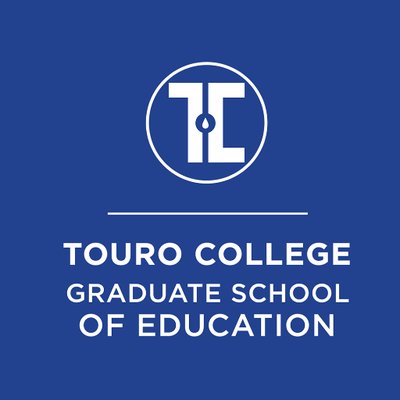
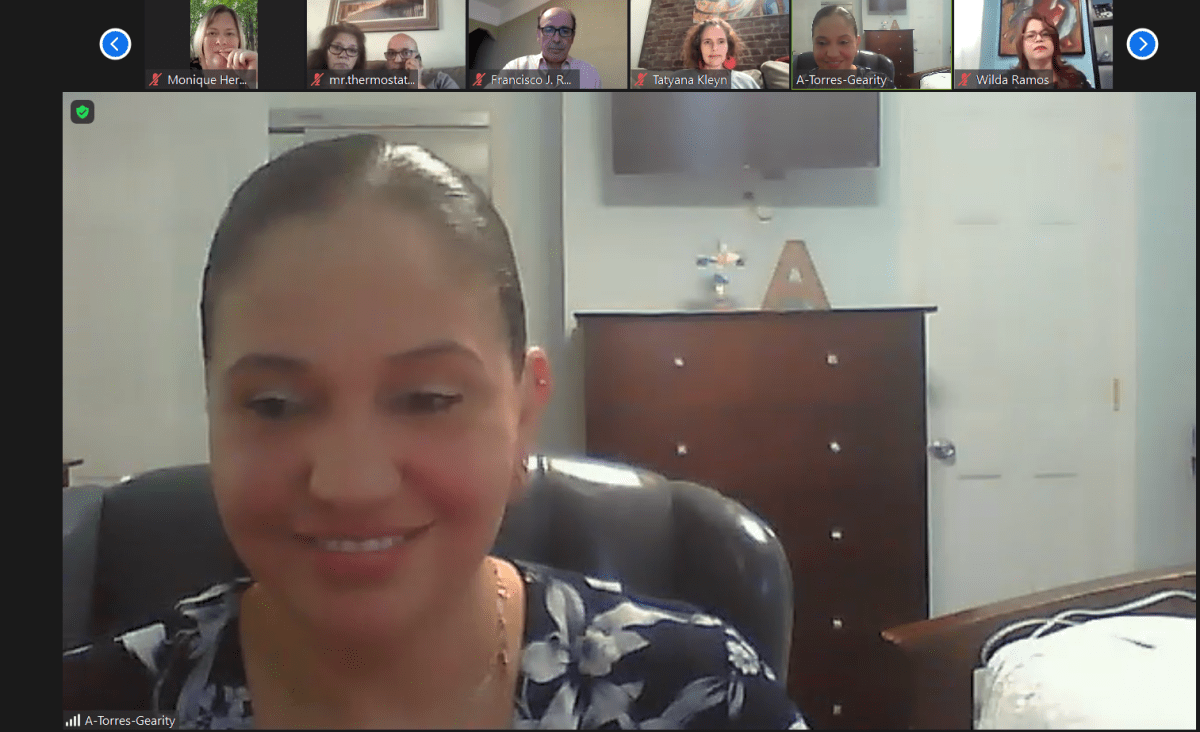
Touro TESOL candidate Antonia Torres-Gearity receives 2020 Bilingual Teacher of the Year Award by THE NEW YORK STATE ASSOCIATION FOR BILINGUAL EDUCATION

As a Professor is is a life-affirming experience to see one’s students succeed. Tonight, my TESOL teacher candidate Antonia Torres-Gearity received her 2020 Bilingual Teacher of the Year Award by NYSABE.

As a Professor it is a life-affirming experience to see one’s students succeed. Tonight, my TESOL teacher candidate Antonia Torres-Gearity received her 2020 Bilingual Teacher of the Year Award by NYSABE.

I was thrilled to be present at NYSABE supporting Mrs. Antonia Torres-Gearity, a gifted educator and TESOL candidate at Touro College, TESOL and Bilingual Department. Her dedication to our profession, caring for her students and passionate work ethic inspires me.

Congratulations to Touro TESOL candidates Mrs. Antoni Torres-Gearity to her 2020 Bilingual Teacher of the Year Award.

NYSABE represents educators, parents, members of community-based organizations, private agencies, and institutions of higher education as well as advocates involved in the education of English language learners/bilingual students in New York State.

Touro GSE TESOL candidate Mrs. Antonia Torres-Gearity

Touro GSE TESOL Candidate Eleonora Israilova’s Materials Critique and Redesign Analysis

One assignment in the Touro TESOL course EDPN 673 Methods and Materials for Teaching English as a Second Language is a Materials Critique & Redesign. In this assignment candidates will: (1) prepare a written critique description of the material or resource, analyzing its effectiveness on ELLs and (2) based on their analysis, redesign one section/activity of the original material so that it meets the need of ELLs. The materials chosen will promote culturally and linguistically responsive classrooms and instructional practices. I chose Eleonora Israilova’s submission as it was not only outstanding but features classroom realia and a robust, thoughtful redesign of her chosen textbooks.

by Jasmin Bey Cowin, Ed.D. , Assistant Professor and TESOL Practicum Coordinator, Touro College, GSE

One assignment in the Touro TESOL course EDPN 673 Methods and Materials for Teaching English as a Second Language is a Materials Critique & Redesign. In this assignment candidates will: (1) prepare a written critique description of the material or resource, analyzing its effectiveness on ELLs and (2) based on their analysis, redesign one section/activity of the original material so that it meets the need of ELLs. The materials chosen will promote culturally and linguistically responsive classrooms and instructional practices. I chose Eleonora Israilova’s submission as it was not only outstanding but features classroom realia and a robust, thoughtful redesign of her chosen textbooks.

Eleonora Israilova comes from Uzbekistan and speaks Russian, Tajik and Spanish. She was 10 years old when she came to America. Ms. Israilova stated that “currently I teach Kindergarten in my community with the same linguistic needs as my background and this assignment was tailored to fit the needs of my ELLs population.”

Materials Critique and Redesign
Matching Books with Readers is an important literacy component for ELL students. One of the most important components is vocabulary recognition, which requires an understanding of unfamiliar words when reading (Apthorp, 2006; Spencer & Guillaume, 2006, Vardell, Hadaway, & Young, 2006.) Also, a bilingual student may speak English in a way that commands a perfect understanding of his second language when in reality the oral vocabulary is much stronger than the reading vocabulary.

Each child has a unique learning style, but bilingual students benefit from reading nonfiction passages because real-life contexts help them visualize vocabulary words for meaning (Apthorp, 2006). Selecting highly visual literature containing photographs (Vardell, Hadaway, & Young, 2006) or that are related to scientific concepts that describe the natural world as children
understand it is best for bilingual students (Spencer & Guillaume, 2006). Therefore, for this materials critique and redesign, I chose to use three books that are nonfiction children’s books.

The three books are National Geographic Readers: Frogs! by Elizabeth Carney, National Geographic Readers: Caterpillar to Butterfly by Laura Marsh, and Ladybugs by Cheryl Coughlan. These books are great for ELL students because they are colorful, include rich vocabulary, and diagrams that show labeled parts of the animals. Younger children are usually drawn to informational texts about animals because it satisfies their curiosity and interest in their favorite topics. When students are interested in reading about a favorite topic, they are more
likely to be motivated to read and dig deeper for answers to their questions about the world and make constant connections to themselves.

Another reason I chose the aforementioned books is because unbeknownst students in my class are mostly of Russian, Tajik, and Spanish native languages. I have noticed that their vocabulary bank is limited as they are likely to come from conversational backgrounds. By using informational texts in my classroom, my ELL students will expand their academic vocabularies in areas that do not necessarily come up in everyday conversation. Nonfiction texts will challenge my ELL students, but it will also give them a broader vocabulary base, especially texts from the fields such as science and social studies. Moreover, ELL students are able to make real life connections with nonfiction texts. Many nonfiction books include photographs to illustrate the details. Photographs are a great visual aid when grappling to understand the English text. Photos contain more details and a precise depiction of the world around us than illustrations. When students are able to refer to photographs, they will increase their comprehension level and make connections to the real world they see around them. Students will be confident when they have a clear picture of what is being taught and are able to have higher order thinking skills that help to perform better overall.

Touro TESOL Candidate Radhika Hira on Teaching According to the Stages of Literacy Development

Discussion Boards are invaluable for students to develop their analytic skills, reflect on their readings and interact with their peers. Here an outstanding DB by Touro TESOL Candidate Radhika Hira on Teaching According to the Stages of Literacy Development.

Radhika Hira, a preservice elementary school teacher and yoga teacher in New York will graduate with her MA in Dual Inclusive Elementary Education from Teachers College this fall, and is working on a TESOL extension from Touro as well.
Radhika states that “I’m kind of known for my positive attitude! I think it is my biggest strength in a classroom – it allows my students to have a growth mindset. Since they feel safe in making mistakes, it encourages risk taking as they learn to be learners. This is a tumultuous time in the world, and I am excited to be there for my students. They need us to be ‘present’ more than ever.”

This DB focuses on your reading of Teaching According to the Stages of Literacy Development

  1. How would YOU in YOUR professional teaching practice, track and assess reading levels ? Please be specific.

Over 60 years ago, Betts (1946) described a framework for levels dependent on difficulty in his book, Foundations of Reading Instruction: With Emphasis on Differentiated Guidance. This framework was based on research done over 70 years ago now, and with 41 children. The framework resulted in four levels of reading which are still applicable today. (1) the independent level, (2) the instructional level, (3) the frustration level and (4) the probable capacity level. The fourth level is based on material which is read to a student but the first three are based on the decoding and comprehending ability of the student when reading a text.

Today there are at least 7 systems that level children’s book based on this, and mathematical algorithms using word length and sentence length. (F&P, Lexile, Accelerated Reader, Reading Recover/Benchmark, DRA, DRP, & Fleish-Kincaid). I have personally used F&P running records and miscue analysis as tools to assess students reading levels. My experience leads me to see miscue analysis as a far more authentic tool to measure reading needs of students so that we can focus on improving proficiency as opposed to levels.

Educators, parents and administrators take levels seriously and while I agree that levels are an important and even elegant tool to create a framework for students in some respects, as an educator I primarily always keep in mind that they are a teacher’s tool and not a reader’s label. The following are the principles from Glasswell and Ford’s 2011 article, Let’s start Leveling about Leveling, that I plan to live by in my own professional practice:

• Leveling takes a complex idea and makes it too simple: Reading is a complex process. It involves the reader, the text, background information, culture, linguistic ability, preference and interest all in one. Boiling this down to a mathematical algorithm that assess the word length or number of words on a page in isolation makes levels simplistic and requires that a teacher weigh everything else in and employ professional judgement as well.

• Leveling takes a simple idea and makes it too complex: An example best illustrates this point. In the popular F&P system, “for level J texts, consideration is given to 10 key text characteristics (genre/forms, text structure, content, themes and ideas, language and literary features, sentence complexity, vocabulary, words, illustrations, and book and print features). Across those 10 characteristics, 66 specific criteria are further identified. In contrast, a K-level text is analyzed using the same ten characteristics with 71 specific criteria. J- and K-level texts share 21 identical criteria and many more criteria that vary only in degree. For example, sentence length in J books is 10+ words; in K books, it is 15+ words. Length ranges in J-level texts from 24–36 pages; K-level texts are 24–48 pages. In the end, a book like Henry and Mudge: The First Book is assigned to the J basket, while Frog and Toad Are Friends finds its way into the K basket.” (Glasswell, 2011,211) In addition to being inaccessible to teachers to replicate for a text that is not leveled, it is not clear if these decision are made based on empirical evidence or simply collective characteristics which are subjective. Additionally, research supporting these methods are not necessarily valid or reliable.

• Reading levels are not the same as reading needs: This might be the most critical principle to keep in mind when I implement reading levels. Readers within a level might differ drastically in their needs. Even if readers have the same number of miscues, self corrections and errors, the reasons behind these could be vastly different indicating a distinct skill that needs to be addressed for the reader.

• Progress does not equal proficiency: Readers progressing from one level to the next are not necessarily acquiring proficiency since the emphasis is more on the text and the level than the reader. Additionally this often creates competition & judgement in relation to reading which can create more aversion to reading for many.

• Readers have rights (as well as levels): This quote from the F&P blog really sums up the importance of ensuring levels are always kept in check and come after a reader’s right to read and consume knowledge as they desire.

“Fountas and Pinnell on Leveling: A Teacher’s Tool – Levels can be a resource for you and your colleagues to guide student choices for independent reading, but they should not be a limitation or a requirement. Leveled books are instructional tools for teachers who understand them—nothing more. Above all else, a level is a teacher’s tool, not a child’s label.” (F&P, 2016)

  1. Watching the webcast and looking at the Reading Rockets resources was there anything that you will be able to incorporate into your professional practice?

There were many moments in the webcast that resonated with me and reinforced ideas that I have about practice. Dr. Pressley stressed throughout the webcast how teachers need to consistently keep abreast of new developments and spend time deep diving into the resources they have, even if those are limited. This is important as an educator to keep in mind and always ensure we attend PDs, and keep abreast of what is happening in the field so we can make informed decisions for our students to support them.

Carol Ann Tomlinson talks about “The student leading the teacher.” (23.57) and I believe this is critical since we need to follow our student’s lead. This can only result in better motivation, engagement and a sense of enhanced learning for the classroom community. However, Tomlinson’s work has it’s foundations in gifted education and is not empirical but is based on the intersection of readiness, interest and the student’s learning profile so that content, process or product is modified. It is a responsive approach based on consistent observation of the student. While crucial to consistently assessing students, this approach also makes the teacher central in terms of creating modifications. It takes pre-set content and then tries to adapt it for different learners. This understanding makes me more convinced of the benefits of a UDL (Universal Design for Learning) instructional strategy more than ever. UDL is based in neuroscience and on the principles of the 8 multiple intelligences. While it has foundations and is connected to special education, it is a ‘lens to look through so we can remove barriers and center learners.’ It provides for multiple means of representation, action and expression as the three pillars of lessons and teaching to bring all students access to content in ways they learn best. It is a constructivist approach where in addition to readiness and interests, aspects of the whole student like family, culture, and community are also included. As Carol Ann Tomlinson says “as capturing their best ways of learning” (Tomlinson, 32.49) and “taking advantage of every skill opportunity”(Tomlinson, 9:58).

I believe a UDL approach as opposed to differentiation makes it less challenging for us as teachers because you don’t go into a lesson with set content that then needs to differentiated based on students. You approach the lesson and offer students different ways to access, learn and represent their learning right from the start. If your starting point is that, the process becomes far less intimidating and challenging. It is a resource that “gives you more flexibility rather than hamper it.” (Tomlinson, 41.00)

  1. List Challs stages of reading development aligned with age, 1 key teaching principles, and 1 key teaching practices for each stage.

‘0-6 Years

STAGE 0: By age 6, children can understand thousands of words they hear but can read/write few if any of them.

Principle: They should be exposed to rich experiential learning and shared reading so that they can develop a rich vocabulary. Practice: Their vocabulary and language is developing and are encouraged to draw and scribble. Games, play, word walls and verbal exchanges are instrumental. Purposeful writing is important.

6-7 years

At the end of STAGE 1, most children can understand up to 4000 or more words when heard but can read/write about 600.

Principle: Direct and systematic phonics instruction and Shared, guided and interactive reading and writing are a focus.

Practice: Vocabulary is still developing and in addition they can listen to and discuss stories and write recounts/retells of stories. Invented spelling is encouraged.

7-9 Years

At the end of STAGE 2, about 3000 words can be read, written and understood and about 9000 are known when heard. NB: children’s written language may be up to 3 years behind oral language.

Principle: Continued Phonics in conjunction with learning to express ideas and writing purposefully.

Practice: Exploring interesting though familiar, topics, collection data, word walls, guided reading.

9-13 years

At beginning of STAGE 3, listening comprehension of the same material is still more effective than comprehension and composition. By the end of Stage 3, literacy and listening are about equal for those who read very well.

Principle: Consolidation of constrained skills; speaking, listening and viewing for a range of purposes in diverse knowledge areas to focus on main idea and key strategies of evaluating and analyzing.

Practice: Literacy practice is replaced by reading and writing meaningfully for authentic purposes through complex activities like debates, and discussions.

  1. What did you learn for your own professional practice that was surprising after reading: Teaching According to the Stages of Literacy Development

While reading the article the one thing that stood out to me was the idea that inventive spelling should be encouraged in Stage 1. While I think I’ve instinctively seen this occur and I understood it, it was nice to see it as part of the stage of literacy development. It also makes perfect sense in combination with the idea that phonics are just about being introduced and the student’s understanding of phonemes and the sound letter connection is most important at this stage.

References:

Brace, E. (2017, April 10). Teaching According to the Stages of Literacy Development. Retrieved November 13, 2020, from https://www.theliteracybug.com/journal/2017/8/4/literacy-

teaching-in-accordance-with-the-stages-of-literacy-development?rq=Teaching+According+to+the+stages+of+literacy+development

Fountas&Pinnell. (2016, September 29). A Level is a Teacher’s Tool, NOT a Child’s Label. Retrieved November 18, 2020, from https://fpblog.fountasandpinnell.com/a-level-is-a-teacher-s-tool-not-a-child-s-label

Glasswell, K., & Ford, M. (2011). Let’s start Leveling ab

Touro College TESOL candidate Eva Sipe’s SIOP lesson plan and presentation for EDDN 637

Context and Overview

The focus in the Touro TESOL course EDDN 637 Second Language Learners and the Content Areas is on practicing effective approaches, methods, and strategies for teaching and evaluating English language learners in the content areas (ELA, social studies, math and science). Teacher candidates are required to design a sheltered instruction lesson following the Sheltered Instruction Observation Protocol (SIOP) Model, a research-based and validated instructional model that has proven effective in addressing the academic needs of English learners throughout the United States.  Candidates need to explain how and why they’ve decided on the specific lesson content and language needs to be addressed.  Activities focus on assessing student needs before, during and upon lesson completion to enhance future instructional planning.  An outstanding SIOP lesson plan was submitted by Touro TESOL candidate Eva Sipe.

Eva Sipe, a 3rd Grade NYC Public School Teacher in Brooklyn, NY, has taught Special Education since 2005 and taught English Language Learners since 2016. She received her Undergraduate Diploma and Master’s Degrees in Comparative Religions and Philosophy at the Catholic University of Lublin in her native country, Poland. She received her Dual Master in General and Special Education from Touro College and her Advanced TESOL Certificate from Adelphi University. She is currently pursuing an Advanced Certificate in Bilingual Education at Touro College to better serve the bilingual population of students at her school.