Live from Arlington: GovAI Summit and AGENTIC 2025

Exclusive for Stankevicius by Dre. Jasmin (Bey) Cowin: Step into Arlington, Virginia, where innovation and policy meet within the Hyatt Regency Crystal City at Reagan National Airport. Modev’s flagship events, GovAI Summit and AGENTIC 2025,are taking place from October 27 to 29, 2025, bringing together experts in healthcare, finance, retail, manufacturing, hospitality/tourism, entertainment/media, government, educators, inventors, and technology leaders to shape the future of artificial intelligence across public and private sectors.

The GovAI Summit serves as the leading forum for implementing the White House’s 2025 AI Action Plan. It gathers federal decision-makers, policy analysts, and technical experts to examine how AI is transforming public service, from procurement and oversight to infrastructure, education, and workforce training. Discussions emphasize accountability and practical deployment, offering insight into how institutions and agencies adopt AI responsibly and effectively.

Running alongside, AGENTIC 2025 focuses on the practical application of autonomous AI in real-world enterprise settings. Attending are executives, developers, and innovation officers who drive AI adoption in large organizations. The sessions highlight strategies for integrating AI into daily operations, managing risks, and achieving measurable impact across teams and products.

In my session, Autonomous AI in U.S. Schools: Practical Realities, Policy Tensions, and Institutional Readiness, I drew on John Wyndham’s “The Kraken Wakes” as an allegory for systemic adaptation to new intelligence.

Read the full article: Cowin, J. (2025, October 30). Live from Arlington: GovAI Summit and AGENTIC 2025. Stankevicius. https://stankevicius.co/artificial-intelligence/live-from-arlington-govai-summit-and-agentic-2025/
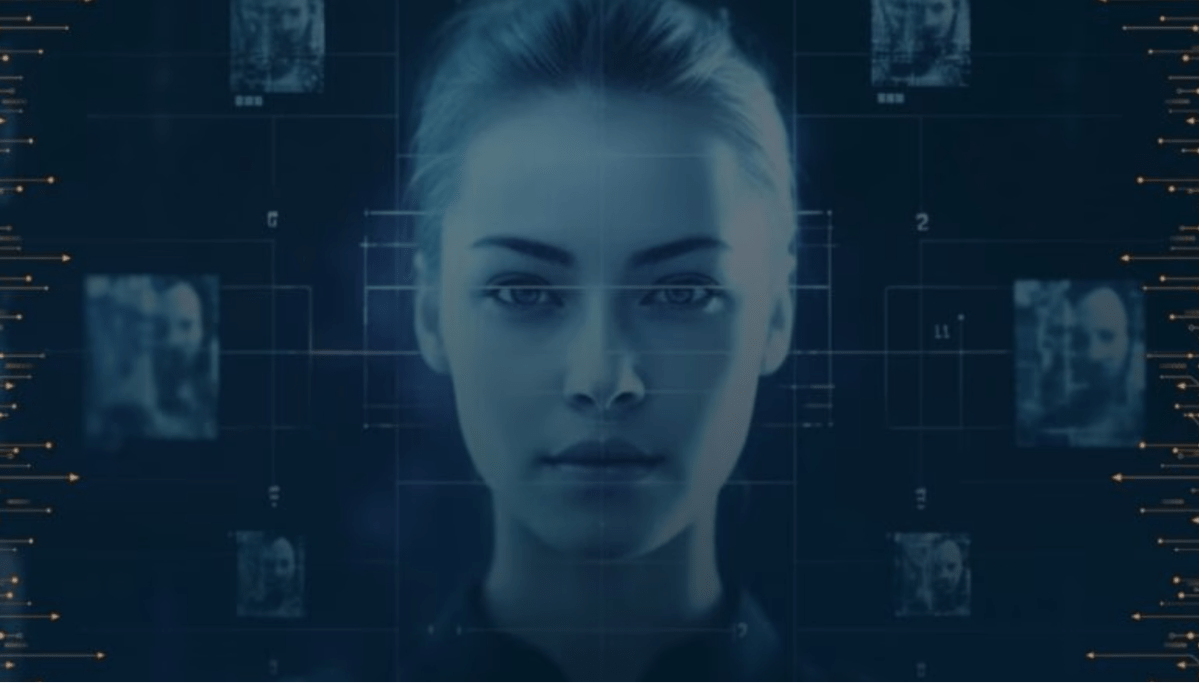
Exclusive for Stankevicius: From Lewis’s Hideous Strength to Deepfakes and the Machinery of Belief

In my previous article for Stankevicius, “The Veldt 2.0: Your Smart Home Wants Your Children,” I drew on Ray Bradbury’s 1950 short story “The Veldt” to warn that the corporate arms race in artificial intelligence is no longer confined to laboratories and trading floors; it is creeping into nurseries and playrooms. I argued that when companies such as Mattel announce plans to embed OpenAI’s language and video models into children’s toys, the Moloch trap comes home. Bradbury’s fictional HappyLife Home, with its immersive nursery, serves as a blueprint for a smart-home ecosystem in which machines monitor and mediate children’s relationships. Negative highlights are privacy breaches, the risk that intimate recordings could be repurposed into deepfake child pornography, and the broader danger that children might form their first emotional attachments with responsive algorithms rather than with human caregivers.

This exclusive Stankevicius article extends that moral inquiry from the home to the public sphere. Deepfakes, convincing audio and video fabrications generated by machine-learning models, transform images and voices into programmable surfaces. They threaten to dissolve the link between what we sense and what is real. The problem is not merely technological; it is moral and political. Drawing on C. S. Lewis’s dystopian novel That Hideous Strength (1945) to explore how technocratic institutions manipulate belief. In the book the National Institute of Co‑ordinated Experiments (N.I.C.E.) attempts to recondition public opinion by flooding society with narratives that make disbelief costly.

Today’s stakes are high. Recent incidents highlight the significant advancements in technology and the continued inadequacy of institutional preparedness. In early 2024, as reported by CNN, the British engineering giant Arup revealed as $25 million deepfake scam, centered around a finance worker in Hong Kong who transferred 39 million dollars (HK$200 million) during a video meeting, believing she was speaking to her executives; the “colleagues” were AI‑generated. 

Cowin, J. (2025, October 9). From Lewis’s Hideous Strength to Deepfakes and the Machinery of Belief. Stankevicius. https://stankevicius.co/artificial-intelligence/from-lewiss-hideous-strength-to-deepfakes-and-the-machinery-of-belief/

Brussels Releases The European Union General-Purpose AI Code of Practice by Dr. Jasmin (Bey) Cowin

Lessons from observing the EU AI Act’s Code of Practice development by Dr. Jasmin Cowin, Richard P. Nathan Public Policy Fellow

The author wrote in prior exclusive Stankevicius articles on The European Union’s AI Act Goes Live: What Higher Education Institutions Need to Know, and The European AI Act 2024: A Threat to International Academic Collaboration for Higher Education Institutions? Much has happened since those articles. The finalized voluntary The General-Purpose AI (GPAI) Code of Practice for general-purpose AI models was released in Brussels on the 10 of July 2025 by the European Union, translating the AI Act’s broad obligations into specific standards.

The author had the privilege of observing GPAI development process but must adhere to the Chatham House rules, which are used around the world to encourage inclusive and open dialogue in meetings. The GPAI development launched in July 2024 with over 1,400 participants from industry, academia, civil society, and EU Member States. Group work started last year November 18, 2024, when the author joined Working Group 4: Internal risk management and governance of General-purpose AI providers meeting.

Citation and Stankevicius article link:

Cowin, J. (2025, July 13). Brussels releases the European Union general‑purpose AI code of practice. Stankevicius. https://stankevicius.co/artificial-intelligence/brussels-releases-the-european-union-general‑purpose‑ai‑code‑of‑practice/

The Veldt 2.0: Your Smart Home Wants Your Children by Dr. Jasmin (Bey) Cowin for Stankevicius

Read the full the article here: Cowin, J. (2025, June 19). The Veldt 2.0: Your smart home wants your children. Stankevicius. https://stankevicius.co/artificial-intelligence/the-veldt-2-0-your-smart-home-wants-your-children/

In my previous work for Stankevicius, The Moloch Trap: OpenAI’s Evolution and the Paradox of Progress, I explored how competitive dynamics in artificial intelligence development can lead rational actors toward collectively harmful outcomes, even when each individual choice appears reasonable. That analysis focused on the corporate battlefield where AI companies race toward ever-greater capabilities, often at the expense of safety and human welfare.

Now, as Mattel announces its radical partnership with OpenAI to embed artificial intelligence directly into children’s toys, we witness the Moloch trap’s most intimate invasion: our nurseries, childhood playrooms, and Sunday morning pillow fights. Ray Bradbury’s 1950 vision in “The Veldt,” once dismissed as science fiction fantasy, now reads like a blueprint for our current moment, where smart homes promise to think for us and AI companions offer to raise our children.

This article, written exclusively for Stankevicius, examines what might happen when the same competitive forces that drive corporate AI development turn their attention to childhood itself. While my previous work dissected the systemic pressures pushing AI companies toward potentially dangerous innovations, this exploration probes into the human cost of that race: how the pursuit of “smart” toys may be undermining the fundamental bonds between parents and children, and between children and their own developing humanity. Welcome to The Veldt 2.0, where your smart home doesn’t just want your data. It wants your children.