Touro University TESOL Candidate Crystal DeMarco’s Materials Critique & Redesign

As a Professor for TESOL, I am immensely proud to feature outstanding student work from our MS in Teaching English to Speakers of Other Languages (TESOL) Program. New York’s linguistic diversity demands teachers who can find common ground and effectively communicate with students from different language backgrounds. Academically rigorous and practice-intensive, the 33-credit program includes 50 hours of fieldwork and supervised student teaching experiences. Candidates that complete all coursework, fieldwork, and student teaching requirements are eligible for recommendation for ESL certification.

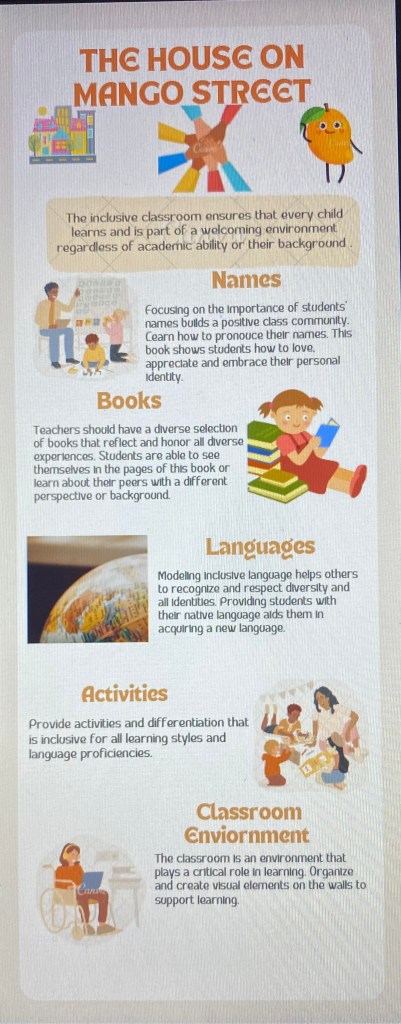
Infographic by Crystal DeMarco

EDPN 673 Methods and Materials for Teaching English as a Second Language

This course provides a historical overview of second language acquisition theories and teaching methods. Students learn how to apply current approaches, methods and techniques, with attention to the effective use of materials, in teaching English as a second language. Students will engage in the planning and implementation of standards-based ESL instruction which includes differentiated learning experiences geared to students’ needs. Emphasis is placed on creating culturally responsive learning environments. Includes 15 hours of fieldwork.

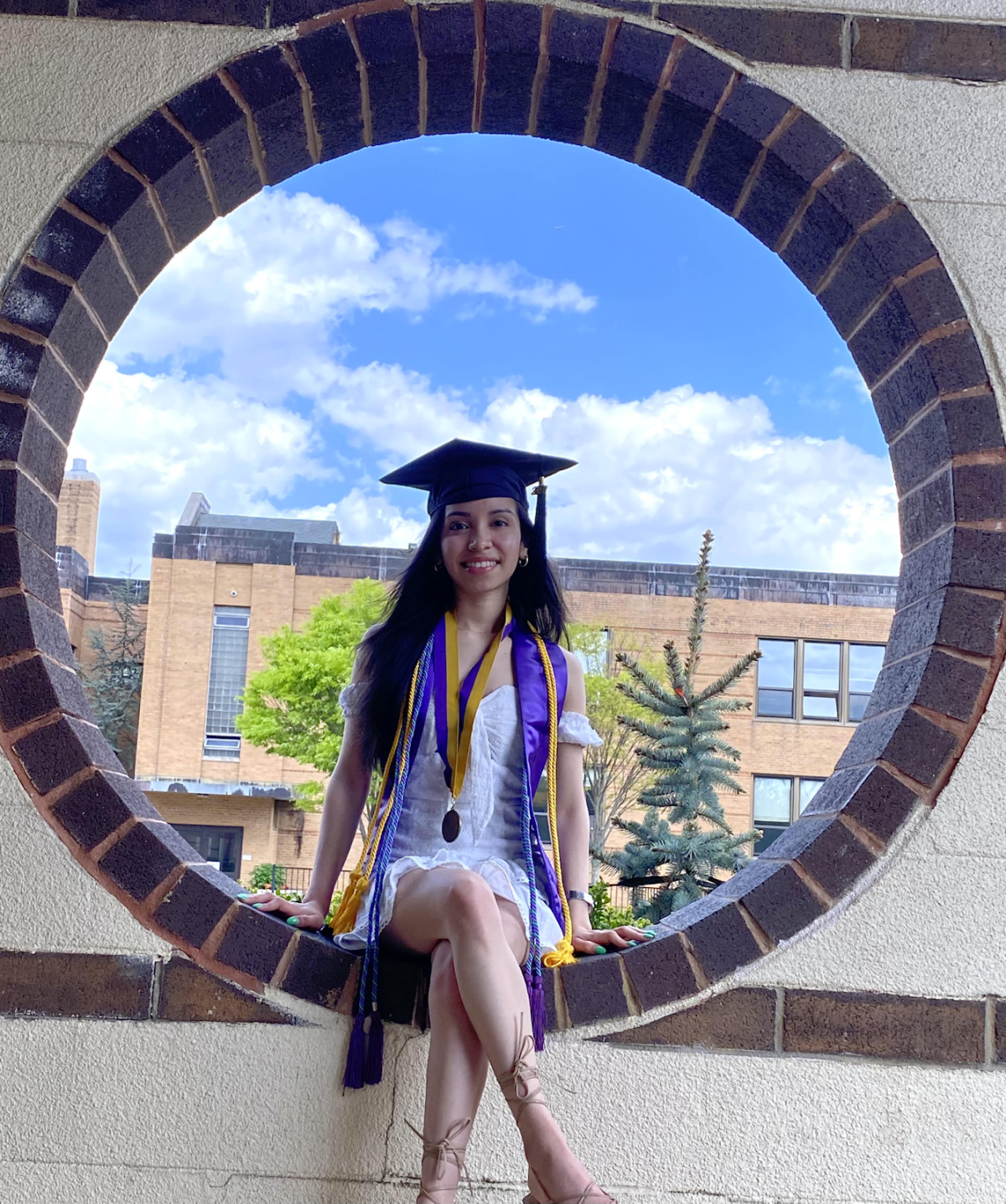
Crystal DeMarco graduated with her Bachelor’s in Education for grades 7-12 from the College of Staten Island. She is currently working towards her Master’s Degree in the TESOL Program at Touro University. Crystal continues to strive for excellence in her academics to become the best educator and role model for her students. She believes that “Education is the most powerful weapon which you can use to change the world.” – Nelson Mandela

Touro has been one of the best educational experiences in my career by
far.

Crystal DeMarco, Touro University, TESOL Candidate

Infographic by Crystal DeMarco

I will empower my students’ voices and opinions throughout instruction to show them that their education is important to me, and that their success in my classroom is my number one goal.

Crystal DeMarco, Touro University, TESOL Candidate

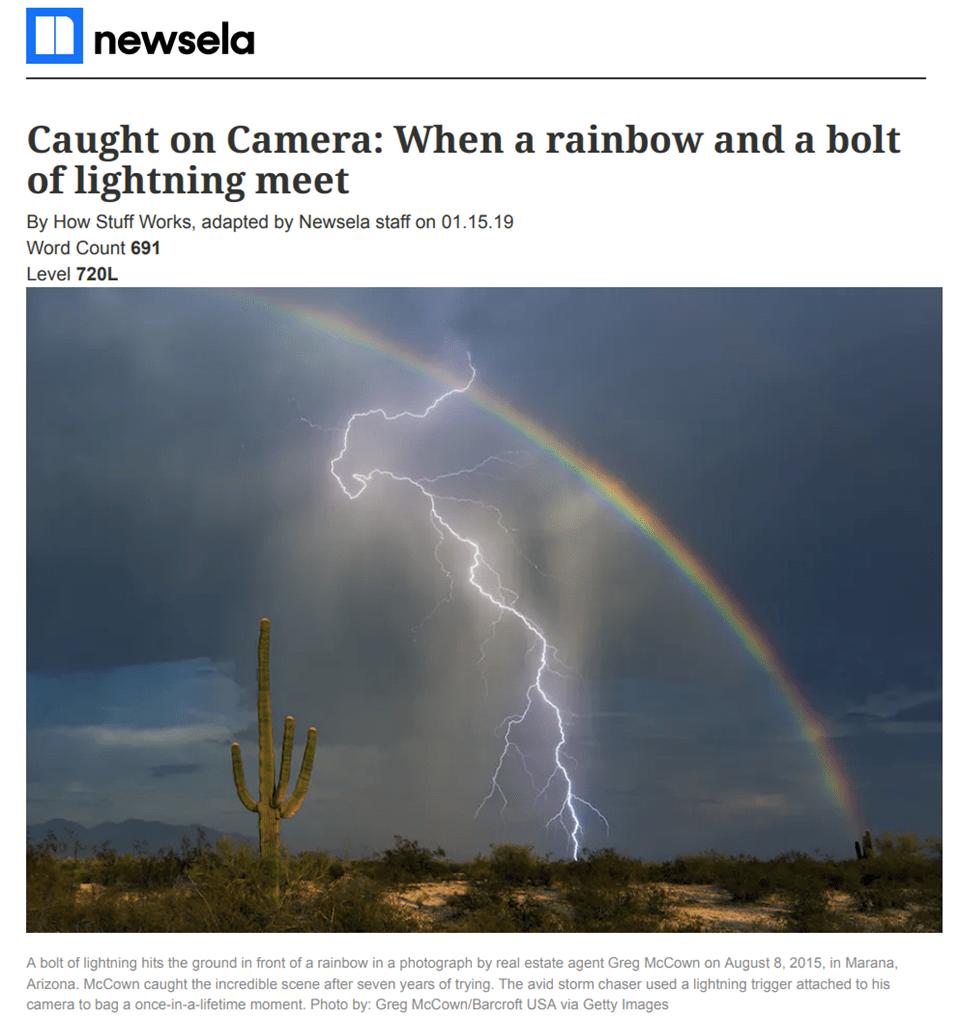
Touro University TESOL Candidate Gianna Romanelli’s Analysis of “Caught on Camera: When a rainbow and a bolt of lightning meet” from newsela

As a Professor for TESOL, I am immensely proud to feature outstanding student work from our MS in Teaching English to Speakers of Other Languages (TESOL) Program. New York’s linguistic diversity demands teachers who can find common ground and effectively communicate with students from different language backgrounds. Academically rigorous and practice-intensive, the 33-credit program includes 50 hours of fieldwork and supervised student teaching experiences. Candidates that complete all coursework, fieldwork, and student teaching requirements are eligible for recommendation for ESL certification.

EDDN 637: Students will become acquainted with and practice effective approaches, methods, and strategies for teaching and evaluating English language learners in the content areas (ELA, Social Studies, Math and Science). Throughout the course, students will explore the impact of culture and language upon classroom learning. Special challenges in teaching and assessment in each content area will be discussed. Examination and analysis of curriculum materials and instructional strategies for creative teaching and learning in grades Pe-K-12. Includes content-specific lesson planning that addresses the New York State Student Content Learning Standards with emphasis on English Language Arts, English as a Second Language, and content area instruction. Course content includes demonstrations, simulated activities, and field observations in Pre-K-12 classrooms. The course also examines how the teaching of English to non-native speakers can be integrated with the teaching of cognitive skills in all content areas. Students will be offered a variety of methods and materials to integrate ESL standards throughout all content areas for classroom use. Includes 15 hours of fieldwork. Includes 15 hours of fieldwork. 3 credits

Gianna Romanelli is a math teacher in the Sewanhaka Central High School District.  She loves teaching math because she strives to help her students to recognize that math doesn’t have to be boring.  Gianna said: “Even though math is my passion, in my free time I enjoy boating, fishing, and gardening!”

My journey at Touro thus far has been delightful. One of my biggest worries with a fully online program is the lack of personal relationships with my professors. I can proudly say the professors at Touro have been nothing short of understanding. The TESOL program is informative and allows educators/students to learn at their own pace.

Gianna Romanelli, Touro University TESOL Candidate

Touro University TESOL Candidate Samantha Howe’s PPT on Review and Assessment

As a Professor for TESOL, I am immensely proud to feature outstanding student work from our MS in Teaching English to Speakers of Other Languages (TESOL) Program. New York’s linguistic diversity demands teachers who can find common ground and effectively communicate with students from different language backgrounds. Academically rigorous and practice-intensive, the 33-credit program includes 50 hours of fieldwork and supervised student teaching experiences. Candidates that complete all coursework, fieldwork, and student teaching requirements are eligible for recommendation for ESL certification.

EDDN 637: Students will become acquainted with and practice effective approaches, methods, and strategies for teaching and evaluating English language learners in the content areas (ELA, Social Studies, Math and Science). Throughout the course, students will explore the impact of culture and language upon classroom learning. Special challenges in teaching and assessment in each content area will be discussed. Examination and analysis of curriculum materials and instructional strategies for creative teaching and learning in grades Pe-K-12. Includes content-specific lesson planning that addresses the New York State Student Content Learning Standards with emphasis on English Language Arts, English as a Second Language, and content area instruction. Course content includes demonstrations, simulated activities, and field observations in Pre-K-12 classrooms. The course also examines how the teaching of English to non-native speakers can be integrated with the teaching of cognitive skills in all content areas. Students will be offered a variety of methods and materials to integrate ESL standards throughout all content areas for classroom use. Includes 15 hours of fieldwork. Includes 15 hours of fieldwork. 3 credits

Dr. Jasmin (Bey) Cowin, Associate Professor and TESOL/BLE Praticum Coordinator, Touro University

Samantha Howe is a 5th-grade teacher from Long Island. After receiving her bachelor’s degree in inclusive childhood education, she was accepted into the TESOL program at Touro University. She is passionate about providing an inclusive and equitable education for all students.

The TESOL program at Touro University has already provided me with valuable insights and necessary tools to better support my multilingual students. 

Samantha Howe, Touro University TESOL Candidate

Touro University TESOL Candidate Ashley Ramdat’s Flowchart on Improving Teaching in L2 Reading

As a Professor for TESOL, I am immensely proud to feature outstanding student work from our MS in Teaching English to Speakers of Other Languages (TESOL) Program. New York’s linguistic diversity demands teachers who can find common ground and effectively communicate with students from different language backgrounds. Academically rigorous and practice-intensive, the 33-credit program includes 50 hours of fieldwork and supervised student teaching experiences. Candidates that complete all coursework, fieldwork, and student teaching requirements are eligible for recommendation for ESL certification.

Ashley Ramdat will be a first-year teacher for the upcoming school year and is happy to serve as a first-grade special education teacher. She has one semester left until she graduates with her masters in TESOL and states that she “is beyond excited.”

Touro University TESOL Candidate Natalie Spirkina’s Materials Critique & Redesign for EDPN 673 Methods and Materials for Teaching English as a Second LanguageNatalie Spirkina, Touro University TESOL Candidate Materials Critique & Redesign
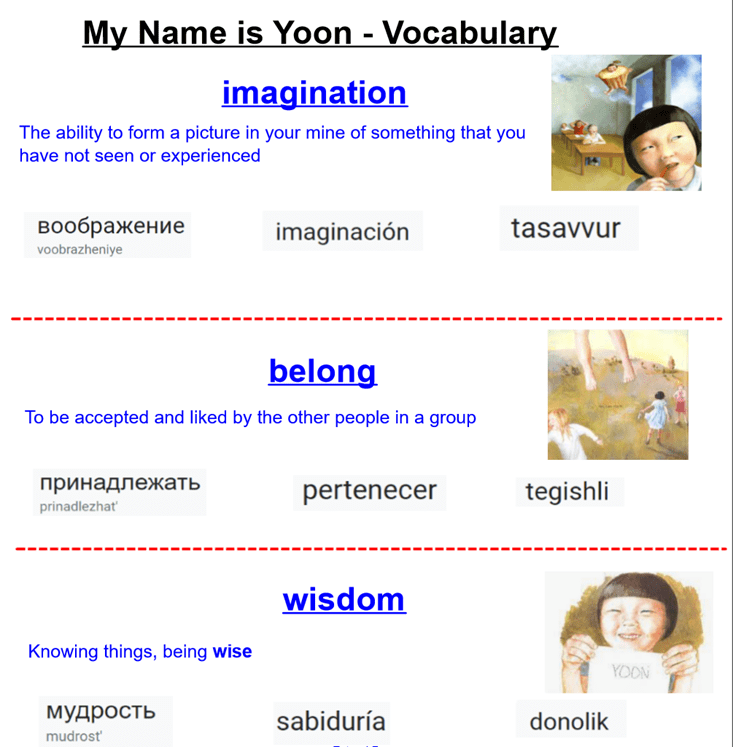

by Natalie Spirkina

As a Professor for TESOL, I am immensely proud to feature outstanding student work from our MS in Teaching English to Speakers of Other Languages (TESOL) Program. New York’s linguistic diversity demands teachers who can find common ground and effectively communicate with students from different language backgrounds. Academically rigorous and practice-intensive, the 33-credit program includes 50 hours of fieldwork and supervised student teaching experiences. Candidates that complete all coursework, fieldwork, and student teaching requirements are eligible for recommendation for ESL certification.

EDPN 673 Methods and Materials for Teaching English as a Second Language

This course provides a historical overview of second language acquisition theories and teaching methods. Students learn how to apply current approaches, methods and techniques, with attention to the effective use of materials, in teaching English as a second language. Students will engage in the planning and implementation of standards-based ESL instruction which includes differentiated learning experiences geared to students’ needs. Emphasis is placed on creating culturally responsive learning environments. Includes 15 hours of field work.

Bio

Natalie Spirkina serves as a second-grade special education teacher working in a public school in Brooklyn, NY. She is passionate about providing students with individualized instruction that will best meet their diverse needs. After working in the DOE for 11 years, she decided to enroll in Touro University’s TESOL program.

My time at Touro University is providing me with the tools and knowledge of the best practices to implement in the classroom and support English Language learners in developing their reading, writing, speaking and listening skills.

Natalie Spirkina, Touro University, TESOL Candidate

Dr. Jasmin (Bey) Cowin, Dr. Birgit Oberer and Cristo Leon on “Trans-Disciplinary Communication in the ChatGPT Age: A Systems Perspective” for The 17th International Multi-Conference on Society, Cybernetics and Informatics: IMSCI 2023

We are pleased to announce that our paper was accepted for presentation for The 17th International Multi-Conference on Society, Cybernetics and Informatics: IMSCI 2023©, September 12 – 15, 2023

About the Conference
“Informatics and Cybernetics (communication and control) are having an increasing impact on societies and in the globalization process that is integrating them. Societies are trying to regulate this impact, and adapt it to their respective cultural infra-structures. Societies and cultures are in reciprocal co-adaptations with Information and Communication Technologies. Synergic relationships might emerge in this co-adaptation process by means of positive and negative feedback loops, as well as feedforward ones. This would make the whole larger than the sum of its parts, generating emergent properties in the parts involved as well as in the whole coming forth. The academic, private, and public sectors are integrating their activities; multi-disciplinary groups and inter-disciplinary teams are being formed, and collaborative research and development projects are being organized in order to facilitate and adequately orient the design and implementation of the feedback and the feedforward loops, so the synergic relationships are socially positive and personally human.”

It was a pleasure to work with my colleagues in a true collaborative spirit and academic exchange through the lens of trans-disciplinarity and its implications for contemporary scholarship and practice. Thank you to Dr. Birgit Oberer from the ETCOP Institute for Interdisciplinary Research, Klagenfurt, Austria, and Cristo Leon from the Office of Research & Development, New Jersey Institute of Technology, Newark.

Our paper is titled:

“Trans-Disciplinary Communication in the ChatGPT Age: A Systems Perspective”

ABSTRACT
In recent years, Trans-Disciplinarity (TD) has become increasingly recognized as a critical concept in contemporary scholarship and practice, especially in the emerging field of the metaverse. Despite its growing importance, however, the precise origins and meanings of the term remain somewhat elusive, and its relationship to systems thinking is still poorly understood. Consequently, further research is needed to clarify the definition and application of transdisciplinarity and explore its connections with related concepts such as systems thinking. By doing so, we can gain a broader understanding of how transdisciplinary approaches can be used to address complex problems in a variety of contexts and how they can contribute to advancing knowledge and innovation across disciplinary boundaries.
Keywords: Trans-disciplinary communication, digital age, metaverses, systems thinking, ChatGPT, transformative technologies.

Touro University Bilingual Extension Candidate Kenia Torres’ Thoughts on the WIDA Can-Do-Descriptors

As a Professor for TESOL, I am immensely proud to feature outstanding student work from our MS in Teaching English to Speakers of Other Languages (TESOL) Program. New York’s linguistic diversity demands teachers who can find common ground and effectively communicate with students from different language backgrounds. Academically rigorous and practice-intensive, the 33-credit program includes 50 hours of fieldwork and supervised student teaching experiences. Candidates that complete all coursework, fieldwork, and student teaching requirements are eligible for recommendation for ESL certification.

Bio
Kenia Torres graduated summa cum laude from St. Joseph’s University in May 2022 with a Child Studies degree and a concentration in Speech Communication. She is currently pursuing her Bilingual Extension from Touro University. Kenia is a bilingual kindergarten teacher in the Brentwood Union Free School District in Brentwood, NY. She is certified in Birth-6th grade in general and special education. Kenia aspires to be a school leader in the future. She believes: “Our fingerprints don’t fade from the lives we touch.“-Judy Blume

  1. Discussion Board Question: How could the WIDA Can Do descriptors help you in choosing reading materials for teaching your ELL’s/MLs? https://wida.wisc.edu/teach/can-do/descriptors
    Links to an external site.

The WIDA Can Do descriptors are an extremely useful tool to evaluate what language learners can do at various stages of language development. As a bilingual kindergarten tool, I can use the WIDA Can Do tool to supplement content instruction with activities that develop my students’ language learning at the same time. For instance, as depicted in the WIDA Can Do key, kindergarteners at the ELP Level 1, Entering, students should point to pictures described orally in context. Therefore, I can develop activities for my literacy centers that ask students to identify pictures from a story read aloud. This would be an appropriate activity for students at the Entering level according to WIDA Can Do.

  1. Discussion Board Question: How could the WIDA Can Do descriptors help you create differentiation for the reading assessment of your ELL’s//MLs?
    The WIDA Can Do Descriptors can assist me in differentiating for the reading assessment of my ELLs/MLs as it gives me an accurate description of what language learners can do at their specific language level. For instance, a kindergarten student at the Entering level can point to pictures described orally in context. A kindergarten student at the Developing level can act out songs, chants, stories, and poems, with gestures as a whole group. Meanwhile as described in the WIDA Can Do key, a student at the Reaching level will be able to identify drawings or other visual displays from elaborate descriptions with details. Therefore, I can use this key to identify specific strategies and skills to assess my English language learners, dependent on their language level.
  2. Discussion Board Question: Chapter 12: Use and upload (you can also take a photo) a graphic organizer of your choice to showcase five areas you would like to improve in your teaching of L2 reading that you have learned about in this chapter. Choose one thing at a time, and focus on improving that aspect of your teaching. Share with others what you are doing to become a better teacher of reading. Remember that it will take time to fully develop the ability to integrate improvements into your teaching. Celce-Murcia, Marianne; Brinton, Donna M.; Snow, Marguerite Ann. Teaching English as a Second or Foreign Language (p. 186). Heinle ELT. Kindle Edition

Touro University TESOL candidate Samantha Howe’s Differentiated Instructional Activity Assignment on Taxation in the Colonies

As a Professor for TESOL, I am immensely proud to feature outstanding student work from our MS in Teaching English to Speakers of Other Languages (TESOL) Program. New York’s linguistic diversity demands teachers who can find common ground and effectively communicate with students from different language backgrounds. Academically rigorous and practice-intensive, the 33-credit program includes 50 hours of fieldwork and supervised student teaching experiences. Candidates that complete all coursework, fieldwork, and student teaching requirements are eligible for recommendation for ESL certification.

Differentiated Instructional Activity Assignment
Assignment Overview:

In this assignment, teachers of English Language Learners (ELL) or Multilingual Learners (ML) will explore and implement differentiated instructional activities to maximize the learning of every student in their class. Using the provided Tools for High-Quality Differentiated Instruction: An ASCD Action Tool, teachers will modify an existing content lesson plan to incorporate differentiation strategies in various aspects of instruction. The assignment requires the submission of a paper including the original and differentiated lesson plans, along with all materials, and a 2-4 minute video showcasing one specific aspect of a differentiated instructional activity. The assignment aims to facilitate professional growth and reflection on implementing differentiated instruction.

I am proud to showcase the outstanding work of Touro University TESOL candidate Samantha Howe on the Differentiated Instructional Activity Assignment in my blog. Her commitment to enhancing the learning experiences of English Language Learners and Multilingual Learners through tailored instructional strategies has been remarkable. The thoughtfulness, creativity, and dedication she demonstrated while modifying her lesson plan and crafting her reflection exemplify her potential as a future TESOL educator who prioritizes inclusivity and student-centered learning.

The TESOL program at Touro University has already provided me with valuable insights and necessary tools to better support my multilingual students.

Samantha Howe, Touro University TESOL candidate

Touro University TESOL candidate Samantha Howe is a 5th-grade teacher from Long Island. After receiving her bachelor’s degree in inclusive childhood education, she was accepted into the TESOL program at Touro University. She is passionate about providing an inclusive and equitable education for all students.

Video Link

Touro University TESOL Candidate Natalie Spirkina’s Differentiated Instructional Activity on The Unique Life Cycle of a Butterfly

As a Professor for TESOL, I am immensely proud to feature outstanding student work from our MS in Teaching English to Speakers of Other Languages (TESOL) Program. New York’s linguistic diversity demands teachers who can find common ground and effectively communicate with students from different language backgrounds. Academically rigorous and practice-intensive, the 33-credit program includes 50 hours of fieldwork and supervised student teaching experiences. Candidates that complete all coursework, fieldwork, and student teaching requirements are eligible for recommendation for ESL certification.

Differentiated Instructional Activity Assignment
Assignment Overview:

In this assignment, teachers of English Language Learners (ELL) or Multilingual Learners (ML) will explore and implement differentiated instructional activities to maximize the learning of every student in their class. Using the provided Tools for High-Quality Differentiated Instruction: An ASCD Action Tool, teachers will modify an existing content lesson plan to incorporate differentiation strategies in various aspects of instruction. The assignment requires the submission of a paper including the original and differentiated lesson plans, along with all materials, and a 2-4 minute video showcasing one specific aspect of a differentiated instructional activity. The assignment aims to facilitate professional growth and reflection on implementing differentiated instruction.

I am proud to showcase the outstanding work of Touro University TESOL candidate Natalie Spirkina on the Differentiated Instructional Activity Assignment in my blog. Her commitment to enhancing the learning experiences of English Language Learners and Multilingual Learners through tailored instructional strategies has been remarkable. The thoughtfulness, creativity, and dedication she demonstrated while modifying her lesson plan and crafting her reflection exemplify her potential as a future TESOL educator who prioritizes inclusivity and student-centered learning.

Touro University TESOL candidate Natalie Spirkina, a special education teacher for the NYC Department of Education for over 10 years, is a product of the public school system and an early-grade English Language Learner herself.

I was drawn to Touro to further my journey as an educator. I am looking forward to implementing the methods and techniques that I am learning at Touro to enrich students’ language development and overall learning in my classroom.

Natalie Spirkina, Touro University TESOL candidate