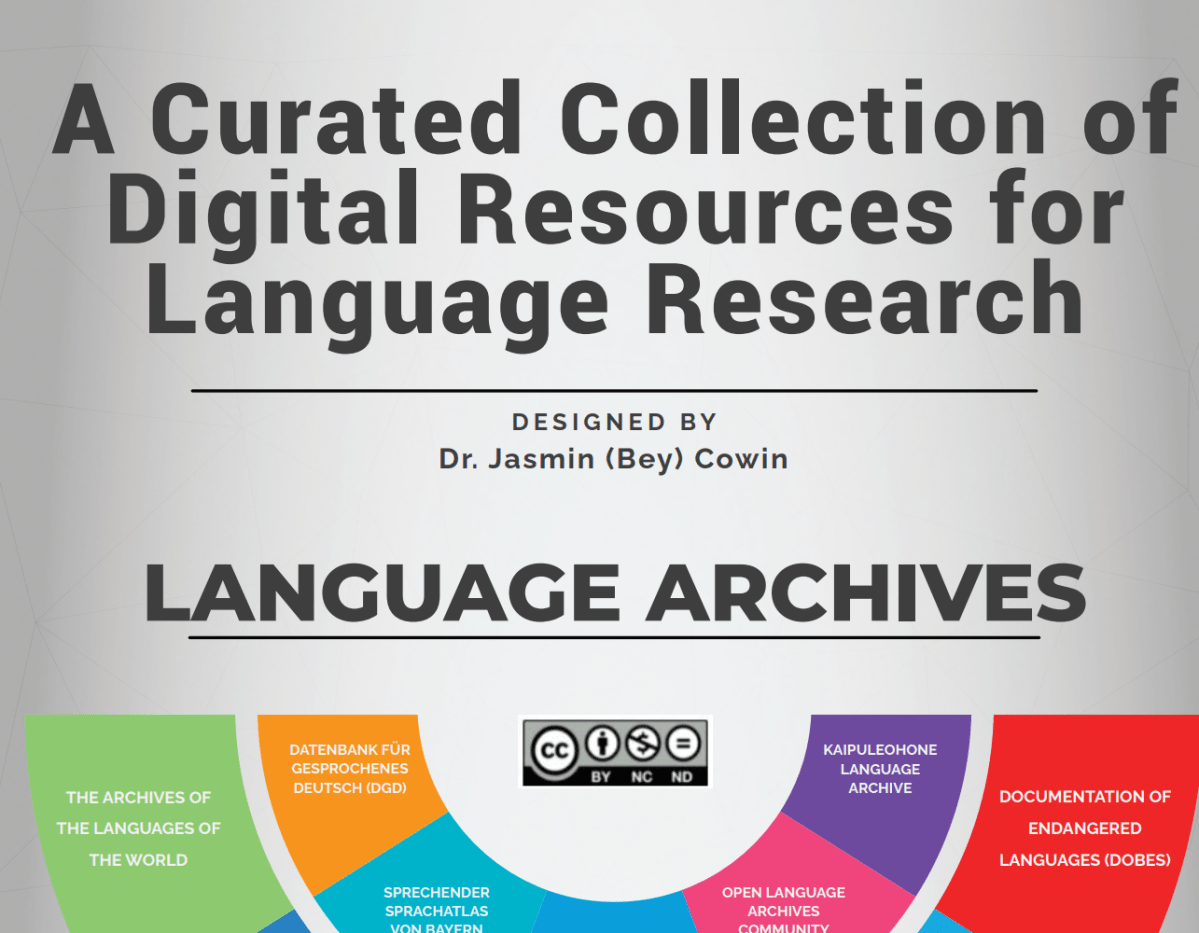
A Curated Collection of Digital Resources for Language Research by Dr. Jasmin (Bey) Cowin

This infographic strives to synthesize and clarify a collection of digital resources designed for linguistic research. It brings together a range of tools and language archives with a focus on enhancing productivity and insight into academic research on languages. By compiling these resources in one place, my goal is to make it easier for linguists, computational linguists, cognitive scientists, students, language teachers and researchers, and others exploring language to find and utilize the assets that will be most valuable for their work.

Overall, my infographic intends to showcase the digital resources that can empower investigations into linguistics and offer shortcuts for discovering and leveraging such freely available assets. By outlining some of the available tools and materials, I aim to promote more efficient, comprehensive, and insightful research practices among scholars studying language from various perspectives and with diverse objectives. Whether looking to find real-world examples of syntax patterns, or uncover endangered languages, this guide endeavors to point researchers towards the most relevant and useful digital assets for their work.

A Brave New World: AI as a Nacent Regime?Accepted Keynote for The 27th World Multi-Conference on Systemics, Cybernetics and Informatics: WMSCI 2023©

Accepted keynote: A Brave New World: AI as a Nacent Regime?
for The 27th World Multi-Conference on Systemics, Cybernetics and Informatics: WMSCI 2023© September 12 – 15, 2023 ~ Virtual Conference

Conference Purpose

The purpose of WMSCI 2023 is to promote discussions and interactions between researchers and practitioners focused on disciplinary, interdisciplinary and transdisciplinary issues, ideas, concepts, theories, methodologies and applications. We are particularly interested in fostering the exchange of concepts, prototypes, research ideas, and other results which could contribute to the academic arena and also benefit business, and the industrial community.

What is WMSCI 2023?

WMSCI 2023 is an international forum for scientists and engineers, researchers and consultants, theoreticians, and practitioners in the fields of Systemics, Cybernetics, and Informatics. The forum focuses on specific disciplinary research, and also in multi, inter, and trans-disciplinary studies and projects. One of its aims is to relate disciplines, fostering analogical thinking and, hence, producing input to logical thinking.

Authors and Abstract:

Jasmin COWIN[1]
Department of TESOL/Bilingual Education, Graduate School of Education, Touro University, NY, 10018, U.S.A.
Birgit OBERER[2]
ETCOP Institute for Interdisciplinary Research, Klagenfurt, Austria
Cristo LEON[3]
Office of Research & Development, NJIT, Newark, NJ, 07102-1982, U.S.A.

Aldous Huxley, in his seminal work ‘Brave New World,’ offers an incisive literary critique of a society where technological determinism also suppresses the quintessence of humanity. As we approach a paradigm dominated by Generative AI, the echoes of Huxley’s admonitions are evident in contemporary debates about AI’s trajectory and potential ramifications. Drawing parallels between Huxley’s dystopia and the current technological milieu, this keynote and article take a deep dive into AI’s potent capability to influence human behavior, shape societal norms, and potentially homogenize linguistic expression. Citing instances such as language simplification observed on platforms such as X (formerly Twitter) and ALEXA, we highlight the risks associated with an unchecked embrace of AI-driven tools that could inadvertently standardize and curtail the rich tapestry of human language, creative thoughts, and authentic expression. While acknowledging AI’s transformative potential across domains, our discourse emphasizes the imperative of ethical considerations, democratic governance, and the preservation of core human values through trans-disciplinary connections, discourse, and debates. Using ‘Brave New World’ as a literary compass, we advocate for a transdisciplinary dialogue that critically assesses AI’s impact on our social ethos, logos, and pathos. Furthermore, the article underscores our collective responsibility to harness AI’s potential in ways that augment our shared human experiences without eroding the nuanced intricacies that define our identity and autonomy. It addresses the cost of uniformity and stability, the role of technology and consumerism, emotional experiences, deep relationships, personal growth, and the danger of totalitarian control with AI emerging as a nascent regime powered by oblique algorithms implemented by transnational global companies. This transdisciplinary keynote serves both as a reflection on humanity’s place in an automated age and a call to action, urging for technological deployment that amplifies, rather than diminishes, our inherent humanity.

Keywords:
Generative AI
Language simplification
Societal norms
Transdisciplinary dialogue
Transnational global companies
Ethical considerations
Human identity

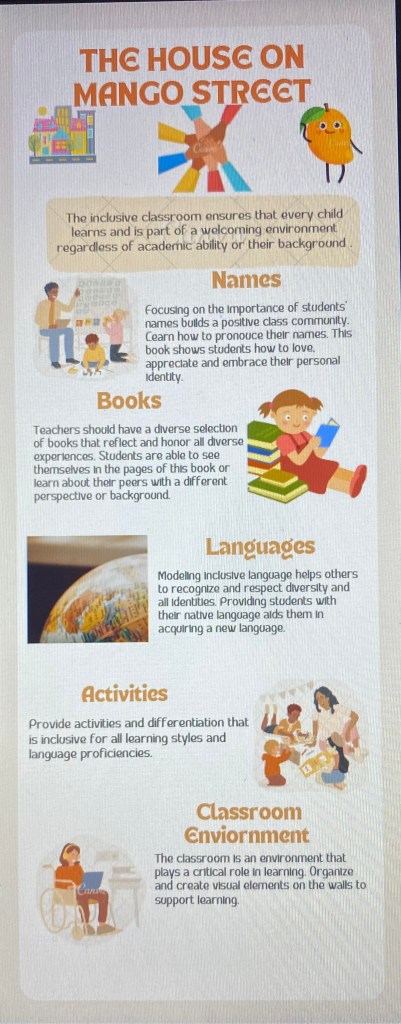
Touro University TESOL Candidate Alexandria Galvez’s Differentiated Instructional Activity

As a Professor for TESOL, I am immensely proud to feature outstanding student work from our MS in Teaching English to Speakers of Other Languages (TESOL) Program. New York’s linguistic diversity demands teachers who can find common ground and effectively communicate with students from different language backgrounds. Academically rigorous and practice-intensive, the 33-credit program includes 50 hours of fieldwork and supervised student teaching experiences. Candidates that complete all coursework, fieldwork, and student teaching requirements are eligible for recommendation for ESL certification.

Alexandria Galvez is a first-year teacher leading a bilingual 1st-grade classroom. She is glad to have the opportunity to work with English Language Learners and finds herself learning from them every day. Her time at Touro has been marked by the acquisition of valuable knowledge regarding effective strategies for classroom use. Her favorite quote: “The capacity to learn is a gift; the ability to learn is a skill; the willingness to learn is choice.” -Brian Herbert

Differentiated Instructional Activity Assignment

In this assignment, teachers of English Language Learners (ELL) or Multilingual Learners (ML) will explore and implement differentiated instructional activities to maximize the learning of every student in their class. Using the provided Tools for High-Quality Differentiated Instruction: An ASCD Action Tool, teachers will modify an existing content lesson plan to incorporate differentiation strategies in various aspects of instruction. The assignment requires the submission of a paper including the original and differentiated lesson plans, along with all materials, and a 2-4 minute video showcasing one specific aspect of a differentiated instructional activity. The assignment aims to facilitate professional growth and reflection on implementing differentiated instruction.

As I reflect on my completion of the Differentiated Instructional Activity, I am now more aware of my own strengths in terms of recognizing what works for me as the educator and strategies that work for English Language Learners in order to differentiate. For example, using whiteboards as a way to quickly assess student understanding is an engaging hands-on strategy that students enjoy using because it is considered “fun” instead of using regular pencil and paper.

Alexandria Galvez, Touro University TESOL Candidate

Touro University TESOL Candidate Crystal DeMarco’s Materials Critique & Redesign

As a Professor for TESOL, I am immensely proud to feature outstanding student work from our MS in Teaching English to Speakers of Other Languages (TESOL) Program. New York’s linguistic diversity demands teachers who can find common ground and effectively communicate with students from different language backgrounds. Academically rigorous and practice-intensive, the 33-credit program includes 50 hours of fieldwork and supervised student teaching experiences. Candidates that complete all coursework, fieldwork, and student teaching requirements are eligible for recommendation for ESL certification.

Infographic by Crystal DeMarco

EDPN 673 Methods and Materials for Teaching English as a Second Language

This course provides a historical overview of second language acquisition theories and teaching methods. Students learn how to apply current approaches, methods and techniques, with attention to the effective use of materials, in teaching English as a second language. Students will engage in the planning and implementation of standards-based ESL instruction which includes differentiated learning experiences geared to students’ needs. Emphasis is placed on creating culturally responsive learning environments. Includes 15 hours of fieldwork.

Crystal DeMarco graduated with her Bachelor’s in Education for grades 7-12 from the College of Staten Island. She is currently working towards her Master’s Degree in the TESOL Program at Touro University. Crystal continues to strive for excellence in her academics to become the best educator and role model for her students. She believes that “Education is the most powerful weapon which you can use to change the world.” – Nelson Mandela

Touro has been one of the best educational experiences in my career by
far.

Crystal DeMarco, Touro University, TESOL Candidate

Infographic by Crystal DeMarco

I will empower my students’ voices and opinions throughout instruction to show them that their education is important to me, and that their success in my classroom is my number one goal.

Crystal DeMarco, Touro University, TESOL Candidate

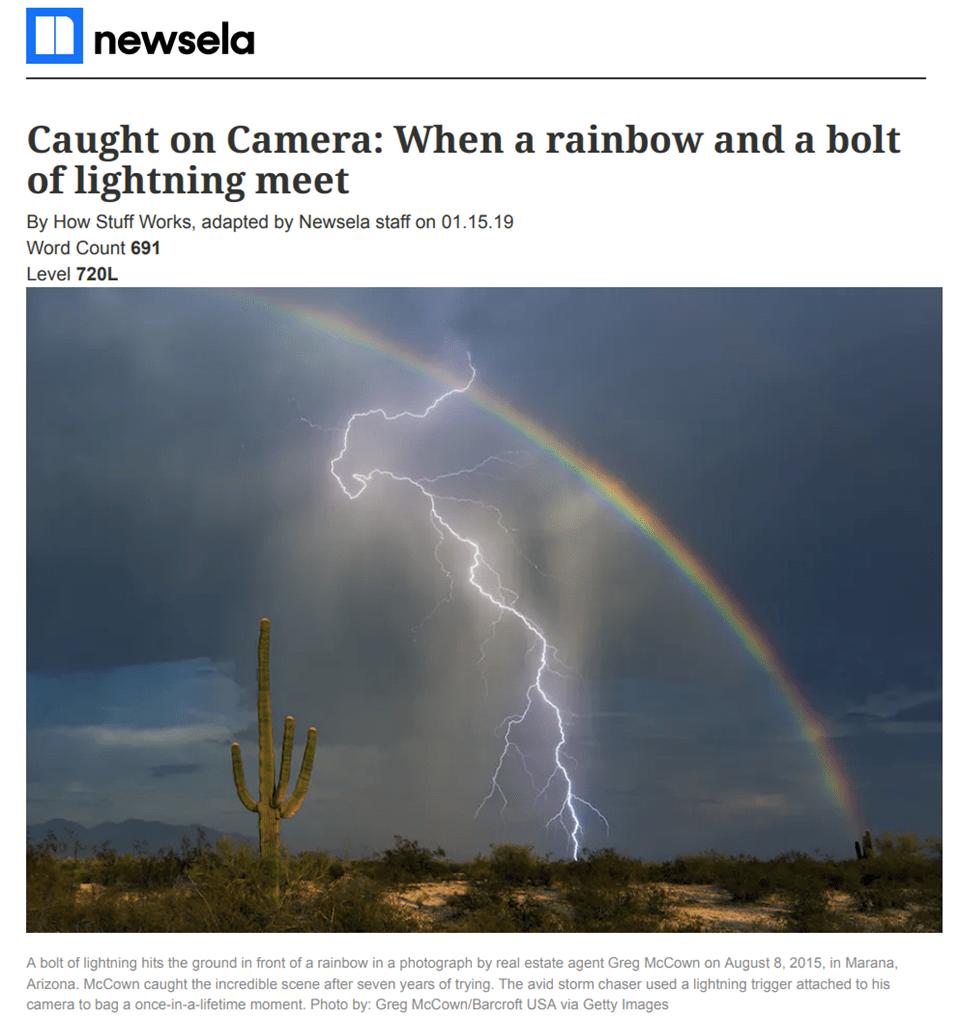
Touro University TESOL Candidate Gianna Romanelli’s Analysis of “Caught on Camera: When a rainbow and a bolt of lightning meet” from newsela

As a Professor for TESOL, I am immensely proud to feature outstanding student work from our MS in Teaching English to Speakers of Other Languages (TESOL) Program. New York’s linguistic diversity demands teachers who can find common ground and effectively communicate with students from different language backgrounds. Academically rigorous and practice-intensive, the 33-credit program includes 50 hours of fieldwork and supervised student teaching experiences. Candidates that complete all coursework, fieldwork, and student teaching requirements are eligible for recommendation for ESL certification.

EDDN 637: Students will become acquainted with and practice effective approaches, methods, and strategies for teaching and evaluating English language learners in the content areas (ELA, Social Studies, Math and Science). Throughout the course, students will explore the impact of culture and language upon classroom learning. Special challenges in teaching and assessment in each content area will be discussed. Examination and analysis of curriculum materials and instructional strategies for creative teaching and learning in grades Pe-K-12. Includes content-specific lesson planning that addresses the New York State Student Content Learning Standards with emphasis on English Language Arts, English as a Second Language, and content area instruction. Course content includes demonstrations, simulated activities, and field observations in Pre-K-12 classrooms. The course also examines how the teaching of English to non-native speakers can be integrated with the teaching of cognitive skills in all content areas. Students will be offered a variety of methods and materials to integrate ESL standards throughout all content areas for classroom use. Includes 15 hours of fieldwork. Includes 15 hours of fieldwork. 3 credits

Gianna Romanelli is a math teacher in the Sewanhaka Central High School District.  She loves teaching math because she strives to help her students to recognize that math doesn’t have to be boring.  Gianna said: “Even though math is my passion, in my free time I enjoy boating, fishing, and gardening!”

My journey at Touro thus far has been delightful. One of my biggest worries with a fully online program is the lack of personal relationships with my professors. I can proudly say the professors at Touro have been nothing short of understanding. The TESOL program is informative and allows educators/students to learn at their own pace.

Gianna Romanelli, Touro University TESOL Candidate

Touro University TESOL Candidate Samantha Howe’s PPT on Review and Assessment

As a Professor for TESOL, I am immensely proud to feature outstanding student work from our MS in Teaching English to Speakers of Other Languages (TESOL) Program. New York’s linguistic diversity demands teachers who can find common ground and effectively communicate with students from different language backgrounds. Academically rigorous and practice-intensive, the 33-credit program includes 50 hours of fieldwork and supervised student teaching experiences. Candidates that complete all coursework, fieldwork, and student teaching requirements are eligible for recommendation for ESL certification.

EDDN 637: Students will become acquainted with and practice effective approaches, methods, and strategies for teaching and evaluating English language learners in the content areas (ELA, Social Studies, Math and Science). Throughout the course, students will explore the impact of culture and language upon classroom learning. Special challenges in teaching and assessment in each content area will be discussed. Examination and analysis of curriculum materials and instructional strategies for creative teaching and learning in grades Pe-K-12. Includes content-specific lesson planning that addresses the New York State Student Content Learning Standards with emphasis on English Language Arts, English as a Second Language, and content area instruction. Course content includes demonstrations, simulated activities, and field observations in Pre-K-12 classrooms. The course also examines how the teaching of English to non-native speakers can be integrated with the teaching of cognitive skills in all content areas. Students will be offered a variety of methods and materials to integrate ESL standards throughout all content areas for classroom use. Includes 15 hours of fieldwork. Includes 15 hours of fieldwork. 3 credits

Dr. Jasmin (Bey) Cowin, Associate Professor and TESOL/BLE Praticum Coordinator, Touro University

Samantha Howe is a 5th-grade teacher from Long Island. After receiving her bachelor’s degree in inclusive childhood education, she was accepted into the TESOL program at Touro University. She is passionate about providing an inclusive and equitable education for all students.

The TESOL program at Touro University has already provided me with valuable insights and necessary tools to better support my multilingual students. 

Samantha Howe, Touro University TESOL Candidate

Touro University TESOL Candidate Ashley Ramdat’s Flowchart on Improving Teaching in L2 Reading

As a Professor for TESOL, I am immensely proud to feature outstanding student work from our MS in Teaching English to Speakers of Other Languages (TESOL) Program. New York’s linguistic diversity demands teachers who can find common ground and effectively communicate with students from different language backgrounds. Academically rigorous and practice-intensive, the 33-credit program includes 50 hours of fieldwork and supervised student teaching experiences. Candidates that complete all coursework, fieldwork, and student teaching requirements are eligible for recommendation for ESL certification.

Ashley Ramdat will be a first-year teacher for the upcoming school year and is happy to serve as a first-grade special education teacher. She has one semester left until she graduates with her masters in TESOL and states that she “is beyond excited.”

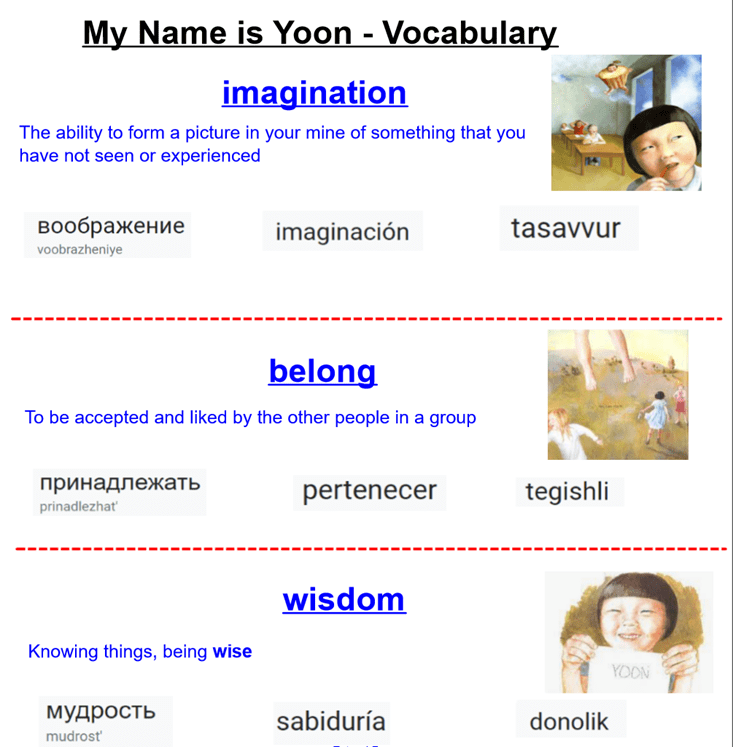
Touro University TESOL Candidate Natalie Spirkina’s Materials Critique & Redesign for EDPN 673 Methods and Materials for Teaching English as a Second LanguageNatalie Spirkina, Touro University TESOL Candidate Materials Critique & Redesign


by Natalie Spirkina

As a Professor for TESOL, I am immensely proud to feature outstanding student work from our MS in Teaching English to Speakers of Other Languages (TESOL) Program. New York’s linguistic diversity demands teachers who can find common ground and effectively communicate with students from different language backgrounds. Academically rigorous and practice-intensive, the 33-credit program includes 50 hours of fieldwork and supervised student teaching experiences. Candidates that complete all coursework, fieldwork, and student teaching requirements are eligible for recommendation for ESL certification.

EDPN 673 Methods and Materials for Teaching English as a Second Language

This course provides a historical overview of second language acquisition theories and teaching methods. Students learn how to apply current approaches, methods and techniques, with attention to the effective use of materials, in teaching English as a second language. Students will engage in the planning and implementation of standards-based ESL instruction which includes differentiated learning experiences geared to students’ needs. Emphasis is placed on creating culturally responsive learning environments. Includes 15 hours of field work.

Bio

Natalie Spirkina serves as a second-grade special education teacher working in a public school in Brooklyn, NY. She is passionate about providing students with individualized instruction that will best meet their diverse needs. After working in the DOE for 11 years, she decided to enroll in Touro University’s TESOL program.

My time at Touro University is providing me with the tools and knowledge of the best practices to implement in the classroom and support English Language learners in developing their reading, writing, speaking and listening skills.

Natalie Spirkina, Touro University, TESOL Candidate

Dr. Jasmin (Bey) Cowin, Dr. Birgit Oberer and Cristo Leon on “Trans-Disciplinary Communication in the ChatGPT Age: A Systems Perspective” for The 17th International Multi-Conference on Society, Cybernetics and Informatics: IMSCI 2023

We are pleased to announce that our paper was accepted for presentation for The 17th International Multi-Conference on Society, Cybernetics and Informatics: IMSCI 2023©, September 12 – 15, 2023

About the Conference
“Informatics and Cybernetics (communication and control) are having an increasing impact on societies and in the globalization process that is integrating them. Societies are trying to regulate this impact, and adapt it to their respective cultural infra-structures. Societies and cultures are in reciprocal co-adaptations with Information and Communication Technologies. Synergic relationships might emerge in this co-adaptation process by means of positive and negative feedback loops, as well as feedforward ones. This would make the whole larger than the sum of its parts, generating emergent properties in the parts involved as well as in the whole coming forth. The academic, private, and public sectors are integrating their activities; multi-disciplinary groups and inter-disciplinary teams are being formed, and collaborative research and development projects are being organized in order to facilitate and adequately orient the design and implementation of the feedback and the feedforward loops, so the synergic relationships are socially positive and personally human.”

It was a pleasure to work with my colleagues in a true collaborative spirit and academic exchange through the lens of trans-disciplinarity and its implications for contemporary scholarship and practice. Thank you to Dr. Birgit Oberer from the ETCOP Institute for Interdisciplinary Research, Klagenfurt, Austria, and Cristo Leon from the Office of Research & Development, New Jersey Institute of Technology, Newark.

Our paper is titled:

“Trans-Disciplinary Communication in the ChatGPT Age: A Systems Perspective”

ABSTRACT
In recent years, Trans-Disciplinarity (TD) has become increasingly recognized as a critical concept in contemporary scholarship and practice, especially in the emerging field of the metaverse. Despite its growing importance, however, the precise origins and meanings of the term remain somewhat elusive, and its relationship to systems thinking is still poorly understood. Consequently, further research is needed to clarify the definition and application of transdisciplinarity and explore its connections with related concepts such as systems thinking. By doing so, we can gain a broader understanding of how transdisciplinary approaches can be used to address complex problems in a variety of contexts and how they can contribute to advancing knowledge and innovation across disciplinary boundaries.
Keywords: Trans-disciplinary communication, digital age, metaverses, systems thinking, ChatGPT, transformative technologies.