Touro University Bilingual Advanced Certificate Candidate Paola Gomez’s Fieldwork Observations & Providing Successful Learning Environments for all Students

Touro University’s TESOL/BLE Education Program offers an advanced certificate to address the shortage of bilingual teachers and administrators.

According to the article, Bilingual teachers are hard to find as thousands of migrant students enter NYC schools. “For at least 20 years there has been a real shortage of bilingual teachers,” said Mark Cannizzaro, president of the principals’ union, the Council of School Supervisors and Administrators. “And it’s an even bigger problem now.”

Thousands of new students have arrived in city schools over the past few months, largely children of asylum seekers from South and Central America. Some have landed at schools with robust bilingual programs, where they can learn academic content while gaining English skills. Others find themselves lost in classes where the only language spoken is English.

Touro University’s TESOL/BLE Education Program offers an advanced certificate to address the shortage of bilingual teachers and administrators.

Bilingual Education and Services
There is a need for high-quality educators trained to offer bilingual education and services. For certified teachers and professionals, a bilingual certificate can extend your certification and opportunities. All our courses stress the importance of considering cultural factors alongside individual abilities in teaching bilingual students. We offer three advanced certificates in bilingual education and services:

Bilingual General Education, PreK-12, for mainstream teachers looking to work with bilingual students, teaching their content area in two languages.

BILINGUAL SPECIAL EDUCATION AND SPEECH & LANGUAGE DISABILITIES is for special education teachers who want to work with bilingual students with cognitive impediments, and help assess whether it’s a hearing or speech impediment that makes it hard for the student to replicate the English language and with them on speech patterns.

Bilingual Pupil Personnel Services is for school counselors, social workers and psychologists, who want to work with bilingual students.

Admissions Requirements

In addition to the general admission requirements, you must be able to document proficiency in the target language of instruction (Click here to download the Target Language Proficiency Verification Form).

To learn more about the program: https://gse.touro.edu/request-more-information/

EDPN 673 Methods and Materials for Teaching English as a Second Language

This course provides a historical overview of second language acquisition theories and teaching methods. Students learn how to apply current approaches, methods and techniques, with attention to the effective use of materials, in teaching English as a second language. Students will engage in the planning and implementation of standards-based ESL instruction which includes differentiated learning experiences geared to students’ needs. Emphasis is placed on creating culturally responsive learning environments. Includes 15 hours of fieldwork.

Fieldwork: Exploration and analysis of relevant K-12 pedagogical approaches, methods, and strategies needed to convey to a diverse population state and professional standards-based curricula. Development, adaptation and evaluation of materials for implementation in lesson planning and assessment for teaching English to speakers of other languages to particular groups of different ages, ability levels and cultural backgrounds.

Using centers will allow my students to work on activities that are differentiated according to their academic levels. In these centers, my paraprofessionals and I can give to one-on-one support to my students and collect data on the acquisition of IEP goals. Moving forward as a bilingual education teacher, I will provide a multicultural learning environment in which students’ native language is seen as an asset rather than a barrier.

Paola Gomez, Touro University Bilingual Advanced Certificate Candidate

Touro University TESOL Candidate Nicole Andrade’s Fieldwork and Observations on Code-Based Skills vs Meaning-Based Skills

“As a professor, I created this blog as a mechanism to support, appreciate and showcase the exemplary work of my graduate and professional Touro University TESOL/BLE teacher candidates. By emphasizing candidates’ best work, and their innovative, thoughtful, reflective contributions I provide a path to shift the focus to their professional values while recognizing and celebrating their significant milestones in the Touro University TESOL/BLE program.” by Dr. Jasmin (Bey) Cowin, Assistant Professor, TESOL/BLE Department, Touro University

Admissions Requirements

We welcome applications from NYS-certified teachers who would like to pursue TESOL certification. This program is designed to strengthen teachers’ capacities to effectively serve children for whom English is a second language. 

Ready to Apply?

Visit admissions to find out how to apply and start your application.

EDDN 637 Second Language Learners and the Content Areas

Students will become acquainted with and practice effective approaches, methods, and strategies for teaching and evaluating English language learners in the content areas (ELA, social studies, math and science). Throughout the course, students will explore the impact of culture and language on classroom learning. Special challenges in teaching and assessment in each content area will also be discussed. Includes 15 hours of field work.

Touro University TESOL Candidate Nicole Andrade is 25 years old. Her family is from Bolivia. She has worked as a Lead Preschool teacher and as a substitute teacher for the DOE for two years, giving her experience in different classroom settings from grades K-5.

It is important to develop the proper instruction, intervention, and goals for students when designing a curriculum. Code-based skills and meaning based skills are what educators must work on with students in order to gain advancements in reading comprehension from students. Code-based skills rely on students’ abilities to sound words out and alphabet knowledge, whereas meaning-based skills refer to vocabulary. Vocabulary is essential in literacy development. English Language Arts Standards categorize three areas, reading literature, reading information text, and language. In these areas, educators must choose the correct interventions to best support students, for instance understanding the difference between a student who needs assistance in code-based skills such as reading words slowly, or meaning-based skills where a student may have difficulty with comprehension of an unfamiliar vocabulary word in a passage(NYSED, 2022).

Nicole Andrade, Touro University TESOL Candidate

Touro University TESOL Candidate Evdokia Gasparis’s Content-Area Text Analysis of Samuel Morse’s “That’s Who! The Story of the Telegraph and Morse Code” by Tracy Nelson Maurer

EDDN 637 Second Language Learners and the Content Areas

Students will become acquainted with and practice effective approaches, methods, and strategies for teaching and evaluating English language learners in the content areas (ELA, social studies, math and science). Throughout the course, students will explore the impact of culture and language on classroom learning. Special challenges in teaching and assessment in each content area will also be discussed. Includes 15 hours of fieldwork.

Evdokia Gasparis: My family consists of many English language learners, which has influenced me to pursue a master’s degree in TESOL. I completed a bachelor’s degree in elementary/early childhood education and psychology from Queens College, which led me to attain a 1-6 common branch license. As I expand my knowledge in the field of education, I strive to effectively differentiate all instructional activities to meet the needs of all students. I aspire not simply to teach, but to inspire all my students to challenge their limits!

Alliteration can be located at several points throughout Samuel Morse’s “That’s Who!: The Story of the Telegraph and Morse Code” by Tracy Nelson Maurer. For example, “… tromping from town to town…” and “Success always seemed one step ahead for Samuel.” The academic language is quite challenging, as it is content specific. Content-specific terms include Morse Code, inventions, telegraph, and French Optical Telegraph System. ELLs are at a disadvantage due to their limited background knowledge of the history of the United States. Prior to reading, educators must focus on building background knowledge and pre-teaching vocabulary, in order for students to properly comprehend the literature.

Evdokia Gasparis, Touro University TESOL Candidate

Touro University TESOL Candidate Shannon Smith on Incorporating Culture into Materials for Multilingual Learners

As educators, incorporating culture into language teaching is crucial. Learning about different cultures can help us approach languages with new insights.
We can feel more connected to our students and our students can connect with each other.

Shannon Smith, Touro University TESOL candidate

EDPN 673 Methods and Materials for Teaching English as a Second Language

This course provides a historical overview of second language acquisition theories and teaching methods. Students learn how to apply current approaches, methods and techniques, with attention to the effective use of materials, in teaching English as a second language. Students will engage in the planning and implementation of standards-based ESL instruction which includes differentiated learning experiences geared to students’ needs. Emphasis is placed on creating culturally responsive learning environments. Includes 15 hours of field work.

Materials Critique & Redesign: Candidates will: (1) prepare a written critique description of the material or resource, analyzing its effectiveness for ELLs and (2) based on your analysis, redesign one section/activity (which could be an infographic, mindmap or anything that shows a redesign) of the original material so that it meets the need of ELLs. The materials chosen will promote culturally and linguistically responsive classrooms and instructional practices.

  • Candidates will promote culturally and linguistically responsive classrooms and instructional practices
  • Candidates will apply strategies to adapting grade-level, content area instruction to include culturally and linguistically different students as well as gifted and special education ELLs.

Touro University TESOL candidate Shannon Smith is a graduate student at Touro University pursuing a master’s degree in the TESOL program. She is certified in general education and special education 1-6.

Ms. Smith, “I am currently teaching a Kindergarten class that has a majority of ENL students. All of the courses I have taken at Touro and all of the professors have been preparing me for the real world. I thoroughly have been enjoying learning different strategies to implement in my Kindergarten classroom.”

Touro University TESOL candidate Cynthia Olavarria’s Analysis of Gary the Monster by Charlesworth

EDPN 673 Methods and Materials for Teaching English as a Second Language

This course provides a historical overview of second language acquisition theories and teaching methods. Students learn how to apply current approaches, methods and techniques, with attention to the effective use of materials, in teaching English as a second language. Students will engage in the planning and implementation of standards-based ESL instruction which includes differentiated learning experiences geared to students’ needs. Emphasis is placed on creating culturally responsive learning environments. Includes 15 hours of field work.

Materials Critique & Redesign: Candidates will: (1) prepare a written critique description of the material or resource, analyzing its effectiveness for ELLs and (2) based on your analysis, redesign one section/activity (which could be an infographic, mindmap or anything that shows a redesign) of the original material so that it meets the need of ELLs. The materials chosen will promote culturally and linguistically responsive classrooms and instructional practices.

  • Candidates will promote culturally and linguistically responsive classrooms and instructional practices
  • Candidates will apply strategies to adapting grade-level, content area instruction to include culturally and linguistically different students as well as gifted and special education ELLs.

Touro University TESOL candidate Cynthia Olavarria is a Special Education Educator in an elementary school in Brooklyn, New York. “I believe in collaboration so we can make changes in the lives of our youth.”

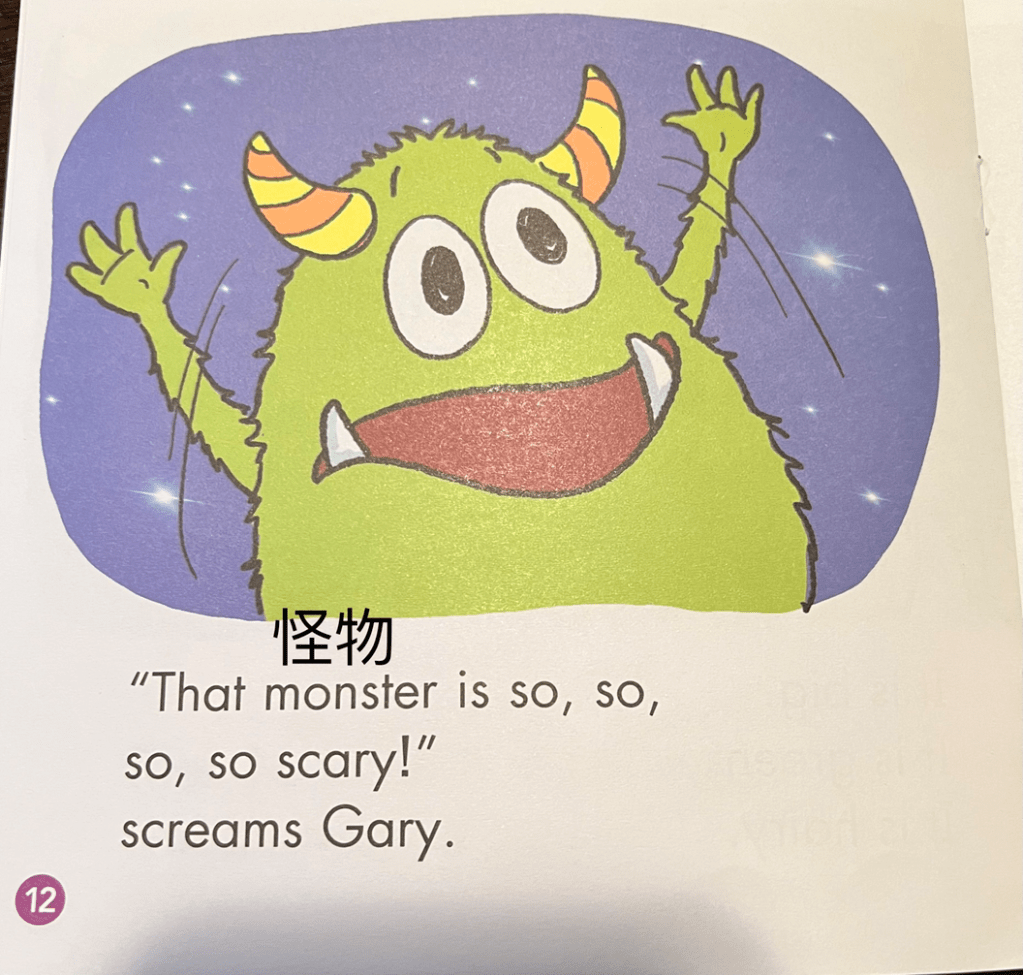
This book is a great way for kids to build on what they already know about colors and feelings while also learning something new. Looking at page 2-3 the author uses the skill of rhyming to grab the reader’s attention. “Gary is big, Gary is green. Gary is hairy. And Gary thinks EVERYTHING is scary.” (Charlesworth, Gary the Monster, 2018, pp. 3-4) This skill can be a little difficult for students to learn. Rhyming is hard for students who are not ELL’s so we know that it can be significantly challenging for students who are ELL’s.

Cynthia Olavarria, Touro University TESOL candidate

Touro University TESOL Candidate Marizabel Nunez’s Comprehensible Input Mindmap for Multilingual Learners

EDDN 637 Second Language Learners and the Content Areas

Students will become acquainted with and practice effective approaches, methods, and strategies for teaching and evaluating English language learners in the content areas (ELA, social studies, math and science). Throughout the course, students will explore the impact of culture and language on classroom learning. Special challenges in teaching and assessment in each content area will also be discussed. Includes 15 hours of fieldwork.

“I attended Touro College and earned a bachelor’s degree in psychology and a master’s degree in education, teaching students with disabilities in grades 7-12. Professor Cowin has taught me much about the theory of bilingual teaching, learning, practice, and strategies to use with English language learners this semester.”

Marizabel Nunez, Touro University TESOL Candidate

References

How to teach such that they understand(2018) The Comprehensible Classroom. Available at: https://comprehensibleclassroom.com/2018/07/26/how-to-teach-such-that-they-understand/Links to an external site.

Lesson plans: Using procedures (2015) TeacherVision

Touro University TESOL Candidate Marizabel Nunez was born and raised in Brooklyn, New York. Her family is from the Dominican Republic, and most of them are linguistically diverse.

Touro University Bilingual Candidate Paola Gomez’s Demonstration of the Total Physical Response Method

“As a professor, I created this blog as a mechanism to support, appreciate and showcase exemplary work of my graduate and professional Touro University TESOL/BLE teacher candidates. By emphasizing candidates’ best work, and their innovative, thoughtful, reflective contributions I provide a path to shift the focus to their professional values while recognizing and celebrating their significant milestones in the Touro University TESOL/BLE program.” by Jasmin (Bey) Cowin

EDPN 673 Methods and Materials for Teaching English as a Second Language

This course provides a historical overview of second language acquisition theories and teaching methods. Students learn how to apply current approaches, methods and techniques, with attention to the effective use of materials, in teaching English as a second language. Students will engage in the planning and implementation of standards-based ESL instruction which includes differentiated learning experiences geared to students’ needs. Emphasis is placed on creating culturally responsive learning environments. Includes 15 hours of fieldwork.

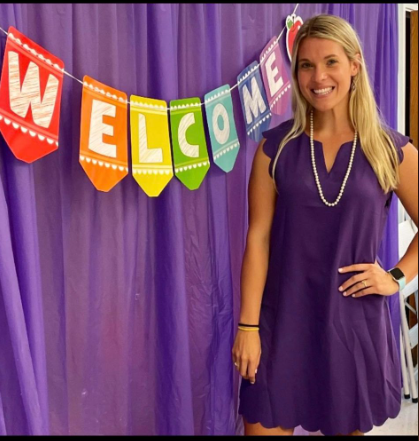
Mrs. Paola Gomez was born in the Bronx and raised partially in the Dominican Republic. She attended Hunter College where she received her degree in Music Performance and Touro University, GSE where she received her master’s in education. She is currently a teacher at P186X, where she hopes to integrate her bilingual teaching skills acquired from Touro University’s bilingual education program.

Paola wishes to thank her family, her husband, Justin, and her professor, Dr. Jasmin Cowin, for her support and dedication to candidate learning during the fall semester of 2022.

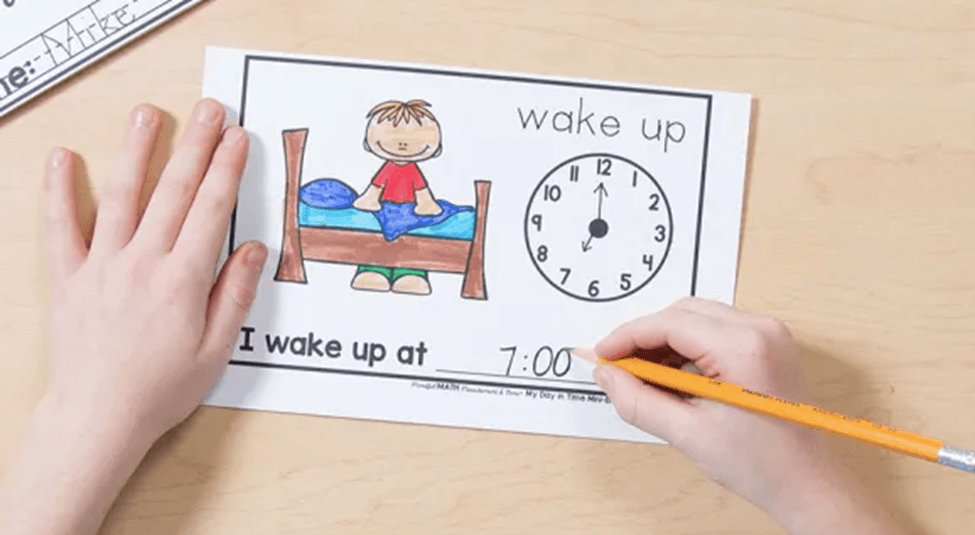
For my multilingual learners, the total physical response mini lesson centered around the vocabulary words of body parts gave them the opportunity to make a connection between body parts in their language and body parts in English. For example, if I were to show just the name of each body part, without any visual support and physical action to go with it, my multilingual learners might had struggled to understand that Mouth is Boca. Having the visual support accompanied by the motor activity, helped the students to successfully identify, recall, and acquire new vocabulary in a new language.

Paola Gomez, Touro University Bilingual Candidate

Evdokia Gasparis, Touro University TESOL Candidate & Differentiated Instructional Activity Math Lesson

“As a professor, I created this blog as a mechanism to support, appreciate and showcase exemplary work of my graduate and professional Touro University TESOL/BLE teacher candidates. By emphasizing candidates’ best work, and their innovative, thoughtful, reflective contributions I provide a path to shift the focus to their professional values, while recognizing and celebrating their significant milestones in the Touro University TESOL/BLE program.” by Jasmin (Bey) Cowin

As a professor, I created this blog as a mechanism to support, appreciate and showcase exemplary work of my graduate and professional Touro University TESOL/BLE teacher candidates. By emphasizing candidates’ best work, and their innovative, thoughtful, reflective contributions I provide a path to shift the focus to their professional values, while recognizing and celebrating their significant milestones in the Touro University TESOL/BLE program.

Dr. Jasmin (Bey) Cowin (Assistant Professor and TESOL Practicum Coordinator, Touro University, GSE)

EDDN 637 Second Language Learners and the Content Areas: Students will become acquainted with and practice effective approaches, methods, and strategies for teaching and evaluating English language learners in the content areas (ELA, social studies, math and science). Throughout the course, students will explore the impact of culture and language on classroom learning. Special challenges in teaching and assessment in each content area will also be discussed. Includes 15 hours of fieldwork.

Evdokia Gasparis: “My family consists of many English language learners, which has influenced me to pursue a master’s degree in TESOL. I completed a bachelor’s degree in elementary/early childhood education and psychology from Queens College, which led me to attain a 1-6 common branch license. As I expand my knowledge in the field of education, I strive to effectively differentiate all instructional activities to meet the needs of all students. I aspire not simply to teach, but to inspire all my students to challenge their limits!”

EDDN 637:

Assignment Description Differentiated Instructional Activity:

For your Differentiated Instructional Activity Assignment, using the Key Elements of Differentiated Instruction.pdf Download Key Elements of Differentiated Instruction.pdf you will use one of your content lesson plans you have already taught and make modifications to support Multilingual Learners to the following segments:

  1. practice (how teachers deliver instruction to students),
  2. process (how the lesson is designed for students),
  3. products (the kinds of work products students will be asked to complete),
  4. content (the specific readings, research, or materials, students will study),
  5. assessment (how teachers measure what students have learned), and
  6. grouping (how students are arranged in the classroom or paired up with other students).

You will submit both the original content lesson and plan and the lesson plan with differentiated instructional activities, with a reflection of your professional growth completing this assignment. Your product for Differentiated Instructional Activity Assignment will be:

  1. A paper including the original lesson plan/differentiated lesson plan addressing points 1 -6 above
  2. 2-4 minute video showcasing one specific aspect of one of your Differentiated Instructional Activities

Picture Walk Video Evdokia Gasparis, Touro University TESOL Candidate
Entering / Emerging Differentiated Worksheet
Expanding Differentiated Worksheet
Transitioning / Bridging Differentiated Worksheet

“…all students work at different speeds, therefore it is essential to group students strategically to provide needed support. During the differentiated lesson, students are grouped homogenously. Homogenous grouping allows students, with similar academic needs and readiness, to collectively complete assignments (Levine, 2012). The intent of grouping students with similar levels of readiness is to scaffold lessons that allow students to work in their zone of proximal development (ZPD) (Levine, 2012).”

Evdokia Gasparis, Touro University TESOL Candidate

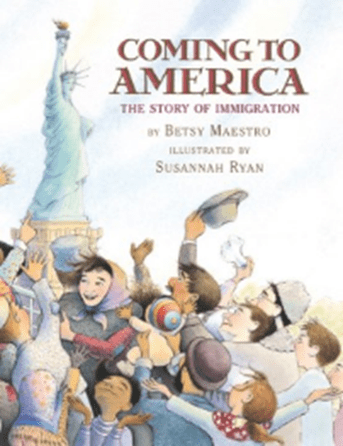
“Coming to America: The Story of Immigration,” by Betsy Maestro and Touro University TESOL Candidate Ada Hirschfeld’s Text Analysis

EDDN 637 Second Language Learners and the Content Areas: Students will become acquainted with and practice effective approaches, methods, and strategies for teaching and evaluating English language learners in the content areas (ELA, social studies, math and science). Throughout the course, students will explore the impact of culture and language on classroom learning. Special challenges in teaching and assessment in each content area will also be discussed. Includes 15 hours of fieldwork.

Adah Hirschfeld is a New York City Public School librarian who currently works at IS 240 in Midwood, Brooklyn. She holds a Master of Library and Information Science degree from Pratt Institute and a Master’s degree in School Administration from Touro University. She is pursuing certification in TESOL to better meet her students’ language and literacy needs.

The Text Analysis discusses the cognitive and linguistic demands of a content area text. Touro University TESOL/BLE candidates closely analyze a chapter, or an aspect of one content-area text currently in use or recommended by New York State/BOE. Upon analysis of underlying concepts, they develop a thesis and purpose for their analysis. Mrs. Hirschfeld’s paper sequences her ideas with evidence from the text supporting essential points. Her critique features substantial, logical, and concrete development of ideas describing what makes that concept or section challenging for ELLs.

Phonics and phonological decoding of the multi-syllabic words may be difficult for ELL students. Examples of words that do not follow standard rules are: ocean, fascinating, officials, unique, foreign. Students would have to be aware of the hard and soft “c” sounds of recent, cities, places, and appreciation. As well as the spelling patterns and pronunciation of words ending in -gh and -ght.

Ada Hirschfeld, Touro University TESOL Candidate

Overall, this is a highly complex text for English language learners. The sentence length, multisyllabic unknown words, and academic vocabulary are difficult for readers to comprehend without scaffolds and modifications. The illustrations correspond to and enhance the text allowing the reader to gain an understanding but without the visual enhancement, meaning may be lost.

Ada Hirschfeld, Touro University TESOL Candidate

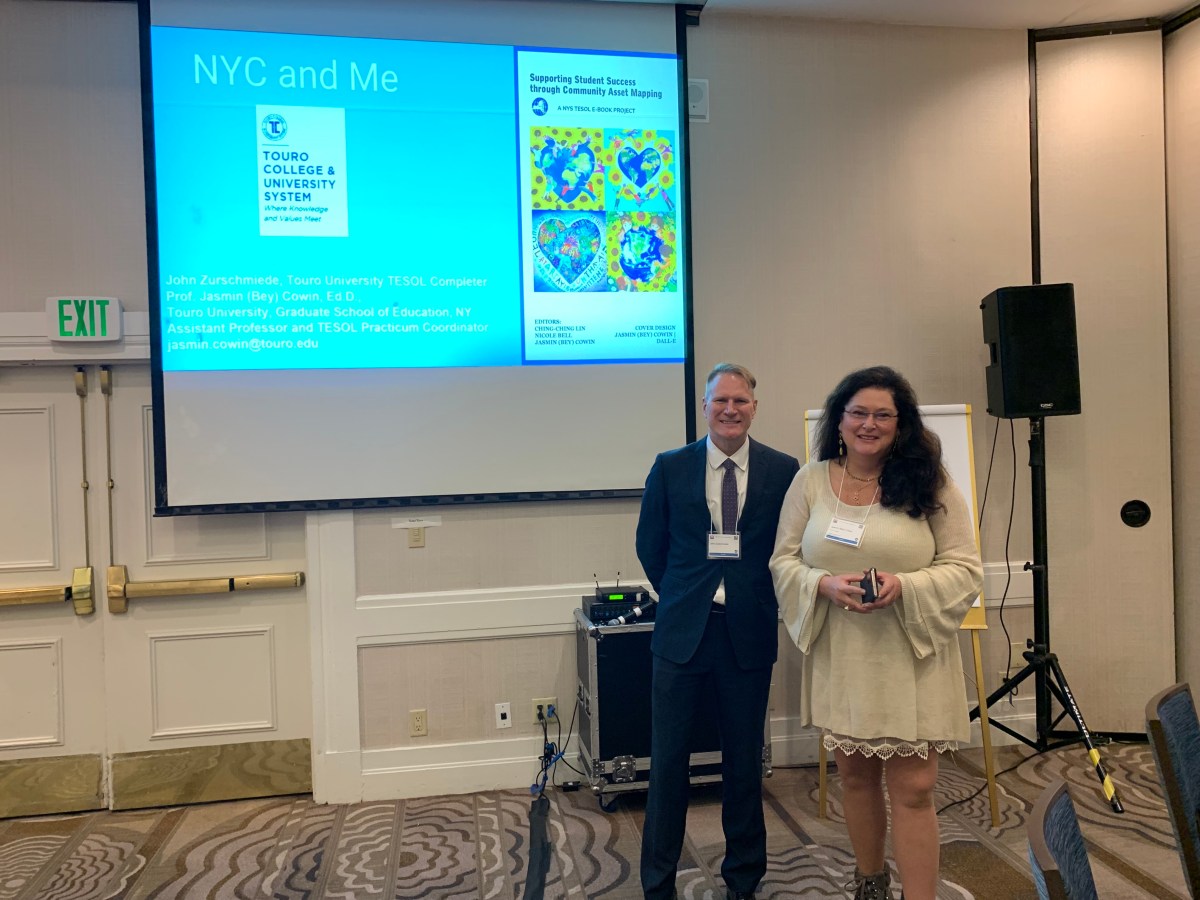
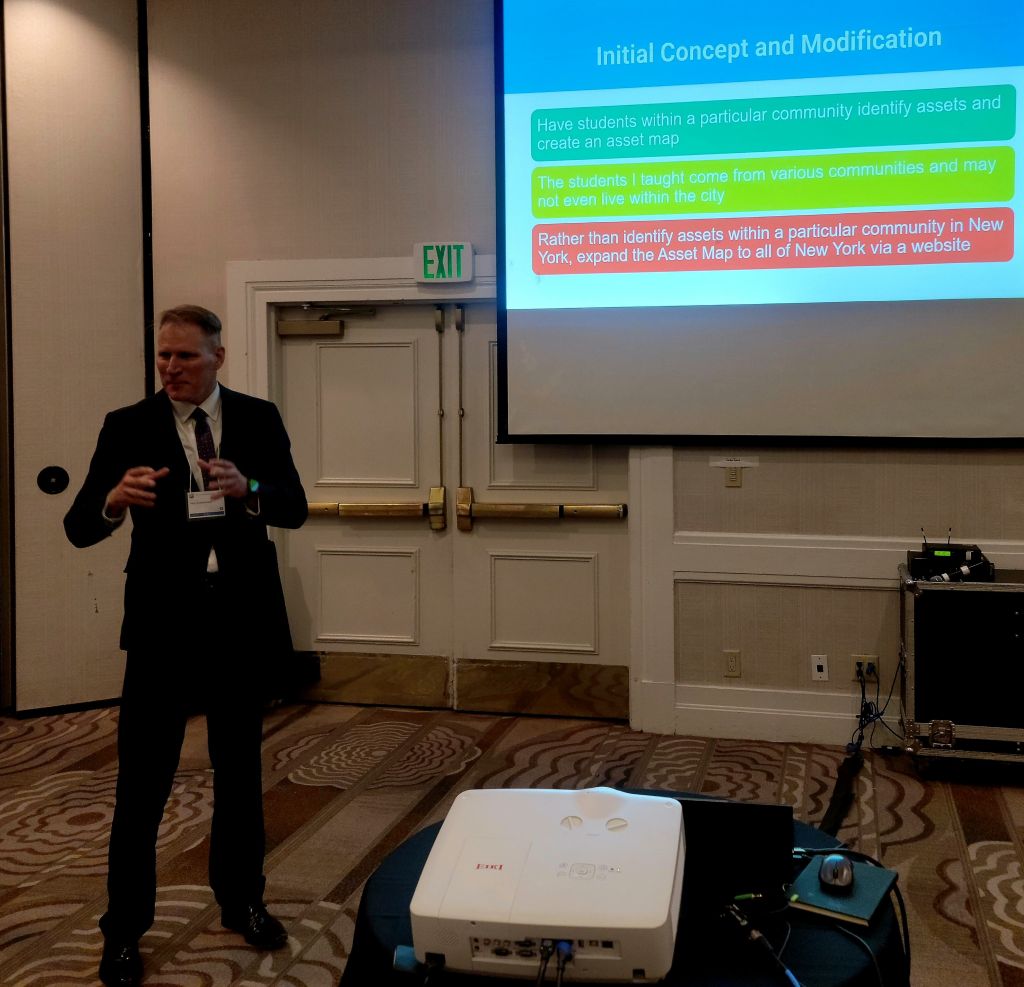
John Zurschmiede & Dr. Jasmin (Bey) Cowin present ”Community Asset Mapping and Linguistically Diverse Learners” at the NTSTESOL 52nd Annual Conference, “Shifting Teaching Paradigms: Examining Inclusive and Dynamic Practices,” November 2-5, 2022, White Plains, NY

John Zurscmiede, Touro University, TESOL Program Completer

How can educators better support linguistically diverse students and their families was a question hotly debated in the Touro University bilingual and multicultural education discussion boards by Touro University TESOL teacher candidates. The discussion boards focused on English to Speakers of Other Languages (ESOL) teacher praxis’, highlighting the targeted inclusion of asset-based approaches. As a professor leading the discussions, the topic sparked deep reflection, and a goal crystallized: to create and implement an impactful hands-on project. The discussion centered around shifting teaching paradigms towards more inclusive, dynamic practices empowering Multilingual Learners (ML). Teachers often enter their profession unprepared to draw on the strengths and assets that culturally and linguistically diverse students bring to school.  (Elfers, 2013)

Out of the discussion boards grew a book chapter with a former teacher John Zurschmiede, post-degree completion: ACROSS BOUNDARIES: COMMUNITY ASSET MAPPING AND LINGUISTICALLY DIVERSE LEARNERS, in which John Zurschmiede, now a teacher at the Board of Education, at an International school, co-constructed not only a project but also meaning-making in a collaborative space bringing together different dimensions of teacher-learner in two different levels. Level 1: the faculty-teacher candidate, Level 2: The former teacher candidate – his Multilingual Learners. This was an interwoven process that created fertile spaces of intentional collaboration across boundaries resulting in a book chapter in “Supporting Student Success through Community Asset Mapping.”

I am deeply grateful for the collaboration with my former student John Zurschmiede which expanded my horizon as an educator and shifted my teaching paradigms. I experienced that funds of knowledge are not static as we are all life-long learners embedded in the tapestry of our communities, personal histories and experiences which we express through our unique linguistic landscapes.