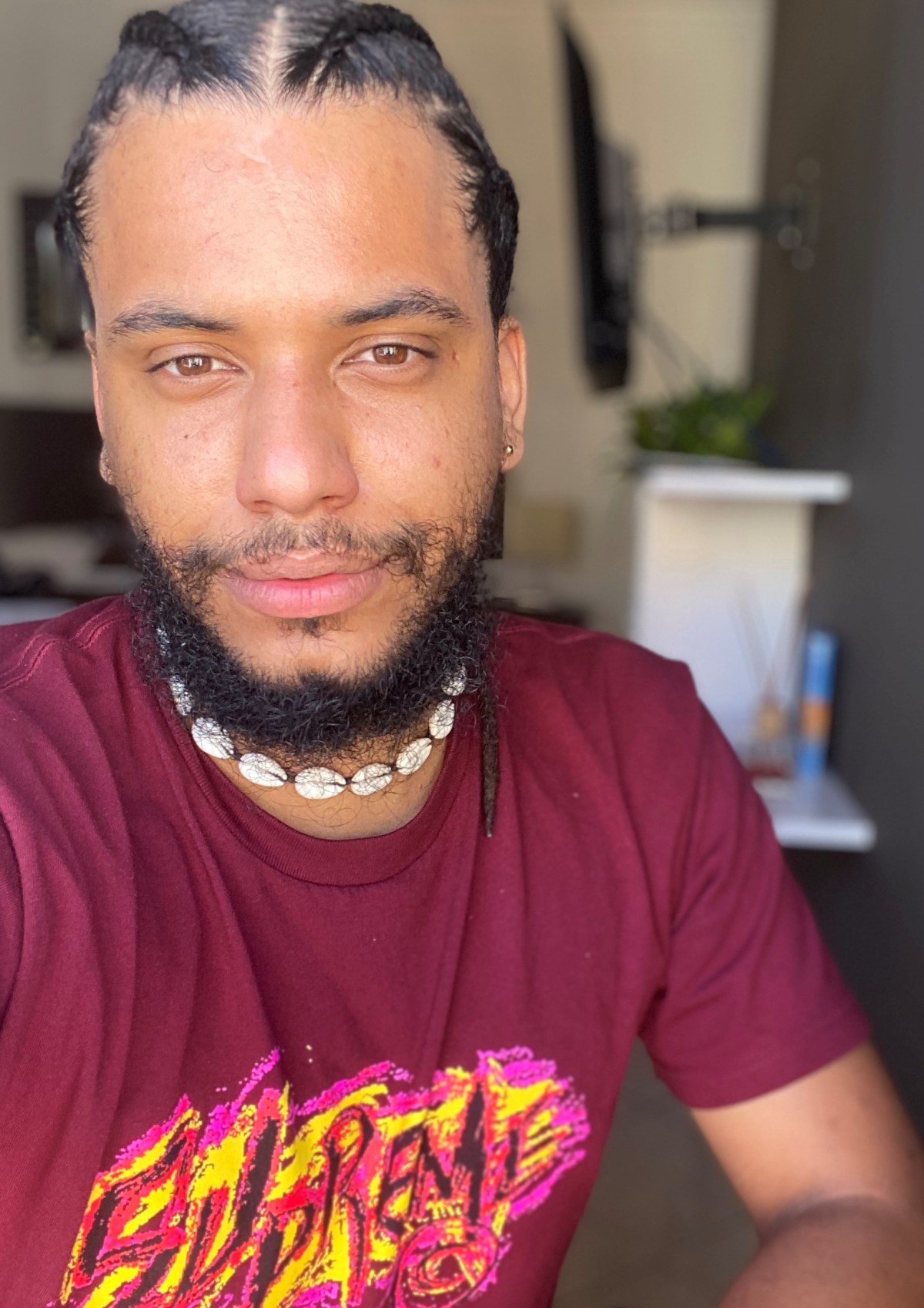
Introduction by Prof. Jasmin (Bey) Cowin, Ed.D.
Fieldwork and field experiences are an integral part of teacher education programs as they enable teacher candidates to examine the ways educational theories and methods can be implemented and interact with live classrooms and students. Touro College’s TESOL/Bilingual EDPN 673, Methods and Materials for Teaching English as a Second Language features a substantial fieldwork component.
The objective of the fieldwork experience in EDPN 673 is to connect course content to practical application in classroom teaching. The teacher candidates’ focus is on identification, observation & use of instructional best practices, lesson planning, lesson delivery, differentiation, assessment, and reflection.
After observing several teachers, Touro TESOL candidates need to choose which observations will become their fieldwork vignettes. The vignettes will show that they, as an aspiring TESOL professional, understand central concepts, tools of inquiry, and structures of the discipline(s) he or she teaches, as identified by relevant professional organizations, and can analyze learning experiences that make these aspects of subject matter meaningful for all students.
Diana Santos is an educator, lifelong learner and mother to a four year old boy. She was born and raised on Long Island, NY but like many children of immigrant parents, English is not her first language. Her native language is Portuguese and upon entering elementary school, she learned to speak, read and write in English due to the wonderful teachers she encountered. Mrs. Santos graduated from Dowling College with a BA in Special and General Education. She pursued her bilingual extension at LIU and Molloy College. Currently, she serves as a 4th grade Dual Language Teacher who teaches in English and Spanish. She is proud to share:”I am proud to say that I will be graduating with a Master’s Degree in TESOL in September 2021 with a G.P.A of 4.0.”
Diana Santos’s Fieldwork Experience: Every semester I take different courses and I am required to complete fieldwork in order to become a better teacher and better my educational practices. This has been by far the most rewarding fieldwork experience of my educational career. I have never been a part of a summer program that included ENL students and it was very educational to see an ENL teacher and a general education teacher in a co-teaching environment while implementing various teaching methods, strategies and materials within their instruction. This summer school program focused on reading and writing skills according to the Teachers College Units of Study. The particular classroom that I was able to observe had only fourth grade students. There were a total of 21 students; 4 attended in-person instruction and 17 attended virtual instruction, which was given simultaneously. There were a total of 11 English language learners in the classroom who have proficiency levels ranging from entering to expanding.
Vignette One
The first fieldwork experience that I would like to focus on is during the reading/writing summer school that was offered through my school district. During this specific incident, the students were learning how to write a personal narrative and the teachers were trying to elicit ideas from students in order to get them started on what their personal narratives were going to be about. The summer program included students who attended in person and students who were remote. Due to the majority of the students attending remotely, the teacher taught by using google meet, google classroom, google slides, padlet, smartboard and the students’ chromebooks. The teacher only utilized the SMART board to show the google meet to the class in order to incorporate the virtual learners. The teacher did not use any paper handouts, tests or textbooks.
There were a few potential distractions throughout the observation. One distraction is the fact that the teacher and ENL teacher are teaching both in person and online. This can be distracting for both sets of students because the teachers are never really focused on just one group of students. Furthermore, the students who are attending virtually have many interruptions to their virtual learning time. A specific example of this is that during the lesson one student could be seen holding a baby while several other children ran around in the background of the camera. This is just one example of many distractions that occurred virtually. These types of virtual distractions can cause other students to lose focus which results in the student not understanding the task or skill that is being taught. One question that arose was why none of the teachers addressed the different virtual distractions. I believe that they should have either gone over the expectations to virtual learning prior to beginning the lesson or at least referred to them while the many distractions were occurring. “It is important for the teacher to create behavioral expectations in virtual classrooms and review the expectations at the beginning of each class, just like they would in person” (Team, 2021, p.1). Due to the current climate that we are in, virtual distractions are inevitable but they can be managed by implementing several strategies.
Throughout the year the students in fourth grade are asked to complete a variety of writing pieces as well as practice many reading skills. One of the writing pieces that the students are asked to create is a personal narrative. This is typically the first unit of the year and therefore the students who were completing the task of coming up with a story idea and writing a personal narrative have background knowledge to refer to. The content objective for the lesson was that students will be able to generate story ideas based on their experiences. The language objective was that students will be able to write story ideas using a digital graphic organizer.
The teacher began the lesson by referring to the student’s prior knowledge of the work that was completed the day before. She then asked the students several questions in order to elicit what information they know about small moments and writing personal narratives. She asked questions such as “what is a personal narrative? Why are personal narratives important? What is a moment? What is a small moment? Could any moment of your life be a small moment? Are moments and experiences the same?” The ENL teacher then showed an example of a small moment story written in both English and the students’ native language, Spanish. She wrote her story about what it felt like to move to Spain when she was in college. The students practiced reading the story aloud in a choral read.
Next, the general education teacher explained the task for the day and that the students were going to be using Padlet as a digital graphic organizer. The teacher showed Padlet on the computer and explained that the students were to pick a section of the padlet and add their name. Then they can pick images, write captions or short story ideas under the section. The students seemed to be familiar with Padlet and how to use it. The ENL teacher then asked the students to close their eyes and think about the most important memories they have. While the students had their eyes closed, she solicited possible ideas such as a trip, memory with a favorite person, a life changing event and favorite things to do. Then the ENL teacher told them to open their eyes and start writing. This great strategy allowed the students time to process their thoughts before starting their assignment.
After the whole group instruction, the ENL teacher broke the students into small groups by proficiency levels in order to differentiate her instruction. With the entering/emerging group she spoke in Spanish to help them generate story ideas while also showing a list of potential story ideas. She then gave the students two sentence frames to use while writing their story idea on the Padlet. With the transitioning and expanding students she spoke to them in English and had conversations about what they were thinking about and scaffolded her questioning in order to help them generate ideas. They got sentence starters like my story idea is and one important memory is. Throughout the rest of the writing period, the ENL teacher checked in with her students to monitor their progress. With some of the entering students she would have them say their sentence in Spanish and then she translated it to English. The students would then rewrite the sentence in English on the padlet. This allowed them an opportunity to practice the target language and acquire it as well.
The ENL teacher would record anecdotal notes on a notepad during the lesson. She then went back and read their padlet entries to check for comprehension and language. Throughout the lesson, both teachers were constantly interacting with both sets of students and answered any questions they may have. The ENL teacher would ask the question several ways in English before reverting to Spanish. There were many questions asked throughout the period in order to promote the students’ higher-order thinking skills as well as help them form connections to the content and task. I believe that the questioning of the lesson was used for various purposes such as to help students recall prior learning and prior life experiences, increase student engagement and to get students to think outside the box. Lastly, the ENL teacher gave students sufficient wait time throughout the lesson and when a student was not able to respond she would scaffold her instruction to help the student.
Vignette Two
The next incident that I would like to speak about is during a reading lesson with an entering student. The ENL teacher was working one on one with an entering student who is considered to be a Student with Interrupted/Inconsistent Formal Education (SIFE). The goal of this lesson was to have him practice his fluency, decoding skills and forming predictions while reading an “A” level book titled Hide by Steve Henry.
The lesson began by having the general education teacher ask the students what a prediction was. They had been working on this skill for two days and were able to answer the question. Then she modeled forming a prediction while reading a book. When she finished the book she thought about whether her prediction was correct. As an extension activity she asked the students to record themselves using Flipgrid, reading a book aloud and forming predictions on their own. The ENL teacher had chosen books on Epic Books according to the students’ proficiency level. She also showed two sentence starters for the students to say “I think ______ will happen” and “my prediction is.”
The reason why I chose to speak about this lesson is because of the issues that arose while the students were trying to complete this task. Some students were not able to access Flipgrid or did not know how to use it because they were not familiar with the program and no one went over how to use the program prior to the students using it. This caused the ENL teacher to have to stop all of the students midway through the lesson and teach the students how to access and use Flipgrid. Next, the students were asked to leave the google meet in order to record themselves and then come back when they finished. This was an issue because many students had questions and were unable to get quick responses or feedback because of the computer restraints. Another issue that I noticed was that the students were having a hard time completing the task itself. Personally, I found this to be a daunting task for the entering and emerging students because not only were they trying to decode and comprehend the books but they were being asked to simultaneously form predictions while being recorded.
The ENL teacher did a wonderful job at addressing this issue by quickly differentiating the task to suit the needs of her students. First, she had the students record themselves forming predictions after only looking at the visuals in the books. Then the students were instructed to make a second recording just reading the book in order to practice fluency and decoding. This allowed for students to tackle only one cognitively challenging task at a time.
For the SIFE student, she worked with him one on one for about twenty five minutes on fluency, decoding, comprehension and forming one prediction. Prior to beginning the book, the student made one prediction by looking at the cover of the book. The student made the prediction in Spanish, the teacher wrote it in English and then the student practiced reading the sentence aloud. The sentence was “I think the book is about an elephant who is lost in the ocean.” Next, the ENL teacher did a choral read with the student. According to Reading Rockets (2021), “Choral reading helps build students’ fluency, self-confidence, and motivation” (p.1). When I spoke to the ENL teacher afterwards she stated that she likes to use different reading approaches in order to help lower a students affective filter in the hopes that they build up their confidence and in turn participate more and take more risks. After the choral read, the ENL teacher asked the student to do an echo read of the same text. She would read the sentence and then the student would repeat the same sentence. After the student read the text, she asked the student to summarize what the book was about. The student didn’t understand and she asked the question again in Spanish. In Spanish the student was able to give a detailed explanation of the text. Finally, she asked the student if his initial prediction was correct. The student said no and was able to explain, in Spanish, why he felt it was incorrect.
Due to this being the same summer program, the initial distractions that were mentioned still posed to be an issue. The teachers do not use supportive backgrounds on google meet. The technology used in this lesson was the computer, google meet, google slides, SMART board, and Epic Books. The recordings of the individual students were used as a form of assessment as well as evidence of their growth. The links to their videos are to be included in their digital portfolio. The various questions that were asked throughout the observation were to recall prior learning, summarize the text and for purposes of evaluating the mastery of the given task. There were also many questions to check for understanding of the task and instructions given. The questioning throughout the lesson was not of variable difficulty.
Vignette Three
The third incident that I would like to describe is during an observation of the summer program during a reading lesson. The objective of this lesson was for the students to describe the mood of the story. In order to motivate the students the general education teacher started by showing many different squares in bright colors. She asked the students “what do you notice?” The students pointed out that there were many squares, they were all different colors, and they were bright colors. Then the teacher asked “how do these colors make you feel?” Some of the responses were “happy, fun, loved, excited, positive, bright, ecstatic and ready to start my day.” Next, the teacher showed another slide with the same squares in dark colors. She asked the same questions but the students’ feelings changed. They used words such as “sad, upset, angry, mad, unloved, bored, sleepy, and depressed.”
The general education teacher went on to explain why she showed the students those colored shapes and how it ties into the mood of the story. She explained that the mood of the story is how the reader feels while he or she is reading the story by reading the words or looking at the pictures, just like when they were examining the squares. This explanation was shown on the computer and the SMART board in both English and Spanish. There was also a visual of a girl on a bus showing a side by side comparison of her mood. One side she was happy and smiling and the other side she was resting her head on her hand and frowning. The teacher then asked the students to pay attention to the mood of the story, “or the way the words and the pictures make you feel,” as she read a book aloud. The book was called The Music of the Sea by Susanna Isern. While the book was being read to the class she pointed out several drawings and important words written in the story to show feeling. She also asked several questions such as “why do you think the author chose these colors? What mood was she trying to set? How do you think the little girl feels? How does it make you feel? Did the colors of the pictures change in the beginning and the end of the book? Why do you think the author did that?” To end the lesson, the students were sent to read in their independent books while the teacher and the ENL teacher conferred with different students. I really enjoyed the variety of questions that were used during this lesson.
The ENL teacher differentiated this lesson by pre-recording a read aloud of the Spanish version of this book for the entering and emerging students to listen to. For the transitioning and expanding students she pre-taught them vocabulary prior to the beginning of this lesson. Some of the vocabulary words that she picked from the book were crops, seashore, coastline, village, deserted, and waves. In order to pre-teach the vocabulary, she associated the word to its Spanish translation while also showing a visual representation of the word.
While she conferred with the students, she asked several questions to help them summarize, determine the mood, focus instruction, assess and form connections. In order to confer with the students virtually she explained to them that while she is speaking to one student, the other students have their microphones muted and their cameras off. Then she would take turns speaking to each individual student for about 5-7 minutes. During the conference, she would take anecdotal notes about their conversations in order to refer to at a later time.
In regard to the classroom, it would be difficult to draw a map of the classroom as I was not physically there. All of the students, regardless of whether they were in class or virtual, were asked to login to google meet and to mute their microphones. This was done in order to seem as though all the students were together and it gave them the ability to see one another. I believe that the teachers did the best they could given their unique teaching situation. The teachers were trying to juggle two sets of learners at the same time while facing several learning barriers and language barriers.
Given the situation, the teachers differentiated their instruction and incorporated several different teaching strategies and methods in order to suit the needs of their learners. A method that they largely incorporated into their instruction was communicative language teaching. Within their instruction they encouraged collaborative discourse and tried to “unravel the speaker or writer’s intention” (Larsen-Freeman, 2000, p.1). Furthermore, the ENL teacher noted any errors that she encountered during the lesson and noted them in order to target them during instruction at a later time. While differentiating her instruction the ENL teacher chose culturally diverse and relevant texts that the students could relate to. For example, during the observation where the students were asked to generate story ideas for their personal narratives, the ENL teacher showed the book Dreamers by Yuyi Morales as an example of an actual personal narrative. It shows and describes the journey that the author took from her home country to the United States with her child. The students were able to relate to this because they also moved from one country to another. All of these lessons were created and implemented in order to continue exposing the students to various reading skills and writing pieces.
Having the opportunity to work with and observe these two wonderful teachers was very enlightening. I learned many different strategies and approaches to education that I can now implement in my dual language classroom. For example, I love the fact that the ENL teacher scaffolded her reading instruction by starting with a choral read and then doing an echo read. By the time the student did the echo read he was much more comfortable with the text and he showed improvement in his fluency. I thoroughly enjoyed this fieldwork experience and look forward to taking what I learned and incorporating it into my daily instruction.
References
Larsen-Freeman, D. (2000). The LINGUIST List. Techniques and Principles in Language Teaching. https://linguistlist.org/issues/13/13-1434.html/
Reading Rockets. (2021). Choral Reading. https://www.readingrockets.org/strategies/choral_reading
Team, P. (2021, April 5). Virtual Classroom Distractions: How Teachers Can Help. Planbook Blog. https://blog.planbook.com/virtual-classroom-distractions/







 Flash Registration SALE being offered until Friday, August 6,2020