Touro GSE At Work features Assistant Professor Jasmin Cowin in Faculty Spotlight

It is an honor to be chosen as featured faculty at Touro GSE.

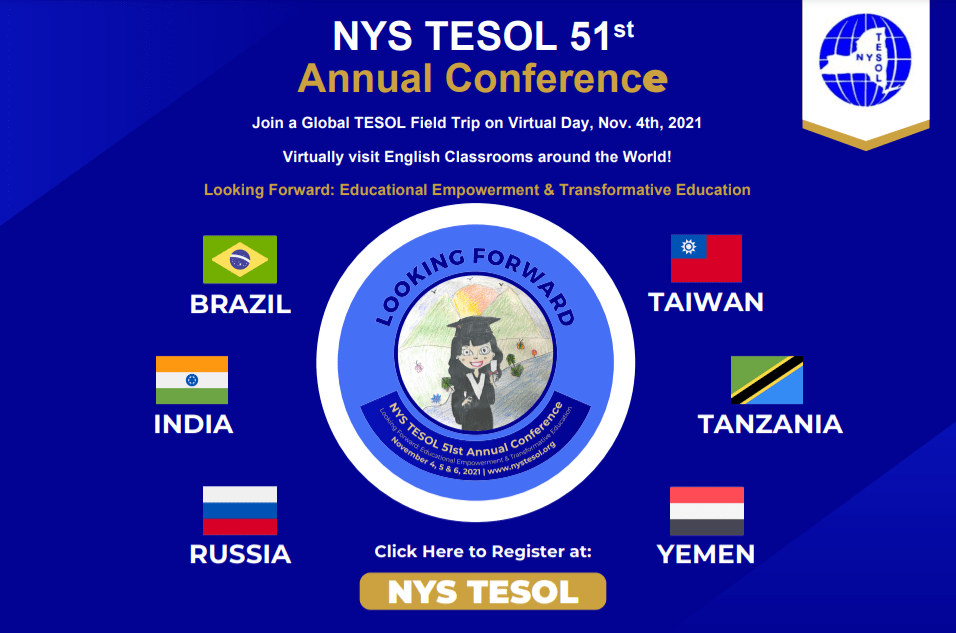
Jasmin Cowin, assistant professor and TESOL practicum coordinator for TESOL and Bilingual Programs at the Touro College Graduate School of Education, has brought innovation to the educator preparation program by presenting virtual, augmented and mixed reality e-learning platforms. Her students use avatars to explore a variety of simulation-based settings in ways that facilitate active knowledge in multi-modal ways, which enhance candidates’ understanding of  diverse learners’ educational needs. The student avatars in simulations are controlled by artificial emotional intelligence software. As intensive web applications, these environments provide a safe, risk-free virtual space to explore a range of teaching strategies, while offering immediate feedback as a training tool for teacher candidates during clinical experiences. Cowin’s latest research on e-learning was published in the International Research and Review Journal of Phi Beta Delta Honor Society of International Scholars Fall 2020 edition. She also serves as chair of the New York State Teaching English as a Second Language 51st Annual

https://mailchi.mp/c9e0aa3148d6/touro-college-ranks-in-top-100-best-online-graduate-education-programs-4926338?e=0597240d44

The 11th International Breakfast meeting in the 111th year of the Rotary Club of New York with Irena Zubcevic, Chief of Intergovernmental Policy and Review Branch at the UN and Elira Karaja, Ph.D,an economist and Fellow at Columbia University and Sustainability Specialist

Today, May 19th, 2021 we had an extraordinary presentation by Irena Zubcevic, Chief of Intergovernmental Policy and Review Branch at the United Nations Department of Economic and Social Affairs on the history and outlook on the Sustainable Development Goals 2030. RCNY member Elira Karaja, Ph.D. an economist and Fellow at Columbia University and Sustainability Specialist within the United Nations System.

Irena Zubcevic


The Rotary Club of New York International Breakfast Meeting May 19th, 2021 – A Conversation on the UN 2030 Agenda for Sustainable Development with Irena Zubcevic, Chief of Intergovernmental Policy and Review Branch at the United Nations Department of Economic and Social Affairs and RCNY member Elira Karaja

The Rotary Club of New York International Breakfast Meeting – A Conversation on the UN 2030 Agenda for Sustainable Development with Irena Zubcevic, Chief of Intergovernmental Policy and Review Branch at the United Nations Department of Economic and Social Affairs. and RCNY member Elira Karaja

As Chair of The Rotary Club of New York International Breakfast Meeting it is my pleasure to host: A Conversation on the UN 2030 Agenda for Sustainable Development with Irena Zubcevic, Chief of Intergovernmental Policy and Review Branch at the United Nations Department of Economic and Social Affairs and RCNY member Elira Karaja


With close to three decades of professional experience in sustainable development and international relations, Irena Zubcevic has certainly proven herself as an extraordinary professional and expert in the field.
Her most current area of focus is on the United Nations high-level political forum on sustainable development. Ms. Zubcevic is supporting countries as well as stakeholders ranging from the private sector to civil society in preparation for voluntary national reviews on implementation of sustainable global goals. She has put strategies into play for a wide range of sustainable development issues such as climate, oceans, cities, sustainable consumption and production and transport. Ms. Zubcevic’s key areas of expertise include Intergovernmental Processes, Sustainable Development, Rule of Law, Governance, Policy and Strategy Development at National Regional,and International Levels, Advocacy and Outreach. Working alongside many high-level functionaries which include, Heads of States and Governments, Ministers, CEOs in private sector, also many media platforms, foundations, academia and civil society in general. Along with these efforts, she has contributed to various reports and authored publications.

Elira Karaja, Ph.D.  is and Economist, Fellow at Columbia University, and Sustainability Specialist within the United Nation System.  

Please register here: https://nyrotary.org/event/irena-zubcevic/

Touro TESOL candidate Antonia Torres-Gearity receives 2020 Bilingual Teacher of the Year Award by THE NEW YORK STATE ASSOCIATION FOR BILINGUAL EDUCATION

As a Professor is is a life-affirming experience to see one’s students succeed. Tonight, my TESOL teacher candidate Antonia Torres-Gearity received her 2020 Bilingual Teacher of the Year Award by NYSABE.

As a Professor it is a life-affirming experience to see one’s students succeed. Tonight, my TESOL teacher candidate Antonia Torres-Gearity received her 2020 Bilingual Teacher of the Year Award by NYSABE.

I was thrilled to be present at NYSABE supporting Mrs. Antonia Torres-Gearity, a gifted educator and TESOL candidate at Touro College, TESOL and Bilingual Department. Her dedication to our profession, caring for her students and passionate work ethic inspires me.

Congratulations to Touro TESOL candidates Mrs. Antoni Torres-Gearity to her 2020 Bilingual Teacher of the Year Award.

NYSABE represents educators, parents, members of community-based organizations, private agencies, and institutions of higher education as well as advocates involved in the education of English language learners/bilingual students in New York State.

Touro GSE TESOL candidate Mrs. Antonia Torres-Gearity

Consul General of the Republic of Kazakhstan in New York – Almat Aidarbekov to speak at Rotary Club of New York United Nations International Breakfast Meeting June 16th, 2021

Consul General of the Republic of Kazakhstan in New York – Almat Aidarbekov to speak at Rotary Club of New York United Nations International Breakfast Meeting

As the Chair of the Rotary Club of New York’s United Nations International Breakfast Meeting is is my great honor to announce the speaking engagement of the Consul General of the Republic of Kazakhstan in New York Almat Aidarbekov.

This will be a very special meeting as it not only celebrates Kazakhstan’s 30th year of independence but also my retirement as Chair of the Rotary Club of NEw York International Breakfast meetings. It was an honor to arrange for the meetings in service to RCNY and host such notable diplomats.

Kazakhstan is the world’s largest landlocked country, and the ninth-largest country in the world. It has a population of 18.8 million residents, and has one of the lowest population densities in the world, at fewer than 6 people per square kilometre (15 people per sq mi). Since 1997, the capital is Nur-Sultan, formerly known as Astana. It was moved from Almaty, the country’s largest city. 2021 marks the 30th year of Independence Day. Kazakhstan became a sovereign state after the Supreme Council adopted a law on the state independence of Kazakhstan on Dec. 16, 1991. I had the great joy to visit Kazakhstan for it’s fantastic World Expo in 2017.

Kazakhstan World Tech Fair 2017

Established on July 27, 2009 Consulate General of the Republic of Kazakhstan in New York within its consular district provides consular and legal assistance to citizens of the Republic of Kazakhstan and provides state and consular services to Kazakhstan citizens and residents of the United States. Our Consulate offers mutually beneficial cooperation between Kazakhstan and the states of the consular district in economic, cultural and humanitarian fields.
Consular district of the Consulate General of Kazakhstan in New York includes the following states:
Connecticut, Minnesota, Vermont, Illinois, New Jersey, Wisconsin, Iowa, New Hampshire, Indiana, Maine, New York, Ohio, Massachusetts, Pennsylvania, Michigan and Rhode Island.


General information about Consul General Aidarbekov
Education
Undergraduate degree in International Relations at Ankara University
Master’s degree in Public Management from Carnegie Mellon University
Career
Almat Aidarbekov started his career at the Ministry of Foreign Affairs of the Republic of Kazakhstan in 1998 as a desk officer at the Asia, Middle East and Africa Division of the Fourth Department.
In 1999-2000 held position of Attaché at the Department for Bilateral Cooperation.
In 2000 worked at the Attaché at the Embassy of the Republic of Kazakhstan in the Republic of Turkey.
In March, 2003 returned to the Foreign Ministry and held consecutive positions of Second and First Secretary at the Department of Europe and America. From 2004 to 2007, Mr. Aidarbekov was in Head of Consular Section position at the Embassy of Kazakhstan in United Kingdom and Northern Ireland.
In 2007-2014 served as Second, First Secretary and later as Counselor of the Embassy of Kazakhstan in the United States.
In 2014-2019 held several positions at the Foreign Policy Division of the Presidential Administration of Kazakhstan.
Since November 1, 2019 Mr. Aidarbekov serves as Consul General of the Republic of Kazakhstan in New York.
Speaks English, Russian and Turkish. Holds the diplomatic rank of Counselor of First Class. Married, has three children

Touro GSE TESOL Candidate Eleonora Israilova’s Materials Critique and Redesign Analysis

One assignment in the Touro TESOL course EDPN 673 Methods and Materials for Teaching English as a Second Language is a Materials Critique & Redesign. In this assignment candidates will: (1) prepare a written critique description of the material or resource, analyzing its effectiveness on ELLs and (2) based on their analysis, redesign one section/activity of the original material so that it meets the need of ELLs. The materials chosen will promote culturally and linguistically responsive classrooms and instructional practices. I chose Eleonora Israilova’s submission as it was not only outstanding but features classroom realia and a robust, thoughtful redesign of her chosen textbooks.

by Jasmin Bey Cowin, Ed.D. , Assistant Professor and TESOL Practicum Coordinator, Touro College, GSE

One assignment in the Touro TESOL course EDPN 673 Methods and Materials for Teaching English as a Second Language is a Materials Critique & Redesign. In this assignment candidates will: (1) prepare a written critique description of the material or resource, analyzing its effectiveness on ELLs and (2) based on their analysis, redesign one section/activity of the original material so that it meets the need of ELLs. The materials chosen will promote culturally and linguistically responsive classrooms and instructional practices. I chose Eleonora Israilova’s submission as it was not only outstanding but features classroom realia and a robust, thoughtful redesign of her chosen textbooks.

Eleonora Israilova comes from Uzbekistan and speaks Russian, Tajik and Spanish. She was 10 years old when she came to America. Ms. Israilova stated that “currently I teach Kindergarten in my community with the same linguistic needs as my background and this assignment was tailored to fit the needs of my ELLs population.”

Materials Critique and Redesign
Matching Books with Readers is an important literacy component for ELL students. One of the most important components is vocabulary recognition, which requires an understanding of unfamiliar words when reading (Apthorp, 2006; Spencer & Guillaume, 2006, Vardell, Hadaway, & Young, 2006.) Also, a bilingual student may speak English in a way that commands a perfect understanding of his second language when in reality the oral vocabulary is much stronger than the reading vocabulary.

Each child has a unique learning style, but bilingual students benefit from reading nonfiction passages because real-life contexts help them visualize vocabulary words for meaning (Apthorp, 2006). Selecting highly visual literature containing photographs (Vardell, Hadaway, & Young, 2006) or that are related to scientific concepts that describe the natural world as children
understand it is best for bilingual students (Spencer & Guillaume, 2006). Therefore, for this materials critique and redesign, I chose to use three books that are nonfiction children’s books.

The three books are National Geographic Readers: Frogs! by Elizabeth Carney, National Geographic Readers: Caterpillar to Butterfly by Laura Marsh, and Ladybugs by Cheryl Coughlan. These books are great for ELL students because they are colorful, include rich vocabulary, and diagrams that show labeled parts of the animals. Younger children are usually drawn to informational texts about animals because it satisfies their curiosity and interest in their favorite topics. When students are interested in reading about a favorite topic, they are more
likely to be motivated to read and dig deeper for answers to their questions about the world and make constant connections to themselves.

Another reason I chose the aforementioned books is because unbeknownst students in my class are mostly of Russian, Tajik, and Spanish native languages. I have noticed that their vocabulary bank is limited as they are likely to come from conversational backgrounds. By using informational texts in my classroom, my ELL students will expand their academic vocabularies in areas that do not necessarily come up in everyday conversation. Nonfiction texts will challenge my ELL students, but it will also give them a broader vocabulary base, especially texts from the fields such as science and social studies. Moreover, ELL students are able to make real life connections with nonfiction texts. Many nonfiction books include photographs to illustrate the details. Photographs are a great visual aid when grappling to understand the English text. Photos contain more details and a precise depiction of the world around us than illustrations. When students are able to refer to photographs, they will increase their comprehension level and make connections to the real world they see around them. Students will be confident when they have a clear picture of what is being taught and are able to have higher order thinking skills that help to perform better overall.

Jasmin Bey Cowin, Ed.D. to speak at the virtual 26th Annual NATE Conference Digital Change in the ELT Community in Moscow, Russia

The 2021 NATE Conference is dedicated to Digital Change in the ELT Community. Never has the world faced such fast-paced change and vast digitalization and, as a result, required such spur-of-the-moment creativity and agility from educational professionals. We are in this process together and have a lot of personal and professional experience to share.

Dr. Bey Cowin’s conference topic will be: Innovation, Collaboration, Transformation: Education for a Connected World. The conference host is the National University of Science and Technology.

Globally, the way we educate and are educated is changing at a rapid pace. New technologies and ways of interpreting the world are reshaping educational philosophies and their underpinning pedagogies while transforming modes of delivery in educational institutions worldwide. This presentation explores the necessity of rethinking education for a successful integration in the artificial intelligence (AI) age.

The need to adapt by educational institutions, corporations, teachers, and learners is great. However, what kind of frameworks are necessary for education in the digital age? What resources will be necessary to bring education into digital classrooms from early childhood through tertiary and technical education? What trends and possibilities are on the horizon to educate and train entire generations of educators to stay relevant in the 21st Century and beyond? Five emerging trends for 21st-century education will be explored.

The International Research and Review Journal of Phi Beta Delta Honor Society for International Scholars publication of Dr. Jasmin Bey Cowin’s article “Digital Worlds and Transformative Learning: Google Expeditions, Google Arts and Culture, and the Merge Cube”

I am delighted to announce that the International Research and Review Journal of Phi Beta Delta, Honor Society for International Scholars, Volume 10, Number 1 Fall 2020, with Michael B. Smithee, Ed.D., Editor published my article Digital Worlds and Transformative Learning: Google Expeditions, Google Arts and Culture, and the Merge Cube