
Pedagogy: David A. Kolb – experiential learning.
David A. Kolb’s model of experiential learning can be found in many discussions of the theory and practice of adult education, informal education, and lifelong learning. Much of the literature on experiential learning, as Peter Jarvis comments (1995: 75), ‘is actually about learning from primary experience, that is learning through sense experiences’.
The learning in this project with the Grammar Fair is geared towards students “creating” a teaching tool from scratch without technology. Here the learning process begins first with deep-diving into Grammar research to be able to teach the Grammar point. Students use the FUMP model: Form, Use, Meaning, and Presentation. Then, students create a trifold with the prime examples and teaching points. The trifolds get showcased at the school-wide Grammar Fair where students now present and peer teach other students adding to free L2 use in an authentic situation.
A video Collage of the successful Grammar Fair at EF – Education First, NY
Here a great resource for the Common App video tutorial by Evelyn Alexander. A major “Thank you” to Evelyn for letting me share this!
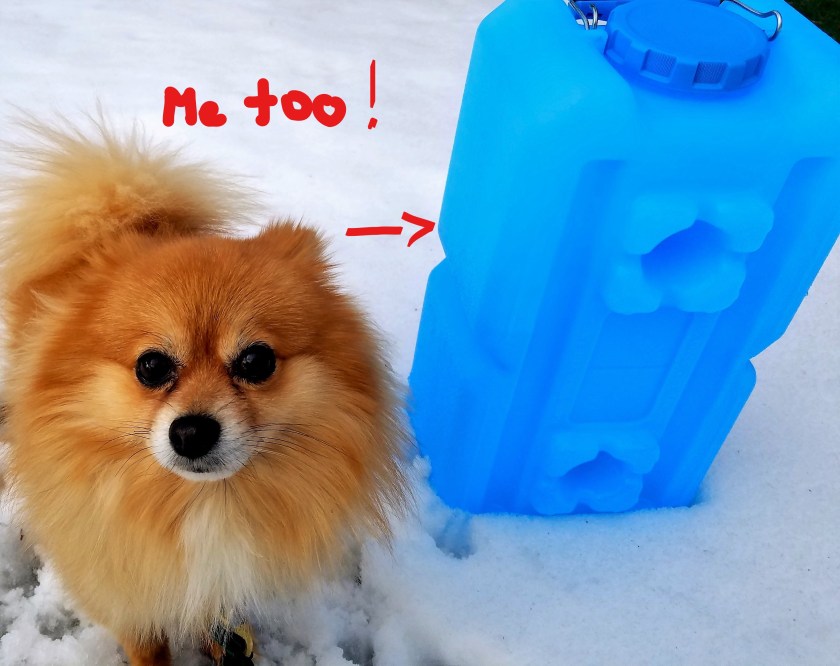 The first thing off the shelves in the advent and aftermath of a disruptive event is bottled water. Clean water must be part of your family’s emergency preparedness plans.
Recommendation for drinking and cooking water per person per month:
Drinking: 15 gallons of clean water for drinking per person per month.
Cooking: Freeze-dried food uses 3/4 to 1 cup of water to rehydrate.
Recommended: 7.5 gallons of cooking water per person per month.
Total of drinking and cooking: 22.5 gallons
This is roughly the size: L 22 x W 11 x H 30″
Hygiene: Grey water, not quality drinking water is fine.
Don’t forget drinking water for your pet!
See instructions:
Long Water Storage
reblogged from the German Center for Research and Innovation
The Internet of Things (IoT), Jetsons’ lifestyle is a possible future scenario for many of us. Read our interview on the future of smart homes with Prof. Dr. Elisabeth André, Chair of Human-Centered Multimedia at Augsburg University. Smart homes contain devices designed to connect to the Internet in order to learn about their owners’ habits. The “magic” happens when data that is gathered by the devices is fed back into the software infrastructure. This results in improved accuracy of the device and, in turn, is more convenient for users.
A short tutorial on how to change your cover photo on PeopeMovers.
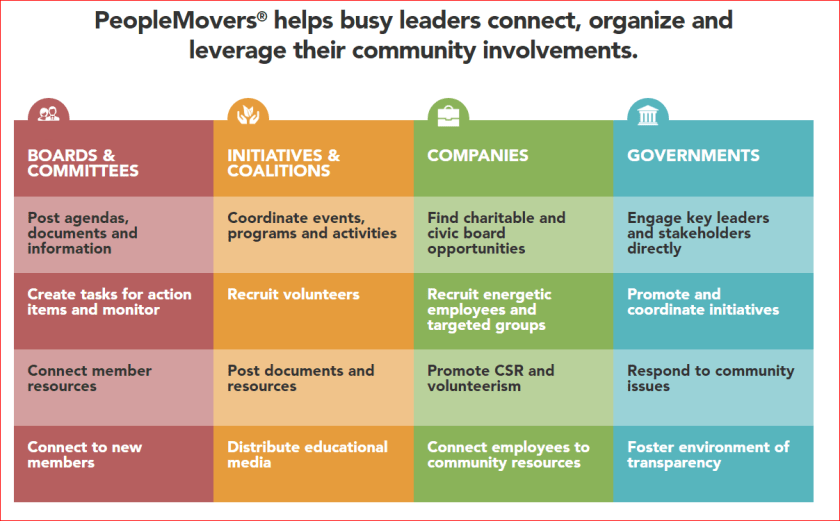
A new Platform where you can:
Connect, communicate and collaborate to leverage community strengths and advance your mission.
The more leaders and organizations share and work together the stronger they become.
How much does PeopleMovers® cost?
The basic suite of tools on PeopleMovers® are FREE, so everyone can participate.
Our sponsors make this incredible new platform possible. So, on that note, if you would like to find out how you can be a strategic part of our mission as a sponsor, please contact us at:
PeopleMovers.com, Inc.
Phone: +1 (313) 865-1264
Fax: +1 (313) 883-4402
Email: info@peoplemovers.com
671 Edison Street
Detroit, Michigan 48202
United States of America
It is more than a matter of perspective!


How Savvy are your students? was posted 10 January 2017 by Michele Kirschenbaum.
First, you get a good laugh when reading what these fake websites offer.
Second, you introduce the websites to your students enrolled in your academic research class.
Third, you will hear serious discussions take place about the validity of the bogus claims!
Fourth, you will absolutely spend more time on research, source validation, keeping a research log and Fake news and the spread of misinformation.
Fifth, even when you spend a unit of study on the fake websites; why they are fake; how to spot their “fakeness” – one student will NOT be convinced and initiate a long, after class discussion with you!
Here is another interesting article on this phenomena:
“With Facebook, Blogs, and Fake News, Teens Reject Journalistic ‘Objectivity’”
Marchi, Regina. Journal of Communication Inquiry, 2012. doi: 10.1177/0196859912458700.
The Independent School and College Virtual Reality Interview App Jasmin B. Cowin
Jasmin B. Cowin, Ed.D.
THIS IS FICTITIOUS INVENTION SOLEY FOR MY EDUCATIONAL TECHNOLOGY CLASS
Interviews for Independent Private Schools, Boarding Schools, and colleges are a source of anxiety for applicant students. The primary goals of this App are diminishing interview anxiety and creating a Virtual World Interview Camp.
All independent schools/colleges feature one universal, critical requirement – the admissions interview, be it by Skype or in person.
Students who apply to an independent school or college for admission are required to meet with an admissions officer in a one-on-one and/or small group setting. Admissions officers view their interactions with prospective students and their families as their number one priority. Schools place extreme value on personal interactions with new families. This Virtual Reality Educational Software program would prepare students for the interviews with Independent schools or colleges.
The function of the App would be Digital Data transformation by “slurping up” public data from around the web, run it through “proprietary school personality detection technology,” and spit out a detailed report on the school’s preferred style of communicating, standard questions, highly desirable student profile, style of teaching, school mottos etc. This app features part oppo research and part algorithmic astrology with the App not only creating a database of personalized standard and complex questions but also building a four-dimensional school/college VR personality profile. Applicants can then enter this four-dimensional world for touch-enable exploration. The App would feature VR sessions which “model” admissions interviews. The VR counselor will create vocabulary matrix for students to practice “Admission vocabulary.” The App would track progress, multi-dimensional and students would receive a Virtual Reality merit badge for every level of completed admission practice. The program will be able to screen/parse school websites and content for proprietary school coaching with personalized answer generation taking into consideration the student’s age and language ability (native-non-native speaker).
The App is designed to work with Oculus’ Touch to deliver the perfect multidimensional gestural and vocal interface simulating an admissions interview


 Dr. J's Education Blog