As a Professor for TESOL, I am immensely proud to feature outstanding student work from our MS in Teaching English to Speakers of Other Languages (TESOL) Program. New York’s linguistic diversity demands teachers who can find common ground and effectively communicate with students from different language backgrounds. Academically rigorous and practice-intensive, the 33-credit program includes 50 hours of fieldwork andsupervised student teaching experiences. Candidates that complete all coursework, fieldwork, and student teaching requirements are eligible for recommendation for ESL certification.
EDPN 673 Methods and Materials for Teaching English as a Second Language
This course provides a historical overview of second language acquisition theories and teaching methods. Students learn how to apply current approaches, methods and techniques, with attention to the effective use of materials, in teaching English as a second language. Students will engage in the planning and implementation of standards-based ESL instruction which includes differentiated learning experiences geared to students’ needs. Emphasis is placed on creating culturally responsive learning environments. Includes 15 hours of field work.
Bio
Natalie Spirkina serves as a second-grade special education teacher working in a public school in Brooklyn, NY. She is passionate about providing students with individualized instruction that will best meet their diverse needs. After working in the DOE for 11 years, she decided to enroll in Touro University’s TESOL program.
My time at Touro University is providing me with the tools and knowledge of the best practices to implement in the classroom and support English Language learners in developing their reading, writing, speaking and listening skills.
As a Professor for TESOL, I am immensely proud to feature outstanding student work from our MS in Teaching English to Speakers of Other Languages (TESOL) Program. New York’s linguistic diversity demands teachers who can find common ground and effectively communicate with students from different language backgrounds. Academically rigorous and practice-intensive, the 33-credit program includes 50 hours of fieldwork andsupervised student teaching experiences. Candidates that complete all coursework, fieldwork, and student teaching requirements are eligible for recommendation for ESL certification.
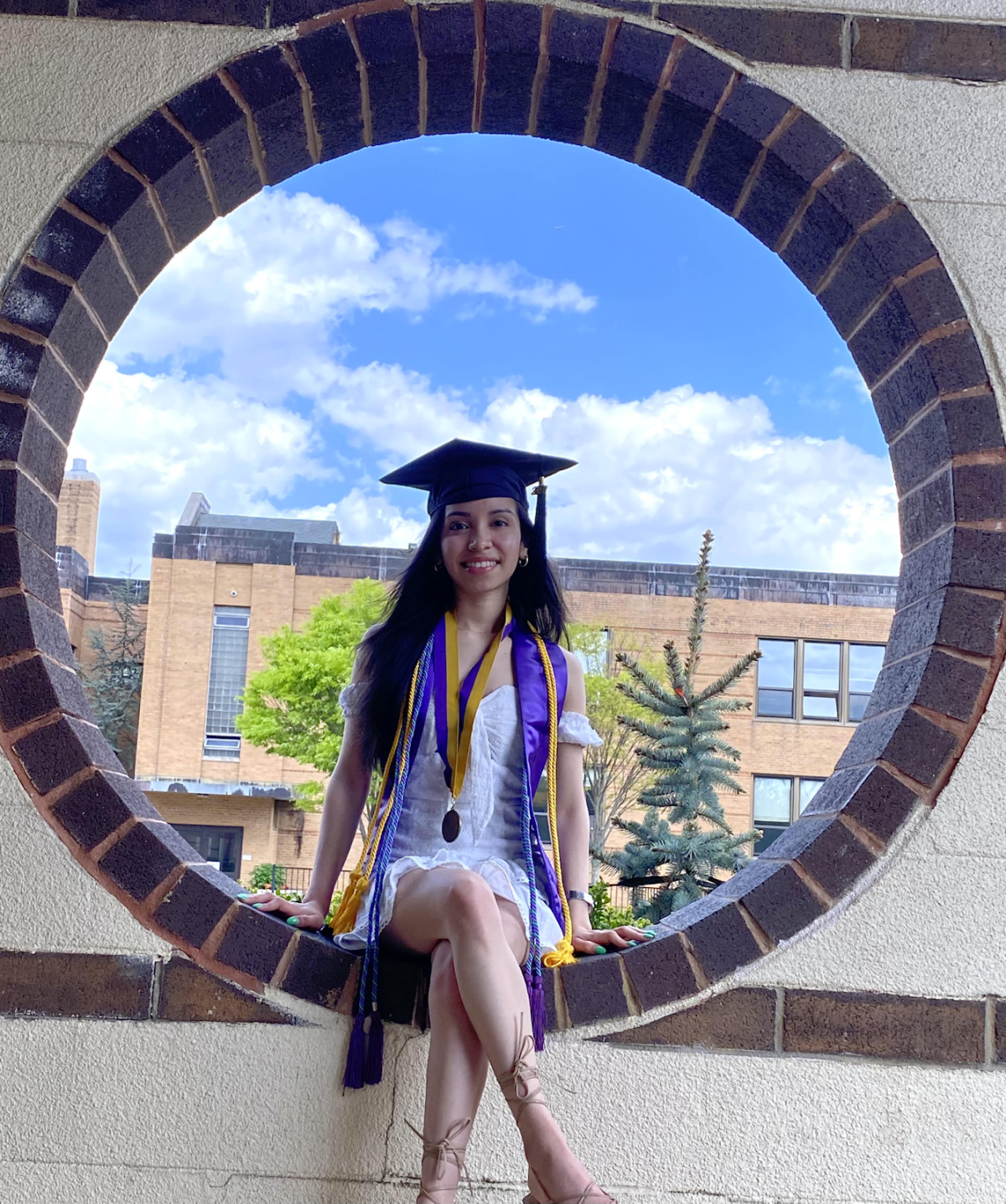
Bio Kenia Torres graduated summa cum laude from St. Joseph’s University in May 2022 with a Child Studies degree and a concentration in Speech Communication. She is currently pursuing her Bilingual Extension from Touro University. Kenia is a bilingual kindergarten teacher in the Brentwood Union Free School District in Brentwood, NY. She is certified in Birth-6th grade in general and special education. Kenia aspires to be a school leader in the future. She believes: “Our fingerprints don’t fade from the lives we touch.“-Judy Blume
My journey in Touro University has evolved my professional development and understanding of English language learners in the learning environment, to be an effective bilingual educator.
Kenia Torres, Touro University Bilingual Extension Candidate
The WIDA Can Do descriptors are an extremely useful tool to evaluate what language learners can do at various stages of language development. As a bilingual kindergarten tool, I can use the WIDA Can Do tool to supplement content instruction with activities that develop my students’ language learning at the same time. For instance, as depicted in the WIDA Can Do key, kindergarteners at the ELP Level 1, Entering, students should point to pictures described orally in context. Therefore, I can develop activities for my literacy centers that ask students to identify pictures from a story read aloud. This would be an appropriate activity for students at the Entering level according to WIDA Can Do.
Discussion Board Question: How could the WIDA Can Do descriptors help you create differentiation for the reading assessment of your ELL’s//MLs? The WIDA Can Do Descriptors can assist me in differentiating for the reading assessment of my ELLs/MLs as it gives me an accurate description of what language learners can do at their specific language level. For instance, a kindergarten student at the Entering level can point to pictures described orally in context. A kindergarten student at the Developing level can act out songs, chants, stories, and poems, with gestures as a whole group. Meanwhile as described in the WIDA Can Do key, a student at the Reaching level will be able to identify drawings or other visual displays from elaborate descriptions with details. Therefore, I can use this key to identify specific strategies and skills to assess my English language learners, dependent on their language level.
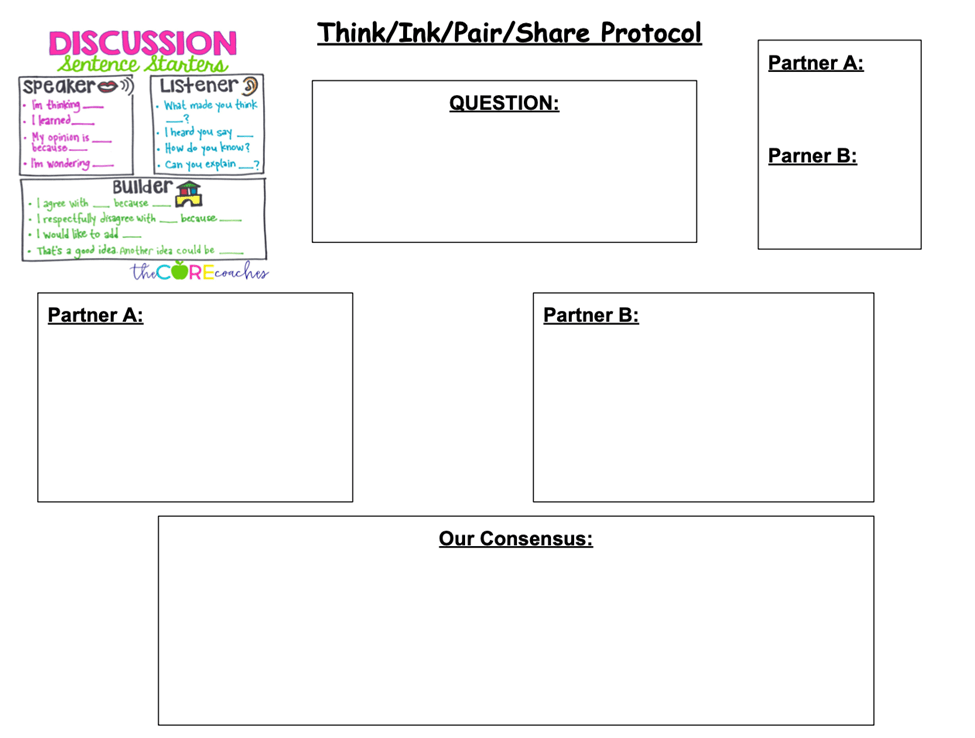
Discussion Board Question: Chapter 12: Use and upload (you can also take a photo) a graphic organizer of your choice to showcase five areas you would like to improve in your teaching of L2 reading that you have learned about in this chapter. Choose one thing at a time, and focus on improving that aspect of your teaching. Share with others what you are doing to become a better teacher of reading. Remember that it will take time to fully develop the ability to integrate improvements into your teaching. Celce-Murcia, Marianne; Brinton, Donna M.; Snow, Marguerite Ann. Teaching English as a Second or Foreign Language (p. 186). Heinle ELT. Kindle Edition
As a Professor for TESOL, I am immensely proud to feature outstanding student work from our MS in Teaching English to Speakers of Other Languages (TESOL) Program. New York’s linguistic diversity demands teachers who can find common ground and effectively communicate with students from different language backgrounds. Academically rigorous and practice-intensive, the 33-credit program includes 50 hours of fieldwork andsupervised student teaching experiences. Candidates that complete all coursework, fieldwork, and student teaching requirements are eligible for recommendation for ESL certification.
In this assignment, teachers of English Language Learners (ELL) or Multilingual Learners (ML) will explore and implement differentiated instructional activities to maximize the learning of every student in their class. Using the provided Tools for High-Quality Differentiated Instruction: An ASCD Action Tool, teachers will modify an existing content lesson plan to incorporate differentiation strategies in various aspects of instruction. The assignment requires the submission of a paper including the original and differentiated lesson plans, along with all materials, and a 2-4 minute video showcasing one specific aspect of a differentiated instructional activity. The assignment aims to facilitate professional growth and reflection on implementing differentiated instruction.
I am proud to showcase the outstanding work of Touro University TESOL candidate Samantha Howe on the Differentiated Instructional Activity Assignment in my blog. Her commitment to enhancing the learning experiences of English Language Learners and Multilingual Learners through tailored instructional strategies has been remarkable. The thoughtfulness, creativity, and dedication she demonstrated while modifying her lesson plan and crafting her reflection exemplify her potential as a future TESOL educator who prioritizes inclusivity and student-centered learning.
The TESOL program at Touro University has already provided me with valuable insights and necessary tools to better support my multilingual students.
Samantha Howe, Touro University TESOL candidate
Touro University TESOL candidate Samantha Howe is a 5th-grade teacher from Long Island. After receiving her bachelor’s degree in inclusive childhood education, she was accepted into the TESOL program at Touro University. She is passionate about providing an inclusive and equitable education for all students.
As a Professor for TESOL, I am immensely proud to feature outstanding student work from our MS in Teaching English to Speakers of Other Languages (TESOL) Program. New York’s linguistic diversity demands teachers who can find common ground and effectively communicate with students from different language backgrounds. Academically rigorous and practice-intensive, the 33-credit program includes 50 hours of fieldwork andsupervised student teaching experiences. Candidates that complete all coursework, fieldwork, and student teaching requirements are eligible for recommendation for ESL certification.
In this assignment, teachers of English Language Learners (ELL) or Multilingual Learners (ML) will explore and implement differentiated instructional activities to maximize the learning of every student in their class. Using the provided Tools for High-Quality Differentiated Instruction: An ASCD Action Tool, teachers will modify an existing content lesson plan to incorporate differentiation strategies in various aspects of instruction. The assignment requires the submission of a paper including the original and differentiated lesson plans, along with all materials, and a 2-4 minute video showcasing one specific aspect of a differentiated instructional activity. The assignment aims to facilitate professional growth and reflection on implementing differentiated instruction.
I am proud to showcase the outstanding work of Touro University TESOL candidate Natalie Spirkina on the Differentiated Instructional Activity Assignment in my blog. Her commitment to enhancing the learning experiences of English Language Learners and Multilingual Learners through tailored instructional strategies has been remarkable. The thoughtfulness, creativity, and dedication she demonstrated while modifying her lesson plan and crafting her reflection exemplify her potential as a future TESOL educator who prioritizes inclusivity and student-centered learning.
Touro University TESOL candidate Natalie Spirkina, a special education teacher for the NYC Department of Education for over 10 years, is a product of the public school system and an early-grade English Language Learner herself.
I was drawn to Touro to further my journey as an educator. I am looking forward to implementing the methods and techniques that I am learning at Touro to enrich students’ language development and overall learning in my classroom.
Natalie Spirkina, Touro University TESOL candidate
The goal of the TESOL and Bilingual Education program is to equip educators with the necessary knowledge, skills, and strategies to provide exemplary instruction and support for English language learners, multilingual learners, and bilingual students. The program strives to cultivate culturally responsive teaching practices and services, facilitate the acquisition and development of language skills, and enhance educators’ ability to cater to the diverse needs of students from linguistically and culturally diverse backgrounds. By incorporating data-driven and research-based approaches, effective pedagogical methodologies, and practical strategies, the program empowers educators to establish inclusive, stimulating, and nurturing learning environments that promote the academic achievement, emotional support, and linguistic progress of all students.
Discussion boards play a pivotal role in online learning environments, serving as dynamic platforms that foster collaborative learning and meaningful engagement among students. These virtual spaces provide a unique avenue for learners to share ideas, ask questions, and engage in thoughtful discussions beyond the limitations of traditional classrooms. “Online discussion forums are asynchronous communication tools that are widely used in Learning Management Systems. Forums enable instructors to understand and intervene in learning activities, and students have time to think and formulate answers. Individuals collaboratively build knowledge while collaborating in an asynchronous online environment. Therefore, a well-coordinated educational forum is a valuable tool to promote reflection on learning, share information and perspectives, and connect students.” (de Lima et al, 2019)
By encouraging active participation and exchange of diverse perspectives, discussion boards (DB) enhance critical thinking, problem-solving, and communication skills. DBs create a sense of community and promote inclusive learning, allowing learners from different backgrounds to connect, contribute, and learn from one another. Through the power of discussion boards, students can deepen their understanding of course content, gain insights from peers, and develop a richer and more comprehensive learning experience. By asking for references and quotes, candidates must support their writings in the area of ChatGPT.
Publishing graduate student work on a professor’s blog is immensely beneficial for graduate students. It provides them with a unique opportunity to showcase their work and findings to a wider audience, beyond the confines of their academic circle. This exposure not only helps in building their academic reputation but also enhances their visibility within their peer network and community ultimately enriching their academic journey and future career prospects.
References:
de Lima, D. P., Gerosa, M. A., Conte, T. U., & Francisco, J. (2019). What to expect, and how to improve online discussion forums: The instructors’ perspective. Journal of Internet Services and Applications, 10(1), 1-15. https://doi.org/10.1186/s13174-019-0120-0
Martyna Sobczyszyn is a dedicated and passionate Special Education Teacher in Brooklyn, New York. She is committed to empowering her students and fostering a love for learning. She writes, “Throughout my career, I had the privilege of working with students across different grade levels. I encourage my students to become critical thinkers and work with them to explore their interests. I believe that the power of education transforms lives. In my free time, I enjoy spending time with my daughter and dog. We love to travel to new places and seek authentic experiences. Traveling has created lifelong memories for us.”
My learning journey at Touro has been a wonderful experience. Through the expertise of my professors, I can embark on an academic exploration. “The more that you read, the more things you will know. The more that you learn, the more places you’ll go.” -Dr. Suess
Martyna Sobczyszyn, Touro University TESOL Candidate
The goal of the TESOL and Bilingual Education program is to equip educators with the necessary knowledge, skills, and strategies to provide exemplary instruction and support for English language learners, multilingual learners, and bilingual students. The program strives to cultivate culturally responsive teaching practices and services, facilitate the acquisition and development of language skills, and enhance educators’ ability to cater to the diverse needs of students from linguistically and culturally diverse backgrounds. By incorporating data-driven and research-based approaches, effective pedagogical methodologies, and practical strategies, the program empowers educators to establish inclusive, stimulating and nurturing learning environments that promote the academic achievement, emotional support and linguistic progress of all students.
Discussion boards play a pivotal role in online learning environments, serving as dynamic platforms that foster collaborative learning and meaningful engagement among students. These virtual spaces provide a unique avenue for learners to share ideas, ask questions, and engage in thoughtful discussions beyond the limitations of traditional classrooms. “Online discussion forums are asynchronous communication tools that are widely used in Learning Management Systems. Forums enable instructors to understand and intervene in learning activities, and students have time to think and formulate answers. Individuals collaboratively build knowledge while collaborating in an asynchronous online environment. Therefore, a well-coordinated educational forum is a valuable tool to promote reflection on learning, share information and perspectives, and connect students.” (de Lima et al, 2019)
By encouraging active participation and exchange of diverse perspectives, discussion boards enhance critical thinking, problem-solving, and communication skills. They create a sense of community and promote inclusive learning, allowing learners from different backgrounds to connect, contribute, and learn from one another. Through the power of discussion boards, students can deepen their understanding of course content, gain insights from peers, and develop a richer and more comprehensive learning experience. By asking for references and quotes, candidates must support their writings in the area of ChatGPT.
Publishing graduate student work on a professor’s blog is immensely beneficial for graduate students. It provides them with a unique opportunity to showcase their work and findings to a wider audience, beyond the confines of their academic circle. This exposure not only helps in building their academic reputation but also enhances their visibility within their peer network and community ultimately enriching their academic journey and future career prospects.
References:
de Lima, D. P., Gerosa, M. A., Conte, T. U., & Francisco, J. (2019). What to expect, and how to improve online discussion forums: The instructors’ perspective. Journal of Internet Services and Applications, 10(1), 1-15. https://doi.org/10.1186/s13174-019-0120-0
Kenia Torres graduated summa cum laude from St. Joseph’s University in May 2022 with a Child Studies degree and a concentration in Speech Communication. She is currently pursuing her Bilingual Extension from Touro University. Kenia is a bilingual kindergarten teacher in the Brentwood Union Free School District in Brentwood, NY. She is certified in Birth-6th grade in general and special education. Kenia aspires to be a school leader in the future.
How might the principles of CLT be applied or adapted to meet the challenge posed by the following context? Students seem to be shy and unaccustomed to discussing topics of a personal or social nature with one another, and the teaching approach is very teacher-centered. Celce-Murcia, Marianne; Brinton, Donna M.; Snow, Marguerite Ann. Teaching English as a Second or Foreign Language (Chapter 2). Heinle ELT. Kindle Edition.
Kenia Torres’ DB Contribution
Program Models
Blueprint for English Language Learner/ Multilingual Leaner (ELL/ MLL) Success
CR Part 154 Comprehensive ELL Education Plan (CEEP) and ENL staffing requirements
School and school leaders role in education
Ensuring that districts and school leaders are trained in meeting the needs of ELLs/MLLs in order to cultivate a school culture of high expectations.
As in previous years, all Local Educational Agencies (LEAs) are required under Part 154 of the Commissioner’s Regulations (CR Part 154), to develop a CR Part 154 Comprehensive ELL Education Plan (CEEP) to meet the educational needs of English Language Learners (ELLs) (CR Part 154-2[b]).
Instructional guidelines for educators of the program models
Requires educators to design and deliver instruction that is culturally and linguistically appropriate for all diverse learners, including those with Individualized Education Programs (IEP).
Requirements that outline specific instructional time for ELLs, are dependent upon students’ language proficiency levels.
Instruction that is grade-appropriate, and academically rigorous
This model requires school districts and schools to engage all English Language Learners/Multilingual Learners in instruction that is grade-appropriate, academically rigorous, and aligned with the New York State Prekindergarten Foundation for the Common Core and P-12 Common Core Learning Standards.
The CEEP is divided into multiple sections in which LEAs must outline how they are addressing the needs of their ELLs and describe their strategic plan for providing grade-appropriate, linguistically and academically rigorous instruction that will allow ELLs to meet the Next Generation Learning Standards.
Table by Kenia Torres, Touro University Bilingual Certification Extension Candidate
2. How might the principles of CLT be applied or adapted to meet the challenge posed by the following context? Students seem to be shy and unaccustomed to discussing topics of a personal or social nature with one another, and the teaching approach is very teacher-centered. Celce-Murcia, Marianne; Brinton, Donna M.; Snow, Marguerite Ann. Teaching English as a Second or Foreign Language (Chapter 2 Heinle ELT. Kindle Edition.
Communicative language teaching facilitates language learning by assisting learners in using language in real world circumstances that they are likely to encounter. As described by Celce-Murcia, M. (2013), CLT emphasizes language learning “for the purpose of communicating with others”. In the situation described above, the educator may develop a more CLT teaching approach by encouraging students to speak in English to the best and or most desirable extent possible. Further, the teacher may have students to develop rapport with one another by discussing their interests and or concerns with one another and working in groups. This will make them more comfortable talking to one another in a casual setting. Finally, the educator can also develop peer and teacher relationships by increasing interactions with students and asking questions that can lead to more responses from students and create an environment for more personalized discussions.
I had the privilege of personally mentoring Mrs. Torres-Gearity through challenging times, and witnessing her growth and success is truly heartwarming. Her perseverance, academic capacity, and remarkable teaching skills make her an outstanding representative of our program and the wider #TouroGSE community.
I wanted to personally share this wonderful news with you as it highlights the incredible accomplishments of our students and the positive impact our Touro University programs can have on their lives. Mrs. Torres’ achievements remind us of the significance of education and the profound influence teachers can have on their students. I truly believe in the power of “Teaching as an Act of Love.”
As a professor, it fills me with immense pride to witness the fruits of my teaching when I see my students excel. Not only was she awarded the esteemed Dr. Ximena E. Zate Bilingual Teacher of the Year Award in 2020, but she has also achieved another remarkable feat – a successful commencement address during graduation in front of a full house.
As I celebrate the achievements of our graduates, I acknowledge the significance of a remarkable commencement address and the courage it took to step in front of her peers as a collective representative.
Teaching empowers me to be an example to others demonstrating that we all have the potential to make our dreams come true. Teaching means to see children succeed, parents proud, and families provided with tools they need to have a brighter future together, teaching means the world to me.
Antonia Torres-Gearity, Touro University Commencement Speaker 2023
Commencement Speach 2023 by TESOL/Bilingual Program Completer Antonia Torres-Gearity

Distinguished guests, esteemed President Kadish, respected faculty and administration members, dear family, friends, and fellow graduates,

As we gather here to commemorate this milestone, I want to express how Touro has not only transformed my life, but it has also become an integral part of my family. Just as your families are special and unique to you, Touro holds a special place in our hearts. Many of us hail from humble backgrounds, with parents who made countless sacrifices to provide us with a better life and the education they themselves couldn't have. Thanks to their unwavering support, I stand here today as the youngest, and the first in my family to earn a master’s degree. But I am determined not to be the last. My parents and siblings have been my guiding lights, teaching me that mistakes are stepping stones to learning and growth.
When I came to this country at the age of 16, learning a second language was a tough journey. I was discouraged from continuing my education due to the challenges I faced. However, I had that one special high school teacher who made an immense impact on my life. Her passion for education and her role as my mentor inspired me to persevere.
I vividly recall one evening struggling with a college textbook, attempting to pronounce words that seemed impossible to master. Exhausted, I decided to read it to my daughter, hoping she would fall asleep quickly so I could review for a midterm. Frustration grew as I encountered a word I couldn't pronounce, and my voice cracked in despair. It was at that moment my daughter turned to me with her innocent eyes and said, "Don't worry, mommy. It's okay. It's just that you are Mexican, but it is okay!" In that instant, I realized I had to accept myself fully and embrace my identity. Coming to this country at 16 had made me overly conscious of my accent, insecure about my intelligence, and afraid to ask for help. Yet, it takes someone special to show us what we have within ourselves.
Returning to Touro to pursue my TESOL certification, I encountered my first class, "Linguistic Structure of the English Language." As a non-native English speaker, the title alone overwhelmed me. But Dr. Jasmin Cowin, my professor, instantly dispelled my fears. She made me believe in my potential to achieve anything. I will never forget her firm voice as she told me, "Don't tell me you can't do it." In that moment, I knew that if she had faith in me, I could accomplish anything. Dr. Cowin treated me like family and made me feel like I truly belonged. I would like to give a big shout-out and heartfelt gratitude to all the faculty and staff at Touro for their solid dedication and guidance through each step of our academic journey.
Throughout our educational pursuit, we encountered obstacles that tested our resolve and moments of self-doubt. But with the support of Touro University, our loved ones, mentors, and belief in ourselves, we persevered. Today, we stand as stronger, more resilient individuals, equipped with knowledge and skills to make a difference in our chosen fields. With this education comes a responsibility to use our knowledge for the betterment of society, to create positive change, and contribute to the advancement of humanity.
May we continue to carry the torch of knowledge, ignited by love, as we stride in to a future abundant with hope, understanding, and compassion. May your individual journeys be filled with success, fulfillment, and the enduring joy that comes from sharing love through the art of teaching.
Congratulations Graduates! Thank you and Godspeed!
New York is a state that speaks many languages. We need teachers who can find the common ground. The MS in Teaching English to Speakers of Other Languages (TESOL) Program helps NYS-certified PreK-12 teachers more effectively teach and communicate with a diverse student population. Academically rigorous and practice-intensive, the 33-credit program includes 50 hours of fieldwork andsupervised student teaching experiences. Candidates that complete all coursework, fieldwork, and student teaching requirements are eligible for recommendation for ESL certification.
Crystal Demarco
Crystal DeMarco is a candidate in the TESOL Graduate Program at Touro University. She completed her undergraduate degree at the College Of Staten Island, and earned her Bachelor’s degree in Secondary Education in Social Studies. Crystal shares, “I love learning new innovative ways to create an engaging curriculum for my students!”
Educators pave the way for students to achieve their academic goals with the help of students understanding the tools they need to succeed when learning a new language. Like anything else in life, acquiring a new language is a difficult task for both the teacher and the student learning. Therefore, teachers need to understand the importance of phonetics and sounds to help support students effectively while teaching them new words. Teaching students the fundamentals of “Phonetics” is a great way to prepare students to understand the difference between target language and sounds.
Crystal DeMarco, candidate in the TESOL Graduate Program at Touro University.
New York is a state that speaks many languages. We need teachers who can find the common ground. The MS in Teaching English to Speakers of Other Languages (TESOL) Program helps NYS-certified PreK-12 teachers more effectively teach and communicate with a diverse student population. Academically rigorous and practice-intensive, the 33-credit program includes 50 hours of fieldwork andsupervised student teaching experiences. Candidates that complete all coursework, fieldwork, and student teaching requirements are eligible for recommendation for ESL certification.
Marissa Diveris graduated summa cum laude from St. Joseph’s University in May 2022 with a History of Adolescent Education degree. She is currently pursuing an MS in Teaching English to Speakers of Other Languages at TOURO University. Marissa is working in a Long Island High School with English Language Learners during her role as an ENL Leave Replacement.
The opportunity to observe a crucial lesson in preparing ELL students for the Global II regents was extremely beneficial to me as a Social Studies teacher. It is important that students master the Enduring Issues Essay to do well on the NYS Regents Exam. English Language Learners need the appropriate support in order to work through their languageand cultural barriers.
New York is a state that speaks many languages. We need teachers who can find the common ground. The MS in Teaching English to Speakers of Other Languages (TESOL) Program helps NYS-certified PreK-12 teachers more effectively teach and communicate with a diverse student population. Academically rigorous and practice-intensive, the 33-credit program includes 50 hours of fieldwork and at least 20 days or 100 hours of supervised student teaching experience. Candidates that complete all coursework, fieldwork, and student teaching requirements are eligible for recommendation for ESL certification.
Cristina Talarico is a teacher in the New York City Department of Education who is currently completing a Master’s Degree in TESOL at Touro College. As a part of the EDPN 673 Course, they fulfilled 15 hours of fieldwork where they observed and collaborated with ENL educators and interacted with diverse ELL students. Throughout this experience, she conducted interviews with both students and teachers to identify the most effective methods and approaches for teaching ELLs.
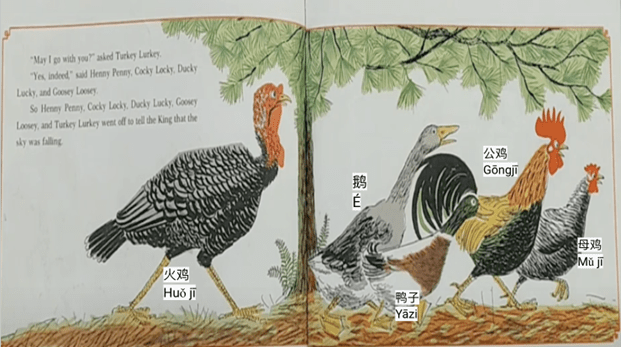
When choosing materials for educating our ELL students, educators must be knowledgeable about the ELL’s vocabulary and language proficiency levels in order to meet their academic needs. The vocabulary for this text is basic and should be familiar to most students at the Pre-K level. It uses simple and repetitive dialogue and introduces new characters on each page through the text and illustrations, repeating the sequence of events.
Cristina Talarico, Touro University TESOL Master’s Degree Candidate








 Dr. J's Education Blog