It is my great pleasure to play with organist Charles Thatcher for the Deutsche Martin-Luther-Gemeinde, 1600 S Orlando Ave, Winter Park, FL 32789 (St. John Lutheran Church) Pastor Wilfried Wassermann Christvesper am 4. Advent, 18. Dezember 2022 Martin-Luther-Gemeinde, Orlando, Email: dtgemeindeorl@aol.com Internet: www.deutschekircheflorida.com/de/orlando-de.html
When: Dec 14, 2022, from 01:00 PM to 02:00 PM (ET)
DESCRIPTION: In this sharing session, we will look at a number of public domain websites that are used for sourcing materials for language teaching. Specifically, we will review pedagogical tools, actual lessons, language aids in terms of videos, readings, practice exercises, and some teacher training materials and resources.
PRESENTER
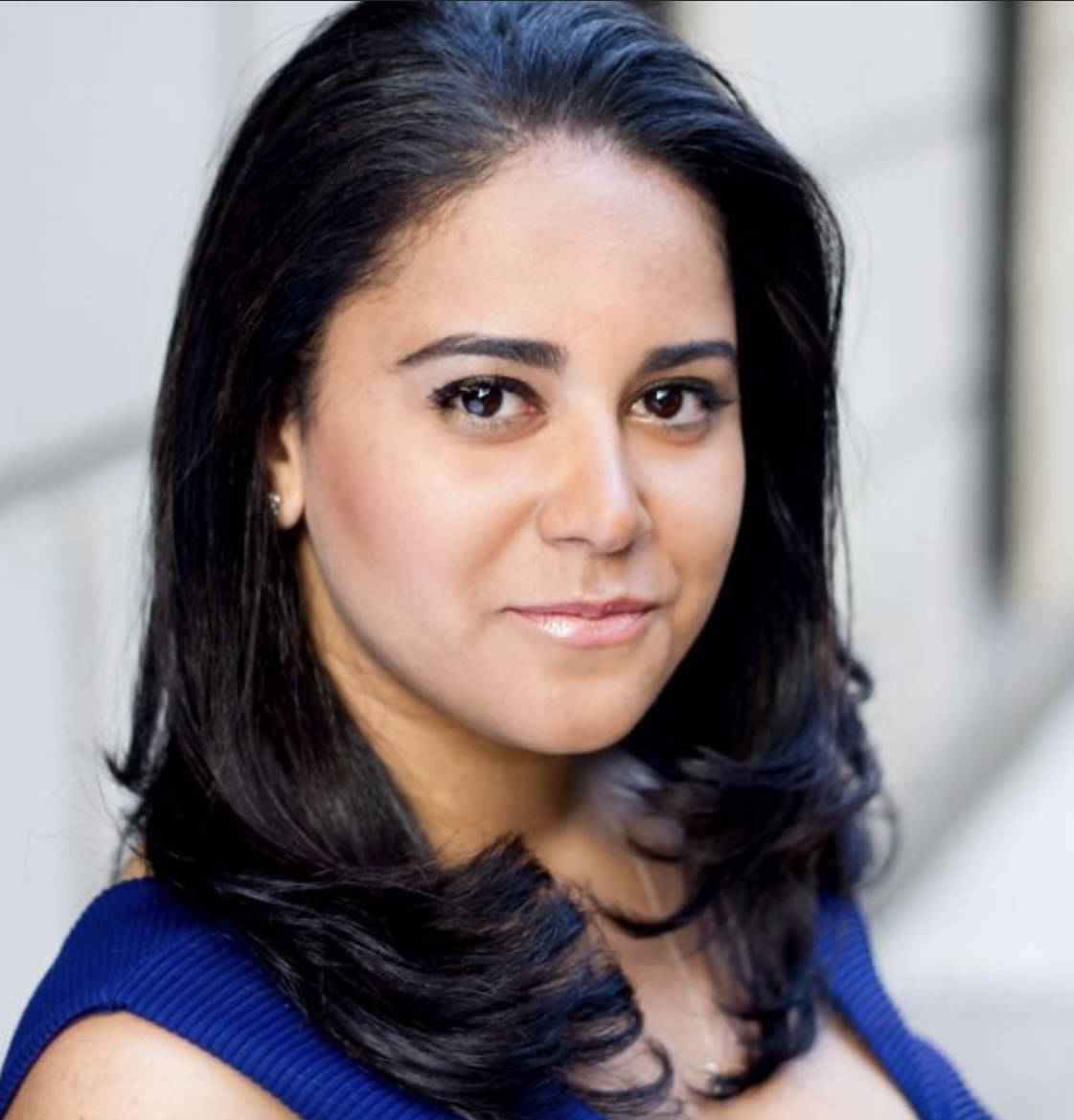
Lubie Alatriste holds a doctorate from Columbia University and is a professor of English/Applied Linguistics at the City University of New York (CUNY). Her research interests include genre analysis, institutional discourse, reflexivity and praxis in education, second language writing, curriculum, and materials development. Her most recent book-length publication is Language Research in Multilingual Settings (2020, Palgrave MacMillan), and Second Language Writing in Transitional Spaces (2020, University of Michigan Press). She is the author of numerous articles and has served on editorial boards of international journals. Lubie is a founding co-editor/Editor-in-Chief of TESOL Affiliate NYS TESOL Journal. The webinar will be moderated by Dr. Jasmin (Bey) Cowin, Touro University.
Students will become acquainted with and practice effective approaches, methods, and strategies for teaching and evaluating English language learners in the content areas (ELA, social studies, math and science). Throughout the course, students will explore the impact of culture and language on classroom learning. Special challenges in teaching and assessment in each content area will also be discussed. Includes 15 hours of fieldwork.
Evdokia Gasparis: My family consists of many English language learners, which has influenced me to pursue a master’s degree in TESOL. I completed a bachelor’s degree in elementary/early childhood education and psychology from Queens College, which led me to attain a 1-6 common branch license. As I expand my knowledge in the field of education, I strive to effectively differentiate all instructional activities to meet the needs of all students. I aspire not simply to teach, but to inspire all my students to challenge their limits!
Alliteration can be located at several points throughout Samuel Morse’s “That’s Who!: The Story of the Telegraph and Morse Code” by Tracy Nelson Maurer. For example, “… tromping from town to town…” and “Success always seemed one step ahead for Samuel.” The academic language is quite challenging, as it is content specific. Content-specific terms include Morse Code, inventions, telegraph, and French Optical Telegraph System. ELLs are at a disadvantage due to their limited background knowledge of the history of the United States. Prior to reading, educators must focus on building background knowledge and pre-teaching vocabulary, in order for students to properly comprehend the literature.
Evdokia Gasparis, Touro University TESOL Candidate
As educators, incorporating culture into language teaching is crucial. Learning about different cultures can help us approach languages with new insights. We can feel more connected to our students and our students can connect with each other.
This course provides a historical overview of second language acquisition theories and teaching methods. Students learn how to apply current approaches, methods and techniques, with attention to the effective use of materials, in teaching English as a second language. Students will engage in the planning and implementation of standards-based ESL instruction which includes differentiated learning experiences geared to students’ needs. Emphasis is placed on creating culturally responsive learning environments. Includes 15 hours of field work.
Materials Critique & Redesign: Candidates will: (1) prepare a written critique description of the material or resource, analyzing its effectiveness for ELLs and (2) based on your analysis, redesign one section/activity (which could be an infographic, mindmap or anything that shows a redesign) of the original material so that it meets the need of ELLs. The materials chosen will promote culturally and linguistically responsive classrooms and instructional practices.
Candidates will promote culturally and linguistically responsive classrooms and instructional practices
Candidates will apply strategies to adapting grade-level, content area instruction to include culturally and linguistically different students as well as gifted and special education ELLs.
Touro University TESOL candidate Shannon Smith is a graduate student at Touro University pursuing a master’s degree in the TESOL program. She is certified in general education and special education 1-6.
Ms. Smith, “I am currently teaching a Kindergarten class that has a majority of ENL students. All of the courses I have taken at Touro and all of the professors have been preparing me for the real world. I thoroughly have been enjoying learning different strategies to implement in my Kindergarten classroom.”
This course provides a historical overview of second language acquisition theories and teaching methods. Students learn how to apply current approaches, methods and techniques, with attention to the effective use of materials, in teaching English as a second language. Students will engage in the planning and implementation of standards-based ESL instruction which includes differentiated learning experiences geared to students’ needs. Emphasis is placed on creating culturally responsive learning environments. Includes 15 hours of field work.
Materials Critique & Redesign: Candidates will: (1) prepare a written critique description of the material or resource, analyzing its effectiveness for ELLs and (2) based on your analysis, redesign one section/activity (which could be an infographic, mindmap or anything that shows a redesign) of the original material so that it meets the need of ELLs. The materials chosen will promote culturally and linguistically responsive classrooms and instructional practices.
Candidates will promote culturally and linguistically responsive classrooms and instructional practices
Candidates will apply strategies to adapting grade-level, content area instruction to include culturally and linguistically different students as well as gifted and special education ELLs.
Touro University TESOL candidate Cynthia Olavarria is a Special Education Educator in an elementary school in Brooklyn, New York. “I believe in collaboration so we can make changes in the lives of our youth.”
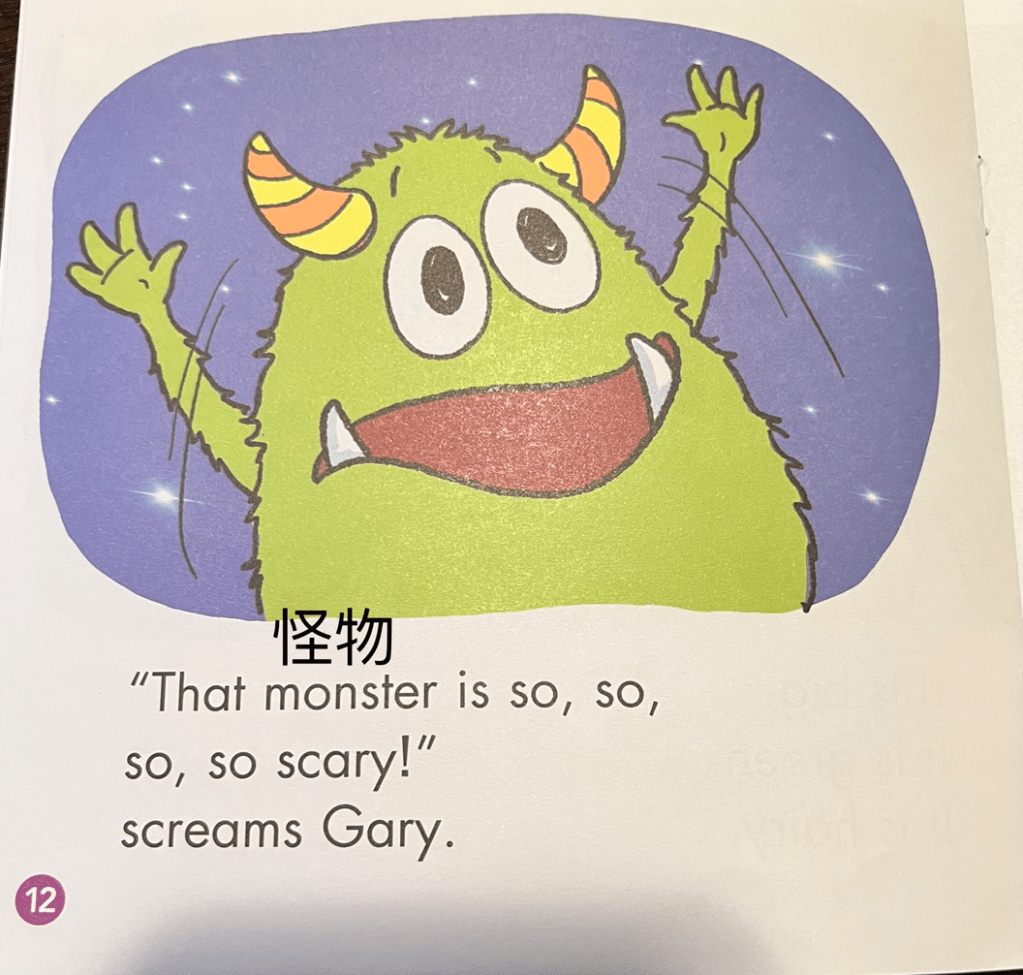
This book is a great way for kids to build on what they already know about colors and feelings while also learning something new. Looking at page 2-3 the author uses the skill of rhyming to grab the reader’s attention. “Gary is big, Gary is green. Gary is hairy. And Gary thinks EVERYTHING is scary.” (Charlesworth, Gary the Monster, 2018, pp. 3-4) This skill can be a little difficult for students to learn. Rhyming is hard for students who are not ELL’s so we know that it can be significantly challenging for students who are ELL’s.
Cynthia Olavarria, Touro University TESOL candidate
Students will become acquainted with and practice effective approaches, methods, and strategies for teaching and evaluating English language learners in the content areas (ELA, social studies, math and science). Throughout the course, students will explore the impact of culture and language on classroom learning. Special challenges in teaching and assessment in each content area will also be discussed. Includes 15 hours of fieldwork.
“I attended Touro College and earned a bachelor’s degree in psychology and a master’s degree in education, teaching students with disabilities in grades 7-12. Professor Cowin has taught me much about the theory of bilingual teaching, learning, practice, and strategies to use with English language learners this semester.”
Lesson plans: Using procedures (2015) TeacherVision
Touro University TESOL Candidate Marizabel Nunez was born and raised in Brooklyn, New York. Her family is from the Dominican Republic, and most of them are linguistically diverse.
I completed the Module Making Workshop with the Department of Online Education at Touro University.
In order to teach online courses as an instructor at Touro College,I wanted to learn more about how to elevate setting up course modules for your online course(s). The Module Making Workshop is a 4-week course guided me through the essential components of creating an online module including creating measurable learning objectives, adding critical design elements (e.g., headers), and creating a logical flow to course content.
The components of this workshop adhere to the standards outlined in Touro’s Rubric for Online Education, which is the instrument used to evaluate the quality of online courses at Touro.
“As a professor, I created this blog as a mechanism to support, appreciate and showcase exemplary work of my graduate and professional Touro University TESOL/BLE teacher candidates. By emphasizing candidates’ best work, and their innovative, thoughtful, reflective contributions I provide a path to shift the focus to their professional values while recognizing and celebrating their significant milestones in the Touro University TESOL/BLE program.” by Jasmin (Bey) Cowin
This course provides a historical overview of second language acquisition theories and teaching methods. Students learn how to apply current approaches, methods and techniques, with attention to the effective use of materials, in teaching English as a second language. Students will engage in the planning and implementation of standards-based ESL instruction which includes differentiated learning experiences geared to students’ needs. Emphasis is placed on creating culturally responsive learning environments. Includes 15 hours of fieldwork.
Mrs. Paola Gomez was born in the Bronx and raised partially in the Dominican Republic. She attended Hunter College where she received her degree in Music Performance and Touro University, GSE where she received her master’s in education. She is currently a teacher at P186X, where she hopes to integrate her bilingual teaching skills acquired from Touro University’s bilingual education program.
Paola wishes to thank her family, her husband, Justin, and her professor, Dr. Jasmin Cowin, for her support and dedication to candidate learning during the fall semester of 2022.
For my multilingual learners, the total physical response mini lesson centered around the vocabulary words of body parts gave them the opportunity to make a connection between body parts in their language and body parts in English. For example, if I were to show just the name of each body part, without any visual support and physical action to go with it, my multilingual learners might had struggled to understand that Mouth is Boca. Having the visual support accompanied by the motor activity, helped the students to successfully identify, recall, and acquire new vocabulary in a new language.
“As a professor, I created this blog as a mechanism to support, appreciate and showcase exemplary work of my graduate and professional Touro University TESOL/BLE teacher candidates. By emphasizing candidates’ best work, and their innovative, thoughtful, reflective contributions I provide a path to shift the focus to their professional values, while recognizing and celebrating their significant milestones in the Touro University TESOL/BLE program.” by Jasmin (Bey) Cowin
As a professor, I created this blog as a mechanism to support, appreciate and showcase exemplary work of my graduate and professional Touro University TESOL/BLE teacher candidates. By emphasizing candidates’ best work, and their innovative, thoughtful, reflective contributions I provide a path to shift the focus to their professional values, while recognizing and celebrating their significant milestones in the Touro University TESOL/BLE program.
Dr. Jasmin (Bey) Cowin (Assistant Professor and TESOL Practicum Coordinator, Touro University, GSE)
EDDN 637 Second Language Learners and the Content Areas: Students will become acquainted with and practice effective approaches, methods, and strategies for teaching and evaluating English language learners in the content areas (ELA, social studies, math and science). Throughout the course, students will explore the impact of culture and language on classroom learning. Special challenges in teaching and assessment in each content area will also be discussed. Includes 15 hours of fieldwork.
Evdokia Gasparis: “My family consists of many English language learners, which has influenced me to pursue a master’s degree in TESOL. I completed a bachelor’s degree in elementary/early childhood education and psychology from Queens College, which led me to attain a 1-6 common branch license. As I expand my knowledge in the field of education, I strive to effectively differentiate all instructional activities to meet the needs of all students. I aspire not simply to teach, but to inspire all my students to challenge their limits!”
practice (how teachers deliver instruction to students),
process (how the lesson is designed for students),
products (the kinds of work products students will be asked to complete),
content (the specific readings, research, or materials, students will study),
assessment (how teachers measure what students have learned), and
grouping (how students are arranged in the classroom or paired up with other students).
You will submit both the original content lesson and plan and the lesson plan with differentiated instructional activities, with a reflection of your professional growth completing this assignment. Your product for Differentiated Instructional Activity Assignment will be:
A paper including the original lesson plan/differentiated lesson plan addressing points 1 -6 above
2-4 minute video showcasing one specific aspect of one of your Differentiated Instructional Activities
Picture Walk Video Evdokia Gasparis, Touro University TESOL CandidateEntering / Emerging Differentiated WorksheetEntering / Emerging Differentiated WorksheetExpanding Differentiated WorksheetTransitioning / Bridging Differentiated Worksheet
“…all students work at different speeds, therefore it is essential to group students strategically to provide needed support. During the differentiated lesson, students are grouped homogenously. Homogenous grouping allows students, with similar academic needs and readiness, to collectively complete assignments (Levine, 2012). The intent of grouping students with similar levels of readiness is to scaffold lessons that allow students to work in their zone of proximal development (ZPD) (Levine, 2012).”
Evdokia Gasparis, Touro University TESOL Candidate
EDDN 637 Second Language Learners and the Content Areas: Students will become acquainted with and practice effective approaches, methods, and strategies for teaching and evaluating English language learners in the content areas (ELA, social studies, math and science). Throughout the course, students will explore the impact of culture and language on classroom learning. Special challenges in teaching and assessment in each content area will also be discussed. Includes 15 hours of fieldwork.
Adah Hirschfeld is a New York City Public School librarian who currently works at IS 240 in Midwood, Brooklyn. She holds a Master of Library and Information Science degree from Pratt Institute and a Master’s degree in School Administration from Touro University. She is pursuing certification in TESOL to better meet her students’ language and literacy needs.
The Text Analysis discusses the cognitive and linguistic demands of a content area text. Touro University TESOL/BLE candidates closely analyze a chapter, or an aspect of one content-area text currently in use or recommended by New York State/BOE. Upon analysis of underlying concepts, they develop a thesis and purpose for their analysis. Mrs. Hirschfeld’s paper sequences her ideas with evidence from the text supporting essential points. Her critique features substantial, logical, and concrete development of ideas describing what makes that concept or section challenging for ELLs.
Phonics and phonological decoding of the multi-syllabic words may be difficult for ELL students. Examples of words that do not follow standard rules are: ocean, fascinating, officials, unique, foreign. Students would have to be aware of the hard and soft “c” sounds of recent, cities, places, and appreciation. As well as the spelling patterns and pronunciation of words ending in -gh and -ght.
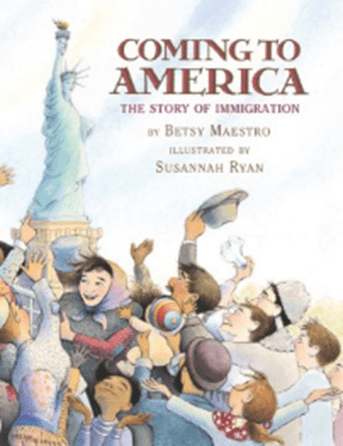
Overall, this is a highly complex text for English language learners. The sentence length, multisyllabic unknown words, and academic vocabulary are difficult for readers to comprehend without scaffolds and modifications. The illustrations correspond to and enhance the text allowing the reader to gain an understanding but without the visual enhancement, meaning may be lost.