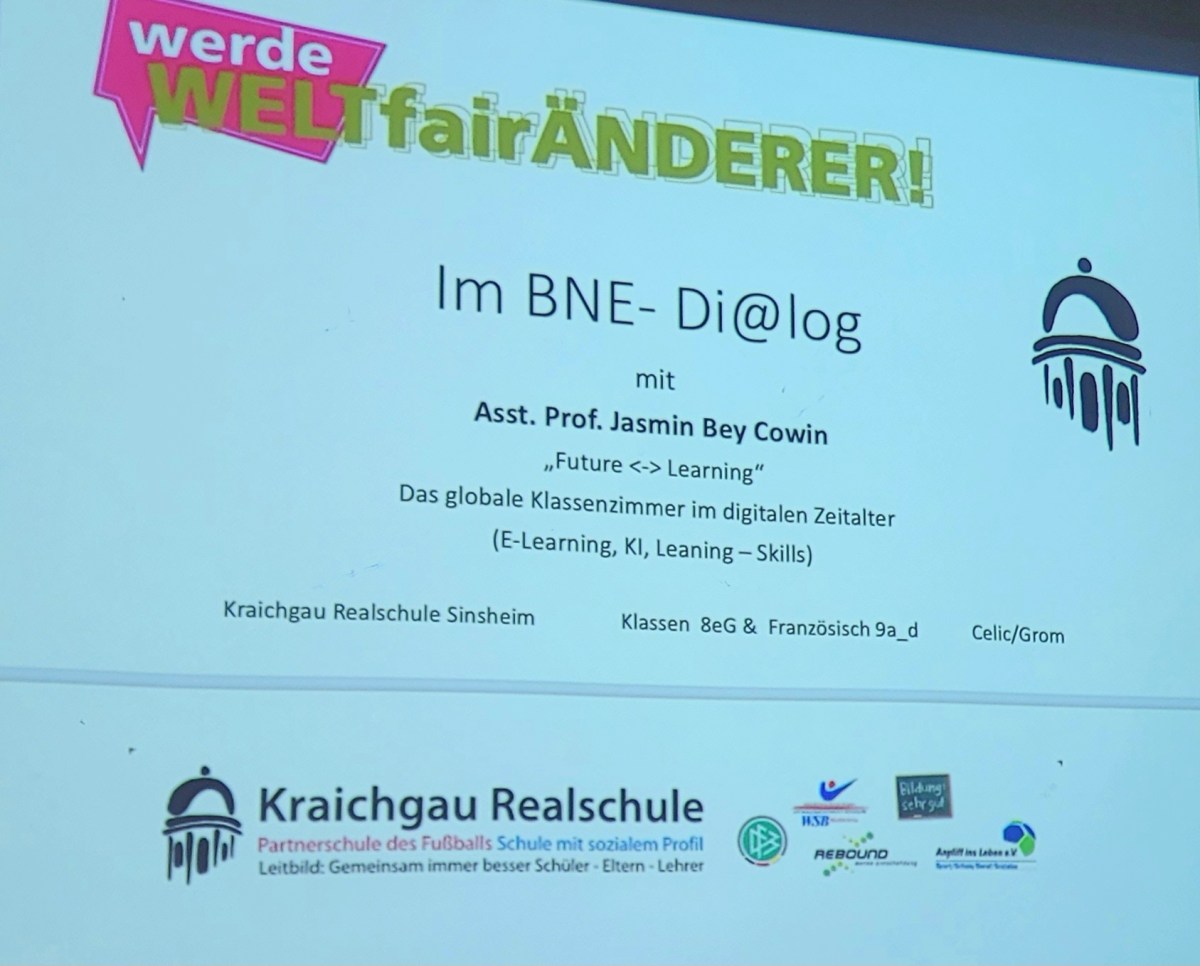
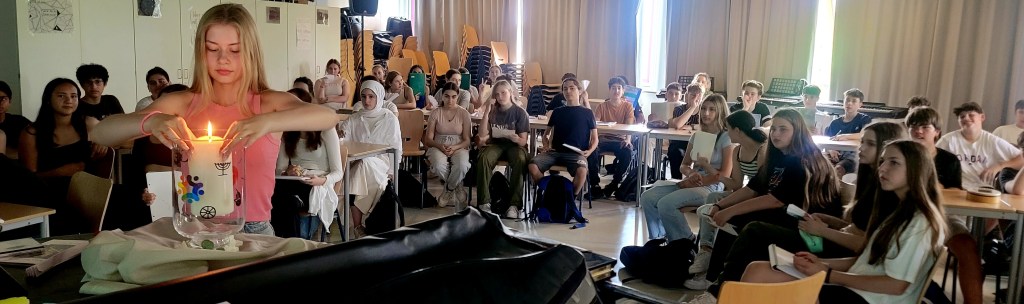
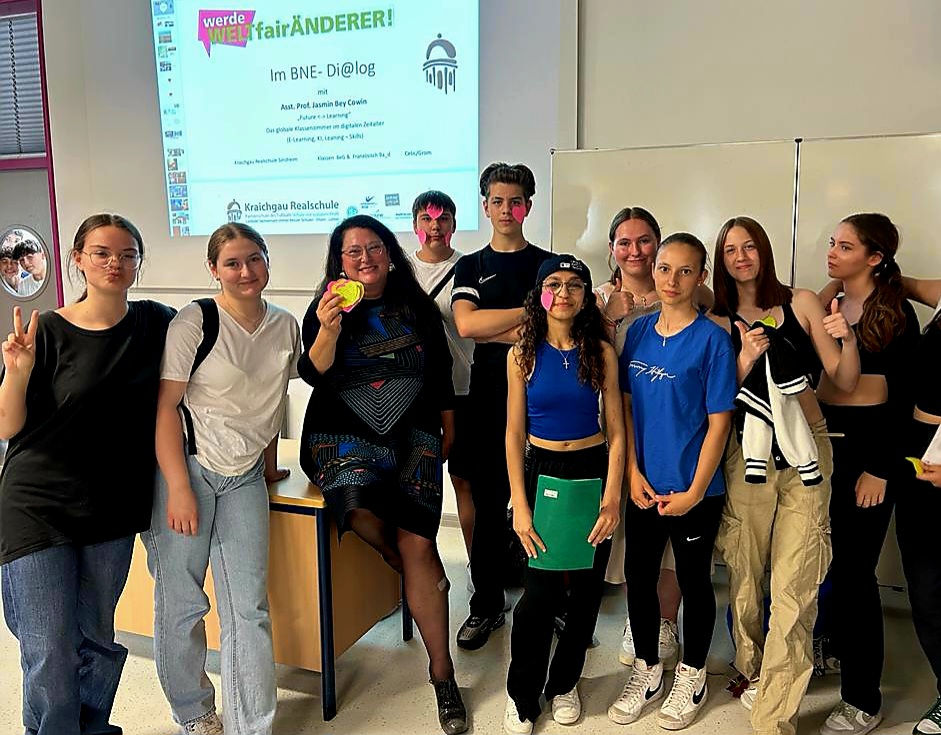
It was a pleasure to conduct an in-person workshop with the 8th grade of the
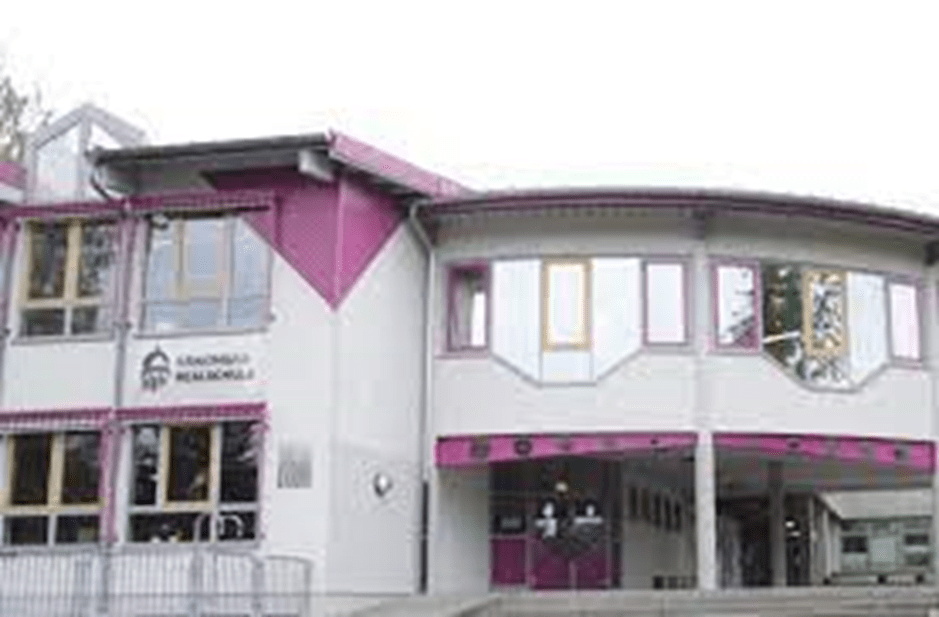
Today I traveled to meet students and faculty of the Kraichgau Realschule….
We met to discuss:
and the SDG agenda with a focus on digital learning and artificial intelligence.
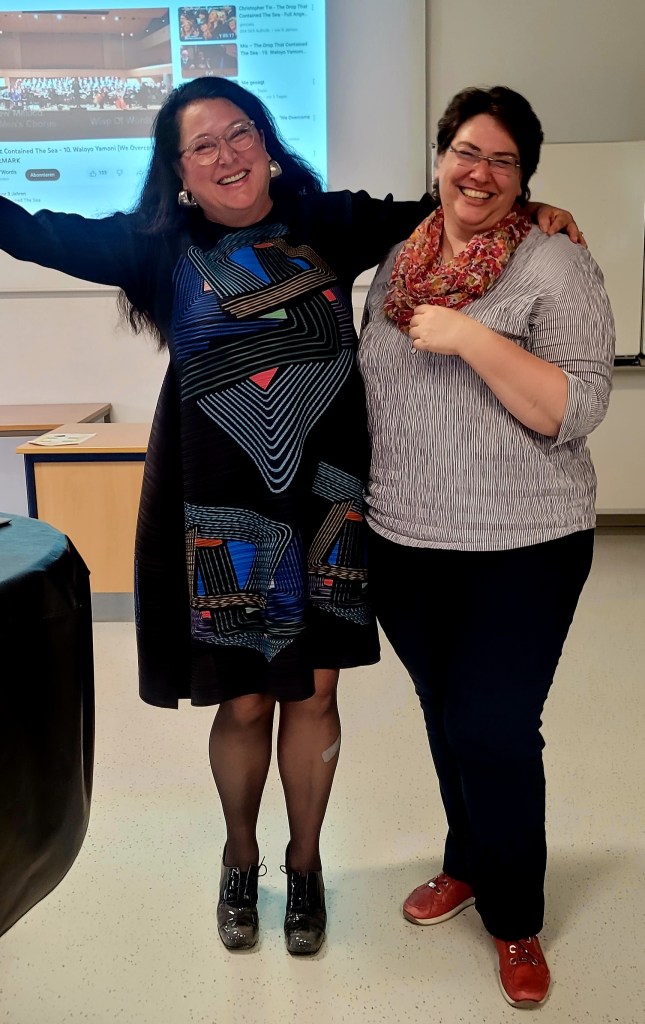
It was a wonderful opportunity to meet an amazing educator whom I worked with in the past, Barbara Grom, faculty and students of the Kraichgau Realschule.
Jasmin Cowin & Barbara Grom, 2 teachers & 1 friendship
I had the privilege of personally mentoring Mrs. Torres-Gearity through challenging times, and witnessing her growth and success is truly heartwarming. Her perseverance, academic capacity, and remarkable teaching skills make her an outstanding representative of our program and the wider #TouroGSE community.
I wanted to personally share this wonderful news with you as it highlights the incredible accomplishments of our students and the positive impact our Touro University programs can have on their lives. Mrs. Torres’ achievements remind us of the significance of education and the profound influence teachers can have on their students. I truly believe in the power of “Teaching as an Act of Love.”
As a professor, it fills me with immense pride to witness the fruits of my teaching when I see my students excel. Not only was she awarded the esteemed Dr. Ximena E. Zate Bilingual Teacher of the Year Award in 2020, but she has also achieved another remarkable feat – a successful commencement address during graduation in front of a full house.
As I celebrate the achievements of our graduates, I acknowledge the significance of a remarkable commencement address and the courage it took to step in front of her peers as a collective representative.
Teaching empowers me to be an example to others demonstrating that we all have the potential to make our dreams come true. Teaching means to see children succeed, parents proud, and families provided with tools they need to have a brighter future together, teaching means the world to me.
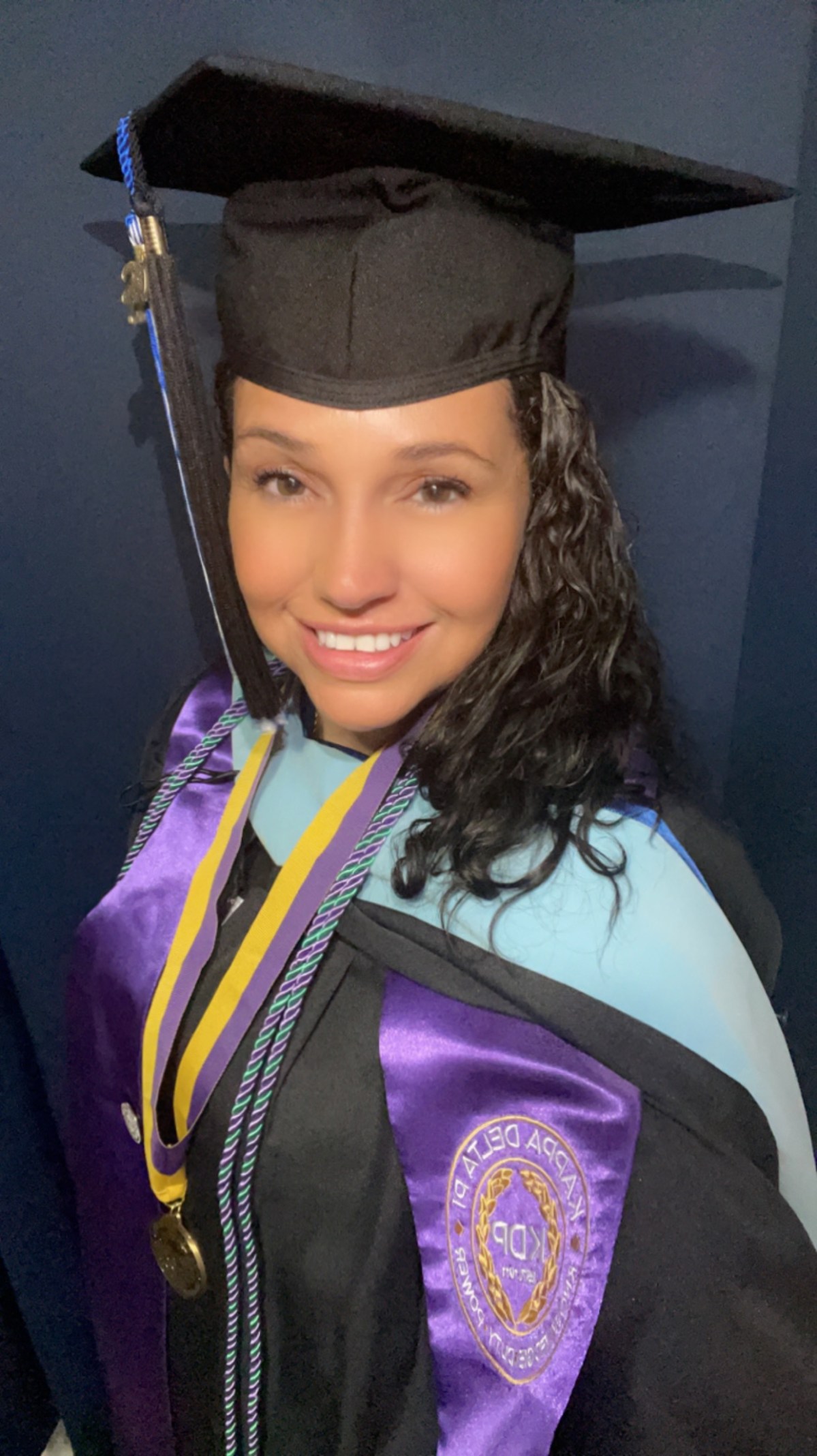
Antonia Torres-Gearity, Touro University Commencement Speaker 2023
Commencement Speach 2023 by TESOL/Bilingual Program Completer Antonia Torres-Gearity

Distinguished guests, esteemed President Kadish, respected faculty and administration members, dear family, friends, and fellow graduates,

As we gather here to commemorate this milestone, I want to express how Touro has not only transformed my life, but it has also become an integral part of my family. Just as your families are special and unique to you, Touro holds a special place in our hearts. Many of us hail from humble backgrounds, with parents who made countless sacrifices to provide us with a better life and the education they themselves couldn't have. Thanks to their unwavering support, I stand here today as the youngest, and the first in my family to earn a master’s degree. But I am determined not to be the last. My parents and siblings have been my guiding lights, teaching me that mistakes are stepping stones to learning and growth.
When I came to this country at the age of 16, learning a second language was a tough journey. I was discouraged from continuing my education due to the challenges I faced. However, I had that one special high school teacher who made an immense impact on my life. Her passion for education and her role as my mentor inspired me to persevere.
I vividly recall one evening struggling with a college textbook, attempting to pronounce words that seemed impossible to master. Exhausted, I decided to read it to my daughter, hoping she would fall asleep quickly so I could review for a midterm. Frustration grew as I encountered a word I couldn't pronounce, and my voice cracked in despair. It was at that moment my daughter turned to me with her innocent eyes and said, "Don't worry, mommy. It's okay. It's just that you are Mexican, but it is okay!" In that instant, I realized I had to accept myself fully and embrace my identity. Coming to this country at 16 had made me overly conscious of my accent, insecure about my intelligence, and afraid to ask for help. Yet, it takes someone special to show us what we have within ourselves.
Returning to Touro to pursue my TESOL certification, I encountered my first class, "Linguistic Structure of the English Language." As a non-native English speaker, the title alone overwhelmed me. But Dr. Jasmin Cowin, my professor, instantly dispelled my fears. She made me believe in my potential to achieve anything. I will never forget her firm voice as she told me, "Don't tell me you can't do it." In that moment, I knew that if she had faith in me, I could accomplish anything. Dr. Cowin treated me like family and made me feel like I truly belonged. I would like to give a big shout-out and heartfelt gratitude to all the faculty and staff at Touro for their solid dedication and guidance through each step of our academic journey.
Throughout our educational pursuit, we encountered obstacles that tested our resolve and moments of self-doubt. But with the support of Touro University, our loved ones, mentors, and belief in ourselves, we persevered. Today, we stand as stronger, more resilient individuals, equipped with knowledge and skills to make a difference in our chosen fields. With this education comes a responsibility to use our knowledge for the betterment of society, to create positive change, and contribute to the advancement of humanity.
May we continue to carry the torch of knowledge, ignited by love, as we stride in to a future abundant with hope, understanding, and compassion. May your individual journeys be filled with success, fulfillment, and the enduring joy that comes from sharing love through the art of teaching.
Congratulations Graduates! Thank you and Godspeed!
I am pleased to share today’s experience as a presenter at the Amity Institute of Education, Amity University, Noida, India, where I conducted a free webinar on “Promoting Ethical Behavior in Higher Education: Integrating Anti-Cheating and Anti-Plagiarism Strategies in Curriculum Design.” As an educator with a personal commitment to Sustainable Development Goal 4.c By 2030, “substantially increase the supply of qualified teachers, including through international cooperation for teacher training…”, I am honored to contribute to such transdisciplinary conversations.
Amity University holds a distinguished reputation as a government-recognized institution, established by an act of the State Legislature and accredited by the University Grants Commission (UGC). This recognition underscores the university’s dedication to providing quality education and fostering academic excellence.
Webinar Focus: Ethical Behavior in Higher Education: During the webinar Promoting Ethical Behavior in Higher Education: Integrating Anti-Cheating and Anti-Plagiarism Strategies in Curriculum Design, I had the privilege of addressing an audience interested in exploring strategies to foster ethical behavior among students in higher education. Cheating is a topic that raises significant ethical concerns in academic settings, and the use of AI can potentially complicate the situation further. While AI technology offers both benefits and opportunities, its misuse for cheating purposes is a serious violation of academic integrity. It is imperative to incorporate proactive measures into curriculum design to effectively address these issues through practical strategies.
Slide by Dr. Jasmin Cowin
International Collaboration: An Exciting Prospect: One of the most intriguing prospects arising from this webinar is the planned international collaboration. I am pleased to announce a forthcoming collaborative article that will feature contributions from highly regarded faculty members at the Amity Institute of Education, Amity University. This collaboration will provide a diverse and comprehensive perspective on the integration of anti-cheating and anti-plagiarism strategies, enriching the academic discourse on ethical behavior in higher education.
Cowin, J. (2023, June 15). Promoting Ethical Behavior in Higher Education: Integrating Anti-Cheating and Anti-Plagiarism Strategies in Curriculum Design [webinar]. Amity Institute of Education, Amity University, Noida, Sec-125, India.
New York is a state that speaks many languages. We need teachers who can find the common ground. The MS in Teaching English to Speakers of Other Languages (TESOL) Program helps NYS-certified PreK-12 teachers more effectively teach and communicate with a diverse student population. Academically rigorous and practice-intensive, the 33-credit program includes 50 hours of fieldwork andsupervised student teaching experiences. Candidates that complete all coursework, fieldwork, and student teaching requirements are eligible for recommendation for ESL certification.
Crystal Demarco
Crystal DeMarco is a candidate in the TESOL Graduate Program at Touro University. She completed her undergraduate degree at the College Of Staten Island, and earned her Bachelor’s degree in Secondary Education in Social Studies. Crystal shares, “I love learning new innovative ways to create an engaging curriculum for my students!”
Educators pave the way for students to achieve their academic goals with the help of students understanding the tools they need to succeed when learning a new language. Like anything else in life, acquiring a new language is a difficult task for both the teacher and the student learning. Therefore, teachers need to understand the importance of phonetics and sounds to help support students effectively while teaching them new words. Teaching students the fundamentals of “Phonetics” is a great way to prepare students to understand the difference between target language and sounds.
Crystal DeMarco, candidate in the TESOL Graduate Program at Touro University.
New York is a state that speaks many languages. We need teachers who can find the common ground. The MS in Teaching English to Speakers of Other Languages (TESOL) Program helps NYS-certified PreK-12 teachers more effectively teach and communicate with a diverse student population. Academically rigorous and practice-intensive, the 33-credit program includes 50 hours of fieldwork andsupervised student teaching experiences. Candidates that complete all coursework, fieldwork, and student teaching requirements are eligible for recommendation for ESL certification.
Marissa Diveris graduated summa cum laude from St. Joseph’s University in May 2022 with a History of Adolescent Education degree. She is currently pursuing an MS in Teaching English to Speakers of Other Languages at TOURO University. Marissa is working in a Long Island High School with English Language Learners during her role as an ENL Leave Replacement.
The opportunity to observe a crucial lesson in preparing ELL students for the Global II regents was extremely beneficial to me as a Social Studies teacher. It is important that students master the Enduring Issues Essay to do well on the NYS Regents Exam. English Language Learners need the appropriate support in order to work through their languageand cultural barriers.
New York is a state that speaks many languages. We need teachers who can find the common ground. The MS in Teaching English to Speakers of Other Languages (TESOL) Program helps NYS-certified PreK-12 teachers more effectively teach and communicate with a diverse student population. Academically rigorous and practice-intensive, the 33-credit program includes 50 hours of fieldwork and at least 20 days or 100 hours of supervised student teaching experience. Candidates that complete all coursework, fieldwork, and student teaching requirements are eligible for recommendation for ESL certification.
Cristina Talarico is a teacher in the New York City Department of Education who is currently completing a Master’s Degree in TESOL at Touro College. As a part of the EDPN 673 Course, they fulfilled 15 hours of fieldwork where they observed and collaborated with ENL educators and interacted with diverse ELL students. Throughout this experience, she conducted interviews with both students and teachers to identify the most effective methods and approaches for teaching ELLs.
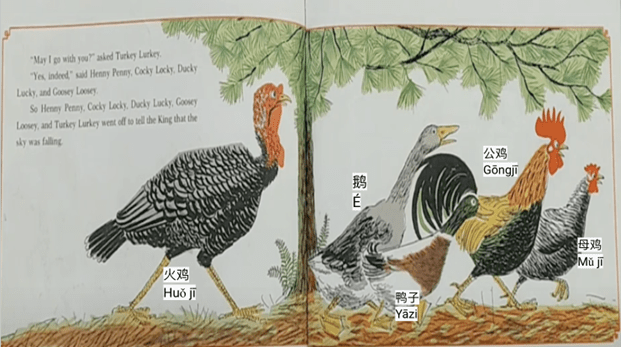
When choosing materials for educating our ELL students, educators must be knowledgeable about the ELL’s vocabulary and language proficiency levels in order to meet their academic needs. The vocabulary for this text is basic and should be familiar to most students at the Pre-K level. It uses simple and repetitive dialogue and introduces new characters on each page through the text and illustrations, repeating the sequence of events.
Cristina Talarico, Touro University TESOL Master’s Degree Candidate
The topic of intercultural competence was the focus of my exploration with the Rotaract group. We discussed how to enhance communication and collaboration among people from diverse cultural backgrounds. This skill is essential in the contemporary globalized workforce, where cross-cultural teams are increasingly common and require effective coordination and mutual understanding. To illustrate the differences and similarities among various cultural styles, we used the Hofstede Insights tool (https://www.hofstede-insights.com/country-comparison-tool) to compare and contrast the dimensions of national culture for several countries. This exercise helped us to appreciate the complexity and richness of intercultural interactions.
Hofstede’s Cultural Dimensions Theory, developed by Geert Hofstede, is a framework used to understand the differences in culture across countries. Hofstede’s initial six key dimensions include power distance, uncertainty avoidance, individualism-collectivism, masculinity-femininity, and short vs. long-term orientation. Later, researchers added restraint vs. indulgence to this list. The extent to which individual countries share key dimensions depends on a number of factors, such as shared language and geographical location. Hofstede’s cultural dimensions are widely used to understand etiquette and facilitate communication across cultures in areas ranging from business to diplomacy.
We then took a look at the hurdles when encountering cultural differences:
Stage
Name
Description
1
Denial of difference
Participants in communication fear that cultural differences threaten them or simply deny their existence. As a result, they ignore difficulties and misunderstandings in intercultural communication. Ethnocentrism is a common stance in this stage, meaning that one’s culture is considered better than others.
2
Defense
Participants in communication perceive cultural differences as a threat and react defensively. They see their own culture as superior to others and tend to criticize other cultures. They feel attacked by other cultures and therefore tend to avoid intercultural communication.
3
Minimization
Participants in communication acknowledge the existence of cultural differences but try to minimize their importance. They tend to ignore cultural differences, as they see them as insignificant, or even irrelevant. They may also try to universalize their own cultural norms and values.
4
Acceptance
Participants in communication recognize and respect cultural differences and acknowledge that other cultures have equally valid ways of seeing and doing things. They try to understand and appreciate different cultural perspectives. However, they may still struggle with misunderstandings and conflicts.
5
Adaptation
Participants in communication are willing to adapt their communication style and behavior to better fit the cultural norms and values of the other culture. They are open to learning from different cultural perspectives and willing to change their own perspectives and behaviors.
6
Integration
Participants in communication have reached the final stage where they are capable of reconciling cultural differences and forging a multicultural identity. They are skilled at intercultural communication and can effectively navigate different cultural perspectives. They are able to combine different cultural identities and develop a unique multicultural identity.
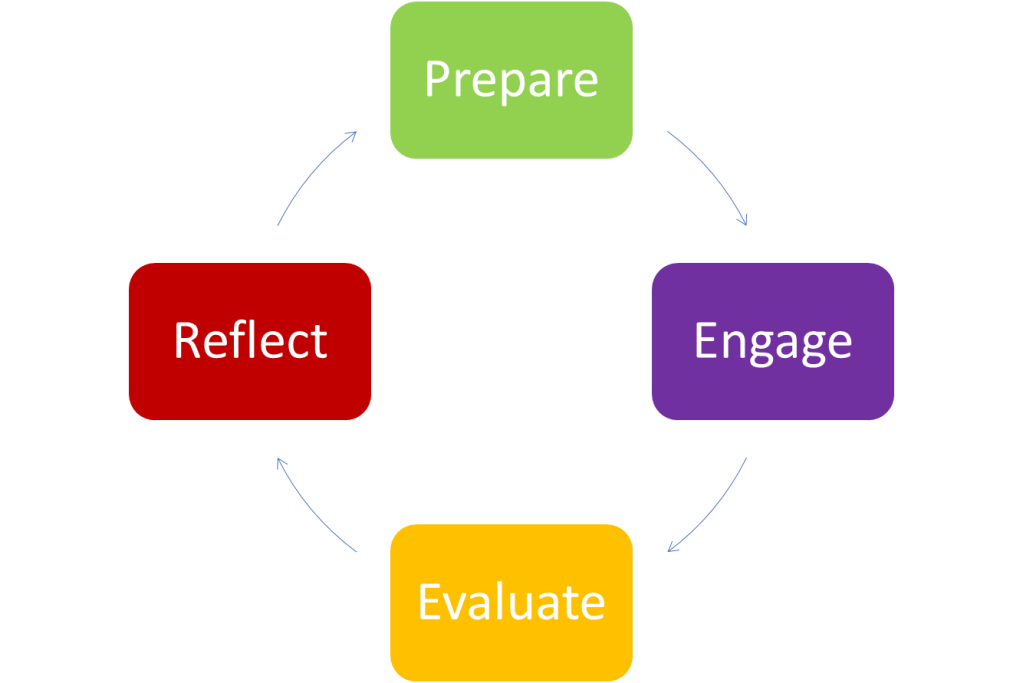
Intercultural Communication Cycle by Dr. Jasmin (Bey) Cowin:
I am honored to give a free workshop for my colleague and esteemed collaborator Aziz Soubai, Everyone Academy, founder and manager in Morocco. Everyone Academy Association signed a partnership with the regional Academy of Education and Training in the Guelmim-Oudenoun region. The main objective is to provide meaningful effective professional development for English teachers through the power of collaboration, connection, communicationacademyeveryone@gmail.com,
New York’s classrooms are some of the most culturally and linguistically diverse in the country. Our TESOL certificate program prepares NYS-certified teachers to provide responsive, comprehensive education to students of every background.
What You’ll Learn
The 15-credit program includes five courses—each with carefully designed fieldwork experiences—that emphasize both academic content learning and English fluency for English Language Learners.
With advanced certification, not only will you be able to more effectively and compassionately serve diverse student populations, you’ll increase your value as an educator and improve your career prospects.
Paola Higuera is a NYC public elementary school teacher. She always wanted to be an ELL teacher and “is excited to be taking courses at Touro in the TESOL Certificate program. I was once an ELL student myself and look forward to providing ELL services to the future generations.”
Differentiated Instructional Activity Assignment The differentiated instruction definition refers to an approach to education whereby teachers make changes to the curriculum and the way they teach to maximize the learning of every student in the class (IRIS Center, 2021). This is not a singular strategy but a framework that educators can utilize. Carol Ann Tomlinson also notes that in differentiated instruction, the teacher anticipates the varying levels of students’ interests, readiness, and learning profiles. Subsequently, they can provide diverse ways of learning, enabling students to learn without being anxious because academic tasks are too difficult for them or being unmotivated because assignments are not challenging for them (ASCD, 2011). However, differentiated instruction is not the same as individualized instruction.
For your Differentiated Instructional Activity Assignment, you will use one of your content lesson plans you have already taught and make modifications to the following segments:
practice (how teachers deliver instruction to students), process (how the lesson is designed for students), products (the kinds of work products students will be asked to complete), content (the specific readings, research, or materials, students will study), assessment (how teachers measure what students have learned), and grouping (how students are arranged in the classroom or paired up with other students).
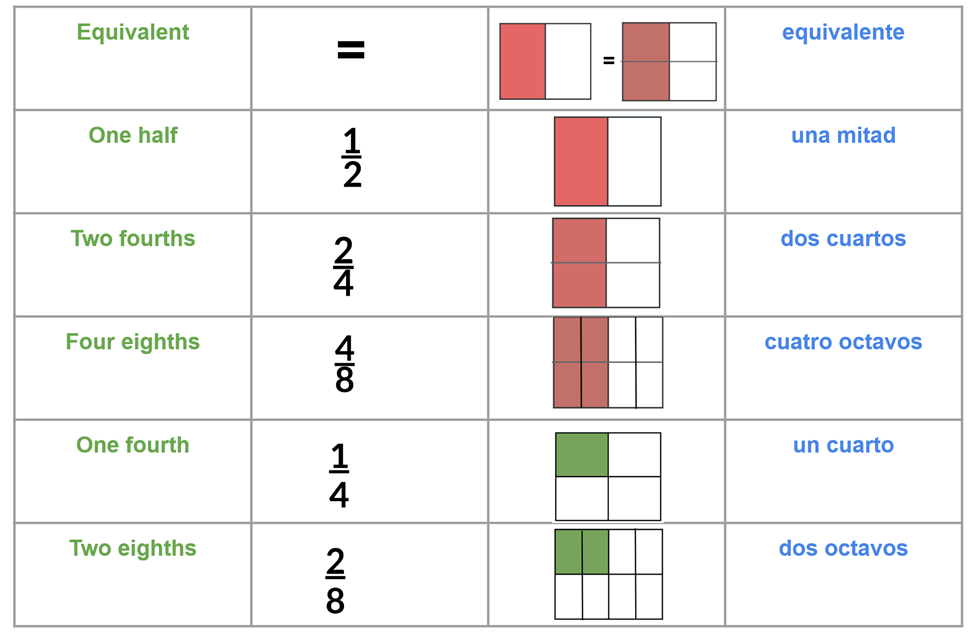
In the differentiated lesson, students will play equivalent fraction four in a row, equivalent fraction bingo and concentration equivalent fractions. Using games in the classroom increases student engagement, participation and motivation.















 Dr. J's Education Blog