

Touro College, GSE hosts its first World Book Day. Administration, faculty and candidates will be reading their favorite books April 22nd and 23rd 2021.
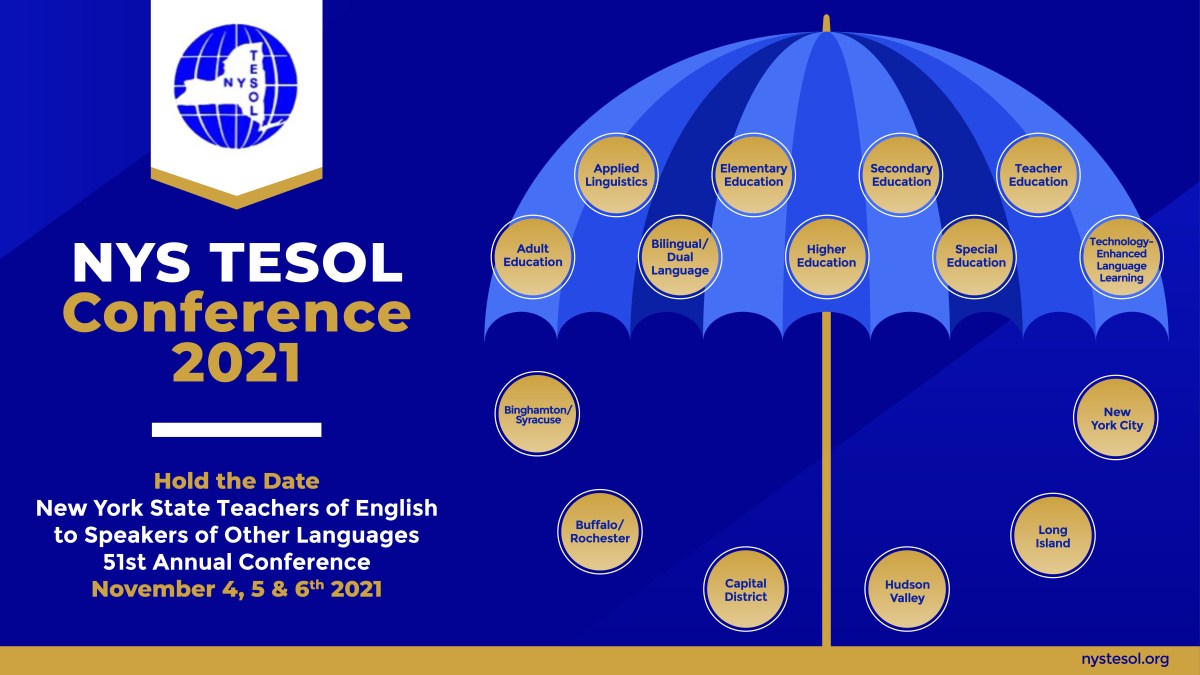
NYS TESOL 51st Annual Conference Looking Forward: Educational Empowerment & Transformative Education
Please consider submitting a proposal for the hybrid NYS TESOL 51st Annual Conference on November 4, 5, & 6 2021.

The Call for Proposals for the NYS TESOL 51st Annual Conference (November 4-6) is live! Our theme this year is Looking Forward: Educational Empowerment & Transformative Education. We are tentatively planning a hybrid conference, with a virtual component and a live component.
Please consider submitting a proposal for the hybrid NYS TESOL 51st Annual Conference on November 4, 5, & 6 2021.
Locations:Virtual Day
Online
Face-to-Face Location
Sonesta White Plains Downtown
66 Hale Avenue
White Plains, NY 10601
Proposal Deadline: March 28th, 2021
Notification of acceptance: by August 1st, 2021
The NYS TESOL 51st Annual Conference invites you to participate, present and collaborate along with the TESOL community across New York State and the globe.We invite any proposal that ties in with our theme to engage attendees in conversations around Looking Forward: Educational Empowerment & Transformative Education. This includes emerging trends, issues and solutions in TESOL education.
Please consider presenting, sharing and discussing ideas related to the conference theme within the following categories:Adult Education
Applied Linguistics
- Adult Education
- Advocacy
- Applied Linguistics
- Bilingual Education
- Elementary Education
- Higher Education
- Secondary Education
- Special Education
- Teacher Education
- Teaching English Internationally
- Technology Integration
Submit proposals here: http://bit.ly/NYSTESOLProposals2021
Virtual Day, November 4th, 2021
- Virtual Poster sessions: features successful lesson plans, projects and/or research studies.
- Virtual Presentations: either a live or short pre-recorded presentation intended to feature successful lessons, projects, reports on work in progress, and/or research studies. Virtual Presentations will be accessible on the NYS TESOL website during the Annual 51st Conference.
- Commercial: NYS TESOL accepts a limited number of Commercial Presentations, those given by publishers or sponsors of publisher’s materials. These require purchase of a virtual exhibitor space and must be specifically marked as Commercial.
Face to Face at the Sonesta White Plains Downtown Conference Venue
November 5th & 6th, 2021
Session descriptions:
- Poster Presentations: presentations that feature successful lesson plans, projects and research studies.
- Paper Presentation: presentations that summarize research or studies in process in a particular field. It provides the audience with a rapid and intensive overview of research and allows for in-depth discussion among presenters and the audience. (20 minutes)
- Workshop/Demonstration: presentations that provide hands-on learning opportunities and specific takeaways that enable participants to gain more expertise in a particular area of interest, or interactive exercises designed to address a challenge. (50 minutes)
- Panel: presentations that explore a specific issue from the diverse points of view expressed by the participants. (50 minutes)
- 20 Minute Teaching Tip: short format presentations that allow presenters to share a quick strategy, game, or tool that facilitates instruction in the classroom. Teaching tips should be practical in focus and simple enough to be explained in a 20-minute format.
- Commercial: presentations that are given by publishers or sponsors and showcase publisher’s materials. These require purchase of exhibitor space and must be specifically marked as Commercial.
NOTE: Paid registration to the conference will be necessary to present.
For more information, please contact:
Jasmin Cowin/Conference Chairperson: vpconference@nystesol.org
Carmen Diaz/Proposal Chair: proposals@nystesol.org
While we are planning a hybrid conference with both virtual and face-to face events, the fluidity of the Covid situation continues to create uncertainty in the conference planning process. We will keep you informed as to any updates.
NYS TESOL advocates, advances, and enriches TESOL education and professionalism statewide. NYS TESOL is an association of professionals concerned with the education of English language learners at all levels of public and private education in New York State. Our interests include classroom practices, research, program and curriculum development, employment, funding, and legislation.
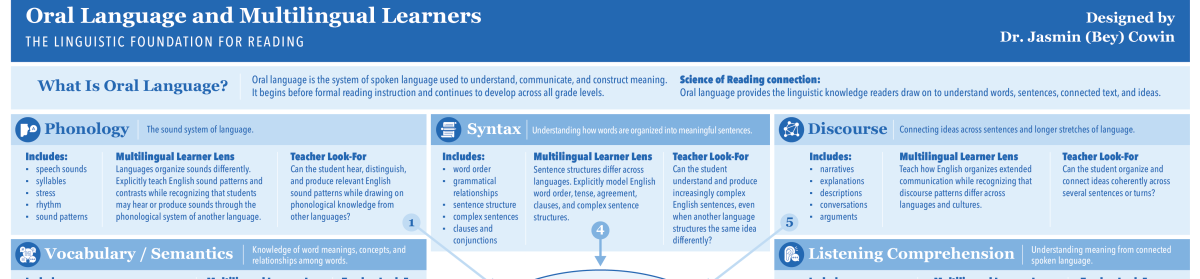
Teaching and Learning Theories Wheel by Jasmin Bey Cowin Ed.D.
As I continue working with infographics I have come to the conclusion that infographics are a two-part data analysis tool.

As I continue working with infographics I have come to the conclusion that infographics are a two-part data analysis tool: First, infographics offer the opportunity to parse information through visualization ideations. Second, the design process for creating an infographic can itself be a form of analysis with the creation of a new design becoming part of the designers meaning-making.
Miklós GÓR-NAGY – Hungarian Trade Attaché to speak at the Rotary Club of New York United Nations International Breakfast Meeting Feb. 17, 2021
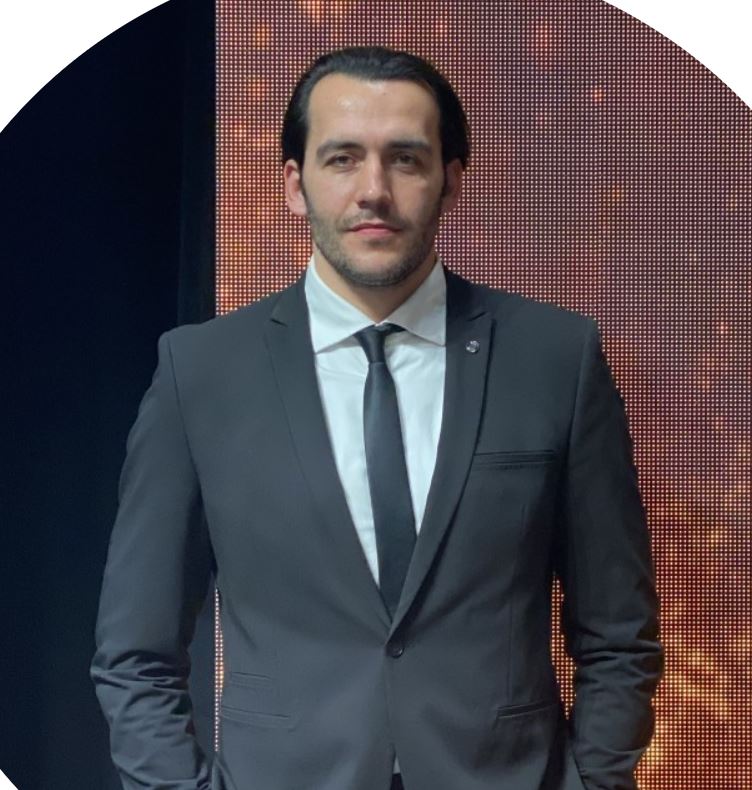
As Chair of the Rotary Club of New York United Nations International Breakfast Meeting it is my pleasure to announce our next guest speaker: Miklós GÓR-NAGY, Hungarian Trade Attaché
In addition to his career as a professional athlete, he graduated from International Business School with a degree in economics and marketing, and earned a law degree from the Károli Gáspár Reformed University. He also has an international water polo referee and coach degree. He has been working at the Ministry of Foreign Affairs and Trade since 2019. In 2020, he began his service at the Consulate General in New York as a trade attaché. He is married and has two young children, Gordon and Abigel.
From 1992 to 2019 he was a professional water polo player. He has played for BVSC, Eger, Honvéd, Budvanska Rivijera Budva, OSC, and Ferencváros. He played his first national team match in 2005, under the captaincy of Dénes Kemény. He has participated in five world championships, three European championships, played 435 first division water polo matches in the Hungarian championship, and 200 he has times caps in the Hungarian national team.
Results Selected: FINA World Champion – Barcelona (2013), FINA World Championship silver – Budapest (2017), European Championship silver – Belgrade 2006, Budapest (2014), European Championship bronze – Belgrade (2016), World League silver – 4x , World Cup silver – Almaty (2014), European Youth Champion (2001), Juniur World Championship and European Championship silver medals.
Results in club teams: 3x Hungarian champion, 3x Hungarian Cup winner, 3x Hungarian Super Cup winner, LEN Champions League winner (FTC – 2019), LEN Super Cup winner (FTC – 2019), Montenegrian Cup winner (Budva – 2008)
Wed, February 17, 2021 9:00 AM – 10:00 AM EST

Holo Sail Holdings, Inc, Global Supply Chain Logistics and SDG 8 by John P. Walker II and Dr. Jasmin Cowin

John P. Walker II, Holo Sail Holdings, Inc: President / Chairman and Dr. Jasmin Cowin, Holo Sail Holdings, Inc: Advisor to Executive Management are featured in a publication by The American Reporter. Read our vision on disruptive technologies, black swans, a possible job famine and integrating automation into the fabric of our shared humanity through resource efficiency in consumption and production as Holo Sail Holdings vision of a prosperous and promising future.
Thomas Missong, President of the European Association of Credit Rating Agencies (EACRA) speaks at the United Nations Rotary Club of New York International Breakfast Meeting on January 20th, 2021

Thomas Missong – President of the European Association of Credit Rating Agencies (EACRA)
TOPIC: “Credit Rating Agencies: stocktaking in times of crisis, Competition and international Framework“.
Date And Time
Wed, January 20, 2021 9:00 AM – 10:00 AM EST

Since 2010, Thomas Missong is the President of the European Association of Credit Rating Agencies (EACRA), registered in Paris, France, currently representing 9 credit rating agencies registered in the Euroepan Union and 3 in Switzerland, Turkey and Russia. Additionally, Thomas is a Managing Director at RATINGPLATFORM, a specialized website on ratings on a global level. He acted as independent Board Member of Russia’s leading agency Analytical Credit Rating Agency from its establishment in November 2015 to July 2020.
Prior to that Thomas was Executive Director of Triple A Corporate and Rating Advisory, a 100% subsidiary of UniCredit Bank Austria in Vienna, acting as communication channel between the bank, the bank clients and the international rating agencies.
In the past he worked as a project manager in Bank Austria Creditanstalt in the Energy and Utilities team in Vienna and as project Manager for Lyonnaise des Eaux, the leading global water utility, in Paris.
Thomas Missong has a Master’s degree in European Political Affairs from the College of Europe in Bruges and holds a Magister in Business Administration from Wirtschaftsuniversitat in Vienna (with focus on Capital Markets).
Register here:
Touro TESOL Candidate Radhika Hira on Teaching According to the Stages of Literacy Development
Discussion Boards are invaluable for students to develop their analytic skills, reflect on their readings and interact with their peers. Here an outstanding DB by Touro TESOL Candidate Radhika Hira on Teaching According to the Stages of Literacy Development.
Radhika Hira, a preservice elementary school teacher and yoga teacher in New York will graduate with her MA in Dual Inclusive Elementary Education from Teachers College this fall, and is working on a TESOL extension from Touro as well.
Radhika states that “I’m kind of known for my positive attitude! I think it is my biggest strength in a classroom – it allows my students to have a growth mindset. Since they feel safe in making mistakes, it encourages risk taking as they learn to be learners. This is a tumultuous time in the world, and I am excited to be there for my students. They need us to be ‘present’ more than ever.”
This DB focuses on your reading of Teaching According to the Stages of Literacy Development
- How would YOU in YOUR professional teaching practice, track and assess reading levels ? Please be specific.
Over 60 years ago, Betts (1946) described a framework for levels dependent on difficulty in his book, Foundations of Reading Instruction: With Emphasis on Differentiated Guidance. This framework was based on research done over 70 years ago now, and with 41 children. The framework resulted in four levels of reading which are still applicable today. (1) the independent level, (2) the instructional level, (3) the frustration level and (4) the probable capacity level. The fourth level is based on material which is read to a student but the first three are based on the decoding and comprehending ability of the student when reading a text.
Today there are at least 7 systems that level children’s book based on this, and mathematical algorithms using word length and sentence length. (F&P, Lexile, Accelerated Reader, Reading Recover/Benchmark, DRA, DRP, & Fleish-Kincaid). I have personally used F&P running records and miscue analysis as tools to assess students reading levels. My experience leads me to see miscue analysis as a far more authentic tool to measure reading needs of students so that we can focus on improving proficiency as opposed to levels.
Educators, parents and administrators take levels seriously and while I agree that levels are an important and even elegant tool to create a framework for students in some respects, as an educator I primarily always keep in mind that they are a teacher’s tool and not a reader’s label. The following are the principles from Glasswell and Ford’s 2011 article, Let’s start Leveling about Leveling, that I plan to live by in my own professional practice:
• Leveling takes a complex idea and makes it too simple: Reading is a complex process. It involves the reader, the text, background information, culture, linguistic ability, preference and interest all in one. Boiling this down to a mathematical algorithm that assess the word length or number of words on a page in isolation makes levels simplistic and requires that a teacher weigh everything else in and employ professional judgement as well.
• Leveling takes a simple idea and makes it too complex: An example best illustrates this point. In the popular F&P system, “for level J texts, consideration is given to 10 key text characteristics (genre/forms, text structure, content, themes and ideas, language and literary features, sentence complexity, vocabulary, words, illustrations, and book and print features). Across those 10 characteristics, 66 specific criteria are further identified. In contrast, a K-level text is analyzed using the same ten characteristics with 71 specific criteria. J- and K-level texts share 21 identical criteria and many more criteria that vary only in degree. For example, sentence length in J books is 10+ words; in K books, it is 15+ words. Length ranges in J-level texts from 24–36 pages; K-level texts are 24–48 pages. In the end, a book like Henry and Mudge: The First Book is assigned to the J basket, while Frog and Toad Are Friends finds its way into the K basket.” (Glasswell, 2011,211) In addition to being inaccessible to teachers to replicate for a text that is not leveled, it is not clear if these decision are made based on empirical evidence or simply collective characteristics which are subjective. Additionally, research supporting these methods are not necessarily valid or reliable.
• Reading levels are not the same as reading needs: This might be the most critical principle to keep in mind when I implement reading levels. Readers within a level might differ drastically in their needs. Even if readers have the same number of miscues, self corrections and errors, the reasons behind these could be vastly different indicating a distinct skill that needs to be addressed for the reader.
• Progress does not equal proficiency: Readers progressing from one level to the next are not necessarily acquiring proficiency since the emphasis is more on the text and the level than the reader. Additionally this often creates competition & judgement in relation to reading which can create more aversion to reading for many.
• Readers have rights (as well as levels): This quote from the F&P blog really sums up the importance of ensuring levels are always kept in check and come after a reader’s right to read and consume knowledge as they desire.
“Fountas and Pinnell on Leveling: A Teacher’s Tool – Levels can be a resource for you and your colleagues to guide student choices for independent reading, but they should not be a limitation or a requirement. Leveled books are instructional tools for teachers who understand them—nothing more. Above all else, a level is a teacher’s tool, not a child’s label.” (F&P, 2016)
- Watching the webcast and looking at the Reading Rockets resources was there anything that you will be able to incorporate into your professional practice?
There were many moments in the webcast that resonated with me and reinforced ideas that I have about practice. Dr. Pressley stressed throughout the webcast how teachers need to consistently keep abreast of new developments and spend time deep diving into the resources they have, even if those are limited. This is important as an educator to keep in mind and always ensure we attend PDs, and keep abreast of what is happening in the field so we can make informed decisions for our students to support them.
Carol Ann Tomlinson talks about “The student leading the teacher.” (23.57) and I believe this is critical since we need to follow our student’s lead. This can only result in better motivation, engagement and a sense of enhanced learning for the classroom community. However, Tomlinson’s work has it’s foundations in gifted education and is not empirical but is based on the intersection of readiness, interest and the student’s learning profile so that content, process or product is modified. It is a responsive approach based on consistent observation of the student. While crucial to consistently assessing students, this approach also makes the teacher central in terms of creating modifications. It takes pre-set content and then tries to adapt it for different learners. This understanding makes me more convinced of the benefits of a UDL (Universal Design for Learning) instructional strategy more than ever. UDL is based in neuroscience and on the principles of the 8 multiple intelligences. While it has foundations and is connected to special education, it is a ‘lens to look through so we can remove barriers and center learners.’ It provides for multiple means of representation, action and expression as the three pillars of lessons and teaching to bring all students access to content in ways they learn best. It is a constructivist approach where in addition to readiness and interests, aspects of the whole student like family, culture, and community are also included. As Carol Ann Tomlinson says “as capturing their best ways of learning” (Tomlinson, 32.49) and “taking advantage of every skill opportunity”(Tomlinson, 9:58).
I believe a UDL approach as opposed to differentiation makes it less challenging for us as teachers because you don’t go into a lesson with set content that then needs to differentiated based on students. You approach the lesson and offer students different ways to access, learn and represent their learning right from the start. If your starting point is that, the process becomes far less intimidating and challenging. It is a resource that “gives you more flexibility rather than hamper it.” (Tomlinson, 41.00)
- List Challs stages of reading development aligned with age, 1 key teaching principles, and 1 key teaching practices for each stage.
‘0-6 Years
STAGE 0: By age 6, children can understand thousands of words they hear but can read/write few if any of them.
Principle: They should be exposed to rich experiential learning and shared reading so that they can develop a rich vocabulary. Practice: Their vocabulary and language is developing and are encouraged to draw and scribble. Games, play, word walls and verbal exchanges are instrumental. Purposeful writing is important.
6-7 years
At the end of STAGE 1, most children can understand up to 4000 or more words when heard but can read/write about 600.
Principle: Direct and systematic phonics instruction and Shared, guided and interactive reading and writing are a focus.
Practice: Vocabulary is still developing and in addition they can listen to and discuss stories and write recounts/retells of stories. Invented spelling is encouraged.
7-9 Years
At the end of STAGE 2, about 3000 words can be read, written and understood and about 9000 are known when heard. NB: children’s written language may be up to 3 years behind oral language.
Principle: Continued Phonics in conjunction with learning to express ideas and writing purposefully.
Practice: Exploring interesting though familiar, topics, collection data, word walls, guided reading.
9-13 years
At beginning of STAGE 3, listening comprehension of the same material is still more effective than comprehension and composition. By the end of Stage 3, literacy and listening are about equal for those who read very well.
Principle: Consolidation of constrained skills; speaking, listening and viewing for a range of purposes in diverse knowledge areas to focus on main idea and key strategies of evaluating and analyzing.
Practice: Literacy practice is replaced by reading and writing meaningfully for authentic purposes through complex activities like debates, and discussions.
- What did you learn for your own professional practice that was surprising after reading: Teaching According to the Stages of Literacy Development
While reading the article the one thing that stood out to me was the idea that inventive spelling should be encouraged in Stage 1. While I think I’ve instinctively seen this occur and I understood it, it was nice to see it as part of the stage of literacy development. It also makes perfect sense in combination with the idea that phonics are just about being introduced and the student’s understanding of phonemes and the sound letter connection is most important at this stage.
References:
Brace, E. (2017, April 10). Teaching According to the Stages of Literacy Development. Retrieved November 13, 2020, from https://www.theliteracybug.com/journal/2017/8/4/literacy-
teaching-in-accordance-with-the-stages-of-literacy-development?rq=Teaching+According+to+the+stages+of+literacy+development
Fountas&Pinnell. (2016, September 29). A Level is a Teacher’s Tool, NOT a Child’s Label. Retrieved November 18, 2020, from https://fpblog.fountasandpinnell.com/a-level-is-a-teacher-s-tool-not-a-child-s-label
Glasswell, K., & Ford, M. (2011). Let’s start Leveling ab
Touro College TESOL candidate Eva Sipe’s SIOP lesson plan and presentation for EDDN 637
Context and Overview
The focus in the Touro TESOL course EDDN 637 Second Language Learners and the Content Areas is on practicing effective approaches, methods, and strategies for teaching and evaluating English language learners in the content areas (ELA, social studies, math and science). Teacher candidates are required to design a sheltered instruction lesson following the Sheltered Instruction Observation Protocol (SIOP) Model, a research-based and validated instructional model that has proven effective in addressing the academic needs of English learners throughout the United States. Candidates need to explain how and why they’ve decided on the specific lesson content and language needs to be addressed. Activities focus on assessing student needs before, during and upon lesson completion to enhance future instructional planning. An outstanding SIOP lesson plan was submitted by Touro TESOL candidate Eva Sipe.
Eva Sipe, a 3rd Grade NYC Public School Teacher in Brooklyn, NY, has taught Special Education since 2005 and taught English Language Learners since 2016. She received her Undergraduate Diploma and Master’s Degrees in Comparative Religions and Philosophy at the Catholic University of Lublin in her native country, Poland. She received her Dual Master in General and Special Education from Touro College and her Advanced TESOL Certificate from Adelphi University. She is currently pursuing an Advanced Certificate in Bilingual Education at Touro College to better serve the bilingual population of students at her school.

Rotary Club Of New York International UN event: Wolfram von Heynitz – Deputy Consul General of Germany in New York on December 16th, 2020 will speak on “The Future of Transatlantic Cooperation”

As Chair of the RCNY UN International meetings I am pleased to announce Wolfram von Heynitz – Deputy Consul General of Germany in New York will speak on “The Future of Transatlantic Cooperation” on Wednesday, December 16, 2020 7:00 PM – 8:00 PM EST. Please register at: https://www.eventbrite.com/e/wolfram-von-heynitz-deputy-consul-general-of-germany-in-new-york-tickets-131642370875
About Wolfram von Heynitz
Wolfram von Heynitz is currently the Deputy Consul General of Germany in New York.
Prior to this he was Head of the Cyber Policy Coordination Staff of the German Federal Foreign Office, a member of the Group of Governmental Experts on Advancing responsible State behavior in cyberspace convened in 2019 by UN Secretary-General Guterres and a member of the Ad hoc Committee on Artificial Intelligence of the Council of Europe. In this position, he was also responsible for the recently published “Recommendations for the Future of Digital cooperation” which Germany and the UAE undertook at the request of the UN.
Previous positions include a term as Research Commissioner of the German Federal Foreign Office and a member of its Policy Planning staff, specializing in Cyberpolicy, Cybersecurity, and, in the face of emerging challenges, the development of future directions and strategies for the Foreign Office. He has also served as Head of the Division for Foresight, in the Ministry’s EU Enlargement Division, as the Political Counsellor in the German Embassy in Tel Aviv dealing with the Middle East Peace Process and Israeli interior politics, in the private office of the Minister for European Affairs and in the Office of the Federal President of Germany. He was also posted as Deputy Head of Mission to Ireland and Azerbaijan.
Dr. Jasmin Cowin assumes conference chair position for NYS TESOL 2021 conference

On November 14th, 2020 I was officially installed as the Conference Chair of the NYS TESOL conference 2021 with my Touro colleague Prof. Ching Ching Lin as the incoming President for 2021-2022. Monica Baker assumed the gravel as President 2020-2021. #NYSTESOL2021

