
via Touro TESOL candidate Christine Romonoyske reflecting on a Lesson Plan and Analysis for EDDN 673
Touro TESOL candidate Christine Romonoyske reflecting on a Lesson Plan and Analysis for EDDN 673

What does a clinically rich teaching program mean? For an assignment in EDPN 673 Methods and Materials for Teaching English as a Second Language, Touro Teacher Candidates will work independently to create a lesson plan for English Language Learners, reflecting their learning of the course (e.g., task-based language teaching) using a SIOP or other pre-approved lesson plan. The lesson must be taught in class.
Yet another question: How does faculty encourage life-long learning and the desire to do research for teacher candidates? I believe by publishing excellent work by teacher candidates!
The paper includes the following elements:
Assignment Description
Submit a differentiated lesson plan combining elements of the SIOP lesson-planning model with elements requiring the candidate to differentiate and modify plans, activities, and assessments to meet the needs of all students. The candidate will utilize concepts in learning theory, curriculum development and instructional effectiveness to produce lesson plans that are aligned with the NYS Teachers of English to Speakers of Other Languages (TESOL) standards.
The TESOL education lesson plan format includes the following elements:
- Readiness (goals/objectives, standards, anticipatory set)
- Instruction (input, modeling, checking for understanding), accommodation (addressing the needs of students with exceptional circumstances and conditions), and assessment.
- Final evaluation section for the candidate to self-assess the degree to which the lesson was taught successfully. These post-lesson self-analysis questions are designed to help the candidate think about the instructional process and how it might be improved in future lessons.
The Touro TESOL education lesson plan design structure is as follows:
 Lesson Plan and Analysis
Introduction: This classroom is a first-grade mainstream ENL classroom consisting of 12 general education students and 11 ELL students. This classroom has a general education teacher and an ENL teacher that pushes in at select times during the day. The ENL teacher pushed in for this Readers Workshop lesson to support the ELL students.
Here Touro TESOL teacher candidate Christine Romonoyske’s final submission. She graduated from St. Joseph’s College with her Bachelor’s Degree in Early Childhood and Childhood Education. She is a New York State Certified Teacher working towards her Master’s Degree in TESOL. Christine share that she is,”I am excited to use the new strategies and methods I learned in my future teaching!” Please note the substantial reference section for her submission.
Part 1: Lesson Plan
| I. Goals, Objectives, Standards
Teacher Name: Christine Romonoyske Grade: First Subject: Readers Workshop ESL Levels: Transitioning and Expanding Theme: Nonfiction Lesson Topic: Text Features in Nonfiction books Objectives: · Language: The students will be able to scan a story and discuss the nonfiction text features they find with their group and list them on a post-it. · Content: The students will be able to identify nonfiction text features in their book club stories. Standards: NYSED Learning Standards for English as a Second Language · Standard 1: Students will listen, speak, read, and write in English for information and understanding. 1.1 Identify and use basic reading and listening strategies to make text comprehensible and meaningful. Such strategies include predicting; previewing; reviewing; recognizing sight words; listening selectively; listening for a specific purpose; listening for main ideas and details; using context clues, cognates, and an understanding of letter-sound relationships. (L, R) 1.3 Select information appropriate to the purpose of the investigation. (L, R) 1.6 Formulate and share opinions about information and ideas with reference to features in oral and written text such as details and facts. (L, S, R, W) 1.10 Demonstrate a basic understanding of facts. (S, W) 1.13 Engage in collaborative activities through a variety of student groupings to gather, share, discuss, and present information. (L, S, R, W) |
| II. Anticipatory Set
Prior Knowledge: The students have been reading fiction books. The students have read stories independently, with a partner, with a small group, or as a whole class. The students have learned the features and purpose of a fiction story. As the students read their fiction books, they have been reading to find evidence that supports the main idea of the text. The students also read to identify the author’s purpose of the story, which is to entertain. The students previously learned that fiction books are stories that are not real, have a beginning, middle, and an end, have characters and animals that can talk, and that they are read for enjoyment. The students have had discussions in their book clubs about the fiction stories their club is reading, as well as sharing their thoughts and ideas aloud to the whole class. The students have been answering question prompts using the textual evidence with their book club groups and whole class. Motivation: The students will answer the question, “What do you know about nonfiction books?” I will provide a visual by showing the students the covers of a fiction book and a nonfiction book. The books will be kept on display while the students turn and talk to discuss their thoughts and ideas. Key Vocabulary: fiction, nonfiction, purpose, inform, photographs, headings, table of content, fact |
| III. Purpose
The purpose of this lesson from a language perspective is to utilize all four modalities of literacy by working cooperatively in their book club groups. The purpose of this lesson from a content perspective is for the students to connect the features and gained knowledge of a nonfiction text to their learning in school and the real world.
|
| IV. Plan for Instruction
Adaptations: This is an ENL classroom. There are 12 general education students and 11 students that are ELL, 6 at the transitioning level and 5 at the expanding levels. The students are grouped heterogeneously based on their reading levels. During the small group activity, the teacher will act as a facilitator and float between the groups offering support and answering any questions the students have. Visuals, charts, and organizers will be provided to the students that need additional support. Remediation: Students who are struggling and didn’t master the objectives will be pulled to the reading table for small group instruction. I will guide the students as they work on the activity and facilitate when they work together. I will remind the students of the language and content objectives and review what they are looking for in their text. The students that are still struggling will be provided with visuals, charts, or differentiated reading passages to support their needs. Enrichment: The students that are on or above grade level will be grouped together in their book club groups. They will be provided with books on their reading levels. These students will work together and self-correct when needed. These students will be given minimal support, unless they ask for it. These students will be challenged to write sentences based on the text features they found in their nonfiction books rather than listing them. ESL- Mainstreamed: The ESL students at the transitioning and expanding levels receive push- in services. During this lesson, the push-in ENL teacher will work with the ELL students and provide them with the support they need. Materials: · Anchor charts · Pencils · Markers · Post-its · Leveled nonfiction books · Book club baskets · Computer · Smartboard |
| V. Lesson Presentation (Input/Output):
In the beginning of the lesson the teacher wrote the content and language objectives on the board and had the students read them along with her. After reviewing the objectives, the teacher and the students created an anchor chart listing the purpose of fiction books and the features that are found in fiction books. The teacher then began to introduce Nonfiction books to the students. The teacher pulled up a picture of a fiction book and a nonfiction book on the Smartboard. The teacher told the students to look at the books and see if they notice any differences. The teacher asked, “What do you know about nonfiction books?” The teacher told the students to turn and talk to discuss their ideas about nonfiction books. The teacher waited a few moments providing the students, especially the ELL learners, time to formulate their thoughts and answers. The teacher directed the student’s attention back to her and asked, “What did we notice about the nonfiction book?” The students discussed how the cover of the nonfiction book had real pictures on it and the fiction book had fake pictures. The teacher agreed with the student’s observation. The teacher took a book walk through a nonfiction book pointing out and discussing meaning and purpose of the table of contents, true facts, photographs (real-life pictures), and headings they saw. The teacher wrote down the text features of the nonfiction book on the same anchor chart as the fiction book, to show the students how nonfiction books include different text features as fiction books. The teacher asked, “What is the purpose, or reason, why people read nonfiction books?” The teacher told the students to turn and talk to discuss the question. The teacher told the students that they are going to be working in their book clubs to find the different text features that their nonfiction book has. The students already know who is in each book club group due to previous reading group activities She explained that each group will have a different book, that is determined by their reading level. All books will be on the same topic, which is animals. For example, group 1-panda bears, group 2- butterflies, group 3-tigers, group 4-snakes, group 5-sharks, group 6-monkeys. The teacher told the students that they will be working collaboratively with their groups to scan the book and find the different text features we just learned. she told the students that they will be using post-it notes and pencils to list the different text features they find. They will stick the post-it note on the page where the text feature was found, with the specific text feature written on the post it. The teacher told the students that the anchor chart with the nonfiction text features they are looking for will be available during their group activity as a reminder. Before sending the students off to begin their activity, the teacher modeled exactly what they needed to do. She picked up the nonfiction book she used for the book walk. She did another book walk but exaggerating when she hit a nonfiction text feature. For example, when she opened the book, she stopped on the first page that stated, “table of contents.” The teacher asked the students, “Do you notice anything on this page?” The teacher waited a few moments before expecting an answer. She then discussed that it was a table of contents. She picked up her pencil and wrote “table of contents” on the post-it and stuck it to that page. The teacher continued to demonstrate the activity on the next 3 pages of the book. The teacher said, “Give me a thumbs up if you know what you need to do with your group!” The teacher said I have a few reminders, “Remember, we are scanning the book for text features, not reading each page, and if you forget, the text features are listed on the anchor chart in the front of the room!” The teacher told the students to meet with their book club groups in their appropriate reading spots, grab their buckets (which has the reading level nonfiction book, pencil, and post-its, that was prepped before the lesson began) and begin to work. Also, all students need to participate in the activity. Every member needs a turn reading, writings, sharing and listening to ideas! As the students are working, the teacher will rotate through the groups. The groups were created on the students independent reading levels. The ELL students are broken into two groups. The ENL push-in teacher is working with the ELL students providing them with the support they need. As the teacher is circulating the room she is acting as a facilitator and giving support as needed. The teacher is also providing oral feedback to the students. As the teacher continues to listen in on each group, she begins to ask the students questions to check for understanding. She asks questions like, “What text feature did this group see in their book?”, “Can you show me where you saw a real-life picture?” or “Did you learn any true facts about your animal?” The students will discuss answers to the questions as a group and have a conversation with the teacher. The students will help each other with the new vocabulary by using context clues, or visuals in their nonfiction books. The teacher continues to monitor the students and their success. As the teacher circulates the room and sees that the groups are finishing up, she will tell the students to sit back at the carpet with their book club groups and baskets. The teacher will call on each group, one at a time to stand in front of the room to present their findings. The teacher will tell the students to show and tell their classmates the different nonfiction text features that their book has. When the group is finished showing their classmates, they will put their post-its on chart paper. Each group will follow the same directions and present their findings and place their post-its on the chart. As the groups are speaking aloud, the teacher will be there to give assistance or prompting when needed. When all the groups are finished presenting, the teacher will discuss the similar text features that all the nonfiction books had. During the lesson and small group activity, the remediation group will be pulled to the back table for small group instruction and assistance by the teacher. The enrichment group will be required to work collaboratively with minimal support and write sentences rather than listing ideas. |
| VI. Check for Understanding:
· Guided Practice: The students will practice the language and content objectives through the lesson by scanning the story while identifying and discussing the nonfiction text features, they find with their group, and list on post-its. The teacher will model the activity and check for understanding through formative assessment before allowing the students to work independently with their groups. · Reteach: Based on the formative assessment, the teacher can determine if the students need to be retaught the skills needed for the activity. The teacher begins by working in whole group then small group. The teacher will work with small groups and review the different text features found in nonfiction books. The teacher will model the activity and provide these students with visuals, charts, highlighted texts, or display a completed outline until the student becomes comfortable and confident with the activity. However, after the teacher provides the students with assistive material, the teacher will monitor and watch as the students work independently in their groups. · Strategies: As the teacher circulates the room meeting with each group, the students in the group can display hand signals representing their understanding. This strategy allows the teacher to know as a group and individually which students understand the objectives. As the teacher passes the group, each student can put their thumb up, down, or in the middle to represent their understanding. The teacher can then have a discussion with the students that have their thumbs in the middle or down and then decide if they need to be pulled for small group instruction.
|
| VII. Review Learning Outcomes/Closure:
· Review: After all the groups present the information they gathered on nonfiction text features, the teacher and the students will discuss the similar text features that all groups had. The teacher will pull up an interactive Smart board activity. The teacher will put up different pages from different books one at a time, and the students will need to decide if the book is nonfiction by what they learned about the different text features. The student will have to tap on the picture that represents the nonfiction book. The students need to look for and tap the image that has photographs, table of contents, headings, or true facts. The teacher will call up students one at a time to participate in the activity. This activity will allow the students to review the nonfiction text features they learned during the lesson.
· Assessment: During the lesson, the teacher used formative assessments. As the lesson proceeded, the teacher observed the students during whole group and small group interactions. The teacher used formative assessments to decide if and where she needed to improve instructional methods through student observation and feedback. |
| VIII. Independent Practice/Extending Learning
· As the unit continues through the week, the students will continue working with nonfiction text features. The students will begin to independently read nonfiction books rather than scan through specifically looking for text features. But as the students are reading, they will be mindful of the text features they see. The students will start to read and look for important facts in their book. The students will be able to relate their own life and experiences to the facts they read about. |
Part 2: Reflection and Post-Lesson Analysis
- How many students achieved the lesson objective(s)? For those who did not, why not?
Almost all students achieved the lesson objectives. The students were able to scan the story, identify nonfiction text features, and discuss them with their book club members. During small groups, some students struggled with the fact that some of their books did not include all the text features we discussed. I told the students that not all nonfiction texts have every text feature we spoke about. I told the students that they need to be the detectives and find out which text feature their book includes. Another slight error some groups made was that they wrote all the text features on one post-it, instead of writing the features on individual post-its, on different pages of their book. As the groups presented their findings, they were still able to show the class where they found the text features despite the incorrect placement of the post-its. Overall, after clarifying the confusion, most of the students did an excellent job and met the objectives.
- What were my strengths and weaknesses?
One strength I feel that I had during the lesson is how I incorporated many materials such as visuals, charts, technology, and organizers into the lesson. My goal was to meet the needs of each learner by using different tools to support their needs. Another strength I had was the wait time I applied after I asked a question. In most cases, ELLs need more time to formulate answers and should be given some time to think before having to respond to the question. One last strength I displayed in this lesson is the amount of time I allowed for student interaction. Through the lesson I provided the students with numerous amounts of small group interactions. According to the SIOP model, through meaningful interaction, students can practice speaking and making themselves understood by asking and answering questions, negotiating meaning, clarifying ideas, and other techniques. A weakness that I had in the lesson was not spending an even amount of time with each small group. Each group deserves the same amount of attention and support. The only group that I should not need to spend as much time with was the enrichment group because they can work independently.
- How should I alter this lesson?
I would alter this lesson by not including the components of fiction books on the anchor chart. I feel that the students could have been confused with seeing both types of books written down on the chart. The students could have interpreted this lesson as comparing and contrasting fiction and nonfiction books. I should have just reviewed fiction books orally and only made an anchor chart based on nonfiction text features. Also, I should have reviewed the new vocabulary more in depth. The students were familiar with the words, but I could have created a concept definition map to ensure they completely understand their new vocabulary.
- How would I pace it differently?
The pace of a lesson is extremely important because you want to make sure the students are engaged the entire time. Overall, I feel that I taught this lesson at a good pace. I feel that I spent an appropriate amount of time on each part of the lesson. The mini lesson and small group interaction were completed in a timely manner. As stated above, I would have taken the part of the lesson out where I wrote the components of fiction texts on the anchor chart. This would have saved time during the mini lesson. One part of the lesson that I feel could have been shortened was the group presentations. Instead of having each group show and tell all the text features their book included, each group could have chosen 2-3 features and only shared those. I also feel that the transitions between whole group and small group could have been done quicker by the students.
- Were all students actively participating? If not, why not?
I am happy to say that all the students were actively participating during the lesson. Every student had a job when they were working in their group. The students were required to take turns listing text features, speaking to their group members, listening to their group members, and reading information from their book. As I walked around to observe each group, I saw all students actively involved. The students were even more excited to participate when I introduced the interactive Smartboard activity. All students enjoy being chosen to touch the Smartboard and participate in hands-on activities.
- What adjustments did I make to reach varied learning styles and ability levels?
- Bloom’s Taxonomy
In relation to Bloom’s Taxonomy, the lesson was created to meet the six levels. First the students needed to remember the facts about fiction books, and then define what nonfictions books were. Next, the students discuss the concepts of text features in nonfiction books. After, the students were instructed to work in groups and apply their understanding of how to find and list nonfiction text features while scanning and examining the pages of their books by making connections to the previously learned nonfiction text features. The students then evaluated their work by supporting their findings through visuals and context clues. Lastly, the students created post-its to present to the class. According to Armstrong, it is important to incorporate Bloom’s Taxonomy because organizing objectives helps to clarify objectives for teachers and for students. (2018)
- Gardner’s Multiple Intelligences
This lesson adjusted to many of Gardner’s Multiple Intelligences learning styles. Bodily-kinesthetic is used because the students transition from whole group on the carpet to small group interactions in different areas of the classroom. Also, the students interact in a hand-on activity using the Smartboard. Visual-spatial is used when I modeled the activity for the students and when I provided the students with anchor charts, visuals, and other graphics on the Smartboard. Interpersonal is another of Gardner’s intelligences that was used during the lesson. Most of the lesson was involving the student’s interaction with each other. The students worked in small groups sharing ideas, thoughts, having discussions, and spending time and attention away from the teacher.
References:
Armstrong, P. (2018, August 13). Bloom’s Taxonomy. Retrieved April 27, 2019, from https://cft.vanderbilt.edu/guides-sub-pages/blooms-taxonomy/
Lane, C. (n.d.). Multiple Intelligences. Retrieved April 27, 2019, from https://www.tecweb.org/styles/gardner.html
Kareva, V., & Echevarria, J. (2013). Using the SIOP Model for Effective Content Teaching with Second and Foreign Language Learners. 1-10.
Markos, A., & Himmel, J. (2016). Using Sheltered Instruction to Support English Learners. Center for Applied Linguistics.
NYSED. (n.d.). Learning Standards for English Language Learners., from http://www.highered.nysed.gov/kiap/precoll/service_learn/standards/esl.pdf
Touro TESOL Candidate Jessica Mercado’s Fieldwork Report for EDPN 673
At Touro, the TESOL program assignments are always focused on clinically rich teacher preparation, programming, and instruction. Robust fieldwork observations together with thoughtful analysis, student interviews and deep reflection are part of our ongoing commitment to English Language Learners (ELLs)/Multilingual Learners (MLLs) and our future TESOL teachers. Touro TESOL is proud to educate teachers who are highly motivated and dedicated to better serving ELLs in their schools or districts.
The fieldwork for TESOL EDPN 673 requires observation of an ESL or integrated classrooms (a total of 10 hours). Next, interviewing the teachers and the ELL students to discover a) what strategies were effective, b) what challenges they faced, and c) their reaction to the lessons. Candidates must include the following components in their report:
a. Lesson plan (or IEP or intervention plan) developed by the teacher
b. Analysis of the lesson – Are the lesson objectives aligned with state or TESOL standards? Is the lesson aligned with another content area for the curriculum? What approach, methods and strategies were applied to the lesson? Was the lesson grade/age appropriate? Did the teacher provide differentiated instructions to all students? Which principles of the instructed language learning (Ellis & Shintani, 2014) were incorporated into the lesson? ( Providing specific examples).
c. Background of the students interviewed- how long has he/she been in the US? What language was spoken in his/her family? What was his/her favorite content area? How was he/she doing in the content area classroom? What aspects of English does he/she find most challenging
(reading, writing, listening, speaking, grammar, pronunciation, etc.)?
d. Summary of the interview: What did they like about the lesson? What were the challenges? e. Reflection on the interview and future implications
Jessica Mercado, a graduate of Touro’s Graduate School of Education has worked as a New York City Public School Teacher for twelve years serving students with Special Needs. Currently, she is working toward her TESOL certification. She is bilingual and wrote that “…it is my goal to better serve students who are learning a second language in our public school system.”
Session observation of 4th-grade students during a pullout session of two periods.
- Lesson Plan
Teacher: Ms. Y. ESL Teacher
Content Objective: student will identify what lives by, in, and above the pond.
-Learn about prepositional phrases
-Write facts & create an illustration
-Create a Venn diagram using Frog & Toad facts
Language Objective: Students will identify prepositional phrases by creating a chart of animals that live by, in, and above the water.
Students will sort and classify facts of frogs & toads by creating a Venn diagram.
CCSS-ELA Literacy.RI.4.6
Compare and contrast a firsthand and secondhand account of the same event or topic; describe the differences in focus and the information provided.
CCSS-ELA Literacy.L.4.1.E
Form and use prepositional phrases.
 Materials
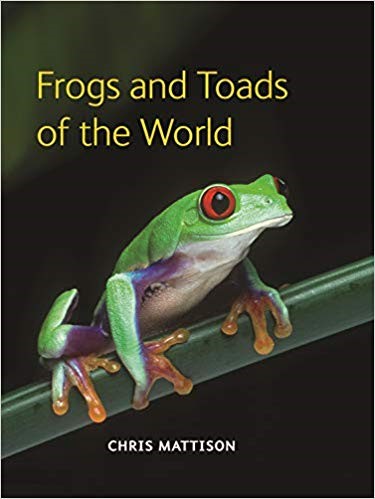
- Reading materials about Frogs and Toads: Frogs and Toads by Camila Gersh, Frogs and Toads of the World by Chris Mattison, Frogs, and Toads and Tadpoles Too by Allan Fowler
- Chart paper, White Board
- Markers, pencils, Paper
- Graphic organizers
Vocabulary
- fact
- preposition
- illustration
- classify
- sort
I introduced students to vocabulary words, their pronunciation, definitions, and examples. They were then paired off with a partner to complete a short activity where they would fill in the blank using vocabulary words to complete sentences.
Motivation
Students will color & cut out pictures of animals found in or near a pond. They will place the animals on a chart that reads “Pond Life”.
Lesson sequence:
- Students will discuss the pictures they have colored and cut out, and why & how they placed them on the chart.
- next the students will make groups of threes{pods}
- After the students are settled, a stack of animal cards and headings will be given to each group.
- The teacher will have the groups place the cards in the appropriate lists. At this time, we will review what a preposition is.
- The answers will be discussed and the subject will be narrowed to frogs and toads.
- The teacher will then read about frogs and toads. During the reading students will be asked to ribbit or croak each time they hear a preposition. (TPR activity)
- After the teacher completes the reading. She will read from a NF text on Frogs and Toads, and modeling how she will place facts onto the Venn diagram. (I DO)
- Each group will be given a stack of seven or eight facts from the text.
- Each group will have a chance at placing a card on our Venn diagram about Frogs/Toads. (WE DO)
- Teacher will have student discuss their placement of facts onto the venn diagram
- Students will be paired off and each group will use a different text according to their ability on the topic of Frogs and Toads. They will work on completing a venn diagram
- When the Venn diagram is completed. Students will be asked to choose a frog or toad, illustrate the frog/toad and list three facts about the frog or toads
Differentiated Instruction
Three different books of Frogs and Toads were provided. Students worked with a partner of like abilities for the independent practice part of the lesson. The teacher provided all groups with graphic organizers but, the lower level student graphic organizer was prefilled with an example and the page number where fact was retrieved. The teacher met with that group for guided support but, then moved to the other groups to advise and conference with students.
- Analysis
This lesson observation involved 4th-grade students from two different classes. Of the six students, five students are native Spanish speakers and the sixth student speaks Haitian Creole. All six students socialize during lunch and recess and socialize a lot during their sessions with Ms. Han, their ESL instructor. They enjoy their time with each other and are given plenty of opportunities to communicate and practice their English language skills.
The lesson objectives were aligned to 4th-grade common core state standards for ELA literacy of Reading for information RI.4.6 and Language L.4.1.E For example, students read informational text that was appropriate to the topic of frogs and toads and level of the students and worked on gathering facts from the text to complete a Venn diagram. Students also practiced their language skills learning about and then identifying prepositions used in the text. Although science standards were not addressed during this lesson, the lesson itself did cover 4th grade science content on animal characteristics and habitats. The lesson is also aligned with TESOL proficiency standard 2: English language learners communicate information, ideas, and concepts necessary for academic success in the area of language arts and Standard 4: English language learners communicate information, ideas, and concepts necessary for academic success in the area of science. Students were given multiple opportunities to communicate before during and after the lesson. They were allowed to work in pairs to complete tasks, they also had to turn and talk to discuss facts from the text during the we do part of the lesson.
The teacher began the lesson by introducing vocabulary words needed for the lesson. She had each word printed on chart paper and on the whiteboard she had each word printed with its definition, and example of the word meaning followed by a link that showed them sentences with the word. I noticed she gave much importance on word enunciation before showing the definitions and examples. This was where students were given the opportunity to practice saying the word to a partner. They were asked, “what do you think this word means?” and they engaged in a turn and talk. They were given copies of the words, definitions, and examples to follow along as the teacher read them aloud from the white board. At the bottom of the sheet was an exercise where students got to show what they learned about the new vocabulary words. I noticed the teacher used the activity as data and reviewed some of the words with some of the students. Although most of the students showed comprehension of the new vocabulary words, I believe the students would have benefitted from visual aids as well.
The teacher used a teacher made chart labeled “Life in The Pond” and for this activity the students were to cut out and color animals that live on or near a pond. This activity tapped into the student’s prior knowledge and lead into background building as some students were unsure about some of the animals on the page. This activity also gave students the opportunity to communicate within cooperative groups as they each shared information with each other on what they knew about the animals and where they live. During this observation I noticed that Ms. Y’s teaching strategies reflected some of the language teaching approaches researched during this course. For example, the students were working in cooperative groups trying to figure things out with information provided as the teacher went from one group to the other offering advice and taking note of what students were able to do. During vocabulary building, she emphasized proper pronunciation and had students repeat the words several times for accuracy and fluency.
During this observation, I also got to see how the teacher was able to use differentiated reading materials on the same topic and teach student the same concept while sticking to 4th grade standards. She made language comprehensible and used communication in the new language as a strategy to learn the language. She applied many strategies and techniques that integrated language and content instruction. According to Short, Deborah, J. (1991), ELL students need access to comprehensible in put in English which means that they need to be exposed to the content language used in the classroom through multiple techniques and strategies that are often seen in Content based Language Instruction.
As Ms. Y. taught the prepositional words through the text, ‘Frog and Toad are Friends’ by Arnold Lobel. She mentioned that this book was different because it was fiction but it that it featured a Frog and a Toad and that they were going to sample the book and listen out for prepositional phrases. In this part of the lesson she applied Principle 4: Instruction needs to be predominantly directed at developing implicit knowledge of the L2 while not neglecting explicit knowledge. Ellis and Shintani, (2014 pg. 23). She began with explicit teaching when teaching prepositions and how they are used in a sentence. She then repeated the meaning and had them refer back to their sheet of paper on vocabulary words. She asked them to look at the example of prepositional phrases and read it aloud. The all said “with” and when she asked them to repeat the word, she croaked and lifted her body in a slight hopping motion. The children laughed because they didn’t expect that from her. She explained that when she hears a prepositional phrase, it makes her want to croak or ribbit like a frog and toad. She then pulled out a list of prepositional phrases and they read them together. Each group got a set of them on index cards held together by a ring that allows them to easily flip through the words. She asked each group to read just one word and as they did, she croaked and moved her body as she previously did (role reversal). The students were excited to see the teacher acting silly. They turned and practiced with their partners for about two minutes and she began reading from the selected text. I was impressed on how easily the students caught on to the prepositional phrases as she read (Implicit instruction). This activity involved Total Physical Response (TPR) and the reversal and the reversal role. This activity was related to chapter 8 of “Techniques and Principles of Language Learning” where the author explains how commands are given to students to perform an action which gives meaning to the action. The author further explain that teachers should perform the action first before asking them to perform the physical command on their own. Larse-Freeman (2008 pg.116).
In observing Ms. Ys lesson, I noticed that she focused on Principle 8: The opportunity to interact in the L2 is central to developing L2 proficiency. Ellis and Shintani, (2014 pg. 25). Throughout the lesson Ms. Han referred to her charts, and had students practice their communication skills in all activities. There were several opportunities for turn and talk, group work, and talk time. I also notice ed that as she spoke her rate would change from slow to normal. She also gave students plenty of wait time but, would also restate when she would t get a response. She implemented many strategies to make the lesson comprehensible and engaging. The group of students worked in pairs to complete their own graphic organizer on frogs and toads during independent practice. There graphic organizers were differentiated and the books on frogs and toads were also of different reading levels. During many of the talk activities students had opportunities to work with student of varying levels of proficiency but, for this part of the lesson they were grouped according to like abilities. Ms. Y worked spent more time with one particular group, but also gave enough time to meet with all groups. She tracked their progress and gave each group oral feedback. They shared out and Ms. Han extended the activity by having students illustrate a toad or frog and list three interesting facts. Ms. Han gave each student written feedback on both tasks. The illustrations were displayed on the bulletin board.
- Student Background/Student Interviews
After the lesson, I interviewed several students in Ms. Y’s 4th-grade class.
The first student named E., a 10yr. old girl that was born and raised in Puerto Rico. She lived in a small secluded town in Puerto Rico and her school did not offer any English language courses. She lives in a single-parent home and says that her mother is trying to learn English from her. She has been living in New York City for about a year and is able to communicate effectively with her classmates. She says that classwork seems hard when we use some words about teaching. I realized she was referring to academic language. She says reading and math are her favorite subjects because she loves books and she can add subtract multiply and divide well. When I asked her what subjects were the hardest. She explained that writing is difficult because she has to write in English and sometimes, she can think of the words she wants to write but in Spanish. She is aware of her misspelled words and when she is really stuck, she starts to cry. She also stated that Social Studies was confusing because sometimes it talks about topics she learned but, then she has to learn about different countries and wars that she doesn’t really understand. She shared her thoughts of Learning a second language by telling me that she can’t wait to read and write like some of her English-speaking classmates and that she loves exchanging words with her English-speaking friends. Ms. Y stated that E. is highly motivated, very talkative, and helpful. E. enjoys communicative activities most and has really advanced in communicating thoughts and ideas with clarity. She also likes to offer help and advice to peers. At times, E. does not respond well to oral feedback and shuts down. Ms. Y has been trying different ways to provide feedback that won’t lower her confidence.
Student 2, A., a 10 yr old girl was born in the United States but lived in the Dominican Republic most of her life. She entered the United States at the age of five and completed kindergarten and first grade at another public school in Queens, NY. She went sent to live in the Dominican Republic and returned to the US during the Spring of 2018. She lives with her father who speaks English and is encouraging her to speak English at home. When I asked her about her previous experience as a second language learner, she explained that she was speaking English with her friends at school but, when she recently returned to the U.S., she suddenly forgot everything she learned. She has regained her speaking and communication skills but, continues to struggle with reading, writing and math. She mentioned that she struggled academically in the Dominican Republic and that her mother had to pay a tutor. She enjoys reading books the most and when the teacher reads to the class. During the interview, there were times I had to ask questions in both English and Spanish. Aside from reading books, I asked about her second favorite activity or subject was and she mentioned math. She says, some math problems remind her of math problems she had to solved back at home. She also likes math because she does not have to write. She believes writing is too hard, and she does not know what to say during her writing tasks. Ms. Y stated that A. is a lovely student but, she needs constant motivation. She sits quietly most of the time and will not volunteer information unless she is prompted. Once she shares within a group several times her confidence builds up. She works best when working with one partner. She is working on building her confidence and has noticed that she has voluntarily participated recently. She also stated that A. may be struggling more than her ELL peers because she struggled academically in her native language. Ms. Y will continue to work with A. because she knows that she really wants to learn; she just needs that extra attention.
The third student was AF, a 9yr old girl who was born and raised in Panama. She entered the United States in the fall of 2018. She told me that the school she attended in Panama provides English as a foreign language at a very young age and that she was able to communicate with her classmates here in the U.S. She explained that her mother doesn’t speak English but, there are many members of her family here in the United States that speak English fluently. She and her mother are living with an aunt and several cousins that are English speakers and are also helping her along the way. They help her with homework and encourage her to speak English when possible. She says that reading in English is really easy because it reminds her of Spanish words that she knows. She knows how to break apart words and sound them out and practices at how with books she gets from the library. She especially enjoys the books that have English to Spanish translations. She enjoys reading books and writing but, admits that writing in English can be difficult. She noticed that when she directly translates some of her thoughts from Spanish to English; she realizes that it doesn’t always sound right. She lies to work with teachers with her writing because she wants to be a better writer. She doesn’t mind learning math but, it is not her favorite subject. Ms. Y stated that AF is very quiet but highly motivated to learn. She says that AF pays close attention during instruction and that she is usually the student who leads the most during group work. She gives close attention to detail when working on a task. She is also very helpful and translates for other students as well. Although AF believes her writing does not always sound the way she intends, Ms. Y believes her writing skills are advanced for a language learner who has only been at our school for less than a year.
- Summary of Interview
The students in Ms. Ys 4th grade group stated that they look forward to working with her in a separate location. They said that she had fun activities for them, and that they did not feel embarrassed about making mistakes because it’s just them. When asked about the lesson on frogs and toads they all said they enjoyed it for several reasons. Some stated that they have similar books in their classroom library, other said that they enjoy learning about animals. Another student said that it reminded her of the main frog found in her country. When I asked about the vocabulary activity at the very beginning of the lesson, they thought the lesson was going to be hard because some words were hard to understand. They felt more comfortable when Ms. Y gave them the vocabulary handouts and had them work with someone to complete the activity. Some said that the activity they liked most was learning about prepositions and having to make sounds and movements whenever they noticed one in the text. They especially loved seeing the teacher making frog sounds when hearing prepositions. Other students enjoyed the activity at the end of the lesson where they had to draw, color and list facts. There was one student who said reading with partner to find out about the frogs and toads was most exciting because he enjoys reading about animals and working with a partner. They all stated that the hardest part was when they were given facts about frogs and toads during the WE DO activity. They saw the teacher model the lesson but were still nervous about placing them in the wrong part of the Venn diagram.
- Reflection
As I reflect on the lesson I observed there were several strategies that I would like to apply once I become an ESL instructor. There were also parts of the lesson I would have done differently. The students were engaged, had lots of talk time with lots of strategies that promote student learning. For example, the teacher implemented a TPR activity that was successful in teaching students to recognize and use prepositions. One thing Ms Y did not include was visual aids. I believe visual aids can be easily accessed online and projected onto whiteboards when learning vocabulary words. If do not have access to a whiteboard in the class I would create a power-point at home and print out copies for each of the students. When Ms. Y used the book Frog and Toad are Friends to teach prepositions, I was confused as to why she used fiction when her lesson involved informational text. I may have used the front cover to get students talking about what they knew about frogs and Toads, but in teaching prepositions, I would have chosen a nonfiction text. I thought the independent practice was rigorous for most students but, I would have asked that the higher performing group complete a writing activity that summarized the information of the Venn Diagram.
Overall, it was a great experience observing an expert ELL instructor use different approaches and strategies as part of her teaching practice. When Ms. Y allowed student s to converse with one another on a topic I was able to see the effectiveness of using language and communication as a way to teach language. I observed her actions and positive interactions which helped build student confidence. I believe my time with Ms. Y has clarified many questions I had about teacher practices in working with ELL students. The outcome of the lesson showed her ability to make content comprehensible and fun.
Touro TESOL Teacher Candidate Christine Romonoyske on Sheltered Instruction for EDPN 673
The reflective journal writing provides students with a theoretically sound pragmatic format for process thinking and critical reflection on professional practice and professional development. Reflective journal writing is a part of an ongoing process of capacity building for critical reflection on practice in the field of TESOL as well as on one’s own socialization.
The reflective journal writing provides students with a theoretically sound pragmatic format for process thinking and critical reflection on professional practice and professional development. Reflective journal writing is a part of an ongoing process of capacity building for critical reflection on practice in the field of TESOL as well as on one’s own socialization. The reflective journal exercise has a specific sequence that student should follow. Below are the requirements for the reflective journal. (Herrera, 2007) To provide students with a framework to make connections between prior knowledge and new information. The framework engages students in a systematic process to guide their ongoing reflection, a process they can internalize and practice as constructive educators. Students will be able to engage in this process to improve their teaching throughout their careers. The following are some ways reflective practice has been described in the literature over the past two decades. Reflective practice is: A dialogue of thinking and doing through which one becomes more skilled (Schon, 1987) A process that helps teachers think about what happened, why it happened, and what else could have been done to reach their goals (Cruickshank & Applegate, 1981) An inquiry approach that involves a personal commitment to continuous learning and improvement (YorkBarr, Sommers,Ghere, & Montie, 2001) The practice of analyzing one’s actions, decisions, or products by focusing on one’s process for achieving them (Killion &Todnem, 1991) A critical, questioning orientation and a deep commitment to the discovery and analysis of information concerning the quality of a professional’s designed action (Bright, 1996). A willingness to accept responsibility for one’s professional practice (Ross, 1990) A systematic and comprehensive data gathering process enriched by dialogue and collaborative effort (Osterman & Kottkamp, 2004) The use of higher level thinking, such as critical inquiry and metacognition, which allow one to move beyond a focus on isolated facts or data to perceive a broader context for understanding behavior and events (Hatton & Smith, 1995).
Touro TESOL Teacher Candidate Christine Romonoyske graduated from St. Joseph’s College with her Bachelor’s Degree in Early Childhood and Childhood Education. She is a NY State Certified Teacher working towards her Master’s Degree in TESOL. Christine shared that “I am excited to use the new strategies and methods I learned in my future teaching!”
1. Description of Highlight(s) – chapter, article or event that pertains to the course.
Content-Based Instruction (CBI) is an approach in language teaching to provide instruction to English language learners based on content and language that the students will acquire. One model of Content-Based Instruction I want to focus on is Sheltered Instruction, also known as the SIOP model. The SIOP model includes eight components: lesson preparation, building background, comprehensible input, strategies, interaction, practice and application, lesson delivery, review and assessment. The articles Using Sheltered Instruction to Support English Learners by Amy Markos and Jennifer Himmel and the article Using the SIOP Model for Effective Content Teaching with Second and Foreign Language Learners by Veronika Kareva and Jana Echevarria both analyze the application and suggests the different strategies to be used in sheltered instruction in content areas including math, science, social studies, and language arts. The goal of sheltered instruction is to acquire the English proficiency and content area knowledge needed to transition successfully into mainstream instruction. Sheltered instruction will provide access to the core curriculum by teaching in a way that is meaningful and understandable for second language learners. Sheltered instruction will allow the students to learn the target language as they master significant skills and content. (Markos, A. & Himmel, J. 2016) At the early stages of English proficiency, students only participate in sheltered instruction during highly context-embedded areas such as music, physical education, and art. Their other content instruction is provided in their native language. When a student reaches an intermediate level of English proficiency, that student will then be eligible to transition into sheltered English for grade-level science and math. Finally, when the student reaches the advanced levels of English proficiency, that student can begin to learn language arts and social studies through sheltered instruction and officially move into the mainstream classroom. As a child’s level of English proficiency increases, so will their exposure and participation in sheltered instruction. (Markos, A. & Himmel, J. 2016) The process of sheltered instruction is to deliver language-rich, content-area instruction that is comprehensible to the learners in English. To be a teacher for sheltered instruction, you need to be certified to teacher the content area material, teach English learners effectively, understand second language acquisition, deliver comprehensible input, address the linguistic needs of ELLs, and have knowledge of the students’ language, culture, and community.
2. Initial Emotional Response (surprised, embarrassed, sad, inspired, excited, puzzled, etc.)
After reading about sheltered instruction, the SIOP model, I was impressed to learn the many different strategies that are implemented into all content areas and language development to improve the effectiveness of teaching ELLs. I was inspired to find that there is a significant improvement in achievement of learning outcomes for English language learners by using the SIOP model. I was also impressed by the way the model was designed to combine features that are recommended for high quality instruction for all students, such as cooperative learning and reading comprehension strategies while including specific features for second language learners, such as language objectives in every lesson delivered, opportunities for oral language exposure and practice, the evolution of background knowledge, and academic vocabulary. (Echevarria, J. & Kareva, V. 2013)
Learning Process 3. Prior Assumptions or Opinions about the described highlight.
Before reading the articles about the SIOP model, I assumed that sheltered instruction, the SIOP model was only intended for ENL programs, not mainstream classrooms. I had the assumption that when the classified ELLs received their ENL program support, that was when the teacher focused on developing lessons for the students to focus on academic language development and academic content. I also assumed that when the students were out of the mainstream classroom and in their ENL program, the term “sheltered instruction” meant that the ELL students studied in classes separate from the mainstream classes and were not able to meet the same academic requirements as the English speaking students in the mainstream classrooms. I assumed that the ELLs would be focusing on mainly reading, writing, listening, and speaking in a separate location where they were able to speak in both their native language and English. I thought that when the students returned to their mainstream classroom after receiving their ENL pullout, they would participate in the classroom curriculum, but receive materials that were considered “watered down.”
4. Source of Assumption or Opinion. What made you have such an assumption?
I had the assumption of sheltered instruction taking place in pull-out ENL programs because when I heard the term “sheltered” I thought it meant that the students would be learning academic language and academic content in a separate classroom of their English-speaking peers. From experience working as a substitute teacher, I have seen both, mainstream classrooms and pull-out ENL programs, and I have noticed the ELLs focusing more on learning a new language and new concepts in their ENL program rather than in the mainstream classroom.
5. Assumption/Opinion Check – Validation/Invalidation
My assumption was invalid because according to Echevarria and Kareva, “schools are faced with teaching second language learners to meet the same academic requirements as other students. (2013) My assumption was also invalidated because in today’s schools, ELLs study alongside their English-speaking peers in the mainstream classrooms. During sheltered instruction, in the mainstream classroom, the teacher makes lessons understandable and meaningful for second language learners. It is the teacher’s job to make adjustments to the lessons to fit the needs of the ELLs. My assumption of curriculum being “watered” down for the ELLs in the mainstream classroom was also invalid. The article states, “Sheltered instruction is not a watered-down version of grade level instruction but is a means for making cognitively challenging lessons comprehensible to second language learners.” (Echevarria, J. & Kareva, V. 2013) In the SIOP model, the teacher will explain the tasks clearly and express the steps written and orally for the second language students. SIOP teachers will talk through the curriculum procedures and use many examples and models to develop the student’s academic language skills across the domains of listening, writing, listening, and speaking. Sheltered instruction is used for instruction in all content areas including science, math, social studies, reading, and language arts.
6. Realization/Aha Moment or Epiphany
I now realize that I had the misconception that sheltered instruction only took place out of the mainstream classroom. After reading the articles, I’ve come to realize that sheltered instruction, the SIOP model is an effective model for teaching second language learners. I learned that the model was beneficial because it promoted teachers to demonstrate curriculum content to second language learners through techniques and strategies that will make the new information the ELL students learning comprehensible. The article states that, “the model was designed to combine features recommended for high quality instruction for all students, such as cooperative learning and reading comprehension strategies with specific features for second language learners, such as language objectives in every lesson, opportunities for oral language practice, and the development of background knowledge and academic vocabulary.” (Echevarria, J. & Kareva, V. 2013) The SIOP model consists of 8 steps, but it not considered a step by step process. The model is framework to for effective lesson planning and delivery. The teacher can add their own style and techniques to promote a successful lesson. Step one is lesson preparation. The teacher will produce a lesson that enables the students to make connections with their own personal knowledge and experiences about the new information being taught. Step 2 is building background. The concepts from the lesson will be related to students’ background experiences. Step 3 is comprehensible input. The teacher will use the proper speech that is appropriate to the students’ proficiency level. Step 4 is strategies. The teacher will include methods and techniques that enhance comprehension for learning and keeping information. Step 5 is interaction. The teacher will allow the students to actively participate, while discussing ideas and information. Step 6 is practice and application. The teacher will provide the students with the opportunity to use hands-on materials or manipulatives to learn and practice content. Step 7 is lesson delivery. The lesson delivery includes the language and content objectives, student engagement, and the pace of the lesson regarding the student’s abilities. Step 8 is review and assessment. The teacher will incorporate review and assessment in daily lessons to assess student learning. (Echevarria, J. & Kareva, V. 2013) I have now learned that by using the SIOP model, teachers will become more motivated to improve their instruction and to use practices that will assist English language learners in both content and academic language.
7. Implications for future teaching practice
In my future teachings, I will be sure to refer to the SIOP model in the classroom. As I am preparing my lessons, I will incorporate the 8 components of the SIOP model to ensure student success. It is said that in the schools where the teachers use the SIOP model, have experienced improvement in academic performance, and those are the results I want to encounter in my future teaching practices. During a lesson, I will connect the content being taught to the students’ background knowledge and experiences. In the classroom, I will post language and content objectives in the beginning and end of my lessons. I will also refer to them in the middle of the lessons so the students can take ownership of their language development, content learning, and their goals. When doing group activities, I will group the students in a heterogeneous mix of language abilities, allowing students of different levels of English proficiency to communicate with other English learners, as well as proficient English speakers. When working with the students in the content areas including math, science, social studies, language arts, I will provide them with many forms of input. I will present the students with posters, charts, diagrams, visuals, and hands-on activities. I will also allow the students to use graphic organizers to express their participation in oral and written instruction. Graphic organizers tend to make the content more comprehensible for English learners. Other tools I can provide the students with are outlines, highlighted texts, Venn diagrams, and discussion webs. All lessons that I perform will be age-appropriate and the proper educational level and language proficiency level of the student.
References:
Markos, A., & Himmel, J. (2016). Using Sheltered Instruction to Support English Learners. Center for Applied Linguistics.
Kareva, V., & Echevarria, J. (2013). Using the SIOP Model for Effective Content Teaching with Second and Foreign Language Learners. 1-10
Touro College EDPN 673 Fieldwork Report by Yevette Jensen
For the Fieldwork report TESOL Touro Teacher Candidates need to observe between 4-5 bilingual, ESL or integrated classrooms (a total of 10 hours). Then, interview the teachers and ELL students to discover a) what strategies were effective, b) what challenges they faced, and c) their reaction to the lessons.
The following components must be included in the report:
a. Lesson plan (or IEP or intervention plan) developed by the teacher you interview and observe
b. Analysis of the lesson by the teacher candidate – Are the lesson objectives aligned with state or TESOL standards? Is the lesson aligned with another content area for the curriculum? What approach, methods and strategies were applied to the lesson? Was the lesson grade/age appropriate? Did the teacher provide differentiated instructions to all students? Which principles of the instructed language learning (Ellis & Shintani, 2014) were incorporated into the lesson? (Provide specific examples).
c. Background of the students interviewed- how long has he/she been in the US? What language was spoken in his/her family? What was his/her favorite content area? How was he/she doing in the content area classroom? What aspects of English does he/she find most challenging?
(reading, writing, listening, speaking, grammar, pronunciation, etc.)?
d. Summary of the interview: What did the student(s) like about the lesson? What were the challenges?
e. Reflection on the interview and future implications
Touro TESOL Teacher Candidate Bio: Yevette Jensen is 23 years old. She graduated from St. Joseph’s College with her Bachelor’s degree in elementary education and is working towards her Master’s degree in TESOL at Touro College, GSE. This September she will officially be a full-time teacher in a 15:1 classroom and could not be more excited.
EDPN 673
Fieldwork Report
A. Lesson Plan
ENL 5th/6th grade transitioning & expanding
Learning Target: I can identify Notice and Note Signposts from the story “The Giver” by Lois Lowry

Common Core State Standards
5th Grade:
CCSS.ELA-LITERACY.RL.5.1
Quote accurately from a text when explaining what the text says explicitly and when drawing inferences from the text.
CCSS.ELA-LITERACY.RF.5.4. A
Read grade-level text with purpose and understanding.
6th Grade:
CCSS.ELA-LITERACY.RL.6.1
Cite textual evidence to support analysis of what the text says explicitly as well as inferences drawn from the text
Materials
• Notice and Note Signposts Poster
• Notice and Note PowerPoint (with videos)
• Poster paper
• Markers
• Pencils
Motivation
• The students will be presented the Notice and Note Signposts Poster and explained what each signpost is.
• Students will then be shown the Notice and Note PowerPoint. Each slide has the name and explanation to each signpost. In addition to that it had a link which when clicked will bring up a short video clip that goes along with the specific signposts from the slide.
• Teach will then show additional video clips and ask students to guess what signpost they think would fit the scene they saw.
• Pre-teach vocabulary: the signposts and videos that correlate will be shown on the board. The signposts are aha moment, tough question, words of the wiser, again and again, memory moment, contrasts and contradictions.
Aha Moment: When a character realizes, understands, or finally figures out something.
Tough Question: When a character asks them self a very difficult question, and it reveals their inner struggles.
Words of the Wiser: When a supporting character (usually older and wiser) offers insightful advice to the main character.
Again, and Again: When a word, phrase or situation is mentioned over and over.
Memory Moment: When the author interrupts the action to tell you about a memory.
Contrasts and Contradictions: When a character acts in a way you don’t expect, or in a way that is opposite of his or her previous actions.
I DO
• The students will listen and observe as the teacher explains the Notice and Note Signposts and shows the PowerPoint
• The teacher will then model how to find a Notice and Note Signpost within the first few pages of the text “The Giver” in chapter 3.
WE DO
• Teacher and students will read the next few pages of the chapter together out loud.
• Students will listen and be looking for Notice and Note Signposts.
• Teacher and students will stop after a few pages and discuss what signposts they have come across.
• Teacher will give time for a turn and talk and then students will state what signpost they found and give evidence providing a page number where they saw it.
• Teacher will write the Notice and Note Signposts on the board that the students found.
YOU DO
• Students will break off into groups and continue to read the chapter.
• While they are reading, they will talk will their group about the signposts they found.
• Once the students have completed the chapter, they will pick 4 of the signposts they found and write it on poster paper.
• On the poster paper students must write the signpost, give specific evidence from the text with a page number and a quote, and draw a picture to represent what they wrote.
B. Analysis
While carrying out my observations in an ESL classroom setting, I spent 2 periods in Mrs. M’s classroom two times a week. At the time I was in a leave replacement for another teacher and had my lunch and prep back to back which is when I would go to Mrs. M’s room. This class consisted of 5th and 6th grade students. The class was very inviting and was a positive environment to be in. The students loved working with one another and looked forward to activities that allowed them to do so.
The lesson attached met the 5th and 6th grade New York State Common Core Standards CCSS.ELA-LITERACY.RL.5.1: Quote accurately from a text when explaining what the text says explicitly and when drawing inferences from the text, CCSS.ELA-LITERACY.RF.5.4.A: Read grade-level text with purpose and understanding, and CCSS.ELA-LITERACY.RL.6.1
Cite textual evidence to support analysis of what the text says explicitly as well as inferences drawn from the text
At the time the lesson took place we just received a PD on a new reading series that the school would be using the following September. Within this new reading series is a tool called Notice and Note which is something the students can use when reading to help them analyze on a deeper level what they have read. In addition to that all of the 5th grade including Mrs. M’s were reading the novel The Giver by Lois Lowry. I was excited because my class was reading it too and I felt this was a great opportunity to see how I could include Notice in Note in my class and get some tips and tricks from Mrs. M.
The teacher began by showing the students a PowerPoint presentation on the Notice and Note Signpost. There are six of them; Aha moment, Tough Questions, Words of the Wiser, Again and Again, Memory Moment, and Contrasts and Contradictions. I have provided definitions to each of them on the lesson plan attached. The PowerPoint went over each signpost and attached to the slide was a video, the videos were all short clips from films or commercials that the students have seen before. For example, for the signpost Words of the Wiser, the teacher had attached a short clip from the movie The Lion King, which was the scene of the monkey talking to Simba about his father who had passed. I thought this was a great idea because it helped the students relate these signposts to things they have seen before. After all the slides were done, the teacher then showed student additional short video clips and asked them to guess what signpost they think it would represent. During this, after each clip was shown, students were given the opportunity to turn and talk with one another and discuss their thoughts and ideas. The students loved this part and were eager to raise their hand and give an answer. In the opening of the lesson alone, Mrs. M gave the students a quick vocabulary lesson on the signposts, gave visuals to help students relate and understand them, and got the class to become active participants in this lesson.
It was clear that Mrs. M incorporated some of the 11 principles discussed by Ellis and Shintani. In the beginning of the lesson I felt that Principle 9: Instruction needs to take account of individual differences in learners, was used. According to Ellis and Shitant, “teachers need to find ways of fostering motivation in their students. They should accept that it is their responsibility to ensure that students are motivated and stay motivated and not just blame a lack of motivation on their students” (Ellis & Shintani, 2014, pg. 26). The teacher did an awesome job motivating her students in this lesson. She used visuals and videos that the students were familiar with to represent the signposts. Doing that help the students bring the definitions of the signposts to life. I think another principle that Mrs. M used was Principle 7: Successful instructed language learning also requires opportunities for output (2014, pg. 25). The teacher gave the students countless the opportunities throughout the entire lesson to talk with one another about what they were learning and also relate it to themselves.
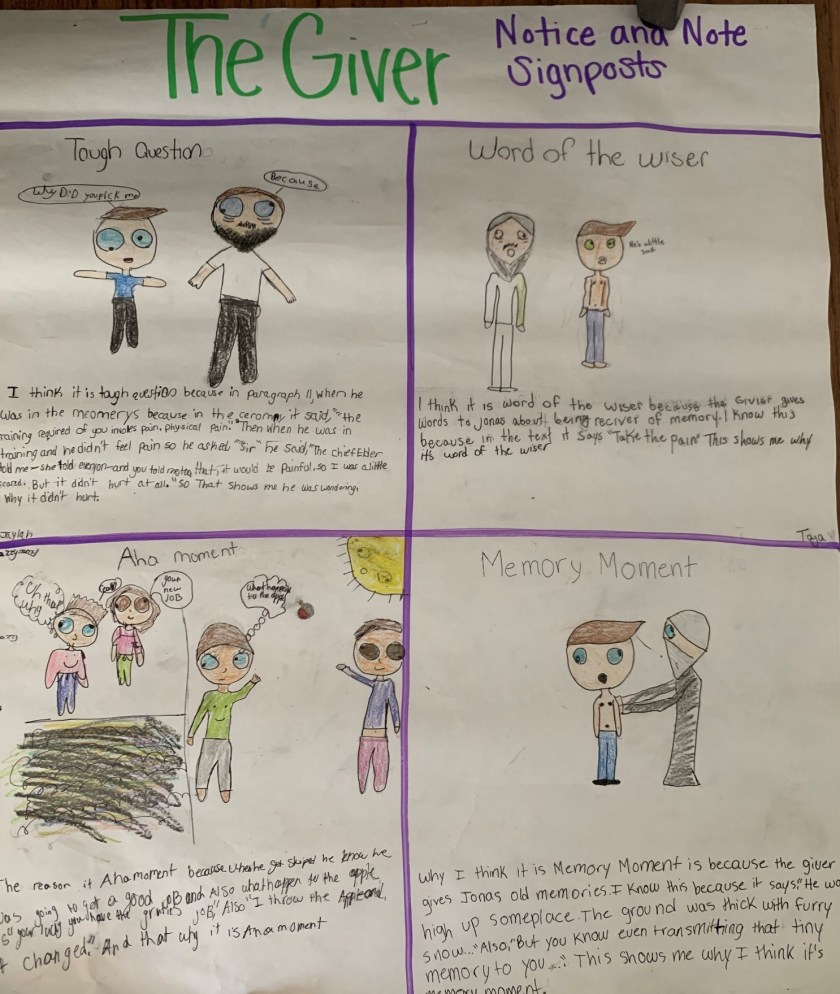 Differentiation was implemented in the lesson when the student broke off into groups. Mrs. M ensured that students who seemed to be struggling to grasp the lesson were paired with students who showed they had a solid understanding of Notice and Note Signposts. During the group work the teacher was circulating the classroom the entire time making sure to stop by each group and ask them questions about their work. I feel this lesson was definitely age and grade appropriate. The students seemed to really enjoy it and were actively engaged the whole time.
C. Student Background
I conducted an interview with a 5th grade student from Mrs. M’s class named W. W moved to the United States when he was five years old. He is from Honduras and his parents speak only Spanish to him and his siblings. During the interview he told me that his parents know some English but it is easier for them to communicate in Spanish therefore, that is all they speak to him. W expressed to me that although he does enjoy reading stories in class, he prefers the area of math because it comes easy to him. He said he felt he didn’t have to put much effort into math because he was able to complete the work in the subject easily and fast and that when he finished his math assignments early Mrs. M lets him spend sometime on the computers in the classroom. The teacher told me that W is a very bright student however, he always likes to be the first one done and that is why math is his favorite. She also said that although W. can read well, he has a hard time putting meaning to the words he reads and then becomes frustrated because he doesn’t understand or comprehend what he reads.
The second student I interviewed was a 6th grade female student named E. who was born in the United States, but both of her parents are from El Salvador and speak only Spanish. E. told me that she did not know how to speak English until she began school and that her parents only speak to her in Spanish which made learning English difficult for her. Similar to W., E. told me that the area of math was her favorite. She too felt that this was an easy subject for her and that she was able to complete assignments with ease. When asked about reading she told me like she likes reading different stories but feels she isn’t the best at reading. She also expressed that writing was one of the hardest things for her, she said that she knows what she wants to say but can’t seem to get it down on paper. When I spoke with Mrs. M, she said that E. is actually really good at reading but lacks confidence when she is completing activities that involve it. The teacher did agree that writing is a struggle for her but said E has come along way since the beginning of the year.
D. Summary of Interviews
Both students informed me that they really enjoyed the lesson and felt that this new tool could help them better understand things that they read. They both said that their favorite part of the lesson was the videos that Mrs. M. showed and when they got to work in groups on the poster. One of the students even said that they enjoyed reading during the lesson because they felt like they were on like a scavenger hunt because they were looking for signposts. Both students did admit that they felt their biggest challenge was actually recognizing when a signpost came up because they never had to think about what they were reading like that. They also said that they wished Mrs. M. handed out a paper with the signposts and the definition because it would have been easier to have it at their desk rather then having to keep looking back at the poster she had created. Lastly, they told me that they felt like it was a lot of information from one lesson.
E. Reflection
After speaking with the students and interviewing them, I was able to see how I would carry out this lesson in my classroom. As I mentioned previously, both students said that they enjoyed watching the short video clips and that they also liked when they were able to work with their groups. I think Mrs. M. did an awesome job with providing the student visuals to really understand the definition of the signposts. I loved that she picked video clips of movies and commercials that were popular and that majority of the students had already seen prior to the lesson. I felt that was a great way to connect the Notice and Note Signpost to real life. I also felt it was a great idea for students to work in groups on a poster and pick out 4 of the signposts in which they were able to draw illustrations to go along with it. It was clear this group liked working with their classmates and valued that time.
One thing I do have to say is I feel that Mrs. M should have a check-in for understanding before have the students go off into the “You Do” part of the lesson. In the “We Do” part the teacher allowed students to share some Notice and Note Signposts they found and then wrote them on the board for the whole class to look at. Although I thought that was beneficial, I also think it would have been better to give the student 5 minutes or so to independently find one and write it down. During that time Mrs. M could have been circulating the classroom to see what students were understanding and what students were struggling. I think the issue with doing it as a whole class is, of course the students who understand are going to raise their hand and provide an answer, however, the students who don’t mostly will not give an answer and instead of expressing they don’t understand will just move on to the next task with the class. She could have used that time to check for understanding before the class broke up into groups.
I also agree with the two students I interviewed that Mrs. M. should have handed out either a paper or even a bookmark with the Notice and Note Signposts on it so that they could have that right in front of them at their desk to refer back to. I also think it would have been nice to see the students share their posters when they were finished with the class. They only had to pick 4 out of the 6 signposts so I think it would have been great for everyone to see what their classmates thought who were not in their own group.
Lastly, I think I would have split this up into either a two- or three-day lesson rather than doing it all in one day. Being the Notice and Note Signposts were something the students had never worked with, I felt it was a lot of information for one day. I think it would have been better to introduce it one day and do a mini activity such as read a short passage and apply the Notice and Note Signposts to the short passage. Then the next day they could have applied it to The Giver. Overall, I think the lesson was great, it was clear that Mrs. M. took time to plan out this lesson and it showed because her students truly did enjoy it.
Educational Technology Survey

 To my network, all faculty, and students – here a survey with four questions I designed to learn more about the use of educational technology for learning and teaching.
Educational Technology Survey
ESL Textbook evaluation for EDPN 673 by Touro TESOL teacher candidate Yevette Jensen
Touro TESOL teacher Candidate Yevette Jensen is 22 years old. She graduated from St. Joseph’s College with her Bachelor’s degree in elementary education. Ms. Jensen currently working towards her Master’s degree in TESOL and looks “forward to applying everything I will learn in my future classroom!”
The assignment in the course Methods and Materials for Teaching English calls for an evaluation of ESL Textbooks.
ESL Textbook evaluation assignment
Refer to Matching Books and Readers by Nancy Hathaway
With thousands of textbooks on the market, and dozens of publishers vying for your business, the selection of appropriate classroom materials is far from a simple process. To help you make well-informed decisions, here are some widely held myths about EFL/ESL textbooks and then three key steps to guide your evaluation of materials and selection of the most appropriate textbooks for your instructional needs.
Evaluation and Selection
Choose 3 chapters/sections OR 3 books (either from a textbook series, library, or a set of supplemental texts to review). Prepare a written description minimum of 2 pages per chapter/book/resource and critique of the material or resource, analyzing its effectiveness for ELL students. Your critique must address the following questions:
- Know your students’ needs: four categories: (1) language background, (2) proficiency level, (3) goals, and (4) preferred approaches to learning.
- What are your students’ native languages?
- Can they read and write in their native language?
- In what settings have they studied English (e.g., classroom, tutoring, self-study)
- Proficiency level in English – Are they beginners, or do they already know some English? Are all students at the same level? Are they stronger in some skills (e.g., reading and writing) and weaker in others (e.g., listening and speaking)?
2. Know your instructional objectives
Taking the time to clearly define your objectives—or to understand the list of objectives provided by the institution in which you teach—will greatly limit the scope of your search for the right textbooks. To do this, you should ask questions such as this:
Given my students’ language background, proficiency level, learning goals, and preferred approaches to learning, what can I realistically expect them to be able to do as a result of my English instruction?
Then move from their needs to teaching objectives. With a list of objectives in hand, you can narrow your textbook selection considerably. You do this by matching your objectives with the proficiency level, content focus, and activity types of a number of potential choices.
3. Know your personal teaching preferences
The third step in the selection process is the assessment of your own teaching style and teaching preferences. To help you to think about the teaching-learning environment that is most ideal for you, as well as your expectations of a textbook, you can begin with questions such as these:
Classroom environment: roles of teacher and students
What teacher role(s) suit your personality and teaching style? Do you prefer the role of director (one who carefully guides students in their learning exercises and activities, usually having them interact more with you than with each other), the role of facilitator (one who organizes and monitors pair work and small group work), or some combination of these roles?
The “fit” between teaching style and textbook choice
How dependent are you on the textbook content for planning your lessons? For example, do you prefer to stick to the textbook, using it as your basic syllabus? Or, do you like to vary your approach based on the content of the lesson?
Are you good at adapting materials and/or creating supplemental activities?
Key Questions to be addressed in Materials Critique
- What are the lesson objectives the material infers?
- Can the identified methods and techniques be used appropriately to the teaching situation that you have in your classroom? (Describe your classroom situation in detail) Your students’ needs: four categories: (1) language background, (2) proficiency level, (3) goals, and (4) preferred approaches to learning.
- Do the techniques used in the material advocate for achieving the stated/assumed objectives most effectively?
- Do the techniques maintain the engagement of the learners and at what level of instruction (beginning, intermediate, advanced proficiency)?
- How are the techniques appropriate for all types of students and can they be easily adapted in your classroom?
- What are the identified methods and are they used appropriately to the teaching situation that you have in your classroom?
- Do the techniques used in the material advocate for achieving the stated/assumed objectives most effectively?
- Do the techniques maintain the engagement of the learners and at what level of instruction (beginning, intermediate, advanced proficiency)?
- How are the techniques appropriate for all types of students including special needs students and can they be easily adapted in your classroom?
- List which NYS TESOL standards this book addresses.
- List key vocabulary.
- Create a general Bloom’s Knowledge Matrix per selection – this means you will have 3 matrixes
- Complete ESL TEXTBOOK EVALUATION CHECKLIST
Here the submission by Touro TESOL teacher Candidate Yevette Jensen: Materials Critique 673
Reflections on the article Sociocultural Perspectives on Foreign Language Learning by Samantha Solomita TESOL Course EDPN 673 Touro College
This week I am featuring TESOL candidate Samantha Solomita’s thoughtful Reflective Journal assignment. All teacher candidates are required to write reflective learning journals for every course as part of the TESOL Touro program, CR-ITI-BE in TESOL and CR-ITI-BE in Bilingual Education. As teacher candidates prepare for a career in TESOL and Bilingual education becoming a reflective practitioner the hallmark for metacognitive learning and taking an active role in one’s own learning. Therefore, the TESOL Program at Touro College, CR-ITI-BE in TESOL, CR-ITI-BE in Bilingual Education requires Reflective Learning Journals for both professional growth and assessment.
Purpose: To provide teacher candidates with a framework making connections between prior knowledge and new information. The framework engages teacher candidates in a systematic process to guide their ongoing reflection, a process they can internalize and practice as constructive educators. Teacher candidates will be able to engage in this process to improve their teaching throughout their careers. Teacher candidates reflective journal entries will be included in the final portfolio.
Bio: Samantha Solomita, a TESOL candidate at Touro College, GSE currently teaches a 12:1+1 bridge self- contained class in Sunnyside, Queens. Her class is composed of 3rd and 4th graders who have learning disabilities and are mostly English Language Learners. Ms. Solomita is certified in childhood studies and students with disabilities 1-6 and holds a Masters in Educational Psychology.
Description of Highlight(s) – chapter, article or event that pertains to EDPN 673 course.
In the article Sociocultural Perspectives on Foreign Language Learning, the authors Mansoor Fahim and Mastaneh Haghani discuss how the sociocultural theory (SCT) relates to learning and teaching a second language. According to Fahim and Haghani (2012) “In sociocultural theory learning is thought of as a social event taking place as a result of interaction between the learner and the environment (p. 693) Therefore, language learning is optimal when the learner is actively involved in their learning and interacting with others. Language and learning are also strengthened as the individual participates in cultural, linguistic, and historical settings. For example, the learner is involved in interactions within peer groups, families, sports activities, etc. Sociocultural theory uses a holistic approach in which meaning is developed through complex forms rather than isolated concepts; therefore, learners have a role in their own learning process. They are problem solvers and meaning makers in their language acquisition process. In addition, this theory stresses an interconnectedness among teachers, learners, and tasks. Social interaction is believed to facilitate the learning process. Learners work together with their teacher to solve the problems. As they work together to solve a problem, individuals are internalizing how to solve the problem on their own. As the learner is developing the language, he/she is benefiting from others participation in the process. With the support of peers and teacher, students can develop language (Fahim & Haghani, 2012). Vygotsky introduced a concept called Zone of Proximal Development (ZPD). With this concept, Vygotsky argues that “psychology should be more concerned with the potential abilities of a child, i.e. what a child will be to accomplish in the future but he/she has not achieved yet” (p. 694). Therefore, scaffolding must take place so that the child can grow and develop. Scaffolding can be referred to as social assistance. Scaffolding can also be anything a learner benefits from. Therefore, scaffolds may be textbooks, dictionaries, and diagrams; however, scaffolds can also be peer feedback and teacher support. Scaffolds may be direct or explicit instruction. The key is that the learning takes place within the learner’s zone of proximal development. Therefore, no learning is “out of reach.” Another concept of SCT is internalization. There needs to be an enhancement of interactions among the learners. The expert role can be applied to the teacher but also to learners as well. Reciprocal teaching may be adopted to have expert learners teach students who are still developing the language. Teachers could adopt a learner-centered approach to instruction to help students with internalization (Fahim & Haghani, 2012). Another essential component of SCT is the activity theory. Activity theory focused on task-based performances which provide learners with an active role. The learner becomes socially and academically motivated which leads to success in the language learning process. Engaging the students in interviews, role-plays, and other real-world tasks increase the value of learning for students. The learners’ motives, goals and values contribute to their success in language acquisition. Overall, the SCT argues that learning is optimal when it is within the learner’s zone of proximal development, scaffolds are provided, and there are interactions within social contexts (Fahim & Haghani, 2012).
2. Initial Emotional Response (surprised, embarrassed, sad, inspired, excited, puzzled, etc.)
Initially, I was surprised when I read this article because I did not think that the sociocultural theory applied to language learning. I have researched and read a lot about Lev Vygotsky’s theory in my undergraduate and graduate courses; however, I do not remember any research focusing on language learning. I was surprised and excited to learn that there are connections between what I have learned in psychology courses and TESOL courses. I was surprised that the sociocultural theory connects to language learning; therefore, I was eager to reflect on this article.
Learning Process
3. Prior Assumptions or Opinions about the described highlight
Prior to reading this article, I thought that second language learning should be mostly teacher-directed. I assumed that for students to learn the language they needed to be passive learners. I thought ENL teaching was very teacher-directed with limited interaction and discussions between peers and teacher. I thought that students simply listened to the teacher and repeated what the teacher stated. I perceived ENL teaching as teaching the basics of English such as grammar, spelling, and verb agreement. I also thought ENL teaching incorporated mostly drill practices and repetition. In addition, I believed ENL was a pull-out service which was separate from content. I thought students were pulled out to practice basic English skills which were not aligned to the curriculum taught in the classroom. Therefore, as a student, I thought that ENL teachers were separate from classroom teachers. I did not realize that an ENL teacher could be a classroom teacher as well. Lastly, I also thought that ENL teaching incorporated specific teacher feedback as opposed to self- and peer- feedback.
4. Source of Assumption or Opinion What made you have such an assumption? (
I had this assumption because most of the videos that I have watched for this course have been very teacher-directed. Also, the readings from earlier on in the course were also more teacher-directed methods. For example, the Audiolingual Method, the Grammar-Translation method, and the Direct Method and very teacher-centered. The teacher is the expert and the students practice language without really understanding the content. The student’s role is mostly to listen to language and then repeat words and phrases. However, when I read the title of the article, I knew that the sociocultural theory focused on interactions; therefore, I was eager to read the article and make connections to language learning. Another reason is, before I became a teacher, I always thought that ENL was teaching simply English. I did not realize that it was integrated. I envisioned the ENL teachers doing basic grammar and sentence structure. From elementary school, I remember the ENL teachers having their own rooms and the students only going to their rooms. I do not remember ENL teachers ever coming into my classroom or teaching general content.
5. Assumption/Opinion Check – Validation/Invalidation
My assumptions about the instruction of a foreign language were invalidated due to research on sociocultural theory and other methods of teaching. For example, Vygotsky’s sociocultural theory proposes for students to be active in their learning in order to create meaning. According to Fahim and Haghani (2012), “the theory also lays great stress on the dynamic nature of interconnections among teachers, learners and tasks and advocates the concept of learning which stems from interactions among individuals” (p.694). Therefore, according to SCT, learners should be engaged in tasks that are meaningful and challenging. Students show optimal growth when learning is within their zone of proximal development and they are supported by peers and teachers. According to SCT, language learning is best when there are meaningful interactions between students and teachers. Similarly, further research has supported and validated the points made by Vygotsky regarding language learning. For example, in the article On Teaching Strategies in Second Language Acquisition Yang Hong argues for creating a learner-centered classroom. According to Hong (2008), “In the learning process, the teacher can guide, facilitate, present materials clearly and answer questions, but the teacher cannot learn the language for students or even make students learn the language” (p. 64). The teacher’s role is the role of the facilitator. It is up to the student to take initiative for their learning. Teachers should facilitate the learners through meaningful tasks. For example, “second language learners are more motivated on tasks that they value (Hong, 2008, p. 66). Students may value a task more if it is applicable to their daily life or if it incorporates their interests. Teachers can try to increase value by incorporating authentic literature, using culturally relevant topics, or providing student choice. Also, Hong argues that teachers should provide opportunities for success. Therefore, teachers should choose tasks that are authentic and appropriately challenging. Appropriately challenging tasks are supported by the Vygotsky’s zone of proximal development. In addition, the Silent Way method also uses some strategies which are reflective of the sociocultural theory. Using the Silent Way Method, the teacher does not have to explicitly model for students. The teacher provides students with learning tasks and activities that encourage student responses. According to Richards and Rogers (2016), “the materials are designed for manipulation by the students as well as by the teacher, independently and cooperatively, in promoting language learning by direct association” (p. 108). Therefore, the students work together to make sense of the content and develop the language. The students rely on each other to strengthen their language; therefore, the students work collaboratively and provide specific, constructive feedback. Also, the silent way uses materials that are meaningful to the students. For example, According to Richards and Rogers (2016). “the materials are designed for manipulation by the students as well as by the teacher, independently and cooperatively, in promoting language learning by direct association” (p.108). Like the sociocultural theory, the Silent Way integrates tasks that are meaningful and authentic in order to promote language learning.
6. Realization/Aha Moment or Epiphany
I had an “aha!” moment when I realized how the recent articles I read and the videos I watched related. The articles I mentioned all stress the importance of students collaborating to develop language. In addition, students provide each other with feedback during this process. The teacher works as the facilitator who guides the students through meaningful, authentic tasks. The teacher provides scaffolds such as various materials, teacher support, and peer support to assist the students throughout their language learning process. I believe that this type of second language teaching and learning is the best for my students. For the first few weeks of this course, I was having a difficult time applying the information from the readings and my observations from the videos to my teaching. A lot of the new content I learned about second language teaching was teacher-centered. Methods such as the Audiolingual Method and Communicative Language Method seemed very time consuming and hard to fit in with teaching the general curriculum. Similarly, methods such as Grammar Translation Method and the Direct Method seemed to be very specific and difficult to integrate into content. However, after recent readings and videos, I am envisioning how I can implement strategies into my classroom to teach and support second language learners. After learning more about the Sociocultural theory, I realize that students need to work together more to develop language. Instead of modeling as a teacher, I can have my students act as models for each other. The learning is more valuable when the students are presented with engaging tasks. Therefore, I would like to incorporate more tasks such as the one in the Silent Way video (English, 2013). In the video, the teacher provided the students with a hands-on experience of a floor plan. Students were able to manipulate the pieces and make sense of language as a group. This was a great example for me, students developing language through participating in a meaningful task. Through this task, students learned vocabulary terms, spatial relationships, and prepositions. This was a great “aha!” moment for me because I was able to actually see the concepts that I was reading about portrayed in a lesson. This video helped me put the readings into perspective. Moving forward, I trust that I have research-based practices that I can apply to my classroom to best support my English Language Learners. My thoughts have been changed about second language teaching. I no longer believe that second language teaching should be teacher-centered and teacher dominated. I believe to teach a second language I should use tasks that are meaningful and authentic. In addition, I should provide opportunities for the students to collaborate and provide feedback to one another. I believe that if the students value the learning, they will truly internalize it and strengthen their language.
7. Implications for future teaching practice
As I reflect on what I have learned so far in this course, I plan on making many changes to my teaching and classroom environment. I will incorporate many aspects of the sociocultural theory into my classroom. I would like to incorporate the Zone of Proximal Development as I plan for lessons. As I plan for tasks, I want to ensure that I am selecting materials that are within the ZPD for my learners. I want to make sure that it is appropriately challenging, yet not out of reach; therefore, students can experience success as they work with scaffolds. I plan on scaffolding for my students. Scaffolds will vary depending on the lesson. Scaffolds I would like to include for my students are words walls, reference books, familiar charts, and sentence stems. In addition, I will provide support as a teacher such as prompting questions and guiding the students to refer to resources. In addition, students will scaffold for one another by providing peer feedback. In addition, I would like to implement the Activity Theory in my classroom. For example, I will provide my students with meaningful learning opportunities for them to practice language and learn content simultaneously. For example, I will infuse more group work and partner work into my lessons so that students have an opportunity to share and learn from one another. I will have students participate in authentic, meaningful tasks that target language needs. For instance, my students struggle with prepositions. I would love to incorporate an activity like the one in the video. I would try to connect it to content that is in our curriculum. When my students create dioramas of the rain forest, I can have them practice and use prepositions in their speech and writing. Students task can be to describe the plants and animals in their rainforest using spatial relationships and prepositions. As a group, students can work together to decide where the plants and animals go in the diorama and how to describe them. Similarly, I would like to incorporate real-world mathematics problems in which the students can practice their mathematics vocabulary because that is also something my English Language Learners struggle with. I do anticipate some challenges with incorporating the sociocultural theory into my classroom. I think it will be difficult to incorporate meaningful, authentic tasks into the classroom daily; however, I do believe that it is very beneficial for my learners. Therefore, I will try to start building tasks by evaluating each unit and developing a task per unit. As I continue to develop tasks, I hope to build a repertoire of meaningful tasks that can be implemented into many lessons in all content areas. Overall, there are many strategies that I have learned through coursework that I am eager to implement into my classroom. I trust that implementing concepts from the sociocultural theory will have positive impacts on my English Language Learners.
References
English, A. (2013, January 25). Language Teaching Methods: Silent Way. Retrieved from https://www.youtube.com/watch?time_continue=2&v=xqLzbLCpack
Fahim, M., & Haghani, M. (2012). Sociocultural Perspectives on Foreign Language Learning. Journal of Language Teaching and Research, 3(4). doi:10.4304/jltr.3.4.693-699
Hong, Y. (2008). On Teaching Strategies in Second Language Acquisition. US- China Education Review, 5(1), 61-67.
Richards, J. C., & Rodgers, T. S. (2016). Approaches and methods in language teaching. Cambridge: Cambridge University Press.
The Silent Way – a discussion contribution for EDDN 673, Methods and Materials for Teaching English as a Second Language at Touro College, GSE by TESOL candidate Rose Linehan
This discussion board focus for EDDN 673 was on The Silent Way, an unconventional Language Teaching Method in today’s teaching landscape. It was based upon ideas outlined in Caleb Cattegno’s book “Teaching Foreign Languages in Schools the Silent Way,” published in 1963. Like most cultural events of the 60s and 70s, it was a reaction to previous approaches and methods that were considered excessively rigid and constricting. The basic method that underlies this approach is simple but potentially quite powerful: The teacher is silent, only speaking if the students are struggling. While Silent Method is currently not used in schools I believe understanding the different methods and their applications gives teacher candidates for TESOL and Bilingual Education powerful ideas to incorporate into their clinical teaching approaches. (Adapted from https://www.fluentu.com/blog/educator/silent-way-teaching-method/)
Rose Linehan holds her Bachelor’s Degree in History with a concentration in General Education and Students with Disabilities 1-6, with a minor in Psychology. She is a New York State certified teacher currently working in the East Meadow School District as an Intervention Teacher while obtaining her Master’s Degree in TESOL at Touro College.
TEACHER TRAINING DISCUSSION QUESTIONS BASED ON THE VIDEO/Silent Way
1. What did the students learn in this lesson?
Throughout this lesson, the students learned a few different topics with the Silent Way Method. Students learned vocabulary and prepositions with a location as they both related to a house.
• What was introduced?
 The first thing that was introduced was the different pronunciation of ‘the’ with the help of a color-coded word chart, a Fidel. Next, the teacher introduced a floor plan to the students using different colored rods. The teacher created the floor plan of a house so that students could practice words such as other, another, front wall, back wall, etc. With the floor plan, students also learned other vocabulary words such as living room, kitchen, bed and dining room. Furthermore, the teacher introduced students to the appropriate word structure in sentences.
• What points were practiced?
The first point that was practiced was the pronunciation of ‘the’, which was practiced with the Fidel chart. Students reviewed many words always coming back to ‘the’ and making sure the pronunciation was correct. The next point that was practiced was with the floor plan. By creating the floor plan the teacher was able to have students come up with their own answers using the language while only guiding them. In the Silent Way, it is important that the students are responsible for their own production of the language. Therefore, the teacher uses a variety of strategies to guide the students and allow them to come up with the language on their own. The next point that was practiced was labeling the different rooms and their locations. This point was practiced by having the students sit together in a circle and ask them questions about where certain furniture should go. The students answer with the help of the teacher’s cues. Students need to be watching the teacher closely.
• What was mastered?
Students were able to master the location of certain areas within the house and the floor plan. Students were able to determine what location the teacher was pointing to, such as the living room, dining room, etc. Students were also able to master using prepositions as they related to the house and floor plan. In addition to mastering the location, students were able to decide where certain pieces of furniture went where in the house. They were able to decide what furniture would go in what room. Lastly, students continued to perfect their sentence structure when speaking with the tools used by the teacher to guide them.
2. How were the four basic language skills (listening, speaking, reading, writing) used in the lesson?
The four basic language skills were used throughout this lesson. The students had to listen closely to the teacher from the very beginning. As soon as the lesson started students had to be listening to the correct pronunciation of different words in order to learn. Students had to make sure to be listening to each other as well because it is important that students learn from each other as well as the teacher. Speaking was used throughout the lesson when students were constantly working with the language. Students were continuously speaking and practicing the language. It is important that the students speak up and practice the language so the teacher can take note and see what they are learning. It is important that students are speaking because mistakes are important and once they are addressed the content can be retained more easily. Reading was used at the very beginning of the lesson with the Fidel Chart that the teacher used. The teacher pointed to different words on the colored chart and students read them out loud. The teacher was listening for the correct pronunciation. If there were a mistake the teacher would have the students keep trying until they got it right. At the end of the lesson, students also read out loud sentences that they had written. Writing was used at the end of the lesson when the teacher had the students write about what they learned about the house today. The teacher gave the students some time to complete the writing and then asked for volunteers to share their sentences. The teacher was looking for correct pronunciation and sentence structure within their sentences.
3. Describe any assessment or corrective feedback the teacher incorporated during the lesson.
The teacher was informally assessing the students throughout the lesson. The teacher was observing students during the lesson and listening to how they were interacting with the language. When it came to errors made by students the teacher worked hard to help the student’s self-correct. While providing corrective feedback to the students the teacher used different techniques to guide the students, such as gestures. The teacher makes sure to guide the students to realize their own errors and correct it themselves. This makes sure that the teacher is as silent as possible when it comes to the language. This is beneficial because students are responsible for their own production of the language.
4. Have you ever seen the Silent Way Method before this course incorporated in a classroom for ENL’s?
I have not seen the Silent Way Method incorporated into the classroom for ENL’s before this course. I can see how this method would be very beneficial for the students. I like that students are guided to self correct their own language. I think it is very important for the students to be able to produce as much language as possible on their own. I would be very excited to see the Silent Way Method incorporated into more lessons for ENL students!
Bibliography
English, A. (2013, January 25). Language Teaching Methods: Silent Way. Retrieved from https://www.youtube.com/watch?time_continue=2&v=x qLzbLCpack
Larsen-Freeman, D. (2000). Techniques and Principles in Language Teaching. Oxford: Oxford University Press.
Richards, J.C., & Rodgers, T.S. (2009). Approaches and Methods in Language Teaching. Cambridge: Cambridge University Press.
TEACHER-TRAINING DISCUSSION by Touro GSE TESOL teacher candidate Crystal Demma for EDPN 673 – Methods and Materials for Teaching English as a Second Language

Touro GSE TESOL teacher candidate Crystal Demma holds a Bachelor Degree in Early Childhood and Childhood Education. She is a NY certified teacher working on her Master’s Degree for TESOL and works in the Brentwood Union Free School District where there is a high population of ELL students. Here her personal quote, ” I have worked closely with these students, and truly enjoyed the relationship we built.”
Every week in our Touro online course EDPN 673 – Methods and Materials for Teaching English as a Second Language, teacher candidates analyze and reflect on videos and readings with direct applications to their teaching practice. This discussion board contribution by Crystal Demma shows the dedication and thoroughness of Touro’s candidates.
TEACHER-TRAINING DISCUSSION QUESTIONS BASED ON THE VIDEO
English, A. (Ed.). (2013, January 25). Language Teaching Methods: Suggestopedia.
1. What did the students learn in this lesson?
• What was introduced?
• What points were practiced?
• What was mastered?
2. How were the four basic language skills (listening, speaking, reading, writing) used in the lesson?
3. What were the contents of the different posters? What functions did they fulfill?
4. Examine the contents of the passage itself. In the contents, what is suggested?
5. What direct suggestions does the teacher make to the students?
6. Examine the teacher’s manner: What variations do you see from activity to activity, from beginning to
end? What might explain these variations?
7. What forms of indirect suggestion, beyond the teacher’s manner, were used?
8. In the initial concert, the teacher asked the students to both watch the actions and listen to the words being read. This is an example of an activity with a dual focus. Which other activities divided the students’ attention? Specify the focus for each activity.
1. Lesson-
• The students learned about verbs, the pronunciation of past-tense verbs (t or d sound), vocabulary, and intonation of phrases.
• She introduced acting out verbs as you are speaking them and verbs in the passage.
• The class practiced pronunciation of past-tense verbs, listening/speaking to a partner, acting out verbs, reading from a paper, repeating dictation, past to present tense of same words, and writing down dictation
• I believe repeating dictation and acting out the passage was mastered. They did this multiple times in differing variations. They did this with the class, with partners, and with a student demonstrator.
2. The four basic language skills were used throughout the lesson in multiple activities. The teacher had the students use more than one language skill at a time to create dual focus. The students were expected to listen to a passage, verbs, and sentences while also doing another action. Sometimes this action included orally repeating, reading, and writing. One example of the students using two language skills is the activity at the end of the lesson. The teacher dictated a sentence to the students (listening), and the students wrote down what they heard (writing). Another activity that required students to practice language skills was when the class chorally read the passage and acted it out together. There were many more activities that helped refine the language skills of the students.
3. The posters hanging in the classroom had a purpose. One poster she specifically drew the class’ attention to had past-tense verbs. This could be to help the students visualize the written word and focus on listening to the sounds of the word. The other posters were there to create a comfortable and non-threatening environment. The students learn best when they are in a positive learning environment.
4. As I listened to the passage a few times I realized that it had some implicit suggestion within. I believe that it was implying that although Sarah had a lot to do she was still calm, relaxed, and assured she would complete her task. The video states, “She stretched lazily and placed her feet one by one on the floor… She tiptoed through the boxes, which lay everywhere, and put a kettle of water on to boil.” This shows me that the character is not overwhelmed and implies that it is best to remain calm and at peace.
5. The teacher makes direct suggestions in the lesson. In the beginning of the lesson, she asks the students to sit back and relax. She adds that the students should take a deep breath and think about something pleasant like the beautiful weather they were having. Another direct suggestion she makes is at the end of the lesson during the closing. She advises the students to read the piece of paper with sentences on it and think about the pronunciation and intonation of the words.
6. The teacher uses different variations of activities. The first activity, the teacher spoke very slowly while acting out the passage. The second activity she started off the same by giving a direct suggestion to calm the students and then began. She read at a faster pace without using body movement. Next, she asks the students to act it out together instead of her doing it alone. She emphasizes the intonation more than the beginning. She speaks slower as the students try to keep up. I think her mannerisms change because she is trying to help guide the students when they are working together with her. She continues to give positive feedback and suggestions. Once she starts playing the game with the verbs with t or d she jokes around with the students. She laughs with them and makes it feel like they are playing a game. This could be because she wants the students to associate learning with fun. This is another technique to help imply relaxation and create a positive learning environment.
7. There was a lot of indirect suggestion in this lesson. The teacher decreased the fear of the students by creating a positive and pleasant learning environment. She played music, put out flowers, and displayed posters. Another example of indirect suggestion is the ball activity. The teacher used a game involving a ball with the class. This suggests to the students that learning can be fun and non-threatening. According to the video, learning should be facilitated in a comfortable environment because it increases the students’ confidence; therefore, the students will perform better and ultimately learn more in a non-threatening positive classroom.
8. The video displayed many activities that used dual focus:
• Activity 1- Listen to teachers sentence, repeat sentence, act out the story with body movement
• Activity 2- Listen to partner, act out dictation/Read aloud the passage, watch your partner’s actions
• Activity 3- Listen to past-tense verb, hold up sound card
• Activity 4- Listen to present-tense verb, catch a ball, dictate past-tense version of the verb
• Activity 5- Chorally read aloud passage, watch one student act out the dictation
• Activity 6- Listen to sentence, write down dictation
Reading Response:
1. As I was reading this chapter I noticed that there were not a lot of reading activities. There were many methods, but many of them had a focus off of reading. It was believed by some theorists that language is primarily what is spoken so that is how they would try to acquire the L2 instead of writing or reading (p. 49, 1986, Richards & Rodgers).
• Direct Method- Teachers taught from books containing short reading passages in the foreign language. After the class read they would study lists of vocabulary that was in the reading.
• Reading Based- Read passages in the foreign language, then discuss the passage in English to deepen comprehension
• Structured Linguistics- Studying characteristics of the language like morphemes, phonemes, words, structures, sentence types, etc.
I think the most effective reading activity would be the Reading Based Approach. It is important to expose students to text in the target language; however, it is even more valuable to discuss the text in their L1. This gives them the opportunity to digest and make sense of the text. Some students may not have understood the entire reading, and discussing it as a whole class can fix any misunderstandings they had. I believe discussing ideas deepens comprehension and increases speaking skills. This would also allow me the opportunity to evaluate if they understood the text or not. Students who do not participate and are unable to answer my questions probably struggled with the reading. I should make note who struggled and use this data to target my instruction. I could give them an easier text, or read the passage with them after they read independently.
English, A. (Ed.). (2013, January 25). Language Teaching Methods: Suggestopedia. Retrieved July 2, 2019, from https://www.youtube.com/watch?time_continue=139&v=3rkrvRlty5M
Richards, J. C., & Rodgers, T. S. (2009). Approaches and methods in language teaching. Cambridge: Cambridge University Press.
 Dr. J's Education Blog