Why EDDN 637 Now Integrates the Science of Reading
Jasmin Cowin, Associate Professor, Touro University, GRE, TESOL/BLE Department | Path Forward Grant | PI: Dr. Seong Kim
New York is moving evidence-based literacy from professional judgment into regulatory expectation. Education Law §818 requires an annual review of district curriculum and instructional practices in reading for prekindergarten through grade three, with attestation to the Commissioner. In December 2024 the Board of Regents amended Section 100.3 of the Commissioner’s Regulations, and districts verified alignment by September 1, 2025. In July 2026 the Department introduced a proposed amendment of Sections 52.21 and 80-3.7 at the Board of Regents meeting. Teacher preparation programs in early childhood education, bilingual education, English language learners, literacy, and students with disabilities would be required to align their instruction with the State’s science of reading framework. Candidates would devote a portion of field experience and student teaching to evidence-based literacy instruction and to assessing students with reading challenges. A public comment period is underway and Board approval is anticipated in November.
Sources: NYSED, Elementary Requirements (Section 100.3): districts shall verify alignment of prekindergarten through grade three reading curriculum and instructional practices with the Commissioner’s instructional best practices on or before September 1, 2025, pursuant to Education Law §818 New York State Education Department NYSED, Prekindergarten-3rd Grade Literacy Instructional Best Practices Guide (§818 attestation) WXXI News, December 17, 2024: Board of Regents approval of the pre-K through grade three reading amendment Chalkbeat New York, July 20, 2026: proposed amendment of Sections 52.21 and 80-3.7 (https://lnkd.in/e3Pg9dQM)
EDDN 637 Second Language Learners and the Content Areas
EDDN 637 – TESOL/BLE Department at Touro University responded through the Path Forward Grant with a module-by-module revision that preserves the SIOP architecture of the original Spring 2026 course while embedding reading research at each component. Module 1 opens with a mandatory Science of Reading survey establishing candidates’ baseline knowledge, which informs Lesson Preparation. Modules 2 and 4 add structured literacy to content and language objectives and to Comprehensible Input. Module 3 foregrounds oral language development and pathways to skilled reading under Building Background. Module 7 introduces phoneme segmentation, blending, and structured literacy assessment within Practice and Application. Module 9 adds Scarborough’s Reading Rope, ReadWorks resources, and a Diagnostic Decoding Survey so candidates can determine whether a reading difficulty originates in decoding, vocabulary, fluency, or language comprehension.
The alignment is deliberate since SIOP offers a framework for making content and academic language accessible, while the Science of Reading (SoR) explains the cognitive architecture that makes reading possible. Module 10 helps candidates distinguish second language acquisition needs from reading difficulties and disability-related needs, Module 11 introduces tiered instruction and infographic reflection, and Module 12 closes with a research reflection on skilled reading pathways. Candidates leave EDDN 637 prepared to plan, assess, and intervene using evidence, which is what New York now expects of them.
Conclusion via Candidate Evidence
Candidate work supplies the clearest measure of whether integration reached practice. In Discussion Board 5, Touro University TESOL Candidate Aliyah Giana Martinez in exemplary analysis of an informational text on trees built content and language objectives around the Big 6 components, vocabulary, and reading comprehension. She identified brick words carrying the domain-specific load of the text, including roots, trunk, branches, bark, crown, leaves, sap, stomata, flowers, and seeds, together with mortar words such as alive, grow, anchor, support, protect, and instead. The observation driving the plan was that brick words appear rarely outside scientific contexts, while mortar words surface across many contexts with shifting meaning, so both categories require explicit instruction before students encounter the text. Her differentiation plan drew on sentence frames, total physical response, shades of meaning, picture and audio support, and structured partner and whole-class discussion. Drawing on Herr’s The Sourcebook for Teaching Science, she designed labeled diagrams, comparison organizers connecting tree survival to human survival, a cumulative word wall, and a hands-on construction paper tree.
That construction paper tree is the realia outcome the course intends. Aliyah Giana Martinez moved from explicit vocabulary work toward comprehension of the text, then produced a tangible artifact that makes literacy learning visible and assessable. That construction paper tree is the realia outcome the course intends. Moving from explicit vocabulary work toward comprehension of the text, then producing a tangible artifact that makes literacy learning visible and assessable. The same theoretical learning carried into the fieldwork strands housed in Modules 10 and 11. Reporting from a placement classroom, a candidate documented lessons in which students reread familiar texts, read aloud individually, answered comprehension questions, discussed characters and events, and worked through new texts with teacher support. Her analysis was that word level skills and meaningful reading were being taught in connection with one another, so decoding work and comprehension work occupied the same instructional space. Ms. Martinez mapped these observations onto the SoR Pathways to Skilled Reading infographic introduced in Module 3, noting that skilled reading depends on word recognition together with language comprehension, and that students require explicit instruction in phonemic awareness, phonics, decoding, spelling, morphology, vocabulary, background knowledge, syntax, and comprehension. Locating each observed activity within that framework allowed her to read a single lesson as a set of identifiable components working together. Integration at the course level yielded observation, analysis, and application at the classroom level.
Aliyah Giana Martinez is of Chilean and Greek descent. She loves to travel, cook, and spend time outside going on adventures with her family and friends. She is a newly hired teacher who strives to support her students while learning from her colleagues in order to grow into the best educator she can be.
I am proud to feature her exemplary work in my blog!
Reading doesn’t just come to you, you have to be surrounded by people who believe in you and who will try a number of learning strategies with you to help you be the best reader you can be.
Aliyah Giana Martinez, Touro University TESOL Candidate
The Touro University TESOL EDDN 637 fieldwork experience is an essential component of TESOL preparation because it requires candidates to connect course theory with authentic instructional practice. Through focused observations, candidates examine how teachers support multilingual learners through comprehensible input, academic language development, differentiation, culturally responsive practices, technology, SIOP, and Science of Reading strategies. Rather than simply identifying instructional techniques, candidates must analyze how and why particular practices support, or fail to support, the linguistic, literacy, and academic development of multilingual learners.
This fieldwork also aligns with AAQEP expectations for high-quality educator preparation. AAQEP emphasizes candidate knowledge and skills, professional growth, responsiveness to diverse learners, evidence-based decision-making, and meaningful clinical experiences. The EDDN 637 fieldwork provides candidates with opportunities to demonstrate these expectations by observing instruction, documenting evidence, analyzing teacher and student interactions, and connecting observations to professional standards and course scholarship. The assignment therefore serves as more than a required number of field hours. It provides evidence that candidates can apply professional knowledge to the complex realities of TESOL practice.
Fieldwork as an AI-Resistant Assignment
This fieldwork is intentionally designed to require sustained, authentic engagement that cannot be replaced by AI. AI may assist with editing or organization, but it cannot complete the observation experience for the candidate. Candidates must closely examine actual teaching, maintain detailed field logs, document specific instructional events, include transcripts, and connect particular moments from lessons to SIOP, Science of Reading principles, course readings, and the needs of multilingual learners. Successful completion therefore depends on the candidate’s own observation, interpretation, and professional judgment.
The assignment also emphasizes the higher levels of Bloom’s Taxonomy. Candidates move beyond remembering and understanding course concepts to applying them to real instructional situations, analyzing relationships among teaching practices and student responses, and evaluating the effectiveness of instruction for multilingual learners. Candidates also engage in creating as they synthesize observations, transcripts, course scholarship, and professional reflection into a coherent analysis and propose ways instruction could be strengthened. In this way, the fieldwork assesses not only what our Touro University TESOL candidates know, but how effectively they can think, reason, and make evidence-based professional decisions.
Yeimy Alvarado is a graduate student at Touro University completing an Advanced Certificate in Teaching English to Speakers of Other Languages (TESOL). She is passionate about literacy and finding ways to support all students through effective and meaningful teaching practices. The summer 2026 semester at Touro has helped her to see the importance of the SIOP model and the Science of Reading and how she can use both to create a classroom where every student feels included, supported, and confident in their ability to learn and grow.
I have learned that teaching is not just about what we teach, but also about making sure students can understand and access the content. The Science of Reading has taught me the importance of explicit instruction, while SIOP has shown me how important it is to provide multilingual learners with the right language support, background knowledge, and opportunities to participate and learn. As an educator, these strategies have strengthened my understanding that making content comprehensible does not mean making the academic task easier, but rather providing students of all levels with the support they need to access challenging content and be successful.
Yeimy Alvarado, Touro University Advanced Certificate in Teaching English Candidate
The Professional PPS Resource for Parents assignment is important because it requires candidates to translate their specialized knowledge into clear, practical, and culturally responsive guidance for bilingual families. Rather than demonstrating competence only through case reports, evaluations, or reflective essays, candidates must consider how parents understand school procedures, student needs, available services, and their own rights and responsibilities. Creating the brochure bilingually also reinforces that equitable family engagement depends on meaningful language access, not simply the translation of isolated information.
The assignment directly supports the goals of PSGN 698 Field Experiences in Bilingual Pupil Personnel Services by connecting professional experience with consultation, advocacy, and community communication. It demonstrates whether candidates can identify barriers faced by bilingual students and families, select relevant information, and present it in an accessible format that parents can use when making decisions or collaborating with school personnel. The brochure therefore becomes both evidence of professional growth and a usable resource that can strengthen trust, participation, and culturally responsive service delivery.
PSGN 698 Field Experiences in Bilingual Pupil Personnel Services
Course Description Since students in the program are certified professionals, their work experience (no less than one academic year) will be considered as fulfillment of the field experience requirement, along with attendance at three field experience seminars and submission of a portfolio which synthesizes their experience and understanding of effective services for bilingual population. The portfolio will include: samples of professional work with bilingual students, including case histories, evaluation reports, progress notes, and IEPs; a written essay presenting the student’s professional philosophy, a discussion of issues involved in providing bilingual services in the New York area, and a description of the student’s professional growth in the Bilingual Advanced Certificate Program.
Bilingual Education – Pupil Personnel (Certificate), Touro University Graduate School of Education – Online Length of Program 12 credits Student teaching is in New York State. You’ll need access to a school with a bilingual population and a mentor PPS who is certified in bilingual education in order to complete the field experience course
Dr. Raphael Reichel is a New York State Certified School Psychologist. His professional interests include psychoeducational assessment, PBIS, bilingual service delivery, and improving educational outcomes for students with extensive support needs. He enjoys translating research into practical strategies that educators, school psychologists, and families can apply in everyday practice.
One of the most valuable lessons I’ve learned in Touro University’s PPS program is that culturally responsive practice is about more than speaking a family’s language. It’s about helping families understand the process so they can confidently participate in their child’s education. Dr. Raphael Reichel
Crystal Ching: I am a student at Touro University pursuing my childhood dream of becoming a teacher. Through my studies, the Science of Reading has shown me that intentional, explicit, and evidence-based strategies move students towards success. I strive to create an inclusive, welcoming, and supportive environment where all students will grow and thrive. Outside of work and school, I enjoy spending time outdoors with my friends and family, trying new food spots and playing sports!
This course provides an historical overview of second language acquisition theories and teaching methods. Students learn how to apply current approaches, methods and techniques, with attention to the effective use of materials, in teaching English as a second language. Students will engage in the planning and implementation of standards-based ENL instruction which includes differentiated learning experiences geared to students’ needs. Emphasis is placed on creating culturally responsive learning environments. The course also analyzes the applicability of applied linguistic studies to such teaching and the appropriateness of various methods and techniques to different developmental and skill levels. Special attention is given to curriculum development, planning and executing instructional activities. Additional emphasis is given to the selection of materials and the design of evaluation instruments for measuring cognitive development if the core subject areas. Includes 15 hours of fieldwork.3 credit hours
Prompt Engineering with Co-Pilot for Teacher Candidates
I use pre-created prompts to help my candidates develop rubrics with AI because this approach combines instructional scaffolding with professional judgment. By designing the prompts in advance, I can guide candidates toward course objectives, sound assessment principles, and program expectations while reducing the likelihood that AI will generate vague, misaligned, or inappropriate criteria.
I also see this process as a way to make rubric construction more transparent. Teacher candidates can examine how learning objectives are translated into assessment criteria, performance levels, and descriptors. I do not expect my candidates to accept an AI-generated rubric as a finished product. Instead, I ask them to evaluate, revise, and justify the rubric. This process supports assessment literacy, critical AI literacy, and reflective teaching.
Crystal Ching’s Insights: From Reading and Discourse to Prompt Engineering – Constructing Culturally Responsive Rubrics
Culture is prevalent and relevant in all aspects of learning, especially across all subjects and content areas for students. When teachers fail to understand a student’s first linguistic and cultural proficiency, it can be damaging their learning process. The role of linguistic and cultural proficiency in ESL/EFL reading and writing is to gauge what they know, understand patterns and how to proceed with support and instruction. As teachers, we can not assume that all students will know the rules of school, what sound a letter makes, or how to read and write the “proper way.” That “proper way” is how the Western culture reads and writes, but other cultures read and write another way. As Celce-Murica et al. (2013) note, “On the whole, to become proficient and effective communicators, learners need to attain L2 sociocultural competence” (p. 395). For example, the Western culture reads and writes from left to right. However, in other cultures, they read from right to left. As teachers, we can not assume that a child is confused or does not understand how to read and write. Instead, we need to understand the why, and that is due to their own culture and backgrounds. In addition, our Western culture in schools have certain rules. For example, lining up and walking together as a class to their next class. In other countries, students head to their next classes independently. These differences are not because a child is not following or respecting the rules of the classroom, but rather because this was their cultural routine and custom. Knowing a student’s L1 literacy is essential because it gives us teachers an understanding of what a student knows, literacy patterns they use, and how we can use their L1 as a foundation for their learning. When recognizing and identifying certain patterns of an L1, we can see the function of how a certain group uses language (Celce-Murica et al., 2013). Teachers can plan their future instruction based on a student’s L1 literacy, linguistic and cultural proficiency. We can build off what they know through existing patterns, or explicitly teach, model and integrate supports for these new skills and concepts. Without understanding a student’s culture and language, it only opens the gap for assumptions, confusion and frustration.
Chapter 21 has explored the use of assessment for formative purposes as well as for summative ones. Review the use of assessments in your classroom setting. What purposes do they serve? How are learners involved in learning and assessment? What external factors (e.g., NYS guidelines or state-mandated assessments) impact your choices about assessment? Celce-Murcia, Marianne; Brinton, Donna M.; Snow, Marguerite Ann. Teaching English as a Second or Foreign Language (p. 335). Heinle ELT. Kindle Edition.
In my classroom, students take assessments to see if they understood the topic or skill. I find that assessments are the most important part to a lesson because this proves how much students comprehended the lesson, and allows me to identify any shortcomings of my lesson. As Celce-Murica et al., (2013) states, “Effective teachers use classroom assessment for multiple purposes, such as determining their students’ learning needs, diagnosing specific learning challenges, monitoring the development of students’ skills and engaging students in their own learning processes” (p. 321). I implement formal, informal and summative assessments. Informal assessments help me monitor if students are understanding the topic in the moment. For example, I observe think-pair-shares, thumbs up or down and prompt comprehension questions to see if students need more support. When doing these informal assessments, it allows me to be flexible and adjust my instruction towards their learning needs. As for formative assessments, I use exit tickets/quick checks and quizzes. Exit tickets and quick checks are after my lessons, and only about one to two questions. These questions show what the students understood about the lesson, and what resources are needed to better understand, or if I need to reteach the lesson. The last assessment is a summative assessment. I use projects, and end of unit assessments. These come after the lessons to asses their understanding of the unit. Students are involved in their own learning because they are able to learn from each other through discussions as well as understanding where they may need additional support in. Through assessment, students are given feedback on their work, and this provides expectations from them and their work. Some external factors that can impact my choices in assessments are their own learning goals (RTI), district benchmarks/assessments or personal needs from a student. I had one student in RTI, and her assessments differed from the class because she needed support and growth towards her own goals. Her own goals were different from the class, and I provided the supports to ensure she met her own personal goals. In addition, my school has students take a district assessment, and this assessment compares grades throughout our district to assess the progress of the lesson and program (HMH). Lastly, I have given some personalized assessments for students because their families were concerned about their learning. I accommodated and differentiated certain assessments to elicit growth from my student, before transitioning them to other assessments. Overall, assessments are just as important as a lesson, and should always be valid, accurate and flexible.
For this part, YOU ARE ALLOWED TO use MICROSOFT COPILOT ONLY. Run the following prompt for assessment – you need to use the complete prompt and individualize by completing the [brackets].
Domain
Highly Effective (H)
Effective (E)
Developing (D)
Ineffective (I)
Content Knowledge Teacher understanding of OG principles & vowel‑r concepts
Demonstrates expert command of OG routines and ir/ur/er concepts; provides precise explanations of r‑controlled vowels; anticipates misconceptions and uses multiple examples (e.g., bird, fern, curl).
Demonstrates solid understanding of OG routines and vowel‑r concepts; explanations are accurate and grade‑appropriate; provides several correct examples.
Demonstrates partial understanding; explanations sometimes lack clarity or precision; examples may be limited or occasionally inaccurate.
Demonstrates insufficient understanding; explanations are unclear or incorrect; examples are missing or inaccurate.
Organization of Lesson Structure, pacing, and sequence
Lesson follows OG’s structured, cumulative sequence flawlessly; pacing is responsive; transitions between multisensory components are seamless; materials are fully prepared.
Lesson follows OG sequence with minor inconsistencies; pacing is appropriate; transitions are generally smooth; materials are ready.
Lesson shows inconsistent structure; pacing is uneven; transitions may cause confusion; materials sometimes missing or disorganized.
Lesson lacks OG structure; pacing is inappropriate; transitions are disjointed; materials are unprepared.
Provides clear, concise modeling of decoding/encoding ir/ur/er; uses multisensory routines (skywriting, tapping, blending) with precision; articulation of r‑controlled vowels is crisp and consistent.
Provides clear modeling; uses multisensory routines correctly; articulation is generally accurate.
Modeling is sometimes unclear; multisensory routines are inconsistently applied; articulation errors occasionally occur.
Modeling is unclear or incorrect; multisensory routines are absent or misused; articulation errors interfere with learning.
Students are highly engaged; all participate in decoding, encoding, and multisensory tasks; students eagerly generate examples (e.g., “*I can spell her, fur, sir!”).
Students are consistently engaged; most participate in multisensory tasks and respond to prompts.
Engagement is inconsistent; some students participate minimally; multisensory tasks do not fully involve the group.
Students are disengaged; few participate; multisensory routines are ineffective or unused.
Pronunciation & Phonemic Accuracy Teacher modeling & student production
Teacher models precise r‑controlled vowel sounds; students consistently produce accurate pronunciations; teacher corrects errors immediately with OG language (“Listen to the vowel sound before the r”).
Teacher models accurate sounds; students generally pronounce correctly; teacher corrects most errors.
Teacher modeling is inconsistent; students show frequent pronunciation errors; corrections are sporadic.
Teacher modeling is inaccurate; students consistently mispronounce; errors go uncorrected.
Decoding Skills Reading words with ir/ur/er
Students decode ir/ur/er words fluently and accurately in isolation and connected text; self‑correct using OG strategies (tapping, chunking).
Students decode most ir/ur/er words accurately; occasional errors corrected with prompting.
Students decode with frequent errors; require repeated prompting; limited use of OG strategies.
Students cannot decode ir/ur/er words; do not use OG strategies; errors persist.
Encoding/Spelling Skills Writing words with ir/ur/er
Students spell ir/ur/er words consistently and accurately; apply generalizations (e.g., er most common at end of words); use tapping and dictation routines independently.
Students spell most ir/ur/er words correctly; apply routines with minimal prompting.
Students spell with inconsistent accuracy; rely heavily on teacher support; routines applied inconsistently.
Students cannot spell ir/ur/er words; routines not used; errors show no understanding of patterns.
Error Correction & Feedback Use of OG‑aligned corrective feedback
Provides immediate, specific, OG‑aligned feedback (“Let’s tap it out together… what vowel sound do you hear before the r?”); students revise accurately.
Provides timely, accurate feedback; students correct most errors.
Feedback is inconsistent or vague; students correct some errors but misunderstandings persist.
Feedback is absent or incorrect; students do not correct errors.
Student Independence & Transfer Application beyond the lesson
Students independently apply ir/ur/er knowledge in reading, writing, and unfamiliar contexts; demonstrate metacognitive awareness (“I know it’s er because it’s at the end”).
Students apply skills in familiar contexts; some transfer to new tasks with prompting.
Students apply skills only during guided practice; limited transfer to new tasks.
Students do not apply skills; no evidence of transfer.
What did you learn using this prompt?
For my school, we use Orton-Gillingham (OG) as a program to help students learn to read, “The Science of Reading”. Most teachers are trained for this program and is used for small groups, pull-out programs and with the entire class. My school implements this program and we found it with the use of data, that students were able to read and write more fluently. Many of the ELL students at my school work either one to one, or in a small group once a day, or depending on their placement. I utilize OG in my classroom and I also work with a OG mentor. After looking at this chart, it has made me realize that there are many components to this program for both students, and for me as a teacher. I like that I also have a rubric and checklist to follow so that this ensures that my students are always being supported in their learning needs. I like that this chart broke down each category from decoding, encoding, error correction to student independence. I will be using this rubric and chart because these components dive deeper than just learning the concept and skill. It also accounts for application and transfer of this beyond the lesson.
Reference:
Celce-Murcia, M. (2013). Teaching English as a Second or Foreign Language. Fourth Edition.
Peer Responses:
Hi S.!
I enjoyed reading your discussion and agree with your points! I liked when you mentioned, “In other words, cultural proficiency supports linguistic proficiency being used appropriately within L2 sociocultural norms.” I agree with this because in order for students to communicate effectively, students need to understand why they are using the language. From the textbook, Celce-Murcia mentioned an example that reminded me of your post! She noted that a simple “thank you” can just be said, but if a speaker does not know the complexities behind that phrase, it is not communicated effectively. As teachers, we need to ensure that students know how to read and write, but also the “why.” We need to use what they already know and possess as a foundation to their learning. Our Western culture can be vastly different or similar to the students, and we can not assume. We need to provide the proper supports that ensure students have a strong understanding of both their own and new cultural and linguistic concepts.
Hi M!
I enjoyed reading your discussion! I also read your thoughts about the AI prompt and wanted to share what I learned! At my school, we have PDs that use AI, and I found this tip to be helpful! When you noted, “I had some difficulty filling the prompt but found that the specific wording within the prompt was helpful in creating specific elements of the generation” it made me reflect on when I first started using AI too. It is hard and sometimes a bit frustrating to get a specific answer. I use the AIM METHOD:
1. Actor (Who is the AI supposed to be?)
Assign a specific role/person
Example: “Act as a 2nd grade teacher of 20 students, ranging in different math proficiencies”
2. Input (What is the Context?)
Provide background information the AI needs to complete the task.
Example:Students are having difficulty with adding up to 20, using the number line.
3. Mission (What is the Goal?)
State exactly what you want the AI to do, including all the specifics you want
Example: Create a worksheet that reteaches the skill of adding up to 20 using the number line.
I hope that helps!
Hi D.!
I liked reading your discussion and agree with your points! I liked when you noted, “I try to involve students by having them complete self-assessments, reflect on their work, and use teacher feedback to improve over time rather than focusing only on a final grade.” Sometimes I catch myself providing ample feedback to students towards the end of the lesson. I find that that this is not as effective as giving them feedback during the lesson. It makes me think, “What is the point in providing support once the assessment and lesson is completed?” Yes, feedback is important, but it is also important for students to be given support overtime. This way, students can fix and learn from their errors in the moment rather than giving a low grade and not understanding their errors.
By Dr. Jasmin Cowin: Discussion boards are an effective starting point for a sequential introduction to the Science of Reading because they give candidates a low-stakes, asynchronous space to work through foundational constructs, such as vocabulary’s role within the Big 6, while grounding their analysis in authentic texts. As Ishrat Jahan’s Science of Reading Insights on Esperanza Rising demonstrates, candidates can practice applying frameworks like brick-and-mortar words, cite course readings, and articulate instructional moves in writing, which makes their conceptual understanding visible to the instructor while giving candidates choices in choosing their own texts.
In addition, the required peer responses build a professional learning community as candidates refine or even revise their thinking (e.g., reconsidering whether brick-or-mortar words pose greater challenges for multilingual learners) through dialogue with colleagues. This written, iterative format is ideal early in the semester because it requires careful reading, evidence-based reasoning, and academic language development before candidates are asked to perform pedagogically. Later in the semester, short video demonstrations are folded in because they require candidates to transfer theoretical knowledge into observable practice, such as explicitly teaching Tier 2 vocabulary in context, modeling phoneme-grapheme mapping, or demonstrating a decoding routine as they would with real learners.. This sequence from written analysis to recorded enactment ensures that candidates’ SoR knowledge is not merely theoretical but demonstrably applicable, mirroring the transfer from declarative to procedural knowledge that we expect them to foster in their own students.
Ishrat Jahan’s Bio: I earned my Bachelor of Science in Childhood Education with a bilingual extension in Bangla. Currently, I work in an elementary school dual-language classroom, supporting students from diverse cultural backgrounds and varying levels of English proficiency. To strengthen my ability to support multilingual learners and expand my professional knowledge, I am pursuing a master’s degree in TESOL at Touro University, where the flexible schedule and practical coursework have helped prepare me to better meet students’ academic and language needs.
“The Science of Reading has taught me that every child deserves instruction built on evidence, not assumptions. It also taught me that successful reading is not left to chance-it is built through explicit, systematic, and evidence-based instruction.”
Ishrat Jahan, Touro University TESOL Candidate
The DB question:
Vocabulary — The Fourth Pillar of the Big 6 Vocabulary is one of the Big 6 components of the Science of Reading and a critical lever for multilingual learner achievement. One practical entry point into vocabulary instruction is the Brick and Mortar framework, which helps teachers assess a text’s full vocabulary demand before teaching it. Select a short text from your text anlaysis. Analyze its vocabulary complexity by identifying the following: Brick words are specialized, content-specific terms essential for understanding the topic of the text (e.g., ecosystem, photosynthesis, denominator). These correspond to Tier 3 vocabulary in Beck, McKeown, and Kucan’s framework. Mortar words are the general academic and functional language that holds ideas together and supports comprehension across content areas (e.g., however, as a result, evaluate, in contrast). These correspond largely to Tier 2 vocabulary. Your post should include:
Your text excerpt, cited with author, title, and page number – you must use text you will be using for your text analysis assignment next week. A list of the brick words you identified and a brief explanation of why each is essential for comprehension of this text. A list of the mortar words you identified and the comprehension or reasoning function each one serves. A reflection on which word type poses the greater challenge for your multilingual learners and what one instructional move you would make before reading to reduce that barrier.
Connect your analysis explicitly to the Science of Reading component of vocabulary instruction and cite at least one course reading in your response.
Ishrat Jahan’s Science of Reading Insights in EDDN 637
Text excerpt: For my text analysis, I selected an excerpt from Esperanza Rising by Pam Muñoz Ryan. I focused on the “Los Melones” section. In this scene, Esperanza, Miguel, Isabel, and Marta discuss the separate labor camps and the unfair conditions faced by farmworkers. Marta explains, “We all live separate and work separate. They don’t mix us” (Ryan, 2000, p. 62). She later explains that workers may need to strike to have better conditions. She said, “They don’t want us banding together for higher wages or better housing” (Ryan, 2000, p. 62). In this part of the story, Esperanza is learning about the living and working conditions of migrant workers in California.
Brick words identified:
Wages: This word is important because it explains the money workers earn for their labor. Students need to understand wages to understand why the workers want better treatment.
Conditions: This word refers to the workers’ living and working situation. It helps students understand what Marta means when she says workers want “better conditions.”
Owners: This word refers to the people who control the farms and make decisions about workers’ pay, housing, and treatment. In this excerpt, the word “they” refers to owners. This word is important to know because it does not directly state that the word “they” refers to owners, and it is a pronoun that many students might not know about.
Housing: In this excerpt, housing refers to the cabins and living conditions provided to farmworker families. It helps students understand why the workers are unhappy and why they want change.
Strike: This word is especially important because it explains the action workers may take by refusing to work together to demand fair treatment.
These words are important because they are connected to the main social and historical issues of the story, including migrant farm work, poverty, and unfair living conditions. Without understanding these words, students may understand that the characters are upset, but they may not fully understand why the workers are separated or why they are considering a strike.
Mortar words identified:
Banding together: This word helps students understand the idea of workers joining as one group.
Separate: This word shows how the farm owners keep different groups of workers apart.
Higher: This comparison word shows that the workers want more pay than they currently receive.
Or: This word connects two possible needs: better wages or better housing.
Don’t want: This phrase helps students understand the motivation of the owners. The owners do not want workers to unite because they may ask for fairer treatment.
Better: This is a comparison word that helps students understand that the workers want improved wages, housing, and treatment.
Reflection:
I think mortar words may be more challenging for multilingual learners than brick words because they represent abstract, functional language rather than concrete objects. Brick words usually have a clear visual representation, while mortar words require students to understand logical relationships and cognitive processes that can not be easily pictured. Mortar words can also change meaning depending on the context. For example, students may learn words like wages, housing, and strike with pictures, examples, and student-friendly definitions. However, words and phrases such as or, higher, and banding together may be harder to teach because their meanings depend on the context. These words are less concrete, and students may not understand their deeper meaning without support. They show relationships, comparison, action, and motivation in the sentence. If students do not understand these words, they may not fully understand the context of the passage.
One instructional move I would make before reading is to use a simple cause-and-effect chart with visuals. I would write “Workers are separated” on one side and “They can not share information or organize for better wages and housing” on the other side. Then, I would introduce the sentence starter, “If workers join together, they might________.” Students would use the sentence starter to discuss their ideas. This would help students practice the mortar language while also preparing them to understand the problem of the text.
Connect your analysis explicitly to the Science of Reading component of vocabulary instruction and cite at least one course reading in your response.
Connection to the Science of Reading: This Brick and Mortar analysis connects to the Science of Reading because vocabulary is an important part of language comprehension. Both types of words are important for students to understand the context of the text. For example, students need to understand brick words such as strike, wages, and housing, but they also need mortar words such as or, higher, don’t want, and better to understand the relationships and conflicts of the text. Multilingual learners may find Mortar words challenging because they are less concrete and show cause, effect, comparison, and motivation. Before reading, I would use visuals and sentence starters, such as “The owners keep workers separate because________,” to help students practice these words in context. This supports vocabulary instruction because students learn both the meaning of the words and how the words work together in a sentence. This connects to Lesaux and Galloway’s (2017) point that “word knowledge develops for students as they connect what they know about a word, in any language, with new information being taught” (p.4). Before reading, I would encourage students to connect these words or ideas to what they already know in their home language.
Links to an external site.to discuss how explicitly teaching vocabulary can enhance multilingual learners’ comprehension and engagement with complex texts.
Teaching vocabulary explicitly can enhance multilingual learners’ comprehension and engagement with complex texts because it gives them access to important words before those words become barriers to comprehension. Sandora (2023) explains that traditional activities, such as looking up definitions, may only create a “superficial understanding” of words instead of the deeper knowledge students need to understand a text. To help students understand complex texts, teachers should explicitly teach important Tier 2 and Tier 3 words, especially for multilingual learners. Teachers should use simple and clear language, student-friendly definitions, visuals, examples, cognates when appropriate, and repeated opportunities to use the words in speaking and writing. For example, before reading a complex text, I would introduce a few important words in context and ask students to discuss examples and non-examples with a partner. This would help students move beyond memorizing a definition and use the words to explain ideas from the text. As Sandora (2023) explains, students should interact with words in meaningful ways that “depend their understanding,” which can make them more confident and engaged when reading challenging text.
References
Echevarría, J., Vogt, M. E., & Short, D. J. (2017). Making content comprehensible for English learners: The SIOP model (5th ed.). Pearson.
Peer Response 1: I found your post interesting because you explained that brick words can also be challenging for multilingual learners. At first, I thought mortar words were more difficult for them because their meanings can change depending on the context and students need to understand grammar and sentence structure to use them correctly. However, your post helped me realize that brick words can be just as challenging, especially when students do not have background knowledge about the topic. Although teachers can use visuals to explain brick words, students still need multiple opportunities to hear, discuss, read, and use those words in context. I also liked your idea of using visuals and a bilingual glossary before reading. This is a meaningful way to activate prior knowledge and reduce vocabulary barriers before students begin the text. Chapter 4 explains that teachers should use “a variety of techniques … to make content concepts clear” (Echevarría et al., 2017, p. 110). Your use of visuals and bilingual support connects well to this feature because students can better understand important vocabulary before reading. One suggestion I would add is having students use both brick and mortar words in sentence starters after the pre-reading activity. This would help students not only recognize the words, but also use them to explain their thinking and better understand the text.
References
Echevarría, J., Vogt, M. E., & Short, D. J. (2017). Making content comprehensible for English learners: The SIOP model (5th ed.). Pearson.
Peer Response 2: I agree with you that mortar words can be more difficult for multilingual learners because their meanings may change depending on the context. I also liked how you gave an example of the word “difference,” which can have different meanings depending on how it is used. This example clearly shows why multilingual learners may need extra support to understand these words. I also think giving oral examples in a sentence can help reduce confusion and support students’ understanding. In addition to oral examples, visuals would be helpful, as students can see and hear the word at the same time. I support your ideas because Mr. Lew also used visuals, hands-on experiments, and clear explanations of terminology, which made the lesson easier for students to understand. His lesson was among the strongest because he provided students with multiple ways to access the content.
Peer Response 3: I also chose Esperanza Rising for my vocabulary excerpt. Vocabulary in this book may be difficult for non-Spanish speakers and multilingual learners from other language backgrounds, so they may need a lot of support. However, with the right support, the vocabulary will not feel as challenging. I also agree that brick words are easier to teach than mortar words because teachers can teach brick words with visual examples, while mortar words require a deeper understanding of the context. I think using visuals and Frayer Models would be a good way to explore mortar words because students can learn the definition, see examples and non-examples, and discuss how the word is used in different sentences. This can help students understand that the meaning of a mortar word may change depending on the context.
Your reflection also stood out to me when you explained that students at Levels 2 and 3 may struggle more with mortar words than brick words. I agree because concrete words such as campesinos or quinceañeras can be supported with pictures, while abstract words such as premonition and uneasiness require students to understand emotions and context. I liked your plan to use Frayer Models, pictures, examples, and connections to students’ own experiences before reading. This connects to your point because students need support with both brick and mortar words to understand the story. As Sandora (2023) explains, “Knowing the right vocabulary is essential for reading comprehension; students need to understand words to grasp the text’s meaning”. One additional strategy could be having students use sentence frames to practice the mortar words in discussion before reading, so they can understand both the meaning of the words and how they work in the story.
“Creating this Padlet taught me that technology is most meaningful when it helps multilingual learners and their families feel included, supported, and connected to learning both inside and outside the classroom.”
I believe that highlighting an exemplary discussion board post does more than celebrate one candidate’s success; it sets a visible, attainable standard that shows the whole course cohort what thoughtful, well-developed thinking looks like in practice. When I feature one of my candidates’ work on my blog, I want them to feel that the often invisible labor of reflection, synthesis, and pedagogical reasoning behind a strong post has truly been seen. I also believe that celebrating progress, not just polished perfection, builds a culture where candidates learn from and encourage one another rather than viewing the discussion board as a box to check. Ultimately, I share this work because I want my future educators to know their voices matter, modeling the same encouraging, growth-oriented feedback I hope they will one day offer their own students.Beyond the present cohort, my blog also serves as a living repository, offering future students clear and exemplary models to draw inspiration from as they develop their own voices.
My name is Shobha Kunjbeharry, a TESOL graduate student at Touro University, committed to supporting multilingual students through equitable and engaging instruction. My interests include curriculum design, language development, culturally responsive teaching, and the integration of technology and Artificial Intelligence to enhance learning outcomes. I strive to improve my knowledge to create an inclusive educational environment that empowers students to achieve academic success while valuing their linguistic and cultural strengths.
“Through studying curriculum mapping and AI Integration, I have learned that effective curriculum design requires both intentional planning and reflective analysis. AI serves as an analytical partner in examining standard alignment, identifying gaps, and supporting decision-making for instruction. However, the need for educators’ expertise is not eliminated but rather becomes expanded, bringing the best outcomes for everyone.” Shobha Kunjbeharry,
Moduel 1 – DB 1
Part 1: Curriculum Design vs. Instructional Design
Grade 3 ELA/ENL Unit Using Dear Primo: A Letter to My Cousin
Curriculum design
Instructional design
Establishes the unit focusing on context Dear Primo by comparing perspectives across cultures
Teacher plans daily lessons using read aloud, partner discussions, small groups, and graphic organizers.
Alignment to NY State Next Generation 3R2, 3R3 and 3R6 (NYSED, 2017).
Selection of strategies such as background knowledge, sentence frames, Think-Pair-Share, and Role Play.
Central goals of summarizing, identifying main ideas and narrators, and comparing setting.
Allocation of vocabulary activities and close reading task. Background uses of key vocabulary words and make personal connections. Provides scaffolding opportunities such as visuals, modeling, slow speech and bilingual support.
Determine and define sequence of learning throughout the unit with expected outcomes for students and assessments
Developing and designing formative activities to student population such as exit tickets and comprehension questions.
Part 2: Your Own Reading First (3-4 sentences)
I reviewed the HMH curriculum for Grade 3, which focuses on the unit Dear Primo: A Letter to My Cousin. This unit emphasizes comparing experiences, cultures, and different perspectives through literary texts. The learning objectives for students are to help them identify themes, analyze characters, and make connections between their own lives and the lives of others. The expectations for students are to use evidence from texts to support their comprehension and participate in oral discussions and writing.
Part 3: AI- Generated Summary
The main goal and scope of this unit are to explore how individuals compare different experiences, lifestyles, and cultural perspectives. Through the central text Dear Primo, students examine the lives of two cousins living in different countries (the US and Mexico). The scope of the unit prioritizes developing essential literacy skills, including summarizing key events, identifying narrators and shifting points of view, and describing character traits and settings. Additionally, students are expected to analyze text and graphic features to deepen their comprehension of cultural contexts. Two highly relevant alignments to the New York State Next Generation ELA Learning Standards include:
3R2: Determine a theme or central idea and explain how it is supported by key details; summarize portions of a text.
Application: This matches the unit’s core requirement for students to track repeated details across the letters to summarize the text and determine the overarching theme of cultural connection.
3R6: Discuss how the reader’s point of view or perspective may differ from that of the author, narrator, or characters in a text.
Application: Because the book is written in an epistolary (letter-sharing) format, this standard directly addresses the instructional focus on identifying different narrators and comparing characters’ distinct perspectives.
Part 4: Compare and Critique (4-6 Sentences)
My analysis and AI Summary share similar objectives because they both identified comparing perspectives, summarized events, and understanding the narrators and characters’ primary goals. The confirmation of standards was shared by AI for 3R2 and 3R6, and not 3R3. One difference was AI sharing the challenges for multilingual learning, which is the dual load of cultural schema and contrastive vocabulary. MLs require extensive support to bridge the vocabulary gap when making connections to their own lives into formal English academic writing and discussion. Recommendations for scaffolds aligned with support: I include sentence frames and visuals, but AI uses the keyword “culturally responsive scaffolding”. AI expanded my thinking about language support for ENLs and MLs; however, Specific directions and files to understand the unit I will be using were required in the search to get the best outcomes using AI as an analytical partner.
Peer responses.
#1 Hi J.,
You shared a great comparison on your critique versus AI critique. You mentioned AI gives you a better depth into the Unit and is not oversimplified as your summary. I agree that using AI to deepen our knowledge and expand on what we offer to students can be helpful in teaching and preparing them with a wide scope of content areas. When students are given more information that is appropriate to their Grade level and proficiency, they can grasp sufficient information to bring understanding of the object, which is a positive influence on the best outcomes for all students.
Thanks, Shobha
#2 Hi T.,
You shared some great information on identifying curriculum design and instructional design. These two go hand in hand and significantly increase participation and productivity of students’ outcomes. You also shared great instructional methods to encourage student outcomes by providing opportunities for scaffolding, which is an important component for multilingual learners. Emphasizing culturally responsive teaching is essential for English Language Learners, which helps them to connect using background knowledge and make meaningful connections. A key point in your analysis and AI that I thought is imperative is the inclusion of family relationships; this is a big part of students’ outcomes and creates a sense of belonging and motivation to learn in an environment that values community.
Thanks, Shobha
#3 Hi M.,
“Curriculum design tells teachers what and when to teach a topic. Instructional design allows teachers to create lessons, supplement the curriculum, and deliver instruction.” These two sentences stand out to me and hit exactly the difference between these two topics and how they go hand in hand with each other. I watched a video shared by our professor on the 4 Ts of Curriculum Design framework, which includes Topic, Task, Target, and Text (EL Education, 2018). These are 4 simple concepts for how to design a curriculum and build knowledge for students. This framework works in an interrelationship, helping teachers connect and create the scaffolding. To simplify it, the curriculum offers the ingredients to a standard, and teachers use those ingredients based on individual outcomes in proportion to students’ expectations.
Thanks, Shobha
Reference:
EL Education. (2018). Curriculum Design: The 4 Ts. Touro University. YouTube Video.
I believe that highlighting an exemplary discussion board post does more than celebrate one candidate’s success; it sets a visible, attainable standard that shows the whole course cohort what thoughtful, well-developed thinking looks like in practice. When I feature one of my candidates’ work on my blog, I want them to feel that the often invisible labor of reflection, synthesis, and pedagogical reasoning behind a strong post has truly been seen. I also believe that celebrating progress, not just polished perfection, builds a culture where candidates learn from and encourage one another rather than viewing the discussion board as a box to check. Ultimately, I share this work because I want my future educators to know their voices matter, modeling the same encouraging, growth-oriented feedback I hope they will one day offer their own students.Beyond the present cohort, my blog also serves as a living repository, offering future students clear and exemplary models to draw inspiration from as they develop their own voices.
Ishrat Jahan: I earned my Bachelor of Science in Childhood Education with a bilingual extension in Bangla. I currently work in an elementary school dual-language classroom, supporting students from diverse cultural backgrounds and varying levels of English proficiency. To strengthen my ability to support multilingual learners and expand my professional knowledge, I am pursuing a master’s degree in TESOL at Touro University, where the flexible schedule and practical coursework have helped prepare me to better meet students’ academic and language needs.
“My journey at Touro has helped me better understand the importance of supporting multilingual learners through meaningful, equitable, and culturally responsive instruction.”
Ishrat Jahan, Touro University TESOL Candidate
EDDN 637 Module 1
Discussion Board Post
1. What are some characteristics of ELL’s to consider to implement effective teaching?
There are many characteristics of ELLs to consider when implementing effective teaching. First, teachers need to understand that all ELLs are not the same, so they should not be taught in the exact same way because ELLs come to the classroom with different English proficiency levels, first languages, family situations, schooling experiences, interrupted schooling, cultural backgrounds, literacy skills in their home language, and academic strengths. The SIOP chapter clearly states that “all English learners in schools are not alike” (Echevarria et al., 2017). This means that students should receive support based on their individual needs. For example, if a student attended school in a different country and is literate in their first language, they may not need the same support as a student who has had no previous schooling, interrupted schooling, or limited literacy experiences.
In my view, effective teaching starts with knowing the whole student, not just their English level, because every student comes to the classroom with some knowledge. If the teacher already knows the student’s background, they can build from there. For example, if a student already understands a concept in their home language, the teacher can use that existing knowledge to build further understanding instead of reteaching everything from the beginning. This connects to the idea that “when teachers know students’ backgrounds and native-language abilities, they can choose better materials and instructional strategies” (Echevarria et al., 2017). This means that teachers need to understand students as a whole, including their language, culture, and learning history, to make content accessible and effective.
2. On Teaching Fairness: Considering the concept of fairness in education, how can TESOL educators ensure equitable classroom practices for multilingual learners? Provide specific examples from the P–3 Multilingual Learning Toolkit to support your response.
Fairness in education does not mean giving every student the exact same thing. To me, fairness means giving students the specific supports they need to succeed by providing opportunities to access learning and show what they know. This is very important for multilingual learners because it values their home language, culture, and prior knowledge instead of viewing them as barriers. The P-3 Multilingual Learning Toolkit explains that learning and using key words in a child’s home language “shows respect and interest” and helps children feel valued (New Venture Fund, n.d.). A practical example would be labeling classroom objects in English and students’ home languages, inviting students to teach the class or their partner a word from their home language, or previewing important vocabulary in both languages when possible. In addition, teachers can create equitable classroom practices by using different approaches to support and assess students fairly. The Toolkit explains that multilingual learners’ language and content skills may be “distributed across English and the home language” (New Venture Fund, n.d.). This means that a student may understand a concept, but they may not yet be able to fully explain their thinking in English. If they are unable to explain their ideas in English, that does not mean they are not strong students. It means they need different support. Teachers can use different approaches to help students demonstrate their understanding through oral responses, pointing, drawings, partner discussions, group discussions, sentence starters, and home-language support when needed. The Toolkit also states that assessment should be “linguistically, culturally, and developmentally appropriate” (New Venture Fund, n.d.) because fairness should measure what students already know, not only how much English they can produce at that moment.
3. SIOP and Structured Literacy Introduction and Practical Application: Reflect on your initial understanding of the SIOP model. How does the approach outlined in the SIOP at a Glance Practical Guide enhance both content and language instruction? Identify one SIOP component and one structured literacy approach from the structured literacy map you believe is particularly impactful for multilingual learners and justify your choice with a practical example.
My initial understanding of the SIOP model is that it helps teachers plan lessons so multilingual learners can understand both the content and the language needed to succeed. After reviewing the SIOP at a Glance Practical Guide, I realized that creating a SIOP lesson is not just about simplifying a lesson. Instead, it is about making instruction explicit, intentional, clear, and accessible for everyone. The guide shows that an effective lesson should include clear content and language objectives, vocabulary support, comprehensible input, background knowledge, interaction, practice, and assessment. This approach supports content instruction because students are not just being given information; they are being supported step by step through hands-on activities, visuals, modeling, and connections to their experiences. It also supports language learning by giving students opportunities to speak, listen, read, and write with clear vocabulary and sentence practice in meaningful ways.
One SIOP component I find important is building background because it connects students’ culture, first language, and existing knowledge to new learning. For example, before teaching a lesson about culture, I could ask students to talk about their culture, teach key vocabulary, show pictures, bring in items, and connect the English words to words they may know in their first language. This helps students feel confident and comfortable before learning new content. One structured literacy approach I think is important is explicit and systematic vocabulary instruction because when teachers preteach and directly teach important words, it benefits multilingual learners instead of assuming they will understand the words from the context. For example, if students are learning about culture, I would introduce key words like food, belief, and tradition using vocabulary cards, anchor charts, student-friendly definitions, pictures, examples, sentence starters, and gestures before asking students to read and write. Before asking them to complete the work, I would explicitly model using sentence starters such as “In my culture, I celebrate_____ becaue_____,” and “A special food from my culture is______”. After that, students could share more about their culture by creating their own sentence with the whole class or with a partner. This makes the lesson clear, meaningful, and supportive for multilingual learners because students are learning grammar, vocabulary, speaking, and writing in an organized way.
4. Supports for Multilingual Learners: Based on your review of the SUPPORTS FOR MULTILINGUAL LEARNERS document and the structured literacy map, discuss two specific strategies or resources you could incorporate into a SIOP lesson plan to strengthen language acquisition for multilingual learners. How would these strategies directly support student literacy, engagement, and academic success?
Based on my review of the Supports for Multilingual Learners document and the structured literacy map, two specific strategies or resources I could incorporate into a SIOP lesson plan to strengthen language acquisition for multilingual learners are differentiated language supports and intentional vocabulary resources that connect language with grade-level content. The Supports for Multilingual Learners document explains that multilingual learners and English learners have different proficiency levels and educational backgrounds, so teachers should avoid a “one-size-fits-all approach” (Mavrogordato et al., 2024). In a SIOP lesson, this could mean using visuals, partner discussions, sentence starters, and small-group instruction based on students’ needs. Another strategy is using instructional resources that build English while still giving students access to grade-level content. The Supports for Multilingual Learners document states that “translations, eBooks, intentional vocabulary development, and the use of definitions and cognates” can support language development and help multilingual learners and English learners access lessons (Mavrogordato et al., 2024). This means that using instructional resources, teachers can still teach the same content while using different supports. For example, in an ELA lesson on tradition, I could pre-teach key vocabulary with interactive cards, pictures, and gestures, include cognates when possible, and let students practice the words through speaking, reading, and writing.
These strategies directly support student literacy, engagement, and academic success because students are learning in meaningful ways that include comprehension, vocabulary, and academic language in context. They also increase engagement and provide opportunities for students to engage in learning without feeling lost or shy. Most importantly, they support academic success by helping multilingual learners access the same meaningful content as their classmates while still developing English.
References
Echevarría, J., Vogt, M. E., & Short, D. J. (2017). Making content comprehensible for English learners: The SIOP model (5th ed.). Pearson.
Kim, S. (n.d.). SIOP at a glance: A practical guide for beginners. Touro University Graduate School of Education.
Mavrogordato, M., Bartlett, C., Callahan, R., DeMatthews, D., & Izquierdo, E. (2024). Supports for multilingual students who are classified as English learners. EdResearch for Action. https://files.eric.ed.gov/fulltext/ED656680.pdf
In Teaching Scenarios, Chapter 2 p. 43 on, pay attention to the lessons of Mr. Cullen, Mr. Ryan, and Ms. Sauerbraun on each of the Lesson Preparation features. What did you learn? How did reading the lesson scenarios give you insight into the SIOP model? Did you notice any Science of Reading (SoR) or structured literacy approaches? You must quote directly from the textbook to support your statements.
After reading Chapter 2 teaching scenarios, I learned that lesson preparation is very important in the SIOP model because it supports students’ success. Another way to say this is that lesson preparation affects how clearly students understand both the content and the language of the lesson. If lesson preparation is strong, it increases the chances of student success. Echevarria et al. (2017) state that “lesson planning is critical to both a student’s and a teacher’s success” (p.28). This means that lesson planning affects not only students but also teachers because it serves as a roadmap for effective teaching. It helps make learning meaningful and organized, and it shows that SIOP is not just a checklist. I understand that lesson preparation helps ensure English learners can access grade-level content through necessary components such as clear objectives, vocabulary support, scaffolds, and meaningful activities. Another important thing I learned is that teachers should have high expectations for English learners because students come to the classroom with background knowledge. Teachers should provide the right tools and support so students can still work with grade-level content regardless of their English proficiency. Echevarria et al. (2017) state that teachers should not use “watered-down curricula” because this can create a learning gap between English learners and native English speakers (p. 29). This means teachers should not lower their expectations or remove the main content for English learners. Instead, they should provide the right support and adapt the lesson based on students’ needs. For example, teachers can give students visuals, vocabulary support, and scaffolded outlines, just like Ms. Chen did in her lesson for her English learners. Instead of changing or removing the main content, she adapted the lesson based on students’ needs, and English learners were still learning about the same content as the rest of the class.
The lesson scenarios from all three teachers gave me a clearer picture of what strong SIOP instruction looks like in practice. The lessons showed how clear, explicit, and meaningful activities can make instruction more effective. For example, when I looked at Ms. Chen’s lesson, I found it to be a strong SIOP lesson because her lesson was explicit, clearly displayed both content and language objectives, used picture books, outlines, maps, and a jump-start mini lesson to support her English learners. Her lesson preparation was careful and purposeful, which helped her instruction and helped her students understand what they were learning. This showed me that effective preparation helps students know what they are learning and how they will use language to show understanding. Echevarria et al. (2017) explain that “content objectives need to be written in terms of what students will learn or do; they should be stated simply, orally and in writing” (p. 31). This stood out to me because lessons should be student-centered. Students, especially multilingual learners, need to understand the purpose of the lesson and what they will do or learn before they can fully participate.
Besides that, I also noticed several Science of Reading and structured literacy connections in Chapter 2. I noticed the use of outlines, graphic organizers, sentence starters, adapted texts, and audio-supported text. In structured literacy, there are many important areas to consider, such as explicit vocabulary instruction, morphemes, semantics, and clarifying context. One example I noticed was explicit vocabulary instruction, which connects to structured literacy because students need direct and systematic instruction in vocabulary and language structures. Echevarria et al. (2017) explain that language objectives may focus on “students’ vocabulary, new words and concepts, or teaching word structure” (p. 36). This connects to structured literacy because it helps students organize information, understand vocabulary, and build reading comprehension.
Overall, the lesson scenarios helped me see that the SIOP model becomes effective when teachers plan intentionally, consider students’ needs, and support them with the right tools so English learners can meet the lesson goal, and help them learn the same content as their native English- language peers without removing the main content. After reading Chapter 2, I learned that a strong lesson includes clear content and language objectives, differentiated support, meaningful activities, and opportunities for students to listen, speak, read, and write. As the chapter summary states, SIOP teachers should “teach the academic language of their subject explicitly and use different techniques to make new information accessible to English learners” (Echevarria et al., 2017, p. 68). This gave me a better understanding that the SIOP model works best when teachers support both content learning and language development at the same time with correct support.
a. After looking at this infographic, connect the infographic with your reading in this module – how would you connect Lesson preparation with the Science of Reading and structured literacy?
After looking at the Science of Reading infographic, I noticed a strong connection between SIOP lesson preparation, the Big 6, and structured literacy. When I looked at the infographic, I noticed several important areas of literacy development, including phonics, vocabulary, phonological awareness, oral language, fluency, and comprehension. The infographic states that oral language is the foundation because “speaking and listening “ are the bases of literacy (Cowin, n.d.). This connects to lesson preparation because it allows teachers to create opportunities for all students, including multilingual learners, to listen, speak, read, and write while also learning grade-level content. It also allows teachers to intentionally connect literacy, language objectives, and content before instruction begins because strong lesson preparation requires teachers to plan ahead of time. Echevarria et al. (2017) explain that “lesson planning is critical to both a student’s and a teacher’s success” (p. 28). This means lesson preparation is important for both students’ and teachers’ success because it supports clear instruction. This connects to structured literacy because, according to the structured literacy infographic, instruction should be explicit, systematic, and scaffolded (International Dyslexia Association, 2025). I also noticed that SIOP lesson preparation supports the Science of Reading because it includes background knowledge, comprehension, vocabulary development, and oral language. From the readings, I understand that multilingual learners need rich, grade-level content paired with clear communication, not watered-down lessons. Teachers must provide clear and accessible explanations while keeping academic materials challenging for language learners without lowering academic standards. This connects to Chapter 2’s idea that teachers should not use “watered-down curricula,” but should instead provide scaffolds so English learners can still access grade-level content (Echevarria et al., 2017, p. 29). This idea also reflects on the lesson plan because, in a lesson plan, it might mean using visuals, modeling sentence starters, pre-teaching vocabulary, adapting text, and providing opportunities for students to listen, speak, read, and write.
The structured literacy infographic also connects strongly to lesson preparation because it describes effective instruction as explicit, sequential, multimodal, systematic, and scaffolded (International Dyslexia Association, 2025). This idea connects with the SIOP lesson preparation model because teachers must plan language and content objectives, vocabulary, assessments, meaningful activities, scaffolds, and adapted instruction for different proficiency levels. For example, if I am teaching a lesson about feelings, I would plan a content objective such as, “Students will identify a character’s feeling,” and a language objective such as, “Students will describe a character’s feeling using sentence starters, such as, ‘The character is feeling _________.’” This supports multilingual learners because they are learning both ELA content and the academic language and vocabulary needed to explain their thinking. From the infographic and SIOP lesson model, I learned that teachers should not assume students already know academic language or literacy skills on their own. Instead, teachers need to directly teach and model these skills for students. Symons (2016) explains that multilingual learners bring important strengths to the classroom and that “linguistic diversity is an asset” (p. 14 ). She also explains that teachers should “create opportunities for students to use oral language, to hear language, to read language, and to write for authentic, academic purposes” (Symons, 2016, p.15). This connects to lesson preparation and the Science of Reading because teachers need to plan lessons while keeping students’ cultures, home languages, and background knowledge in mind, while oral language, vocabulary, and comprehension are all important parts of literacy development. Kramer et al. (2010) also explain the importance of clear language objectives. Their reading helped me understand that SIOP lessons should include academic language functions, not just vocabulary, because language objectives help teachers focus on what students need to do with language. In a SIOP lesson plan, teachers should not only write content objectives, but also language objectives to help students practice vocabulary, sentence structure, oral language, and comprehension in an explicit and organized way.
Overall, I would connect lesson preparation with the Science of Reading and structured literacy by saying that strong lesson planning makes literacy instruction meaningful and purposeful for students. Each of these plays an important role in effective instruction because SIOP lesson preparation helps teachers plan how multilingual learners can access both content and language. Structured literacy explains how instruction should be delivered, and the Science of Reading informs teachers about what students need for literacy development.
b. Find one article/website on SoR and share it in your DSB with a link, and in 3 sentences, share what you learned or questions you have.
One helpful website I found is Reading Rockets: Science of Reading: https://www.readingrockets.org/classroom/evidence-based-instruction/science-reading.Reading Rockets explains that the Science of Readingis grounded in research and evidence from multiple fields, including quantitative and qualitative studies, education, linguistics, and psychology. It gives important insight into effective classroom practices. One important thing I learned is that the Science of Reading is not based on only one study, but on multiple research studies about how students learn to read, write, and spell (Reading Rockets, n.d.). Although children learn to talk naturally, reading needs to be taught. I also learned that SoR does not only focus on phonics; it also includes fluency, comprehension, vocabulary, and oral language, which strongly connect to multilingual learners. In addition to explicit literacy instruction, multilingual learners also need to build academic language and background knowledge. However, one question I still have is: in a busy classroom, what is the best way for teachers to incorporate fluency, vocabulary, oral language, comprehension, and meaningful content-based discussions in a single lesson every day? How can teachers balance phonics and decoding instruction with enough time for all these areas to work together in the classroom?
References
Cowin, J. (n.d). Science of reading: Big 6 + instructional framework: Foundations, instruction, and equity in literacy development [Infographic].
Echevarría, J., Vogt, M. E., & Short, D. J. (2017). Making content comprehensible for English learners: The SIOP model (5th ed.). Pearson.
This course provides a historical overview of second language acquisition theories and teaching methods. Students learn how to apply current approaches, methods and techniques, with attention to the effective use of materials, in teaching English as a second language. Students will engage in the planning and implementation of standards-based ESL instruction which includes differentiated learning experiences geared to students’ needs. Emphasis is placed on creating culturally responsive learning environments. Includes 15 hours of field work.
Marissa Diveris is a high school social studies ENL teacher with four years of teaching experience. She earned her undergraduate degree in History Secondary Education from St. Joseph’s University and is completing her master’s degree in TESOL at Touro University. Her professional interests include multilingual learner advocacy, culturally responsive teaching, and making rigorous social studies content accessible through intentional language supports and scaffolding.
This fieldwork project focused on observing and analyzing instructional practices used to support English Language Learners (ELLs) across a variety of classroom settings. The observations took place in a suburban high school setting with diverse English learners across grade levels. Observations were conducted in four classrooms, including ENL and integrated co-teaching environments in social studies, mathematics, and science. In addition, interviews were conducted with two teachers and two English learners to gain insight into both instructional approaches and student experiences. The purpose of this fieldwork was to examine how educators adapt instruction to meet the linguistic and academic needs of diverse learners, while also promoting engagement and language development. Through the combination of classroom observations and interviews, several key themes emerged, including the use of scaffolding, the role of academic language, the importance of student interaction, and the need to balance support with increasing independence. These findings provide valuable insight into effective practices for supporting English learners and have important implications for my own teaching as an ENL social studies educator. This analysis will examine how these themes emerged across both instructional practices and student experiences.
“My journey through the TESOL program at Touro strengthened both my instructional practices and my understanding of multilingual learners as assets within the classroom. The program challenged me to think more critically about equity, language development, and the importance of creating rigorous but accessible learning experiences for all students.”
This course provides a historical overview of second language acquisition theories and teaching methods. Students learn how to apply current approaches, methods and techniques, with attention to the effective use of materials, in teaching English as a second language. Students will engage in the planning and implementation of standards-based ESL instruction which includes differentiated learning experiences geared to students’ needs. Emphasis is placed on creating culturally responsive learning environments. Includes 15 hours of field work.
I designed the Instructional Material Critique & Redesign with Infographic assignment in direct alignment with my concept of ‘Education for 2060’ and its implications for teacher education in multilingual and technologically evolving classrooms. My focus within ‘Education for 2060’ is not simply the inclusion of emerging technologies in coursework, but the preparation of teacher candidates who can think critically, act reflectively, and maintain pedagogical intentionality within increasingly complex educational environments. This assignment reflects my belief that future TESOL educators must be prepared to evaluate instructional materials analytically, redesign curriculum responsively, and engage artificial intelligence through informed professional judgment rather than passive dependence.
The Instructional Material Critique & Redesign with Infographic positions AI as a pedagogical instrument that must remain secondary to teacher cognition, disciplinary expertise, and reflective decision-making. Candidates are required to identify instructional challenges, critique AI-generated outputs, revise materials through TESOL and WIDA frameworks, and justify redesign choices in relation to multilingual learner needs. In this way, the assignment preserves cognitive rigor and metacognitive engagement while simultaneously acknowledging that AI will remain part of future educational practice. Within my conception of Education for 2060, teacher education must prepare candidates not merely to use technological tools, but to interrogate them critically, adapt them responsibly, and align them with equitable instructional goals.
My emphasis on multimodal redesign and visual instructional supports is also informed by the Science of Reading and its attention to language comprehension, vocabulary development, background knowledge, and meaningful access to complex texts. For multilingual learners, literacy development requires intentional scaffolding that integrates oral language, academic discourse, visual representation, and culturally responsive instructional design. By requiring candidates to adapt materials according to WIDA proficiency levels and create multimodal supports for learners, the assignment reinforces the understanding that literacy instruction in TESOL contexts is both cognitive and sociocultural.
Ultimately, this assignment embodies my vision of ‘Education for 2060’ by positioning teacher education as intellectually rigorous, critically reflective, technologically informed, and fundamentally human-centered. The project is designed to ensure that future TESOL educators retain ownership of pedagogical reasoning even as AI becomes increasingly integrated into educational systems. Rather than diminishing professional expertise, the assignment requires candidates to strengthen their analytical capacities, deepen their metacognitive awareness, and develop the reflective habits necessary for equitable multilingual learner instruction in future educational contexts.
My TESOL teacher candidate, Anastasios Panagiotidis, submitted exemplary work showcasing his specialty as an Earth and Space Science teacher!
Anastasios Panagiotidis proudly serves the South Huntington Union Free School District as an Earth and Space Science teacher and recently obtained his tenure at Walt Whitman High School. He is passionate about creating engaging, student-centered lessons that emphasize inquiry, collaboration, and real-world connections. Anastasios strongly believes that curiosity is at the root of all learningand strives to create experiences that encourage students to ask questions, think critically, and actively engage with science. His goal is to help students develop a lasting interest in science that extends beyond the classroom. He also uses artificial intelligence as a tool to strengthen instructional materials, support differentiated instruction, and create more accessible learning experiences for multilingual learners.
Through my experience at Touro University, I have learned to combine strong instructional practices with the thoughtful use of artificial intelligence to seamlessly create engaging, accessible, and effective learning experiences that better support diverse student needs.
Anastasios Panagiotidis, Touro University TESOL Candidate
Students will become acquainted with and practice effective approaches, methods, and strategies for teaching and evaluating English language learners in the content areas (ELA, social studies, math and science). Throughout the course, students will explore the impact of culture and language on classroom learning. Special challenges in teaching and assessment in each content area will also be discussed. Includes 15 hours of field work.
Maria Quiroz is a Spanish teacher at John Adams High School in New York City. She is currently pursuing a Master’s degree in TESOL at Touro University, where she focuses on supporting multilingual learners through effective instructional strategies. Her work emphasizes creating engaging, inclusive, and language-rich classroom environments.
“My journey at Touro has helped me connect theory to real classroom practice, allowing me to better support my multilingual learners. I have grown as an educator by learning how to design lessons that build both content knowledge and language skills. This program has strengthened my confidence and commitment to teaching diverse students.” Maria Quiroz, Touro University TESOL Candidate
Exemplary Discussion Board 7 Practice and Application submission for EDDN 637 Second Language Learners and the Content Areas
Prof. Jasmin Cowin:This Discussion Board submission is exemplary because it demonstrates a clear and applied understanding of the SIOP model through the integration of hands-on practice, structured application tasks, and attention to multiple language domains. It is further strengthened by the effective use of direct textual evidence to support instructional decisions and by the analytical treatment of teaching scenarios, which moves beyond description to evaluation. The discussion of writing samples is particularly well developed, as it connects proficiency levels to observable learner performance, reflecting a grounded understanding of second-language development.
Textbook Chapter 7 Practice and Application (p. 182-203): What activities are you planning to provide for your students in your SIOP lesson to apply content and language knowledge? Support your statement by quoting directly from the text with the page number.
In my SIOP lesson, I plan to use hands-on practice and meaningful application tasks so students can build content understanding while also using academic language. First, I will include manipulatives or visual models that students can touch, move, and use to demonstrate new concepts. The chapter explains that “students have a greater chance of mastering content concepts and skills when they are given multiple opportunities to practice in relevant, meaningful ways” (p. 185).
Next, I will design an application task that asks students to use the new concept in a new way, such as explaining a process to a partner using sentence frames, creating a short written explanation, or acting out a concept and describing it orally. This matches the idea that for students learning a new language, application matters because “discussing and ‘doing’ make the abstract concepts more concrete” (p. 187).
I will also plan for students to use more than one language domain in the same lesson, so they practice speaking, listening, reading, and writing connected to the same objective. The chapter states that for SIOP instruction, “practice and application tasks should also aim for practice of all four language skills: reading, writing, listening, and speaking” (p. 183).
2. Teaching scenarios, starting on p. 193 – discuss your takeaways from the teaching scenarios and quote directly from the text with the page number.
My key takeaway from the teaching scenarios is that practice and application must be active and structured, so students do not stay passive. In Mrs. Bertoni’s lesson, students listened, repeated, copied, and then were expected to complete homework independently, but they did not get guided opportunities to practice and apply the concepts in class. The discussion makes this point clearly: “Listening to a teacher read is not a practice activity” (p. 198).
In contrast, Mr. Sherbiny’s lesson shows what strong SIOP Practice and Application looks like. Students used hands-on materials, practiced the language frames aloud, read a text, wrote sentences, and applied concepts through examples and demonstrations. The scenario analysis highlights that “students used manipulatives in small groups to demonstrate revolution and rotation and practiced language frames to explain the concepts” (p. 198).
Mrs. Aliheri’s lesson reminded me that interactive activities still need careful scaffolding. Even though she used a video and tried word cards, the task did not set students up for success because there were missing supports and unclear steps. The text explains that “her planning was poor, as was the execution of the task” (p. 198). Overall, these scenarios reinforced that SIOP practice must be hands-on and guided, and application must require students to use both content knowledge and language in a supportive structure.
3. Choose one grade-level writing sample to build your understanding of the different writing competencies and levels at your teaching level. Choose 3 writing samples of your grade level and discuss how they are similar/not similar to what you see your ELL/ML students produce in your writing assessments. Select a writing sample below. INCLUDE A SCREENSHOT of the writing sample because neither your peers nor I will be able to guess what you are analyzing!
For this part, I selected three Grades 7–9 writing samples at Level 1, Level 3, and Level 5 from the LearnAlberta Writing Assessment Exemplars to understand differences in writing competencies across proficiency levels.
Level 1 shows very basic writing control. The writing is short, repetitive, and relies on simple sentence patterns. Ideas are listed more than developed, and there are frequent grammar errors that affect clarity. This looks similar to what I see when my beginner language learners write, even in my Spanish classroom. At early stages, students often depend on repeated sentence starters and basic vocabulary because they are still building control of word order and sentence structure.
Level 3 shows growth in development and organization. The student writes a longer response, attempts to explain reasons, and includes more detail. Sentences are longer and more complete, and the ideas connect more logically, even if there are still noticeable language errors. This is similar to what I see when students move from novice to more intermediate performance in a second language. They take more risks with language and expand their ideas, but they still need support with accuracy and cohesion.
Level 5 shows stronger control of extended writing. The response is longer, more organized, and includes explanations and examples. Vocabulary is more varied, and sentences show more complexity, even though some grammar issues remain. This resembles what I see in my more advanced language learners, who can sustain an argument or explanation and elaborate their ideas with more independence.
References
Echevarría, J., Vogt, M. E., & Short, D. J. (2017). Making content comprehensible for English learners: The SIOP model(5th ed.). Pearson.


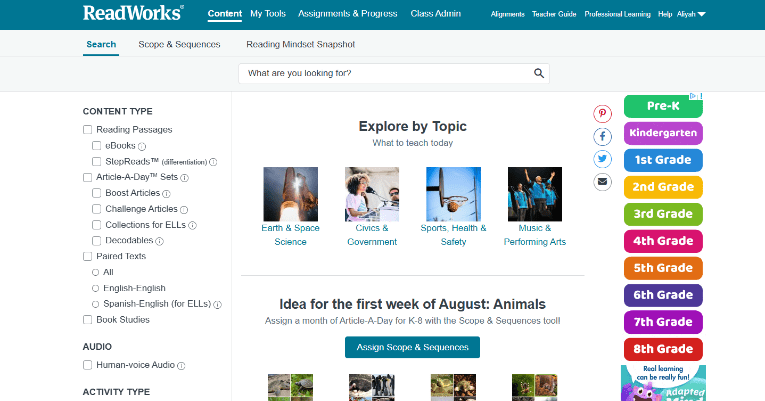





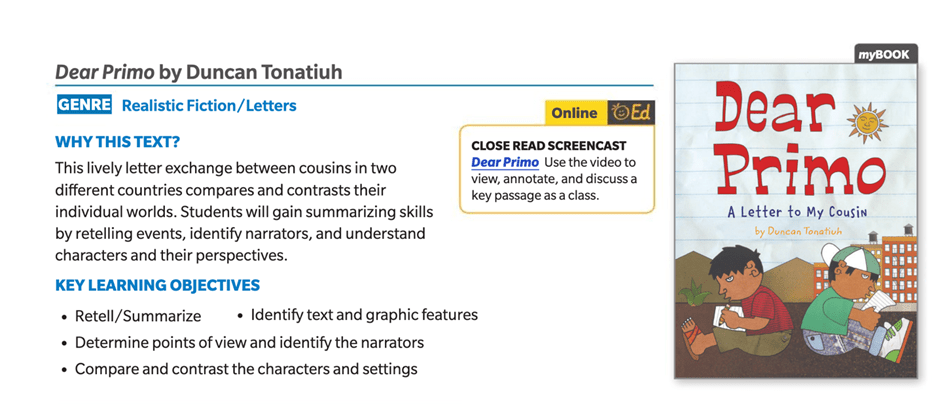
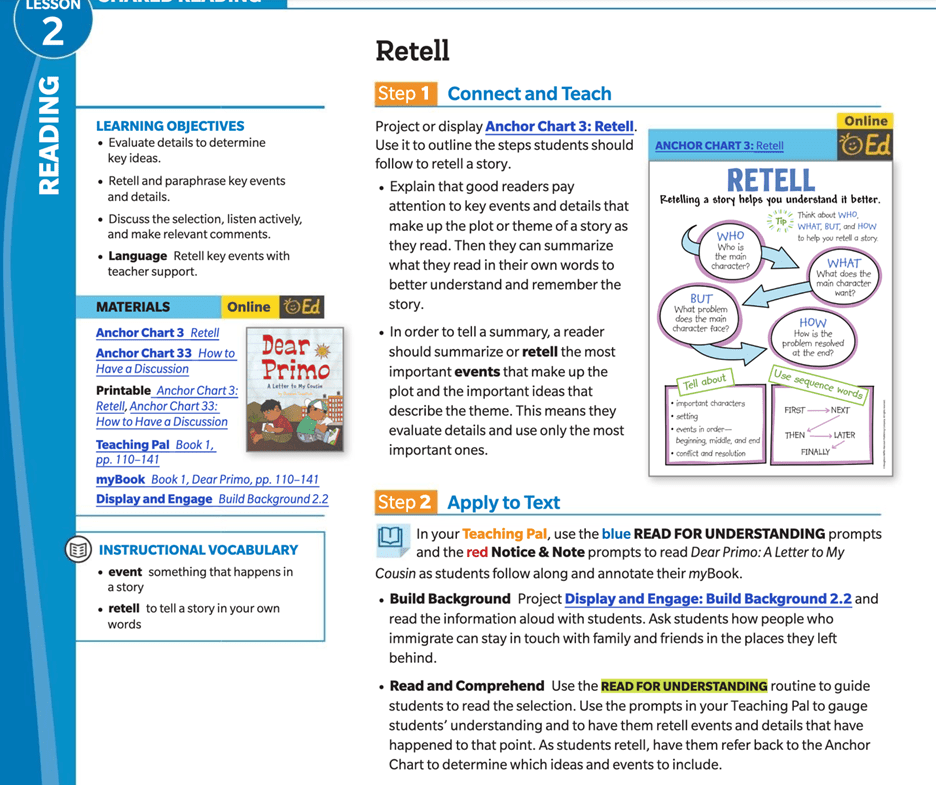
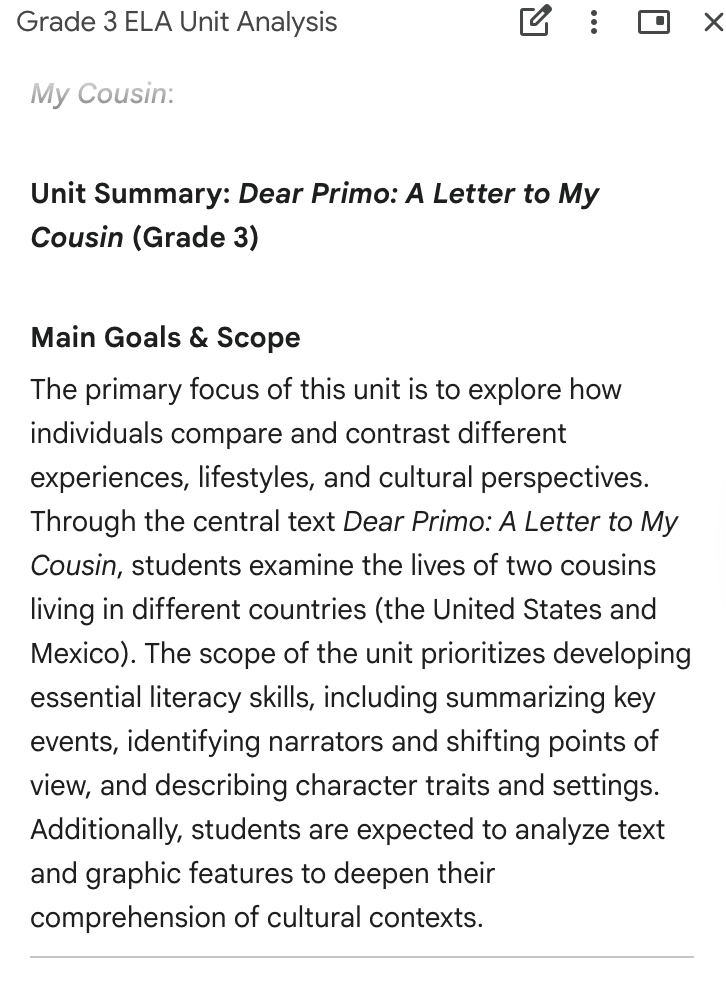

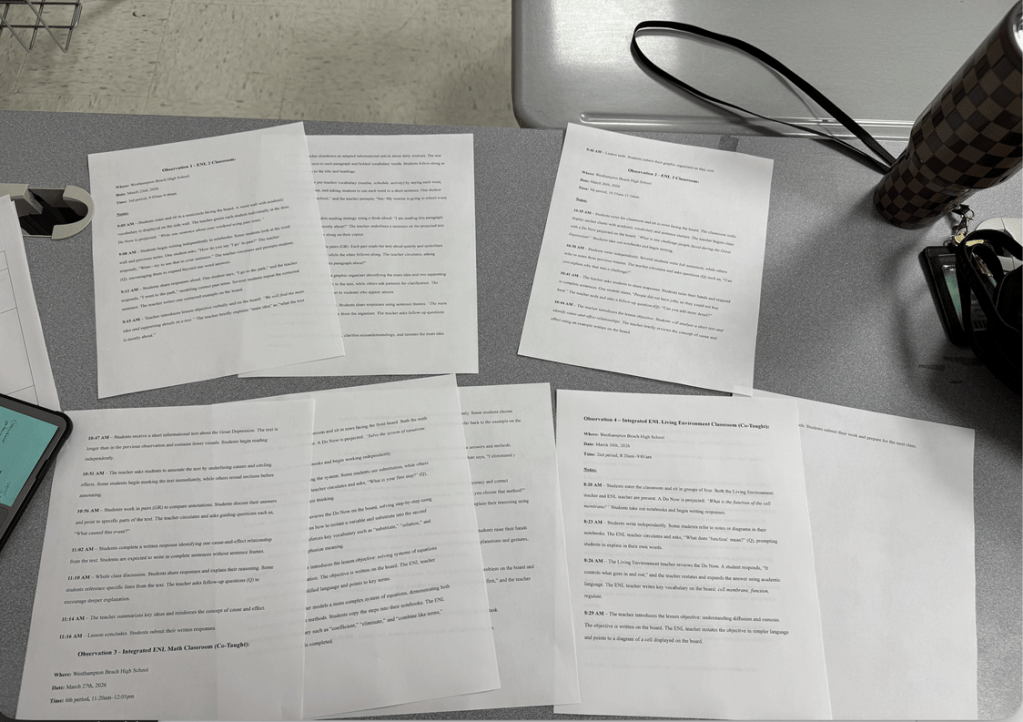





 Dr. J's Education Blog