LANGUAGE TRANSFER AND ITS ROLE IN LEARNINGENGLISH: A GUIDE FOR TESOL EDUCATORS (C) by Dr. Jasmin Cowin

TESOL/ENL and EFL professionals, I am pleased to share an infographic that surveys language transfer patterns among five commonly encountered groups in our multilingual classrooms: Ukrainian, Haitian Creole, Arabic, Urdu, and Spanish speakers. Titled Language Transfer and Its Role in Learning English, this visual aid illustrates each group’s potential positive transfers—such as Spanish-English cognates and shared SVO structures in Arabic and English—alongside likely areas of interference, complemented by targeted instructional strategies.

What distinguishes this resource is its in-depth focus on language-specific phenomena. The infographic addresses how Ukrainian speakers, already comfortable with a variant of the Latin alphabet, can make rapid gains in early literacy, yet often need focused practice differentiating English vowel contrasts. For Haitian Creole speakers, cognates derived from French (e.g., enfòmasyon and information) can aid vocabulary development, though the absence of inflected tense markers in Haitian Creole necessitates deliberate instruction in English verb conjugation. Arabic speakers, meanwhile, benefit from certain structural parallels with English but can face persistent challenges with the /p/ and /v/ phonemes; the infographic offers suggestions for minimal-pair drills to facilitate more accurate pronunciation. Urdu speakers may find vocabulary bridges through English loanwords yet need explicit guidance on word order, especially given their SOV home-language structure. Spanish speakers have an extensive network of cognates at their disposal, but can also benefit from carefully designed lessons that address interference in areas such as adjective-noun agreement or false friends.

If you are interested in enriching your understanding of how language transfer shapes English acquisition, this infographic may offer practical insights. I hope you will be able to adapt the infographic to your unique contexts and share reflections or additional ideas for fostering language transfer in action.

#TESOL #EFL #LanguageTransfer #TeachingStrategies

Touro University TESOL Candidate Ivelisse Martinez’s Technology Field Experience on Technology

Teaching English to Speakers of Other Languages

New York is a state that speaks many languages. We need teachers who can find the common ground.

The MS in Teaching English to Speakers of Other Languages (TESOL) Program helps NYS-certified PreK-12 teachers more effectively teach and communicate with a diverse student population.

Academically rigorous and practice-intensive, the 33-credit program includes 5-15 hours of fieldwork embedded in each course

The outlined field experience for EDDN 635 Curriculum Development and Classroom Management in the Technology Era is AI-resistant because it involves components that require direct human interaction, practical observation, and context-specific reflection that cannot be adequately replicated or performed by AI. Here’s a detailed breakdown of why this field experience ensures the authenticity of candidates’ engagement:

  1. Dual Observational Role
    Classroom Observation: Observing educators working with English Language Learners (ELLs) or bilingual students requires attention to the nuances of teaching strategies, classroom dynamics, and student interactions.
    Library Observation: Observing how technology supports literacy development in a library setting involves recognizing non-verbal interactions, how students engage with resources, and the librarian’s role—all tasks requiring human presence and contextual understanding.
  2. Interviews with ICT Specialists and Educators
    Conducting interviews demands human interaction skills, including the ability to ask follow-up questions, interpret verbal and non-verbal cues, and build rapport with interviewees.
    The responses gained from interviews are context-dependent and tied to the unique policies, practices, and challenges of the specific school or district, further grounding the experience in local realities.
  3. Reflection and Synthesis
    Reflection Paper: Writing a paper based on observations and interviews requires critical thinking, personal insights, and the ability to synthesize information from varied experiences. This process is inherently human and tied to individual perspectives.
    Multimedia Presentation: Creating a presentation involves selecting and interpreting data, integrating visuals, and crafting a narrative that demonstrates deep understanding. These tasks necessitate creativity and critical analysis unique to the candidate.
  4. Time Log and Deliverables
    Keeping a time log and taking observation notes are tasks tied to the candidate’s direct presence and engagement in specific activities. AI cannot generate authentic records of these experiences.
    The requirement for notes, interviews, and multimedia outputs ensures that the candidate participates actively and generates original content based on their unique experiences.
  5. Practical, Contextual Learning
    Observing technology use in real classrooms and libraries exposes candidates to the complex, real-world application of digital tools. This type of learning requires adaptability, contextual awareness, and the ability to assess practical challenge.
  6. TESOL and Digital Education Principles
    The experience aligns with principles of TESOL and digital education, emphasizing the strategic integration of technology to meet linguistic and academic needs. Candidates must demonstrate their ability to observe, analyze, and apply these principles in a practical, context-specific manner.

    The EDDN 635 field experience is rooted in direct, human-centric engagement with educators, students, and environments. It emphasizes real-world interaction, critical reflection, and contextualized learning—all elements that demand active participation and cannot be substituted with AI tools. The requirement for personalized insights and tangible deliverables ensures that candidates engage meaningfully, fostering skills and knowledge essential for their professional growth in TESOL and digital education.

Ivelisse Martinez has a bachelor’s degree in Education from Brooklyn College and is currently pursuing a master’s degree in TESOL at Touro University. She is passionate about empowering young learners, particularly those learning English as a second language. Inspired by her own teachers as a child, she sees a reflection of herself in many of her students, understanding firsthand the challenges and joys of learning a new language. As a former ELL, her goal is to inspire and support the next generation of learners on their educational journey.

Teaching is a way of giving back the inspiration and support you once received, guiding others to see their potential and know that every challenge is a stepping stone toward success.

Ivelisse Martinez, Touro University TESOL Candidate

Touro University TESOL Candidate Ivelisse Martinez’s Teaching Resources for TESOL Teachers

Teaching English to Speakers of Other Languages (TESOL) [MS]
We offer a Master of Science in TESOL appropriate for NYS-certified PreK-12 teachers interested in expanding their teaching fields to ESL or strengthening their capacities to serve a diverse student body. Evening, Sunday, and online courses are available.

Teaching English to Speakers of Other Languages

New York is a state that speaks many languages. We need teachers who can find the common ground.

The MS in Teaching English to Speakers of Other Languages (TESOL) Program helps NYS-certified PreK-12 teachers more effectively teach and communicate with a diverse student population.

Academically rigorous and practice-intensive, the 33-credit program includes 5-15 hours of fieldwork embedded in each course and at least 10 days or 50 hours of supervised student teaching experience. Candidates that complete all coursework, fieldwork, and student teaching requirements are eligible for recommendation for ESL certification.

Ivelisse Martinez holds a bachelor’s degree in Education from Brooklyn College and is currently pursuing a master’s degree in TESOL at Touro University. She is passionate about empowering young learners, particularly those learning English as a second language. Inspired by her own teachers as a child, she sees a reflection of herself in many of her students, understanding firsthand the challenges and joys of learning a new language. As a former ELL, her goal is to inspire and support the next generation of learners on their educational journey.

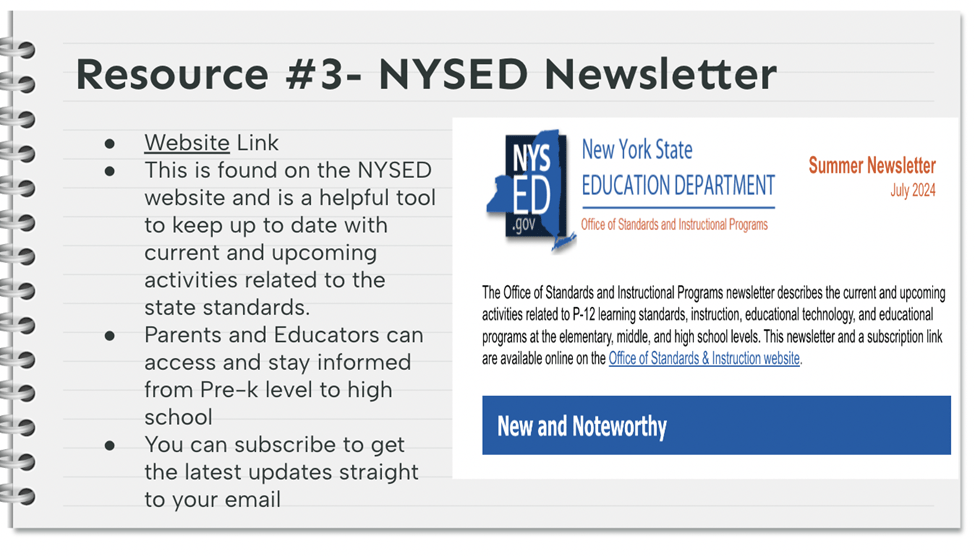
So far I have been able to observe in both an ENL pullout classroom and ENL push-in periods. I notice the difference between the teacher when she has access to her materials and room versus a push-in period where the room is shared with the classroom teacher.The teacher has to use various tools depending on the setting but one tool that stays consistent for instance is the use of the pocket talk. The pocket talk device allows the teacher to translate in real time, two way translation and access to 84 plus languages all in one small device. (Here is the link to the device Pocket Talk).”

“Teaching is a way of giving back the inspiration and support you once received, guiding others to see their potential and know that every challenge is a stepping stone toward success.

Ivelisse Martinez, Touro University TESOL Candidate

Touro University TESOL Candidate Ariana Vargas’ Video on using WIDA

Teaching English to Speakers of Other Languages

New York is a state that speaks many languages. We need teachers who can find the common ground.

The MS in Teaching English to Speakers of Other Languages (TESOL) Program helps NYS-certified PreK-12 teachers more effectively teach and communicate with a diverse student population.

Academically rigorous and practice-intensive, the 33-credit program includes 5-15 hours of fieldwork embedded in each course and at least 10 days or 50 hours of supervised student teaching experience. Candidates that complete all coursework, fieldwork, and student teaching requirements are eligible for recommendation for ESL certification.

What You’ll Learn

Each course tackles a distinct aspect of teaching English Language Learners, from curriculum development in a multicultural context to general and special education student assessment to sociolinguistics and second language acquisition. We explore the impact of cultural and language diversity on individual learning and community development.

Our goal is to train teachers to create effective, responsive learning environments where all students can thrive.

Online courses are available, and students can transfer up to twelve credits from previous graduate-level study toward our requirements. Students pursuing an Advanced Certificate in TESOL may apply their credits toward the Master’s degree. Completion of the program makes you eligible for New York State certification as a TESOL teacher for PreK-12.

If you have questions about our admissions requirementscertification guidelines, or transfer credits, feel free to contact us.

Ariana Vargas is a Mexican-Peruvian American who grew up in a predominantly Hispanic community, where she observed firsthand the challenges faced by students learning English as a new language. Despite these challenges, she found the experience deeply rewarding. Now, as a teacher in that same community, she is passionate about her work and finds joy in every moment of teaching.

Touro University has given me the tools and resources to not only be a good educator but be one that is always ready to learn. Ariana Vargas, Touro University TESOL Candidate

Touro University TESOL candidate Ariana Vargas’ Video on using WIDA in her teaching

TESOL Graduate Candidate at Touro University, Alexa Armentano on CR Part 154 Comprehensive ELL Education Plan (CEEP), ENL staffing requirements, and Community Language Teaching

As an Associate Professor for the Touro University TESOL/BLE Department, I am immensely proud to feature outstanding student work from our MS in Teaching English to Speakers of Other Languages (TESOL) Program. New York’s linguistic diversity demands teachers who can find common ground and effectively communicate with students from different language backgrounds. Academically rigorous and practice-intensive, the 33-credit program leads candidates who complete all coursework, and fieldwork to recommendation for ESL certification.

Alexa Armentano is a candidate in the TESOL Graduate Program at Touro University. She attended Hofstra University for her undergraduate degree where she earned a dual degree in Early Childhood Education and Childhood Education, as well as a Psychology degree. Fun Fact! She coaches the Commack High School dance team.

My journey through the Touro University Graduate School of Education TESOL program has been an enriching experience that has deepened my passion for teaching and equipped me with the skills necessary to make a meaningful impact in the field of education.

Alexa Armentano, TESOL Graduate Candidate at Touro University

Directions and the Tasks: Discussion Board 3 Program Models – Bilingual & ESOL

CUT AND PASTE QUESTIONS IN ORDER AND ANSWER EACH ONE OF THEM.

  1. CREATE A  COMPARTIVE TABLE WITH AT LEAST 3 POINTS; How do the BLUEPRINT FOR ENGLISH LANGUAGE LEARNER/MULTILINGUAL LEARNER (ELL/MLL) SUCCESS http://www.nysed.gov/common/nysed/files/nys-blueprint-for-ell-success.pdfLinks to an external site. and CR Part 154 Comprehensive ELL Education Plan (CEEP) and ENL staffing requirements connect with each other? http://www.nysed.gov/bilingual-ed/cr-part-154-comprehensive-ell-education-plan-ceep?  Links to an external site.http://www.nysed.gov/common/nysed/files/programs/bilingual-ed/enl-k-8-units-of-study-table-5-6-15.pdfLinks to an external site.
  2. How might the principles of CLT be applied or adapted to meet the challenge posed by the following context? Students seem to be shy and unaccustomed to discussing topics of a personal or social nature with one another, and the teaching approach is very teacher-centered. Celce-Murcia, Marianne; Brinton, Donna M.; Snow, Marguerite Ann. Teaching English as a Second or Foreign Language (Chapter 2). Heinle ELT. Kindle Edition. 
  3. How do (or might) you use technology for CLT language teaching and learning in your context? What constraints do you face? Do you think that you as a language learner or your  (future) students would want to engage in virtual or simulated learning environments online? Why or why not? Please write from your own experience and from the I perspective. Chapter 2Celce-Murcia, Marianne; Brinton, Donna M.; Snow, Marguerite Ann. Teaching English as a Second or Foreign Language (p. 29). Heinle ELT. Kindle Edition. 

TO DO:

  1. Please cut and paste the questions into your DB dialogue box and answer each question.
  2. Spell and grammar check your answers.
  3. Create a reference section/bibliography in APA style – https://www.citationmachine.net/apaLinks to an external site.

U.S. Department of State Press Release: Prof. Jasmin (Bey) Cowin, Ed.D. Selected for Prestigious English Language Specialist Project

I am humbled and excited to serve the U.S. Department of State in the capacity of English Language Specialist.

The English Language Specialist Program is the premier opportunity for leaders in the field of teaching English to speakers of other languages (TESOL) to enact meaningful and sustainable changes in the way that English is taught abroad. Through projects developed by U.S. Embassies in more than 80 countries, English Language Specialists work directly with local teacher trainers, educational leaders, and ministry of education officials to exchange knowledge, build capacity, and establish partnerships benefiting participants, institutions, and communities in the United States and overseas. Since 1991, the English Language Specialist Program has supported in-country, virtual, and mixed projects in which hundreds of TESOL scholars and educators promote English language learning, enhance English teaching capacity, and foster mutual understanding between the U.S. and other countries through cultural exchange. During their projects, English Language Specialists may conduct intensive teacher training, advise ministries of education or participate in high-level educational consultations, and offer plenary presentations at regional, national, or international TESOL conferences. These projects are challenging and those selected represent the best of the U.S. TESOL community. In return, the program provides professional development opportunities to help participants experience different cultures and build skills that can greatly enhance their TESOL careers at home. English Language Specialists are counted among the more than 50,000 individuals participating in U.S. Department of State exchange programs each year. The Specialist Program is administered by the Center for Intercultural Education and Development at Georgetown University.

Touro University TESOL Candidate Jasmeet Kaur on Review & Assessment

As a Professor for TESOL, I am immensely proud to feature outstanding student work from our MS in Teaching English to Speakers of Other Languages (TESOL) Program. New York’s linguistic diversity demands teachers who can find common ground and effectively communicate with students from different language backgrounds. Academically rigorous and practice-intensive, the 33-credit program prepares candidates to be eligible for recommendation for ESL certification.

Jasmeet Kaur, Touro University TESOL candidate, a graduate of York College in Childhood Education (Grades 1-6) with Summa Cum Laude honors in 2022, is currently employed as a Substitute Teacher. Concurrently, she is pursuing a Master’s degree in TESOL at Touro College. Her professional objective is to support bilingual and multilingual students, aiming to instill confidence in their abilities and guide them towards academic and personal success.