As an Associate Professor for the Touro University TESOL/BLE Department, I am immensely proud to feature outstanding student work from our MS in Teaching English to Speakers of Other Languages (TESOL) Program. New York’s linguistic diversity demands teachers who can find common ground and effectively communicate with students from different language backgrounds. Academically rigorous and practice-intensive, the 33-credit program leads candidates who complete all coursework, and fieldwork to recommendation for ESL certification.
Amanda Foti: She is in her third year as a fourth-grade teacher at P.S.131 in the vibrant Brooklyn, New York community. Alongside her teaching adventures, she is also deep into the TESOL graduate degree program at Touro University, adding more tools to her teaching toolbox. What really lights her up is the opportunity to step into the role of an ESL teacher for her incredible group of students, creating a classroom where everyone feels seen and supported. She believes that “In learning you will teach, and in teaching you will learn.” – Phil Collins
At Touro University, I found that learning and teaching go hand in hand. As I learned, I also got to teach others, creating a circle of knowledge. Touro is not just a school; it’s a place where everyone learns from each other, making education a shared adventure.
Amanda Foti, TESOL Candidate, Touro University, Graduate School of Education
Assignment description:
Instructional Material Critique & Redesign with Infographic
Setting the stage:
Imagine you are the TESOL expert and the librarian come to you to select books for your multilingual learners – how will you sdecide? This project will help you focus on choosing inclusive books AND academically rigorous for multilingual learners.
Look at the books and texts YOU are using RIGHT now in your classroom – what is in your reading corner, what do you use with your students for history, math, music etc? Look at those books or chapters with a fresh focus! How can YOU support English language acquisition for your ELL’s?
You will engage in a comprehensive evaluation and redesign project focused on creating culturally and linguistically responsive classrooms and instructional practices for English Language Learners (ELLs) and MLs. The assignment consists of five steps.
You will choose 3 books to analyze or 3 book chapters. Two of the books/chapters are in their grade level, and one book/chapter must be a different level; So if the first set is elementary level, the third book/chapter must be either middle or high school, and vice versa. Going to your library is an excellent resource, please use it. You must provide an appropriate APA style citation for EACH book. I welcome photos of your books that demonstrate what you are discussing.
As an Associate Professor for the Touro University TESOL/BLE Department, I am immensely proud to feature outstanding student work from our MS in Teaching English to Speakers of Other Languages (TESOL) Program. New York’s linguistic diversity demands teachers who can find common ground and effectively communicate with students from different language backgrounds. Academically rigorous and practice-intensive, the 33-credit program leads candidates who complete all coursework, and fieldwork to recommendation for ESL certification.
Anastasios Panagiotidis works as a secondary education Earth Science teacher, proudly serving the South Huntington Union Free School District. As he prepares for his fourth year in a probationary track position, he is simultaneously enrolled in courses through Touro University to acquire his Master’s degree in TESOL. As an educator, his utmost priority is ensuring he has the “tools” necessary to meet the individual needs of his diverse student population.
“The reason I feel so strongly about this statement is that I once had an 8th grade Science teacher myself, who not only met my individual needs, but made me believe that I could prevail beyond my learning disability to accomplish anything I put my heart, mind, and soul into. She is who has propelled me to the point I am at today.”
My goal in life since then, was to be that person for my students someday. This all begins by allowing equal opportunities for success regardless of the struggles our students face and using every resource we have access to to aid our student population. Touro University has paved the way for my continued growth and maturity as a young educator and has ultimately gotten me closer to achieving those goals I have set for myself way back in High school.
Anastasios Panagiotidis, Touro University TESOL Master’s Degree Candidate
As an Associate Professor for the Touro University TESOL/BLE Department, I am immensely proud to feature outstanding student work from our MS in Teaching English to Speakers of Other Languages (TESOL) Program. New York’s linguistic diversity demands teachers who can find common ground and effectively communicate with students from different language backgrounds. Academically rigorous and practice-intensive, the 33-credit program leads candidates who complete all coursework, and fieldwork to recommendation for ESL certification.
Carly Croteau: She graduated from SUNY New Paltz in 2021, earning a Bachelor of Science Degree in Early Childhood and Childhood Education, with a concentration in Spanish and a minor in Deaf Studies. Throughout her tenure at SUNY New Paltz, she was a four-year varsity student-athlete, playing for the field hockey team and serving as a three-year captain for the program. She began teaching fourth grade in September of 2022 and started pursuing her Master of Science Degree in Teaching English to Speakers of Other Languages (TESOL). Her Touro University journey quote is “I’ve learned that people will forget what you said, people will forget what you did, but people will never forget how you made them feel.”— Maya Angelou
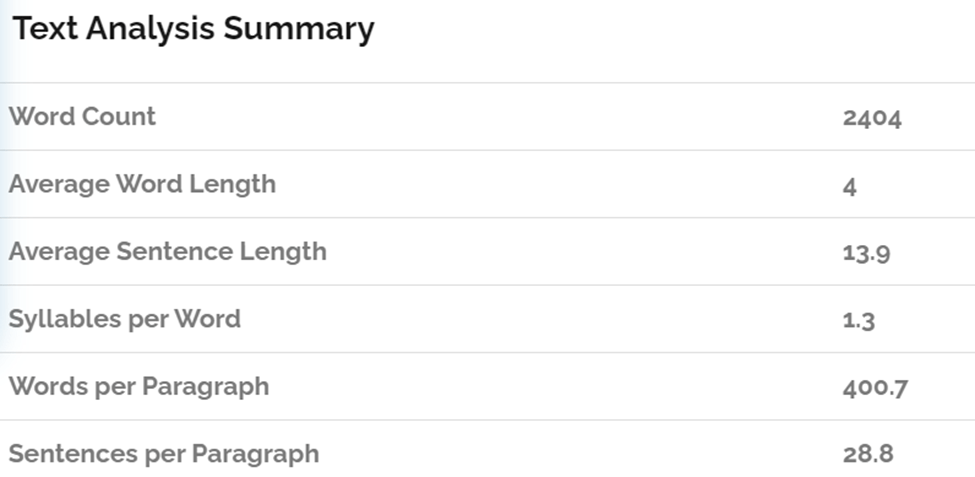
Ms. Carly Croteau submitted an outstanding text analysis which I am proud to share.
As an Associate Professor for the Touro University TESOL/BLE Department, I am immensely proud to feature outstanding student work from our MS in Teaching English to Speakers of Other Languages (TESOL) Program. New York’s linguistic diversity demands teachers who can find common ground and effectively communicate with students from different language backgrounds. Academically rigorous and practice-intensive, the 33-credit program leads candidates who complete all coursework, and fieldwork to recommendation for ESL certification.
Soha Girguis: She serves as a special education teacher at P4K School in Brooklyn, New York. Having graduated from Touro College in 2023 with a Master’s degree in General Education and Special Education, she is enthusiastic about her ongoing educational journey. Currently, she is enrolled in a TESOL Master’s program at Touro College, aiming to expand her expertise and impact in the field of education.
Ms. Girguis submitted an outstanding text analysis.
Assignment description: Text Analysis & Critique
Analyzing Complex Texts and Addressing Challenges for ELLs/MLs in the Content Areas
Objective:
The objective of this assignment is to deepen your understanding of the cognitive and linguistic demands of complex texts in the content areas and to analyze a specific chapter or aspect of a content-area text currently used or recommended by the New York State/BOE. By closely examining the underlying concepts, you will develop a thesis and purpose for your analysis. You will critically evaluate the challenges that make the selected concept or section difficult for ELLs and provide substantial, logical, and concrete development of ideas in your critique.
Analyzing text complexity for English Language Learners (ELL) and Multilingual Learners (ML) requires a comprehensive approach that takes into account various factors. You can begin by examining the linguistic demands of the text, including vocabulary, sentence structure, and discourse patterns, ensuring they align with the proficiency levels of the students. Additionally, you, the teacher should consider the cultural and background knowledge necessary to comprehend the text, as well as the cognitive processes required, such as inference or critical thinking. Furthermore, evaluating the organization and coherence of the text, along with its purpose and intended audience, allows you, the teacher to gauge its appropriateness and relevance for ELL/ML learners. By conducting a thorough analysis of text complexity, you can make informed decisions about instructional strategies, adaptations, and scaffolding techniques to support their students’ language development and comprehension skills.
Deliverables:
Analysis of a Chapter or Aspect: Select a chapter or aspect of a content-area text and thoroughly analyze its complex nature. Identify and explain the quantitative elements, qualitative factors, and reader and task considerations that contribute to its complexity.
Development of Thesis and Purpose: Based on your analysis, develop a clear and concise thesis statement that reflects the main idea or argument of your analysis. State the purpose of your analysis, outlining the specific goals and objectives you aim to achieve.
Linguistic analysis which involves examining the linguistic features and demands of a text in order to determine its suitability for language learners. It focuses on various aspects of the text, including vocabulary, sentence structure, and discourse patterns, with the aim of aligning them with the proficiency levels of the students. Here’s a breakdown of these elements:
Vocabulary: The analysis considers the range and complexity of words used in the text. It examines whether the vocabulary is appropriate for the students’ language proficiency level, taking into account factors such as word frequency, difficulty, and relevance to the topic. It also considers the presence of idiomatic expressions, figurative language, and specialized terminology that might pose challenges for learners.
Sentence structure: The analysis looks at the complexity and variety of sentence structures employed in the text. It considers factors such as sentence length, grammatical structures (e.g., verb tenses, conditionals, relative clauses), and syntactic complexity. The aim is to ensure that the sentence structures are within the grasp of the students’ language proficiency level, allowing for gradual progression and challenges appropriate to their abilities.
Discourse patterns: This aspect of linguistic analysis examines how ideas and information are organized and presented in the text. It includes analyzing discourse markers (e.g., conjunctions, transitional phrases) that indicate relationships between ideas, as well as cohesive devices (e.g., pronouns, repetition, referencing) that connect sentences and paragraphs. The analysis ensures that the text’s discourse patterns are comprehensible and aligned with the students’ proficiency levels, promoting their understanding of the text’s overall structure and coherence.
Sequencing Ideas with Textual Evidence: Organize your ideas in a coherent and logical manner, using evidence from the selected text to support your important points. Explain how the evidence reinforces your analysis and contributes to the understanding of the challenges faced by ELLs.
Critique of Challenging Concepts for ELLs: Engage in substantial and concrete development of ideas to describe the specific challenges ELLs encounter when accessing the chosen concept or section of the text. Discuss the linguistic, cultural, and cognitive barriers that hinder their comprehension and propose strategies to overcome these challenges.
Attention to De-Mystifying Complex Texts: Reflect on the concept of “complex” texts and explore strategies to ensure that ELLs/MLLs can access them effectively. Consider the quantitative, qualitative, and reader/task elements involved in text complexity and how they relate to supporting ELLs’/MLs comprehension.
Format and Length: The assignment should be a typed, double-spaced paper with a 12-point font. The length of the paper should be 5-6 pages, excluding references. Follow the provided grading rubric for formatting guidelines and requirements.
I am humbled and excited to serve the U.S. Department of State in the capacity of English Language Specialist.
The English Language Specialist Program is the premier opportunity for leaders in the field of teaching English to speakers of other languages (TESOL) to enact meaningful and sustainable changes in the way that English is taught abroad. Through projects developed by U.S. Embassies in more than 80 countries, English Language Specialists work directly with local teacher trainers, educational leaders, and ministry of education officials to exchange knowledge, build capacity, and establish partnerships benefiting participants, institutions, and communities in the United States and overseas. Since 1991, the English Language Specialist Program has supported in-country, virtual, and mixed projects in which hundreds of TESOL scholars and educators promote English language learning, enhance English teaching capacity, and foster mutual understanding between the U.S. and other countries through cultural exchange. During their projects, English Language Specialists may conduct intensive teacher training, advise ministries of education or participate in high-level educational consultations, and offer plenary presentations at regional, national, or international TESOL conferences. These projects are challenging and those selected represent the best of the U.S. TESOL community. In return, the program provides professional development opportunities to help participants experience different cultures and build skills that can greatly enhance their TESOL careers at home. English Language Specialists are counted among the more than 50,000 individuals participating in U.S. Department of State exchange programs each year. The Specialist Program is administered by the Center for Intercultural Education and Development at Georgetown University.
I am delighted to announce the recent publication of our paper, titled “Accelerating Higher Education Transformation: Simulation-Based Training and AI Coaching for Educators-in-Training.” This paper has been featured in the conference proceedings titled “Towards a Hybrid, Flexible and Socially Engaged Higher Education,” published by Springer Nature, Switzerland.
Our transdisciplinary collaborative effort grew from the International Conference on Interactive Collaborative Learning (ICL 2023), Madrid, and signifies a significant step forward in our journey to reshape educational paradigms through the integration of cutting-edge technologies (Cowin et al., 2024).
Cowin, J., Oberer, B., Lipuma, J., Leon, C., & Erkollar, A. (2024). Accelerating Higher Education Transformation: Simulation-Based Training and AI Coaching for Educators-in-Training [ICL]. In M. E. Auer, U. R. Cukierman, E. Vendrell Vidal, & E. Tovar Caro (Eds.), Towards a Hybrid, Flexible and Socially Engaged Higher Education (CLDM_Dv; Vol. 899, pp. 532–541). Springer Nature Switzerland; /Research/Education. https://doi.org/10.1007/978-3-031-51979-6_55
Conference Presentation
Cowin, J., Oberer, B., Lipuma, J., Leon, C., & Erkollar, A. (2023, September 26). Accelerating Higher Education Transformation: Simulation-Based Training and AI Coaching for Educators-in-Training [Presentation] [Conference]. International Conference on Interactive Collaborative Learning (ICL 2023), Madrid, Spain. http://icl-conference.org/icl2023/
Paper Abstract As the world undergoes remarkable transformations powered by Artificial Intelligence, the challenge arises for educational systems and institutions to adapt. How can we adequately equip educators-in-training to flourish in unprecedented change? The emergence of flexible, hybrid, and socially engaged learning environments has created a need for effective training methodologies that empower educators-in-training to thrive in this new paradigm. Higher education institutions need to expand aspiring educators’ human and professional potential amidst accelerating change, in line with the clarion call of the Sustainable Development Goal 4 Quality Education “By 2030, substantially increase the supply of qualified teachers, including through international cooperation for teacher training in developing countries, especially least developed countries and small island developing States” [1]. Simulation-based training coupled with Artificial Intelligence offers a solution to equip educators with the necessary skills and competencies to navigate complex real-world educational settings to succeed in classrooms of the 21st century. Simulation-based training allows educators-in-training to develop their skills and build confidence in their abilities to effectively engage with students in multifaceted classroom environments by providing a safe and controlled space for experimentation and practice. In conclusion, this paper and presentation explore the shifting teaching paradigms in higher education using simSchool and Mursion simulation platforms as examples and examine inclusive and dynamic practices that promote sustainable systems change in line with SDG 4. Quality Education, supporting educators-in-training by identifying strengths and encouraging personal and professional growth through AI feedback loops and faculty coaching.
Keywords: Artificial Intelligence, Educators-in-training, Simulation-based training, Sustainable systems change
Acknowledgments I extend my heartfelt gratitude to my colleagues and peers and the supportive community that made this research possible. Our collaborative efforts reflect a unified vision for the future of education, one that embraces the challenges and opportunities presented by the digital age.
Disclosure statement No conflict of interest pertains to the research presented above.
In the Department of Online Education, at Touro University, a group of skilled instructional designers and seasoned online educators collaborates with Touro faculty members to assist in the creation, modification, and updating of their online courses.
Online Teaching Certification Description: This faculty and staff development badge is awarded upon completion of the Module Making and Online Course Creation Workshops through Touro University (NY). The workshops represent 16 contact hours and 20 PDUs of content. Certification good for three years of end date of workshop series. This badge is internally accepted inside the TCUS system.
issued on: Jan 9, 2024 at 12:02 PM |Expires on Jan 9, 2027 at 12:02 PM
As a Professor for TESOL, I am immensely proud to feature outstanding student work from our MS in Teaching English to Speakers of Other Languages (TESOL) Program. New York’s linguistic diversity demands teachers who can find common ground and effectively communicate with students from different language backgrounds. Academically rigorous and practice-intensive, the 33-credit program includes 50 hours of fieldwork andsupervised student teaching experiences. Candidates who complete all coursework, fieldwork, and student teaching requirements are eligible for recommendation for ESL certification.
Nicolette Parisi: ” I am currently pursuing a Master’s degree in TESOL at Touro University. This academic journey has been immensely enriching, offering me valuable insights and methodologies essential for excelling in the field of TESOL education. My focus is on integrating innovative teaching strategies and linguistic theories to enhance my future role as a TESOL educator.”
“Great teachers are the ones who inspire you.” By Martin Landau My Professors have been nothing short of remarkable and have been extremely helpful in assisting me on this outstanding learning journey! Touro is an incredible choice if you want to feel supported with your learning and grow as an educator!
As a Professor for TESOL, I am immensely proud to feature outstanding candidate work from our TESOL Certification Program. New York’s classrooms are some of the most culturally and linguistically diverse in the country. Our TESOL certificate program prepares NYS-certified teachers to provide responsive, comprehensive education to students of every background.
The TESOL Certification at Touro University is a 15-credit program including five courses—each with carefully designed fieldwork experiences—that emphasize both academic content learning and English fluency for English Language Learners.
We explore contemporary theory and research-based instructional strategies for multicultural education, methods and materials for second language acquisition, and best practices for teaching ELLs in specific subjects. We give you the tools to ensure that your students meet the latest performance standards of PreK-12 curricula in both private and public schools.
Courses are offered evenings and Sundays, and online to accommodate our students’ diverse scheduling needs, and you’ll receive personalized guidance based on your current work and career goals from highly qualified and experienced professors.
Upon completion of the program, you’ll be eligible for the New York State Advanced Certificate in ESOL. All courses are transferable to the master’s degree program in TESOL at Touro University.
Kayla Challenor is currently enrolled in a TESOL certification program at Touro University and has recently accepted a position as a Reading Specialist within the Huntington School District. Having completed a Master’s degree in Reading and Literacy (K-12), she is dedicated to continuing education and applying this knowledge to support learners in achieving success.
“I am dedicated to creating a culturally responsive learning environment and encouraging community outreach to help my students’ families.”
Kayla Challenor, TESOL Certification Candidate at Touro University
Below is Kayla Challenor’s contribution to our discussion board on Comprehensible Input:
1. What is the relationship of language, teacher speech, expression, gestures, wait time etc. to make content comprehensible?
The relationship between language, teacher speech, expression, gestures, and wait time is crucial in making content comprehensible for students. Language is the primary means of instruction. Teachers must use language that is appropriate for the students’ proficiency level. For example, when I taught third grade, I would simplify complex concepts when introducing new topics in Science and Social Studies. Once students understand a newly learned concept, such as immigration, students practice using the vocabulary words and can connect it to their background knowledge. Educators should be as explicit as possible, using clear and concise language.
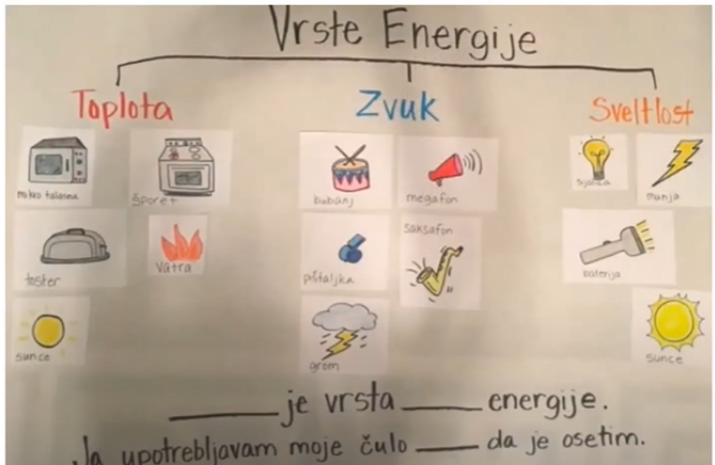
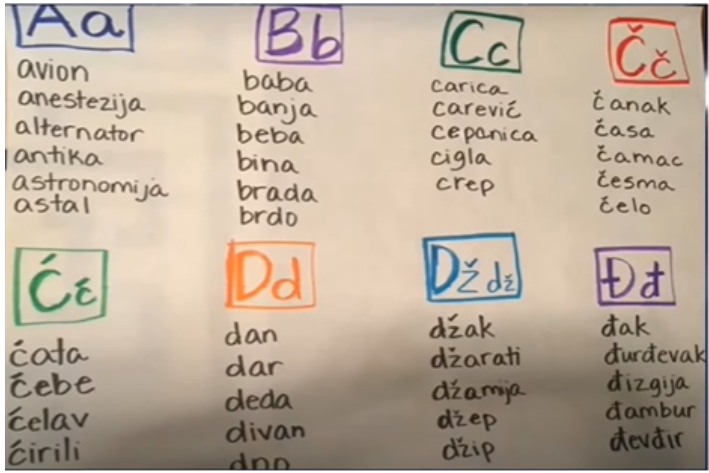
Just as the language a teacher uses should be concise, the classroom should display comprehensive language. Visual representations in the room can provide an alternative way of conveying information and can be especially helpful for ENL/ML learners who are more visually oriented. Rand (2022) suggests that instead of using traditional word walls that organize vocabulary words as a dictionary would, educators should align with instruction and be arranged to show relationships/schemas. Rand uses these two unfamiliar language examples to show the comprehensible differences:
(Rand, 2022)
The way an educator speaks is crucial. They should articulate clearly, speak at an average pace, and use the proper intonation. Teachers should also be mindful of their tone and ensure that it’s engaging and supportive. Expression involves the teacher’s facial expressions, body language, and enthusiasm. Expressive teachers can convey their passion for the subject or topic, making it more engaging and easier for students to understand. Vogt shares that wait time can differ in various cultures; “In U.S. classrooms, the average length of wait time is clearly not sufficient” (2017, p. 166). English learners are processing ideas in a new language and will need additional time to enhance their interaction with peers.
Non-verbal communication through gestures can reinforce student understanding as well. Teachers can use gestures to illustrate concepts, demonstrate actions, or emphasize key points. This visual component can provide additional context and support for learners. I can connect to this need during my American Sign Language classes that I am currently taking for foreign language credits. The professor signed a short story using her hand gestures and expressions during the story. Our class has not learned many of the hand signs yet but I was able to understand the bulk of the story because of her expressions. Her lesson was to show how helpful non-verbal communication can be when learning a foreign language.
What is one take-away from the Stephen Krashen video and how might it impact your teaching?
One take-away from Stephen Krashen is that anything that helps input more comprehensible helps language acquisition. Talking is not practicing language. Language is acquired by experiencing and listening to comprehensible input – not by speaking. Speaking and using language comes as a result of comprehensible input. It impacted my view on how it’s the educator’s responsibility to provide comprehensible input. If a student is not acquiring language skills, it is not because they are an ENL/ML — it is because they are not able to comprehend the information being taught in the classroom.
Lesson analysis p 116. Explain your rating on each of the Comprehensible Input Features. (Vogt, M., Echevarria, J. J., & Short, D. J. (2017). Making content comprehensible for English learners. (5th ed.). Pearson: New York.)
Figure 4.2 Comprehensible Input Component of the SIOP® Model: Mr. Dillon’s Lesson
4
3
2
1
0
Speech appropriate for students’ proficiency levels (e.g., slower rate, enunciation, and simple sentence structure for beginners)
Speech sometimes inappropriate for students’ proficiency levels
Speech inappropriate for students’ proficiency levels
4
3
2
1
0
Clear explanation of academic tasks
Unclear explanation of academic tasks
No explanation of academic tasks
4
3
2
1
0
A variety of techniques used to make content concepts clear (e.g., modeling, visuals, hands-on activities, demonstrations, gestures, body language)
Some techniques used to make content concepts clear
No techniques used to make concepts clear
In the Mr. Lew scenario, it says he “was careful to make sure students not only knew the meaning of content vocabulary, but also knew the meaning of words associated with academic tasks, such as predict and calculate” (Vogt, 2017, p. 115). Mr. Lew told the students to watch as he demonstrated before beginning the lesson making the instructions more comprehensible. The students listened but also watched what they were being asked to do. He spoke slowly and avoided idioms, being concise and explicit. I scored his language a 4 for being careful and appropriate for ENL/ML learners. I scored his academic tasks a 3 because he did model the instructions, but I think he stopped another group and asked one student to stand and explain the steps of what they were doing. Rather than this, he could have had pictures to accompany the directions on the board. His lesson includes various techniques, but I rated this part a 3 because playing a video could have been very useful for all learners and given more background knowledge.
Why is collaboration an essential element of productive work in the ZPD?
Collaboration allows individuals to work together, with one person often being more knowledgeable or skilled than the other. Some students in a group may take on the role of being the presenter, some students are more skilled in writing or researching. This enables what Vygotsky referred to as “scaffolding” or “gradual release of responsibility” (Vogt, 2017, p.130). A more knowledgeable person, teacher or peer, can provide support, guidance, and assistance to help a learner perform tasks just beyond their current level of competence. Effective teachers also incorporate instructional approaches that provide procedural scaffolding. Using an instructional framework, such as the ‘I do, we do, you do’ method includes explicit teaching, modeling, and guided and independent practice. Through interaction with others in small group instruction, learners can engage in discussions, debates, and knowledge-sharing. Students practice a newly learned strategy with another more experienced student, scaffolding each other as a teacher would. (Vogt, 2017)
Content Objective/Language Objective Write 2 corresponding content/language objectives for one of YOUR lesson plans that YOU are going to teach.
Content Objective
Language Objective
Students will be able to describe major events in a story, using key details.
Students will be able to use the sentence frame: “The most important event in the story is ______ because ______ .”
Students will be able to determine cause and effect in a story.
Students will be able to categorize cause and effect relationships on a t-chart with a partner.
Students will be able to argue their opinion, using examples from the article.
Students will be able to paraphrase using evidence from the text.
Students will be able to evaluate the credibility of the author’s argument.
Students will be able to provide reasons including at least 2 examples in complete sentences.
References
Comprehensible Input Demonstration. (2017). YouTube. Retrieved October 9, 2023, from
Rand, M. K. (2022). Interactive Word Walls in Early Childhood Education. YouTube.
The Positive Classroom. Retrieved October 11, 2023, from
Vogt, M., Echevarria, J. J., & Short, D. J. (2017). Making content comprehensible forEnglish learners. (5th ed.). Pearson: New York.
DB Contributions
A.,
I enjoyed reading your post this week. Stephen Krashen’s point about understanding messages stood out to me too. Sometimes, the ENL/ML students in my fieldwork can be shy because they feel timid when asking to repeat a question or if they are having difficulty understanding, they prefer to stay quiet. This video resonated with me and I can see how our teaching methods can facilitate rapid language acquisition by using the right strategies. I agree that it is more important for ELL students to get the overall idea of the lesson. When collaborating and scaffolding with peers, summarizing skills and grasping the overall message will be more effective than using grammar rules. Great post!
J.,
It sounds like you have a very engaging lesson planned soon! I am sure the students will love explaining their cultural traditions with their peers. It would be interesting to see how many of them celebrate the same traditions and how they may celebrate differently with their families. Your lessons are student-centered and encourage them to share a part of their identity. I can see how their language objectives will be useful in the real-world and also remind them of home. I would love to teach a similar lesson. Great post!








 Dr. J's Education Blog