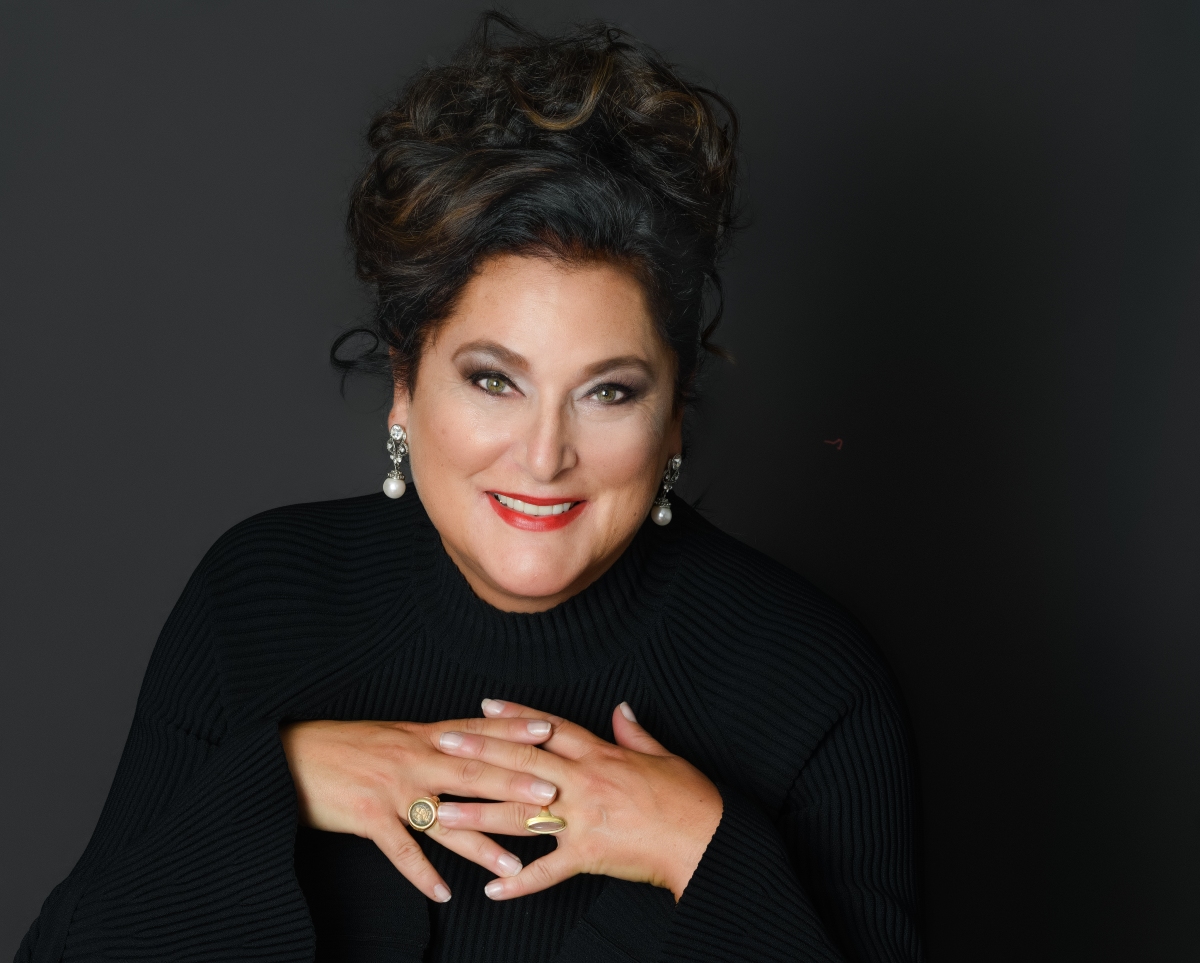
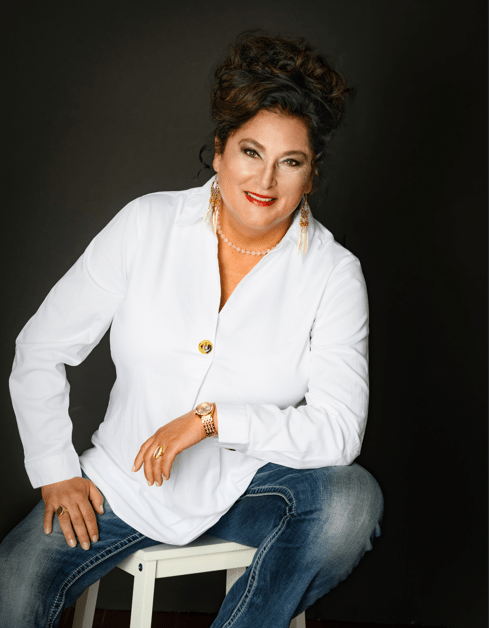
Dr. Jasmin (Bey) Cowin, an Associate Professor at Touro University, received the 2024 Touro University CETL Faculty Fellowship for Excellence in Teaching and the Rockefeller Institute of Government awarded her the prestigious Richard P. Nathan Public Policy Fellowship (2024-2025). As a Fulbright Scholar and SIT Graduate, she was selected to be a U.S. Department of State English Language Specialist. Her expertise in AI in education is underscored by her role as an AI trainer and former Education Policy Fellow (EPFP™) at Columbia University's Teachers College. As a columnist for Stankevicius, she explores Nicomachean Ethics at the intersection of AI and education. She has contributed to initiatives like Computers for Schools Burundi, served as a resource specialist for Amity University in Uttar Pradesh, India, and participated in TESOL "Train the Trainer" programs in Yemen and Morocco. Her research interests include simulations and metaverse for educators-in-training, AI applications in education and language acquisition and teaching, and distributed ledger technologies, with a focus on her 'Education for 2060' theme.
In conclusion, my commitment extends beyond transactional interactions, focusing instead on utilizing my skills and privileges to make a positive, enduring impact on the world.
In the hush of dawn, where day’s light unfurls, I play my notes, thus rising free. Each melody, like the universe, swirls, Boundless as the sea, archē, in me.
The lark ascends, its song a timeless flight, Echoing the vastness of the sky. In our music, a dance of day and night, A symphony where earth and heavens lie.
In every string’s vibration, I find, A cosmos of feelings, vast and unconfined. Infinite in scope, like the limitlessness mind, In this harmony, life’s mysteries unwind.
Through the strings of my harp, in each refrain, Resides the Boundless, where love and hope remain.
Jasmin (Bey) Cowin
Grenzenlos – απεριόριστος
In der Stille der Morgendämmerung, wo sich das Licht des Tages entfaltet, spiele ich meine Noten, die sich frei erheben. Jede Melodie, wie das Universum, kreist, grenzenlos wie das Meer, archē, in mir.
Die Lerche steigt auf, ihr Lied ist ein zeitloser Flug, der die Weite des Himmels widerhallt. In unserer Musik, ein Tanz von Tag und Nacht, Eine Sinfonie, in der Erde und Himmel liegen.
In der Schwingung jeder Saite finde ich, Ein Kosmos von Gefühlen, weit und unermesslich. Unendlich im Umfang, wie die Grenzenlosigkeit des Geistes, In dieser Harmonie entspannen sich die Geheimnisse des Lebens.
Durch die Saiten meiner Harfe, in jedem Refrain, Wohnt das Ewige, wo Liebe und Hoffnung bleiben.
As a Professor for TESOL, I am immensely proud to feature outstanding student work from our MS in Teaching English to Speakers of Other Languages (TESOL) Program. New York’s linguistic diversity demands teachers who can find common ground and effectively communicate with students from different language backgrounds. Academically rigorous and practice-intensive, the 33-credit program prepares candidates to be eligible for recommendation for ESL certification.
Samantha Howe, a Touro TESOL candidate, is a 5th grade teacher from Long Island. After receiving her bachelor’s degree in inclusive childhood education, she was accepted into the TESOL program at Touro University. She is passionate about providing an inclusive and equitable education for all students.
The TESOL program at Touro has provided me with valuable insights and necessary tools to better support my multilingual students.
As a Professor for TESOL, I am immensely proud to feature outstanding student work from our MS in Teaching English to Speakers of Other Languages (TESOL) Program. New York’s linguistic diversity demands teachers who can find common ground and effectively communicate with students from different language backgrounds. Academically rigorous and practice-intensive, the 33-credit program prepares candidates to be eligible for recommendation for ESL certification.
Jasmeet Kaur, Touro University TESOL candidate, a graduate of York College in Childhood Education (Grades 1-6) with Summa Cum Laude honors in 2022, is currently employed as a Substitute Teacher. Concurrently, she is pursuing a Master’s degree in TESOL at Touro College. Her professional objective is to support bilingual and multilingual students, aiming to instill confidence in their abilities and guide them towards academic and personal success.
“In my journey towards becoming a TESOL professional, Touro College has not only deepened my understanding of teaching pedagogy but has also introduced me to the latest educational technologies, which I believe will significantly enhance my future effectiveness in the field.”
In the Department of Online Education, at Touro University, a group of skilled instructional designers and seasoned online educators collaborates with Touro faculty members to assist in the creation, modification, and updating of their online courses.
Online Teaching Certification Description: This faculty and staff development badge is awarded upon completion of the Module Making and Online Course Creation Workshops through Touro University (NY). The workshops represent 16 contact hours and 20 PDUs of content. Certification good for three years of end date of workshop series. This badge is internally accepted inside the TCUS system.
issued on: Jan 9, 2024 at 12:02 PM |Expires on Jan 9, 2027 at 12:02 PM
“I believe that it is and was the power of having access to education that reframed my father’s narrative to a living testimonial on the opportunities and the transformative power of education.”
As a Professor for TESOL, I am immensely proud to feature outstanding student work from our MS in Teaching English to Speakers of Other Languages (TESOL) Program. New York’s linguistic diversity demands teachers who can find common ground and effectively communicate with students from different language backgrounds. Academically rigorous and practice-intensive, the 33-credit program includes 50 hours of fieldwork andsupervised student teaching experiences. Candidates who complete all coursework, fieldwork, and student teaching requirements are eligible for recommendation for ESL certification.
Nicolette Parisi: ” I am currently pursuing a Master’s degree in TESOL at Touro University. This academic journey has been immensely enriching, offering me valuable insights and methodologies essential for excelling in the field of TESOL education. My focus is on integrating innovative teaching strategies and linguistic theories to enhance my future role as a TESOL educator.”
“Great teachers are the ones who inspire you.” By Martin Landau My Professors have been nothing short of remarkable and have been extremely helpful in assisting me on this outstanding learning journey! Touro is an incredible choice if you want to feel supported with your learning and grow as an educator!
As a Professor for TESOL, I am immensely proud to feature outstanding candidate work from our TESOL Certification Program. New York’s classrooms are some of the most culturally and linguistically diverse in the country. Our TESOL certificate program prepares NYS-certified teachers to provide responsive, comprehensive education to students of every background.
The TESOL Certification at Touro University is a 15-credit program including five courses—each with carefully designed fieldwork experiences—that emphasize both academic content learning and English fluency for English Language Learners.
We explore contemporary theory and research-based instructional strategies for multicultural education, methods and materials for second language acquisition, and best practices for teaching ELLs in specific subjects. We give you the tools to ensure that your students meet the latest performance standards of PreK-12 curricula in both private and public schools.
Courses are offered evenings and Sundays, and online to accommodate our students’ diverse scheduling needs, and you’ll receive personalized guidance based on your current work and career goals from highly qualified and experienced professors.
Upon completion of the program, you’ll be eligible for the New York State Advanced Certificate in ESOL. All courses are transferable to the master’s degree program in TESOL at Touro University.
Kayla Challenor is currently enrolled in a TESOL certification program at Touro University and has recently accepted a position as a Reading Specialist within the Huntington School District. Having completed a Master’s degree in Reading and Literacy (K-12), she is dedicated to continuing education and applying this knowledge to support learners in achieving success.
“I am dedicated to creating a culturally responsive learning environment and encouraging community outreach to help my students’ families.”
Kayla Challenor, TESOL Certification Candidate at Touro University
Below is Kayla Challenor’s contribution to our discussion board on Comprehensible Input:
1. What is the relationship of language, teacher speech, expression, gestures, wait time etc. to make content comprehensible?
The relationship between language, teacher speech, expression, gestures, and wait time is crucial in making content comprehensible for students. Language is the primary means of instruction. Teachers must use language that is appropriate for the students’ proficiency level. For example, when I taught third grade, I would simplify complex concepts when introducing new topics in Science and Social Studies. Once students understand a newly learned concept, such as immigration, students practice using the vocabulary words and can connect it to their background knowledge. Educators should be as explicit as possible, using clear and concise language.
Just as the language a teacher uses should be concise, the classroom should display comprehensive language. Visual representations in the room can provide an alternative way of conveying information and can be especially helpful for ENL/ML learners who are more visually oriented. Rand (2022) suggests that instead of using traditional word walls that organize vocabulary words as a dictionary would, educators should align with instruction and be arranged to show relationships/schemas. Rand uses these two unfamiliar language examples to show the comprehensible differences:
(Rand, 2022)
The way an educator speaks is crucial. They should articulate clearly, speak at an average pace, and use the proper intonation. Teachers should also be mindful of their tone and ensure that it’s engaging and supportive. Expression involves the teacher’s facial expressions, body language, and enthusiasm. Expressive teachers can convey their passion for the subject or topic, making it more engaging and easier for students to understand. Vogt shares that wait time can differ in various cultures; “In U.S. classrooms, the average length of wait time is clearly not sufficient” (2017, p. 166). English learners are processing ideas in a new language and will need additional time to enhance their interaction with peers.
Non-verbal communication through gestures can reinforce student understanding as well. Teachers can use gestures to illustrate concepts, demonstrate actions, or emphasize key points. This visual component can provide additional context and support for learners. I can connect to this need during my American Sign Language classes that I am currently taking for foreign language credits. The professor signed a short story using her hand gestures and expressions during the story. Our class has not learned many of the hand signs yet but I was able to understand the bulk of the story because of her expressions. Her lesson was to show how helpful non-verbal communication can be when learning a foreign language.
What is one take-away from the Stephen Krashen video and how might it impact your teaching?
One take-away from Stephen Krashen is that anything that helps input more comprehensible helps language acquisition. Talking is not practicing language. Language is acquired by experiencing and listening to comprehensible input – not by speaking. Speaking and using language comes as a result of comprehensible input. It impacted my view on how it’s the educator’s responsibility to provide comprehensible input. If a student is not acquiring language skills, it is not because they are an ENL/ML — it is because they are not able to comprehend the information being taught in the classroom.
Lesson analysis p 116. Explain your rating on each of the Comprehensible Input Features. (Vogt, M., Echevarria, J. J., & Short, D. J. (2017). Making content comprehensible for English learners. (5th ed.). Pearson: New York.)
Figure 4.2 Comprehensible Input Component of the SIOP® Model: Mr. Dillon’s Lesson
4
3
2
1
0
Speech appropriate for students’ proficiency levels (e.g., slower rate, enunciation, and simple sentence structure for beginners)
Speech sometimes inappropriate for students’ proficiency levels
Speech inappropriate for students’ proficiency levels
4
3
2
1
0
Clear explanation of academic tasks
Unclear explanation of academic tasks
No explanation of academic tasks
4
3
2
1
0
A variety of techniques used to make content concepts clear (e.g., modeling, visuals, hands-on activities, demonstrations, gestures, body language)
Some techniques used to make content concepts clear
No techniques used to make concepts clear
In the Mr. Lew scenario, it says he “was careful to make sure students not only knew the meaning of content vocabulary, but also knew the meaning of words associated with academic tasks, such as predict and calculate” (Vogt, 2017, p. 115). Mr. Lew told the students to watch as he demonstrated before beginning the lesson making the instructions more comprehensible. The students listened but also watched what they were being asked to do. He spoke slowly and avoided idioms, being concise and explicit. I scored his language a 4 for being careful and appropriate for ENL/ML learners. I scored his academic tasks a 3 because he did model the instructions, but I think he stopped another group and asked one student to stand and explain the steps of what they were doing. Rather than this, he could have had pictures to accompany the directions on the board. His lesson includes various techniques, but I rated this part a 3 because playing a video could have been very useful for all learners and given more background knowledge.
Why is collaboration an essential element of productive work in the ZPD?
Collaboration allows individuals to work together, with one person often being more knowledgeable or skilled than the other. Some students in a group may take on the role of being the presenter, some students are more skilled in writing or researching. This enables what Vygotsky referred to as “scaffolding” or “gradual release of responsibility” (Vogt, 2017, p.130). A more knowledgeable person, teacher or peer, can provide support, guidance, and assistance to help a learner perform tasks just beyond their current level of competence. Effective teachers also incorporate instructional approaches that provide procedural scaffolding. Using an instructional framework, such as the ‘I do, we do, you do’ method includes explicit teaching, modeling, and guided and independent practice. Through interaction with others in small group instruction, learners can engage in discussions, debates, and knowledge-sharing. Students practice a newly learned strategy with another more experienced student, scaffolding each other as a teacher would. (Vogt, 2017)
Content Objective/Language Objective Write 2 corresponding content/language objectives for one of YOUR lesson plans that YOU are going to teach.
Content Objective
Language Objective
Students will be able to describe major events in a story, using key details.
Students will be able to use the sentence frame: “The most important event in the story is ______ because ______ .”
Students will be able to determine cause and effect in a story.
Students will be able to categorize cause and effect relationships on a t-chart with a partner.
Students will be able to argue their opinion, using examples from the article.
Students will be able to paraphrase using evidence from the text.
Students will be able to evaluate the credibility of the author’s argument.
Students will be able to provide reasons including at least 2 examples in complete sentences.
References
Comprehensible Input Demonstration. (2017). YouTube. Retrieved October 9, 2023, from
Rand, M. K. (2022). Interactive Word Walls in Early Childhood Education. YouTube.
The Positive Classroom. Retrieved October 11, 2023, from
Vogt, M., Echevarria, J. J., & Short, D. J. (2017). Making content comprehensible forEnglish learners. (5th ed.). Pearson: New York.
DB Contributions
A.,
I enjoyed reading your post this week. Stephen Krashen’s point about understanding messages stood out to me too. Sometimes, the ENL/ML students in my fieldwork can be shy because they feel timid when asking to repeat a question or if they are having difficulty understanding, they prefer to stay quiet. This video resonated with me and I can see how our teaching methods can facilitate rapid language acquisition by using the right strategies. I agree that it is more important for ELL students to get the overall idea of the lesson. When collaborating and scaffolding with peers, summarizing skills and grasping the overall message will be more effective than using grammar rules. Great post!
J.,
It sounds like you have a very engaging lesson planned soon! I am sure the students will love explaining their cultural traditions with their peers. It would be interesting to see how many of them celebrate the same traditions and how they may celebrate differently with their families. Your lessons are student-centered and encourage them to share a part of their identity. I can see how their language objectives will be useful in the real-world and also remind them of home. I would love to teach a similar lesson. Great post!
As a Professor for TESOL, I am immensely proud to feature outstanding student work from our MS in Teaching English to Speakers of Other Languages (TESOL) Program. New York’s linguistic diversity demands teachers who can find common ground and effectively communicate with students from different language backgrounds. Academically rigorous and practice-intensive, the 33-credit program includes 50 hours of fieldwork andsupervised student teaching experiences. Candidates who complete all coursework, fieldwork, and student teaching requirements are eligible for recommendation for ESL certification.
Jaspreet Kaur is a graduate of York College with a Bachelor’s degree in History Education, certified to teach from grades 1-6 with an extension to middle school grades 6-9. Mrs. Kaur has experience as a Teaching Assistant in a pre-kindergarten class and is currently on maternity leave, caring for her firstborn daughter. Amidst this new chapter of life, she enrolled in the Touro University TESOL/BLE Department for her Master’s degree in TESOL to further develop her teaching expertise.
When considering a text for reading the teacher must check for the book’s language features; including dialogue, repetition, and descriptive language.
Candidate Jaspreet Kaur, Touro University Masters Degree TESOL Candidate
As a Professor for TESOL, I am immensely proud to feature outstanding student work from our MS in Teaching English to Speakers of Other Languages (TESOL) Program. New York’s linguistic diversity demands teachers who can find common ground and effectively communicate with students from different language backgrounds. Academically rigorous and practice-intensive, the 33-credit program includes 50 hours of fieldwork andsupervised student teaching experiences. Candidates who complete all coursework, fieldwork, and student teaching requirements are eligible for recommendation for ESL certification.
Emily Georgoulakos is a second-year master’s student in the TESOL program at Touro University. With certifications in General and Special Education for Birth through 6th Grade, Ms. Georgoulakos brings a wealth of knowledge and practical expertise to their current role. She teaches in a first-grade self-contained classroom, following a 15:1 student-to-teacher ratio, in a district that serves a substantial ENL (English as a New Language) population.
My journey at Touro University has been a valuable and positive experience as am able to continue to develop and grow as a teacher to support students of all cultural backgrounds and individual needs.
Emily Georgoulakos, TESOL/BLE candidate at Touro University