Dr. Jasmin (Bey) Cowin, an Associate Professor at Touro University, received the 2024 Touro University CETL Faculty Fellowship for Excellence in Teaching and the Rockefeller Institute of Government awarded her the prestigious Richard P. Nathan Public Policy Fellowship (2024-2025). As a Fulbright Scholar and SIT Graduate, she was selected to be a U.S. Department of State English Language Specialist. Her expertise in AI in education is underscored by her role as an AI trainer and former Education Policy Fellow (EPFP™) at Columbia University's Teachers College. As a columnist for Stankevicius, she explores Nicomachean Ethics at the intersection of AI and education. She has contributed to initiatives like Computers for Schools Burundi, served as a resource specialist for Amity University in Uttar Pradesh, India, and participated in TESOL "Train the Trainer" programs in Yemen and Morocco. Her research interests include simulations and metaverse for educators-in-training, AI applications in education and language acquisition and teaching, and distributed ledger technologies, with a focus on her 'Education for 2060' theme.
In conclusion, my commitment extends beyond transactional interactions, focusing instead on utilizing my skills and privileges to make a positive, enduring impact on the world.
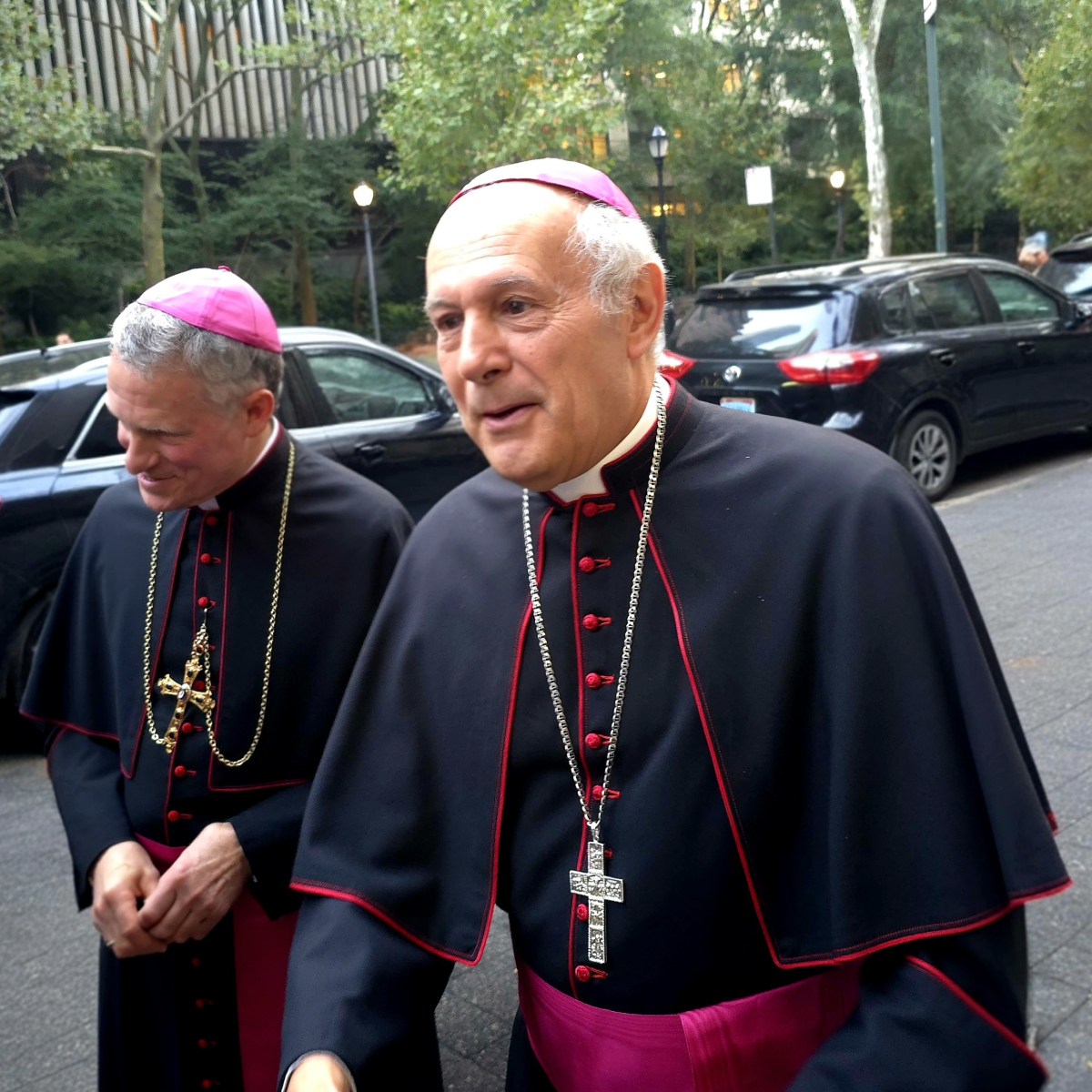
A venerable Who’s Who greeting unfolded at the doorsteps of the Church of the Holy Family on the evening of Monday, September 8, 2025, as representatives from every corner of the earth gathered in perfect early fall weather for the annual United Nations Prayer Service marking the opening of the 80th Session of the General Assembly. On Tuesday, September 9, 2025, world leaders will gather at UN Headquarters in New York for the formal opening ceremony, uniting to tackle urgent global issues under the inspiring theme “Better Together: 80 years and more for peace, development and human rights.”
Step into the heart of Paris, where innovation meets tradition at the UNESCO headquarters, and the brightest minds in education and technology converge. Stankevicius Media, through Dr. Jasmin Cowin, brings you an exclusive, on-the-ground perspective from UNESCO Digital Learning Week 2025, a global gathering dedicated to shaping the future of digital education.
Live from UNESCO Headquarters in Paris
As I arrived at UNESCO Headquarters in Paris for the inaugural Digital Learning Week 2025, I felt a sense of both anticipation and responsibility. This event, newly rebranded after a decade as Mobile Learning Week, drew together a vibrant and diverse global community of educators, policy-makers, researchers, and innovators, all eager to address one of the defining questions of our era: How can we harness the power of digital technologies, especially artificial intelligence, to create more equitable, human-centered education for all?
The fieldwork for EDPN 673 Methods and Materials for Teaching English as a Second Language focuses on exploring and analyzing K–12 pedagogical approaches, methods, and strategies relevant to teaching English to speakers of other languages (ESOL) and bilingual learners in diverse classrooms. The objective is to develop a deep understanding of the strategies that effectively convey state and professional standards-based curricula to students from different age groups, ability levels, and cultural backgrounds. This fieldwork is particularly valuable for TESOL and Bilingual candidates because it sharpens the practical application of observational skills. By systematically documenting, comparing, and evaluating instructional practices, candidates move beyond passive observation to purposeful analysis. They learn to identify nuanced teacher decision-making, scaffolded supports for multilingual learners, and the interplay between language objectives and content objectives. In doing so, TESOL and Bilingual candidates cultivate the ability to translate observations into actionable insights for their own teaching practice, bridging theory with evidence-based application in linguistically and culturally diverse classrooms.
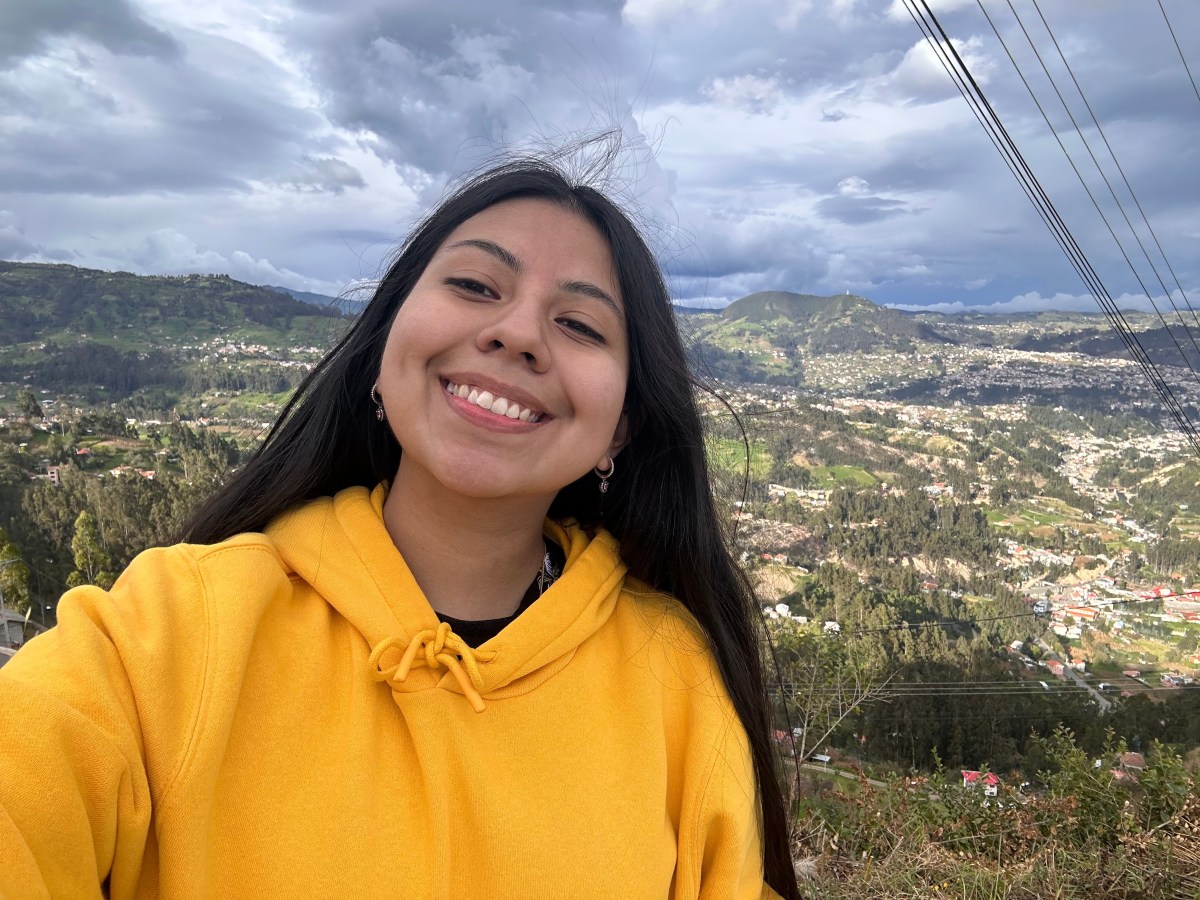
Johana Matute has been teaching for 3 years. She will officially start teaching at a DOE Public School fall 2025. She loves to read books and go for nature walks during my free time.
Her fieldwork report demonstrates an outstanding ability to connect classroom observations with TESOL and bilingual education theories, showing both depth and clarity. The report highlights how instructional strategies supported language and content objectives for multilingual learners with precision and insight. The candidate’s reflections reveal strong professional readiness and a high level of critical analysis.
As someone who understands the power of speaking more than one language, I chose Touro University’s bilingual certification program to help students thrive in both their native language and English.”
Johana Matute, Bilingual Certification Candidate at Touro University
Students will become acquainted with and practice effective approaches, methods, and strategies for teaching and evaluating English language learners in the content areas (ELA, social studies, math and science). Throughout the course, students will explore the impact of culture and language on classroom learning. Special challenges in teaching and assessment in each content area will also be discussed. Includes 15 hours of field work.
Elizabeth Guallpa teaches Spanish to both heritage and non-heritage speakers at Port Richmond High School in Staten Island, New York. In order to enhance her proficiency in assisting multilingual learners, she is presently pursuing a TESOL/Bilingual Extension at Touro University. Elizabeth’s passion as a teacher is helping kids to thrive academically and linguistically via culturally relevant instruction.
My experience at Touro University has changed my life, providing me with the skills, self-assurance, and vision I need to provide excellent, empathetic multilingual instruction. I’ve been reminded of why I selected this road by each course, which has pushed me to develop as an advocate and educator. In addition to improving my professional abilities, Touro has strengthened my resolve to elevate the voices of multilingual and immigrant pupils.
Elizabeth Guallpa, Touro University Master’s Degree Candidate
EDPN 673 Methods and Materials for Teaching English as a Second Language:This is a specific course within the MS in Teaching English to Speakers of Other Languages (TESOL) program at Touro University’s Graduate School of Education. It focuses on historical theories, current teaching methods, and the practical application of materials for teaching English as a second language.
The fieldwork assignment integrates field inquiry with technology-supported design to build core TESOL competencies. In Part I, candidates observe multiple bilingual or ESOL classrooms, conduct teacher and, where permitted, student interviews, and keep structured descriptive, reflective, and analytic notes with verbatim evidence, including basic documentation of the interview setup. In Part II, they investigate tech tools for instructional materials then produce a concise guide and an example material they created for multilingual learners. The final write up synthesizes pedagogy, materials, and assessment practices, and aligns insights with state and professional standards. In my opinion, this strengthens TESOL teacher education by cultivating evidence-informed analysis, standards-aligned planning and assessment, principled technology integration for differentiation, and reflective practice that centers multilingual learners’ profiles and voices.
Angelina Libardi is an elementary school teacher with a background in Childhood Education and Special Education. She is currently pursuing her master’s degree in TESOL, with a focus on supporting multilingual learning in inclusive classroom settings. Her work reflects a commitment to equality, language access, and empowering all students to thrive.
My experience in the TESOL program at Touro University has deepened my understanding of language, culture, and identity. It has empowered me to create more inclusive, responsive learning environments for every student I teach.
Angelina Libardi, Touro University Master’s Degree Candidate
My newest article Digital Privacy vs. Child Protection: The EU’s Controversial Chat Control Initiative for Stankevicius, explores Chat Control, the Brussels Effect, using Neil Stephenson’s Spew as a framing element.
“So, a week later I’m still wondering how I got this job: patrolman on the information highway. We don’t call it that, of course, the job title is Profile Auditor 1. But if the Spew is a highway, imagine a hard-jawed, close-shaven buck lurking in the shade of an overpass, your license plate reflected in the quicksilver pools of his shades as you whoosh past. Key difference: we never bust anyone, we just like to watch.”(Stephenson, N. (1994, October 1). Spew.)
The European Union’s proposed Regulation to Prevent and Combat Child Sexual Abuse, known as “Chat Control,” is built upon precisely this premise of permanent watching. Its central tool is mandatory client-side scanning of all private communications: messages, images, and files inspected on a user’s device before they are encrypted (European Commission, 2022). Unlike targeted investigations, this is systematic and indiscriminate monitoring.
This comprehensive course builds upon the foundation of curriculum development and classroom management in the context of teaching English language learners. Expanding its horizons to embrace the digital age, the course adeptly weaves innovative technology integration into the domain of Teaching English to Speakers of Other Languages (TESOL). Crafted to empower prospective TESOL/BLE educators, the course hones in on fostering competence in designing, implementing, assessing, and reflecting within diverse language learning environments, all while capitalizing on the potentials of cutting-edge technology. With a strong focus on practical application and discerning appraisal of technological tools, this course primes upcoming educators to excel amidst the ever-evolving educational landscape. Includes 10 hours of field work.
Maria Quiroz is a certified World Language teacher in Spanish for grades 7–12, who also holds a FLES extension for grades K–6. She is currently pursuing her Master’s degree in TESOL at Touro University. Her goal is to create inclusive, engaging learning environments that support diverse language learners across all age levels.
Maria Quiroz’ reflection on the assignment itself: This assignment was part of the Curriculum Analysis project in the Touro TESOL program. I analyzed the Getting to Know New York City unit for high school Emerging-level Multilingual Learners, using the EDDN 635 Alignment Reflection Tool. The work involved examining alignment with New York State Next Generation ELA Standards and WIDA ELD Standards, identifying supports and barriers for multilingual learners, and reflecting on ways to strengthen language and content integration. The process included multiple drafts and revisions, allowing me to develop a deeper synthesis of research-based ESOL strategies and culturally responsive curriculum design.
“Touro has inspired me to embrace innovation and equity in my teaching and given me the tools to support multilingual learners with confidence and purpose.” Thank you again for this opportunity.
EDPN 673: Methods and Materials for Teaching English as a Second Language: The Instructional Material Critique & Redesign with Infographic assignment prepares Touro University TESOL candidates to critically evaluate and adapt instructional materials for multilingual learners across diverse educational contexts. The assignment structure addresses specific TESOL and AAQEP standard requirements while developing essential professional competencies our graduates need in the field. The dual-material analysis requirement ensures candidates develop expertise in material evaluation across developmental levels, addressing TESOL Standard 2 by requiring deep analysis of how language acquisition intersects with academic content delivery. Candidates must demonstrate understanding of developmental language trajectories and their implications for instructional material selection, a core competency for effective TESOL practice. The WIDA PRIME protocol integration provides candidates with industry-standard evaluation tools currently used by school districts nationwide for material adoption decisions. This practical application directly aligns with AAQEP Standard 1’s emphasis on evidence-based practice while ensuring our graduates can contribute meaningfully to curriculum adoption processes in their professional contexts. The non-negotiable criteria assessment develops candidates’ capacity to identify and address systemic barriers that multilingual learners face in accessing grade-level content. This component operationalizes TESOL Standard 3 by requiring examination of cultural representation and linguistic accessibility, while AAQEP Standard 2’s equity focus is addressed through critical analysis of how materials support or hinder multilingual learner success. The redesign component transforms theoretical knowledge into practical application through differentiated material adaptation. Candidates must operationalize TESOL Standard 5 by creating instructionally sound modifications that maintain academic rigor while providing appropriate linguistic scaffolding across proficiency levels. This authentic assessment demonstrates candidate impact on multilingual learner outcomes, satisfying AAQEP Standard 3 requirements. The infographic creation simultaneously addresses AAQEP’s technology integration competency requirements and develops visual literacy skills essential for multilingual learner instruction. Candidates must demonstrate proficiency with digital design tools while creating pedagogically sound visual supports that enhance comprehension for diverse learners. This component ensures graduates can effectively integrate educational technology to improve multilingual learner outcomes while building practical skills for immediate classroom application. This assignment ensures our graduates possess both analytical expertise and practical competencies necessary for effective multilingual learner instruction.
Oralia Lainez-Tutka is a middle school Spanish teacher on Staten Island. Coming from a Spanish-speaking household, she is proud to be a first-generation college graduate now pursuing her master’s in TESOL at Touro College. She’s also a mom to a bilingual toddler, which makes this journey even more meaningful to her. She’s currently in her third semester.
I am already applying new scaffolding strategies and techniques in my teaching. I’ve learned a lot so far during my Touro journey and am truly enjoying the learning process. I feel well supported by my professors and the program as a whole.
Oralia Lainez-Tutka, TESOL Master’s Candidate, Touro University
The author had the privilege of observing GPAI development process but must adhere to the Chatham House rules, which are used around the world to encourage inclusive and open dialogue in meetings. The GPAI development launched in July 2024 with over 1,400 participants from industry, academia, civil society, and EU Member States. Group work started last year November 18, 2024, when the author joined Working Group 4: Internal risk management and governance of General-purpose AI providers meeting.






 Dr. J's Education Blog