Dr. Jasmin Cowin joins Inter-National Association FOR Trans-Disciplinary Communication AFTC as a Founding Member and Call for Papers

The International Institute of Informatics and Cybernetics, IIIC through The Inter-National Association FOR Trans-Disciplinary Communication AFTC is planning a Special Issue FOR “Trans-Disciplinary Communication”

The objectives are 1) to support a written dialogue related to the Foundation of the International Association FOR “Trans-Disciplinary Communication”, 2) to potentially support the elaboration of a founding collective document, and/or 3) a special issue of the journal related to the notion “Transdisciplinary Communication”  which have two main meaning implied by the context in which the notion is used: 3a) the “Transdisciplinary Communication”  required for communicating members of a multidisciplinary team working in the context of trans-disciplinarity and/or transdisciplinary research, and 3b) the “Transdisciplinary Communication”  related to communicating authors with readers from different disciplines. speakers for a multidisciplinary audience, or even with the Society in General. The latter is the second sense of the etymological meaning of the prefix ‘trans-”, i.e., across and beyond. Accordingly, based on these two etymological senses, “Trans-Disciplinary Communication” means across disciplines and/or beyond them. The first relates academics from different disciplines and the second relates Academy to Society at Large. The latter requires to use of the natural language being spoken in each country.

Call for papers: The 14th International Conference on Society and Information Technologies: ICSIT 2023© March 28 – 31, 2023 Submissions Articles might be submitted for face-to-face or virtual participation in the conference. For details regarding the types of submission, please click here. Submitted papers will have double-blind and non-blind review. They may also have peer-to-peer participative review. More details regarding the Reviewing Policy can be found by clicking on the link “Multi-Methodological Reviewing Process for Multi-Disciplinary Conferences” under the “Reviewers” tab. The acceptance policy to be applied to the reviewed submissions made to ICSIT 2023 is based on the Majority Rule, applied to the reviews received for each submitted article. Details on this issue can be found by clicking on the link “Acceptance Policy” under the “General Info” tab.

Jake LaNasa, Touro University Candidate, TESOL/Bilingual department, Graduate School of Education on “Transforming the Education of English Language Learners/ Multilingual Learners for Tomorrow’s World.”

In my online courses, starting the semester, I facilitate student discussions using Canvas Discussion Boards. Questions focusing on readings help students with critical analysis of the readings. Course progression starts folding in tech tools such as voicethread, videos, mind maps, infographics, etc. I believe discussion boards create opportunities and set the stage for active learning, developing critical thinking and writing skills relevant to the course subject. To nurture graduate writing skills, my discussion boards are required to use APA style referencing. This gives students an opportunity to engage in graduate writing and peer feedback. Jake LaNasa contributed a well-researched and thoughtful discussion board, which I am proud to showcase.

Jake LaNasa is currently a permanent substitute teacher at California Avenue School in the Uniondale School District. H received his bachelor’s degree in Childhood Education, in December of 2021 and has been subbing ever since.

I became a teacher because my mother and many other family members are teachers. My mother would come home from work every day with a smile on her face and I knew that is what I wanted for my future.

Jake LaNasa, Touro University, candidate in the TESOL/Bilingual department, Graduate School of Education

  • Question: CHAP 1. WHAT Characteristics  INFLUENCE ELLs’ having SUCCESS IN SCHOOL?

          In order for ELLs to have success in schools, the teacher must build background knowledge and vocabulary as well as hands-on experience that enhance their understanding of the content. Teachers should also offer access to websites in the student’s native language in order to facilitate any language barriers. The more prepared the teacher is the higher chance of student success. This is not only the job of the teacher but of the schools, districts, and or universities to take action and implement this framework for all ELLs and students. Educators have to be aware of their students’ diverse backgrounds. The students bring cultural and educational experiences to the classroom that will have implications for assessment, program design, and instruction. Understanding the students’ funds of knowledge is incredibly important in constructing effective techniques. 

  • Question: What are some characteristics of ELLs to consider to implement effective teaching?

          No Ell is the same. The more aware the teacher is of this information, the easier it will be to implement proper teaching techniques. Many Ell’s come from different geographic locations which will present challenges. Many school districts have not served large numbers of ELLs in the past, meaning the school’s academic progress toward ELLs is not well established. This not well-established progress will reflect on some schools not having appropriate curricula and or resources available for Ells. Many teachers are also untrained in how to meet the needs of their Ell students, the teacher must know and understand the students’ backgrounds and abilities in their native language in order for the teacher to incorporate effective materials and techniques in their instructional practices. ELLs enter American schools with a range that varies widely in language proficiency.  Many characteristics of ELLs affect the way they learn and their ability for second language acquisition. These characteristics include the students’ educational background, socioeconomic status, age of arrival, personal experiences while traveling to America, and their parents’ education level. As educators, we must push the need for English language development (ELD) in order for the students to transfer their knowledge in their native language into English as they become more proficient with it.

I feel it is important to explain to the students that making mistakes is natural and teachers should not scrutinize students for grammatical correctness early on.

Jake LaNasa, Touro University, candidate in the TESOL/Bilingual department, Graduate School of Education


Educators must assure that the ELLs and SIFE students are getting the best educational opportunities possible. Districts should be integrating technology and revisiting their models of teaching ELLs to make sure their best practices are up to date with the growing and changing Ell population. The most important aspect is ensuring the Ell students are receiving equitable representation in their schools. Introducing TESOL techniques will transform the education of Ells by increasing students’ linguistic knowledge across multilingual contexts through research, standards, professional development/learning, and advocacy. To reach the students and transform their learning we must value their home language and culture to draw them into learning a new language altogether. The student’s home language will facilitate and bridge the gap between learning a completely new language. I feel it is important to explain to the students that making mistakes is natural and teachers should not scrutinize students for grammatical correctness early on. The students must receive feedback strategically in order for the students to not feel as though they cannot successfully acclimate to the new language and give up. Educators should be involving families in their student’s education path. If the families are involved and participate in their children’s education, this may lead to a greater chance of success as students will feel empowered. Students have to feel comfortable in the classroom during lessons, teachers can add more visuals, translate essential vocabulary, and allow students to collaborate in their native language during discussions. The classroom must be a safe environment. If the children do not feel safe, their ability to learn is fragmented and much more difficult. Implementing the SIOP model will also transform the education of Ells. The SIOP model consists of eight instructional strategies that will help educators in their lesson design and delivery. The SIOP model involves building background, lesson preparation, interaction, practice and application, lesson delivery, strategies, comprehensible input, and review and assessment. This model has a strong research base that has been tested across grade levels and subject areas. Implementing this model has proven to improve academic literacy for ELL students. With more teachers using this model, the future of Ell students is very bright.

  • Question: What is one takeaway from this week’s readings and how might it impact your teaching?

          Something that stood out to me is the fact that ELLs are either over or under-represented in special education. Many districts and schools struggle to distinguish between a learning disability and a delay in developing second language acquisition. Even if students are correctly identified, districts may have trouble providing services to bilingual special education educators. After reading this it changes my perspective of Ells in special education. This motivates me to meet with special education teachers in my building and discuss how they identify ELLs in special education and what services or scaffolds they have in place for them. I never want to misidentify a student and I believe that many students are. Some students have delays in language acquisition, but it does not mean they should be in a special education classroom. 

  • Question: Share a fun fact or photo of yourself.

          A fun fact about me is I work in the Uniondale school district where there is an overwhelming and continually growing amount of Ell students. I am taking these courses in order to further my knowledge of Ells and TESOL which in turn will make me a more qualified and proficient teacher in this school district. I am excited to obtain new knowledge and apply it to my Ell students every week.

References:

Schembari, J. (2023, January 11). What advocates say we must do to support the needs of these children. Work It Daily. Retrieved January 25, 2023, from https://www.workitdaily.com/help-english-language-learners/what-advocates-say-we-must-do-to-support-the-needs-of-these-children

Echevarria, J. (2007). Making content comprehensible for English language learners: The Siop model. Pearson/Allyn and Bacon.

Dr. Jasmin Cowin and “The Mitzvah of Mezzuzah and Metaverses” featured in the Israel Herald

Back yard, Court 15, Inge Street, Birmingham (10) by Brian Robert Marshall is licensed under CC-BY-SA 2.0

I am pleased that my thoughts on “The Mitzvah of Mezzuzah and Metaverses” were featured in the Israel Herald. I believe it is time to engage in transdisciplinary discussions and explore the potential implications of dynamic simulation environments for Jewish educators, instructional designers, metaverse curators, and users to ensure Jewish principles are honored.

Read the article: The Mitzvah of Mezzuzah and Metaverses

Call for Proposals for The Third VirtuaTELL Conference due March 1st, 2023

As a conference co-chair for the Third VirtuaTELL Conference, I am pleased to announce:

Conference Theme: Technology Enhanced Language Learning: Investigate, Identify, and Innovate

There will also be an Innovative Technology Use Teacher Competition

The Third VirtuaTELL Conference will be on May 6th, 2023.

This year’s conference theme reflects on current trends and approaches in technology-enhanced language learning and teaching to investigate, identify and innovate within a broad consideration of related issues, including (but not limited to) the following: millennials and language acquisition; 21st Century pedagogies embedded in and using technology for language teaching and acquisition; assistive technologies, technology in special education; culturally relevant and asset-based pedagogy, gamification, e-assessment; and immersive realities for diverse linguistic learners.

The Third VirtuaTELL Conference website

Third Annual VirtuaTeLL Conference Call for Proposals deadline will be March 1st, 2023.

EdUp host Holly Owens features Dr. Jasmin (Bey) Cowin on “Preparing Educators for the Complexities of 21st Century Classrooms”

This podcast is a go-to resource to stay updated with the latest and greatest Ed Tech tools that are disturbing (in a good way) education. EdUp EdTech is hosted by Holly Owens, whose ability to break down the complex components of edtech makes us believe we can do anything when it comes to education! Join Holly each week as she hosts insightful guests from the world of educational technology.

Holly Owens, “In this episode, I got to chat with my friend, Dr. Jasmin Cowin from Touro University! Jasmin is an Assistant Professor of TESOL, Ed Tech guru, and lover of all things education. In this episode, you get to hear about Jasmine’s journey into education, her thoughts on jobs of the future, and what we should be doing to prepare our educators for 21st-century classrooms.”

English vs Ukrainian: A Morphology Comparison for US Educators of Displaced Ukrainian Students

by Dr. Jasmin (Bey) Cowin

To support teachers working with Ukrainian students, I prepared this grammar resource for teachers and students alike to showcase a morphology comparison between Ukrainian and English parts of speech. Morphological awareness has been related to literacy development including vocabulary development and reading comprehension (Ke & Xiao, 2015). 

I believe that developing morphological awareness across both languages, enables both teachers and Ukrainian students to use their linguistic repertoire across languages and benefit from their multilingual resources.

Dr. Jasmin (Bey) Cowin

In addition,  Translate Google is a useful tool for basic translations. Feel free to share my resource!

As displaced Ukrainian families are dispersing out across the country they are finding refuge with family, friends, and volunteers and enroll their children in school. In New York, the Mayor’s Office of Immigrant Affairs (MOIA) Commissioner Manuel Castro launched New York City’s Ukrainian Response Initiative in June 2022, to help currently residing and newly arrived Ukrainian New Yorkers access immigration legal assistance, translation services, social services, and other resources. Information on how to access services provided through this initiative can be found on nyc.gov/ukraineresources or by calling NYC’s immigration hotline at 800-354-0365.  

New York State officials estimate New York will need more than 180,000 new teachers in the next decade, however, the teacher shortage is already hitting selected subject specialties and geographic areas. According to NYSUT, New York reports persistent shortages in teachers for special education, bilingual education, English as a Second Language, science, mathematics, English Language Arts, social studies, world languages, career and technical education, health education, literacy and library science.

Touro University’s TESOL and bilingual certificate programs prepare NYS-certified teachers to provide responsive, comprehensive education to students of every background.

What You’ll Learn

The 15-credit program includes five courses—each with carefully designed fieldwork experiences—that emphasize both academic content learning and English fluency for English Language Learners.

We explore contemporary theory and research-based instructional strategies for multicultural education, methods and materials for second language acquisition, and best practices for teaching ELLs in specific subjects. We give you the tools to ensure that your students meet the latest performance standards of PreK-12 curricula in both private and public schools.

Courses are offered evenings and Sundays, and online to accommodate our students’ diverse scheduling needs, and you’ll receive personalized guidance based on your current work and career goals from highly qualified and experience professors.   

Upon completion of the program, you’ll be eligible for the New York State Advanced Certificate in ESOL. All courses are transferable to the master’s degree program in TESOL at Touro College.

Admissions Requirements

In addition to general requirements, applicants must provide proof of initial or professional teaching certificate, as well as 12 credits of foreign language study or a passing score on a  CLEP examination. Students who have not satisfied the foreign language studies requirement may be admitted to the program, but with the understanding that they must satisfy this requirement as soon as possible and prior to graduation.

Contact us to learn more about our advanced certificate and master’s programs.

References:

Ke, S., & Xiao, F. (2015). Cross-linguistic transfer of morphological awareness between Chinese and English. Language Awareness24(4), 355–380. doi:10.1080/09658416.2015.1114624 [Taylor & Francis Online][Web of Science ®][Google Scholar]

A Bilingual Glossary for Administrators and Educators: English – Spanish Key Terms Describing Multilingual Learner Education Practices in New York State by Dr. Jasmin (Bey) Cowin

As the end of 2022 is approaching, I decided to design a “poster” and create a bilingual English-Spanish glossary as a resource for administrators and teachers working with Spanish-speaking families. The inspiration came from a text-heavy document by THE STATE EDUCATION DEPARTMENT / THE UNIVERSITY OF THE STATE OF NEW YORK, Office of P-12 Key Terms Used to Describe Practices Related to the Education of ELLs in New York State, March 2016. As I read through the document, I thought about visually creating a simpler structure to unbundle the information in a visual way.

Feel free to share!

“Learning another language is not only learning different words for the same things, but learning another way to think about things.”

Flora Lewis

Want to Upskill? Study Grant Opportunity at Touro University, TESOL/BLE Department -Clinically Rich Intensive Teacher Institute programs (CR-ITI)

The New York State Education Department is intending to make new grant awards for the operation of Clinically Rich Intensive Teacher Institute programs (CR-ITI). These Institutes are targeted at NYC teachers who want to obtain a TESOL or Bilingual General Education teaching certificate.

Touro College’s Graduate School of Education is successfully operating a 5-year CR-ITI Program under NYSED. Under the Touro program, an annual cohort of 20 teachers will take 5 courses and upon completion of the program, will be recommended to NYSED for either an ESOL (PreK-12) or Bilingual Extension. Under the grant, participants will receive tuition support of $900 per course, as well as a 15% Touro College discount for the remainder of tuition expenses. To complete the entire one-year certificate program,

     Eligibility Requirements for Participating Teachers:

  • Participants must be NYC DOE teachers (with an initial or professional classroom teaching certificate) and must be recommended by their principals.
  • Teachers must be highly motivated and dedicated to better serving ELLs in their schools or districts.
  • TESOL candidates will need to provide proof of experience with learning a foreign language (equivalent to 12 college credits). Candidates may complete the necessary credits while in the program.
  • Bilingual Extension candidates will need to provide verification of target language proficiency.

For more details about this great opportunity program please see the attachment.  For other information including deadlines for application please contact

Dr. Olga De Jesus-Diaz

To apply send  required information to : Dr. Olga De Jesus-Diaz

Chair, TESOL/BLE Advance Certification Programs 

212-463-0400 ext. 55122

olga.dejesus@touro.edu

Touro University Bilingual Advanced Certificate Candidate Paola Gomez’s Fieldwork Observations & Providing Successful Learning Environments for all Students

Touro University’s TESOL/BLE Education Program offers an advanced certificate to address the shortage of bilingual teachers and administrators.

According to the article, Bilingual teachers are hard to find as thousands of migrant students enter NYC schools. “For at least 20 years there has been a real shortage of bilingual teachers,” said Mark Cannizzaro, president of the principals’ union, the Council of School Supervisors and Administrators. “And it’s an even bigger problem now.”

Thousands of new students have arrived in city schools over the past few months, largely children of asylum seekers from South and Central America. Some have landed at schools with robust bilingual programs, where they can learn academic content while gaining English skills. Others find themselves lost in classes where the only language spoken is English.

Touro University’s TESOL/BLE Education Program offers an advanced certificate to address the shortage of bilingual teachers and administrators.

Bilingual Education and Services
There is a need for high-quality educators trained to offer bilingual education and services. For certified teachers and professionals, a bilingual certificate can extend your certification and opportunities. All our courses stress the importance of considering cultural factors alongside individual abilities in teaching bilingual students. We offer three advanced certificates in bilingual education and services:

Bilingual General Education, PreK-12, for mainstream teachers looking to work with bilingual students, teaching their content area in two languages.

BILINGUAL SPECIAL EDUCATION AND SPEECH & LANGUAGE DISABILITIES is for special education teachers who want to work with bilingual students with cognitive impediments, and help assess whether it’s a hearing or speech impediment that makes it hard for the student to replicate the English language and with them on speech patterns.

Bilingual Pupil Personnel Services is for school counselors, social workers and psychologists, who want to work with bilingual students.

Admissions Requirements

In addition to the general admission requirements, you must be able to document proficiency in the target language of instruction (Click here to download the Target Language Proficiency Verification Form).

To learn more about the program: https://gse.touro.edu/request-more-information/

EDPN 673 Methods and Materials for Teaching English as a Second Language

This course provides a historical overview of second language acquisition theories and teaching methods. Students learn how to apply current approaches, methods and techniques, with attention to the effective use of materials, in teaching English as a second language. Students will engage in the planning and implementation of standards-based ESL instruction which includes differentiated learning experiences geared to students’ needs. Emphasis is placed on creating culturally responsive learning environments. Includes 15 hours of fieldwork.

Fieldwork: Exploration and analysis of relevant K-12 pedagogical approaches, methods, and strategies needed to convey to a diverse population state and professional standards-based curricula. Development, adaptation and evaluation of materials for implementation in lesson planning and assessment for teaching English to speakers of other languages to particular groups of different ages, ability levels and cultural backgrounds.

Using centers will allow my students to work on activities that are differentiated according to their academic levels. In these centers, my paraprofessionals and I can give to one-on-one support to my students and collect data on the acquisition of IEP goals. Moving forward as a bilingual education teacher, I will provide a multicultural learning environment in which students’ native language is seen as an asset rather than a barrier.

Paola Gomez, Touro University Bilingual Advanced Certificate Candidate

Touro University TESOL Candidate Nicole Andrade’s Fieldwork and Observations on Code-Based Skills vs Meaning-Based Skills

“As a professor, I created this blog as a mechanism to support, appreciate and showcase the exemplary work of my graduate and professional Touro University TESOL/BLE teacher candidates. By emphasizing candidates’ best work, and their innovative, thoughtful, reflective contributions I provide a path to shift the focus to their professional values while recognizing and celebrating their significant milestones in the Touro University TESOL/BLE program.” by Dr. Jasmin (Bey) Cowin, Assistant Professor, TESOL/BLE Department, Touro University

Admissions Requirements

We welcome applications from NYS-certified teachers who would like to pursue TESOL certification. This program is designed to strengthen teachers’ capacities to effectively serve children for whom English is a second language. 

Ready to Apply?

Visit admissions to find out how to apply and start your application.

EDDN 637 Second Language Learners and the Content Areas

Students will become acquainted with and practice effective approaches, methods, and strategies for teaching and evaluating English language learners in the content areas (ELA, social studies, math and science). Throughout the course, students will explore the impact of culture and language on classroom learning. Special challenges in teaching and assessment in each content area will also be discussed. Includes 15 hours of field work.

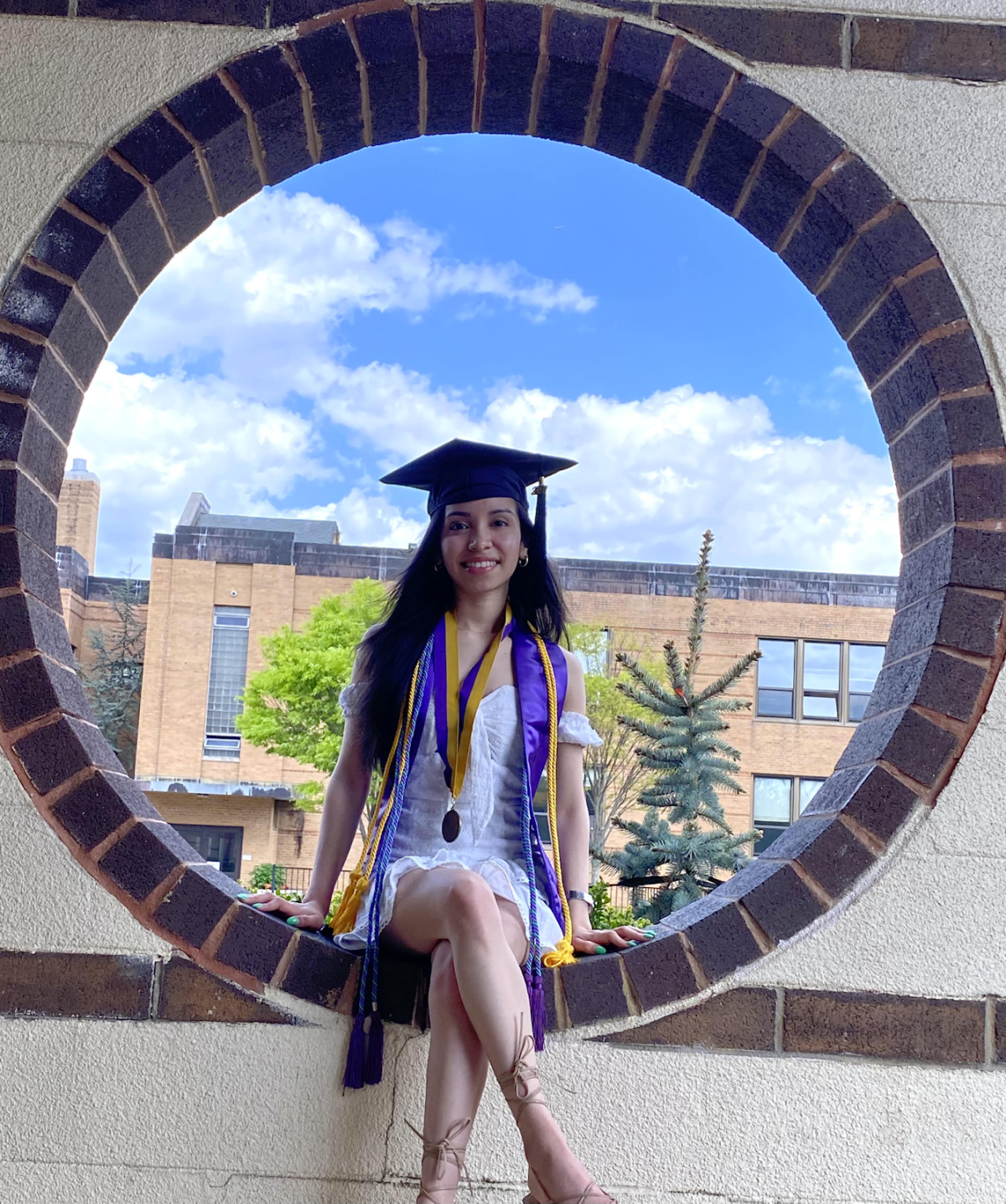
Touro University TESOL Candidate Nicole Andrade is 25 years old. Her family is from Bolivia. She has worked as a Lead Preschool teacher and as a substitute teacher for the DOE for two years, giving her experience in different classroom settings from grades K-5.

It is important to develop the proper instruction, intervention, and goals for students when designing a curriculum. Code-based skills and meaning based skills are what educators must work on with students in order to gain advancements in reading comprehension from students. Code-based skills rely on students’ abilities to sound words out and alphabet knowledge, whereas meaning-based skills refer to vocabulary. Vocabulary is essential in literacy development. English Language Arts Standards categorize three areas, reading literature, reading information text, and language. In these areas, educators must choose the correct interventions to best support students, for instance understanding the difference between a student who needs assistance in code-based skills such as reading words slowly, or meaning-based skills where a student may have difficulty with comprehension of an unfamiliar vocabulary word in a passage(NYSED, 2022).

Nicole Andrade, Touro University TESOL Candidate