Dr. Jasmin (Bey) Cowin on Education and Globalization: Artificial Intelligence, Augmented Reality Digital Technologies, and Distributed Ledger Technology Networks – Proceedings of the 15th International Multi-Conference on Society Cybernetics and Informatics: IMSCI 2021©

The convergence of data, computation, and globalization in education has far-reaching consequences for educational stakeholders, institutions, and learners. Terms such as the Fourth Industrial Revolution, artificial intelligence (AI), exponential technology, deep learning, personalized competency-based learning, and distributed ledger technology networks (DLTNs) are indicators of the changing dialogue between education stakeholders, businesses, and government aspirations on a global scale. Location-independent virtual environments promise an exponential expansion that goes beyond brick-and mortar schools, colleges, and universities.

It is my pleasure to share the publication of my most recent article:

Cowin, J. (2021). Education and Globalization: Artificial Intelligence, Augmented Reality Digital Technologies, and Distributed Ledger Technology Networks. Proceedings of the 15th International Multi-Conference on Society, Cybernetics and Informatics: IMSCI 2021, 56–61.

About the Social and Organizational Informatics and Cybernetics: SOIC 2021©
in the context of The 15th International Multi-Conference on Society, Cybernetics and Informatics: IMSCI 2021©

July 18 – 21, 2021 ~ Virtual Conference

Many social, societal and organizational problems, in the information age, are interrelated and need to be solved jointly by means of multidisciplinary projects, interdisciplinary communications and/or trans-disciplinary concepts and methodologies.

Informatics, Cybernetics and Cyber-Technologies (ICCT) are, by definition and by nature, transversal to many disciplines and, as such, are special means for the multi-, inter-, and trans-disciplinary approaches required.

ICCT are helping in the solutions of an increasing social, societal and organizational problems, but they are also generating new kind of problems and raising unfamiliar questions. The processes of answering these questions and finding possible solutions to these kinds of problems require as much as of scientific/engineering approaches, as of conceptual/reflexive studies.

Both, analogical and logical thinking are also required, in different complementary studies, as well as combined in the same one. In this context logical thinking without the analogical one would be sterile, and analogical thinking without the logical one would be dangerous for being prone to hidden errors and mistakes.

In the context of this framework, the basic purpose of the Organizing Committee of SOIC 2021 is to a provide a forum for disciplinary and interdisciplinary communications, where researchers (in Social and Natural Sciences, as well as in Engineering), intellectuals, policy/decision makers and Consultants would share the results of their research, studies and thoughts, with regards to societies and private/public organizations in the context of the Information Age.

http://www.iiis2021.org/imsci/website/default.asp?vc=11

ABSTRACT (1)

Jasmin (Bey) Cowin, Ed.D.


The convergence of data, computation, and globalization in education has far-reaching consequences for educational stakeholders, institutions, and learners. Terms such as the Fourth Industrial Revolution, artificial intelligence (AI), exponential technology, deep learning, personalized competency-based learning, and distributed ledger technology networks (DLTNs) are indicators of the changing dialogue between education stakeholders, businesses, and government aspirations on a global scale. Location-independent virtual environments promise an exponential expansion that goes beyond brick-and mortar schools, colleges, and universities.

AI and intelligent systems are poised to become global change agents in education, ushering in profound changes in administrative functions, strategic planning, data aggregation, student acquisition and retention, and alternative currencies, as well as curriculum design, assessment, personal learning networks, and global competitiveness generally of both institutions and their graduates. The quality of the education a nation’s schools, educational institutions, and teachers provide, along with investments in science, technology engineering, and mathematics education, directly impact economic prosperity and global competitiveness.

This paper explores some of the interdependencies that arise from supercharged technological advances such as AI augmented reality digital technologies (ARDTs) and DLTNs and their possible impact on education, educators, learners, and society. In addition, it unbundles the meaning and use cases of AI, ARDTs, and DLTNs in education.


1 The author gratefully acknowledges Prof. Ching-Ching Lin, Ed.D., Touro College, GSE for her insightful peer review of this paper.

Keywords:
Fourth Industrial Revolution, Artificial Intelligence, Exponential Technology, Deep Learning, Personalized Competency-based Learning, Natural Language Processing and Distributed Ledger Technology Networks

Zoom Seminar – Yemeni TESOL Teaching for the Future: Exploring Open Educational Resources (OERs) and Virtual Spaces 

Future Horizons Foundation for Translation, Training and Development together with President Prof. Abdullah Al Ghurbani and Prof. Jasmin Bey Cowin proudly present a free seminar on July 27th, 2021 from 1 pm to 2:30 pm aimed at continued professional TESOL development for all its alumni and graduates. This free seminar and workshop and attendance is limited to the Foundation’s Alumni. 

Future Horizons Foundation for Translation, Training and Development together with President Prof. Abdullah Al Ghurbani and Prof. Jasmin Bey Cowin proudly present a free seminar on July 27th, 2021 from 1 pm to 2:30 pm aimed at continued professional TESOL development for all its alumni and graduates. This free seminar and workshop and attendance is limited to the Foundation’s Alumni. 

Please click this link https://forms.gle/BudCNdevNb5HLAnk9 to sign up.
Yemeni TESOL Teaching for the Future: Exploring Open Educational Resources (OERs) and Virtual Spaces 


This Zoom seminar will focus on educational resources for TESOL teaching such as public digital libraries, open educational resources, and virtual rooms in hubs. The aim is to create access and equity for Yemini TESOL teachers to free materials, resources, and contemporary technology. 
If you are a confirmed Future Horizons Foundation for Translation, Training and Development Alumni you will receive a link via the provided email from the form.

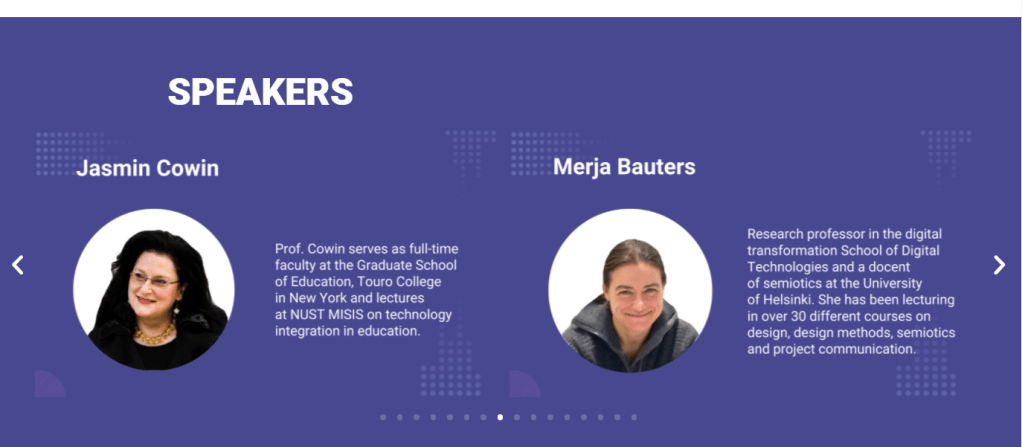
Presenter Bio: Dr. Jasmin Bey Cowin
Assistant Professor and TESOL Practicum Coordinator,
Touro College, GSE, NY


Dr. Cowin’s pro-bono work is seated in a deep professional and personal commitment to transcending boundaries and bringing universal access to high-quality teacher education and professional teacher development. As a Fulbright Scholar; Assistant Professor and TESOL Practicum Coordinator at Touro College, GSE; Chair of the 51st New York State TESOL fall 2021,  she brings over twenty-five years of experience as an educator and institutional leader. 

As an Education Policy Fellow at the EPFP™ Institute, Columbia University/Teachers College, she became part of a select group of strategic leaders analyzing trends regarding effective educational policy and leadership. Her EPFP™ focus was on three pillars: The Fourth Industrial Revolution, Leadership, and Educational Policy furthering her understanding of the challenges that lie at the heart of education inequity. 

Dr. Cowin’s extensive background in education, administration, not-for-profit leadership, entrepreneurial spirit, commitment to the idea of education as a basic human right, technology innovation, and demonstrated sensitivity to cultural communication differences; provide her with unique skills and vertical networks locally and globally.
https://drcowinj-locationindependentteach.com/about/ 

Touro College GSE TESOL Candidate Jason Madrick on Sociopolitical Contexts of Multicultural Education in Public Education for Course EDPN-671

In synchronous online courses discussion boards are in integral part of student analysis and peer cross-pollination. Touro TESOL Candidate Jason Madrick submitted a thoughtful, reflective, exemplary discussion board contribution for the course Theory and Practice of Bilingual and Multicultural Education EDPN-671.

In synchronous online courses discussion boards are an integral part of student analysis and peer cross-pollination. Touro TESOL Candidate Jason Madrick submitted a thoughtful, reflective, exemplary discussion board contribution for the course Theory and Practice of Bilingual and Multicultural Education EDPN-671. This course reviews the impact of historical, legal, sociological, and political issues in relationship to the education of culturally and linguistically diverse students. It is designed to prepare bilingual and ESOL teachers to work successfully with language minority students, in the context of bilingual ESL programs. It includes the study of the historical, psychological, social, cultural, political, theoretical and legal foundations of bilingual education programs in the United States. Students will examine and analyze different bilingual program models so that they may apply such knowledge to the implementation of pedagogically effective practices for second language learners using both the L1 and the L2 in curriculum implementation. Communication with parents and families concerning students’ academic and social outcomes will be highlighted. The course supports Touro College’s commitment to preparing educational professionals to work in diverse urban and suburban settings. Students explore the evolution of attitudes regarding bilingualism and multiculturalism in the United States. Emphasis is placed on developing multicultural competence as educators, with areas of focus including cross-cultural communication in the classroom and with parents; how the language and culture of the home and the community impact student learning; cultural factors in the relationships between the school and the community. Models of multicultural and bilingual education will be presented and analyzed. Includes 10 hours of fieldwork.

Jason Madrick was born and raised in Queens, NY. He has been an illustrator, musician, and overall creative person. Mr. Madrick is graduate of Syracuse University with BA degrees in Biology and Anthropology and minors in Sociology and Education. He has taught as a substitute teacher in public elementary schools in Queens, and then in the UPK program for more than a decade combined. Jason Madrick wrote: “I look forward to embarking on the next stage of my career in education being employed by the NYC DOE this coming fall and using my artistic and musical talents, love of reading, nature, science and more to convey and hopefully instill a love of learning in my future students.”

The Discussion Board prompts are in Italic

In your own words, provide a brief summary (4-6 sentences) of one of the major concepts presented in Chapter 1: Affirming Diversity, The Sociopolitical Context of Multicultural Education. Seventh Edition, Pearson, New York (Nieto, Sonia & Bode, Patty,2018). You may select any concept within the chapter. Choose one that you find unique, interesting, and/or worthy of intellectual discussion.

Jason Madrick : In the last section of Chapter One of our text “Affirming Diversity: The Sociopolitical Context of Multicultural Education” by Sonia Nieto and Paddy Bode, one of the concepts that caught my attention was the influence of private industry in public schools, and the heavy focus on high stakes standardized testing. These testing practices had grown out of the policies and curriculum changes that can be linked back to the publication of the “A Nation at Risk” in 1983. (Nieto & Bode, 2018). From there, the No Child Left Behind Act or NCLB continued this trend of focusing on high stakes testing, and the links between private industries and charter schools in particular is alarming in the enormous influence they have on our public education system in the United States. The “testing industrial complex” (Nieto & Bode, 2018) is a term I had not heard before reading this chapter, but it seems incredibly accurate to me based on my own observations and experiences with the company who has published every text book I have used so far in graduate school, Pearson. Pearson is also the same company I had to gather and input data for during my recent teaching experiences in the UPK program. Described in this chapter as a “monstrous carnivore” that devours public school funding, (Nieto & Bode, 2018) Pearson, I think is just one example of the many private companies whose quest for profits is in direct conflict with the noble goals of public education.

Provide a brief discussion/introduction/explanation of the sociopolitical context of your school environment. If you don’t currently work in a school, you may choose to discuss your workplace or school that you attended. Provide some background information so that others can build an understanding of your specific environment.

Jason Madrick: I am currently not teaching during this school year, but I would like to discuss the sociopolitical context of the two schools I worked at through the UPK program. The first of these schools was located in Whitestone, Queens, and the second location was in Jamaica, Queens. I think my familiarity with those schools is more up to date than my own elementary school experiences, though the memories and details of those years are still very much intact. The first school where I taught in the UPK program was located in Whitestone, Queens in what I would classify as a middle class to upper middle class, to wealthy in terms of economic resources for the area and families of students who attended this school. There was even a golf course and country club located within walking distance of the school. The population of the school included students from several different cultural backgrounds including White, African-America, Latino, and Asian students. Religious faiths represented among the student and family populations included Christianity, Judaism, Muslim, and Athiest/Agnostics. The languages spoken by students included English, Spanish, Chinese, Korean, and Japanese. The majority of the teaching and administrative staff at this school was predominantly White and from a middle to upper middle class background. There were four general education UPK classrooms at this school.

The second school location that I was teaching in UPK was located in Jamaica, Queens. This school was predominantly a 4410 program, with a dozen special education classrooms, but had created four to five integrated UPK classrooms in their basement. These integrated classes were meant to be populated by half general education students, and half special education students. The cultural and religious backgrounds of the students and families at this school was predominantly Latino, Southeast Asian, and African-Americans. There were also White and Asian students present in the program as well. The economic background of many of the families based on my limited observations as well as limits of communication due to language differences at this school I think definitely represented a larger proportion of lower income families, including those who were on public assistance and/or homeless. Religious faiths at this school included Christians, Jews, Muslims, Hindu, and Atheist/Agnostics. There were multiple languages spoken by students at home including English, Spanish, Chinese, Bangali, Punjabi, and Urdu. Among the staff including lead teacher and teaching assistants there are a number of languages spoken besides English including Spanish, Arabic, Bangali, Punjabi, Urdo, Chinese, and Russian. One observation and big difference I noticed between these two schools I taught at was the huge increase in absences and habitual lateness of students at this second location compared to the school in Whitestone. I had some students from the two classes I taught at this school that had missed more than a third of the total scheduled days of class.

Comment on one of the videos presented in this week’s readings. This is slightly flexible, but have fun with it. Choose something within the video to discuss here in this board. It could be something you enjoyed learning, something you disagree with, or something that sparked curiosity.

Jason Madrick: I enjoyed watching the Ted Talk video featuring Elijah Jones on Diverse Education for a student in the Education System, TEDxYouth@Wilmington. Elijah is a student at a private school and spends much of his talk discussing how socioeconomic matters have a significant impact on the resources, both materials and instructional talent that are available to students depending on where the live and their economic means. Ultimately he speaks about how our public school system has become increasingly segregated along racial and socioeconomic lines. At one point he mentions that at his private school, there weren’t any “teachers of color” and that he felt like he was “definitely not in Kansas anymore”. His private school had given him access to top level resources, teachers and extracurricular activities. He laments that what it does not provide him with is a substantial level of diversity among his peers, and that this is not going to be helpful for his future. This future he discusses is the one in which the population of students in the USA is rapidly changing both along cultural and ethnic lines, but also along economic ones. He states at one point that recently, and for the first time, more than half of all school age children are from low income families. Elijah continues to speak towards the ideal that to live in an increasingly multicultural society, he, and other students need and should be exposed to a diverse student population, as well as being able to have access to proper learning resources and instructors. He also says that for race relations and divisions among the people of this country to improve, that discussions and opportunities to talk about these relations and problems need to continue.

References

Nieto, Sonia & Bode, Patty (2018). Affirming Diversity. The Sociopolitical Context of Multicultural Education. Seventh Edition, Pearson, New York

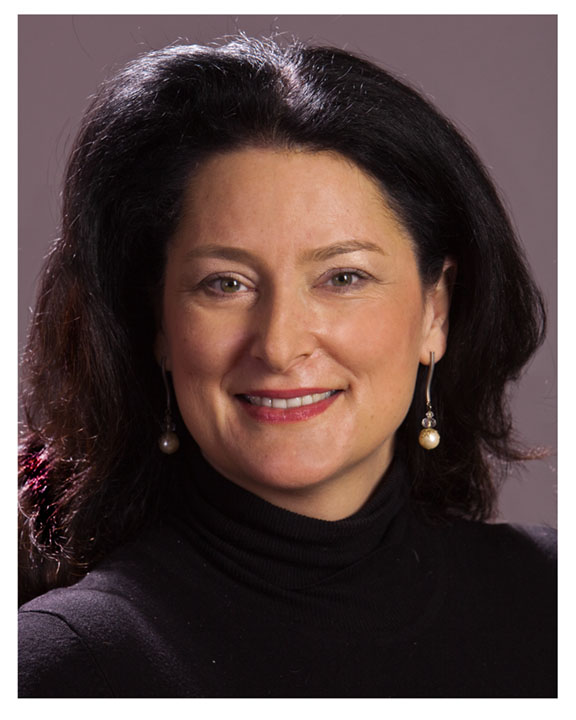
Touro GSE At Work features Assistant Professor Jasmin Cowin in Faculty Spotlight

It is an honor to be chosen as featured faculty at Touro GSE.

Jasmin Cowin, assistant professor and TESOL practicum coordinator for TESOL and Bilingual Programs at the Touro College Graduate School of Education, has brought innovation to the educator preparation program by presenting virtual, augmented and mixed reality e-learning platforms. Her students use avatars to explore a variety of simulation-based settings in ways that facilitate active knowledge in multi-modal ways, which enhance candidates’ understanding of  diverse learners’ educational needs. The student avatars in simulations are controlled by artificial emotional intelligence software. As intensive web applications, these environments provide a safe, risk-free virtual space to explore a range of teaching strategies, while offering immediate feedback as a training tool for teacher candidates during clinical experiences. Cowin’s latest research on e-learning was published in the International Research and Review Journal of Phi Beta Delta Honor Society of International Scholars Fall 2020 edition. She also serves as chair of the New York State Teaching English as a Second Language 51st Annual

https://mailchi.mp/c9e0aa3148d6/touro-college-ranks-in-top-100-best-online-graduate-education-programs-4926338?e=0597240d44

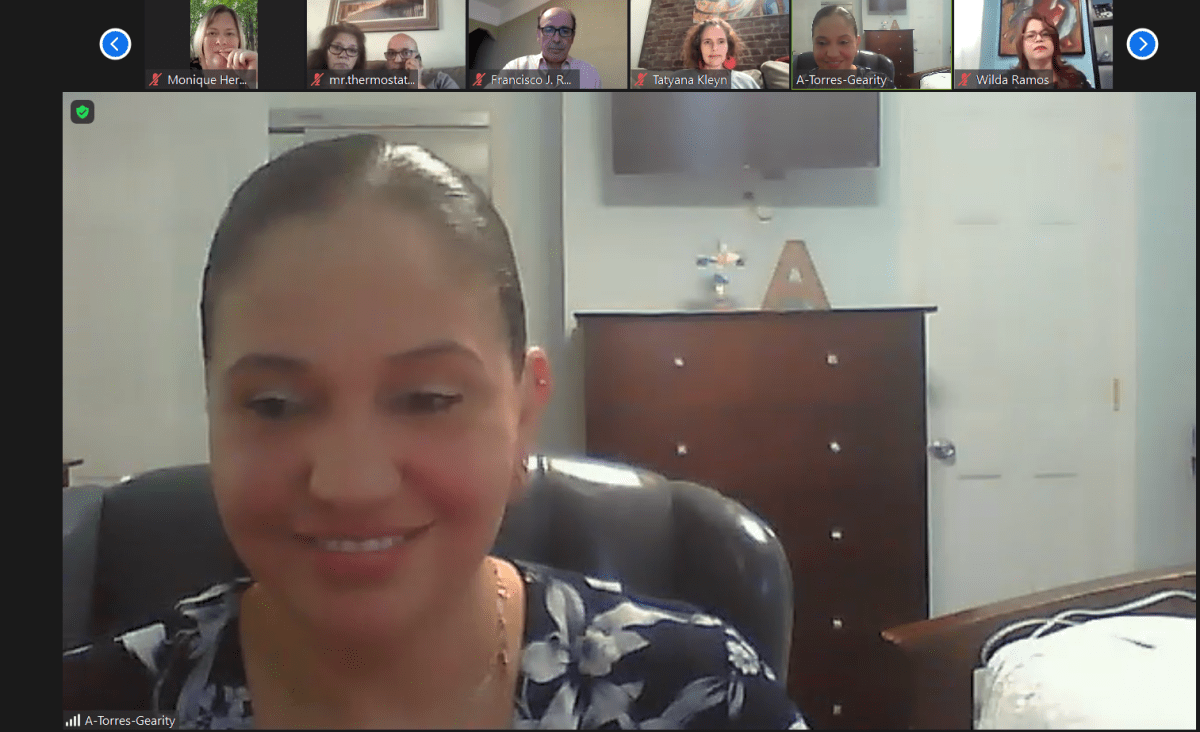
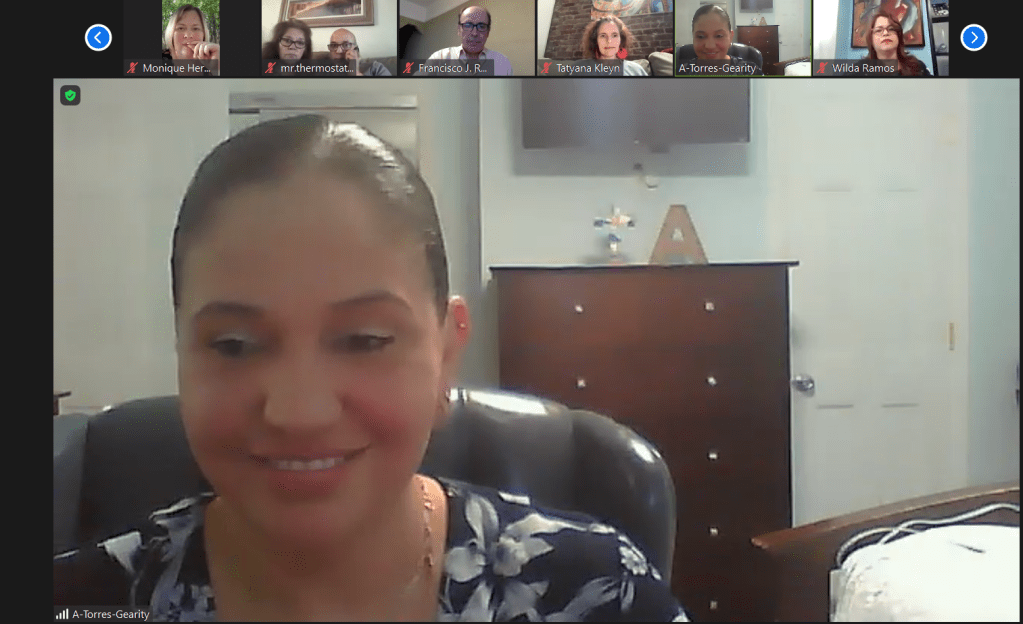
Touro TESOL candidate Antonia Torres-Gearity receives 2020 Bilingual Teacher of the Year Award by THE NEW YORK STATE ASSOCIATION FOR BILINGUAL EDUCATION

As a Professor is is a life-affirming experience to see one’s students succeed. Tonight, my TESOL teacher candidate Antonia Torres-Gearity received her 2020 Bilingual Teacher of the Year Award by NYSABE.

As a Professor it is a life-affirming experience to see one’s students succeed. Tonight, my TESOL teacher candidate Antonia Torres-Gearity received her 2020 Bilingual Teacher of the Year Award by NYSABE.

I was thrilled to be present at NYSABE supporting Mrs. Antonia Torres-Gearity, a gifted educator and TESOL candidate at Touro College, TESOL and Bilingual Department. Her dedication to our profession, caring for her students and passionate work ethic inspires me.

Congratulations to Touro TESOL candidates Mrs. Antoni Torres-Gearity to her 2020 Bilingual Teacher of the Year Award.

NYSABE represents educators, parents, members of community-based organizations, private agencies, and institutions of higher education as well as advocates involved in the education of English language learners/bilingual students in New York State.

Touro GSE TESOL candidate Mrs. Antonia Torres-Gearity

Touro GSE TESOL Candidate Eleonora Israilova’s Materials Critique and Redesign Analysis

One assignment in the Touro TESOL course EDPN 673 Methods and Materials for Teaching English as a Second Language is a Materials Critique & Redesign. In this assignment candidates will: (1) prepare a written critique description of the material or resource, analyzing its effectiveness on ELLs and (2) based on their analysis, redesign one section/activity of the original material so that it meets the need of ELLs. The materials chosen will promote culturally and linguistically responsive classrooms and instructional practices. I chose Eleonora Israilova’s submission as it was not only outstanding but features classroom realia and a robust, thoughtful redesign of her chosen textbooks.

by Jasmin Bey Cowin, Ed.D. , Assistant Professor and TESOL Practicum Coordinator, Touro College, GSE

One assignment in the Touro TESOL course EDPN 673 Methods and Materials for Teaching English as a Second Language is a Materials Critique & Redesign. In this assignment candidates will: (1) prepare a written critique description of the material or resource, analyzing its effectiveness on ELLs and (2) based on their analysis, redesign one section/activity of the original material so that it meets the need of ELLs. The materials chosen will promote culturally and linguistically responsive classrooms and instructional practices. I chose Eleonora Israilova’s submission as it was not only outstanding but features classroom realia and a robust, thoughtful redesign of her chosen textbooks.

Eleonora Israilova comes from Uzbekistan and speaks Russian, Tajik and Spanish. She was 10 years old when she came to America. Ms. Israilova stated that “currently I teach Kindergarten in my community with the same linguistic needs as my background and this assignment was tailored to fit the needs of my ELLs population.”

Materials Critique and Redesign
Matching Books with Readers is an important literacy component for ELL students. One of the most important components is vocabulary recognition, which requires an understanding of unfamiliar words when reading (Apthorp, 2006; Spencer & Guillaume, 2006, Vardell, Hadaway, & Young, 2006.) Also, a bilingual student may speak English in a way that commands a perfect understanding of his second language when in reality the oral vocabulary is much stronger than the reading vocabulary.

Each child has a unique learning style, but bilingual students benefit from reading nonfiction passages because real-life contexts help them visualize vocabulary words for meaning (Apthorp, 2006). Selecting highly visual literature containing photographs (Vardell, Hadaway, & Young, 2006) or that are related to scientific concepts that describe the natural world as children
understand it is best for bilingual students (Spencer & Guillaume, 2006). Therefore, for this materials critique and redesign, I chose to use three books that are nonfiction children’s books.

The three books are National Geographic Readers: Frogs! by Elizabeth Carney, National Geographic Readers: Caterpillar to Butterfly by Laura Marsh, and Ladybugs by Cheryl Coughlan. These books are great for ELL students because they are colorful, include rich vocabulary, and diagrams that show labeled parts of the animals. Younger children are usually drawn to informational texts about animals because it satisfies their curiosity and interest in their favorite topics. When students are interested in reading about a favorite topic, they are more
likely to be motivated to read and dig deeper for answers to their questions about the world and make constant connections to themselves.

Another reason I chose the aforementioned books is because unbeknownst students in my class are mostly of Russian, Tajik, and Spanish native languages. I have noticed that their vocabulary bank is limited as they are likely to come from conversational backgrounds. By using informational texts in my classroom, my ELL students will expand their academic vocabularies in areas that do not necessarily come up in everyday conversation. Nonfiction texts will challenge my ELL students, but it will also give them a broader vocabulary base, especially texts from the fields such as science and social studies. Moreover, ELL students are able to make real life connections with nonfiction texts. Many nonfiction books include photographs to illustrate the details. Photographs are a great visual aid when grappling to understand the English text. Photos contain more details and a precise depiction of the world around us than illustrations. When students are able to refer to photographs, they will increase their comprehension level and make connections to the real world they see around them. Students will be confident when they have a clear picture of what is being taught and are able to have higher order thinking skills that help to perform better overall.

Jasmin Bey Cowin, Ed.D. to speak at the virtual 26th Annual NATE Conference Digital Change in the ELT Community in Moscow, Russia

The 2021 NATE Conference is dedicated to Digital Change in the ELT Community. Never has the world faced such fast-paced change and vast digitalization and, as a result, required such spur-of-the-moment creativity and agility from educational professionals. We are in this process together and have a lot of personal and professional experience to share.

Dr. Bey Cowin’s conference topic will be: Innovation, Collaboration, Transformation: Education for a Connected World. The conference host is the National University of Science and Technology.

Globally, the way we educate and are educated is changing at a rapid pace. New technologies and ways of interpreting the world are reshaping educational philosophies and their underpinning pedagogies while transforming modes of delivery in educational institutions worldwide. This presentation explores the necessity of rethinking education for a successful integration in the artificial intelligence (AI) age.

The need to adapt by educational institutions, corporations, teachers, and learners is great. However, what kind of frameworks are necessary for education in the digital age? What resources will be necessary to bring education into digital classrooms from early childhood through tertiary and technical education? What trends and possibilities are on the horizon to educate and train entire generations of educators to stay relevant in the 21st Century and beyond? Five emerging trends for 21st-century education will be explored.

The International Research and Review Journal of Phi Beta Delta Honor Society for International Scholars publication of Dr. Jasmin Bey Cowin’s article “Digital Worlds and Transformative Learning: Google Expeditions, Google Arts and Culture, and the Merge Cube”

I am delighted to announce that the International Research and Review Journal of Phi Beta Delta, Honor Society for International Scholars, Volume 10, Number 1 Fall 2020, with Michael B. Smithee, Ed.D., Editor published my article Digital Worlds and Transformative Learning: Google Expeditions, Google Arts and Culture, and the Merge Cube