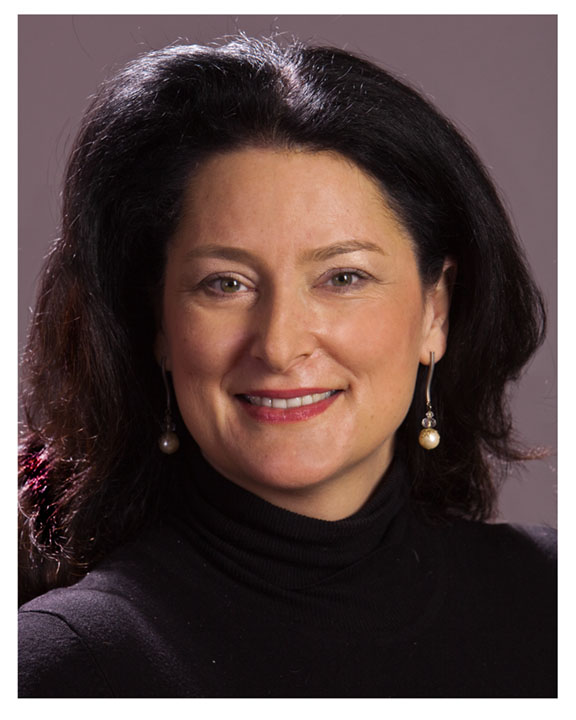
Prof. Dr. Jasmin (Bey) Cowin invited to speak on “Nanoscience and Nanotechnology: A Multidisciplinary Teaching Frontier” at the 2nd Global Summit and Expo on Nanotechnology and Nanomaterials (GSENN2022)

Prof. Dr. Jasmin (Bey) Cowin invited to speak on “Nanoscience and Nanotechnology: A Multidisciplinary Teaching Frontier” at the 2nd Global Summit and Expo on Nanotechnology and Nanomaterials (GSENN2022)

I am excited to be part of the 2nd Global Summit and Expo on Nanotechnology and Nanomaterials (GSENN2022):

“On behalf of the organizing committee and The Scientistt, we would like to invite Prof. Dr. Cowin as a speaker to our 2nd Global Summit and Expo on Nanotechnology and Nanomaterials (GSENN2022) taking place in Copenhagen, Denmark on June 13-15, 2022.

Prof. Cowin’s topic on “Nanoscience and Nanotechnology: A Multidisciplinary Teaching Frontier” was accepted by the Review Committee Members at 2nd Global Summit and Expo on Nanotechnology and Nanomaterials (GSENN2022) taking place in Copenhagen, Denmark on June 13-15, 2022.”

The GSENN2022 is the vital platform for exchanging recent achievements and discussing future facilities in Nanomaterials and Nanotechnology. The GSENN2022 will be a 3 days event that means to gather the key players of the Nanomaterials and Nanotechnology and related sectors.

The GSENN2022 aims to be a unique platform for leading scientists, researchers, scholars and engineers from academia, R&D laboratories and industry around the world to exchange, share and learn the most
recent advancements on various aspects related to Nanomaterials and Nanotechnology.

https://www.thescientistt.com/nanotechnology-nanomaterials/2022/

Flash Registration SALE for the NYS TESOL 51st Hybrid Conference: Looking Forward: Educational Empowerment and Transformative Education

Flash Registration SALE for the NYS TESOL 51st Hybrid Conference: Looking Forward: Educational Empowerment and Transformative Education

NYS TESOL

Register TODAY for the NYS TESOL 51st Hybrid Conference! ⚡️⚡️⚡️⚡️Spots are limited!! 🔹Flash Registration SALE being offered until Friday, August 6,2020⚡️⚡️⚡️⚡️⚡️🔹Hybrid Conference with virtual and in-person options🔹Registration Code: FLASH2021 to receive 20% off🔹Registration Link: https://mms.nystesol.org/members/evr/reg_event.php?orgcode=NYST&evid=28075129

It’s a FLASH SALE!!  We are offering 20% off on all registrations for the NYS TESOL 51st Annual Conference!  This is the LOWEST rate we will be offering, so be sure to register by Friday, August 6th in order to secure this reduced rate!!  Just use the code FLASH2021 when registering. 

This year’s conference will be hybrid, with a virtual day on Thursday, November 4th and in-person days on Friday, November 5th and Saturday, November 6th at the Sonesta White Plains in New York (formerly the Crowne Plaza).  The conference theme is Looking Forward: Educational Empowerment and Transformative Education.  We are offering three full days of workshops, plenary speakers, and practical sessions.  This year we will also have virtual, international site visits, an administrator ENL boot camp (focus on ENL regulations and best practices), and speed networking sessions.  Plus, be sure to join us for our dinner and dance party on Friday night!  We currently have a LIMITED NUMBER of seats available so don’t delay!  We encourage all teachers, teacher educators, support staff, and administrators to attend the conference.  You have the opportunity to earn up to 6 CTLE credits per day of attendance.  2022 NYS TESOL membership is included with ALL conference registrations.  Please share this conference information with anyone in your network who may be interested in attending!  If you have any questions, please email vpconference@nystesol.org.   If you are a current NYS TESOL member, be sure to use the email address associated with your account in order to receive a discounted rate.   You can also book your Sonesta Hotel room for a reduced rate using the code here.  

Touro TESOL candidate Jaclyn Kletchka reflects on English Language Learners with Learning Disabilities

As Touro TESOL Bilingual teacher candidates prepare for a career in education and to become a reflective practitioner, it is imperative that they accept responsibility and take an active role in their own learning. This is why the TESOL Program at Touro College requires to write Reflective Learning Journals.

Ten Attributes of a Reflective Practitioner (Larrivee, 2009)

  1. Reflects on and learns from experience
  2. Engages in ongoing inquiry
  3. Solicits feedback
  4. Remains open to alternative perspectives
  5. Assumes responsibility for own learning
  6. Takes action to align with new knowledge and understanding
  7. Observes self in the process of thinking
  8. Is committed to continuous improvement in practice
  9. Strives to align behaviors with values and beliefs
  10. Seeks to discover what is true

Biography

Jaclyn Kletchka is a graduate student at Touro College’s TESOL program. She has experience working for the Brentwood School District where she filled the roles of permanent substitute teacher, ENL leave replacement teacher, and summer school kindergarten teacher. Ms. Kletchka shared that “during my free time, I enjoy reading, going on hikes, and spending time with my two rescue pups!”

Description of Highlight(s) – chapter, article or event that is relevant to the EDPN 671 course.(10 pts.)    In the video titled, English Language Learners with Learning Disabilities, Dr. Cardenas Hagan, a bilingual speech pathologist discusses with a representative from colorincolorado effective instructional strategies for English language learners who are also students with disabilities. Hagan also explains strategies that encourage active parent involvement of parents of English language learners with learning disabilities. In the profession of TESOL education, this is a very important topic because it can be difficult to distinguish whether a student is struggling due to a learning disability, or due to the language barrier. The presenter of this video explains that when students first come to school, they should be screened and this can be used as an “anchor” for the teacher. The teacher then implements the use of accommodations when working with English language learners to monitor their progress. If the student is not responding to the modifications and accommodations, it is then that the teacher should begin the Response to Intervention (RTI) process (colorincolorado). An effective strategy that Hagan stated is that teachers should assess these students in both the English language, and in their native language. This is a very helpful tool when determining if an English language learner has a learning disability because educators are able to observe the students’ skills in both languages. Hagan discussed that a potential problem with the assessments being used is that they are not always culturally relevant to English language learners. Once a student is classified as an English language learner with a learning disability, it is critical that their Individualized Education Plan (IEP) includes specific goals and objectives that are measurable. Hagan emphasizes throughout the video presentation that these students must be receiving support in their native language as well as in the English language, and that teachers can help ELLs make connections between the two languages.
Initial Emotional Response (surprised, embarrassed, sad, inspired, excited, puzzled, etc.) (10 pts.)   My initial response to watching this video about English language learners who have learning disabilities was excitement. I am certified to teach both general education and special education grades birth through six, and I am soon to be a certified ENL teacher. Since I am certified to teach in these content areas, it is very likely that I will be teaching ELLs with learning disabilities throughout my educational career. I felt excitement when watching this video because there are so many resources and effective instructional strategies that teachers can utilize when reaching these learners. My initial response when watching this video was excitement also because I have worked with English language learners who have learning disabilities, and absolutely loved it. While watching this video, I felt very impressed with the strength of both educators, and students. Educators adapt their teaching and instructional strategies to meet the individual needs of their unique learners, and I find this to be truly amazing. Not only am I impressed with the teachers, but I am also impressed with the students who are both English language learners and students with disabilities. These students are learning both content, and the English language all at the same time. I feel that this is extremely difficult for any individual, and especially for students with disabilities.
Learning Process   1) Prior Assumptions or Opinions about the topic of the described highlight. (10 pts.)   My prior opinion on ENL students who have learning disabilities is that it is very difficult to identify if the academic delay is due to a learning disability, or the language barrier. I assumed that this is especially difficult when the educators do not speak the same language as their students who are English language learners. I feel that the language barrier is not only difficult for the students, but also for the teachers in the classroom. If a teacher does not speak the same language as the English language learners in his/her classroom, they have to find ways to accommodate these students’ language, social, and academic needs. I had the assumption that some of the assessments given to this population of students are not effective in determining if a student is struggling because of a learning disability, or due to the language barrier. The assessments may not be effective due to factors such as cultural and language differences. A student may not know how to accurately answer a question because they have not yet been exposed to the vocabulary terms or academic language. Before watching this video, I also had the prior assumption that English language learners who have learning disabilities require a large amount of accommodations and modifications within their learning. I felt that these students need more one-on-one instruction than their peers and that it will take them a longer time to grasp and master academic concepts, due to their learning disability, and language barrier. Prior to watching this video, I also had the assumption that English language learners should also receive academic instruction and support in their native language as well as in the English language.
2) Source of Assumption or Opinion (10 pts.)  I have the opinion that it can be difficult to confidently determine whether a student is struggling academically due to a language barrier, or because of a learning disability. The source of this assumption are conversations I have had with several ENL teachers. For the past year, I have worked at East Elementary School in Brentwood, New York. The population of students that attend East Elementary is largely composed of bilingual and ENL students. When speaking with experienced ENL teachers, they explained to me how difficult it can be to determine if a student is struggling due to a language barrier, or due to a learning disability. I have learned from ENL teachers in my school that this is an especially difficult task when working with young children, as East Elementary is a kindergarten building. I also feel that English language learners who have a learning disability require more academic support and accommodations than their general education peers. I have these opinions regarding this content area because I just recently completed a leave of absence position where I filled the role of a kindergarten ENL teacher. During this leave replacement position, I worked in small groups, and one-on-one with English language learners who are also students with disabilities to teach them the basic skills of reading and writing. While planning lessons and materials, I followed a literacy curriculum, as well as, my students’ IEP goals. I have experienced first hand that this population of students require more one-on-one attention and instruction than their general education peers. Throughout this leave replacement position, I have also gained experience in developing accommodations and modifications to meet the needs of my students. For example, I observed that a large majority of my students were struggling with identifying the letters and the letter sounds. In an attempt to strengthen this skill, I created an alphabet book for each of my students. The book consisted of the uppercase and lowercase letters, and a picture of an object that represents the sound that letter makes. I practiced the alphabet and alphabet sounds for a few minutes each day with my students. I also created interactive and engaging games to play with my students. One game that I created is called “alphabet soup”. I placed letters in a bowl and the students “scooped” up the letters using a spoon, and I would ask the students educational questions such as “what does this letter say?” and “can you think of a word that begins with that letter?”. I also have the assumption that English language learners should be receiving instruction in their native language based on my experiences as an ENL kindergarten teacher.     
3) Assumption/Opinion Check – Validation/Invalidation (20 pts.)    After viewing the video, English Language Learners with Learning Disabilities, my opinion that English language learners who are also students with disabilities require more accommodations and modifications to their learning has been validated. My assumption that it can be very difficult to determine whether a student is having a difficult time academically because of a language barrier, or due to a learning disability has also been validated. At the beginning of this video, Hagan explains that this is a current issue and that educators often struggle to make the distinction between a learning disability and a language barrier. According to the article titled, English Language Learners & Disproportionality in Special Education, English language learners are at a disadvantage due to the lack of appropriate valid and reliable assessment instruments” (Irujo, 2004). The presenter of the video, Hagan, explains that English language learners should be assessed in both their native language, and in the English language. By assessing the student in both languages, the teacher has the opportunity to gain a better understanding of the students’ academic skills. I have also gained further knowledge on my assumption that it is important for English language learners to continue developing skills in their native language. This opinion was validated when reading chapter six of the textbook titled, Affirming Diversity written by Nieto and Bode. The authors of this textbook state that “in the case of emergent bilingual students, this means that their natie language can be a strong foundation for future learning” (Nieto & Bode, 2018). In this chapter, Nieto and Bode explain how teachers can build upon the skills students have in their native language to further develop their skills when speaking the English language.        
4) Realization/Aha Moment or Epiphany (20 pts.)   Before viewing this video, I understood the difficulty of determining whether a student is struggling due to a lack of English proficiency or due to a learning disability. However, I was not fully aware of the measures that must be taken to ensure a student is placed in the correct educational setting, and is receiving the proper support and services. Before watching this video and conducting further research, I was also not aware of how educators tease out between learning difficulties and language difficulties. The “aha moment” occurred to me when watching this video and the speaker stated that “no matter what the language, and within languages, and across languages what we will find are similar patterns of difficulty” (colorincolorado). Hagan provided the audience with the example of a student with dyslexia. She explains that a student with dyslexia will very clearly display in their native language the same type of difficulties, such as having trouble with the processing of sounds, as in the English language. It was during this moment that I realized if a student has a learning disability, they are likely to show the same or similar struggles when learning in both their native language and the English language. From doing further research on the topic of English language learners with learning disabilities, I have learned that ELLs may be overrepresented in special education, due to ineffective assessments and assessment strategies. According to the article titled, English-language learners may be over-represented in the learning disabilities category, it is critical that a stable assessment tool is developed that is able to accurately identify if a student is struggling due to a lack of proficiency of the English language, or a learning disability (Krings, 2107). This article explains that the national estimates reveal that English-language learners may be over-represented in the learning disabilities category due to ineffective and inaccurate testing. Based on conducted research on this topic, the Individuals with Disabilities Education Improvement Act (IDEA) legally requires the distinction between a learning disability and a lack of language proficiency, which can be challenging to identify.  
Implications for future teaching practice (20 pts.) What specific changes do you intend to make in your teaching or classroom environment? After watching this informative video, I plan to make several changes to my teaching methods in order to better support English Language Learners who have learning disabilities. I learned from the video titled English Language Learners with Learning Disabilities, that it is very important to get to know your students and build positive relationships with each and every one of them. In order to do so, I plan on implementing a daily check in into our morning routine. I plan on doing this daily check in by creating a “ feelings thermometer”. On the right side of this “thermometer” will be different feelings such as happy, sad, excited, angry, etc. On the left side of the “thermometer” will be a pipe cleaner with a bead. The students will move the bead each day to tell me how they are feeling that day. I also learned from this video the importance of incorporating the students’ cultures and native languages into my lesson plans. I feel that it is very important to build students’ confidence and make them feel comfortable and safe in your class. A great and effective way to do this is by learning about, and embracing their cultures and what makes them unique. I am going to include my students’ cultures and native languages into my teaching through literature, videos, and student created projects. I plan on having my students complete a project where they bring in an item from their culture. This item could be a type of food, a piece of clothing, or a family heirloom. The students will bring these items into school and will have the opportunity to share their culture with their classmates. Not only will the students be learning important information about other cultures, but they will also have the opportunity to practice their speaking and listening skills. Another change I plan on implementing into my classroom environment is making a greater effort to include parents and families into their child’s learning. Throughout the video, Hagan discussed the importance of getting parents and families involved in their childrens’ learning, especially students who are English language learners with learning disabilities. I plan on taking Hagan’s advice and encouraging parents to read to their children, even if it is in their native language, and not in the English language. The presenter of this video explains how this is a great way to get children excited about learning how to read (colorincolorado). Hagan pointed out that some parents of our students may not know how to read and write, and this makes it very difficult for them to read to/with their children. If I am aware of parents not being able to read and/or write, I am going to provide them with the support and resources they need such as adult literacy courses, translation services, etc. The last change I plan on implementing into my teaching is the increased use of group learning. I feel that it is essential that students learn from each other, and group learning will help English language learners with learning disabilities to improve upon their speaking and literacy skills. I also feel that group learning will benefit this population of students greatly because it gives them the opportunity to socialize with their peers and build their confidence. I believe that all of the changes I plan to incorporate into my classroom are relevant and important to TESOL and bilingual education. The changes I am going to begin to implement are important to this field of education because they are all strategies to improve the overall academic experience for ENL and bilingual students.

References

          Colorincolorado. (2015). English Language Learners with Learning Disabilities. (Video). YouTube. Retrieved from https://www.youtube.com/watch?v=xMJKHh1cL5I.

            Irujo, S. (2004). English Language Learners & Disproportionality in Special Education. MAEC. Retrieved from https://maec.org/wp-content/uploads/2016/04/English-Learners-and-Disproportionality-in-Special-Ed.pdf.

Krings, M. (2017). English-language learners may be over-represented in learning disabilities category. Psychorg. Retrieved from https://phys.org/news/2017-02-english-language-learners-over-represented-disabilities-category.html.

Nieto, Sonia & Bode, Patty (2018). Affirming Diversity. The Sociopolitical Context of Multicultural Education. Seventh Edition, Pearson, New York.

Touro TESOL/Bilingual teacher candidate Elias Y. Taveras reflects on Affirming Diversity

A reflective learning journal is a means of recording ideas, personal thoughts and experiences, as well as reflections and insights candidates experience during during their Touro TESOL/Bilingual journey. Reflective journal writing requires candidates to think more deeply, confront their values and beliefs, and encourages them to pose questions.

What is a Reflective Learning Journal?

A reflective learning journal is a means of recording ideas, personal thoughts and experiences, as well as reflections and insights candidates experience during during their Touro TESOL/Bilingual journey. Reflective journal writing requires candidates to think more deeply, confront their values and beliefs, and encourages them to pose questions.

Assignment:

In your reflective journal, you will be required to critically analyze and synthesize the information you are learning into your personal thoughts and philosophy, integrate what the learning may mean to you as a teacher, and to guide you to identify your future professional development needs.

The reflective learning journal also provides faculty with insights regarding your learning so that they may respond to questions and explore topics that need further clarification. Lastly, the journal provides you take charge of your own learning and to develop the habits of a reflective, lifelong educator (adapted from Assessment Resources, HUK, 2012).

Touro TESOL/Bilingual teacher candidate Elias Y. Taveras submitted a deeply thoughtful reflection. It is a priviledge and honor to read such submissions as they help me grow both professionally and personally.

Mr. Taveras embodies : “Teachers have three loves: love of learning, love of learners, and the love of bringing the first two loves together.” ― Scott Hayden

Mr. Taveras currently serves as a teacher in the Bronx, NY. He migrated from the Dominican Republic when he was in middle school and grew up in the city ever since. Mr. Taveras received a Bachelor of Art in Journalism from SUNY Buffalo State and later completed his master’s in Bilingual Education at The City College of New York. Mr. Taveras wrote that “…above everything else, I am a single father and a teacher of kindness.”

Mr. Taveras’ Reflective Journal on Affirming Diversity

  1. Description of Highlight(s) – chapter, article or event that pertains to ___________course. (20 pts.)
    For this reflection, I have chosen to write about chapter two of Affirming Diversity. The Sociopolitical Context of Multicultural Education by Sonia Nieto. Chapter two is titled Defining Multicultural Education for School Reform. The chapter begins with Sonia Nieto explaining that for many years she has heard through conversation with educators that multicultural education is a “done deal” that is not needed. Such a statement reflects on how misunderstood diversity is in our country. Furthermore, when people begin to have conversations about diversity it is usually about sensitivity training, units about ethnic holidays, food festivals. When schools take this approach to multicultural education the potential for lasting change is decimated. The chapter breaks down the definition of multicultural education as an essential tool for school reform by analyzing seven primary characteristics. The definition highlights the lack of achievement on students of diverse backgrounds and promotes the content and process of education. It is also mentioned that multicultural education will not serve as the solution for the achievement gap, put an end to boring curriculums, or stop vandalism in the communities. Nonetheless, multicultural education can provide change and reform to the educational system. The chapter breaks the definition of multicultural education into seven characteristics meant to detain us from developing one way of understanding multicultural education. Instead, they are meant to entice us into thinking about the interplay between societal and school structure and context and how those factors affect learning. Sonia Nieto defines multicultural education on a social-political basis: “Multicultural education is a process of comprehensive school reform and basic education for all students. It challenges and rejects racism and other forms of discrimination in society and accepts and affirms the pluralism (ethnic, racial, linguistic, religious, economic, gender, and sexual orientation, amongst others) that students, their communities, and teachers reflect. Multicultural education permeates the school’s curriculum and intuitional strategies as well as the interactions amongst teachers, students, and families and the very way that schools conceptualized the nature of teaching and learning,” (p. 32). The chapter continues to die peeper into multicultural education.
  2. Initial Emotional Response (surprised, embarrassed, sad, inspired, excited, puzzled, etc.) (5 pts.)
    Reading about the highlighted brought a mix of emotions and it forced me to reflect on my past experiences as an educator and professional. Specially because some of the examples in the chapter had to do with topics and lessons that I had already thought about in the past. Moreover, if I could select an emotion that overwhelmed all the others after reading about the topic it would have to be an embarrassment. I felt embarrassed at different levels because there were numerous aspects of multicultural education that I had no idea about and there were many realizations about my behavior and that of my colleagues that were indeed embarrassing. Reading the chapter I first felt embarrassed when Sonia Nieto mentions: “unfortunately when multicultural education is mentioned, many people think of lessons in human relations and sensitivity training, units about ethnic holidays, education in inner-city schools, or food festivals. If multicultural education is limited to these issues, the potential of substantive change in school is severally diminished,” (p. 32). This let me feeling embarrassed because at my school and specifically in my classroom we have celebrated many events about a different culture. For black history month, we would briefly go over historical figures and their impact on history. For Ramadan, we would read a book about Islam and have the kids discuss it. However, the worst of the worst was when Cinco de Mayo would roll around, and all across the school, we would be celebrating Mexican culture with a holiday that real Mexicans do not even celebrate. After doing these food/cultural events we would feel proud and we would check the box for multicultural education in our heads.
    Learning Process
  3. Prior Assumptions or Opinions about the described highlight (10 pts.)
    One major assumption I had before reading chapter two of Affirming Diversity was about the way I was teaching history and historical figures of the black community was a sufficient method of teaching using multicultural education. One major example of my pedagogy that was also reflected in this reading was the teaching of Dr. Martin Luther King Jr. Whenever the time of the year came for this holiday we simply rolled out the tapes and recording of I had a dream. I would make the students watch the speech and discussing the importance of the events that led to the speech. I would later introduce the language objective in which students had to think of ways they could make the world better through their dreams. This was achieved using the infamous and famous starter words of I had a dream. Students would first think of ways the world needed to be changed and then they would use the sentence starter to initiate their solution or their ideal world. I was assuming that it was relevant for me to stop there and move on from teaching them anything more about Martin Luther King Jr.
  4. Source of Assumption or Opinion What made you have such an assumption? (5 pts.)
    The source of my assumption that sanitizing historical figures was a way to teach multicultural learning is unknown to me. There could be many different reasons why I had this assumption. On the other hand, the best answer to this question could be the ignorance. Before reading this chapter I was not aware of the term sanitizing the curriculum. Moreover, I grew up in the Bronx in the mix of a dance Black and Latino population. There were no white students ever around me until I got to university. The teachers that gave me my education in middle school and high school were mostly white but even the few teachers of color that I had all taught these topics the same way or similar to me. It is possible that because I grew up watching the educators of color teach about prominent historical figures by only touching the surface of the topic. There was no deeper connection to us or our experience as individuals of color in the United States. We were also never though the negative actions of these figures so part of my assumption could have been a result of always merely scratching the surface.
  5. Assumption/Opinion Check – Validation/Invalidation (20 pts.)
    Reading this chapter was shocking, embarrassing, and eye-opening at the same time. This was because it allowed me to humble myself and learn about a practice or assumption that I had in the past. My assumption that teaching about rich colorful and deep historical characters by merely mentioning them or scratching the surface of what they are known for was invalidated. Often time I avoided talking about racism and speaking openly about the problem with many historical figures and events. This was invalidated when Sonia Nieto said: “Too many schools avoid confronting, honestly and directly, the negative effects of history, the arts, and sciences. Michael Fine has called this the “fear of Learning,” and it is part of the system of silencing public schools,” (p. 33). At this instant, my previous opinion was checked. Avoiding diving deeper into history and inclosing the negative sides of what happened to us was wrong. Avoiding to speak to my students about the racism that their ancestors faced was not doing them any favors or improving the deep of conversation they could have with each other. In order to protect their feelings I rejected talking about people and experiences that were crucial and similar to theirs. Maybe I did not want to remind them of something that they experience every day but it was the wrong choice because instead I sanitized or clean up the topics my students could embark on.
  6. Realization/Aha Moment or Epiphany (20 pts.)
    Chapter two provided me with many realizations or aha moments. The most significant one that I can think of because I teach it every year to my students was when Sonia Nieto used Dr. Martin Luther King Jr as an example of sanitizing characters. It was a perfect example of what it is like to only scratch the surface with a topic to fulfill a requirement in the curriculum. Sonia Nieto states: “The only thing children know about him is that he kept “having a dream.” School bulletin boards are full of ethereal pictures of Dr. King surrounded by clouds. If children get to hear or read any of his speeches at all, it is his “I Have a Dream” speech. As inspirational as this speech is, it is only one piece of his notable accomplishments. (p.33). Nieto continues to explain that educators barely explore more of the life of Dr. King: “Rare indeed are allusions to his early and consistent oppositions to the Vietnam War; his strong criticism of unbridled capitalism; and the connection he made near the end of his life among racism, capitalism, and war. This sanitation of Martin Luther King, a man full of passion and life, renders him an oversimplified, lifeless figure, in the process making him a “safe hero,” (p.33). reading this hit home because I am certain that if I ask any of my students from this past year about Dr. King all they would say is I have a dream. They would not even possess the knowledge or the academic language to further explains the accomplishments of such an important person in our history. Furthermore, that is why I am extremely thankful to have gotten the opportunity to read Affirming Diversity. I would not have thought about how my students are affected by the lack of real colorful and truthful teaching. I now understand that it is extremely important to push past discomfort to have conversations that are uncomfortable but challenging to students. Without this kind of work, students will walk out of my class without the ability to properly discuss the world around them.
  7. Implications for future teaching practice (20 pts.)
    Due to the realization that my prior assumption was invalidated, I have now realized that there can be many changes made in my teaching. I have to begin to plan out units to identify the topics that are going to be impactful for them. I want to allow students to have an impact on some of the material that we study in class. I want to allow students to be surveyed and to share their opinions as to what they should learn. Subsequently, also allowing them to bring in their own experiences through inquiry questions. I plan to have questioners at the beginning and end of every unit. In this way, I could use their prior knowledge to guide the direction of the unit. I can also use these questions to find out if any of the students have possible real-life connections to the topic. For instance, if we are learning about ending slavery and Abraham Lincoln and through inquiry I find out that one of the students has a relative that has a connection or history with slavery or the ending of. It could be possible to contact that person to come in to speak to the students. To have the students prepare questions and make their experiences and the ones of their family members validated and appreciated by all. Another major step I must take after my realization is planning how I am going to teach my third graders stronger academic language that will help them understand the complexities of history and politics. If we plan to research Dr. King beyond “I Have a Dream,” my students need to understand ideas like communism and capitalism. In the end, there is much work to be done that will be active and heavily involving of the student’s opinions, experiences, and expectations. The reason why it will be difficult but rewarding is that antiracism education is not done inactively. As Sonia Nieto stated in chapter two: “To be anti-racist is not a passive act; it proposes working actively to combat racism…it means making anti-discrimination explicit parts of the curriculum and teaching young people skills in confronting racism.” (p. 33).
    Bibliography

  8. Nieto, Sonia & Bode, Patty (2018). Affirming Diversity. The Sociopolitical Context of Multicultural Education. Seventh Edition, Pearson, New York

New York State Teachers of English to Speakers of Other Languages 2021 Conference Registration is Open! Looking Forward: Educational Empowerment & Transformative Education

NYS TESOL is thrilled to announce that the 51st Annual Conference will be hybrid, with virtual and in-person options. We currently have a LIMITED NUMBER of seats available!

NYS TESOL advocates, advances, and enriches TESOL education and professionalism statewide. NYS TESOL is an association of professionals concerned with the education of English language learners at all levels of public and private education in New York State. Our interests include classroom practices, research, program and curriculum development, employment, funding, and legislation.

NYS TESOL is thrilled to announce that the 51st Annual Conference will be hybrid, with virtual and in-person options. We currently have a LIMITED NUMBER of seats available! You may register for:


Virtual Day (Thursday, November 4) – Participate from the comfort of your own home via zoom.
Virtual Day (Thursday, November 4) plus ONE in-person day (either Friday, November 5 or Saturday, November 6) at the Sonesta Hotel in White Plains, NY.
Virtual Day (Thursday, November 4) plus TWO in-person days (Friday, November 5 AND Saturday, November 6) at the Sonesta Hotel in White Plains, NY.
ALL Conference Registrations include 2022 NYS TESOL membership.
If you are a current NYS TESOL member, please log-in before registering in order to ensure you receive a discounted rate.
There will be NO on-site registration this year.
*Registration rates will increase by $30 on October 1st.
Event Date: 11/4/2021 – 11/6/2021
Event Time: 8:30 AM – 5:00 PM Eastern

Register here: https://mms.nystesol.org/Calendar/moreinfo.php?eventid=64899

We are offering three full days of workshops, plenary speakers, and practical sessions. This year we will also have virtual, international site visits, an administrator ENL boot camp (focus on ENL regulations and best practices), and speed networking sessions. Plus, be sure to join us for our dinner and dance party on Friday night! We currently have a LIMITED NUMBER of seats available so don’t delay! We encourage all teachers, teacher educators, support staff, and administrators to attend the conference. Whether you are an ENL/Bilingual teacher, an elementary teacher, a high school math teacher, an adult educator, or a college professor, we will have sessions geared toward you. Our complete conference line-up is coming soon! You have the opportunity to earn up to 6 CTLE credits per day of attendance. 2022 NYS TESOL membership is included with ALL conference registrations. Please share this conference information with anyone in your network who may be interested in attending! If you have any questions, please email pres@nystesol.org. Register here. If you are a current NYS TESOL member, be sure to use the email address associated with your account in order to receive a discounted rate. You can also book your Sonesta Hotel room for a reduced rate using the code here.

We would also like to announce the winners of our Student Logo Contest! Congratulations to Elio (4th grade) and Roxana (6th grade), two multilingual students from Taconic Hills Central School District in the Capital Region!! We love collaborations, and this year we were so impressed by all of our logo contest submissions that it was difficult to choose just one winner – so we chose two!

We have combined Elio and Roxana’s logo submissions to create our NYS TESOL 51st Annual Conference Logo! Their logo will appear in all promotional materials for our upcoming conference. A special thank you to their teacher, Martine Van Ness, for submitting their designs. And thank you to everyone who entered and to all of the teachers who encouraged their students to participate! Check out the logo at nystesol.org.

Touro TESOL Candidate Michelle Velez on Program Options for English Language Learners/Multilingual Learners with Personal Teaching Illustrations

EDPN 673 Methods and Materials for Teaching English as a Second Language provides a historical overview of second language acquisition theories and teaching methods. Students learn how to apply current approaches, methods and techniques, with attention to the effective use of materials, in teaching English as a second language. Students will engage in the planning and implementation of standards-based ESL instruction which includes differentiated learning experiences geared to students’ needs. Emphasis is placed on creating culturally responsive learning environments. Ms. Velez submitted an outstanding Discussion Board Contribution.

Michelle Velez is a 1st grade teacher in the South Bronx. She has worked in the education field since 2015, holding various titles. Ms. Velez feels that “obtaining an advanced certificate in TESOL is my goal in order to better assist my students on their language acquisition journey.”

What are the basic tools and techniques for effective second language/foreign language teaching?

There are three main parts to effective second language/foreign language teaching, which are approach, design, and procedure. The grouping of students plays a large role in an ENL classroom for the students. One type of grouping depends on the L2 language of one of the students. If a student acquiring the L2 is paired with another who has some grasp on the L2 it is helpful. The student is able to work with another in the target language that is accessible to them, and not going to frustrate them because they are able to understand each other. It is more valuable to ELL students to work in pairs or groups than individually because they are able to have valuable conversation in the L2 with their peers, which fosters growth. From personal experience I found that ELL students prefer and become excited when paired with peers because it is a greater benefit in learning the L2 and fosters growth over time. A student’s classmate can help in ways us educators cannot sometimes because they have their own way of communicating and understanding each other. Another important part of the classroom is the different types of talk the teacher has with the students. Whether it’s small talk about the weather or the past weekend, pre-lesson talks about the upcoming lesson or the previous one. Another important aspect in the classroom is providing feedback when needed. Wait time when asking a question to ELL students is very important and much needed. ELL students need a longer wait time in order to process the questions being asked. Asking multiple questions in a short amount of time can potentially overwhelm and cause a student to shut down. I have seen this first hand while I was student teaching years ago. The student put his head down and refused to talk because it was too much information coming at him at once.

Give specific illustrative example examples of YOUR PERSONAL teacher classroom discourse IN YOUR CLASSES

In a third grade classroom we started our mystery unit by drawing the student in. We had a class plant that was watered by the students when needed. To get the students hooked we hid the plant in the closet with dirt left behind. The students noticed the plant was gone and we asked if anything they have has went missing before and what were the steps they used to try and find it. We talked a little about this to make a relatable connection to their lives. As this question was opened to the class, we had a short turn and talk with their assigned partners. Our ELL students were paired with two others, one ELL and non-ELL student to foster and encourage conversations. Later in this unit we read a mystery book (3rd Grade Detective Series) and students were asked to answer comprehension questions based on what was read following in each chapter. As a class we would start the discussion about the chapters then students were asked to go back and answer a few on their own or in pairs. While the students are working we did provide visual supports or modified questions when needed. Most common visual supports are sentence starters.

PRETEND THAT YOU OBSERVE YOUR OWN CLASS – use the sample classroom observation feedback form p. 361 in your textbook and reflect on what you learned about your planning, teaching and assessment.

Lesson Quality: The lesson achieved its initial objectives to introduce the next unit of study, mystery. Michelle was able to pace the lesson appropriately for all of the students, taking her time and not rushing through any questions students may have about the topic. Students were engaged and able to be apart of the opening of the lesson, which helped draw student’s interest.

Teacher Presentation: All aspects of the presentation were clear for students to understand. Students were engaged and focused on the lesson presentation and class conversations. Students were grouped not based on academic levels, but students were grouped based on abilities to bring out the best in their peers, especially with ELL students.

Student Participation: Students showed a high interest level in the lesson, especially the pre-lesson introduction with the missing class plant. While reading the book students also showed a high interest in class discussions sharing their thoughts about the mystery present in the book.

Looking back on this particular lesson I think engaging the students in the pre-lesson “the missing class plant” was very effective in getting the students excited about mysteries. They were able to somehow connect it to their own lives, which is important for all students, even more so for ELL students. Students were also given ample opportunity to converse and work on their verbal language with peers. Students worked in several grouping opportunities, whole class, pair, and small groups. Students were also provided with visual supports and modified questions.

If I had to change anything for this lesson I would break down the chapters a little more instead of asking comprehension questions about the entire chapter. Some of the chapters were long, making some students frustrated when trying to find answers and evidence to support those answers.

On p 389 in your textbook -391 you will find textbook evaluation checklists.  Take one book YOU USE CURRENTLY in YOUR classroom and analyze it with those checklists. Reflect on what you learned in your answer in the DB with specific, descriptive examples.

The book I picked is the enVision Math book we use in first grade. In the first section of the checklist, curriculum this book covers the topics needed for my first grade students, however the time frame for each section feels rushed. Students do not get enough time to work on their skills for each topic instead each topic is rushed. Often I find myself spending more than one day on topics rather than rushing just to get through the topics we need to be covered in the school year. One example of this can be found in topic 3, where we cover addition facts to 20 by using various strategies. Each lesson adds upon the last, for example, the first lesson’s focus is counting on to add followed by counting on to add using an open number line. It is a positive that each concept builds upon the previous, but there is not a sufficient number of examples for the students to refer to if needed support. In the lesson using a number line, there is one example given for the students to refer back to. Another issue students can face is the students need to then create their own number lines in order to solve 9 questions. If the students were not exposed to number lines prior to this lesson it may be a lot to assume students will understand the concept of using a number line so quickly. One part of the checklist that stood out and is often not represented well in the textbooks we use in schools is the cultural & age group sensitivities. For example, one of the word problems in this topic mentions the zoo, pounds, and tortoises. Some of my students have no prior experience with going to zoos or they have no idea what tortoises are. This word problem is supposed to be completed independently. If they are not able to read the words how are they supposed to be able to solve the problem. Often I notice the students either completely skip the word problems provided in this textbook or they get stuck on the words and concepts not familiar to them. This textbook has its positive aspects but also many negatives that make it difficult for my students to grasp concepts.

Gather some information on student assessment from your school district. What kinds of student assessments are regularly administered, and in what language? If the district includes non-native speakers of English, are testing and assessment requirements modified or altered in any way to accommodate them? If so, how?

Prior to the pandemic one assessment administered was the MOSOL, which is supposed to measure student learning in the beginning of the year and at the end of the year. The MOSOL is given to students in English. If students need translation of the questions we try to provide that if we can. In some cases we do not have an adult that speaks a certain language and able to translate for the student. Often we encourage the students to try their best, sometimes we do have the ENL teacher to take her group of students to administer the MOSOL assessment. She will read each question and answers in the student’s L1. Another assessment given to students is the NYSESLAT at the end of each school year. This assessment measures an ELL student’s English proficiency. This assessment is given to students in English, as it’s purpose to measure student’s ability in English.

In NYS, what are the Program Options for English Language Learners/Multilingual Learners?

Students can be in a Transitional Bilingual Education Program (TBE). Students in this program learn to read, write, speak, and understand in English. Simultaneously, students are learning content in their L1. It is the goal of these students to eventually learning in only English. Dual language programs give students the opportunity to become multilingual. One-way dual programs instruction is given in the student’s L1 and in English. In two-way dual programs is for native English speakers and ELL students. Instruction is in both English and the new language. ENL programs focuses on acquiring English. Some students receive push-in instruction and other received pullout instruction in the core content.

What is the purpose of Commissioner’s Regulations – Sections 117

The purpose of Sections 117 is to screen new students in a school to see if they are gifted, having a disability, and or an ELL student.

How do the BLUEPRINT FOR ENGLISH LANGUAGE LEARNER/MULTILINGUAL LEARNER (ELL/MLL) SUCCESS and CR Part 154 Comprehensive ELL Education Plan (CEEP) and ENL staffing requirements connect with each other? 

These three connect with each other because they focus on the success of the ELL students. All of these outline ways to help better assist ENL students on their way through the journey of language acquisition. Depending on the level of the ELL student determines how often the ENL teacher will meet with them per week.

Celce-Murcia, M. (2001). Teaching English as a second or foreign language. Heinle & Heinle.

Commissioner’s Regulations – Sections 117.1-3. NYSED. (n.d.). http://www.p12.nysed.gov/sss/lawsregs/117-1-3.html.

Program Options for ELLs and MLs. New York State Education Department. (n.d.). http://www.nysed.gov/bilingual-ed/program-options-english-language-learnersmultilingual-learners.

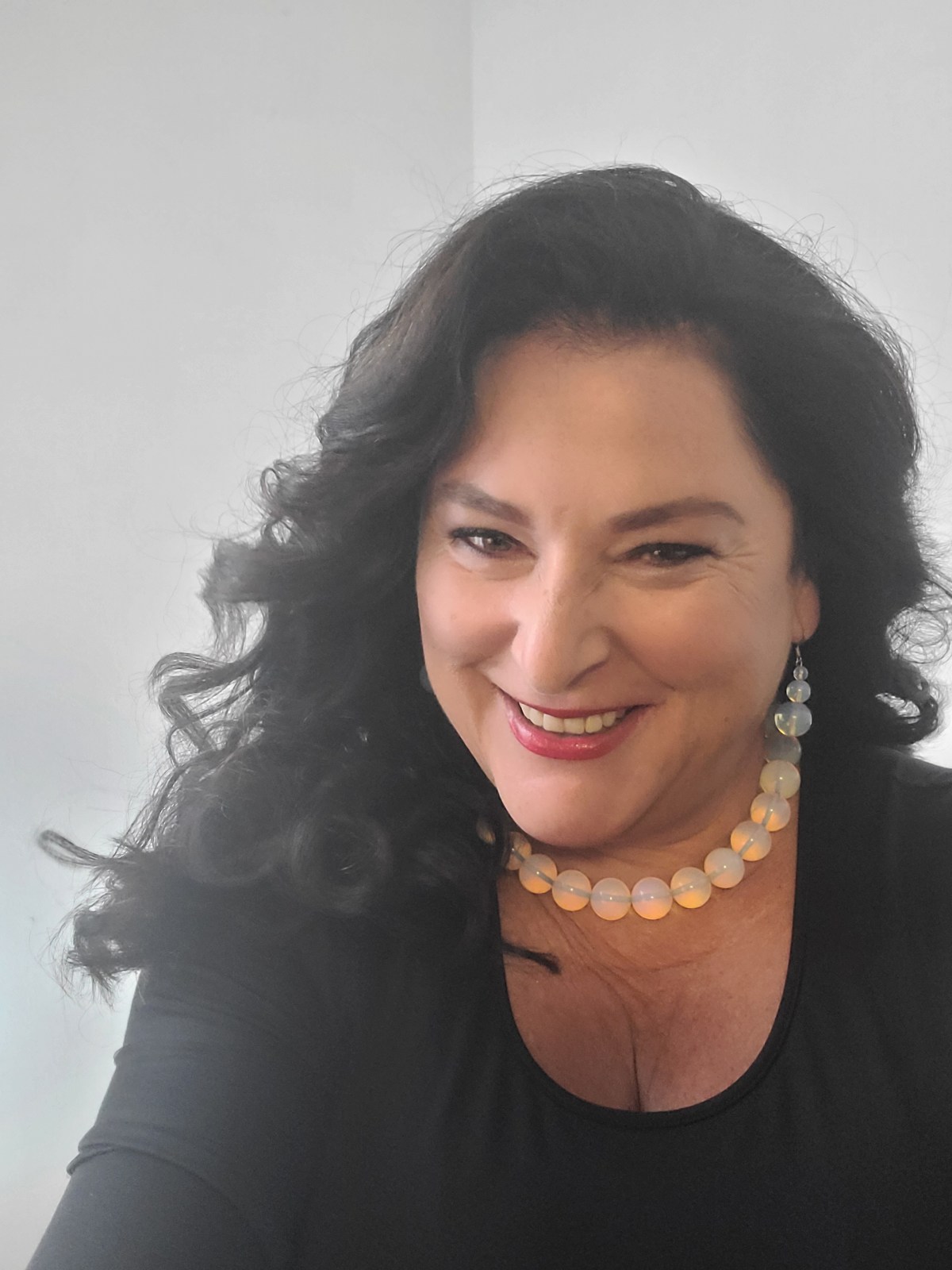
Dr. Jasmin (Bey) Cowin on Education and Globalization: Artificial Intelligence, Augmented Reality Digital Technologies, and Distributed Ledger Technology Networks – Proceedings of the 15th International Multi-Conference on Society Cybernetics and Informatics: IMSCI 2021©

The convergence of data, computation, and globalization in education has far-reaching consequences for educational stakeholders, institutions, and learners. Terms such as the Fourth Industrial Revolution, artificial intelligence (AI), exponential technology, deep learning, personalized competency-based learning, and distributed ledger technology networks (DLTNs) are indicators of the changing dialogue between education stakeholders, businesses, and government aspirations on a global scale. Location-independent virtual environments promise an exponential expansion that goes beyond brick-and mortar schools, colleges, and universities.

It is my pleasure to share the publication of my most recent article:

Cowin, J. (2021). Education and Globalization: Artificial Intelligence, Augmented Reality Digital Technologies, and Distributed Ledger Technology Networks. Proceedings of the 15th International Multi-Conference on Society, Cybernetics and Informatics: IMSCI 2021, 56–61.

About the Social and Organizational Informatics and Cybernetics: SOIC 2021©
in the context of The 15th International Multi-Conference on Society, Cybernetics and Informatics: IMSCI 2021©

July 18 – 21, 2021 ~ Virtual Conference

Many social, societal and organizational problems, in the information age, are interrelated and need to be solved jointly by means of multidisciplinary projects, interdisciplinary communications and/or trans-disciplinary concepts and methodologies.

Informatics, Cybernetics and Cyber-Technologies (ICCT) are, by definition and by nature, transversal to many disciplines and, as such, are special means for the multi-, inter-, and trans-disciplinary approaches required.

ICCT are helping in the solutions of an increasing social, societal and organizational problems, but they are also generating new kind of problems and raising unfamiliar questions. The processes of answering these questions and finding possible solutions to these kinds of problems require as much as of scientific/engineering approaches, as of conceptual/reflexive studies.

Both, analogical and logical thinking are also required, in different complementary studies, as well as combined in the same one. In this context logical thinking without the analogical one would be sterile, and analogical thinking without the logical one would be dangerous for being prone to hidden errors and mistakes.

In the context of this framework, the basic purpose of the Organizing Committee of SOIC 2021 is to a provide a forum for disciplinary and interdisciplinary communications, where researchers (in Social and Natural Sciences, as well as in Engineering), intellectuals, policy/decision makers and Consultants would share the results of their research, studies and thoughts, with regards to societies and private/public organizations in the context of the Information Age.

http://www.iiis2021.org/imsci/website/default.asp?vc=11

ABSTRACT (1)

Jasmin (Bey) Cowin, Ed.D.


The convergence of data, computation, and globalization in education has far-reaching consequences for educational stakeholders, institutions, and learners. Terms such as the Fourth Industrial Revolution, artificial intelligence (AI), exponential technology, deep learning, personalized competency-based learning, and distributed ledger technology networks (DLTNs) are indicators of the changing dialogue between education stakeholders, businesses, and government aspirations on a global scale. Location-independent virtual environments promise an exponential expansion that goes beyond brick-and mortar schools, colleges, and universities.

AI and intelligent systems are poised to become global change agents in education, ushering in profound changes in administrative functions, strategic planning, data aggregation, student acquisition and retention, and alternative currencies, as well as curriculum design, assessment, personal learning networks, and global competitiveness generally of both institutions and their graduates. The quality of the education a nation’s schools, educational institutions, and teachers provide, along with investments in science, technology engineering, and mathematics education, directly impact economic prosperity and global competitiveness.

This paper explores some of the interdependencies that arise from supercharged technological advances such as AI augmented reality digital technologies (ARDTs) and DLTNs and their possible impact on education, educators, learners, and society. In addition, it unbundles the meaning and use cases of AI, ARDTs, and DLTNs in education.


1 The author gratefully acknowledges Prof. Ching-Ching Lin, Ed.D., Touro College, GSE for her insightful peer review of this paper.

Keywords:
Fourth Industrial Revolution, Artificial Intelligence, Exponential Technology, Deep Learning, Personalized Competency-based Learning, Natural Language Processing and Distributed Ledger Technology Networks

Zoom Seminar – Yemeni TESOL Teaching for the Future: Exploring Open Educational Resources (OERs) and Virtual Spaces 

Future Horizons Foundation for Translation, Training and Development together with President Prof. Abdullah Al Ghurbani and Prof. Jasmin Bey Cowin proudly present a free seminar on July 27th, 2021 from 1 pm to 2:30 pm aimed at continued professional TESOL development for all its alumni and graduates. This free seminar and workshop and attendance is limited to the Foundation’s Alumni. 

Future Horizons Foundation for Translation, Training and Development together with President Prof. Abdullah Al Ghurbani and Prof. Jasmin Bey Cowin proudly present a free seminar on July 27th, 2021 from 1 pm to 2:30 pm aimed at continued professional TESOL development for all its alumni and graduates. This free seminar and workshop and attendance is limited to the Foundation’s Alumni. 

Please click this link https://forms.gle/BudCNdevNb5HLAnk9 to sign up.
Yemeni TESOL Teaching for the Future: Exploring Open Educational Resources (OERs) and Virtual Spaces 


This Zoom seminar will focus on educational resources for TESOL teaching such as public digital libraries, open educational resources, and virtual rooms in hubs. The aim is to create access and equity for Yemini TESOL teachers to free materials, resources, and contemporary technology. 
If you are a confirmed Future Horizons Foundation for Translation, Training and Development Alumni you will receive a link via the provided email from the form.

Presenter Bio: Dr. Jasmin Bey Cowin
Assistant Professor and TESOL Practicum Coordinator,
Touro College, GSE, NY


Dr. Cowin’s pro-bono work is seated in a deep professional and personal commitment to transcending boundaries and bringing universal access to high-quality teacher education and professional teacher development. As a Fulbright Scholar; Assistant Professor and TESOL Practicum Coordinator at Touro College, GSE; Chair of the 51st New York State TESOL fall 2021,  she brings over twenty-five years of experience as an educator and institutional leader. 

As an Education Policy Fellow at the EPFP™ Institute, Columbia University/Teachers College, she became part of a select group of strategic leaders analyzing trends regarding effective educational policy and leadership. Her EPFP™ focus was on three pillars: The Fourth Industrial Revolution, Leadership, and Educational Policy furthering her understanding of the challenges that lie at the heart of education inequity. 

Dr. Cowin’s extensive background in education, administration, not-for-profit leadership, entrepreneurial spirit, commitment to the idea of education as a basic human right, technology innovation, and demonstrated sensitivity to cultural communication differences; provide her with unique skills and vertical networks locally and globally.
https://drcowinj-locationindependentteach.com/about/ 

Touro College GSE TESOL Candidate Jason Madrick on Sociopolitical Contexts of Multicultural Education in Public Education for Course EDPN-671

In synchronous online courses discussion boards are in integral part of student analysis and peer cross-pollination. Touro TESOL Candidate Jason Madrick submitted a thoughtful, reflective, exemplary discussion board contribution for the course Theory and Practice of Bilingual and Multicultural Education EDPN-671.

In synchronous online courses discussion boards are an integral part of student analysis and peer cross-pollination. Touro TESOL Candidate Jason Madrick submitted a thoughtful, reflective, exemplary discussion board contribution for the course Theory and Practice of Bilingual and Multicultural Education EDPN-671. This course reviews the impact of historical, legal, sociological, and political issues in relationship to the education of culturally and linguistically diverse students. It is designed to prepare bilingual and ESOL teachers to work successfully with language minority students, in the context of bilingual ESL programs. It includes the study of the historical, psychological, social, cultural, political, theoretical and legal foundations of bilingual education programs in the United States. Students will examine and analyze different bilingual program models so that they may apply such knowledge to the implementation of pedagogically effective practices for second language learners using both the L1 and the L2 in curriculum implementation. Communication with parents and families concerning students’ academic and social outcomes will be highlighted. The course supports Touro College’s commitment to preparing educational professionals to work in diverse urban and suburban settings. Students explore the evolution of attitudes regarding bilingualism and multiculturalism in the United States. Emphasis is placed on developing multicultural competence as educators, with areas of focus including cross-cultural communication in the classroom and with parents; how the language and culture of the home and the community impact student learning; cultural factors in the relationships between the school and the community. Models of multicultural and bilingual education will be presented and analyzed. Includes 10 hours of fieldwork.

Jason Madrick was born and raised in Queens, NY. He has been an illustrator, musician, and overall creative person. Mr. Madrick is graduate of Syracuse University with BA degrees in Biology and Anthropology and minors in Sociology and Education. He has taught as a substitute teacher in public elementary schools in Queens, and then in the UPK program for more than a decade combined. Jason Madrick wrote: “I look forward to embarking on the next stage of my career in education being employed by the NYC DOE this coming fall and using my artistic and musical talents, love of reading, nature, science and more to convey and hopefully instill a love of learning in my future students.”

The Discussion Board prompts are in Italic

In your own words, provide a brief summary (4-6 sentences) of one of the major concepts presented in Chapter 1: Affirming Diversity, The Sociopolitical Context of Multicultural Education. Seventh Edition, Pearson, New York (Nieto, Sonia & Bode, Patty,2018). You may select any concept within the chapter. Choose one that you find unique, interesting, and/or worthy of intellectual discussion.

Jason Madrick : In the last section of Chapter One of our text “Affirming Diversity: The Sociopolitical Context of Multicultural Education” by Sonia Nieto and Paddy Bode, one of the concepts that caught my attention was the influence of private industry in public schools, and the heavy focus on high stakes standardized testing. These testing practices had grown out of the policies and curriculum changes that can be linked back to the publication of the “A Nation at Risk” in 1983. (Nieto & Bode, 2018). From there, the No Child Left Behind Act or NCLB continued this trend of focusing on high stakes testing, and the links between private industries and charter schools in particular is alarming in the enormous influence they have on our public education system in the United States. The “testing industrial complex” (Nieto & Bode, 2018) is a term I had not heard before reading this chapter, but it seems incredibly accurate to me based on my own observations and experiences with the company who has published every text book I have used so far in graduate school, Pearson. Pearson is also the same company I had to gather and input data for during my recent teaching experiences in the UPK program. Described in this chapter as a “monstrous carnivore” that devours public school funding, (Nieto & Bode, 2018) Pearson, I think is just one example of the many private companies whose quest for profits is in direct conflict with the noble goals of public education.

Provide a brief discussion/introduction/explanation of the sociopolitical context of your school environment. If you don’t currently work in a school, you may choose to discuss your workplace or school that you attended. Provide some background information so that others can build an understanding of your specific environment.

Jason Madrick: I am currently not teaching during this school year, but I would like to discuss the sociopolitical context of the two schools I worked at through the UPK program. The first of these schools was located in Whitestone, Queens, and the second location was in Jamaica, Queens. I think my familiarity with those schools is more up to date than my own elementary school experiences, though the memories and details of those years are still very much intact. The first school where I taught in the UPK program was located in Whitestone, Queens in what I would classify as a middle class to upper middle class, to wealthy in terms of economic resources for the area and families of students who attended this school. There was even a golf course and country club located within walking distance of the school. The population of the school included students from several different cultural backgrounds including White, African-America, Latino, and Asian students. Religious faiths represented among the student and family populations included Christianity, Judaism, Muslim, and Athiest/Agnostics. The languages spoken by students included English, Spanish, Chinese, Korean, and Japanese. The majority of the teaching and administrative staff at this school was predominantly White and from a middle to upper middle class background. There were four general education UPK classrooms at this school.

The second school location that I was teaching in UPK was located in Jamaica, Queens. This school was predominantly a 4410 program, with a dozen special education classrooms, but had created four to five integrated UPK classrooms in their basement. These integrated classes were meant to be populated by half general education students, and half special education students. The cultural and religious backgrounds of the students and families at this school was predominantly Latino, Southeast Asian, and African-Americans. There were also White and Asian students present in the program as well. The economic background of many of the families based on my limited observations as well as limits of communication due to language differences at this school I think definitely represented a larger proportion of lower income families, including those who were on public assistance and/or homeless. Religious faiths at this school included Christians, Jews, Muslims, Hindu, and Atheist/Agnostics. There were multiple languages spoken by students at home including English, Spanish, Chinese, Bangali, Punjabi, and Urdu. Among the staff including lead teacher and teaching assistants there are a number of languages spoken besides English including Spanish, Arabic, Bangali, Punjabi, Urdo, Chinese, and Russian. One observation and big difference I noticed between these two schools I taught at was the huge increase in absences and habitual lateness of students at this second location compared to the school in Whitestone. I had some students from the two classes I taught at this school that had missed more than a third of the total scheduled days of class.

Comment on one of the videos presented in this week’s readings. This is slightly flexible, but have fun with it. Choose something within the video to discuss here in this board. It could be something you enjoyed learning, something you disagree with, or something that sparked curiosity.

Jason Madrick: I enjoyed watching the Ted Talk video featuring Elijah Jones on Diverse Education for a student in the Education System, TEDxYouth@Wilmington. Elijah is a student at a private school and spends much of his talk discussing how socioeconomic matters have a significant impact on the resources, both materials and instructional talent that are available to students depending on where the live and their economic means. Ultimately he speaks about how our public school system has become increasingly segregated along racial and socioeconomic lines. At one point he mentions that at his private school, there weren’t any “teachers of color” and that he felt like he was “definitely not in Kansas anymore”. His private school had given him access to top level resources, teachers and extracurricular activities. He laments that what it does not provide him with is a substantial level of diversity among his peers, and that this is not going to be helpful for his future. This future he discusses is the one in which the population of students in the USA is rapidly changing both along cultural and ethnic lines, but also along economic ones. He states at one point that recently, and for the first time, more than half of all school age children are from low income families. Elijah continues to speak towards the ideal that to live in an increasingly multicultural society, he, and other students need and should be exposed to a diverse student population, as well as being able to have access to proper learning resources and instructors. He also says that for race relations and divisions among the people of this country to improve, that discussions and opportunities to talk about these relations and problems need to continue.

References

Nieto, Sonia & Bode, Patty (2018). Affirming Diversity. The Sociopolitical Context of Multicultural Education. Seventh Edition, Pearson, New York

Touro GSE At Work features Assistant Professor Jasmin Cowin in Faculty Spotlight

It is an honor to be chosen as featured faculty at Touro GSE.

Jasmin Cowin, assistant professor and TESOL practicum coordinator for TESOL and Bilingual Programs at the Touro College Graduate School of Education, has brought innovation to the educator preparation program by presenting virtual, augmented and mixed reality e-learning platforms. Her students use avatars to explore a variety of simulation-based settings in ways that facilitate active knowledge in multi-modal ways, which enhance candidates’ understanding of  diverse learners’ educational needs. The student avatars in simulations are controlled by artificial emotional intelligence software. As intensive web applications, these environments provide a safe, risk-free virtual space to explore a range of teaching strategies, while offering immediate feedback as a training tool for teacher candidates during clinical experiences. Cowin’s latest research on e-learning was published in the International Research and Review Journal of Phi Beta Delta Honor Society of International Scholars Fall 2020 edition. She also serves as chair of the New York State Teaching English as a Second Language 51st Annual

https://mailchi.mp/c9e0aa3148d6/touro-college-ranks-in-top-100-best-online-graduate-education-programs-4926338?e=0597240d44