Touro University TESOL Certificate Candidate Maureen Leggett’s Teaching Philosophy & Authentic Voice

EDPN 673 Methods and Materials for Teaching English as a Second Language

This course provides a historical overview of second language acquisition theories and teaching methods. Students learn how to apply current approaches, methods and techniques, with attention to the effective use of materials, in teaching English as a second language. Students will engage in the planning and implementation of standards-based ESL instruction which includes differentiated learning experiences geared to students’ needs. Emphasis is placed on creating culturally responsive learning environments. Includes 15 hours of field work.

Dr. Cowin’s Advice on Articulating a Teaching Philosophy

As a professor who has spent years preparing TESOL educators for the classroom, I want to share why developing your teaching philosophy is not just another academic exercise, but the foundation upon which your entire career will stand. When I first began teaching, I thought methodology was everything. I spent countless hours perfecting lesson plans and mastering techniques. Yet something was missing. It wasn’t until I articulated my core beliefs about language learning that my teaching transformed from mechanical application to purposeful practice.

Your teaching philosophy serves as your professional compass, particularly crucial in TESOL where you navigate complex intersections of language, culture, identity, and power. Every day, you make hundreds of decisions in your classroom. Without a clear philosophy grounding these choices, you risk becoming reactive rather than intentional, swayed by the latest trends or administrative pressures rather than guided by deep convictions about what your students need.

Consider how the guiding questions connect to real classroom moments. When a student struggles with pronunciation, your response stems from your beliefs about error correction and the role of accent in communication. When parents worry their child is losing their home language, your philosophy shapes whether you see this as inevitable or preventable, and how you engage families as partners. When standardized test pressures mount, your philosophy determines whether you narrow your curriculum or maintain rich, meaningful language experiences. These aren’t theoretical considerations; they’re daily realities that demand principled responses.The requirement to articulate your core beliefs forces you to examine assumptions you may not realize you hold.

Writing your philosophy demands honest reflection on how your own language learning experiences, both positive and negative, shape your expectations for students. This self-awareness is essential for avoiding the trap of teaching as you were taught rather than teaching as your students need.

Your classroom practice section bridges the critical gap between theory and application. Too often, teachers claim student-centered beliefs while maintaining teacher-dominated classrooms. By explicitly connecting your principles to specific practices, you create accountability for yourself. If you believe in honoring home languages, how does this manifest in your lesson planning? If you value collaborative learning, what structures support meaningful peer interaction? This alignment between beliefs and actions builds integrity in your practice.The student-centered approach component challenges you to move beyond generic commitments to “meeting all learners’ needs” toward aspecific understanding of the multilingual learners in your context. New York’s ESOL students aren’t abstract categories but individuals navigating complex linguistic landscapes. Some are refugees processing trauma while acquiring academic English. Others are heritage speakers reclaiming languages their families were pressured to abandon. Your philosophy must acknowledge this diversity while maintaining high expectations for all learners.

Professional growth isn’t an addendum to your philosophy but integral to ethical practice. Language teaching methodologies evolve as we gain a deeper understanding of second language acquisition. Demographics shift, bringing new languages and cultures into our classrooms. Educational policies change, sometimes supporting and at other times constraining our work. A static philosophy becomes obsolete. A commitment to ongoing development means your philosophy remains a living document, refined through experience and responsive to your students’ evolving needs. The authenticity requirement protects against the temptation to write what you think others want to hear. When challenges arise, and they will, only genuine conviction will sustain you. Your philosophy should reflect hard-won insights from your own journey, not perfect answers from textbooks.

Maureen Young Leggett teaches elementary education in New York City Public Schools. She studied History and English Literature at Colgate University in Hamilton, NY, and chose the field of education as her second career. She received her Master of Science in Education, Birth through Grade 6, from Hofstra University in Uniondale, NY. Maureen is proud that her students leave her classroom each day knowing how to think harder and communicate better.

“So many of by students are multilingual. They are learning English as their second or even third language. My quest to find ways for them to be academically successful has led me to Touro. I am currently pursuing my TESOL certification.”

Maureen Leggett, Touro University TESOL Certificate Candidate

Touro University Master’s Degree Candidate Elizabeth Guallpa’s Fieldwork Instructional Synopsis Observation Report for EDDN 637

EDDN 637 Second Language Learners and the Content Areas

Students will become acquainted with and practice effective approaches, methods, and strategies for teaching and evaluating English language learners in the content areas (ELA, social studies, math and science). Throughout the course, students will explore the impact of culture and language on classroom learning. Special challenges in teaching and assessment in each content area will also be discussed. Includes 15 hours of field work.

Elizabeth Guallpa teaches Spanish to both heritage and non-heritage speakers at Port Richmond High School in Staten Island, New York.  In order to enhance her proficiency in assisting multilingual learners, she is presently pursuing a TESOL/Bilingual Extension at Touro University.  Elizabeth’s passion as a teacher is helping kids to thrive academically and linguistically via culturally relevant instruction.

My experience at Touro University has changed my life, providing me with the skills, self-assurance, and vision I need to provide excellent, empathetic multilingual instruction. I’ve been reminded of why I selected this road by each course, which has pushed me to develop as an advocate and educator. In addition to improving my professional abilities, Touro has strengthened my resolve to elevate the voices of multilingual and immigrant pupils.

Elizabeth Guallpa, Touro University Master’s Degree Candidate

Touro University Master’s Degree Candidate Angelina Libardi’s EDPN 673 Fieldwork Project

EDPN 673 Methods and Materials for Teaching English as a Second Language:This is a specific course within the MS in Teaching English to Speakers of Other Languages (TESOL) program at Touro University’s Graduate School of Education. It focuses on historical theories, current teaching methods, and the practical application of materials for teaching English as a second language. 

The fieldwork assignment integrates field inquiry with technology-supported design to build core TESOL competencies. In Part I, candidates observe multiple bilingual or ESOL classrooms, conduct teacher and, where permitted, student interviews, and keep structured descriptive, reflective, and analytic notes with verbatim evidence, including basic documentation of the interview setup. In Part II, they investigate tech tools for instructional materials then produce a concise guide and an example material they created for multilingual learners. The final write up synthesizes pedagogy, materials, and assessment practices, and aligns insights with state and professional standards. In my opinion, this strengthens TESOL teacher education by cultivating evidence-informed analysis, standards-aligned planning and assessment, principled technology integration for differentiation, and reflective practice that centers multilingual learners’ profiles and voices.

Angelina Libardi is an elementary school teacher with a background in Childhood Education and Special Education. She is currently pursuing her master’s degree in TESOL, with a focus on supporting multilingual learning in inclusive classroom settings. Her work reflects a commitment to equality, language access, and empowering all students to thrive. 

My experience in the TESOL program at Touro University has deepened my understanding of language, culture, and identity. It has empowered me to create more inclusive, responsive learning environments for every student I teach. 

Angelina Libardi, Touro University Master’s Degree Candidate

The Lexical Knowledge and Analysis for Teachers Infographic designed by Dr. Jasmin (Bey) Cowin

The Lexical Knowledge and Analysis for Teachers infographic serves as a resource specifically for teachers who might find it useful as a reference in their lesson preparation or even for students. This visual guide responds to educators’ need for practical, research-based strategies that bridge theoretical understanding with classroom application in vocabulary development.

The Critical Role of Lexical Knowledge in Second Language Learning

Vocabulary acquisition stands as one of the most fundamental yet complex challenges in second language learning.

The significance of lexical competence extends far beyond simple word recognition. As demonstrated through the multifaceted approach outlined in this infographic, vocabulary knowledge encompasses both breadth (the quantity of words learners recognize) and depth (the nuanced understanding of word meanings, contexts, and relationships). This dual dimension of vocabulary knowledge directly impacts students’ ability to comprehend complex texts, express sophisticated ideas, and navigate academic discourse across disciplines.

It is crucial to acknowledge that language learning fundamentally requires vocabulary memorization and lexical knowledge stored in human memory. Despite technological advances and the availability of AI tools, there is no substitute for internalized vocabulary knowledge. Real-time communication, whether in academic or social contexts, demands immediate access to lexical items without external assistance. No amount of AI offloading will change this fundamental requirement of language acquisition.

Moreover, the tiered vocabulary framework presented here (distinguishing between high-frequency words, academic vocabulary, and subject-specific terminology) offers teachers a systematic approach to prioritizing instruction. This strategic focus ensures that limited classroom time is invested in vocabulary that will yield maximum communicative and academic benefits for learners.

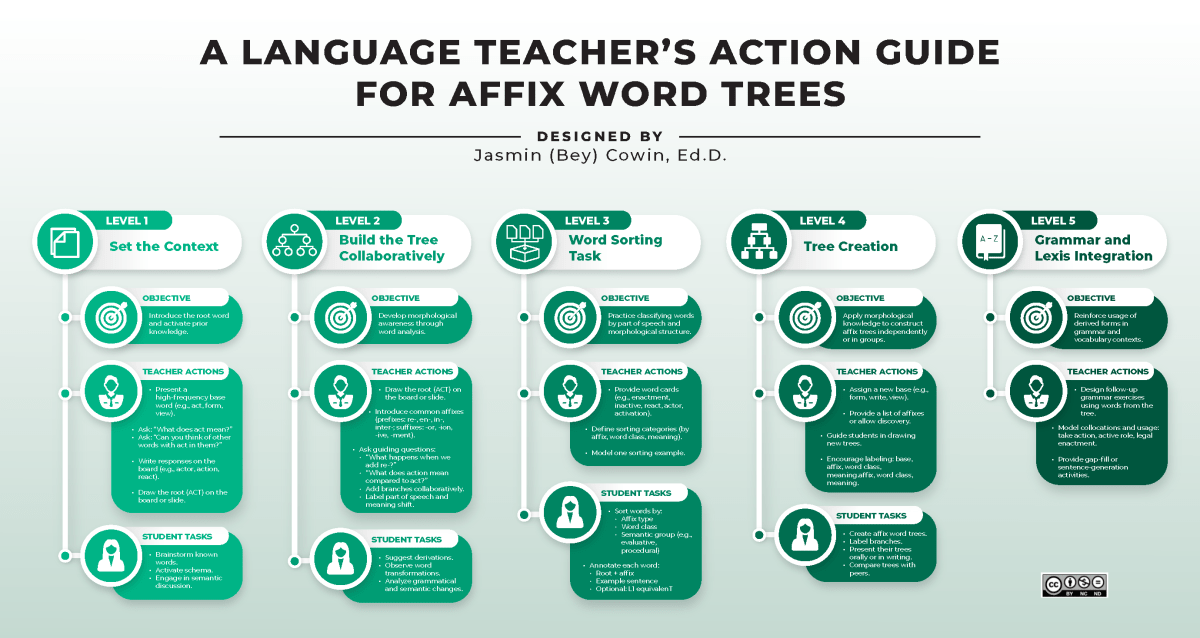
The emphasis on morphological awareness represents another crucial element, as it empowers students to independently decode unfamiliar words by understanding common prefixes, suffixes, and roots. This metacognitive strategy transforms learners from passive recipients of vocabulary instruction into active word learners who can continue expanding their lexical repertoire beyond the classroom.

Perhaps most importantly, the practical applications detailed in this framework bridge the often-cited gap between theory and practice. By providing concrete steps for lexical analysis, strategic vocabulary selection, and integrated instruction across language domains, this approach enables teachers to make informed, evidence-based decisions about vocabulary instruction that directly support their students’ linguistic and academic development.

Touro University Bilingual Extension Candidate Kenia Torres on Differentiated Instructional Activities

There is a need for high-quality educators trained to offer bilingual education and services. For certified teachers and professionals, a bilingual certificate can extend your certification and opportunities. All Touro courses stress the importance of considering cultural factors alongside individual abilities in teaching bilingual students.

We offer three advanced certificates in bilingual education and services:

Bilingual General Education, PreK-12

The Advanced Certification in Bilingual General Education, PreK-12 is designed for mainstream teachers looking to work with bilingual students and teach your content area in two languages. This five-course program will equip you with the necessary knowledge, skills and strategies to effectively teach in bilingual classrooms, supporting students’ language development and academic success.

Courses

EDDN 636 – Linguistic Structure of the English Language – Sociolinguistic Perspectives

EDDN 638 – Teaching English as a Second Language through Modern English Approaches to Grammar

EDPN 671 – Theory and Practice of Bilingual and Multicultural Education

EDPN 673 – Methods and Materials for Teaching English as a Second Language

EDPN 675 – Methods and Materials for Teaching in the Native Language

Bilingual Special Education and Speech & Language Disabilities

The Advanced Certification in Bilingual Special Education and Speech & Language Disabilities is designed to prepare bilingual educational professionals to meet the unique needs of students with disabilities who are also English language learners. This five-course program will equip educators with specialized knowledge, skills, and strategies to provide effective bilingual education and services to students with special needs, speech and language disabilities, ensuring their academic, social and emotional growth. Upon completing this program, you will be equipped with the expertise and competencies necessary to positively impact the lives of students with disabilities who are English language learners.

Courses

EDSN 640 – Assessment of Individual Differences in General and Special Education: A Socio-Cultural Perspective

EDPN 671 – Theory and Practice of Bilingual and Multicultural Education

EDPN 672 – Methods of Teaching and Service Delivery in Languages Other Than English

EDPN 673 – Methods and Materials for Teaching English as a Second Language

EDPN 675 – Methods and Materials for Teaching in the Native Language

Bilingual Pupil Personnel Services

The Advanced Certification in Bilingual Pupil Personnel Services prepares educational professionals – including school psychologists, school social workers, school counselors, school administrators, and other pupil personnel services staff – to effectively support the diverse needs of bilingual students and their families. This four-course program will equip you with specialized knowledge, skills and strategies to provide culturally and linguistically responsive services, ensuring bilingual learners’ academic, social and emotional well-being.

Courses

EDPN 620 – Child Development and Learning in Cultural Context

EDPN 671 – Theory and Practice of Bilingual and Multicultural Education

EDPN 672 – Methods of Teaching and Service Delivery in Languages Other Than English

PSGN 698 – Field Experience in Bilingual Education and Service Delivery

Admissions Requirements

In addition to the general admission requirements, you must be able to document proficiency in the target language of instruction (download the Target Language Proficiency Verification Form).

To learn more about the program, contact us.

Wanda Agosto
Program Associate for TESOL & Teaching Literacy
wanda.agosto@touro.eduwanda.agosto@touro.edu (opens in a new tab)
646-777-9296

Seong-Shin Kim, Ph.D.
Program Chair for TESOL, Bilingual Programs & Teaching Literacy
seongshin.kim@touro.edu
646-777-9857

Kenia Torres is a Bilingual Kindergarten teacher in the Brentwood Union Free School District. She received her Bachelor’s Degree in Child Studies with a concentration in Speech Communication from Saint Joseph’s University, a Bilingual Extension from Touro University, and is currently enrolled in a TESOL program in Touro University. Kenia is passionate about developing a classroom community that allows all children to achieve their academic and personal goals. In the future, she would like to pursue an educational leader role to empower educators and students to catalyze school success.

A quote that reflects Kenia’s vision about the educational field is:

“A teacher affects eternity; he can never tell where his influence stops.” – Henry Adams.”

Video Kenia Torres on Differentiated Instructional Activities

Sara Sylaj, Advanced TESOL Certificate Candidate at Touro University on Differentiated Assessment

Our advanced certificates lead to NYSED certification in specialized areas and an extension/annotation on your NYS teaching credentials.

The extra credits can make all the difference, and specialization can help make you a more marketable, knowledgeable, and well-rounded educator.

Intensive, focused coursework and hands-on learning are benchmarks of the advanced certificate programs at the Graduate School of Education. We unite pedagogical theory and classroom practice, explore innovative teaching and outreach methods, and emphasize culturally responsive instruction.

Pursuing an advanced certificate is an ideal—and affordable—way for experienced teachers and educational personnel to strengthen their expertise in a specific area, from program development for gifted children to teaching English Language Learners with disabilities.

Most programs require 12-15 credits, inclusive of fieldwork. Upon successful completion, you’ll be eligible for an extension/annotation on your New York State teaching credentials, and your earned credits can apply to an additional salary differential.

With advanced certification, not only will you be able to more effectively and compassionately serve diverse student populations, you’ll increase your value as an educator and improve your career prospects.

Teaching English to Speakers of Other Languages (TESOL)

Our 15-credit Advanced Certificate in TESOL will allow you to expand your teaching to ESL or strengthening your capacities to serve a diverse student body. Evening, Sunday, and online courses are available.

Sara Sylaj was born in Albania and moved to the U.S at the age of 12. She holds a master’s degree in Italian education from Hunter College and is seeking an advanced TESOL certificate at Touro University. She currently work as a substitute teacher in the NYC DOE.

My experience at Touro University has been fruitful and productive, learning about different strategies and tools I can use to meet English learners’ language and academic needs and help them build confidence in their abilities as they acquire new knowledge in different content areas.

Sara Sylaj, Advanced TESOL certificate candidate at Touro University

The assignment: Differentiated Assessment Using Authentic Student Products with Emphasis on The Practices and Principles of Differentiation

Assignment Objectives:

Understand and integrate principles of differentiation into assessment techniques.
Modify existing lesson plans to incorporate differentiated assessments using authentic student products.
Integrate and discuss anonymized student products, focusing on differentiating assessment based on readiness, interest, and learning profile.
Reflect on the practices and principles of differentiation and its impact on multilingual learners.

Paper:

Present both the original and modified lesson plans.
In-depth discussion on the integration of anonymized student products and their relevance to differentiated assessment.
Application of the differentiated strategies suchas Graphic Organizers, RAFTs, Choice Grids, VAK Tasks, etc. to provide clarity on the execution of differentiated assessment.

Video: Produce a 2-4 minute video presenting a chosen aspect of differentiated assessment, specifically showing how a student’s anonymized product illustrates YOUR PERSONALIZED differentiation in action.

Assignment Reflection:

Reflect on your understanding and application differentiation FOR ELLs/MLs.
Discuss how differentiated assessment, grounded in student readiness, interest, and learning profile, impacts multilingual learners.
Evaluate YOUR practices, challenges, and successes in implementing differentiation. Please note that you will write your reflection from an I-perspective, with explicit references to your work and professional growth.

Precision in practice: Structured prompting strategies to enhance TESOL by Dr. Jasmin Cowin

Introduction: Precision in Practice

A background in prompt engineering helps language educators refine curriculum development approaches, streamline lesson planning, and craft assessments and rubrics that address the diverse needs of multilingual learners (MLs). Educators can direct Large Language Models (LLMs) such as ChatGPT, ClaudeAI, Cohere, Gemini, and others to produce diverse forms of instructional content by crafting prompts to elicit specific language features, ranging from controlled grammar exercises to rubrics.

Cowin, J. (2025, March). Precision in practice: Structured prompting strategies to enhance TESOL. TESOL International On CALL Newsletter. https://my.tesol.org/news/1166339

Touro University TESOL Candidate Anastasios Panagiotidis on Complex Texts and Addressing Challenges for ELLs/MLs in the Content Area

EDDN 637 Second Language Learners and the Content Areas

Students will become acquainted with and practice effective approaches, methods, and strategies for teaching and evaluating English language learners in the content areas (ELA, social studies, math and science). Throughout the course, students will explore the impact of culture and language on classroom learning. Special challenges in teaching and assessment in each content area will also be discussed. Includes 15 hours of field work.

Anastasios Panagiotidis states that he is “a high school Earth Science teacher who proudly serves the South Huntington Union Free School District. As I enter my tenure year at the age of 25 my love and compassion towards the culturally and academically diverse student population have inspired me to craft lessons that not only target individual student needs but make learning relatable to the world outside of school. This is all in hopes that each student, regardless of language or academic abilities, can reach their highest possible potential through my instruction. 

The assignment description: Text Analysis & Critique
Analyzing Complex Texts and Addressing Challenges for ELLs/MLs in the Content Area

Objective:

The objective of this assignment is to deepen your understanding of the cognitive and linguistic demands of complex texts in the content areas and to analyze a specific chapter or aspect of a content-area text currently used or recommended by the New York State/BOE. By closely examining the underlying concepts, you will develop a thesis and purpose for your analysis. You will critically evaluate the challenges that make the selected concept or section difficult for ELLs and provide substantial, logical, and concrete development of ideas in your critique.

Analyzing text complexity for English Language Learners (ELL) and Multilingual Learners (ML) requires a comprehensive approach that takes into account various factors. You can begin by examining the linguistic demands of the text, including vocabulary, sentence structure, and discourse patterns, ensuring they align with the proficiency levels of the students. Additionally, you, the teacher should consider the cultural and background knowledge necessary to comprehend the text, as well as the cognitive processes required, such as inference or critical thinking. Furthermore, evaluating the organization and coherence of the text, along with its purpose and intended audience, allows you, the teacher to gauge its appropriateness and relevance for ELL/ML learners. By conducting a thorough analysis of text complexity, you can make informed decisions about instructional strategies, adaptations, and scaffolding techniques to support their students’ language development and comprehension skills.

Deliverables:

Analysis of a Chapter or Aspect: Select a chapter or aspect of a content-area text and thoroughly analyze its complex nature. Identify and explain the quantitative elements, qualitative factors, and reader and task considerations that contribute to its complexity.

Development of Thesis and Purpose: Based on your analysis, develop a clear and concise thesis statement that reflects the main idea or argument of your analysis. State the purpose of your analysis, outlining the specific goals and objectives you aim to achieve.

Linguistic analysis which involves examining the linguistic features and demands of a text in order to determine its suitability for language learners. It focuses on various aspects of the text, including vocabulary, sentence structure, and discourse patterns, with the aim of aligning them with the proficiency levels of the students. Here’s a breakdown of these elements:

  1. Vocabulary: The analysis considers the range and complexity of words used in the text. It examines whether the vocabulary is appropriate for the students’ language proficiency level, taking into account factors such as word frequency, difficulty, and relevance to the topic. It also considers the presence of idiomatic expressions, figurative language, and specialized terminology that might pose challenges for learners.
  2. Sentence structure: The analysis looks at the complexity and variety of sentence structures employed in the text. It considers factors such as sentence length, grammatical structures (e.g., verb tenses, conditionals, relative clauses), and syntactic complexity. The aim is to ensure that the sentence structures are within the grasp of the students’ language proficiency level, allowing for gradual progression and challenges appropriate to their abilities.
  3. Discourse patterns: This aspect of linguistic analysis examines how ideas and information are organized and presented in the text. It includes analyzing discourse markers (e.g., conjunctions, transitional phrases) that indicate relationships between ideas, as well as cohesive devices (e.g., pronouns, repetition, referencing) that connect sentences and paragraphs. The analysis ensures that the text’s discourse patterns are comprehensible and aligned with the students’ proficiency levels, promoting their understanding of the text’s overall structure and coherence.

Touro University TESOL candidate Anastasios Panagiotidis’ Discussion Board on SIOP

Touro University TESOL: EDDN 637 – Second Language Learners and the Content Areas

Students will become acquainted with and practice effective approaches, methods, and strategies for teaching and evaluating English language learners in the content areas (ELA, social studies, math and science). Throughout the course, students will explore the impact of culture and language on classroom learning. Special challenges in teaching and assessment in each content area will also be discussed. Includes 15 hours of field work.

Anastasios Panagiotidis is a dedicated high school Earth Science teacher serving the South Huntington Union Free School District. As he approaches his tenure year at the age of 25, he recognizes that his career is still in its early stages. However, his passion for education and commitment to fostering a supportive and inclusive learning environment drive his work every day. Inspired by the culturally and academically diverse student population he teaches, he strives to design engaging, student-centered lessons that not only address individual needs but also connect learning to real-world contexts. His ultimate goal is to ensure that every student, regardless of their language proficiency or academic abilities, has the opportunity to reach their fullest potential under his instruction.

The SIOP Model: An Essential Framework for ESL Instruction by Prof. Dr. Jasmin Cowin

The Sheltered Instruction Observation Protocol (SIOP) is a research-based instructional model designed to support English Learners (ELs) in developing both content knowledge and English language proficiency simultaneously. Developed by Echevarria, Vogt, and Short, the SIOP model provides a structured approach to lesson planning and delivery, ensuring that ELs receive comprehensible input and meaningful language support across content areas.

As a TESOL educator, understanding and implementing the SIOP model is essential for effective ESL instruction. The model provides a structured yet flexible framework that ensures ELs have equitable access to academic content while simultaneously developing their language proficiency. By integrating language and content instruction, teachers can create an inclusive classroom environment that promotes both linguistic and cognitive development for English Learners.

The SIOP Model: Components and Structure

The SIOP framework consists of eight interrelated components that guide teachers in designing effective lessons for ELs:

  1. Lesson Preparation
    • Clearly defined content and language objectives
    • Use of supplementary materials to support comprehension
    • Meaningful activities that integrate both content and language practice
  2. Building Background
    • Explicitly linking students’ background knowledge to new content
    • Connecting past learning experiences to new concepts
    • Introducing and reinforcing key vocabulary
  3. Comprehensible Input
    • Adjusting speech for EL proficiency levels
    • Using clear explanations of academic tasks
    • Incorporating visuals, gestures, and realia to support understanding
  4. Strategies
    • Teaching students learning strategies to support comprehension
    • Encouraging metacognitive awareness and self-monitoring of learning
    • Scaffolding tasks through teacher modeling, guided practice, and peer collaboration
  5. Interaction
    • Promoting student-to-student discourse using structured peer interactions
    • Designing opportunities for extended academic conversations
    • Encouraging collaborative learning experiences
  6. Practice & Application
    • Providing hands-on learning experiences
    • Integrating reading, writing, speaking, and listening activities
    • Allowing ELs to apply language skills in meaningful contexts
  7. Lesson Delivery
    • Ensuring objectives are clearly communicated and met
    • Keeping students engaged and maintaining an appropriate pace
    • Aligning instruction with student needs
  8. Review & Assessment
    • Regularly reviewing key concepts and vocabulary
    • Conducting formative assessments to monitor comprehension
    • Providing feedback to guide language and content development

Anastasios Panagiotidis’ Discussion Board provides excellent insight into Building Background.

Screenshot 2025-02-24 at 10.19.52 PM.png

Touro University TESOL Candidate Ivelisse Martinez’s Teaching Resources for TESOL Teachers

Teaching English to Speakers of Other Languages (TESOL) [MS]
We offer a Master of Science in TESOL appropriate for NYS-certified PreK-12 teachers interested in expanding their teaching fields to ESL or strengthening their capacities to serve a diverse student body. Evening, Sunday, and online courses are available.

Teaching English to Speakers of Other Languages

New York is a state that speaks many languages. We need teachers who can find the common ground.

The MS in Teaching English to Speakers of Other Languages (TESOL) Program helps NYS-certified PreK-12 teachers more effectively teach and communicate with a diverse student population.

Academically rigorous and practice-intensive, the 33-credit program includes 5-15 hours of fieldwork embedded in each course and at least 10 days or 50 hours of supervised student teaching experience. Candidates that complete all coursework, fieldwork, and student teaching requirements are eligible for recommendation for ESL certification.

Ivelisse Martinez holds a bachelor’s degree in Education from Brooklyn College and is currently pursuing a master’s degree in TESOL at Touro University. She is passionate about empowering young learners, particularly those learning English as a second language. Inspired by her own teachers as a child, she sees a reflection of herself in many of her students, understanding firsthand the challenges and joys of learning a new language. As a former ELL, her goal is to inspire and support the next generation of learners on their educational journey.

So far I have been able to observe in both an ENL pullout classroom and ENL push-in periods. I notice the difference between the teacher when she has access to her materials and room versus a push-in period where the room is shared with the classroom teacher.The teacher has to use various tools depending on the setting but one tool that stays consistent for instance is the use of the pocket talk. The pocket talk device allows the teacher to translate in real time, two way translation and access to 84 plus languages all in one small device. (Here is the link to the device Pocket Talk).”

“Teaching is a way of giving back the inspiration and support you once received, guiding others to see their potential and know that every challenge is a stepping stone toward success.

Ivelisse Martinez, Touro University TESOL Candidate