

EDPN 673 Methods and Materials for Teaching English as a Second Language
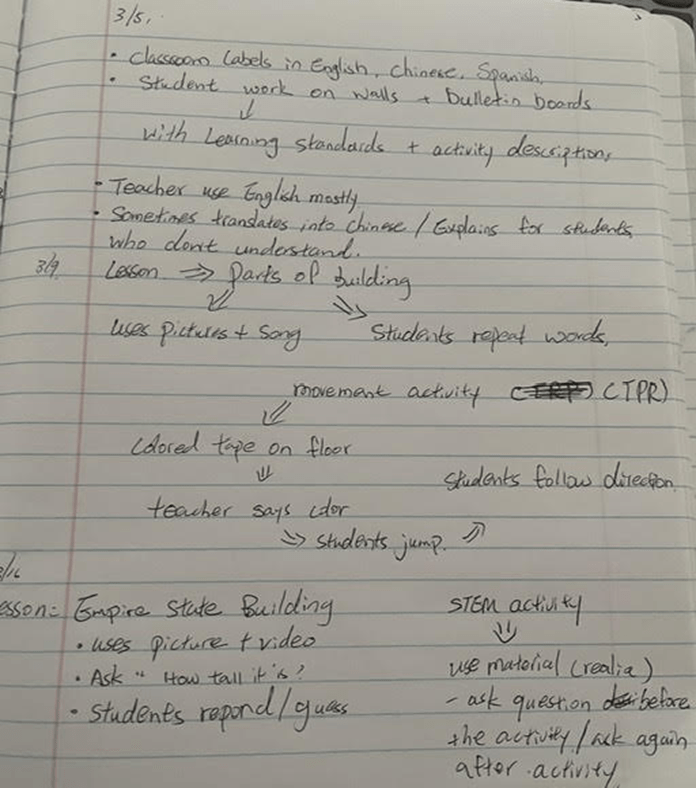
The fieldwork for EDPN 673 reflects our departments practice-based and evidence-centered orientation emphasized by Association for Advancing Quality in Educator Preparation because it requires TESOL candidates to demonstrate professional learning through documented clinical engagement rather than through abstract discussion alone. Candidates must observe multilingual classrooms, conduct interviews, maintain transcripts and observational notes, analyze instructional practices, and connect findings to professional standards and course readings. The assignment therefore evaluates how candidates apply pedagogical knowledge within authentic educational settings.
A major strength of the assignment is its emphasis on structured professional observation. Candidates are required to document descriptive, reflective, and analytic notes focused on instructional strategies, classroom interaction, differentiation, assessment, and use of materials and technology. This framework supports the development of pedagogical reasoning because candidates must move beyond surface description and examine why teachers make particular instructional choices for multilingual learners. Such observational training is central to TESOL preparation because effective ESOL teaching depends upon the ability to recognize language supports, learner participation patterns, and culturally responsive instructional practices within dynamic classroom contexts.
The assignment also aligns closely with AAQEP expectations concerning evidence quality and candidate performance. Candidates must maintain interview notes or recordings, provide transcript excerpts, document interview settings, and furnish observation notes upon request. This creates a form of accountability grounded in authentic clinical evidence rather than solely in polished written products. The assignment assesses whether candidates can gather, interpret, and synthesize practice-based evidence in ways consistent with professional educator preparation.
Finally, the assignment demonstrates our Touro University, TESOL/BLE departments’ clinically rich approach to educator preparation because it requires sustained engagement with classroom realities, systematic documentation, and reflective analysis. Rather than assessing knowledge through isolated examinations or generalized discussion, the fieldwork measures how our TESOL candidates interpret instructional practice, analyze evidence, and connect observation to professional decision-making in multilingual educational environments.
Shu Jun Li: I earned my master’s degree in Early Childhood General and Special Education (Birth–Grade 2) at Touro University and currently work as an SEIT, where most of my students are bilingual learners. Working closely with bilingual and multilingual students inspired me to enroll in the Bilingual Extension Program in Special Education and Speech and Language Disabilities, which I am currently completing in my final semester. My experiences in both the classroom and coursework have strengthened my passion for creating inclusive, culturally responsive learning environments that support student growth and success. My journey at Touro and my experience in EDPN 673 strengthened my understanding of how culturally responsive teaching, scaffolding, and reflective practices can better support bilingual and multilingual learners. The course helped me become more intentional in creating inclusive learning experiences that support both language development and student success.
Fieldnotes by Touro University TESOL Candidate Shu Jun Li
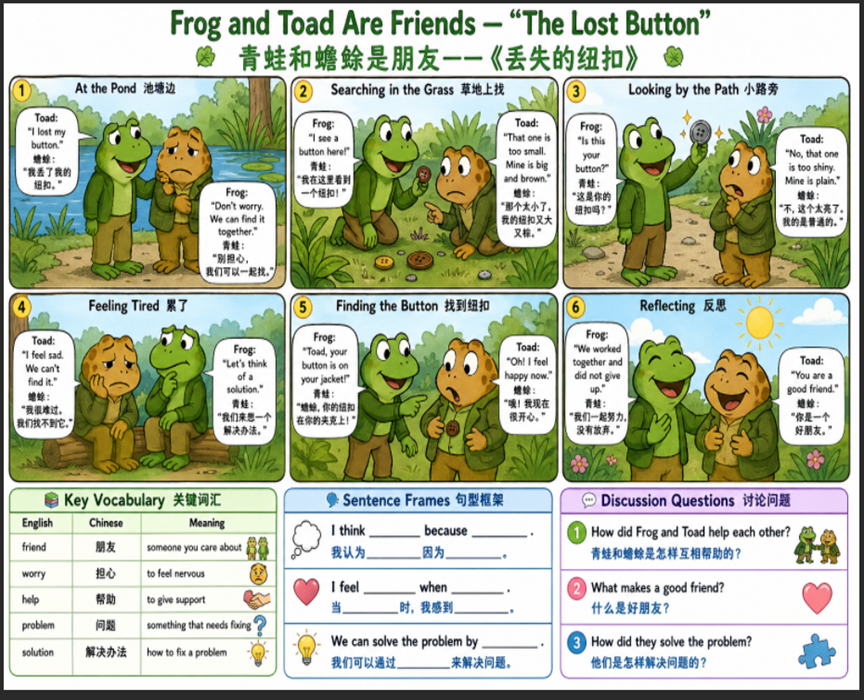
Using Copilot in EDPN 673 helped me better understand how technology can support bilingual and multilingual learners through differentiated and scaffolded instruction. I learned that AI tools can help create visual supports, lesson ideas, and language activities that make learning more accessible and engaging for students. At the same time, the course taught me the importance of critically reviewing and adapting AI-generated materials to ensure they are culturally responsive and aligned with students’ learning needs. This experience strengthened my confidence in using technology as a meaningful instructional support tool.
Shu Jun Li Touro University TESOL Candidate


