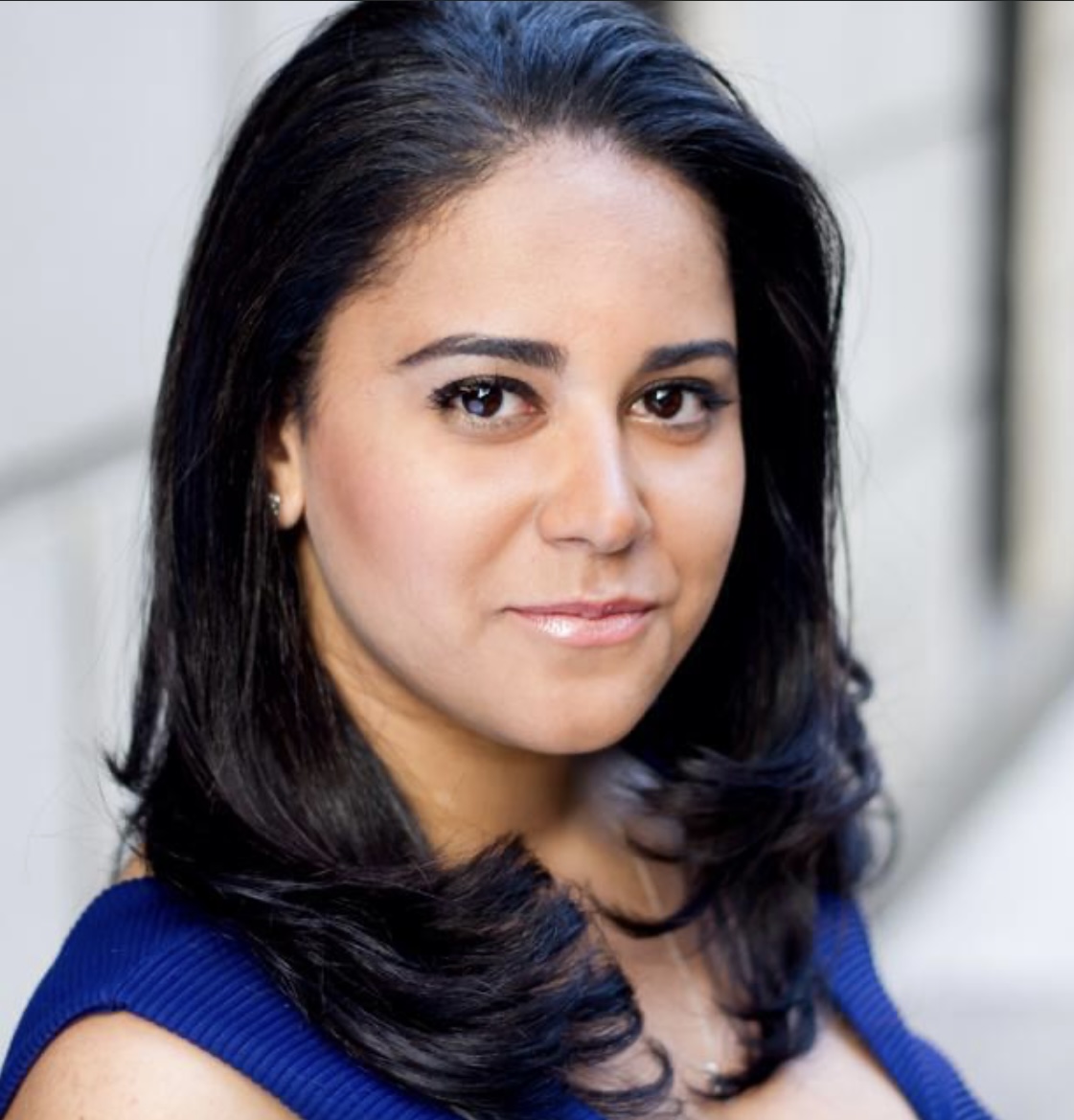
Dr. Jasmin (Bey) Cowin, an Associate Professor at Touro University, received the 2024 Touro University CETL Faculty Fellowship for Excellence in Teaching and the Rockefeller Institute of Government awarded her the prestigious Richard P. Nathan Public Policy Fellowship (2024-2025). As a Fulbright Scholar and SIT Graduate, she was selected to be a U.S. Department of State English Language Specialist. Her expertise in AI in education is underscored by her role as an AI trainer and former Education Policy Fellow (EPFP™) at Columbia University's Teachers College. As a columnist for Stankevicius, she explores Nicomachean Ethics at the intersection of AI and education. She has contributed to initiatives like Computers for Schools Burundi, served as a resource specialist for Amity University in Uttar Pradesh, India, and participated in TESOL "Train the Trainer" programs in Yemen and Morocco. Her research interests include simulations and metaverse for educators-in-training, AI applications in education and language acquisition and teaching, and distributed ledger technologies, with a focus on her 'Education for 2060' theme.
In conclusion, my commitment extends beyond transactional interactions, focusing instead on utilizing my skills and privileges to make a positive, enduring impact on the world.
I completed the Module Making Workshop with the Department of Online Education at Touro University.
In order to teach online courses as an instructor at Touro College,I wanted to learn more about how to elevate setting up course modules for your online course(s). The Module Making Workshop is a 4-week course guided me through the essential components of creating an online module including creating measurable learning objectives, adding critical design elements (e.g., headers), and creating a logical flow to course content.
The components of this workshop adhere to the standards outlined in Touro’s Rubric for Online Education, which is the instrument used to evaluate the quality of online courses at Touro.
“As a professor, I created this blog as a mechanism to support, appreciate and showcase exemplary work of my graduate and professional Touro University TESOL/BLE teacher candidates. By emphasizing candidates’ best work, and their innovative, thoughtful, reflective contributions I provide a path to shift the focus to their professional values while recognizing and celebrating their significant milestones in the Touro University TESOL/BLE program.” by Jasmin (Bey) Cowin
This course provides a historical overview of second language acquisition theories and teaching methods. Students learn how to apply current approaches, methods and techniques, with attention to the effective use of materials, in teaching English as a second language. Students will engage in the planning and implementation of standards-based ESL instruction which includes differentiated learning experiences geared to students’ needs. Emphasis is placed on creating culturally responsive learning environments. Includes 15 hours of fieldwork.
Mrs. Paola Gomez was born in the Bronx and raised partially in the Dominican Republic. She attended Hunter College where she received her degree in Music Performance and Touro University, GSE where she received her master’s in education. She is currently a teacher at P186X, where she hopes to integrate her bilingual teaching skills acquired from Touro University’s bilingual education program.
Paola wishes to thank her family, her husband, Justin, and her professor, Dr. Jasmin Cowin, for her support and dedication to candidate learning during the fall semester of 2022.
For my multilingual learners, the total physical response mini lesson centered around the vocabulary words of body parts gave them the opportunity to make a connection between body parts in their language and body parts in English. For example, if I were to show just the name of each body part, without any visual support and physical action to go with it, my multilingual learners might had struggled to understand that Mouth is Boca. Having the visual support accompanied by the motor activity, helped the students to successfully identify, recall, and acquire new vocabulary in a new language.
“As a professor, I created this blog as a mechanism to support, appreciate and showcase exemplary work of my graduate and professional Touro University TESOL/BLE teacher candidates. By emphasizing candidates’ best work, and their innovative, thoughtful, reflective contributions I provide a path to shift the focus to their professional values, while recognizing and celebrating their significant milestones in the Touro University TESOL/BLE program.” by Jasmin (Bey) Cowin
As a professor, I created this blog as a mechanism to support, appreciate and showcase exemplary work of my graduate and professional Touro University TESOL/BLE teacher candidates. By emphasizing candidates’ best work, and their innovative, thoughtful, reflective contributions I provide a path to shift the focus to their professional values, while recognizing and celebrating their significant milestones in the Touro University TESOL/BLE program.
Dr. Jasmin (Bey) Cowin (Assistant Professor and TESOL Practicum Coordinator, Touro University, GSE)
EDDN 637 Second Language Learners and the Content Areas: Students will become acquainted with and practice effective approaches, methods, and strategies for teaching and evaluating English language learners in the content areas (ELA, social studies, math and science). Throughout the course, students will explore the impact of culture and language on classroom learning. Special challenges in teaching and assessment in each content area will also be discussed. Includes 15 hours of fieldwork.
Evdokia Gasparis: “My family consists of many English language learners, which has influenced me to pursue a master’s degree in TESOL. I completed a bachelor’s degree in elementary/early childhood education and psychology from Queens College, which led me to attain a 1-6 common branch license. As I expand my knowledge in the field of education, I strive to effectively differentiate all instructional activities to meet the needs of all students. I aspire not simply to teach, but to inspire all my students to challenge their limits!”
practice (how teachers deliver instruction to students),
process (how the lesson is designed for students),
products (the kinds of work products students will be asked to complete),
content (the specific readings, research, or materials, students will study),
assessment (how teachers measure what students have learned), and
grouping (how students are arranged in the classroom or paired up with other students).
You will submit both the original content lesson and plan and the lesson plan with differentiated instructional activities, with a reflection of your professional growth completing this assignment. Your product for Differentiated Instructional Activity Assignment will be:
A paper including the original lesson plan/differentiated lesson plan addressing points 1 -6 above
2-4 minute video showcasing one specific aspect of one of your Differentiated Instructional Activities
Picture Walk Video Evdokia Gasparis, Touro University TESOL CandidateEntering / Emerging Differentiated WorksheetEntering / Emerging Differentiated WorksheetExpanding Differentiated WorksheetTransitioning / Bridging Differentiated Worksheet
“…all students work at different speeds, therefore it is essential to group students strategically to provide needed support. During the differentiated lesson, students are grouped homogenously. Homogenous grouping allows students, with similar academic needs and readiness, to collectively complete assignments (Levine, 2012). The intent of grouping students with similar levels of readiness is to scaffold lessons that allow students to work in their zone of proximal development (ZPD) (Levine, 2012).”
Evdokia Gasparis, Touro University TESOL Candidate
EDDN 637 Second Language Learners and the Content Areas: Students will become acquainted with and practice effective approaches, methods, and strategies for teaching and evaluating English language learners in the content areas (ELA, social studies, math and science). Throughout the course, students will explore the impact of culture and language on classroom learning. Special challenges in teaching and assessment in each content area will also be discussed. Includes 15 hours of fieldwork.
Adah Hirschfeld is a New York City Public School librarian who currently works at IS 240 in Midwood, Brooklyn. She holds a Master of Library and Information Science degree from Pratt Institute and a Master’s degree in School Administration from Touro University. She is pursuing certification in TESOL to better meet her students’ language and literacy needs.
The Text Analysis discusses the cognitive and linguistic demands of a content area text. Touro University TESOL/BLE candidates closely analyze a chapter, or an aspect of one content-area text currently in use or recommended by New York State/BOE. Upon analysis of underlying concepts, they develop a thesis and purpose for their analysis. Mrs. Hirschfeld’s paper sequences her ideas with evidence from the text supporting essential points. Her critique features substantial, logical, and concrete development of ideas describing what makes that concept or section challenging for ELLs.
Phonics and phonological decoding of the multi-syllabic words may be difficult for ELL students. Examples of words that do not follow standard rules are: ocean, fascinating, officials, unique, foreign. Students would have to be aware of the hard and soft “c” sounds of recent, cities, places, and appreciation. As well as the spelling patterns and pronunciation of words ending in -gh and -ght.
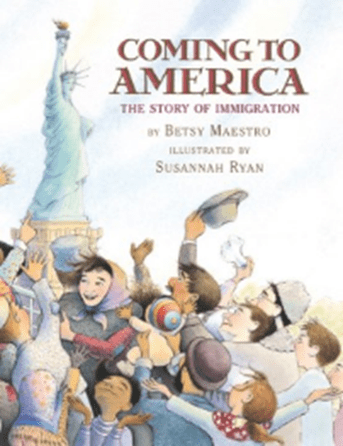
Overall, this is a highly complex text for English language learners. The sentence length, multisyllabic unknown words, and academic vocabulary are difficult for readers to comprehend without scaffolds and modifications. The illustrations correspond to and enhance the text allowing the reader to gain an understanding but without the visual enhancement, meaning may be lost.
How can educators better support linguistically diverse students and their families was a question hotly debated in the Touro University bilingual and multicultural education discussion boards by Touro University TESOL teacher candidates. The discussion boards focused on English to Speakers of Other Languages (ESOL) teacher praxis’, highlighting the targeted inclusion of asset-based approaches. As a professor leading the discussions, the topic sparked deep reflection, and a goal crystallized: to create and implement an impactful hands-on project. The discussion centered around shifting teaching paradigms towards more inclusive, dynamic practices empowering Multilingual Learners (ML). Teachers often enter their profession unprepared to draw on the strengths and assets that culturally and linguistically diverse students bring to school. (Elfers, 2013)
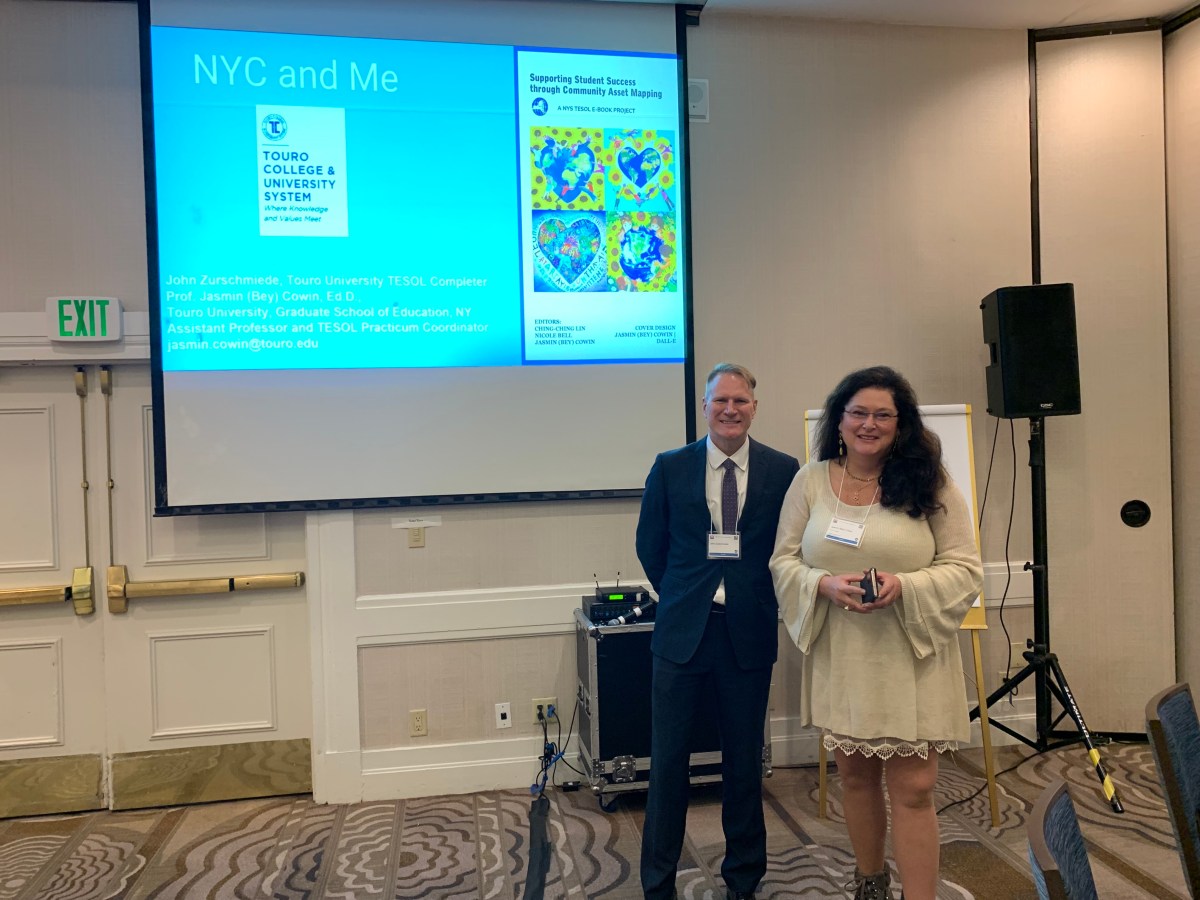
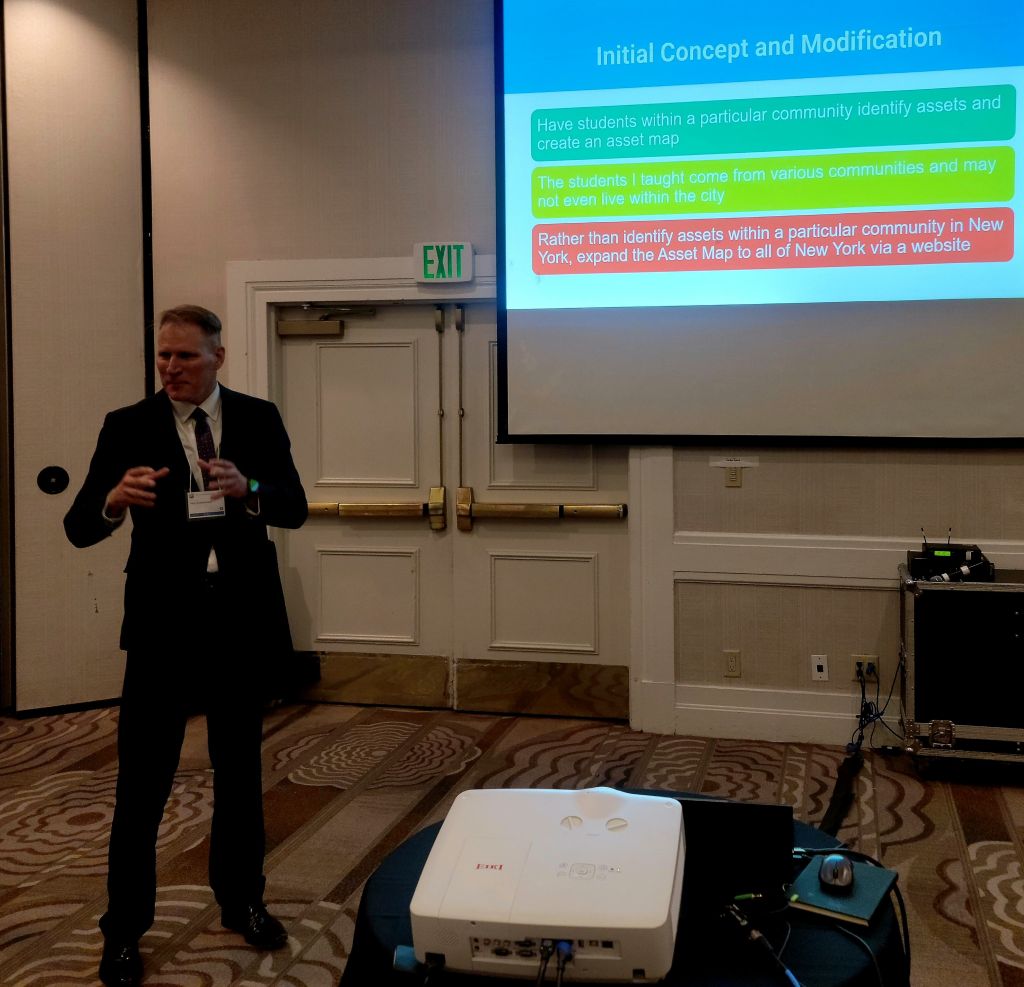
Out of the discussion boards grew a book chapter with a former teacher John Zurschmiede, post-degree completion: ACROSS BOUNDARIES: COMMUNITY ASSET MAPPING AND LINGUISTICALLY DIVERSE LEARNERS, in which John Zurschmiede, now a teacher at the Board of Education, at an International school, co-constructed not only a project but also meaning-making in a collaborative space bringing together different dimensions of teacher-learner in two different levels. Level 1: the faculty-teacher candidate, Level 2: The former teacher candidate – his Multilingual Learners. This was an interwoven process that created fertile spaces of intentional collaboration across boundaries resulting in a book chapter in “Supporting Student Success through Community Asset Mapping.”
I am deeply grateful for the collaboration with my former student John Zurschmiede which expanded my horizon as an educator and shifted my teaching paradigms. I experienced that funds of knowledge are not static as we are all life-long learners embedded in the tapestry of our communities, personal histories and experiences which we express through our unique linguistic landscapes.
AI and intelligent systems are positioned to become change agents in education through ushering in profound changes in institutional administrative and teaching functions, systemic strategic planning, and program planning. Post-pandemic, the explosive growth of fully-accredited online degrees has also reached teacher education programs. However, any online teacher education program needs alternative pathways to support teacher candidates in their online journey at Touro University and towards teacher certification. This lightening talk focused on alternative meeting, teaching and advising spaces in metaverses such as Agora World. Meeting in such alternative, closed-loop spaces fosters positive faculty-candidate interaction, provides pathways for collaborative experiences, nurtures self-efficiacy, and the ability to partner authentically through talking, presenting, debating within groups in a constructed safe metaverse space.
Session recordings are now available to watch On Demand. Keynotes, interviews and panel discussions from top brands explore real world examples of those successfully integrating conversational AI and automation to drive innovation throughout their organizations. Catch any sessions you may have missed or watch your favorites again! You can register here to get access to VOICE22 and my presentation recording from Agora World:
Dr. Jasmin (Bey) Cowin – AI, Avatars and 21st Century Simulation Training for Educators
AI and intelligent systems are positioned to become change agents in education through ushering in profound changes in institutional administrative functions, systemic strategic planning, and program planning. Post-pandemic, the explosive growth of fully-accredited online degrees has also reached teacher education programs. However, any online program in teacher education needs alternative pathways to support teacher candidates who are required to complete practicum and fieldwork hours.
This lightning talk focuses on reviewing, contrasting, and framing two distinct immersive ecosystems. Mursion and simSchool. While both platforms offer immersive experiences simSchool is AI-driven while Mursion employs mixed reality simulations. Both provide preservice teachers a platform to practice and rehearse the art and skill of teaching within a controlled simulation setting using avatars. Insights on evidence-based practices by teacher candidates are generated through data from both AI and candidates’ in-world experiences. Such data aggregation offers institutions informed decision-making through a systematic review using technology to improve teacher education programs.
Just in time for the 52nd NYS TESOL conference our book: Supporting Student Success Through Community Asset Mapping: A NYS TESOL E-Book Kindle Edition with Ching-Ching Lin (Editor), Nicole Bell (Editor), Jasmin (Bey) Cowin (Editor) Format: Kindle Edition
This collection of participatory action research from educators of multilingual learners across the world is dedicated to the goal of supporting student success through community assets mapping. It is a must-read for any educator looking for concrete ways to tear down deficit narratives about multilingual learners and replace them with a lens of celebrating and amplifying students’ unique perspectives, assets, and strengths. Join a diverse and dynamic group of educators and their multilingual learners as they share their beliefs, knowledge and action plans in reimagining school as a site of foster-ship and empowerment through integrating academics, enrichment, critical awareness, and social-emotional learning to design programs that are holistic, equitable, and inclusive.
The art of teaching is the art of assisting discovery.
Mark Van Doren
Best of all, I published a chapter with my former Touro University TESOL candidate John Zurschmiede: ACROSS BOUNDARIES: COMMUNITY ASSET MAPPING AND LINGUISTICALLY DIVERSE LEARNERS
Together with my dear colleagues and peers Ching-Ching Lin, Ed. D. and Nikki Bell we will be presenting on our NYS TESOL e-book project “Enacting culturally responsive pedagogies through community assets mapping: A NYS TESOL Story,” which has been included in the TESOL 2023 convention program, held on 21–24 March in Portland, Oregon, USA.
Reunion, Resilience & Reciprocity: Fulbright’s Yemini English Teacher Trainees General Session: 60 Minute Presentation and Discussion
Presenter Information: Dr. Jasmin (Bey) Cowin Touro University – Assistant Professor and TESOL Practicum Coordinator Dr. Cowin is a Fulbright Scholar; Assistant Professor and TESOL Practicum Coordinator at Touro University; sustainability advisor for access and equity for Computers for Schools Burundi; collaborator with Prof. Abdullah Al Ghurbani, President of Future Horizons Foundation for Translation, Training, and Development a teacher training and translation institution in Sanaa, Yemen, member of the TESOL International CALL-IS Steering Committee, co-Chair of the of the Technology Enhanced Language Learning SIG 2022 conference, conference chair of the 51st NYS TESOL conference 2021. Recent presentations focused on Computers for Schools Burundi: Gukorera Hamwe through Cultural Competency Training, Yemeni TESOL Teaching & Training for the Future: Exploring Google, Virtual Field Trips and Open Educational Resources (OER’s), The Metaverse: Layers, Applications, and Terminology, The Next Normal: Metaverse, Virtual Beings, AI cloning for the World Higher Education Ranking Summit (WHERS), Dubai, UAE.
Dr. Abdullah Al Ghurbani, Ph.D. Fulbright recipient (2005 USA), Prof. Abdullah Al Ghurbani, Ph.D., President of Future Horizons Foundation for Translation, Training, and Development a teacher training and translation institution in Sanaa, Yemen has 29 years of experience in the field of teaching English as a foreign/second language. He holds a Ph.D. in English Literature, English Department, College of Languages, Sana’a University and was sponsored through a Fulbright grant to acquire the SIT TESOL certification at Rennert International, New York, U.S.A, 2012.
Session Abstract: This presentation gives a voice to Fulbright grant funded Teaching English as a Second Language (TESOL) teacher trainees who were trained in Sanaa, Yemen. In alignment with this year’s theme ” Resilience”, this presentation showcases two Fulbright alumni, one from Yemen, the other from the US who reunited through LinkedIn and teamed up to reciprocate with teacher training. The presentation will explore Yemini TESOL teacher candidate’s perceptions on their professional growth through their weekly reflections during their Fulbright funded training cycle. Participants will explore, discuss and celebrate these meaningful journeys by engaging with the concept of reflective practice and the idea of Chris Argyris double-loop learning.