Core AI Competencies for Legal Education Curricula and Law Students, designed by Dr. Jasmin (Bey) Cowin

My infographic on Core AI Competencies for Legal Education Curricula and Law Students emphasizes the progression from foundational AI knowledge to advanced application and evaluation for students studying law. The integration of AI into legal education requires deliberate thoughts on students’ practical skill acquisition, which I aligned in this infographic with Bloom’s Taxonomy.
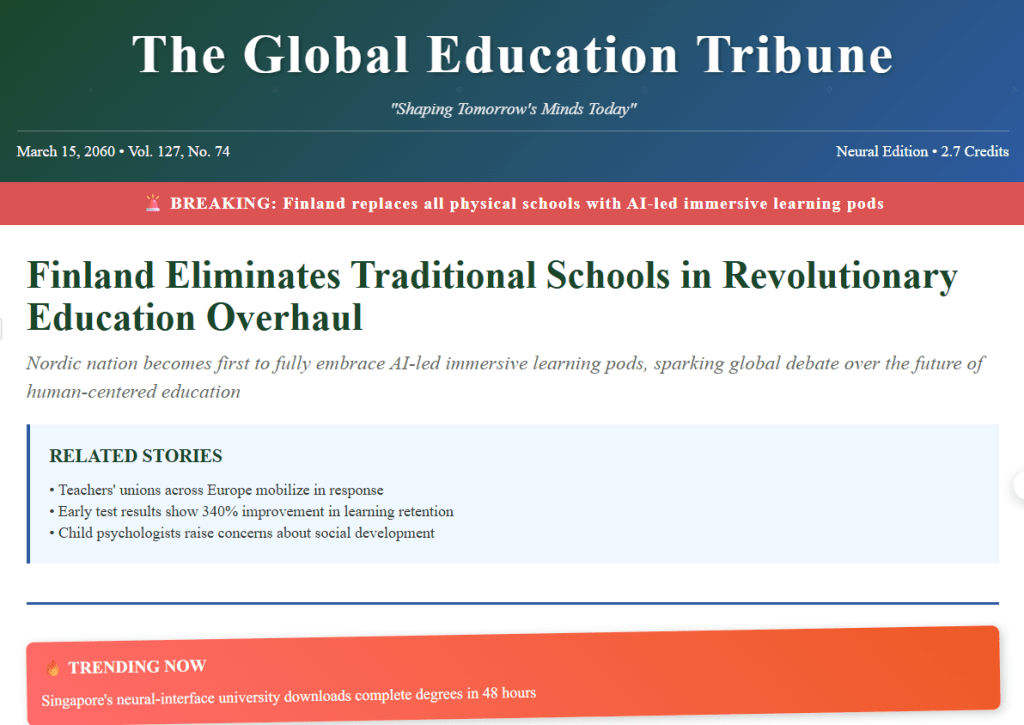
Law courses should reflect these competencies, offering law candidates opportunities to develop practical skills alongside theoretical understanding. By embedding specific, practical AI competencies into their curriculum, law schools can ensure their graduates are not only proficient in traditional legal skills but also adept at leveraging AI to enhance marketability. I believe that technology integration alongside traditional teaching methods in law is crucial for the future legal practice of aspiring lawyers. Law students should be able to navigate legal AI platforms with ease, operate multiple AI tools effectively, and combine different AI technologies to enhance their skill sets. Proficiency in these areas will prepare students not only with traditional legal skills but also to become adept at navigating the complexities of technology in their future practice. Today’s law students will be practicing until 2060!

I hope you enjoy my infographic.

America First in AI: Protecting Jobs, Advancing Innovation by Dr. Jasmin Cowin

Great stories have always helped us understand complex truths about human behavior, and sometimes the simplest tales reveal the most profound insights about how incentives shape our choices. In this exclusive Stankevicius article, the author interleaves insights from Martine Murray’s “The Wanting Monster,” a children’s fable, with an exploration of how America might realign Silicon Valley incentives to serve American workers and communities first. The author explored previously in exclusive Stankevicius articles: Autonomous AI’s Spellbook and the Absent Necromancer, and Forging the Future: President Trump’s AI Vision and OpenAI’s Challenge to DeepSeek.

The challenge facing America’s technology sector today stems from a fundamental misalignment of incentives that has driven companies to outsource essential AI work overseas while promising domestic job creation and technological leadership. As economist Steven Landsburg observed, “People respond to incentives. The rest is commentary.”

Read the article here:

Cowin, J. (2025, June 1). America first in AI: Protecting jobs, advancing innovation. Stankevicius. https://stankevicius.co/artificial-intelligence/america-first-in-ai-protecting-jobs-advancing-innovation/

The Lexical Knowledge and Analysis for Teachers Infographic designed by Dr. Jasmin (Bey) Cowin

The Lexical Knowledge and Analysis for Teachers infographic serves as a resource specifically for teachers who might find it useful as a reference in their lesson preparation or even for students. This visual guide responds to educators’ need for practical, research-based strategies that bridge theoretical understanding with classroom application in vocabulary development.

The Critical Role of Lexical Knowledge in Second Language Learning

Vocabulary acquisition stands as one of the most fundamental yet complex challenges in second language learning.

The significance of lexical competence extends far beyond simple word recognition. As demonstrated through the multifaceted approach outlined in this infographic, vocabulary knowledge encompasses both breadth (the quantity of words learners recognize) and depth (the nuanced understanding of word meanings, contexts, and relationships). This dual dimension of vocabulary knowledge directly impacts students’ ability to comprehend complex texts, express sophisticated ideas, and navigate academic discourse across disciplines.

It is crucial to acknowledge that language learning fundamentally requires vocabulary memorization and lexical knowledge stored in human memory. Despite technological advances and the availability of AI tools, there is no substitute for internalized vocabulary knowledge. Real-time communication, whether in academic or social contexts, demands immediate access to lexical items without external assistance. No amount of AI offloading will change this fundamental requirement of language acquisition.

Moreover, the tiered vocabulary framework presented here (distinguishing between high-frequency words, academic vocabulary, and subject-specific terminology) offers teachers a systematic approach to prioritizing instruction. This strategic focus ensures that limited classroom time is invested in vocabulary that will yield maximum communicative and academic benefits for learners.

The emphasis on morphological awareness represents another crucial element, as it empowers students to independently decode unfamiliar words by understanding common prefixes, suffixes, and roots. This metacognitive strategy transforms learners from passive recipients of vocabulary instruction into active word learners who can continue expanding their lexical repertoire beyond the classroom.

Perhaps most importantly, the practical applications detailed in this framework bridge the often-cited gap between theory and practice. By providing concrete steps for lexical analysis, strategic vocabulary selection, and integrated instruction across language domains, this approach enables teachers to make informed, evidence-based decisions about vocabulary instruction that directly support their students’ linguistic and academic development.

Foundations or Facades? Duolingo, AI, and the Antaeus Paradox in EdTech by Dr. Jasmin Cowin

In my exclusive article for Stankevicius Foundations or Facades? Duolingo, AI, and the Antaeus Paradox in EdTech, I explore how the platform’s rapid shift toward AI optimization may be weakening the core elements that once defined its success. Like Antaeus losing his strength when lifted from the ground, Duolingo risks disconnecting from the educational and cultural foundations that gave it power. The article investigates whether the pursuit of growth is coming at the cost of pedagogical integrity and user trust.

Cowin, J. (2025, May 15). Foundations or facades? Duolingo, AI, and the Antaeus paradox in EdTech. Stankevicius. https://stankevicius.co/artificial-intelligence/foundations-or-facades-duolingo-ai-and-the-antaeus-paradox-in-edtech/

Touro University TESOL Candidate Maria Fernandez on Assessment and Professional Responsibilities

MS in Teaching English to Speakers of Other Languages: New York is a state that speaks many languages. We need teachers who can find the common ground.The MS in Teaching English to Speakers of Other Languages (TESOL) Program helps NYS-certified PreK-12 teachers more effectively teach and communicate with a diverse student population.

Maria Fernandez is a former English Language Learner who enjoys exploring other cultures through travel whenever possible. Currently, she serves as a 12:1:1 special education teacher in District 75, where she brings enthusiasm and dedication to her teaching practice.

In EDDN 637 Second Language Learners and the Content Area students will become acquainted with and practice effective approaches, methods, and strategies for teaching and evaluating English language learners in the content areas (ELA, social studies, math and science). Throughout the course, students will explore the impact of culture and language on classroom learning. Special challenges in teaching and assessment in each content area will also be discussed. Includes 15 hours of field work.

One of the discussion boards asks:

  1. What is your responsibility AS A TESOL PROFESSIONAL in terms of Initial Assessment of Language Proficiency?
    Demonstrate by showing realia the difference between formal and informal assessment. You can take photos of anonymized assessment types from YOUR classroom. For example, if you used Kahoot, or a test or an exit ticket.
    2.How do YOU assess student progress and learning for your ELLs? Take ONE of the realia student samples from telpas-annotated-examples-of-student-writing.pdf and assess the example using academic TESOL terms. Include a photo of your example in your presentation.
    What are ways to provide specific constructive affirmations to students to keep them progressing and motivated? (Think about technology tools too, badges etc.) share at least one link, hand-out, exit ticket, or other realia to an assessment tool you use in your professional practice. (Take a photo!)

Maria Fernandez’s contribution shows her attention to detail and depth of contribution.

Touro University TESOL Candidate Madison Derwin’s Field Log

MS in Teaching English to Speakers of Other Languages: New York is a state that speaks many languages. We need teachers who can find the common ground.

EDPN 673: Methods and Materials for Teaching English as a Second
Language

This course provides an historical overview of second language acquisition theories and teaching methods. Students learn how to apply current approaches, methods and techniques, with attention to the effective use of materials, in teaching English as a second language. Students will engage in the planning and implementation of standards-based ENL instruction which includes differentiated learning experiences geared to students’ needs. Emphasis is placed on creating culturally responsive learning environments. The course also analyzes the applicability of applied linguistic studies to such teaching and the appropriateness of various methods and techniques to different developmental and skill levels. Special attention is given to curriculum development, planning and executing instructional activities. Additional emphasis is given to the selection of materials and the design of evaluation instruments for measuring cognitive development if the core subject areas.

This assignment focuses on exploring and analyzing K-12 pedagogical approaches, methods, and strategies relevant to teaching English to speakers of other languages (ESOL) in diverse classrooms. The objective is to develop a deep understanding of the strategies that effectively convey state and professional standards-based curricula to students from different age groups, ability levels, and cultural backgrounds. Additionally, the assignment aims to facilitate the development, adaptation, and evaluation of materials for lesson planning and assessment. 

Originally from Long Island, New York, Madison Derwin holds a bachelor’s degree in Inclusive Childhood Education and is currently pursuing a graduate degree in TESOL. As an aspiring educator, Madison’s goal is to inspire students to reach their full potential through engaging lessons and hands-on learning experiences.

Ms. Derwin clearly connected her fieldwork to the course objective on second language teaching methods. Her interactions with the ENL-certified educator and attention to culturally responsive practices demonstrate strong professional engagement. Her descriptive focus on practical strategies such as scaffolding and visual aids, along with her recognition of the importance of inclusion and collaboration, reflects a thoughtful and intentional approach to her teaching observations.

Art in the Age of AI: A Conversation with Alex Beard

In a world increasingly influenced by rapid technological change, where algorithms and AI can generate art in mere seconds, what becomes of authenticity, creativity, and craft? The author wrote exclusively for Stankevicius in January about At the Cusp of Tomorrow: AI’s 2024 Milestones and the 2025 Horizon.

To further explore questions on the cusp of tomorrow, I sat down with Alex Beard, artist, author, and keen observer of nature’s intricate patterns. Beard shared his reflections on art, AI, and the enduring human spirit that breathes life into creative work from his New Orleans studio.

Cowin, J. (2025, April 30). Art in the age of AI: A conversation with Alex Beard. Stankevicius. Retrieved from https://stankevicius.co/entertainment/art-in-the-age-of-ai-a-conversation-with-alex-beard/

Lauren Eisenman a Master’s Degree Candidate for TESOL at Touro University on Instructional Materials & Redesign

Publishing my students’ work in a blog or other professional outlet is a deliberate choice to affirm their professional identities and position them as active contributors to the TESOL field. It highlights the professionalism, academic rigor, and exceptional quality of our program, while honoring the dedication and intellectual engagement our TESOL teacher candidates at Touro University bring to their work. By showcasing their scholarship publicly, I want to reinforce my commitment to cultivating educators who are prepared to shape and elevate the discourse around multilingual education.

Lauren Eisenman is a third-grade teacher who has been teaching for the past four years in a diverse school district. She currently holds a Bachelor’s Degree in English and Elementary Education and a Teacher of Students with Disabilities Endorsement from Monmouth University. She is enrolled to receive her Master’s Degree in TESOL at Touro University in order to enhance her teaching practices and better support Culturally and Linguistically Diverse (CLD) students in her classroom.

Touro University has empowered me to better support multilingual learners through meaningful, research-based instruction. The program has strengthened my understanding of language acquisition and culturally responsive teaching. I feel more confident and equipped to meet the diverse needs of my students.

Lauren Eisenman, Master’s Degree Candidate for TESOL at Touro University

New York is a state that speaks many languages. We need teachers who can find the common ground. Request Info ApplySchool CatalogSchool Catalog (opens in a new tab) The MS in Teaching English to Speakers of Other Languages (TESOL) Program helps NYS-certified PreK-12 teachers more effectively teach and communicate with a diverse student population. Academically rigorous and practice-intensive, the 33-credit program includes 5-15 hours of fieldwork embedded in each course and at least 10 days or 50 hours of supervised student teaching experience. Candidates that complete all coursework, fieldwork, and student teaching requirements are eligible for recommendation for ESL certification. Online courses are available, and students can transfer up to twelve credits from previous graduate-level study toward our requirements. Students pursuing an Advanced Certificate in TESOL may apply their credits toward the Master’s degree. Completion of the program makes you eligible for New York State certification as a TESOL teacher for PreK-12. If you have questions about our admissions requirementscertification guidelines, or transfer credits, feel free to contact us. Contact Wanda Agosto
Program Associate for TESOL & Teaching Literacy
wanda.agosto@touro.eduwanda.agosto@touro.edu (opens in a new tab)
646-777-9296 or Seong-Shin Kim, Ph.D.
Program Chair for TESOL, Bilingual Programs & Teaching Literacy
seongshin.kim@touro.edu
646-777-9857

Touro University Bilingual Extension Candidate Kenia Torres on Differentiated Instructional Activities

There is a need for high-quality educators trained to offer bilingual education and services. For certified teachers and professionals, a bilingual certificate can extend your certification and opportunities. All Touro courses stress the importance of considering cultural factors alongside individual abilities in teaching bilingual students.

We offer three advanced certificates in bilingual education and services:

Bilingual General Education, PreK-12

The Advanced Certification in Bilingual General Education, PreK-12 is designed for mainstream teachers looking to work with bilingual students and teach your content area in two languages. This five-course program will equip you with the necessary knowledge, skills and strategies to effectively teach in bilingual classrooms, supporting students’ language development and academic success.

Courses

EDDN 636 – Linguistic Structure of the English Language – Sociolinguistic Perspectives

EDDN 638 – Teaching English as a Second Language through Modern English Approaches to Grammar

EDPN 671 – Theory and Practice of Bilingual and Multicultural Education

EDPN 673 – Methods and Materials for Teaching English as a Second Language

EDPN 675 – Methods and Materials for Teaching in the Native Language

Bilingual Special Education and Speech & Language Disabilities

The Advanced Certification in Bilingual Special Education and Speech & Language Disabilities is designed to prepare bilingual educational professionals to meet the unique needs of students with disabilities who are also English language learners. This five-course program will equip educators with specialized knowledge, skills, and strategies to provide effective bilingual education and services to students with special needs, speech and language disabilities, ensuring their academic, social and emotional growth. Upon completing this program, you will be equipped with the expertise and competencies necessary to positively impact the lives of students with disabilities who are English language learners.

Courses

EDSN 640 – Assessment of Individual Differences in General and Special Education: A Socio-Cultural Perspective

EDPN 671 – Theory and Practice of Bilingual and Multicultural Education

EDPN 672 – Methods of Teaching and Service Delivery in Languages Other Than English

EDPN 673 – Methods and Materials for Teaching English as a Second Language

EDPN 675 – Methods and Materials for Teaching in the Native Language

Bilingual Pupil Personnel Services

The Advanced Certification in Bilingual Pupil Personnel Services prepares educational professionals – including school psychologists, school social workers, school counselors, school administrators, and other pupil personnel services staff – to effectively support the diverse needs of bilingual students and their families. This four-course program will equip you with specialized knowledge, skills and strategies to provide culturally and linguistically responsive services, ensuring bilingual learners’ academic, social and emotional well-being.

Courses

EDPN 620 – Child Development and Learning in Cultural Context

EDPN 671 – Theory and Practice of Bilingual and Multicultural Education

EDPN 672 – Methods of Teaching and Service Delivery in Languages Other Than English

PSGN 698 – Field Experience in Bilingual Education and Service Delivery

Admissions Requirements

In addition to the general admission requirements, you must be able to document proficiency in the target language of instruction (download the Target Language Proficiency Verification Form).

To learn more about the program, contact us.

Wanda Agosto
Program Associate for TESOL & Teaching Literacy
wanda.agosto@touro.eduwanda.agosto@touro.edu (opens in a new tab)
646-777-9296

Seong-Shin Kim, Ph.D.
Program Chair for TESOL, Bilingual Programs & Teaching Literacy
seongshin.kim@touro.edu
646-777-9857

Kenia Torres is a Bilingual Kindergarten teacher in the Brentwood Union Free School District. She received her Bachelor’s Degree in Child Studies with a concentration in Speech Communication from Saint Joseph’s University, a Bilingual Extension from Touro University, and is currently enrolled in a TESOL program in Touro University. Kenia is passionate about developing a classroom community that allows all children to achieve their academic and personal goals. In the future, she would like to pursue an educational leader role to empower educators and students to catalyze school success.

A quote that reflects Kenia’s vision about the educational field is:

“A teacher affects eternity; he can never tell where his influence stops.” – Henry Adams.”

Video Kenia Torres on Differentiated Instructional Activities

Touro University Faculty Chronicles – Season 4, Episode 2: The Future of Artificial Intelligence

🎯 My interview and podcast and interview is live: Season 4, Episode 2: The Future of Artificial Intelligence with Dr. Jasmin Cowin, Touro University Graduate School of Education.
💡 Thank you to my interviewer and excellent moderator, Gena Bardwell. It is an honor to be part of this episode of hashtag#Touro hashtag#Faculty hashtag#Chronicles.
🔴 We discussed the infallibility myth of AI, the often-held belief that AI outperforms human cognition. Yet, AI lacks human hashtag#commonsense.
✔️ We also discussed hashtag#nanotechnology, hashtag#syntheticdata, hashtag#socraticdiscourse, hashtag#algorithms and much more.
📖 I believe there is a difference between hashtag#intelligence and hashtag#consciousness.
💫The interview ends with a personal favorite quote by hashtag#Ovid: “All other creatures look down toward the earth, but man was given a face so that he might turn his eyes toward the stars and his gaze upon the sky.”

Bardwell, G. (Host). (2025, April 21). Season 4, Episode 2: The future of artificial intelligence with Dr. Jasmin Cowin [Audio podcast episode]. In The Faculty Chronicles. Touro University Center for Excellence in Teaching and Learning. https://www.ivoox.com/season-4-episode-2-the-future-of-artificial-audios-mp3_rf_145330021_1.html