
via The English Article System or An English Article System? Determiners and ELL’s
Author: drcowinj
Dr. Jasmin (Bey) Cowin, an Associate Professor at Touro University, received the 2024 Touro University CETL Faculty Fellowship for Excellence in Teaching and the Rockefeller Institute of Government awarded her the prestigious Richard P. Nathan Public Policy Fellowship (2024-2025). As a Fulbright Scholar and SIT Graduate, she was selected to be a U.S. Department of State English Language Specialist. Her expertise in AI in education is underscored by her role as an AI trainer and former Education Policy Fellow (EPFP™) at Columbia University's Teachers College. As a columnist for Stankevicius, she explores Nicomachean Ethics at the intersection of AI and education. She has contributed to initiatives like Computers for Schools Burundi, served as a resource specialist for Amity University in Uttar Pradesh, India, and participated in TESOL "Train the Trainer" programs in Yemen and Morocco. Her research interests include simulations and metaverse for educators-in-training, AI applications in education and language acquisition and teaching, and distributed ledger technologies, with a focus on her 'Education for 2060' theme.
In conclusion, my commitment extends beyond transactional interactions, focusing instead on utilizing my skills and privileges to make a positive, enduring impact on the world.
The English Article System or An English Article System? Determiners and ELL’s

TESOL-direct states “It is almost impossible to discuss the noun phrase without referring at some stage to the class of words known as determiners, since more often than not a noun will occur with one or more words from this grammatical class. Determiners include articles (a/an, the) and quantifiers.” DEFINITE AND INDEFINITE ARTICLES IN ENGLISH GRAMMAR
According to Julia Miller, the English article system presents many problems for non-native speakers of English, particularly when they do not have an equivalent in their first language (2005) “…identifying countability may be problematic for the learner”. John M. Lipski, an American linguist writes “Articles in English are one of the key indicators of native speaker competence, and the ease with which native speakers use articles can lead them to ignore the complexities of the system and often be unaware of their importance to English syntax.” (Lipski, 1978, p.13).
The term indefinite article refers to a or an. The term definite article refers to the. Once the noun is identified by an ELL as noncountable or countable, the student will need to determine if an article is necessary. The indefinite article is stated to be less problematic for most students because its use is restricted to singular, countable nouns (Miller, 2005). A study in 2002 by Lui and Gleason’s indicating that students may initially overuse the definite article even after the following instruction on its use and the use of the may be generic or non-generic (Miller, 2005). Definite articles are used when talking about or referring to something specific and indefinite articles are used when referring to something non-specific.
For example:

“The duck” (Definite) vs A duck (Indefinite)”. ‘The duck’ refers to a specific duck; however, referring to ‘a duck’ it refers to any duck.
Other struggles for Emergent Bilinguals include linguistic interference and cross-linguistic influence with quantifiers such as little, few, many, and much (Pesce) and singular and plural noun determination as native langue nouns may be plural in their mother language but not in English (Miller, 2005).
Liu, D. & Gleason, J. L. (2002). Acquisition of the article the by nonnative speakers of English: An analysis of four types of use. Studies in Second Language Acquisition, 24, 1–26.
Lipski, J.M. (1978) On the use of the indefinite article. Hispania, 61, 105-109.
Miller, J (2005). Most of ESL students have trouble with the articles. International Education Journal, 5 (ERC2004 Special Issue), 5th ser., 80-88. J. Miller Text
Pesce, C. How to teach countable and uncountable nouns https://busyteacher.org/18856-how-to-teach-countable-uncountable-nouns-esl.html
EDDN 638 Teaching English as a Second Language through Modern English Approaches to Grammar – Teacher Candidates Final Projects
EDDN 638 Teaching English as a Second Language through Modern English Approaches to Grammar – Teacher Candidates Final Projects

This fully online course reviewed the structure of American English. Teacher Candidates learned about diverse theories, approaches, methods, and practical techniques of grammar instruction for English language learners. Special emphasis was placed on developing instructional strategies to assist English language learners in meeting the current English Language Arts standards. The course included 5 hours of fieldwork.
Touro students at the Graduate School of Education enjoy flexible options in completing their degree. Many GSE students work part- or full-time, and have commutes or family obligations that limit their schedules. To accommodate our students’ needs, we offer afternoon, evening, Sunday, and online courses, and our campuses are conveniently located in Manhattan, Brooklyn, Queens, and Long Island.
Whether you’re an experienced educator seeking professional or advanced certification or an aspiring teacher looking for a rigorous—and affordable—program, Touro will help you learn how to make a difference in the lives of children.
Here some of the teacher candidates work with educational technology this semester in EDDN 638 – creating a blog, a website, an infographic. Consolidation of their semester work into one place for professional showcasing.
Beatriz Martine created an informative Weebly site as a final e-project.
Rebecca Gulino created a multitiered blog.
Marisa Simoncic created this fantastic infographic.

Admissions Requirements
We welcome applications from NYS-certified teachers who would like to pursue TESOL certification. This program is designed to strengthen teachers’ capacities to effectively serve children for whom English is a second language. Courses are scheduled to accommodate working students. Applicants should be aware that they are required to complete 100 hours of Student Teaching Experience in grades PreK-12.
Academic Requirements
All applicants to the MS program in Teaching English to Speakers of Other Languages must have:
- Completed a baccalaureate degree from an accredited academic institution (official transcript must be submitted).
- A minimum grade point average of 2.5 (on a 4-point scale).
- Provisional or initial NYS Certification in Education.
- All applicants who plan to enroll in our teacher education, leadership, and counseling programs after July 1, 2016, must submit their Graduate Record Examination (GRE) or Miller Analogies Test (MAT) official test scores, or a nationally-normed equivalent. Applicants who present MAT scores will be asked to complete a writing sample administered by Touro. It will be another criterion within a candidate’s application that each program weighs appropriately. Touro’s GRE test code is 2902 and MAT test code is 3346.
Ready to Apply?
NO, IT IS NOT TOO LATE TO APPLY FOR FALL 2018!
Visit admissions to find out how to apply and start your application.
Questions?
212-463-0400 ext. 5288
Leticia Castillo
Assistant to Chair
leticia.castillo5@touro.edu
Dr. Lucia Buttaro
Chair
Lucia.buttaro@touro.edu
Beatriz Martine, Teacher Candidate at Touro College on Prepositions and Articles
 Beatriz Martine is a certified 7-12 Mathematics teacher currently working in the Roosevelt Union Free School District. She has had the experience of teaching in the 7th and 8th grades for four years and is looking forward to teaching many more. Beatriz has found a love in working with ENL students because of the predominantly high ENL population in her school district. She is currently pursuing her Masters in TESOL at Touro College to better support her students. Beatriz is hoping to continue her studies and work towards her Bilingual extension after graduating with her Masters.
Here the questions for the Discussion Board of our Touro online learning environment with Ms. Martine’s answers. Ms. Martine has given express permission to use her discussion board postings in my blog.
Why do you think learning correct prepositions, articles and when a noun needs an article or not takes so long to learn? Is this also true for native speakers?
I think the reasons why learning correct prepositions, articles and when a noun needs an article or not takes a long time to learn is that the rules are complex, have many exceptions, and in certain situations interchangeable. Most of the time, practice is the key to learning these grammatical components. Tara Arntsen explains in Gerund vs. Infinitive, that “it takes a lot of practice to recognize which words this applies to and there is no rule to help,” referring to specific words that must be followed by infinitives or gerunds (2011). Prepositions are hard to learn because they have multiple meanings. Take the preposition on, for example, we can use this for different situations: to be in physical contact with something (on a shelf) or to participate in something (on a team). There are also instances where depending on where you are geographically, prepositions are used differently (standing in line vs. standing on line). Prepositions can also be interchangeable. When someone is waiting inside a restaurant, they can be in or at the restaurant.
Create a short worksheet requiring your students to demonstrate their proficiency in the use of prepositions, infinitives and/or gerunds. Post this on the discussion board for your colleagues to address.
I would use this as a Do Now for a succeeding lesson on when to use gerunds or infinitives.
Name: __________________________ Date: ________ Period: _____
Gerund vs. Infinitive
Directions: Fill in the blank with the correct gerund or infinite
1. I enjoy (play) ________________ hide-and-seek with my friends.
2. My teacher always says, “Keep (try) ________________, next time you’ll get it right!”
3. I need (clean) ________________ my room this weekend, it’s a mess.
4. I don’t like (go) ________________ to the store with my mom, she takes forever!
5. When my mom walks in my room, I pretend (sleep) ________________ but I’m really on my phone!
Post two, thoughtful and insightful questions about grammar proficiency for your colleagues to discuss.
1. Does anyone have a good classroom resource for practicing gerunds and infinitives?
2. Matthew Lubin explains, “It’s easier to explain to an ESL class that gerunds sound more natural than infinitives when used as subjects or complements of a sentence” (2017). How would you model this to your students?
References:
Arntsen, T. (2011, August 22). Gerund vs. Infinitive: How to Explain the Difference. Retrieved from https://busyteacher.org/4123-gerund-vs.-infinitive-how-to-explain-the.html
Arntsen, T. (2016, October 30). How To Teach Prepositions Of Place (8 Simple Steps). Retrieved from https://busyteacher.org/3630-how-to-teach-prepositions-of-place.html
Lubin, M. (2017, July 27). How to Teach Gerunds and Infinitives to ESL Students Without Confusing Them. Retrieved from https://www.fluentu.com/blog/educator-english/esl-gerunds-and-infinitives/
Bitcoin, Blockchain and IoT for Educators accepted conference presentation

NYS TESOL 48th Annual Conference in Albany, November 2nd, 2018
This poster session will explain and present in easy to understand non-technical language and infographics: 1. Cryptocurrencies like Bitcoin, which represent much more than digital economic innovations. 2. The Blockchain and Blockchain principles. 3. Potential applications for to the Internet of Things (IoT) and Smart Systems for educators and educational institutions.
Blockchain can be implemented within individual educational institutions, groups of educational institutions, and both national and international educational bodies. This technology makes it possible to securely store badges, credits, and qualifications through a decentralized system. Blockchain has the potential to morph into a massive open, online, secure database used for certification and achievement repositories with payment in cryptocurrencies. Blockchain can be implemented within individual educational institutions, groups of educational institutions, and both national and international educational bodies. As education becomes more diversified, democratized, decentralized and disintermediated, we still need to maintain reputation, trust in certification, and proof of learning. The increased focus on relevance and employability may also push us in this direction, as we also need more transparency. Blockchain could provide just such a system: a massive open, online, secure database embedded in the IoT and Smart Systems.
Evilyn Ortiz Teacher Candidate Touro Contribution – Modern American English- Approaches to Grammar/TESOL/Bilingual course
Sometimes Teacher Candidates contributions are too good to be buried in discussion boards. Here is an outstanding post with permission from my teacher candidate. The activity by my teacher Evilyn is not only viable but also shows her thoughtfulness in folding in ESL grammar into real-life classroom teaching while making grammar fun. The assignment questions are featured in in italics.
Evilyn Ortiz is a certified biliassignment questions are featured in intalicsngual teacher (Spanish speaking) currently working in the Wyandanch scho ol district. She has worked for 2.5 years and is going on her second year teaching as a third grade bilingual teacher in Wyandanch. She loves working with ENL, CLD students and is currently pursuing her masters in TESOL at Touro College so that she can better support her students with new strategies and methods.
-
After reading our course texts, can you come up with a new method to teach the parts of speech to English Language Learners?
I like the idea of teaching the parts of speech through poetry. I think that this is an engaging way to teach parts of speech especially since most poetry is rich in nouns, verbs, adjectives, prepositions, conjunctions, and prepositions. I would use poetry to teach the parts of speech but chose which parts I want the scholars to focus on. In my class, we have mainly focused on nouns, verbs and adjectives and we color-coded each. A noun was to be identified in green, a verb was blue and adjectives were red.I often had my students do “scavenger” hunts during their literacy stations and they needed to find the part of speech and color/shade it the color assigned. Then students could create a chart using the words, create new sentences with the words and also needed to share their findings/data with a friend to see if they were in agreement or disagreement.
Create an activity for teaching the parts of speech for an ESL student that focuses on one particular learning style.
It was interesting to read about the different learning styles of children. All of my students are visual learners however, I have one global learner, one analytic learner, and one auditory learner. Any opportunity that I get to incorporate a video or audio to supplement a lesson, I use it in order to benefit my students.
For an auditory learner, this one specific student that I have in mind, I would pair her with a higher student. They will be given a short leveled reading a passage. I would give them job titles. The auditory learner will be the recorder and the other student will be the reader/teacher. This student is to read the passage three times. The first time just to listen, the second reading the recorder is to listen for nouns and verbs. The third reading, the student is to listen for the adjectives. Then they are to have an oral discussion of the examples they found within the text.
Pose three insightful questions relating to teaching the parts of speech or addressing learning styles to which your colleagues will respond.
-
Has anyone transformed their classrooms into a flexible seating classroom to address the various needs within your classroom?
-
On an elementary level, has anyone ever successfully had their students participate in an open panel?
-
According to Haynes, “most ELLs are visual or kinesthetic learners when they first learn English. Most teachers, especially in the upper grades, teach to students with an auditory learning style. This can be very difficult for the ELLs in your class.” Has anyone found that they are not using enough visual aids to support their ENL students and if so, how have you addressed it or plan to address it?
Resources
Haynes, J. (n.d.). Teach to Students’ Learning Styles. Retrieved June 20, 2018, from http://www.everythingesl.net/inservices/learningstyle.php
Jordan, B. (2018). How to Teach Parts of Speech. Retrieved June 18, 2018 from http://blog.reallygoodstuff.com/4-fun-ways-to-teach-parts-of-speech/
Presentation for WACRA Learning by Doing – Thirty-Fifth International Conference- June 1st -5th, 2018, Rotterdam
Are you Merged yet?


Open Library – a Project of the non-profit Internet Archive
“Open Library is an open project: the software is open, the data are open, the documentation is open, and the team welcomes individual contributions. Whether fixing a typo, adding a book, or writing a widget – it’s all welcome.” from Open Library

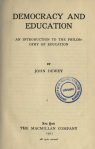

As an educator and Professor, I love this site. Instead of asking students to buy classic textbooks such as John Dewy’s Democracy and Education, all my students need to do is sign-up for the free library, download the book as a PDF and read it for free. A search function for keywords is incorporated and extremely helpful in pulling content up. Nearly three million books are available in digital form, some can be borrowed, some can be downloaded and read. In addition, there are books in other languages than English such as Italien, Greek, Chinese, and German. For example, one can find the complete Die Harzreise by Heinrich Heine. Johann Wolfgang von Goethe has 251 books in German dedicated to him. Pindar’s The Olympian and Pythian Odes are in this realm as is Gildersleeve’s Latin Grammar and Athenaze: an introduction to ancient Greek. Interested in learning Chinese? You can borrow: Conversational Chinese, with grammatical notes
prepared by Teng Ssŭ-yü.
It is possible to borrow up to five eBook titles for 2 weeks each, either in your browser or as a PDF or ePub. Reading is available in Adobe Digital Editions as a PDF or ePub.
 Dr. J's Education Blog