Touro TESOL Candidate Alessia Tartamella on Program Options and Teaching Models for English Language Learners/Multilingual Learners

Online Discussion boards ensure that course questions and answers are available to all participants, create a repository of shared information and create a permanent record of all postings. Yet, apart from these points, Online Discussion Boards throughout the semester showcase students in-depth analysis of the assigned materials and their scholarly trajectory. This week I am featuring Touro College, TESOL candidate Alessia Tartamella’s excellent contribution.

Alessia Tartamella, a 3rd Grade NYC Public School teacher in Brooklyn, New York, has taught English Language Learners since 2016. She received her Bachelors Degree of Business Administration at Brooklyn College and her Masters Degree in Teaching Children grades 1-6 at Brooklyn College. Currently, she attends Touro College to pursue an extension in Teaching English to Speakers of Other Languages. This will be her last semester at Touro College. “I hope to soon move on to become a certified TESOL teacher in the NYC Public School system.”

  1. In NYS,  what are the  Program Options for English Language Learners/Multilingual Learners?

The Program Options for English Language Learners and Multilingual Learners are Transitional Bilingual Education Program (TBE) , Dual Language (DL) , One Way Dual Language Program, Two Way Dual Language Program and English as a New Language (ENL). (Program Options for English Language Learners/Multilingual Learners, n.d.)

2. Name the five different models currently in use that integrate language and content instruction – refer to Celce-Murcia Unit III readings.

There are different models that teachers may use when lesson planning. According to Celce-Mucia in Unit III, these models were created by experts with different views and embedded theories. The first model is the Hunter model (Hunter, 2004). This model is also known as five-step, seven-step, or nine-step model. Another model is the presentation-practice-production model (PPP). This is used mainly in beginning-level classes of language learning.  The next model is the engage-study-activate (ESA) model. This is a more versatile model than the PPP model because it allows the instructor to adapt the lesson delivery in different ways. This can be taught in different time frames and with students’ engagement in mind.  Another teaching model is the Sheltered Immersion Observation Protocol or SIOP model. This is a model developed with the intention of teaching students learning English from grades K-12th grade.  With this model, the instructor’s intention is to teach language and content at the same time. This model first started as a rubric for teacher’s observations, and evolved into a lesson-planning model.  Finally, the last teaching model is encounter, clarify, remember, internalize, and fluently use (ECRIF). This is a common model used when teachers drill strategies or vocabulary to students. 

3. Name the model that you use most and why.

In my instruction, I mainly use the Sheltered Immersion Observation Protocol or SIOP model. It is very important for students to learn content while learning a new language. In my school, teachers are expected to teach a lot of content to students, even if they do not speak English yet. We are considered a content based school.  This method of teaching English could be challenging for a teacher because it incorporates many things into a lesson, however, for a student who is learning English it allows them to use what they know in their lives and apply it to what they are learning.  This model also allows the teacher to focus on language objectives to get students to the goal or goals of the lesson. Students and teachers can activate prior knowledge, teach vocabulary and apply the lesson to real world situations to motivate students.  Then, students go on and participate in language objectives, strategies and interactions. Finally, students will practice and apply.  This model is what I am required to use in my classroom and one that I enjoy using as a third grade TESOL teacher.

In addition to this model, my school uses the ECRIF model when teaching phonics and reading to students learning how to read. We use a program called Orton-Gillingham, where students participate in language drills that they apply to reading a writing.  This strategy works well for many special education students and some ELLs, but not all. Students are taught the rules of English grammar and spelling.  After they are taught the basic rules through drills and repetition, they use them in practice for reading and writing.

4. Gather some information on student assessment from your school district. What kinds of student assessments are regularly administered, and in what language? If the district includes non-native speakers of English, are testing and assessment requirements modified or altered in any way to accommodate them? If so, how?

There are different assessments given to students in different situations.  During a student’s registration process, they are assessed through an interview and questions to determine the child’s ability in English and if the child may need special education services. This interview process is done by a trained teacher, sometimes a TESOL one and the school psychologist, if necessary. 

For learning, my school district uses different forms of assessments, but they are not altered to accommodate non-native speakers of English.  In the beginning of the year, students are given reading, writing, and math assessments. All students take the same assessment and they are all given without the teacher reading the questions to them.  However, my school district uses an online program called iReady that is tailored to all student’s needs. While the student takes the assessment, the online program adapts itself to the child’s ability.  It alters questions in different subject domains and only asks the just-right amount of questions for a child.  When the student continuously does not know answers to questions, the assessment ends. If a student continuously gets questions correct, the assessment continues on, adding difficulty to the assessment. This is a good way to get accurate ability levels in all students and does not allow them to feel discouraged. This assessment also reads to students, includes videos and engaging characters to keep students interested and excited. 

5. What is the purpose of Commissioner’s Regulations – Sections 117 http://www.p12.nysed.gov/sss/lawsregs/117-1-3.html (Links to an external site.)

The purpose of the Commissioners Regulations Sections 117 is that students must be given a screening prior to entering a school to develop a plan for learning for each child.  The students should be given this assessment to ensure they are placed in the correct learning setting. This is to ensure students with special needs are given a fair placement.  Additionally, speakers of other languages should be given a choice of a placement in a Dual language class, or ENL class when registering, if the school has the option. 

6. How do the BLUEPRINT FOR ENGLISH LANGUAGE LEARNER/MULTILINGUAL LEARNER (ELL/MLL) SUCCESS http://www.nysed.gov/common/nysed/files/nys-blueprint-for-ell-success.pdf (Links to an external site.) and CR Part 154 Comprehensive ELL Education Plan (CEEP) and ENL staffing requirements connect with each other? http://www.nysed.gov/bilingual-ed/cr-part-154-comprehensive-ell-education-plan-ceep?   (Links to an external site.)http://www.nysed.gov/common/nysed/files/programs/bilingual-ed/enl-k-8-units-of-study-table-5-6-15.pdf (Links to an external site.)

These three resources have many things in common, but the most common theme is the plan for fair instruction for English Language Learners.  These three resources highlight the importance of a structured program for the diverse levels of English Language Learners.  They all enforce inclusivity and structure.  The Blueprint for English Language Learners/MLL success highlights 8 different aspects to teaching English at the highest regard.  The mission of this blueprint is described as “The mission of the New York State Education Department’s (NYSED) Office of Bilingual Education and World Languages (OBEWL) is to ensure that all New York State (NYS) students, including English Language Learners/ Multilingual Learners (ELLs/MLLs), attain the highest level of academic success and language proficiency. ” (The Blueprint for English Language Learners/MLL success, n.d.).  

The Commissioner’s Regulations 154 states that all English Language Learners must experience learning as described in the education plan for ELLs. Principals and staff must submit a plan of action for these students.  By using the ENL staffing requirements, principals can align staffing and instruction to fit the needs of the students in the school. These three resources go hand in hand because they demonstrate the appropriate planning and instruction required for a school to fairly and legally education ELL students. 

7. List 3 surprising fact you learned about in Celce-Murcia Chapter 32: Approaches to School-Based Bilingual Education Mary McGroarty & Shannon Fitzsimmons-

  • “Bilingual education is not only for recent immigrants; there are also approaches aimed at monolingual students who speak only the majority language and wish to develop strong proficiency in another language” (Celce-Murcia, 503)
  • “In the United States, there is a great deal of interest in two-way immersion model designed to serve both language minority and language majority children who wish to learn through the medium of two languages and develop literacy skills in both languages. ” (Celce-Murcia, 506)
  • Although teachers are vital, they are not the only relevant personnel. The presence of school administrators who understand bilingual instruction, other bilingual instructional personnel such as classroom aides and librarians, and bilingual staff members such as shcool secretary increase the likelihood of consistent and effective bilingual instruction.

Citations

Blueprint for English Language Learner/ Multilingual Learner Success THE STATE EDUCATION DEPARTMENT / THE UNIVERS ITY OF THE STATE OF NEW YORK Office of Bilingual Education and World L anguages. (n.d.). http://www.nysed.gov/common/nysed/files/nys-blueprint-for-ell-success.pdf (Links to an external site.)

Celce-Murcia, M., Brinton, D., & Snow, M. A. (2014). Teaching English as a second or foreign language. Boston: National Geographic Learning

CR Part 154 Comprehensive ELL Education Plan (CEEP). (n.d.). New York State Education Department. Retrieved September 28, 2020, from http://www.nysed.gov/bilingual-ed/cr-part-154-comprehensive-ell-education-plan-ceep?

CR Part 154-2 (K-8) English as New Language (ENL) Units of Study and Staffing Requirements. (n.d.). Retrieved September 28, 2020, from http://www.nysed.gov/common/nysed/files/programs/bilingual-ed/enl-k-8-units-of-study-table-5-6-15.pdf

Program Options for ELLs/MLLs. (n.d.). New York State Education Department. Retrieved September 28, 2020, from http://www.nysed.gov/bilingual-ed/program-options-english-language-learnersmultilingual-learners

The Honorable Adrian Kubicki, Consul General of Poland in New York City and Rotary Club of New York International Breakfast at the UN – Virtual

The Honorable Adrian Kubicki, Consul General of Poland in New York City and Rotary Club of New York International Breakfast at the UN – Virtual

As Chair of the Rotary Club of New York’s International Breakfast at the United Nations it is my pleasure to announce our next guest speaker: Adrian Kubicki Consul General of Poland in New York City. Join us virtually by registration https://www.eventbrite.com/e/rotary-club-of-new-york-international-breakfast-at-the-un-virtual-tickets-123754317495

DATE
Wed, Oct 21, 2020 9:00 AM – 10:00 AM EDT

Born in 1987 in Poland, Adrian Kubicki is a Diplomat, sociologist, expert in public relations and communication, former journalist and spokesperson of LOT Polish Airlines.

He graduated social sciences at University of Warsaw. For 7 years he worked as a journalist for one of the largest radio stations in Poland, reporting major news stories from Poland and many other countries across the globe. He contributed to major daily newspapers in Poland as well as the website dedicated to nongovernment organizations with a particular focus on humanitarian and development aid.

In 2014 he joined communications team at LOT Polish Airlines as international PR manager, building relations with media on airline’s key markets, including the U.S. In 2016 he became spokesperson and executive director responsible for building communication strategy for the ambitious plan of LOT’s global expansion. During that time he and his team organized more than 100 events and press conferences, launching new services to Tokyo, Seoul, Singapore, Newark, Los Angeles, Miami and many others, as well as introducing new Boeing aircraft to the service – 787 Dreamliner and 737 MAX. He represented LOT on many of these events, as well as at major international conferences and gatherings around the World.

In 2017, together with LOT’s CEO Rafał Milczarski, he initiated and run a successful public campaign educating Polish passport holders about U.S. visa application process, with an aim to reduce the refusal rate below 3%. Campaign guided Poland to being included into the Visa Waiver Program in 2019.

In August 2019 he joined Polish foreign service at the Ministry of Foreign Affairs, where he received a consular title and was appointed for four years term as a director of Polish Cultural Institute in New York – part of Polish diplomatic mission to the U.S. working in the field of public diplomacy.

In January 2020 he has received an official nomination to become a new Consul General of Poland in New York. In February 2020 he passed the hearing before the parliament commission, receiving green light to take over the post later this year.

Privately he is married to Anna and is a father of two years old daughter Laura. In his spare time he enjoys playing piano and organs.

JOIN VIA ZOM: https://us02web.zoom.us/j/83896620862

Hon. Consul General of the Republic of Kazakhstan in New York, Mr. Almat Aidarbekov joins the Rotary Club of New York International Breakfast Meeting at the UN – Virtual

About this Event

Mr. Almat Aidarbekov started his career at the Ministry of Foreign Affairs of the Republic of Kazakhstan in 1998 as a desk officer at the Asia, Middle East and Africa Division of the Fourth Department.

In 1999-2000, he held position of Attaché at the Department for Bilateral Cooperation. In 2000, he was posted as Attaché at the Embassy of the Republic of Kazakhstan in the Republic of Turkey.

In March, 2003 he returned to the Foreign Ministry and held consecutive positions of Second and First Secretary at the Department of Europe and the Americas.

From 2004 to 2007, Mr. Aidarbekov was posted as Head of Consular Section at the Embassy of Kazakhstan to the United Kingdom of Great Britain and Northern Ireland.

In 2007-2014, he served as Second, Third Secretary and later as Counselor of the Embassy of Kazakhstan in the United States.

In 2014-2019, he held several high ranking positions at the Foreign Policy Division of the Presidential Administration of Kazakhstan.

Mr. Aidarbekov has served as Consul General of the Republic of Kazakhstan in New York since November 1, 2019.

He has a Master’s degree in Public Management from Carnegie Mellon University and undergraduate degree in International Relations from Ankara University.

He speaks English, Russian and Turkish, and holds the diplomatic rank of Counselor of First Class.

Almat Aidarbekov is married with three children.

Register here: https://www.eventbrite.com/e/rotary-club-of-new-york-international-breakfast-at-the-un-virtual-tickets-118974793811

NYS TESOL Journal published Dr. Cowin’s “Simulation-Based Learning Environment: A Training Tool for TESOL Teacher Candidates”

simSchool screenshot of virtual classroom

simSchool: screenshot of virtual classroom environment training module.

I am pleased to announce the publication of my Materials Review:

Cowin, J. B. (2020). simSchool’s Simulation-Based Learning Environment: A Training Tool for TESOL Teacher Candidates. NYS TESOL Journal, 7(2), 44-46. Retrieved 2020, from http://journal.nystesol.org/currentissue.html

Many thanks to the helpful direction of the Editor-in-Chief Lubie Grujicic-Alatriste, New York City, College of Technology, City University of New York.

Journal of Higher Education Theory and Practice Publication: Access and Equity: Computers for Schools Burundi by Dr. Jasmin Bey Cowin

Keywords: Higher Education, Practice, education, information and communication technology (ICT), access, equity, computers for schools Burundi, African

It is my pleasure to announce the publication of my article in the Journal of Higher Education Theory and Practice:
Cowin, J. B. (2020). Access and Equity: Computers for Schools Burundi. Journal of Higher Education Theory and Practice20(3). https://doi.org/10.33423/jhetp.v20i3.2970

Keywords: Higher Education, Practice, education, information and communication technology (ICT), access, equity, computers for schools Burundi, African

Abstract

Although information and communication technology (ICT) has been used in various parts of the world to improve access to and the quality of education, educational systems in many African nations still face challenges around access to, equity in, and accessibility of ICT. Such issues are widespread in public education throughout Burundi. To resolve these issues, all stakeholders, including nongovernmental organizations, not-for-profit organizations, schools, communities, and employers in the education sector, must recognize and facilitate educational liberation leading to the social transformation of Burundi’s educational system. It is especially important to include previously disadvantaged communities. This paper outlines and contextualizes the quest of Computers for Schools Burundi to improve access to and equity in ICT literacy skills for Burundian youth from kindergarten–Grade 12.

Dr. Jasmin Bey Cowin Presents “Tips and Resources on Teaching Math Online to English Learners”, a NYS TESOL Webinar

NYS TESOL Webinars

All are welcome to participate in our webinars! 

  • All webinars are listed in Eastern time (NYC time zone)
  • Pre-registration is required, no later than 1 hour prior to the start of the session. 
  • 30 minutes before the session begins, you will receive an email with a join link.  Please do not share this link on any social media platforms to preserve the integrity of the sessions. 
  • Members will be prioritized when the session reaches capacity
  • Only members can apply for CTLE. Follow this link to apply for CTLE.  Join now for these benefits!
  • To register for any upcoming webinars, click here: https://bit.ly/nystesolwebinar.

Dr. Jasmin Bey Cowin presents “Tips and Resources on Teaching Math Online to English Learners” on 8/20/2020 at 2 pm

Explore different online tools such as Desmos Activities .

Key Math vocabulary for ELLs in Preproduction, Early Production, Speech Emergence, (Krashen & Terrell, 1983).
• Number words, including cardinal (three) and ordinal (third) form
• Words related to basic mathematical operations:
• Addition, add, sum, plus
• Subtraction, subtract, difference, minus
• Multiplication, multiply, product, times
• Division, divide, quotient
• Equals

The Virtual NYS TESOL 50th Annual Conference Schedule featuring Diane Larsen-Freeman, Ofelia García, Stephen Krashen

The New York State Teachers of English to Speakers of Other Languages is delighted to announce its speaker schedule for The Virtual NYS TESOL 50th Annual Conference.

The dates: 11/13/2020 – 11/14/2020 from 9:00 AM – 4:00 PM.

The Virtual NYS TESOL 50th Annual Conference will be inclusive of all our members across New York State and around the world! 

We have intentionally designed a compassionate virtual conference – a place to connect, learn and above all share how much we care about our multilingual learners, their families, and each other. 

The two days will be filled with rich opportunities to learn, share, and interact with educators of multilingual learners at all levels. Conference activities include three types of concurrent sessions: 45-minute interactive workshops, 25-minute practice or research-focused presentations, quick 15-minute teaching tips as well as fun coffee breaks and lunches with incredible keynote speakers.

Registration & Fees
The conference fee includes the full two days of conference activities, access to recordings of all sessions, and NYS TESOL membership through 2021.
2020 Member $75
Click here to register

If you would like to make a donation to support NYS TESOL in honor of our 50th anniversary, click here!

Schedule at a Glance

Friday, November 13, 2020

9:00-9:10Opening Remarks by NYS TESOL President Laura Baecher
9:15-9:45Plenary 1: Okhee Lee
10:00-10:45 Concurrent Sessions
11:00-11:30 Coffee Klatsch with TESOL Great Diane Larsen-Freeman
11:45-12:15Plenary 2: Ofelia García
12:30-1:15TESOL Expert Brown-Bag Conversation with Luciana de Oliveira
1:30-2:30 Hands-on Workshops

More than Scaffolding Reading: Validating, Affirming, Honoring ELs Valentina Gonzalez
Teaching Immigration Through Film: A Workshop for Secondary Educators Tatyana Kleyn
Culturally Sustaining-Responsive Instructional Reading Approaches for Emergent Adolescent Readers Jody Polleck
Migrant Students and Trauma – Part 1 Michael O’Loughlin and Susanne Marcus
The Altruistic Shield: Moving Past Racial Discomfort and White Fragility Justin Gerald
Standing up for Our Community: an Upstander Workshop for Teachers Sarah Creider
Virtual Study Abroad Collaboration Devin Thornburg and Óscar Ceballos
2:45-3:15Afternoon Tea with TESOL expert Diane Staehr Fenner
3:30-4:00Plenary 3:  Deborah Short
4:15-5:00Award Ceremony Celebrate Students and Educators

Saturday, November 14, 2020

9:00-9:10Opening Remarks by NYS TESOL President Laura Baecher
9:15-9:45Plenary 1: Elisa Alvarez
10:00-10:45 Concurrent Sessions
11:00-11:30Coffee Klatsch with TESOL great Stephen Krashen 
11:45-12:15Plenary 2: Alicja Winnicki and Elsa Nuñes
12:30-1:15TESOL Expert Brown-Bag Conversation with Emily Francis
1:30-2:30 Hands-on Workshops Migrant Students and Trauma – Part 2 Michael O’Loughlin and Susanne Marcus
Advancing the Language & Literacy Needs of Adolescent Newcomers Rebecca Curinga and Ingrid Heidrick
The Synchronous Online Flipped Learning Approach – An 8-Step Cycle Helaine Marshall
Engaging All Students in Learning Science Through Functional Use of Language Emily Kang and Okhee Lee
Creating Breakout Rooms with Google Meet to Encourage Live Collaboration Tan Huynh
Addressing Perceptions and Stereotypes in Interracial Friendships and Teacher-Student Relationships within Diverse School Communities Ming-Hsuan Wu and Sonna Opstad
Determining Language Difference from Disability Jamie Scripps
Taller de Bitmoji Esther Park and Suzy Cáceres

Deepen Learning with PBL Virtual Field Trips Frederic Lim
Culturally-Responsive and Sustaining Practices Odette Clarke and Max Chang
Texts, Topic, Translanguaging: A Framework for Teaching Bilingual/ Multilingual Students Carla España and Luz Yadira Herrera
2:45-3:15NYS TESOL SIGs/ Regions Tea and Conversation
3:30-4:00Plenary 3: Andrea Honigsfeld and Maria Dove
4:15-5:00Toast the 50th!Honor 50 Past Presidents and Installation of New Board

The Rotary Club of New York United Nations International Breakfast Meetings present: Ambassador Otgonbayar Yondon – Ambassador of the Mongolian Republic

The Rotary Club of New York United Nations International Breakfast Meetings present: Ambassador Otgonbayar Yondon – Ambassador of the Mongolian Republic

As Chair of the RCNY International Breakfast Meetings it is my pleasure to announce our guest for our next Zoom meeting: Ambassador Otgonbayar Yondon – Ambassador of the Mongolian Republic

https://www.eventbrite.com/e/rcny-international-breakfast-tickets-117026711043 Please register on Eventbrite for Wed, August 19, 20209:00 AM – 10:00 AM EDT

Yondon Otgonbayar, a long-time member of his country’s Ministry of Foreign Affairs, presented his credentials to President Donald Trump as Mongolia’s ambassador to the United States on March 28, 2018. He had nominated to the position on May 25, 2017.

Otgonbayar was born August 3, 1965. He attended School #52 in Ulaanbaator, Mongolia’s capital, before serving a hitch in the army as a member of the 282nd Infantry Regiment. In 1983, he left for the Moscow Institute of Foreign Relations, finishing in 1989. He returned to that school later, in 2005, and added a Ph.D. He also earned a post-graduate diploma at the School of Marketing and Management in New Delhi, India, in 1995.

Otgonbayar joined Mongolia’s Ministry of Foreign Affairs in 1989 as first secretary in the Department of Asia. In 1991, he was sent to India as second secretary in the embassy in New Delhi. Otgonbayar was then put in the Department of International Organizations and served in 1996-1997 in Mongolia’s mission to the United Nations.

In 1997, Otgonbayar left government to be the CEO and director of Bayangol Hotel. He returned to the Ministry of Foreign Affairs in 2000 as first secretary in the Department of Policy Planning and the following year was made foreign policy adviser to Prime Minister Nambaryn Enkhbayar.

Otgonbayar left the Foreign Ministry in 2004 to become secretary general of the Mongolian People’s Revolutionary Party (MPRP), now the Mongolian People’s Party. At the time, Mongolia was doing a lot of trading with China after years of being a client state of the Soviet Union. Otgonbayar worked to encourage trade with the United States, Japan, South Korea and the European Union as well. In 2006, Otgonbayar added leadership of the Ulaanbaator branch of the MPRP to his party duties.

Otgonbayar was made minister of education, culture and science in 2008. He was elected to parliament in 2012 from Bulgan, a province along the border with Russia. In 2016, Otgonbayar was named vice minister of education, culture, science and sports, a post he held until going to Washington.

Otgonbayar is married and has two children. He speaks English, Russian and Hindi. (Steve Straehley)

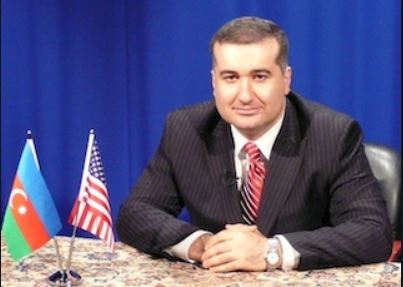
The Rotary Club of New York’s United Nations International Breakfast Meeting presents: The Honorable Ambassador Elin Suleymanov to Azerbaijan

As Chair of the Rotary Club of New York’s UN International Breakfast Meetings it is my great pleasure to announce that on Wed, July 29, 2020 we will welcome The Honorable Ambassador Elin Suleymanov to Azerbaijan. Please register

In October of 2011, the President of the Republic of Azerbaijan Ilham Aliyev appointed Elin Suleymanov as Azerbaijan’s Ambassador to the United States of America. Prior to that, for over five years, Mr. Suleymanov had been the nation’s first Consul General to Los Angeles and the Western States leading the team, which established Azerbaijani diplomatic presence on the West Coast. Earlier, he served as Senior Counselor at the Foreign Relations Department, Office of the President in Baku, Azerbaijan and as Press Officer of the Azerbaijani Embassy in Washington, DC. Mr. Suleymanov’s experience before joining diplomatic service includes working with the United Nations High Commissioner for Refugees in Azerbaijan and Glaverbel Czech, a leading manufacturing company in East-Central Europe.

A graduate of the Fletcher School of Law and Diplomacy in Medford, Massachusetts, Mr. Suleymanov also holds graduate degrees from the Political Geography department of the Moscow State University, Russia, and from the University of Toledo, Ohio. Mr. Suleymanov has authored numerous articles and is a frequent presenter at academic events. He speaks Azerbaijani, English, Russian languages.