Touro University Bilingual Extension Candidate Kenia Torres on Differentiated Instructional Activities

There is a need for high-quality educators trained to offer bilingual education and services. For certified teachers and professionals, a bilingual certificate can extend your certification and opportunities. All Touro courses stress the importance of considering cultural factors alongside individual abilities in teaching bilingual students.

We offer three advanced certificates in bilingual education and services:

Bilingual General Education, PreK-12

The Advanced Certification in Bilingual General Education, PreK-12 is designed for mainstream teachers looking to work with bilingual students and teach your content area in two languages. This five-course program will equip you with the necessary knowledge, skills and strategies to effectively teach in bilingual classrooms, supporting students’ language development and academic success.

Courses

EDDN 636 – Linguistic Structure of the English Language – Sociolinguistic Perspectives

EDDN 638 – Teaching English as a Second Language through Modern English Approaches to Grammar

EDPN 671 – Theory and Practice of Bilingual and Multicultural Education

EDPN 673 – Methods and Materials for Teaching English as a Second Language

EDPN 675 – Methods and Materials for Teaching in the Native Language

Bilingual Special Education and Speech & Language Disabilities

The Advanced Certification in Bilingual Special Education and Speech & Language Disabilities is designed to prepare bilingual educational professionals to meet the unique needs of students with disabilities who are also English language learners. This five-course program will equip educators with specialized knowledge, skills, and strategies to provide effective bilingual education and services to students with special needs, speech and language disabilities, ensuring their academic, social and emotional growth. Upon completing this program, you will be equipped with the expertise and competencies necessary to positively impact the lives of students with disabilities who are English language learners.

Courses

EDSN 640 – Assessment of Individual Differences in General and Special Education: A Socio-Cultural Perspective

EDPN 671 – Theory and Practice of Bilingual and Multicultural Education

EDPN 672 – Methods of Teaching and Service Delivery in Languages Other Than English

EDPN 673 – Methods and Materials for Teaching English as a Second Language

EDPN 675 – Methods and Materials for Teaching in the Native Language

Bilingual Pupil Personnel Services

The Advanced Certification in Bilingual Pupil Personnel Services prepares educational professionals – including school psychologists, school social workers, school counselors, school administrators, and other pupil personnel services staff – to effectively support the diverse needs of bilingual students and their families. This four-course program will equip you with specialized knowledge, skills and strategies to provide culturally and linguistically responsive services, ensuring bilingual learners’ academic, social and emotional well-being.

Courses

EDPN 620 – Child Development and Learning in Cultural Context

EDPN 671 – Theory and Practice of Bilingual and Multicultural Education

EDPN 672 – Methods of Teaching and Service Delivery in Languages Other Than English

PSGN 698 – Field Experience in Bilingual Education and Service Delivery

Admissions Requirements

In addition to the general admission requirements, you must be able to document proficiency in the target language of instruction (download the Target Language Proficiency Verification Form).

To learn more about the program, contact us.

Wanda Agosto
Program Associate for TESOL & Teaching Literacy
wanda.agosto@touro.eduwanda.agosto@touro.edu (opens in a new tab)
646-777-9296

Seong-Shin Kim, Ph.D.
Program Chair for TESOL, Bilingual Programs & Teaching Literacy
seongshin.kim@touro.edu
646-777-9857

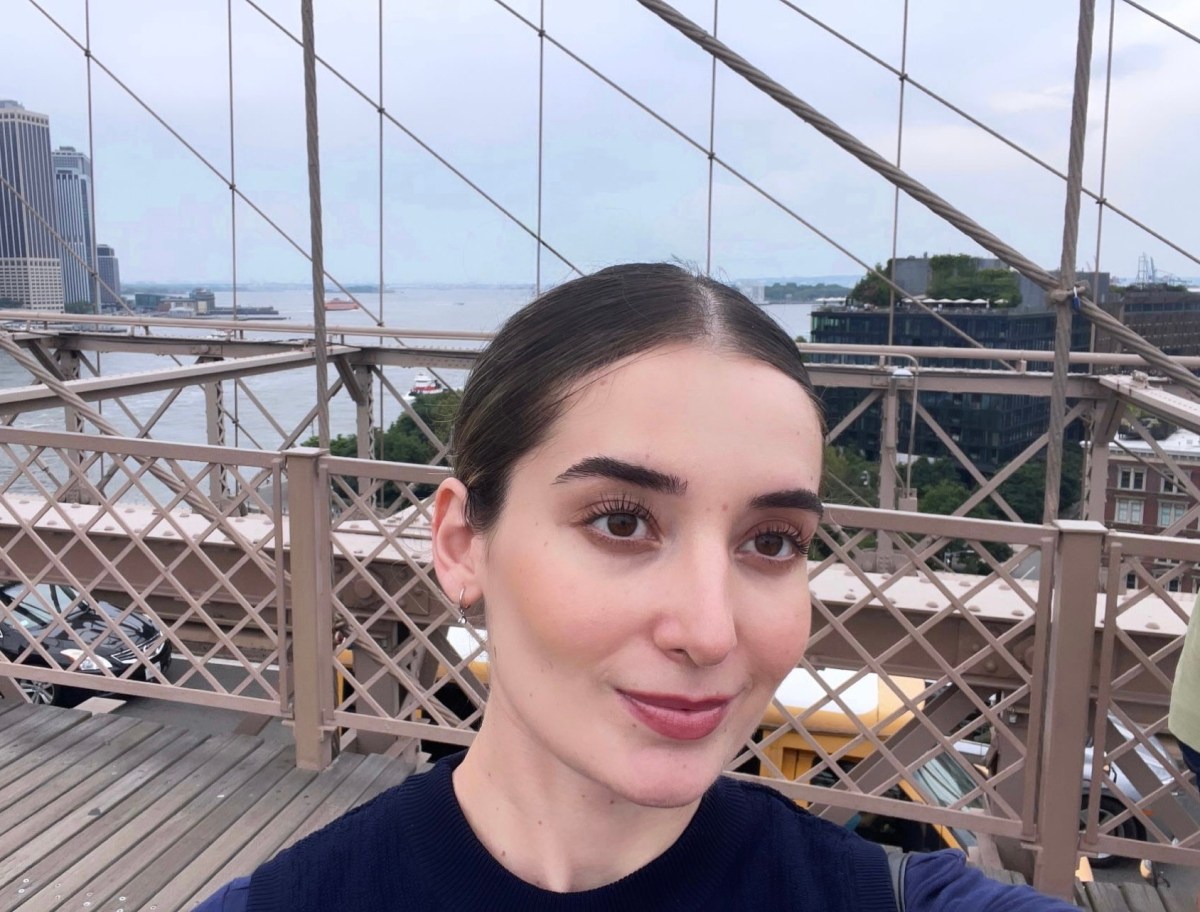
Kenia Torres is a Bilingual Kindergarten teacher in the Brentwood Union Free School District. She received her Bachelor’s Degree in Child Studies with a concentration in Speech Communication from Saint Joseph’s University, a Bilingual Extension from Touro University, and is currently enrolled in a TESOL program in Touro University. Kenia is passionate about developing a classroom community that allows all children to achieve their academic and personal goals. In the future, she would like to pursue an educational leader role to empower educators and students to catalyze school success.

A quote that reflects Kenia’s vision about the educational field is:

“A teacher affects eternity; he can never tell where his influence stops.” – Henry Adams.”

Video Kenia Torres on Differentiated Instructional Activities

Touro University Faculty Chronicles – Season 4, Episode 2: The Future of Artificial Intelligence

🎯 My interview and podcast and interview is live: Season 4, Episode 2: The Future of Artificial Intelligence with Dr. Jasmin Cowin, Touro University Graduate School of Education.
💡 Thank you to my interviewer and excellent moderator, Gena Bardwell. It is an honor to be part of this episode of hashtag#Touro hashtag#Faculty hashtag#Chronicles.
🔴 We discussed the infallibility myth of AI, the often-held belief that AI outperforms human cognition. Yet, AI lacks human hashtag#commonsense.
✔️ We also discussed hashtag#nanotechnology, hashtag#syntheticdata, hashtag#socraticdiscourse, hashtag#algorithms and much more.
📖 I believe there is a difference between hashtag#intelligence and hashtag#consciousness.
💫The interview ends with a personal favorite quote by hashtag#Ovid: “All other creatures look down toward the earth, but man was given a face so that he might turn his eyes toward the stars and his gaze upon the sky.”

Bardwell, G. (Host). (2025, April 21). Season 4, Episode 2: The future of artificial intelligence with Dr. Jasmin Cowin [Audio podcast episode]. In The Faculty Chronicles. Touro University Center for Excellence in Teaching and Learning. https://www.ivoox.com/season-4-episode-2-the-future-of-artificial-audios-mp3_rf_145330021_1.html

The Office of English Language Programs Certification: From Chalk to ChatGPT: Emerging Tech in ELT

I completed the Specialist Master Class! In this course, Specialists Jeff Kuhn and Elizabeth Plummer introduced foundational concepts and critical considerations for integrating emerging technologies, such as generative AI, in English language learning spaces.

Sara Sylaj, Advanced TESOL Certificate Candidate at Touro University on Differentiated Assessment

Our advanced certificates lead to NYSED certification in specialized areas and an extension/annotation on your NYS teaching credentials.

The extra credits can make all the difference, and specialization can help make you a more marketable, knowledgeable, and well-rounded educator.

Intensive, focused coursework and hands-on learning are benchmarks of the advanced certificate programs at the Graduate School of Education. We unite pedagogical theory and classroom practice, explore innovative teaching and outreach methods, and emphasize culturally responsive instruction.

Pursuing an advanced certificate is an ideal—and affordable—way for experienced teachers and educational personnel to strengthen their expertise in a specific area, from program development for gifted children to teaching English Language Learners with disabilities.

Most programs require 12-15 credits, inclusive of fieldwork. Upon successful completion, you’ll be eligible for an extension/annotation on your New York State teaching credentials, and your earned credits can apply to an additional salary differential.

With advanced certification, not only will you be able to more effectively and compassionately serve diverse student populations, you’ll increase your value as an educator and improve your career prospects.

Teaching English to Speakers of Other Languages (TESOL)

Our 15-credit Advanced Certificate in TESOL will allow you to expand your teaching to ESL or strengthening your capacities to serve a diverse student body. Evening, Sunday, and online courses are available.

Sara Sylaj was born in Albania and moved to the U.S at the age of 12. She holds a master’s degree in Italian education from Hunter College and is seeking an advanced TESOL certificate at Touro University. She currently work as a substitute teacher in the NYC DOE.

My experience at Touro University has been fruitful and productive, learning about different strategies and tools I can use to meet English learners’ language and academic needs and help them build confidence in their abilities as they acquire new knowledge in different content areas.

Sara Sylaj, Advanced TESOL certificate candidate at Touro University

The assignment: Differentiated Assessment Using Authentic Student Products with Emphasis on The Practices and Principles of Differentiation

Assignment Objectives:

Understand and integrate principles of differentiation into assessment techniques.
Modify existing lesson plans to incorporate differentiated assessments using authentic student products.
Integrate and discuss anonymized student products, focusing on differentiating assessment based on readiness, interest, and learning profile.
Reflect on the practices and principles of differentiation and its impact on multilingual learners.

Paper:

Present both the original and modified lesson plans.
In-depth discussion on the integration of anonymized student products and their relevance to differentiated assessment.
Application of the differentiated strategies suchas Graphic Organizers, RAFTs, Choice Grids, VAK Tasks, etc. to provide clarity on the execution of differentiated assessment.

Video: Produce a 2-4 minute video presenting a chosen aspect of differentiated assessment, specifically showing how a student’s anonymized product illustrates YOUR PERSONALIZED differentiation in action.

Assignment Reflection:

Reflect on your understanding and application differentiation FOR ELLs/MLs.
Discuss how differentiated assessment, grounded in student readiness, interest, and learning profile, impacts multilingual learners.
Evaluate YOUR practices, challenges, and successes in implementing differentiation. Please note that you will write your reflection from an I-perspective, with explicit references to your work and professional growth.

“AI Meets Law: How the UAE Is Building the World’s First Dynamic Legislative Ecosystem” Exclusive for Stankevicius

AI Meets Law: How the UAE Is Building the World’s First Dynamic Legislative Ecosystem

In this exclusive article for Stankevicius, I explore the United Arab Emirates’ (UAE) comprehensive transformation of its legislative system through the strategic integration of artificial intelligence (AI). With the UAE Cabinet’s approval of an AI-powered legislative ecosystem, the nation is boldly stepping into a new era of governance where laws evolve in real-time, powered by data and artificial intelligence. This paradigm shift signifies the UAE’s strategic vision: legislation that is efficient and adaptive to the social, economic, and technological currents of the 21st century.

Cowin, J. (2025, April 16). AI meets law: How the UAE is building the world’s first dynamic legislative ecosystem. Stankevicius. https://stankevicius.co/tech/ai-meets-law-how-the-uae-is-building-the-worlds-first-dynamic-legislative-ecosystem/

The ASTUTE(C) Framework by Dr. Jsmin (Bey) Cowin

The ASTUTE(C) AI Teaching infographic is designed for educators, faculty developers, instructional designers, and academic leadership seeking to strategically incorporate AI tools into teaching and learning. It provides a structured overview of over 50 curated tools organized into thematic categories such as Assessment, Content Creation, Data Analysis, Communication, and Productivity. Each tool is directly linked for immediate access, allowing users to explore and adopt solutions that align with their instructional goals. The infographic is especially useful in faculty training, curriculum redesign, and educational technology planning, offering a practical entry point for those navigating the expanding AI landscape. Centered on six pedagogical principles—Adaptive, Strategic, Technologically-Enhanced, Upskilling, Teaching, and Enrichment—it serves as a roadmap for institutions aiming to build AI capacity with intention and clarity.

Precision in practice: Structured prompting strategies to enhance TESOL by Dr. Jasmin Cowin

Introduction: Precision in Practice

A background in prompt engineering helps language educators refine curriculum development approaches, streamline lesson planning, and craft assessments and rubrics that address the diverse needs of multilingual learners (MLs). Educators can direct Large Language Models (LLMs) such as ChatGPT, ClaudeAI, Cohere, Gemini, and others to produce diverse forms of instructional content by crafting prompts to elicit specific language features, ranging from controlled grammar exercises to rubrics.

Cowin, J. (2025, March). Precision in practice: Structured prompting strategies to enhance TESOL. TESOL International On CALL Newsletter. https://my.tesol.org/news/1166339

Vision 2060: A Practical Toolkiet for Educators

Touro University Graduate School of Education
💡 I am honored to deliver “A Practical AI Toolkit for Educators” on April 10, 2025, at 1:00 PM CET, which will focus on practical AI tools to enhance teaching strategies.
Don’t miss this opportunity to integrate AI into your educational practices!
Enroll now: https://lnkd.in/drZ-X9zu
(The session link will be sent 2 days in advance)
Organized by: Cinta Gallent Torres-Torres & Laura Angelini, ASPAI Project Universidad Católica de Valencia San Vicente Mártir
Thank you to my dear colleague Orna Levin, who created the connection with Cinta and Laura.
✔️ We are stronger when we support each other!

Touro University Bilingual Teaching Certificate Candidate Sandy Gonzalez using Total Physical Response for Math

Celebrating Exemplar Work in TESOL
One of the most rewarding aspects of my role as faculty at Touro University’s TESOL & Bilingual department is the opportunity to highlight and honor the exceptional work of our students – work that embodies the high standards we aspire to our TESOL & Bilingual Education department under the leadership of Seongshin Kim, Ph.D. – Chair/Associate Professor for TESOL, Bilingual Education, & Teaching Literacy. When students grant permission to publish their work, they allow us to share model examples of excellence that illustrate the effective integration of theory and practice in our field. This act not only celebrates their achievement but also fuels a commitment to continuous improvement and ethical teaching practices.


The Value of Publishing Student Work
By publishing exemplary student work, we:
1. Validate their efforts and creativity: Recognizing outstanding accomplishments reinforces a culture of achievement and motivates others to strive for excellence.
2. Showcase authentic application of learning: These works serve as tangible examples of how theory—especially historical perspectives on language acquisition and current teaching methods—translates into effective classroom practice.
3. Promote transparency and scholarly dialogue: Sharing these projects encourages constructive discussion among educators and candidates, furthering professional growth and innovation.

Connection to AAQEP Standards
Linking this practice to AAQEP standards emphasizes the importance of quality assurance and rigorous assessment in educational programs. AAQEP champions initiatives that demonstrate:
1. Evidence-based Practice: The publication of exemplar work acts as concrete evidence of effective instructional strategies and culturally responsive teaching—key tenets of Touro’s TESOL paradigm.
2. Continuous Improvement: By openly sharing high-quality work, we establish benchmarks that peer educators and teacher candidates can analyze and aspire to, fostering an environment of consistent professional development.
3. Accountability and Transparency: This process highlights our commitment to ethical practices and quality instruction, reinforcing the values that AAQEP standards advocate.
In essence, when exemplary student projects are disseminated publicly (with the proper permissions), they serve as motivational tools and proof points for the quality and impact of our instructional approaches. By publishing work produced in such a dynamic and impactful course, I am not just celebrating student success; I am also providing a clear, accessible model of how thoughtful integration of differentiated instruction and cultural responsiveness can lead to authentic excellence for aspiring TESOL & Bilingual teachers.

EDPN 673: Methods and Materials for Teaching English as a Second Language

This course provides a historical overview of second language acquisition theories and teaching methods. Students learn how to apply current approaches, methods and techniques, with attention to the effective use of materials, in teaching English as a second language. Students will engage in the planning and implementation of standards-based ESL instruction which includes differentiated learning experiences geared to students’ needs. Emphasis is placed on creating culturally responsive learning environments. Includes 15 hours of field work.

Sandy Gonzalez holds a B.S. in Legal Studies from Post University and an M.S. in Education from St. John’s University. As a Special Education Secondary Generalist since 2013, she has always been dedicated to supporting diverse learners. Already fluent in Spanish, Portuguese, and English, intermediate in Italian, and now learning French, she is currently pursuing an Advanced Bilingual Teaching Certificate at Touro University to better serve the growing needs of English Language Learners in her high school. Her passion for language learning and inclusive education drives her commitment to empowering students with the skills and confidence to succeed.

Touro University has reinforced my passion for bilingual education while allowing me to grow as an educator enhancing my teaching strategies to better support the diverse linguistic backgrounds of my students.

Sandy Gonzalez,
Touro University Bilingual Teaching Certificate Candidate

Mini Lesson Vimeo Video Link:

CLICK HERE for Methods Presentation Slides Canva Link

Exclusive for Stankevicius “Global Supply Chains – From Fragmentation to Forecasting – an Interview with Wolfgang Lehmacher” by Dr. Jasmin Cowin

In this exclusive interview for Stankevicius Wolfgang Lehmacher offers a candid perspective on today’s logistics challenges: how de-globalization intersects with systems-level inefficiencies, why predictive analytics alone can’t solve carbon emissions, and what kind of innovation -cultural as much as technical – is required to redesign supply chains for a turbulent future. His views dovetail with the research evidence: that building intelligent, AI-powered supply chains requires not just algorithms but alignment—between systems, stakeholders, and strategies.

Cowin, J. (2025, March 25). Global supply chains – From fragmentation to forecasting – An interview with Wolfgang Lehmacher. Stankevicius. Retrieved from https://stankevicius.co/world/global-supply-chains-from-fragmentation-to-forecasting-an-interview-with-wolfgang-lehmacher/