This column explores the symbolic meaning of unicorns, narwhals, Big Tech’s Messiah Savior Complex (a phrase coined by the author), and the pressing need for heightened situational awareness coupled with the ever more elusive common sense. This article was written exclusively for Stankevicius.
I am pleased to announce my newest Stankevicius article where I explore my belief that the study of geological cataclysms offers a valuable analog for understanding Singularity’s potential risks and consequences. Just as geologists use data from past events to inform their predictions and preparedness for future disasters, we can apply a similar approach to the development of AI. By recognizing the parallels between the complex, nonlinear dynamics that govern both geological and technological systems, we can develop more effective strategies for anticipating and mitigating the potential risks of autonomous AI systems.
Touro University Graduate School of Education I am thrilled to speak as a keynote for The 54th New York State TESOL (Teachers of English to Speakers of Other Languages) Annual Conference 2024. My topic: “Cultivating Situational Awareness: Adaptive Strategies for TESOL Educators in the Age of AI” is relevant to this year’s conference theme: “Pathways to Empowerment: Navigating Agency and Affirmation through TESOL.” Thank you to the conference team Ali Safivand, PhD., Michele Goldin, Shawnna Sweet, Olga DeJesus-Diaz, and the many volunteers who make this conference possible.
– Date of presentation: Saturday, October 19, 2024
On July 12, 2024, the EU issued Regulation (EU) 2024/1689, known as the EU AI Act, marking a significant milestone as the first extensive AI regulation globally. This regulation emerged over three years after its initial draft by the EU Commission in April 2021. The AI Act establishes a broad, sector-independent regulatory framework designed to set the standard for AI governance within the EU. This framework is expected to influence both local and global companies and global legislative approaches. Importantly, the AI Act’s scope extends beyond the EU; it applies to entities worldwide that might not be physically present in any EU member state but engage with the EU market. This represents the culmination of a lengthy legislative process, with the Act set to be enforced starting on August 2, 2024. Higher Education Institutions (HEIs) should familiarize themselves with the implications of this regulation, understand their responsibilities, and prepare for compliance by the designated date. This series of blogs exclusively written for Stankevicius by the author aims to highlight the critical aspects of the AI Act that HEI organizations need to grasp to ensure they are ready for the upcoming regulatory changes, specifying important deadlines for meeting these new requirements.
Click on the link below to read the complete article.
It is a pleasure to announce the following article which grew from our quartet’s transdisciplinary discussions. publication:
Cowin, J., Leon, C., Brock, S., & Torres, X. O. (2024). AI and the future of marketing education through the lens of the space merchants. Brazilian Journal of Business, 6(2), e70382 .
Cowin, J., (Touro GSE), Oberer, B., & Leon, C. (2023). A Brave New World: AI as a Nascent Regime? Journal of Systemics, Cybernetics and Informatics, 21(4), 58-66. https://doi.org/10.54808/JSCI.21.04.58
I ate civilization.
Aldous Huxley, Brave New World, 1932, p. 165
Introduction by Dr. Jasmin (Bey) Cowin
In my role as the lead author of ” A Brave New World: AI as a Nascent Regime?” I explored the parallels between Aldous Huxley’s 1932 masterpiece, “Brave New World,” and the contemporary advancements in Artificial Intelligence (AI). I found myself deeply engaged with themes of predestination, emotional regulation, and societal control forecasting a dystopian AI-driven society. By using “Brave New World” as a metaphorical frame, I emphasize the importance of critically assessing the role of AI in shaping human society while providing a structured logical argument, the Logic Model for AI Governance and Ethical Oversight (AI-GEO model) about the evolving role of AI in governance and the corresponding need for ethical oversight.
My metaphorical approach provided a compelling backdrop for many transdisciplinary discussions with Prof. Birgit Oberer and Cristo Leon on the challenges and responsibilities associated with technological advancement, emphasizing the importance of maintaining human autonomy and diversity in the face of rapid AI development. Huxley’s depiction of a future where human roles are predetermined and emotions are meticulously regulated mirrors the potential implications of AI in our era. As Huxley states, “We also predestine and condition. We decant our babies as socialized human beings, as Alphas or Epsilons, as future sewage workers or future…” (Huxley, 1932, p. 11). This notion of a controlled destiny becomes increasingly pertinent as AI algorithms begin to dictate career paths, social interactions, and even ethical decisions.
The rise of AI-driven technologies such as deep learning and predictive analytics underscores the collective authors collective concern. For example, AI algorithms in recruitment software can predetermine an individual’s career trajectory, echoing Huxley’s categorization of individuals into Alphas or Epsilons. Similarly, AI in social media algorithms shapes our perceptions and interactions, subtly conditioning our responses in ways that Huxley might have anticipated. While AI offers opportunities for advancement, it also poses risks similar to those in Huxley’s world: the erosion of individuality and the emergence of a controlled society. Our challenge is to navigate such technological progression while adhering to ethical standards that safeguard individual autonomy and societal diversity, particularly from a systems perspective. We argue that the transformative potential of AI must be balanced with a conscientious approach to ethics and governance. AI’s ability to influence human behavior and societal norms raises significant questions about the preservation of human authenticity and diversity. It is crucial to critically evaluate the impact of AI on our social ethos, logos, and pathos and to ensure that its deployment enhances, rather than diminishes, the human experience.
Facit: A Brave New World: AI as a Nascent Regime? serves as a reflection on humanity’s role in an age of automation and as a call to action for responsible AI use. It is an exploration of the balance between technological advancement and the preservation of the core values that define our humanity.
Transdisciplinary dialogues are essential in ensuring that AI serves as a tool for enriching human experiences without compromising the nuances that define our identity and autonomy.
The authors gratefully acknowledge the insightful support by the Guest Editors: Nagib CALLAOS, Jeremy HORNE and Michael SAVOIE from WMSCI/IMCIC 2023
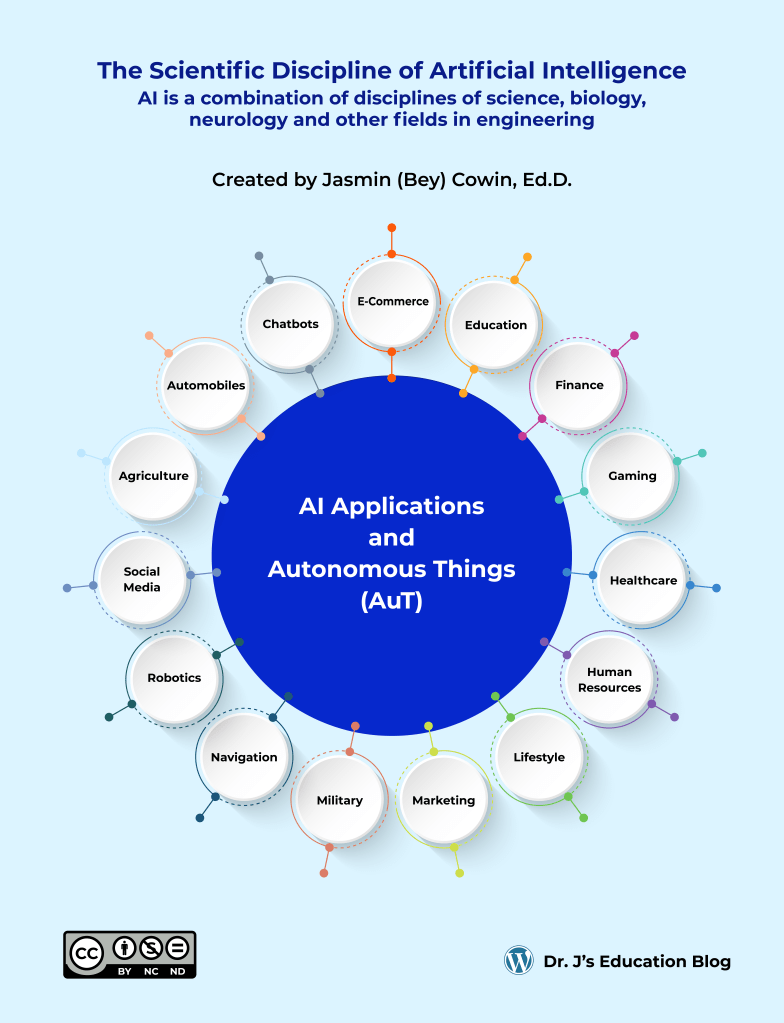
I virtually presented on November 6th, 2023 for the Everyone Academy in Guelmin, Morocco about using Artificial Intelligence (AI) to create personalized prompts for EFL teachers working with students at different levels. My presentation focused on how AI can be used to improve language teaching and create individualized prompts for specific topics, units of study, and students’ needs and backgrounds. I discussed the theories that support using AI in language classrooms and showed how prompts can be customized for learning goals and cultures. I showed examples of how AI-created prompts can help teachers to work more effectively. The goal was to introduce EFL teachers to AI and how it can help them tailor their teaching.
Cowin, J. (2023, November 6). Targeted prompts for EFL teachers using AI [Virtual presentation]. Everyone Academy, Guelmin, Morocco.









![Dr. Cowin presented on “Targeted prompts for EFL teachers using AI,” [Virtual presentation] for Everyone Academy, Guelmin, Morocco.](https://drcowinj-locationindependentteach.com/wp-content/uploads/2023/11/image.png?w=1200)

