TESOL Advanced Certificate Candidate at Touro University Angelee Bess’ Structured CoPilot Prompting & Developing AI Literacy in Teacher Candidates

As part of Touro University’s comprehensive initiative to introduce AI literacy across teacher education programs, I am engaged in a Touro University grant focused on developing AI literacy in TESOL candidates. My project-based approach empowers future educators to leverage AI as a strategic partner in curriculum design, bridging theoretical understanding with applied classroom practice.

Within this initiative, teacher candidates progress from mastering the fundamentals of curriculum mapping to designing comprehensive, differentiated learning sequences that reflect professional teaching standards grounded in research-backed principles.

My primary instructional goals are to:

  • Teach foundational and applied AI competencies,
  • Develop practical skills in standards-based curriculum design,
  • Showcase AI as a collaborative tool in instructional planning, and
  • Align deliverables with professional teaching standards.

Foundational AI Competencies

AI vocabulary is embedded throughout the project via explicit terminology such as prompt engineering, AI-assisted content structuring, LLM interaction, and iterative feedback loops. This structured language development ensures that candidates move from foundational comprehension to applied proficiency, demonstrating the ability to use domain-specific AI concepts meaningfully in curriculum contexts.

Ethical Thinking

Ethical reasoning is central to the project’s design. Candidates must maintain human oversight and exercise critical evaluation of AI-generated contributions for instructional quality and curricular coherence. By foregrounding professional judgment and ethical discernment, the project cultivates a nuanced understanding of AI’s potential and its limitations, underscoring the continued necessity of educator expertise.

In upcoming blog posts, I will showcase current student output, highlighting innovative examples of how TESOL candidates apply structured CoPilot prompting to create differentiated, AI-supported instructional materials. These exemplars demonstrate how AI literacy and pedagogical practice intersect to prepare a new generation of educators for the evolving digital landscape of teaching and learning.

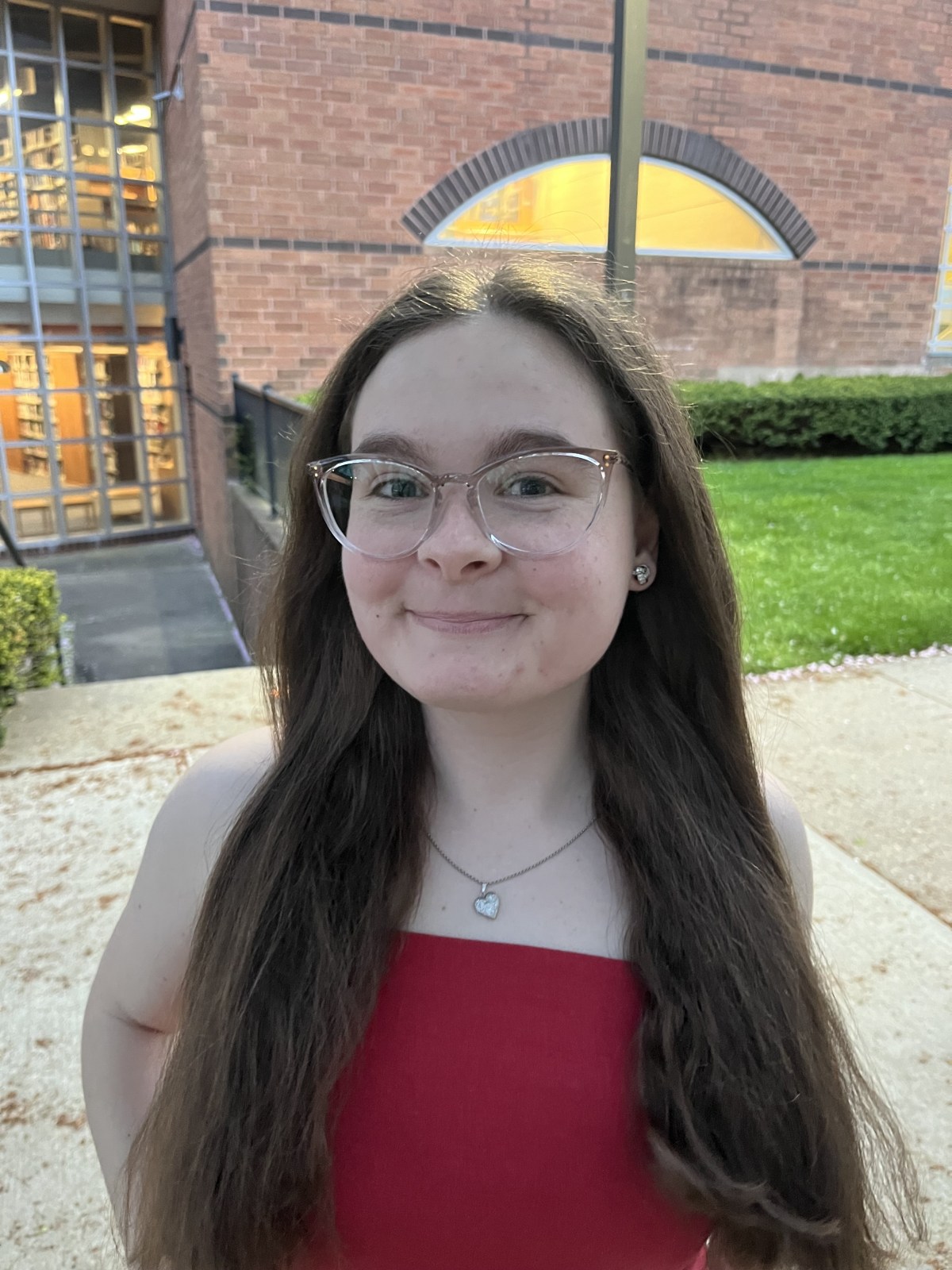
Angelee Bess holds a Bachelor’s Degree in Science from Cornell University, a Master’s Degree in Childhood Education from Fordham University, and Extensions in both Early Childhood Education and Gifted Education. She is currently pursuing a TESOL Advanced Certificate at Touro University while working as a K-2 ENL Teacher at an elementary school in Brooklyn, NY. Angelee strives to create an inclusive environment that recognizes, embraces, and values the cultural and linguistic diversity of her students, helping them thrive both academically and socially. Her motto: “Be the change you wish to see in the world” – Mahatma Gandhi

Ms. Bess’ observation in working with CoPilot: “I was impressed by how quickly Copilot created a lesson tailored for Entering-level MLs. By including the grade level, topic, language proficiency, and support needs in my prompt, I received a mini-lesson with simplified text, a visual anchor chart, printable materials, a vocabulary table, and activity suggestions—all differentiated for beginner learners. I initially focused on Entering students to help plan for Stand-Alone ENL classes, but I can also see the value in using Copilot for Integrated settings. I plan to use similar prompts for other proficiency levels to support all MLs in my classroom. Copilot also gave the option to expand the mini-lesson into a full lesson plan with objectives, standards, and assessments, which makes it a powerful tool for creating instruction that connects to students’ experiences and supports their language development.”

Furthermore, Ms. Bess created anchor charts and visuals through structured prompting:

Teaching English to Speakers of Other Languages Certificate

New York’s classrooms are some of the most culturally and linguistically diverse in the country. Our TESOL certificate program prepares NYS-certified teachers to provide responsive, comprehensive education to students of every background.

Personal OpinionPedagogical Value of Discussion Boards in Online Courses
I utilize discussion boards as essential scaffolding tools in my online courses at Touro University, providing multilayered support for my master’s degree candidates’ academic development. These course discussion boards function as preparatory spaces where my teacher candidates can practice academic writing conventions, develop critical thinking skills, and experiment with disciplinary discourse before tackling more substantial assignments such as research papers or presentations. Through regular posting requirements, my candidates create meaningful artifacts that demonstrate their evolving command of academic English and pedagogical understanding, including proper APA citation practices which prepare them for graduate-level academic work. The iterative nature of discussion board participation enables me to track my candidates’ linguistic and academic progress throughout the semester, providing valuable opportunities to observe candidate growth over time and identify when coaching sessions are needed, particularly when I notice disconnects between course materials and student responses.

Exclusive for Stankevicius: From Lewis’s Hideous Strength to Deepfakes and the Machinery of Belief

In my previous article for Stankevicius, “The Veldt 2.0: Your Smart Home Wants Your Children,” I drew on Ray Bradbury’s 1950 short story “The Veldt” to warn that the corporate arms race in artificial intelligence is no longer confined to laboratories and trading floors; it is creeping into nurseries and playrooms. I argued that when companies such as Mattel announce plans to embed OpenAI’s language and video models into children’s toys, the Moloch trap comes home. Bradbury’s fictional HappyLife Home, with its immersive nursery, serves as a blueprint for a smart-home ecosystem in which machines monitor and mediate children’s relationships. Negative highlights are privacy breaches, the risk that intimate recordings could be repurposed into deepfake child pornography, and the broader danger that children might form their first emotional attachments with responsive algorithms rather than with human caregivers.

This exclusive Stankevicius article extends that moral inquiry from the home to the public sphere. Deepfakes, convincing audio and video fabrications generated by machine-learning models, transform images and voices into programmable surfaces. They threaten to dissolve the link between what we sense and what is real. The problem is not merely technological; it is moral and political. Drawing on C. S. Lewis’s dystopian novel That Hideous Strength (1945) to explore how technocratic institutions manipulate belief. In the book the National Institute of Co‑ordinated Experiments (N.I.C.E.) attempts to recondition public opinion by flooding society with narratives that make disbelief costly.

Today’s stakes are high. Recent incidents highlight the significant advancements in technology and the continued inadequacy of institutional preparedness. In early 2024, as reported by CNN, the British engineering giant Arup revealed as $25 million deepfake scam, centered around a finance worker in Hong Kong who transferred 39 million dollars (HK$200 million) during a video meeting, believing she was speaking to her executives; the “colleagues” were AI‑generated. 

Cowin, J. (2025, October 9). From Lewis’s Hideous Strength to Deepfakes and the Machinery of Belief. Stankevicius. https://stankevicius.co/artificial-intelligence/from-lewiss-hideous-strength-to-deepfakes-and-the-machinery-of-belief/

Touro University TESOL Candidate Oralia Lainez-Tutka’s Instructional Material Critique & Redesign with Infographic

EDPN 673: Methods and Materials for Teaching English as a Second
Language
: The Instructional Material Critique & Redesign with Infographic assignment prepares Touro University TESOL candidates to critically evaluate and adapt instructional materials for multilingual learners across diverse educational contexts. The assignment structure addresses specific TESOL and AAQEP standard requirements while developing essential professional competencies our graduates need in the field.
The dual-material analysis requirement ensures candidates develop expertise in material evaluation across developmental levels, addressing TESOL Standard 2 by requiring deep analysis of how language acquisition intersects with academic content delivery. Candidates must demonstrate understanding of developmental language trajectories and their implications for instructional material selection, a core competency for effective TESOL practice.
The WIDA PRIME protocol integration provides candidates with industry-standard evaluation tools currently used by school districts nationwide for material adoption decisions. This practical application directly aligns with AAQEP Standard 1’s emphasis on evidence-based practice while ensuring our graduates can contribute meaningfully to curriculum adoption processes in their professional contexts.
The non-negotiable criteria assessment develops candidates’ capacity to identify and address systemic barriers that multilingual learners face in accessing grade-level content. This component operationalizes TESOL Standard 3 by requiring examination of cultural representation and linguistic accessibility, while AAQEP Standard 2’s equity focus is addressed through critical analysis of how materials support or hinder multilingual learner success.
The redesign component transforms theoretical knowledge into practical application through differentiated material adaptation. Candidates must operationalize TESOL Standard 5 by creating instructionally sound modifications that maintain academic rigor while providing appropriate linguistic scaffolding across proficiency levels. This authentic assessment demonstrates candidate impact on multilingual learner outcomes, satisfying AAQEP Standard 3 requirements.
The infographic creation simultaneously addresses AAQEP’s technology integration competency requirements and develops visual literacy skills essential for multilingual learner instruction. Candidates must demonstrate proficiency with digital design tools while creating pedagogically sound visual supports that enhance comprehension for diverse learners. This component ensures graduates can effectively integrate educational technology to improve multilingual learner outcomes while building practical skills for immediate classroom application.
This assignment ensures our graduates possess both analytical expertise and practical competencies necessary for effective multilingual learner instruction.

Oralia Lainez-Tutka is a middle school Spanish teacher on Staten Island. Coming from a Spanish-speaking household, she is proud to be a first-generation college graduate now pursuing her master’s in TESOL at Touro College. She’s also a mom to a bilingual toddler, which makes this journey even more meaningful to her. She’s currently in her third semester.

I am already applying new scaffolding strategies and techniques in my teaching.  I’ve learned a lot so far during my Touro journey and am truly enjoying the learning process. I feel well supported by my professors and the program as a whole. 

Oralia Lainez-Tutka, TESOL Master’s Candidate, Touro University

Building the Future: J3D.AI Labs Zebracorn Deep Tech Castle Retreat by Dr. Jasmin (Bey) Cowin

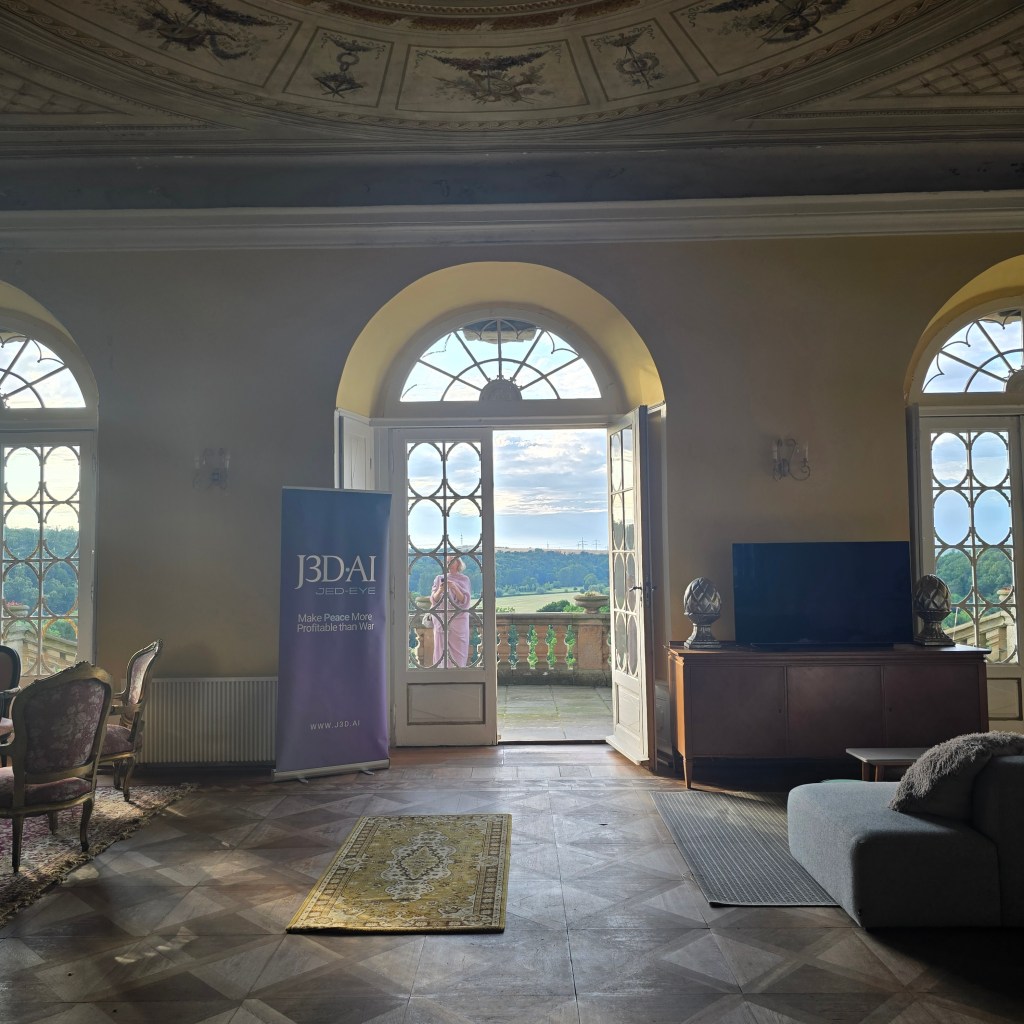
Dr. Jasmin Cowin reporting from the Zebracorn Deep Tech Castle Retreat at Historic Castle Schloss Burgscheidungen, Germany

Photo of Schloss Burgscheidungen by Dr. Jasmin Cowin, taken June 30th, 2025

Read the full article here: https://stankevicius.co/tech/building-the-future-j3d-ai-labs-zebracorn-deep-tech-castle-retreat/

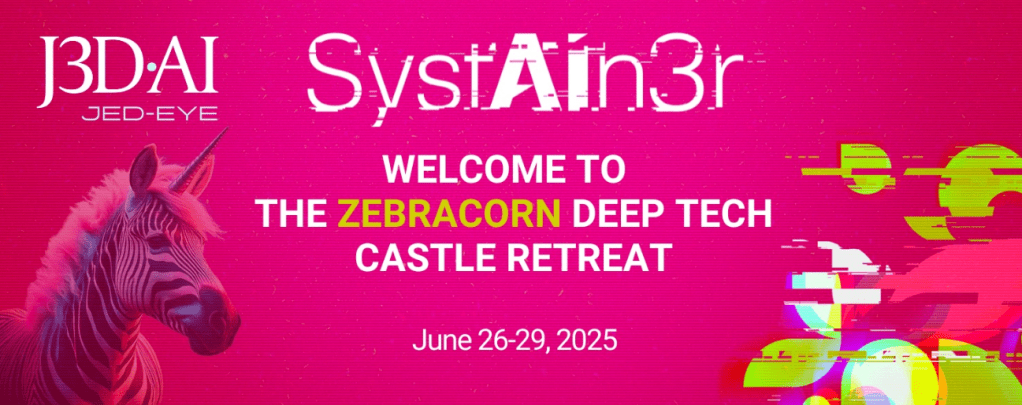
In the rolling hills of the Unstrut Valley, where history whispers through ancient stone walls, something extraordinary unfolded. The Zebracorn Deep Tech Castle Retreat, June 26-29, 2025,  transformed Historic Castle Schloss Burgscheidungen (also known as “Crypto Castle”) into a collaborative Zebracorn,  creating an arc between history past and the nexus of a future envisioned by Yip Thy Diep Ta’s quest “…to make peace more profitable than war…”

Impressions and photos

All photos are by Dr. Jasmin Cowin (C)

Cite: Cowin, J. (2025, June 29). Building the future: J3D.AI Labs Zebracorn Deep Tech Castle Retreat. Stankevicius. https://stankevicius.co/tech/building-the-future-j3d-ai-labs-zebracorn-deep-tech-castle-retreat/

Here my presentation!

The Veldt 2.0: Your Smart Home Wants Your Children by Dr. Jasmin (Bey) Cowin for Stankevicius

Read the full the article here: Cowin, J. (2025, June 19). The Veldt 2.0: Your smart home wants your children. Stankevicius. https://stankevicius.co/artificial-intelligence/the-veldt-2-0-your-smart-home-wants-your-children/

In my previous work for Stankevicius, The Moloch Trap: OpenAI’s Evolution and the Paradox of Progress, I explored how competitive dynamics in artificial intelligence development can lead rational actors toward collectively harmful outcomes, even when each individual choice appears reasonable. That analysis focused on the corporate battlefield where AI companies race toward ever-greater capabilities, often at the expense of safety and human welfare.

Now, as Mattel announces its radical partnership with OpenAI to embed artificial intelligence directly into children’s toys, we witness the Moloch trap’s most intimate invasion: our nurseries, childhood playrooms, and Sunday morning pillow fights. Ray Bradbury’s 1950 vision in “The Veldt,” once dismissed as science fiction fantasy, now reads like a blueprint for our current moment, where smart homes promise to think for us and AI companions offer to raise our children.

This article, written exclusively for Stankevicius, examines what might happen when the same competitive forces that drive corporate AI development turn their attention to childhood itself. While my previous work dissected the systemic pressures pushing AI companies toward potentially dangerous innovations, this exploration probes into the human cost of that race: how the pursuit of “smart” toys may be undermining the fundamental bonds between parents and children, and between children and their own developing humanity. Welcome to The Veldt 2.0, where your smart home doesn’t just want your data. It wants your children.

Core AI Competencies for Legal Education Curricula and Law Students, designed by Dr. Jasmin (Bey) Cowin

My infographic on Core AI Competencies for Legal Education Curricula and Law Students emphasizes the progression from foundational AI knowledge to advanced application and evaluation for students studying law. The integration of AI into legal education requires deliberate thoughts on students’ practical skill acquisition, which I aligned in this infographic with Bloom’s Taxonomy.
Law courses should reflect these competencies, offering law candidates opportunities to develop practical skills alongside theoretical understanding. By embedding specific, practical AI competencies into their curriculum, law schools can ensure their graduates are not only proficient in traditional legal skills but also adept at leveraging AI to enhance marketability. I believe that technology integration alongside traditional teaching methods in law is crucial for the future legal practice of aspiring lawyers. Law students should be able to navigate legal AI platforms with ease, operate multiple AI tools effectively, and combine different AI technologies to enhance their skill sets. Proficiency in these areas will prepare students not only with traditional legal skills but also to become adept at navigating the complexities of technology in their future practice. Today’s law students will be practicing until 2060!

I hope you enjoy my infographic.

America First in AI: Protecting Jobs, Advancing Innovation by Dr. Jasmin Cowin

Great stories have always helped us understand complex truths about human behavior, and sometimes the simplest tales reveal the most profound insights about how incentives shape our choices. In this exclusive Stankevicius article, the author interleaves insights from Martine Murray’s “The Wanting Monster,” a children’s fable, with an exploration of how America might realign Silicon Valley incentives to serve American workers and communities first. The author explored previously in exclusive Stankevicius articles: Autonomous AI’s Spellbook and the Absent Necromancer, and Forging the Future: President Trump’s AI Vision and OpenAI’s Challenge to DeepSeek.

The challenge facing America’s technology sector today stems from a fundamental misalignment of incentives that has driven companies to outsource essential AI work overseas while promising domestic job creation and technological leadership. As economist Steven Landsburg observed, “People respond to incentives. The rest is commentary.”

Read the article here:

Cowin, J. (2025, June 1). America first in AI: Protecting jobs, advancing innovation. Stankevicius. https://stankevicius.co/artificial-intelligence/america-first-in-ai-protecting-jobs-advancing-innovation/

Foundations or Facades? Duolingo, AI, and the Antaeus Paradox in EdTech by Dr. Jasmin Cowin

In my exclusive article for Stankevicius Foundations or Facades? Duolingo, AI, and the Antaeus Paradox in EdTech, I explore how the platform’s rapid shift toward AI optimization may be weakening the core elements that once defined its success. Like Antaeus losing his strength when lifted from the ground, Duolingo risks disconnecting from the educational and cultural foundations that gave it power. The article investigates whether the pursuit of growth is coming at the cost of pedagogical integrity and user trust.

Cowin, J. (2025, May 15). Foundations or facades? Duolingo, AI, and the Antaeus paradox in EdTech. Stankevicius. https://stankevicius.co/artificial-intelligence/foundations-or-facades-duolingo-ai-and-the-antaeus-paradox-in-edtech/

Touro University TESOL Candidate Maria Fernandez on Assessment and Professional Responsibilities

MS in Teaching English to Speakers of Other Languages: New York is a state that speaks many languages. We need teachers who can find the common ground.The MS in Teaching English to Speakers of Other Languages (TESOL) Program helps NYS-certified PreK-12 teachers more effectively teach and communicate with a diverse student population.

Maria Fernandez is a former English Language Learner who enjoys exploring other cultures through travel whenever possible. Currently, she serves as a 12:1:1 special education teacher in District 75, where she brings enthusiasm and dedication to her teaching practice.

In EDDN 637 Second Language Learners and the Content Area students will become acquainted with and practice effective approaches, methods, and strategies for teaching and evaluating English language learners in the content areas (ELA, social studies, math and science). Throughout the course, students will explore the impact of culture and language on classroom learning. Special challenges in teaching and assessment in each content area will also be discussed. Includes 15 hours of field work.

One of the discussion boards asks:

  1. What is your responsibility AS A TESOL PROFESSIONAL in terms of Initial Assessment of Language Proficiency?
    Demonstrate by showing realia the difference between formal and informal assessment. You can take photos of anonymized assessment types from YOUR classroom. For example, if you used Kahoot, or a test or an exit ticket.
    2.How do YOU assess student progress and learning for your ELLs? Take ONE of the realia student samples from telpas-annotated-examples-of-student-writing.pdf and assess the example using academic TESOL terms. Include a photo of your example in your presentation.
    What are ways to provide specific constructive affirmations to students to keep them progressing and motivated? (Think about technology tools too, badges etc.) share at least one link, hand-out, exit ticket, or other realia to an assessment tool you use in your professional practice. (Take a photo!)

Maria Fernandez’s contribution shows her attention to detail and depth of contribution.

Sara Sylaj, Advanced TESOL Certificate Candidate at Touro University on Differentiated Assessment

Our advanced certificates lead to NYSED certification in specialized areas and an extension/annotation on your NYS teaching credentials.

The extra credits can make all the difference, and specialization can help make you a more marketable, knowledgeable, and well-rounded educator.

Intensive, focused coursework and hands-on learning are benchmarks of the advanced certificate programs at the Graduate School of Education. We unite pedagogical theory and classroom practice, explore innovative teaching and outreach methods, and emphasize culturally responsive instruction.

Pursuing an advanced certificate is an ideal—and affordable—way for experienced teachers and educational personnel to strengthen their expertise in a specific area, from program development for gifted children to teaching English Language Learners with disabilities.

Most programs require 12-15 credits, inclusive of fieldwork. Upon successful completion, you’ll be eligible for an extension/annotation on your New York State teaching credentials, and your earned credits can apply to an additional salary differential.

With advanced certification, not only will you be able to more effectively and compassionately serve diverse student populations, you’ll increase your value as an educator and improve your career prospects.

Teaching English to Speakers of Other Languages (TESOL)

Our 15-credit Advanced Certificate in TESOL will allow you to expand your teaching to ESL or strengthening your capacities to serve a diverse student body. Evening, Sunday, and online courses are available.

Sara Sylaj was born in Albania and moved to the U.S at the age of 12. She holds a master’s degree in Italian education from Hunter College and is seeking an advanced TESOL certificate at Touro University. She currently work as a substitute teacher in the NYC DOE.

My experience at Touro University has been fruitful and productive, learning about different strategies and tools I can use to meet English learners’ language and academic needs and help them build confidence in their abilities as they acquire new knowledge in different content areas.

Sara Sylaj, Advanced TESOL certificate candidate at Touro University

The assignment: Differentiated Assessment Using Authentic Student Products with Emphasis on The Practices and Principles of Differentiation

Assignment Objectives:

Understand and integrate principles of differentiation into assessment techniques.
Modify existing lesson plans to incorporate differentiated assessments using authentic student products.
Integrate and discuss anonymized student products, focusing on differentiating assessment based on readiness, interest, and learning profile.
Reflect on the practices and principles of differentiation and its impact on multilingual learners.

Paper:

Present both the original and modified lesson plans.
In-depth discussion on the integration of anonymized student products and their relevance to differentiated assessment.
Application of the differentiated strategies suchas Graphic Organizers, RAFTs, Choice Grids, VAK Tasks, etc. to provide clarity on the execution of differentiated assessment.

Video: Produce a 2-4 minute video presenting a chosen aspect of differentiated assessment, specifically showing how a student’s anonymized product illustrates YOUR PERSONALIZED differentiation in action.

Assignment Reflection:

Reflect on your understanding and application differentiation FOR ELLs/MLs.
Discuss how differentiated assessment, grounded in student readiness, interest, and learning profile, impacts multilingual learners.
Evaluate YOUR practices, challenges, and successes in implementing differentiation. Please note that you will write your reflection from an I-perspective, with explicit references to your work and professional growth.