TESOL Advanced Certificate Candidate at Touro University Angelee Bess’ Structured CoPilot Prompting & Developing AI Literacy in Teacher Candidates

As part of Touro University’s comprehensive initiative to introduce AI literacy across teacher education programs, I am engaged in a Touro University grant focused on developing AI literacy in TESOL candidates. My project-based approach empowers future educators to leverage AI as a strategic partner in curriculum design, bridging theoretical understanding with applied classroom practice.

Within this initiative, teacher candidates progress from mastering the fundamentals of curriculum mapping to designing comprehensive, differentiated learning sequences that reflect professional teaching standards grounded in research-backed principles.

My primary instructional goals are to:

  • Teach foundational and applied AI competencies,
  • Develop practical skills in standards-based curriculum design,
  • Showcase AI as a collaborative tool in instructional planning, and
  • Align deliverables with professional teaching standards.

Foundational AI Competencies

AI vocabulary is embedded throughout the project via explicit terminology such as prompt engineering, AI-assisted content structuring, LLM interaction, and iterative feedback loops. This structured language development ensures that candidates move from foundational comprehension to applied proficiency, demonstrating the ability to use domain-specific AI concepts meaningfully in curriculum contexts.

Ethical Thinking

Ethical reasoning is central to the project’s design. Candidates must maintain human oversight and exercise critical evaluation of AI-generated contributions for instructional quality and curricular coherence. By foregrounding professional judgment and ethical discernment, the project cultivates a nuanced understanding of AI’s potential and its limitations, underscoring the continued necessity of educator expertise.

In upcoming blog posts, I will showcase current student output, highlighting innovative examples of how TESOL candidates apply structured CoPilot prompting to create differentiated, AI-supported instructional materials. These exemplars demonstrate how AI literacy and pedagogical practice intersect to prepare a new generation of educators for the evolving digital landscape of teaching and learning.

Angelee Bess holds a Bachelor’s Degree in Science from Cornell University, a Master’s Degree in Childhood Education from Fordham University, and Extensions in both Early Childhood Education and Gifted Education. She is currently pursuing a TESOL Advanced Certificate at Touro University while working as a K-2 ENL Teacher at an elementary school in Brooklyn, NY. Angelee strives to create an inclusive environment that recognizes, embraces, and values the cultural and linguistic diversity of her students, helping them thrive both academically and socially. Her motto: “Be the change you wish to see in the world” – Mahatma Gandhi

Ms. Bess’ observation in working with CoPilot: “I was impressed by how quickly Copilot created a lesson tailored for Entering-level MLs. By including the grade level, topic, language proficiency, and support needs in my prompt, I received a mini-lesson with simplified text, a visual anchor chart, printable materials, a vocabulary table, and activity suggestions—all differentiated for beginner learners. I initially focused on Entering students to help plan for Stand-Alone ENL classes, but I can also see the value in using Copilot for Integrated settings. I plan to use similar prompts for other proficiency levels to support all MLs in my classroom. Copilot also gave the option to expand the mini-lesson into a full lesson plan with objectives, standards, and assessments, which makes it a powerful tool for creating instruction that connects to students’ experiences and supports their language development.”

Furthermore, Ms. Bess created anchor charts and visuals through structured prompting:

Teaching English to Speakers of Other Languages Certificate

New York’s classrooms are some of the most culturally and linguistically diverse in the country. Our TESOL certificate program prepares NYS-certified teachers to provide responsive, comprehensive education to students of every background.

Personal OpinionPedagogical Value of Discussion Boards in Online Courses
I utilize discussion boards as essential scaffolding tools in my online courses at Touro University, providing multilayered support for my master’s degree candidates’ academic development. These course discussion boards function as preparatory spaces where my teacher candidates can practice academic writing conventions, develop critical thinking skills, and experiment with disciplinary discourse before tackling more substantial assignments such as research papers or presentations. Through regular posting requirements, my candidates create meaningful artifacts that demonstrate their evolving command of academic English and pedagogical understanding, including proper APA citation practices which prepare them for graduate-level academic work. The iterative nature of discussion board participation enables me to track my candidates’ linguistic and academic progress throughout the semester, providing valuable opportunities to observe candidate growth over time and identify when coaching sessions are needed, particularly when I notice disconnects between course materials and student responses.
Exclusive for Stankevicius: From Lewis’s Hideous Strength to Deepfakes and the Machinery of Belief

In my previous article for Stankevicius, “The Veldt 2.0: Your Smart Home Wants Your Children,” I drew on Ray Bradbury’s 1950 short story “The Veldt” to warn that the corporate arms race in artificial intelligence is no longer confined to laboratories and trading floors; it is creeping into nurseries and playrooms. I argued that when companies such as Mattel announce plans to embed OpenAI’s language and video models into children’s toys, the Moloch trap comes home. Bradbury’s fictional HappyLife Home, with its immersive nursery, serves as a blueprint for a smart-home ecosystem in which machines monitor and mediate children’s relationships. Negative highlights are privacy breaches, the risk that intimate recordings could be repurposed into deepfake child pornography, and the broader danger that children might form their first emotional attachments with responsive algorithms rather than with human caregivers.

This exclusive Stankevicius article extends that moral inquiry from the home to the public sphere. Deepfakes, convincing audio and video fabrications generated by machine-learning models, transform images and voices into programmable surfaces. They threaten to dissolve the link between what we sense and what is real. The problem is not merely technological; it is moral and political. Drawing on C. S. Lewis’s dystopian novel That Hideous Strength (1945) to explore how technocratic institutions manipulate belief. In the book the National Institute of Co‑ordinated Experiments (N.I.C.E.) attempts to recondition public opinion by flooding society with narratives that make disbelief costly.

Today’s stakes are high. Recent incidents highlight the significant advancements in technology and the continued inadequacy of institutional preparedness. In early 2024, as reported by CNN, the British engineering giant Arup revealed as $25 million deepfake scam, centered around a finance worker in Hong Kong who transferred 39 million dollars (HK$200 million) during a video meeting, believing she was speaking to her executives; the “colleagues” were AI‑generated. 

Cowin, J. (2025, October 9). From Lewis’s Hideous Strength to Deepfakes and the Machinery of Belief. Stankevicius. https://stankevicius.co/artificial-intelligence/from-lewiss-hideous-strength-to-deepfakes-and-the-machinery-of-belief/

Dr. Cowin’s ‘Language Learning in 2050: A Technological and Cultural Forecast’- a Podcast with NotebookLM

Welcome to my newest exploration: From Research to AI: Language Learning in 2050: A Technological and Cultural Forecast, a podcast where I explore how artificial intelligence is reshaping academic work—not just in the classroom, but in the way we disseminate knowledge itself.

As researchers, we write, analyze, and synthesize ideas, but what happens when we use AI tools to take our work beyond the written word? In this episode, I take you behind the scenes of my latest research on the future of language education – examining how AI, multimodal learning, and cross-cultural adaptability might redefine teaching by 2050.

But here’s the twist: this podcast wasn’t scripted in the traditional way. Instead, I uploaded my work into NotebookLM, an AI-powered tool designed to transform written work into interactive and engaging formats. From text to voice, from static research to dynamic dialogue—this episode is an experiment in what AI can do for academic communication.

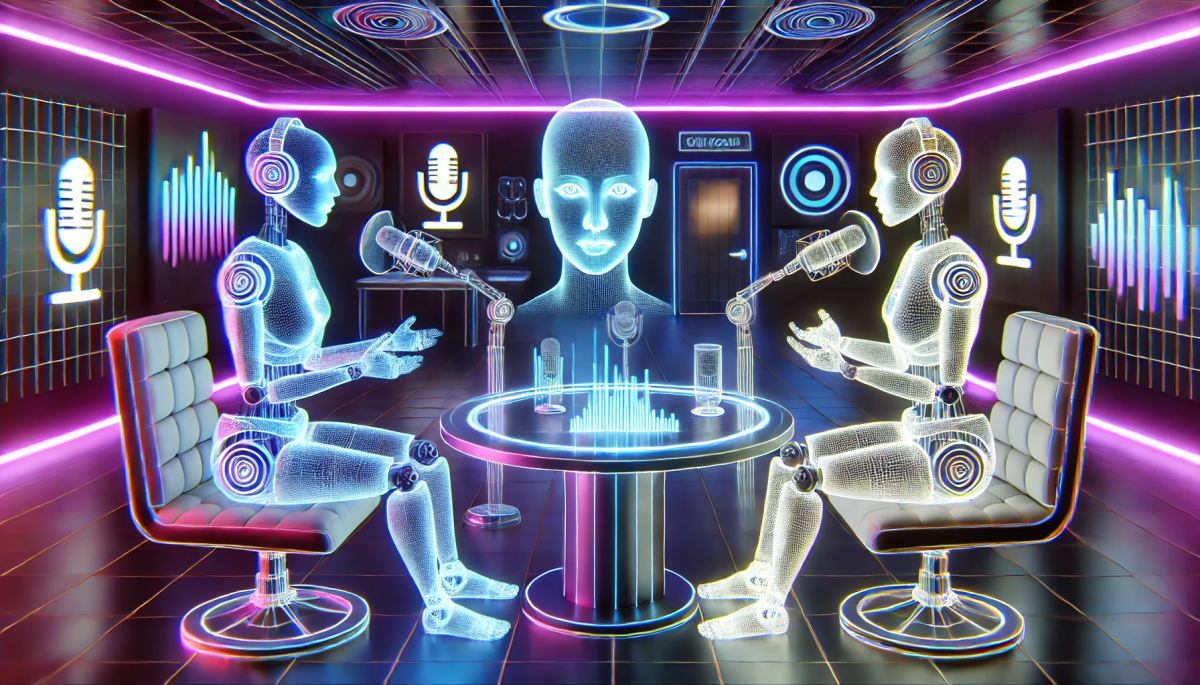
Join me as tow AI generated personas not only discuss the future of language education but also reflect on how AI is changing the way we share and interact with research itself. What does this mean for acadmics, educators, students, and the future of knowledge dissemination?

Click the link to listen to this AI generated podcast!

Language Learning in 2050: A Technological and Cultural Forecast

Expanding my AI Knowledge with Google’s AI Essentials Course

Today, I completed Google’s AI Essentials course to build upon my existing AI knowledge. As someone who believes in continuous learning, I found the course to be a valuable resource for professionals looking to enhance their AI skill set.
The course content was comprehensive, covering a wide range of topics from foundational concepts to practical applications of AI in the workplace. The hands-on exercises and real-world examples helped reinforce the learning material and provided opportunities to apply newfound knowledge.
One notable aspect of the course was its emphasis on the responsible and ethical use of AI. It provided a framework for understanding potential biases, inaccuracies, and security risks associated with AI and offered guidance on mitigating these issues.

The course content was comprehensive, covering a wide range of topics from foundational concepts to practical applications of AI in the workplace, with many aspects directly transferable to higher education and my field: teacher preparation and second language acquisition. The hands-on exercises and real-world examples helped reinforce the learning material and provided opportunities to apply newfound knowledge. The course provided insights into prompt engineering and its potential to streamline workflows and inspire creative solutions. This skill can greatly augment tasks and improve efficiency in various industries.
Throughout the course, I acquired several key skills that are applicable to both my academic work and teaching:

  • Augmenting tasks with AI: Learning how to effectively integrate AI into my workflow to enhance productivity and performance.
  • Critical thinking: Developing the ability to critically evaluate AI tools and their potential impacts on projects and decision-making processes.
  • Iterative thinking: Understanding the importance of iterative problem-solving when working with AI, refining solutions based on feedback and results.
  • Prompt engineering: Mastering the art of crafting precise and effective prompts to guide AI models in generating desired outputs.
  • Confronting AI challenges: Gaining awareness of potential biases, inaccuracies, and security vulnerabilities associated with AI systems and developing strategies to mitigate these concerns.

However, it is essential to recognize that learning AI is an ongoing process. The field is constantly evolving, and staying up-to-date requires a personal commitment to continuous learning about and exploration of new AI tools. As AI technologies advance at a rapid pace, those of us who wish to remain competitive in the field must actively seek out opportunities to expand our knowledge and skill set. This may involve attending conferences, participating in online courses, engaging with AI communities, and experimenting with emerging AI platforms to stay at the forefront of this exponentially transformative industry. And in my case, this meant using the 4th of July to complete the course.

Dr. Jasmin (Bey) Cowin published Sentient AI or Modern Myth? Anthropic’s Claude 3 Opus, Talos and the Golem of Prague

Cowin, J. (2024, April 29). Sentient AI or Modern Myth? Anthropic’s Claude 3 Opus, Talos and the Golem of Prague. Stankevicius. https://stankevicius.co/tech/sentient-ai-or-modern-myth-anthropics-claude-3-opus-talos-and-the-golem-of-prague/

Daniel Dinello, in his apocalyptic book “Technophobia!” forecasts, “Like a viral infection, technology develops into an autonomous, invasive force that expands and fulfills its dangerous potential by flourishing in the societal medium of corporate, military, and religious sustenance. Voracious in its urge to possess and engulf, technology is a parasite that frequently undermines human integrity—invisibly infiltrating, manipulating, seizing control, and mutating its human host to support its own survival and evolution. Like a virus, technology metamorphoses itself, because of unintended and uncontrollable consequences, progressively transforming the human world in the wake of its own modern changing structure.” (Dinello, 2006, p. 247)

For more, click on my column and read!

Dinello, Daniel. Technophobia!: Science Fiction Visions of Posthuman Technology, New York, USA: University of Texas Press, 2006. https://doi.org/10.7560/709546

Reimagine and Redesign: Augmented Reality Digital Technologies & 21st Century Education by Jasmin (Bey) Cowin on Kindle Edition

Jasmin (Bey) Cowin, Ed.D., Assistant Professor and TESOL Practicum CoordinatorTouro University, Graduate School of Education, New York, NY Google Scholar Profile: Dr. Jasmin Cowin, Orchid ID: 0000-0002-0405-8774

Reimagine and Redesign: Augmented Reality Digital Technologies & 21st Century Education Kindle Edition

It is finally done! I published my essay on augmented digital reality technologies, big data, and the need for a teacher workforce on Kindle! The essay explores applications and educational use cases of augmented reality digital technologies for educational organizations during the Fourth Industrial Revolution. The Fourth Industrial Revolution requires vision, flexibility, and innovative educational conduits by governments and educational institutions to remain competitive in a global economy while simultaneously working towards new governance structures aimed to mitigate external interruptions and algorithmic biases by Artificial Intelligence algorithmic models. Educational organizations will need to focus on teaching in and for a digital age to continue offering academic knowledge relevant to 21st-century markets and changing labor force needs. Implementing contemporary disciplines will need to be embodied through learners’ active knowledge-making experiences while embracing ubiquitous accessibility. The power of Distributed Ledger Technology promises major streamlining for educational record-keeping, degree conferrals, and authenticity guarantees. Augmented reality digital technologies (ARDT) hold the potential to restructure educational philosophies and their underpinning pedagogies thereby transforming modes of delivery. Structural changes in education and governmental planning are already increasing through intelligent systems and big data. Reimagining and redesigning education on a broad scale is required to plan and implement governmental and institutional changes to harness innovative technologies while moving away from the industrial manufacturing labor force.
Keywords—Fourth Industrial Revolution, artificial intelligence, big data, education, Augmented Reality Digital Technologies, Distributed Ledger Technology

Accepted Conference Proposal: Simulation-Based Learning Environments for the Twenty-seventh International Conference on Learning July 13 – 15, 2020

Accepted Conference Proposal: Simulation-Based Learning Environments for the Twenty-seventh International Conference on Learning July 13 – 15, 2020. A virtual poster presentation with a focus on epistic game theory.

A virtual poster presentation with a focus on epistic game theory

letter_of_invitation_jasmin-cowin

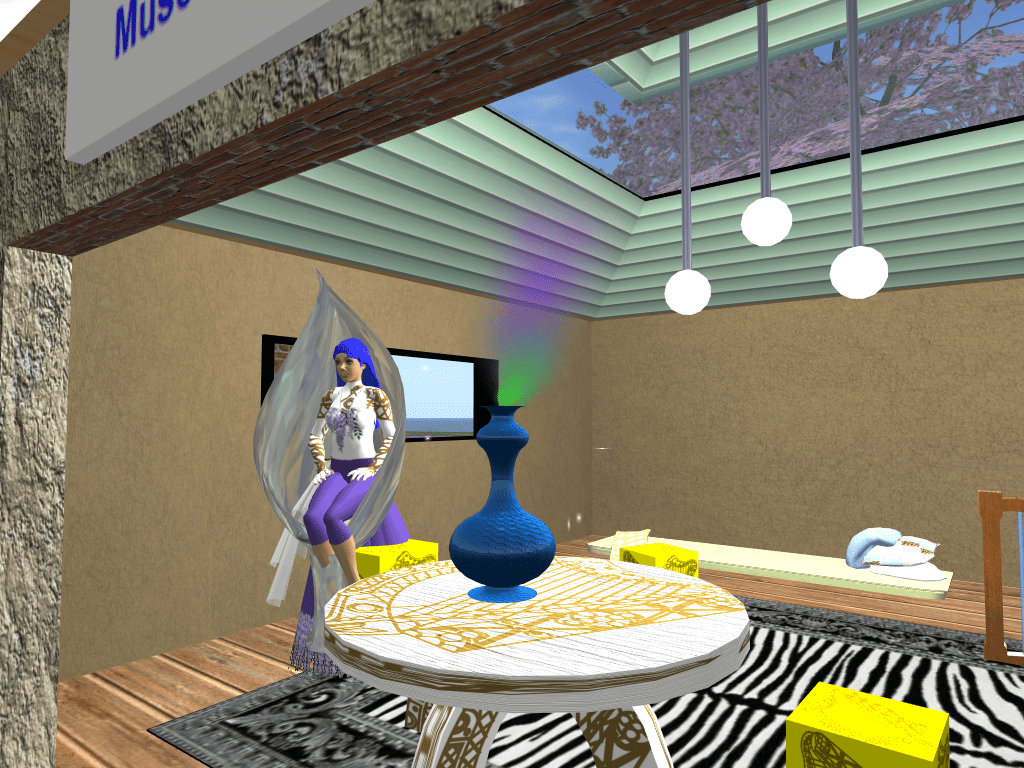
Online, web-based virtual classroom environments, populated with student avatars, use simulation-based learning to increase teacher candidates’ understanding of the educational needs of diverse learners. The student avatars in simulations are controlled by artificial emotional intelligence software. As intensive web applications, these environments can provide a safe, risk-free virtual space to explore a range of teaching strategies, while offering immediate feedback as a training tool for teacher candidates during interrupted practicum experiences, fully online pedagogy courses and virtual fieldwork experiences.

Keywords: Simulation-Based Learning, Virtual Reality, Artificial Intelligence, Epistic Game Theory, Virtual Teacher Practicum

For whom: Twenty-Seventh International Conference on Learning July 13 – 15, 2020 Universitat de València – Facultat de Magisteri, Av. dels Tarongers, 4, València, Spain