Education for 2060 and Touro University TESOL Candidate Rachel Melamed’s Padlet

Touro University TESOL Department’s Curriculum Development and Classroom Management in the Technology Era philsophy:

Education for 2060 will require TESOL educators who can design and create meaningful artifacts using technology, not simply describe or evaluate its use. In my view, the central shift is from consumption to production: educators must be able to develop digital materials, curate multimodal resources, and construct learning environments that actively engage multilingual learners. This emphasis on creation reflects a broader redefinition of teaching as a design-oriented practice grounded in both pedagogy and technological fluency.

Within this framework, the intersection of curriculum development, classroom management, and digital innovation reshapes how learning experiences are constructed for English language learners (ELLs). Technology supports varied ways of learning, fosters critical thinking, and increases efficiency in task completion. It also provides teachers with opportunities to design instructional materials, adapt content for diverse learners, and facilitate more responsive forms of classroom interaction.

As the field of TESOL continues to evolve, it is no longer sufficient for teacher candidates to be aware of digital tools or to discuss their potential. They need to demonstrate the ability to create instructional artifacts that connect with students, expand access to content, and enhance teaching quality. In this sense, technology becomes a medium for design. It enables the development of interactive materials, multiple forms of representation, communication with diverse stakeholders, and platforms for inquiry. This assignment, therefore, positions candidates as creators, asking them to design artifacts that respond to the linguistic, academic, and sociocultural needs of ELLs and their families.

The assignment moves beyond surface-level familiarity by requiring candidates to evaluate how their chosen tools support TESOL instructional strategies such as scaffolding, differentiation, and multimodal learning. Teachers must determine how the artifacts they create align with specific pedagogical goals, which requires deliberate integration rather than simple adoption. Technology can extend instructional strategies by supporting interaction and collaboration while also generating data that informs teaching decisions.

By asking candidates to design, justify, and reflect on their artifacts in relation to curriculum standards, community engagement, and instructional effectiveness, the assignment develops the kind of professional reasoning needed for work with linguistically diverse populations. In my view, this focus on creation is essential for preparing educators for education for 2060. Future classrooms will require teachers who can build, adapt, and critically evaluate digital learning environments, not merely participate in them. This assignment, therefore, represents a step toward my topic “Education for 2060,” by positioning TESOL educators as intentional designers of technology-mediated learning.

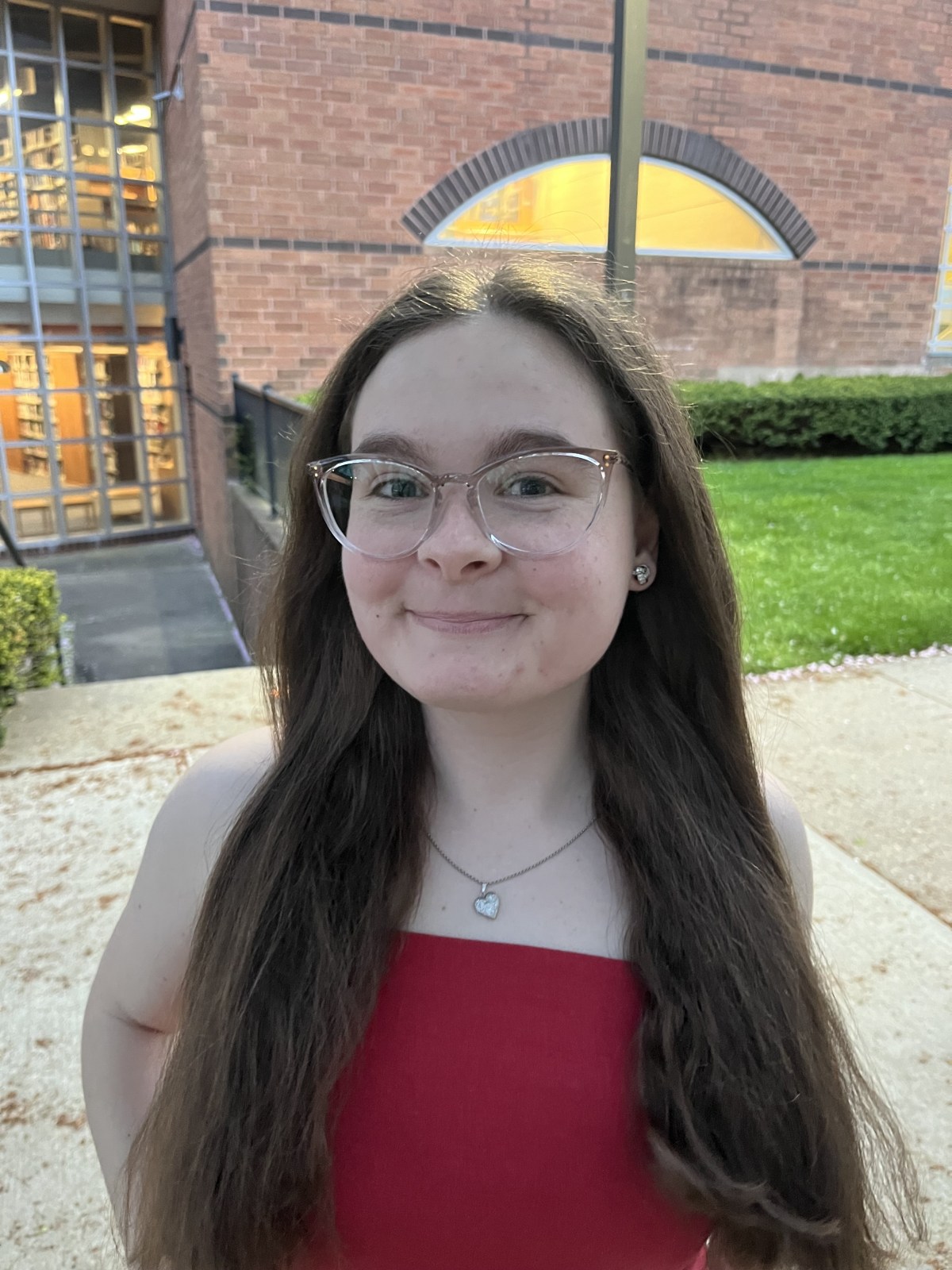
Rachel Melamed is a high school teacher in Brooklyn working with multilingual learners. She received her bachelor’s degree from SUNY Cortland and is currently pursuing her TESOL master’s degree at Touro University, where she focuses on helping students understand content while building their academic language. She aims to create a classroom where students feel confident participating and supported in their learning.

The TESOL program at Touro University has changed the way I plan for my students, making me more intentional about breaking down content and providing support to improve language and comprehension.

Rachel Melamed, Touro University TESOL Candidate

Link:

Journal of Invitational Theory and Practice publishes Transdisciplinary Dialogues on AI in Education: Earth, Air, Water, Fire as Metaphors for Change

I am delighted to announce that our article was published!

Dacey, C. M., Cowin, J., & de los Reyes, J. (2026). Transdisciplinary dialogues on AI in education. Journal of Invitational Theory and Practice, 31, 60–80. https://doi.org/10.26522/jitp.v31i.5420

Abstract: The authors integrate the classical elements – earth, air, water, and fire – within post-human perspectives to explore the multifaceted integration of Artificial Intelligence (AI) in educational contexts. A transdisciplinary approach invited a fertile dialogue among three academic experts from distinct fields of study, who then examined the transformative impact of AI in education: transcending traditional anthropocentric perspectives. In the ‘Earth’ metaphor, the narrative likens AI’s role to Earth’s stabilizing properties. It critically analyzes AI simulations in various disciplines, emphasizing AI’s support in fundamental learning and cognitive development, yet maintaining skepticism about its effects on embodied cognition and experiential learning. Addressing ‘Water’, the authors underscore the need for fluid, adaptable educational governance in response to AI integration. This element resonates with post-human ideas of fluidity and hybridity, urging educational systems to be responsive while expressing concerns about rapid technological changes and their wider implications, calling for thoughtful policy revisions. The focus in ‘Fire’ shifts to AI’s transformative effects on educational governance, intertwining ethical and data privacy issues. The authors critique the potential centralization of power of educational technology companies and the importance of preventing educational inequities and biases. Transitioning to ‘Air’, the focus is upon AI’s exponential impact on pedagogy, just as air facilitates communication. The authors examine AI’s potential for personalizing learning and enhancing interactive dynamics. Examining this element also highlights the importance of algorithmic transparency and the risks of diminishing human roles in education. Finally, the authors examine and interpret the United Nations’ Agenda 2030through a post-human perspective, advocating for an educational governance model and framework that acknowledges the interplay between human, non-human, and technological entities, thereby emphasizing the need for transdisciplinary perspectives on AI in education to capture the Zeitgeist of the Fourth Industrial Revolution.

Touro University TESOL Candidate Carly Croteau’s Student Work Demonstrating Disciplined Copilot Use

EDPN 673 – Methods and Materials for Teaching English as a Second Language

This course provides a historical overview of second language acquisition theories and teaching methods. Students learn how to apply current approaches, methods and techniques, with attention to the effective use of materials, in teaching English as a second language. Students will engage in the planning and implementation of standards-based ESL instruction which includes differentiated learning experiences geared to students’ needs. Emphasis is placed on creating culturally responsive learning environments. Includes 15 hours of field work.

Instructional Materials Critique and Redesign

This assignment centers on material analysis as a core professional skill. Candidates critically examine two instructional materials at different grade levels to investigate how linguistic demands, discourse expectations, and access points for multilingual learners vary across instructional contexts. This comparative approach is designed to move candidates away from generic notions of “ELL strategies” and toward a disciplined analysis of language use, text complexity, and opportunities for meaning-making. In my view, this kind of analytic work is foundational to effective TESOL practice and is often underemphasized in methods coursework.

Within the context of the AI grant, Copilot is used in a deliberately structured way. It functions as a generative drafting tool that supports instructional redesign, not as an instructional authority. Candidates identify a specific instructional limitation in a selected material, use Copilot to generate a redesign artifact, and then evaluate and revise that output using WIDA English Language Development Standards, New York State Next Generation Learning Standards, and established TESOL frameworks. The requirement to critique and modify AI generated content foregrounds professional judgment and exposes the limitations of automated outputs in addressing linguistic precision and cultural responsiveness.

The infographic component extends this work by requiring candidates to synthesize analytic findings into a visual support that could plausibly mediate content access for multilingual learners. This element emphasizes multimodality as an instructional practice rather than a design exercise. Taken together, the assignment models an approach to AI use that is critical, standards aligned, and grounded in the everyday instructional decisions TESOL educators must make.

Carly Croteau is in her second-to-last semester at Touro University. She serves in her Fourth Year of Teaching as a fourth-grade general education teacher within an ENL classroom. Carly shared a quote to describe her Touro Journey: “I’ve learned that people will forget what you said, people will forget what you did, but people will never forget how you made them feel.” by Maya Angelou

Carly Croteau’s exemplary submission demonstrates a precise, standards-aligned critique of both materials and a redesigned artifact that clearly addresses an identified linguistic barrier for multilingual learners. Her use of Copilot is transparent and disciplined, with revisions that reflect strong TESOL knowledge and well-justified instructional decision-making.

Xavier Campoverde’s work with CoPilot and Materials Critique & Redesign for Touro University’s TESOL Course EDPN 673

The Touro University Copilot Grant supports my work as a faculty member in explicitly teaching teacher candidates how to use Copilot as an instructional design tool within a structured, standards-aligned pedagogical framework. In this course, Copilot is not introduced as an optional productivity aid. It is taught as a professional instructional resource whose use must be intentional, transparent, and grounded in TESOL theory, state standards, and multilingual learner pedagogy.

The instructional focus of this grant-funded work is on teaching candidates how to work with Copilot, rather than merely allowing its use. Candidates are guided through a faculty-modeled process that emphasizes instructional problem identification, constrained prompting, critical evaluation of AI-generated outputs, and revision based on professional judgment.

Instructional context and assignment purpose

The Copilot integration is based on a major assessment titled “Instructional Material Critique and Redesign with Infographic.” The assignment is designed to teach candidates how to critically analyze instructional materials and redesign them to improve accessibility and rigor for multilingual learners.

Materials may include complete texts or individual chapters from instructional resources commonly used in schools. The assignment explicitly teaches candidates how to engage in mastery-level material critique and redesign using established TESOL and multilingual education frameworks.

Explicit teaching of Copilot as an instructional design tool

Within this assignment, I explicitly teach candidates how Copilot can be used as a co-creative instructional design partner under faculty supervision and pedagogical constraints. Copilot is introduced through direct instruction and modeling, not discovery-based experimentation.

  • Generates draft instructional materials, not finished products
  • Requires human evaluation using research-based criteria
  • Must be revised to ensure linguistic accuracy, cultural responsiveness, and standards alignment

This explicit framing positions Copilot as part of the instructional design process, not as an authority or substitute for professional educators’ expertise.

Xavier Campoverde is a bilingual social studies teacher at the high school he attended growing up. He is passionate about ensuring that every student has the ability to learn based on their individual needs, building on what they already know, and establishing a safe learning environment for all. He is also a proud husband and father to two wonderful children.

I learned that being a TESOL educator means being an advocate, a designer, and a listener, using data, culture, and technology to ensure every multilingual learner can thrive. Xavier Campoverde, Touro University TESOL Candidate.

Touro TESOL Candidate Madison Derwin’s Field Observations and Reflections

Fieldwork reflection is a critical component of TESOL candidate growth because it functions as the primary mechanism through which theoretical knowledge is transformed into professional judgment. In EDDN 635, curriculum development and classroom management are not treated as abstract constructs but as situated practices shaped by technology, policy, and the linguistic realities of multilingual learners. Reflective fieldwork allows candidates to systematically examine how instructional decisions, technological tools, and classroom management strategies interact to support or constrain language development in real educational settings.

From a pedagogical standpoint, structured reflection promotes metacognition, professional noticing, and evidence based reasoning. By observing classrooms, libraries, and technology infrastructures, and by engaging with ICT specialists and educators, candidates learn to analyze curriculum design choices in relation to student needs, institutional constraints, and state level policies. Reflection deepens this analysis by requiring candidates to connect observations to course readings, TESOL principles, and research on technology mediated instruction. In my opinion, this deliberate linking of theory, observation, and analysis is what moves candidates beyond description toward informed instructional decision making.

Ultimately, reflective fieldwork supports the development of adaptive, reflective practitioners who can design technology integrated curricula that are linguistically responsive, pedagogically sound, and contextually appropriate. For TESOL candidates, this process strengthens professional identity, sharpens analytical skills, and lays the foundation for sustained growth in an increasingly complex and technology driven educational landscape.

Madison Derwin holds a Bachelor’s Degree in Inclusive Childhood Education from SUNY Cortland. She is currently pursuing a Master’s Degree in TESOL and working as a 4th-grade Teacher’s Assistant at an elementary school on Long Island. Her goal as an educator is to create an inclusive, supportive learning environment that empowers every student to reach their full potential and thrive both academically and socially. She shared a favorite quote: “I’m not telling you it’s going to be easy- I’m telling you it’s going to be worth it.”- Art Williams

Rachel Melamed master’s degree candidate in TESOL at Touro University: AI Literacy Through Method Embodiment


This assignment, Instructional Method Assignment – Teaching a Mini-Lesson to an ML Audience, required creating a simulated teaching video that demonstrates one specific language teaching method from our course readings. This is a pretend lesson where you act as the teacher presenting to an imaginary multilingual learner audience for EDPN 673 Methods and Materials for Teaching English as a Second Language. This course provides a historical overview of second language acquisition theories and teaching methods. Students learn how to apply current approaches, methods and techniques, with attention to the effective use of materials, in teaching English as a second language. Students will engage in the planning and implementation of standards-based ESL instruction, which includes differentiated learning experiences geared to students’ needs. Emphasis is placed on creating culturally responsive learning environments. Includes 15 hours of field work.

The assignment was designed to deepen TESOL candidates’ methodological expertise while positioning them to engage with artificial intelligence in purposeful and pedagogically sound ways. It reflects Touro University’s broader initiative to strengthen AI literacy across its programs through a Touro Faculty AI Grant headed and supported by Shlomo Engelson Argamon, Associate Provost for Artificial Intelligence and Professor of Computer Science, and Jamie Sundvall, Ph.D, Psy.D, LP, LCSW, Assistant Provost of Artificial Intelligence. Within this institutional landscape, the assignment serves as a structured model for preparing educators to work in learning environments where AI is increasingly integrated into curriculum, assessment, and multilingual support.

My motto, Education for 2060, emphasizes the development of shared spaces of competencies influenced by AI and large language models. As schools and districts integrate AI into core instructional processes, teacher education programs must develop candidates who can navigate these systems with ethical judgment and instructional precision. This assignment, therefore, balances two essential design principles: strong safeguards against unverified AI substitution and intentional guidance for targeted AI use.

The AI-resistant component centers on a six to seven-minute simulated teaching video that requires candidates to embody a single method from the course readings. By performing the method in a real physical space with realia, gesture, classroom presence, and teacher talk, candidates demonstrate the translation of theory into practice. This performance reveals decision-making, sequencing, and pedagogical rationale that cannot be delegated to AI, ensuring that candidates are evaluated on their own instructional competence.

Targeted AI use is built into the assignment through Copilot-supported planning and reflection. Copilot is positioned as a thinking partner that helps candidates examine the structural logic of the method, refine the flow of the activity, and interrogate their own understanding. Proof of work in the form of screenshots and reflective commentary ensures transparency and allows candidates to analyze the accuracy, limitations, and pedagogical value of AI-generated suggestions. In this way, the assignment teaches AI literacy as a reflective and evaluative process rather than a generative shortcut.

The written analysis links the performance to course theories, identifies the method features demonstrated in the video, and articulates how Copilot contributed to planning choices. This component reinforces conceptual understanding while modeling a professional stance toward responsible AI use.

By combining embodied demonstration with documented AI-supported thinking, the assignment prepares candidates for a future in which educators and AI systems occupy interconnected roles. It brings the work full circle by returning to the idea of shared spaces of competencies. Candidates learn to inhabit these spaces with confidence, contributing their own pedagogical judgment while engaging with AI in ways that enhance, rather than replace, their professional expertise.

Rachel Melamed is a high school teacher in Brooklyn, New York. She earned her bachelor’s degree in Inclusive Education from SUNY Cortland and is a first-generation graduate student pursuing her master’s in TESOL at Touro University. Growing up in a Russian-speaking household helped her develop a passion for teaching multilingual learners and shaped her approach to connecting with them in the classroom.

Using Copilot helped me rework a lesson I had taught before and make it more accessible for English language learners. I learned how small adjustments and simplified, repetitive language can make a big difference when designing lessons.

Rachel Melamed master’s degree candidate in TESOL at Touro University

Master’s Degree in TESOL Candidate at Touro University Carly Croteau’s Submission: Simulation Teaching, Embodiment, and AI Literacy

This assignment, Instructional Method Assignment – Teaching a Mini-Lesson to an ML Audience, required creating a simulated teaching video that demonstrates one specific language teaching method from our course readings. This is a pretend lesson where you act as the teacher presenting to an imaginary multilingual learner audience for EDPN 673 Methods and Materials for Teaching English as a Second Language. This course provides a historical overview of second language acquisition theories and teaching methods. Students learn how to apply current approaches, methods and techniques, with attention to the effective use of materials, in teaching English as a second language. Students will engage in the planning and implementation of standards-based ESL instruction, which includes differentiated learning experiences geared to students’ needs. Emphasis is placed on creating culturally responsive learning environments. Includes 15 hours of field work.

The assignment was designed to deepen TESOL candidates’ methodological expertise while positioning them to engage with artificial intelligence in purposeful and pedagogically sound ways. It reflects Touro University’s broader initiative to strengthen AI literacy across its programs through a Touro Faculty AI Grant headed and supported by Shlomo Engelson Argamon, Associate Provost for Artificial Intelligence and Professor of Computer Science, and Jamie Sundvall, Ph.D, Psy.D, LP, LCSW, Assistant Provost of Artificial Intelligence. Within this institutional landscape, the assignment serves as a structured model for preparing educators to work in learning environments where AI is increasingly integrated into curriculum, assessment, and multilingual support.

My motto, Education for 2060, emphasizes the development of shared spaces of competencies influenced by AI and large language models. As schools and districts integrate AI into core instructional processes, teacher education programs must develop candidates who can navigate these systems with ethical judgment and instructional precision. This assignment, therefore, balances two essential design principles: strong safeguards against unverified AI substitution and intentional guidance for targeted AI use.

The AI-resistant component centers on a six to seven-minute simulated teaching video that requires candidates to embody a single method from the course readings. By performing the method in a real physical space with realia, gesture, classroom presence, and teacher talk, candidates demonstrate the translation of theory into practice. This performance reveals decision-making, sequencing, and pedagogical rationale that cannot be delegated to AI, ensuring that candidates are evaluated on their own instructional competence.

Targeted AI use is built into the assignment through Copilot-supported planning and reflection. Copilot is positioned as a thinking partner that helps candidates examine the structural logic of the method, refine the flow of the activity, and interrogate their own understanding. Proof of work in the form of screenshots and reflective commentary ensures transparency and allows candidates to analyze the accuracy, limitations, and pedagogical value of AI-generated suggestions. In this way, the assignment teaches AI literacy as a reflective and evaluative process rather than a generative shortcut.

The written analysis links the performance to course theories, identifies the method features demonstrated in the video, and articulates how Copilot contributed to planning choices. This component reinforces conceptual understanding while modeling a professional stance toward responsible AI use.

By combining embodied demonstration with documented AI-supported thinking, the assignment prepares candidates for a future in which educators and AI systems occupy interconnected roles. It brings the work full circle by returning to the idea of shared spaces of competencies. Candidates learn to inhabit these spaces with confidence, contributing their own pedagogical judgment while engaging with AI in ways that enhance, rather than replace, their professional expertise.

Carly Croteau is in her second-to-last semester of the Master’s Degree in TESOL at Touro University and is currently in her fourth year of teaching as a fourth-grade general education teacher in an ENL classroom. Her favorite quote: “I’ve learned that people will forget what you said, people will forget what you did, but people will never forget how you made them feel.” by Maya Angelou

I was first introduced to Copilot during a district professional development session and encountered it again this semester in my TESOL coursework at Touro University. I find Copilot to be a valuable support for both educators and students when used with clear, well-structured prompts. I see it as a helpful aid that can enhance instructional work, but not as a replacement for the professional judgment and intellectual effort that teachers and learners bring to the process.

Carly Croteau, Master’s Degree in TESOL candidate at Touro University

Carly Croteau Grammar Translation Method Video (teaching simulation)

Touro University: TESOL Candidate Angelica Marziliano’s Analysis of Complex Texts with Complementary Copilot Review

This assignment reflects Touro University’s broader initiative to strengthen AI literacy across its programs through a Touro Faculty AI Grant headed and supported by Shlomo Engelson Argamon, Associate Provost for Artificial Intelligence, Professor of Computer Science & Jamie Sundvall, Ph.D, Psy.D. LP, LCSW, Assistant Provost of Artificial Intelligence

My motto, ‘Education for 2060,’ focuses on shared spaces of competencies shaped by AI and large language models. As schools, districts, and our students adopt AI tools for learning, assessment, curriculum development, and multilingual support, teacher education programs must equip our candidates with the knowledge and nuanced judgment needed to integrate these technologies ethically, strategically, and in alignment with sound principles of pedagogy and instructional design. The goal is not technological substitution but pedagogical enhancement. Responsible AI use requires a clear understanding of when and why an AI-supported process strengthens instructional decisions, particularly for multilingual learners who interact with complex academic texts across content areas.

The work of analyzing text complexity offers an ideal entry point for developing AI literacy in teacher preparation. Examining linguistic, cognitive, and cultural demands requires careful reasoning and structured evaluation. These skills align with high-quality instructional design and can be augmented by transparent AI tools that assist candidates in organizing ideas, checking coherence, and strengthening linguistic analysis without taking over intellectual labor. Within this assignment, targeted use of AI support mirrors the professional responsibilities teachers will face when adapting curriculum materials, planning differentiated instruction, and selecting resources for English Language Learners and Multilingual Learners. Candidates learn to pair human expertise with AI-supported review processes that promote accuracy, clarity, and reflective practice.

The integration of Microsoft Copilot for final review models responsible AI use that complements, rather than replaces, analytical work. Candidates are required to complete their paper independently and then invite AI-supported critique, focusing on coherence, alignment with APA standards, and clarity of argumentation. This mirrors practical praxis where educators may use AI tools to refine instructional plans, check alignment to standards, and evaluate materials before implementation. By engaging in this structured workflow, Touro University GSE candidates experience a practical application of AI literacy that reinforces their ability to evaluate complex text for ELL and ML access while maintaining professional accountability.

The broader purpose of embedding AI-supported review is to help our Touro University TESOL teacher candidates develop habits of mind that pair rigorous analysis with reflective metacognition. Engaging in text complexity analysis, considering reader and task variables, and examining linguistic challenges for multilingual learners requires nuanced evaluative skills. When paired with transparent and ethical use of AI as a secondary tool for refinement, candidates learn how exponential technologies can support differentiated lesson planning and curriculum construction. This fosters a readiness to lead in classrooms where multilingual learners depend on teachers who can leverage digital resources while upholding principles of equity, clarity, and culturally responsive practice.

Angelica Marziliano: I have been an educator for ten years, starting my career as a paraprofessional before transitioning to a general education teacher. Over the years, I’ve had the privilege of teaching a large and diverse student population, including many English Language Learners. I am currently pursuing my graduate degree in TESOL at Touro University to further support all students in reaching their full potential.

At Touro University, I learned that effective teaching means meeting each learner where they are, differentiating instruction so every student can reach their full potential.

Angelica Marziliano, Touro University, TESOL candidate

Joyann Castilletti, Touro University TESOL Candidate, on her experience working with structured prompt engineering and AI

MS in Teaching English to Speakers of Other Languages
TESOL
– New York is a state that speaks many languages. We need teachers who can find the common ground.

🏛️ As part of Touro University’s comprehensive initiative to introduce #AI #literacy to our students, I am engaged in a #Touro #University #grant focused on developing AI literacy in #TESOL candidates. My project-based approach empowers future educators to leverage AI as a strategic partner in curriculum design, bridging theoretical understanding with applied classroom practice.

Joyann Castilletti is a 7th–12th grade certified English teacher,  currently working as a permanent substitute teacher while pursuing her TESOL degree at Touro University. She is passionate about creating learning environments where every student feels seen, heard, and loved, and where each learner is supported in achieving success. She continues to inspire a love of learning in every English learner while equipping them with the skills to communicate confidently and effectively. 

Joyann Castilletti, Touro University TESOL Candidate, on her experience working with structured prompt engineering and AI:

Using this prompt showed me a few things about designing rubrics. For starters, specifics are key to a solid rubric. When I first started student teaching, every assignment I gave had some sort of rubric mainly to protect myself in case a student didn’t do too well. Since student teaching, I have still utilized rubrics but have worked towards making them more specific and rooted in whatever standard I was working on. The rubric that CoPilot and ChatGPT provided is a great jumping point if my students were doing this presentation. My biggest negative with this rubric is that since CoPilot is primarily analytic based, it does not allow for a holistic view of my students (especially since all of my key domains were also analytical). When I make my rubrics, I try to include some element that allows my students that may struggle with the assignment a chance to achieve highly in one category. Additionally, since this rubric was generated from a prompt it did not allow me to have student insight which I like to do (unless I took this rubric to the students and had a discussion about it with them for recommendations or suggested changes). I do like that CoPilot clearly establishes the format of “you do exactly this– you get this score”. When I make my rubrics, I tend to struggle with the verbiage to express exactly what I am looking for and to separate between each score point. With this said, by utilizing this format, I can create more efficient rubrics and change them as needed to make my accommodations.