


I am grateful to our collaborative, transdisciplinary and international work with Dr. Cristo Leon, Ph.D., James Lipuma, and Mauricio Rangel-Jimenez.
🚨 “Meta-participation and ethical transparency in role-playing games: Examining AI and algorithmic influence.” Integrating artificial intelligence (AI) and other non-human participants in role-playing games (RPGs) has brought new dimensions to interactive storytelling and game design. As
AI evolves to simulate human-like interactions more convincingly, its role in games raises significant ethical questions, particularly regarding transparency and player agency. This paper critically examines these issues, focusing on the concept of the meta-participant—the programmer or author responsible for designing the AI’s decision-making algorithms—
and the implications of their invisible influence and personal bias on the gaming experience of human players.
Leon, C., Lipuma, J., Cowin, J., & Rangel-Jimenez, M. (2025). Meta-participation and ethical transparency in role-playing games: Examining AI and algorithmic influence [Peer-reviewed journal]. STEM for Success Resources(101). https://lnkd.in/eHSifda7
Tag: #technology
Touro University TESOL candidate Anastasios Panagiotidis’ Discussion Board on SIOP

Touro University TESOL: EDDN 637 – Second Language Learners and the Content Areas
Students will become acquainted with and practice effective approaches, methods, and strategies for teaching and evaluating English language learners in the content areas (ELA, social studies, math and science). Throughout the course, students will explore the impact of culture and language on classroom learning. Special challenges in teaching and assessment in each content area will also be discussed. Includes 15 hours of field work.
Anastasios Panagiotidis is a dedicated high school Earth Science teacher serving the South Huntington Union Free School District. As he approaches his tenure year at the age of 25, he recognizes that his career is still in its early stages. However, his passion for education and commitment to fostering a supportive and inclusive learning environment drive his work every day. Inspired by the culturally and academically diverse student population he teaches, he strives to design engaging, student-centered lessons that not only address individual needs but also connect learning to real-world contexts. His ultimate goal is to ensure that every student, regardless of their language proficiency or academic abilities, has the opportunity to reach their fullest potential under his instruction.
Touro University contributes to the tools, knowledge, and wisdom I strive to acquire as I continue to develop and mature as an educator, while allowing me the opportunity to broaden my horizons in a wide variety of areas relative to the rapidly evolving field of education.
Anastasios Panagiotidis, Touro University TESOL candidate
The SIOP Model: An Essential Framework for ESL Instruction by Prof. Dr. Jasmin Cowin
The Sheltered Instruction Observation Protocol (SIOP) is a research-based instructional model designed to support English Learners (ELs) in developing both content knowledge and English language proficiency simultaneously. Developed by Echevarria, Vogt, and Short, the SIOP model provides a structured approach to lesson planning and delivery, ensuring that ELs receive comprehensible input and meaningful language support across content areas.
As a TESOL educator, understanding and implementing the SIOP model is essential for effective ESL instruction. The model provides a structured yet flexible framework that ensures ELs have equitable access to academic content while simultaneously developing their language proficiency. By integrating language and content instruction, teachers can create an inclusive classroom environment that promotes both linguistic and cognitive development for English Learners.
The SIOP Model: Components and Structure
The SIOP framework consists of eight interrelated components that guide teachers in designing effective lessons for ELs:
- Lesson Preparation
- Clearly defined content and language objectives
- Use of supplementary materials to support comprehension
- Meaningful activities that integrate both content and language practice
- Building Background
- Explicitly linking students’ background knowledge to new content
- Connecting past learning experiences to new concepts
- Introducing and reinforcing key vocabulary
- Comprehensible Input
- Adjusting speech for EL proficiency levels
- Using clear explanations of academic tasks
- Incorporating visuals, gestures, and realia to support understanding
- Strategies
- Teaching students learning strategies to support comprehension
- Encouraging metacognitive awareness and self-monitoring of learning
- Scaffolding tasks through teacher modeling, guided practice, and peer collaboration
- Interaction
- Promoting student-to-student discourse using structured peer interactions
- Designing opportunities for extended academic conversations
- Encouraging collaborative learning experiences
- Practice & Application
- Providing hands-on learning experiences
- Integrating reading, writing, speaking, and listening activities
- Allowing ELs to apply language skills in meaningful contexts
- Lesson Delivery
- Ensuring objectives are clearly communicated and met
- Keeping students engaged and maintaining an appropriate pace
- Aligning instruction with student needs
- Review & Assessment
- Regularly reviewing key concepts and vocabulary
- Conducting formative assessments to monitor comprehension
- Providing feedback to guide language and content development
Anastasios Panagiotidis’ Discussion Board provides excellent insight into Building Background.

Dr. Cowin’s ‘Language Learning in 2050: A Technological and Cultural Forecast’- a Podcast with NotebookLM

Welcome to my newest exploration: From Research to AI: Language Learning in 2050: A Technological and Cultural Forecast, a podcast where I explore how artificial intelligence is reshaping academic work—not just in the classroom, but in the way we disseminate knowledge itself.
As researchers, we write, analyze, and synthesize ideas, but what happens when we use AI tools to take our work beyond the written word? In this episode, I take you behind the scenes of my latest research on the future of language education – examining how AI, multimodal learning, and cross-cultural adaptability might redefine teaching by 2050.
But here’s the twist: this podcast wasn’t scripted in the traditional way. Instead, I uploaded my work into NotebookLM, an AI-powered tool designed to transform written work into interactive and engaging formats. From text to voice, from static research to dynamic dialogue—this episode is an experiment in what AI can do for academic communication.
Join me as tow AI generated personas not only discuss the future of language education but also reflect on how AI is changing the way we share and interact with research itself. What does this mean for acadmics, educators, students, and the future of knowledge dissemination?
Click the link to listen to this AI generated podcast!
Language Learning in 2050: A Technological and Cultural Forecast
Meta’s End of Fact-Checking vs Plato’s Republic by Dr. Jasmin (Bey) Cowin

On January 7th, 2025, Meta CEO Mark Zuckerberg stunned the media, the public, and political world by announcing in a Facebook video an end to Meta’s longstanding fact-checking Meta for Media program. Instead, Meta will be implementing “community notes,” a system based on Elon Musk’s user-driven moderation strategy on X (formerly Twitter). Zuckerberg stated in the video, “It’s time to get back to our roots around free expression. We’re replacing fact checkers with Community Notes, simplifying our policies…” read more at Stankevicius:
Cowin, J. (2025, January 13). Meta’s end of fact-checking vs Plato’s Republic. Stankevicius. https://stankevicius.co/tech/metas-end-of-fact-checking-vs-platos-republic/
Touro University TESOL Candidate Ivelisse Martinez’s Technology Field Experience on Technology

Teaching English to Speakers of Other Languages
New York is a state that speaks many languages. We need teachers who can find the common ground.
The MS in Teaching English to Speakers of Other Languages (TESOL) Program helps NYS-certified PreK-12 teachers more effectively teach and communicate with a diverse student population.
Academically rigorous and practice-intensive, the 33-credit program includes 5-15 hours of fieldwork embedded in each course
The outlined field experience for EDDN 635 Curriculum Development and Classroom Management in the Technology Era is AI-resistant because it involves components that require direct human interaction, practical observation, and context-specific reflection that cannot be adequately replicated or performed by AI. Here’s a detailed breakdown of why this field experience ensures the authenticity of candidates’ engagement:
- Dual Observational Role
Classroom Observation: Observing educators working with English Language Learners (ELLs) or bilingual students requires attention to the nuances of teaching strategies, classroom dynamics, and student interactions.
Library Observation: Observing how technology supports literacy development in a library setting involves recognizing non-verbal interactions, how students engage with resources, and the librarian’s role—all tasks requiring human presence and contextual understanding. - Interviews with ICT Specialists and Educators
Conducting interviews demands human interaction skills, including the ability to ask follow-up questions, interpret verbal and non-verbal cues, and build rapport with interviewees.
The responses gained from interviews are context-dependent and tied to the unique policies, practices, and challenges of the specific school or district, further grounding the experience in local realities. - Reflection and Synthesis
Reflection Paper: Writing a paper based on observations and interviews requires critical thinking, personal insights, and the ability to synthesize information from varied experiences. This process is inherently human and tied to individual perspectives.
Multimedia Presentation: Creating a presentation involves selecting and interpreting data, integrating visuals, and crafting a narrative that demonstrates deep understanding. These tasks necessitate creativity and critical analysis unique to the candidate. - Time Log and Deliverables
Keeping a time log and taking observation notes are tasks tied to the candidate’s direct presence and engagement in specific activities. AI cannot generate authentic records of these experiences.
The requirement for notes, interviews, and multimedia outputs ensures that the candidate participates actively and generates original content based on their unique experiences. - Practical, Contextual Learning
Observing technology use in real classrooms and libraries exposes candidates to the complex, real-world application of digital tools. This type of learning requires adaptability, contextual awareness, and the ability to assess practical challenge. - TESOL and Digital Education Principles
The experience aligns with principles of TESOL and digital education, emphasizing the strategic integration of technology to meet linguistic and academic needs. Candidates must demonstrate their ability to observe, analyze, and apply these principles in a practical, context-specific manner.
The EDDN 635 field experience is rooted in direct, human-centric engagement with educators, students, and environments. It emphasizes real-world interaction, critical reflection, and contextualized learning—all elements that demand active participation and cannot be substituted with AI tools. The requirement for personalized insights and tangible deliverables ensures that candidates engage meaningfully, fostering skills and knowledge essential for their professional growth in TESOL and digital education.
Ivelisse Martinez has a bachelor’s degree in Education from Brooklyn College and is currently pursuing a master’s degree in TESOL at Touro University. She is passionate about empowering young learners, particularly those learning English as a second language. Inspired by her own teachers as a child, she sees a reflection of herself in many of her students, understanding firsthand the challenges and joys of learning a new language. As a former ELL, her goal is to inspire and support the next generation of learners on their educational journey.
Teaching is a way of giving back the inspiration and support you once received, guiding others to see their potential and know that every challenge is a stepping stone toward success.
Ivelisse Martinez, Touro University TESOL Candidate
Dr. Jasmin (Bey) Cowin publishes ‘Autonomous AI’s Spellbook and the Absent Necromancer’

The sorcerer, old necromancer
At last has gone, he’s out of haunt!
His sprites will give me loyal answer
Proudly I’ll my powers flaunt.
(1-4) Goethe, J. W. (1797). The sorcerer’s apprentice (L. Collins, Trans.)
Goethe wrote “Der Zauberlehrling” (The Sorcerer’s Apprentice) in 1797, long before AI concepts emerged. The ballad, like this author’s prior article for Stankevicus on Autonomous AI Agents – The Kraken Wakes? explores themes of human hubris and the challenges of controlling powerful forces, providing an analogy for exploring humanity’s relationship with tools and forces that exceed our understanding or control.
Cowin, J. (2024, December 9). Autonomous AI’s spellbook and the absent necromancer. Stankevicius. https://stankevicius.co/artificial-intelligence/autonomous-ais-spellbook-and-the-absent-necromancer
Touro University TESOL Candidate Hamida Abdalla’s Technology Integration Fieldwork Project for EDDN 635
Teaching English to Speakers of Other Languages
New York is a state that speaks many languages. We need teachers who can find the common ground.
The MS in Teaching English to Speakers of Other Languages (TESOL) Program helps NYS-certified PreK-12 teachers more effectively teach and communicate with a diverse student population.
Academically rigorous and practice-intensive, the 33-credit program includes 5-15 hours of fieldwork embedded in each course
Hamida Abdalla is 22 and holds a bachelor’s degree in Childhood Education. She is pursuing a master’s degree in TESOL to help students develop their English language skills. Her goal is to create a supportive and accessible learning atmosphere that assists English language learners in improving their English language abilities, ensuring that every student can communicate effectively and achieve academic success.
Although this is only my first semester at Touro, I have gained valuable expertise to foster an inclusive learning environment where all students, regardless of their proficiency level, can thrive and reach their full potential.
Hamida Abdalla, Touro University, TESOL Candidate
Ms. Abdalla submitted an exemplary and rich Field Experience for EDDN 635: Curriculum Development and Classroom Management in the Technology Era which required that”Candidates will engage in a dual observational role: in the classroom with English Language Learners (ELLs) or bilingual students, they will examine how educators integrate technology to enhance language instruction and manage a diverse classroom; in the school library, they will observe the role of technology in supporting literacy skills among linguistically diverse students.”
This field experience assignment is AI-proof because it demands direct personal observation and critical analysis of real-world classroom dynamics and personal interactions that cannot be fabricated by AI systems. The requirement for candidates to simultaneously examine classroom technology integration for ELL students and library-based literacy support creates a complex, interconnected observational task requiring authentic human presence and professional judgment. The rich, contextual details that emerge from observing how educators and librarians support linguistically diverse students through technology cannot be convincingly generated by AI, as these observations must draw from genuine human experiences, professional educational insights, and a nuanced understanding of how different learning environments complement each other.
Zeynep Yildirim – Touro University TESOL Candidate’s SIOP Lesson Plan on The Black Rabbit by Philippa Leathers

If you’re already certified to teach, we offer specialized Master’s and Advanced Certificate programs that can help make you a more marketable, knowledgeable, and well-rounded educator. Our advanced certificates lead to NYSED certification in specialized areas and an extension/annotation on your NYS teaching credentials.

Pursuing a specialized Masters or Advanced Certificate is an ideal—and affordable—way for experienced teachers and educational personnel to strengthen their expertise in a specific area. Upon successful completion, you’ll be eligible for an extension/annotation on your New York State teaching credentials, and your earned credits can apply to an additional salary differential.
Teaching English to Speakers of Other Languages (TESOL) [MS]
We offer a Master of Science in TESOL appropriate for NYS-certified PreK-12 teachers interested in expanding their teaching fields to ESL or strengthening their capacities to serve a diverse student body. Evening, Sunday, and online courses are available.
New York’s classrooms are some of the most culturally and linguistically diverse in the country. Our TESOL certificate program prepares NYS-certified teachers to provide responsive, comprehensive education to students of every background.
Zeynep Yildirim: As a dedicated general education teacher, she is passionate about fostering an inclusive classroom where all students can thrive. She is currently expanding her expertise in TESOL to better support English Language Learners and enhance their educational experience. Her goal is to integrate this specialized knowledge into her teaching practice to ensure every student has the opportunity to succeed.
I am delighted to showcase Ms. Yildirim’s outstanding work from summer 2024.
Touro University TESOL Candidate Lauren Martin’s Learning About the World
EDDN 635 Curriculum Development and Classroom Management in the Technology Era

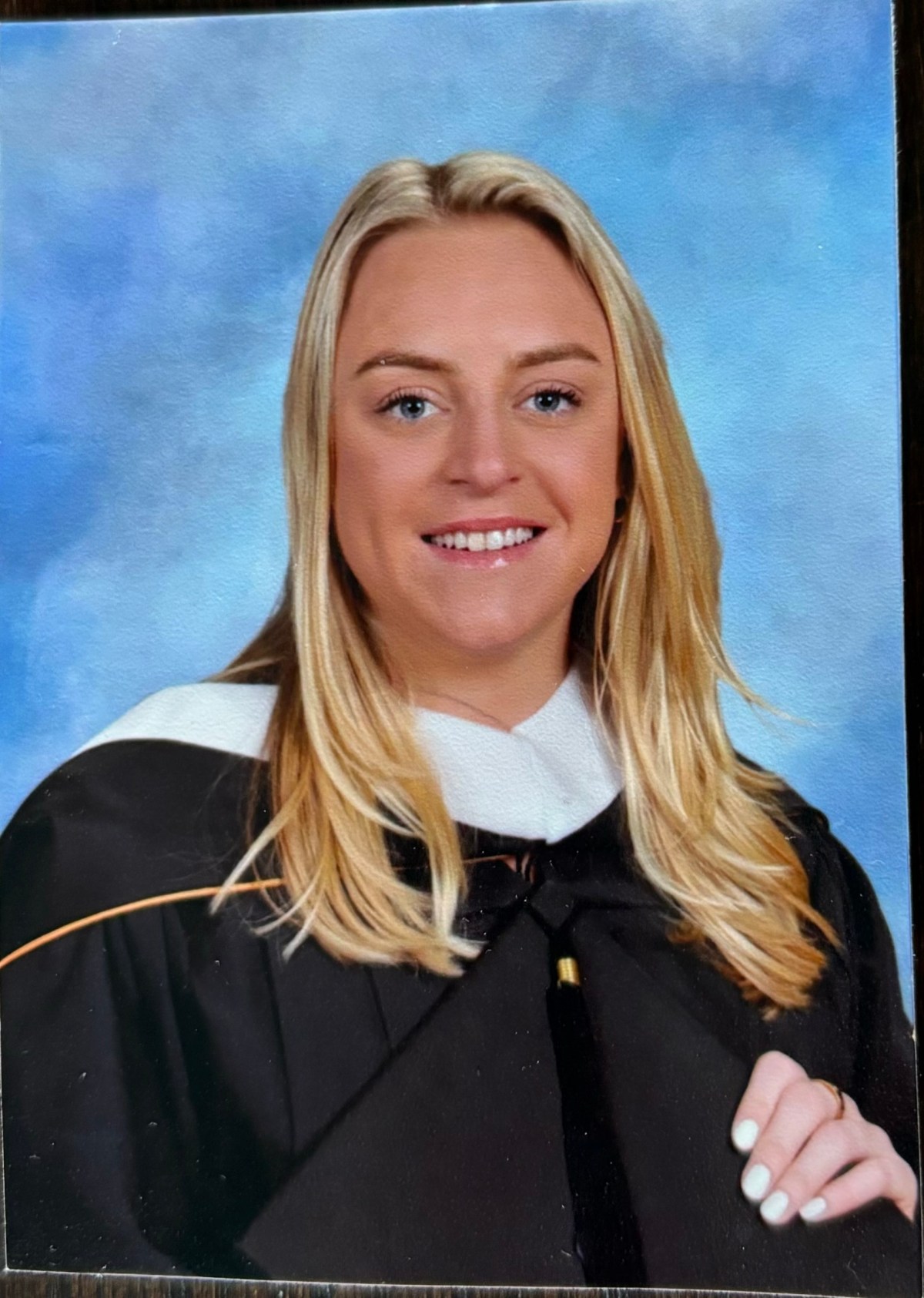
This comprehensive course builds upon the foundation of curriculum development and classroom management in the context of teaching English language learners. Expanding its horizons to embrace the digital age, the course adeptly weaves innovative technology integration into the domain of Teaching English to Speakers of Other Languages (TESOL). Crafted to empower prospective TESOL/BLE educators, the course hones in on fostering competence in designing, implementing, assessing, and reflecting within diverse language learning environments, all while capitalizing on the potential of cutting-edge technology. With a strong focus on practical application and discerning appraisal of technological tools, this course primes upcoming educators to excel amidst the ever-evolving educational landscape. Includes 10 hours of fieldwork.
Touro University TESOL Candidate Lauren Martin: She is a first-grade teacher. She graduated from St. Joseph’s University-Brooklyn in 2023 with a Bachelor of Science in early childhood and childhood education in both general and special education. In September of 2023, she began teaching her first teaching job in a first-grade classroom. This is her first semester working towards her master’s degree in Teaching English to Speakers of Other Languages (TESOL). As a first-year teacher, she was inspired by her colleagues as to how they guide their ELL students. This helped her decide on what to receive her master’s degree in and made it an easy choice as she knew that this was what she was passionate about. Her journey at Touro has just begun, but she can’t wait to learn all of the ways to support her ELL students on their academic path. Her favorite quote: ‘Far and away the best prize that life offers is the chance to work hard at work worth doing.’ —Theodore Roosevelt
I am proud to feature Touro University TESOL Candidate Lauren Martin’s Learning About the World
Click here for: Techtool Padlet link
Touro University TESOL Candidate Kenia Torres’ Tech Tools
EDDN 635 Curriculum Development and Classroom Management in the Technology Era
This comprehensive course builds upon the foundation of curriculum development and classroom management in the context of teaching English language learners. Expanding its horizons to embrace the digital age, the course adeptly weaves innovative technology integration into the domain of Teaching English to Speakers of Other Languages (TESOL). Crafted to empower prospective TESOL/BLE educators, the course hones in on fostering competence in designing, implementing, assessing, and reflecting within diverse language learning environments, all while capitalizing on the potential of cutting-edge technology. With a strong focus on practical application and discerning appraisal of technological tools, this course primes upcoming educators to excel amidst the ever-evolving educational landscape. Includes 10 hours of fieldwork.
Kenia Torres is a Bilingual Kindergarten teacher in the Brentwood Union Free School District. She received her Bachelor’s Degree in Child Studies with a concentration in Speech Communication from Saint Joseph’s University, a Bilingual Extension from Touro University, and is currently enrolled in a TESOL program at Touro University. Kenia is passionate about developing a classroom community that allows all children to achieve their academic and personal goals. In the future, she would like to pursue an educational leadership role to empower educators and students to catalyze school success. A quote that reflects Kenia’s vision of the educational field is: “Tell me and I forget, teach me and I remember, involve me and I learn.”- Benjamin Franklin
The assignment for EDDN 635 Curriculum Development and Classroom Management in the Technology Era was: To curate a list of technology tools that not only aid in instructional strategies and curriculum development but also facilitate community outreach and engagement.
Introduction: Briefly discuss the importance of integrating technology in education and its possible role in using it for community engagement.
Selection of Technology Tools: Choose 9 technology tools, ensuring a mix that includes tools for both educational purposes and community outreach. These tools could range from educational platforms and apps to communication and social media tools.
Tool Descriptions: Provide a concise description of each tool, highlighting its key features and the URL. Explain how each tool can be used in an educational context and for community engagement.
Practical Applications: Illustrate practical examples of how these tools can be integrated into teaching, curriculum design, and/or community outreach initiatives. Examples could include using social media for parent-teacher communication, blogs for student projects showcased to the community, or collaborative platforms for community-based projects.
Reflection and Analysis: Reflect on the potential impact of these tools on enhancing educational experiences and community relations.
Analyze any challenges or limitations in implementing these tools for both educational and outreach purposes.
Format and Submission: Choose of format of your choice – possibly a Storybook, Padlet, Flipgrid etc.
Kenia Torres’ submission
Kenia Torres, TESOL Candidate, Touro University
click:
Tech Tool (padlet.com)

