Touro University, GSE, TESOL Candidate Kelly Broshears on Academic Success for Multilingual Learners for EDDN 637

It is always a pleasure to feature exception candidate work. TESOL Candidate Kelly Broshears contributed an exceptional Discussion Board on Academic Success for Multilingual Learners for EDDN 637 – Second Language Learners and the Content Areas

In order to provide the most effective teaching, it is crucial that teachers of ELL students work off of what the student can already do and build upon their strengths. It is so often that educators work off of what students do not know and they focus on that negativity, instead of focusing on the positives of what students can already do and use that to their advantage. The assets being referred to also do not necessarily have to be academically based. According to Echevarria, et.al (2017), “these assets are related to language and cultural practices in the home… Teachers can build on these relationship roles to construct collaborative learning environments in the classroom.” (p. 7). By building off the strengths of the students, the teacher can create a more inclusive environment for students that makes all students feel like they can be successful and helps to provide the confidence they need to succeed.

Kelly Broshears, Touro University, GSE, TESOL Candidate

Kelly Broshears is a 4th semester student at Touro College and a member of the TESOL masters program. She received her undergraduate degree at Salve Regina University in Newport RI in 2019 with a major in early childhood education. “This is where I found a passion for working with ENL students. Currently, I am a kindergarten teacher for the NYC DOE in District 27.”

 Discussion Board: 1 CHAP I ACADEMIC SUCCESS by Echevarria, J., Vogt, M. & Short, D. (2017). Making Content Comprehensible for English Learners: The SIOP Model. 5th Edition, Pearson.

Kelly Broshears:

  1. WHAT Characteristics  INFLUENCE ELL’s having SUCCESS IN SCHOOL? 

The success of an ELL student in school can be connected to a variety of factors. There are the ones that I think of right off the bat that include the student’s prior exposure to the English language before attending school or the years the ELL student has been attending an English speaking school. However, research suggests that the characteristics that influence the school success of an ENL student goes much deeper than that. As stated earlier, knowledge of the English language is a main characteristic of student success. Another characteristic includes how deep the language proficiency is in the L1, as well as, the educational background of the student. For example, a student who is well educated in the L1 typically will have an easier time learning the L2 compared to a student who had limited access to school due to factors outside of the control of the child. If a student is more proficient in their L1 and has had more access to school in their native language, “they can transfer the knowledge they learned in their native country’s schools to the courses they are taking in the United States.” (Echevarria, Vogt & Short, 2017, p. 5) which, in turn, will more likely produce success. ELL success can also be determined on factors outside of the education realm. Some factors may include the family’s financial situation, abuse, refugee status from a potentially war-torn country, etc. As teachers of ELL students, it is incredibly important to recognize and acknowledge these characteristics when planning the best possible instruction for the individual students you work with.

2. What are some characteristics of ELL’s to consider to implement effective teaching? 

As previously stated, there are so many characteristics of ELL’s that are important to consider when teaching. In order for the instruction to be effective, these characteristics must be considered. In order to provide the most effective teaching, it is crucial that teachers of ELL students work off of what the student can already do and build upon their strengths. It is so often that educators work off of what students do not know and they focus on that negativity, instead of focusing on the positives of what students can already do and use that to their advantage. The assets being referred to also do not necessarily have to be academically based. According to Echevarria, et.al (2017), “these assets are related to language and cultural practices in the home… Teachers can build on these relationship roles to construct collaborative learning environments in the classroom.” (p. 7). By building off the strengths of the students, the teacher can create a more inclusive environment for students that makes all students feel like they can be successful and helps to provide the confidence they need to succeed.

You can also use student educational backgrounds in their native languages to help implement effective teaching. Teachers can build upon the literacy skills students may have in their L1 and work off of that to transfer those skills to English. This can be done through making connections from school to their outside world by looking at various things to read like a bill or a shopping list. You can also foster effective teaching by providing many opportunities for students to use conversational English. Lastly, in order to implement effective teaching it is crucial to have students make connections to their cultures because “students do not enter schools as blank slates. Many have had life experiences that are pertinent to the curricula.” (Echevarria, Vogt & Short, 2017, p. 8). By providing children with those connections to their cultures, it can give students a chance to show their knowledge, build their confidence, and they can teach their peers while learning how the things in their native countries might be different than in the United States.

3. How can we as educators transform the education of English Language Learners/ Multilingual Learners for  tomorrow’s world?

The key to transforming the education of ELL’s and ML’s for tomorrow’s world is multimodal learning. ELL students who are filling in quick and mindless worksheets are not being engaged enough and set up for success in the future. Students will need to be cognitively ready for purposeful and substantive conversations and interactions they will be having in the near future. It is an educator’s job to set these students up for this kind of success, but so often, these students are falling through the cracks because of teacher activities like simple worksheets. According to Walqui (2021), students “need to be skilled in understanding ideas, judging their validity based on evidence, and often making decisions based on inferential interpretations of the ideas and information presented in the narrative or written texts they encounter.” By providing ELL/ ML students with an opportunity to engage with text in various modalities and engage with a peer about the text, the students are then able to practice forming their own understanding and perspective on the topic, as well as, listen to and gain a peer’s perspective. Because ELL students have so much cultural knowledge to build upon that teachers can tap into, students should be well equipped to engage with others and learn from their peers. In order to transform education, we need to include these types of rich and engaging practices that will prove to be more effective in preparing students for the future than a worksheet.

4. What is one take-away from this week’s readings and how might it impact you teaching?

In my opinion, I learned a lot from this week’s reading and it was really eye opening. The biggest take-away I had from the reading is how important it is to build relationships in the classroom and be culturally responsive. I always heard professors talk about how important culturally responsive teaching is but after reading several articles and the text it is even more clear how important this is. For example, an ELL teacher in Oregon engages in home visits and pays special attention to important aspects of her students home lives so she can include these aspects into her lessons to make them more engaging and to make children have a sense of community. “Students are most engaged when they feel a personal connection to a lesson or unit, a connection that’s created in part by a teacher’s investment in culturally competent relationships.” (Kaplan, 2019). By considering all factors of an ELL students life and taking into account all of their strengths and interests, it is more likely that these students will have more success in school because the teacher is setting them up for that success with the environment he/she has cultivated.

References:

Echevarria, J., Vogt, M. & Short, D. (2017). Making Content Comprehensible for English Learners: The SIOP Model. 5th Edition, Pearson.

Kaplan, E. (2019, April 12). 6 Essential Strategies for Teaching English Language Learners. Edutopia. https://www.edutopia.org/article/6-essential-strategies-teaching-english-language-learners (Links to an external site.)

Walqui, A. (2021, January 5). Quality Education for ELLs and MLs: Why We Need It and How We Can Achieve It. NYSED. http://www.nysed.gov/bilingual-ed/topic-brief-1-quality-education-ells-and-mls-why-we-need-it-and-how-we-can-achieve-it (Links to an external site.)

from DB 1 CHAP I ACADEMIC SUCCESS

Kelly Broshears responding to peers:

Hi M., 

I really enjoyed reading your post this week and I felt like a lot of the things you mentioned resonated deeply with me and my reading this week as well. One thing that you mentioned that stood out to me was when you said about “Creating activities that sharpen all five senses and allow students to work in an interactive format will help them gain a greater understanding of both the English language and the world around them.” This jumped out to me because as a kindergarten teacher, this is the only way we really teach because it is proven that young children need that hands on and multimodal learning to help grasp new concepts. However, I know that as you go on in the years of schooling, hands on learning turns more into worksheets and textbooks which can be detrimental for an ENL student. I worry about these students because I feel that with so many teachers not having ENL training, they do not know how to differentiate for these students. This can cause these students to get lost in the shuffle. In my opinion, teachers who are struggling with teaching their ENL students should think about this: “Educators considering how to strengthen the quality of teaching for ELLs and MLs will find it provocative and productive to reflect on their own and other experts’ theories concerning how second languages are learned, how learning happens in general, what students bring to learning, and how teachers themselves learn and develop as expert professionals.” (Walqui, 2021). By reflecting and studying the theory and pedagogy behind teaching ENL students, most teachers can begin to shift their thinking and improve their practice. 

Reference:

Walqui, A. (2021, January 5). Quality Education for ELLs and MLs: Why We Need It and How We Can Achieve It. NYSED. http://www.nysed.gov/bilingual-ed/topic-brief-1-quality-education-ells-and-mls-why-we-need-it-and-how-we-can-achieve-it 

Hi L., 

I wanted to let you know that I thought your post this week was really great and I look forward to hearing your perspective throughout this course. As someone who is dual language, I think you bring a whole other side to this apart from just the teaching side that is interesting to hear. Something that you said really stood out to me. What stood out to me was when you mentioned overcrowded classrooms being an ineffective way to teach ENL students. Currently, I teach general education kindergarten and have 24 students in the room with no aide or paraprofessional. This is almost the maximum amount of students the NYC DOE allows in a kindergarten setting. I always say that this puts my students at a huge disadvantage since it becomes very loud at times and overstimulating, but this is true especially for the ENL students I have. I never thought about them potentially struggling more because of the setting so thank you for pointing that out. In a big school system like the DOE, unfortunately there is nothing we can do about the class sizes no matter how hard we fight for it. However, I really enjoyed the suggestion by Schwartz (2021), that said to use microphones in the classroom to combat this issue. She says that using a microphone “can help ELL students hear the nuances of your voice more clearly and understand you better”. This might help ENL students in a large classroom to understand different aspects of the language more clearly. 

Reference:

Schwartz, J. (2021, October 21). 10 strategies that support English language learners across all subjects. Edutopia. Retrieved June 9, 2022, from https://www.edutopia.org/article/10-strategies-support-english-language-learners-across-all-subjects  (Links to an external site.) 

Touro University TESOL Candidate Bianca Soto-King’s Reflections on her Fieldwork Experience in EDPN 673

EDPN 673 Methods and Materials for Teaching English as a Second Language

This course provides a historical overview of second language acquisition theories and teaching methods. Students learn how to apply current approaches, methods and techniques, with attention to the effective use of materials, in teaching English as a second language. Students will engage in the planning and implementation of standards-based ESL instruction which includes differentiated learning experiences geared to students’ needs. Emphasis is placed on creating culturally responsive learning environments. Includes 15 hours of fieldwork.

Bianca Soto-King is an NYC Public School teacher who currently works in Bensonhurst, Brooklyn. She teaches 6th grade ELA and is completing her master’s degree in TESOL at Touro University. She is a native Brooklynite and a lover of all things literary.

During my fieldwork hours, I learned how to plan standards-based ESL instruction and how to implement differentiated learning experiences in order to meet my students’ needs. By observing others and working on the assignments given by Professor Cowin, I was able to create a more culturally responsive learning environment for my students.

Bianca Soto-King, Touro University TESOL Candidate

Touro University TESOL Candidates Luz Chavarrio’s and John Zurschmiede’s Discussion Board Vlogs on Multilingual Learner Support

When designing rich and meaningful online courses discussion boards (DBs) are an opportunity to increase the social presence of students and facilitator. Vlogs instead of text-based DBs create a social presence for students and faculty, thereby allowing connectedness and group cohesion to develop.

Dr. Jasmin (Bey) Cowin, Assistant Professor and TESOL Practicum Coordinator, Touro University, GSE

DBs are an important vehicle to measure growth, connect with students beyond text-based contributions, introduce new technology, and interact using different modalities and media. I find that varying the format and giving students the ability to express themselves through different media introduces spaces of discovery, communication, and peer-to-peer learning while giving diverse learning styles various ways to shine.

This Discussion Board focused on a deep dive and exploration of early interventions as well as the RTI system. Touro TESOL candidates were asked to reflect on the importance of providing Multilingual Learners the support and interventions they may need. Candidates also reflected on assessing students in their native language in order to differentiate between academic or language issues.

Luz Chavarrio currently attends Touro College. This is her first year as a public school teacher. She is currently working as a Spanish teacher in an elementary school on the Lower East Side.

Luz Chavarrio’s Vlog on“Making Content Comprehensible for English Learners”

Vlog References:

Ariza, E. N., & Coady, M. R. (2018). Why Tesol?: Theories and issues in teaching English to speakers of other languages in K-12 classrooms (5th ed.). Kendall Hunt Pub Co.

Echevarría Jana, Vogt, M. E., & Short, D. (2017). Making content comprehensible for English learners: The Siop model. Pearson.

John Zurschmiede: “I am originally from South Africa where I graduated from the University of the Witwatersrand with a Batchelor’s in Primary Education. Since came to the United States, I have worked at private ESL institutions as an instructor and as an Academic Lead. I have also completed a Master’s in Adult Education and am currently studying at Touro college pursuing NYS TESOL certification.”

Vlog Response to Intervention:

Vlog references:

Emerson Dickman, G (n.d.). RTI and Reading: Response to Intervention in a Nutshell. https://www.readingrockets.org/article/rti-and-reading-response-intervention-nutshell (Links to an external site.)

RTI-Based Specific Learning Disability Determination Worksheet. (n.d.). https://wyominginstructionalnetwork.com/wp-content/uploads/2018/05/MTSS-SLD-Eligibility-Documentation-Worksheet.pdf

Teaching English to Speakers of Other Languages

New York is a state that speaks many languages. We need teachers who can find the common ground.

The MS in Teaching English to Speakers of Other Languages (TESOL) Program helps NYS-certified PreK-12 teachers more effectively teach and communicate with a diverse student population.

Academically rigorous and practice-intensive, the 33-credit program includes 50 hours of fieldwork and at least 20 days or 100 hours of supervised student teaching experience. Candidates that complete all coursework, fieldwork, and student teaching requirements are eligible for recommendation for ESL certification.

Touro University TESOL Candidate Meghan Schick on “Making Content Comprehensible for English Learners”

When designing rich and meaningful online courses discussion boards (DBs) are an opportunity to increase both the facilitators’ teaching and the social presence of the students and facilitator. Video DBs create a social presence for students and facilitators, thereby allowing connectedness and group cohesion to develop.

DBs are an important vehicle to measure growth, connect with students beyond text-based contributions, introduce new technology, and interact using different modalities and media. I find that varying the format and giving students the ability to express themselves through different media introduces spaces of discovery, communication, and peer-to-peer learning while giving diverse learning styles various ways to shine.

To gain a further understanding of early interventions as well as the RTI system Touro TESOL candidates were asked to reflect on the importance of providing Multilingual Learners the support and interventions they may need. Candidates also reflected on assessing this student in their native language in order to tell if it is an academic or a language issue.

Video contributions increase “the ability of participants…to project their personal characteristics into the community, thereby presenting themselves to the other participants as real people”

Garrison, Anderson, & Archer, 2000, p. 89.

Meghan Schick is completing her second semester at Touro Univerity, Graduate School of Education, TESOL & BLE Department and working towards her Master’s in TESOL.

I feel that I have already learned a lot of valuable information that will help me in my career.

Meghan Schick, Touro University TESOL candidate

Meghan Schick: “I thoroughly enjoyed reading Chapter 10 in “Making Content Comprehensible for English Learners.” I am very passionate when it comes to the topics of issues with Reading, RTI, and Special Education for English Learners. As an educator who has the opportunity to work with English learners, I have to be aware of their language proficiency levels. We have to be aware that a student’s difficulty to learn reading might just be from their limited English Proficiency and not mislabel them as special needs.

References:
Echevarria Jana,Vogt,M.E., & Short, D.(2017). Making Content Comprehensible for English Learners: The SIOP Model. Pearson

Meghan Schick, Touro University TESOL candidate

Questions:

  • How would you avoid the trap of confusing and labeling an entering ESL student with a student with special needs?
  • What is RIT and how might it be useful to you as a TESOL professional?
  • How might you use the RTI-Based Specific Learning Disability Determination Worksheet?

References:

Garrison, R., Anderson, T., & Archer, W. (2000). Critical inquiry in a text-based environment: Computer conferencing in higher education. The Internet and Higher Education, 2(2 – 3), 87-105. doi: 10.1016/S1096-7516(00)00016-6

Touro University’s Graduate School of Education TESOL Teacher Bianca Soto-King’s Materials Critique & Redesign for EDPN 673

EDPN 673 Methods and Materials for Teaching English as a Second Language

This course provides a historical overview of second language acquisition theories and teaching methods. Students learn how to apply current approaches, methods and techniques, with attention to the effective use of materials, in teaching English as a second language. Students will engage in the planning and implementation of standards-based ESL instruction which includes differentiated learning experiences geared to students’ needs. Emphasis is placed on creating culturally responsive learning environments. Includes 15 hours of fieldwork.

Bianca Soto-King is an NYC Public School teacher who currently works in Bensonhurst, Brooklyn. She teaches 6th grade ELA and is completing her master’s degree in TESOL at Touro University. She is a native Brooklynite and a lover of all things literary.

Redesign for Chapter 7 , Freak the Mighty

The first thing I would do is have a prereading activity. I would use Quizlet and assign vocabulary flashcards for homework the day before we read the chapter. The five words that I would present are perspective, trajectory, converging, swaggering and nanosecond. The flashcards would have the word in English, Spanish and Chinese, the page number the word is located in, a visual aid and the definition of the word.

Bianca Soto-King,
Touro University, GSE TESOL

Touro University’s Graduate School of Education TESOL Teacher Candidate  Kelly Broshears Morphology and Semantics Project: ‘The Giving Tree’ for EDDN 636

EDDN 636 Linguistic Structure of the English Language – Sociolinguistic Perspective

Course Description:
This course provides an understanding of basic linguistic concepts and their applications for TESOL instruction. Students will be introduced to the essential concepts of language development and modern linguistic components that are relevant to first and second language pedagogy. Specific concepts include: phonetics, phonology, morphology, semantics, syntax, pragmatics, discourse analysis, and the nature of regional and social variations in English and the relationship between dialects and ethnic identity. Students will explore the origins, diversity, and functions of human languages, in addition to the relationship between language and society. Students will also study key concepts of sociolinguistics in order to gain a solid understanding of the social and cultural dimensions of language. Includes 10 hours of fieldwork. 3 credits

Michele Goldin is an Assistant Professor of Bilingual Education and TESOL at Touro University Graduate School of Education. She received her Ph.D. in Bilingualism and Second Language Acquisition from Rutgers University. Her research broadly focuses on child bilingualism. As a heritage speaker of Spanish herself, she strives to increase our understanding of bilingual development with direct implications for successful academic outcomes, language policy and pedagogy, as well as bilingual and dual-language education.

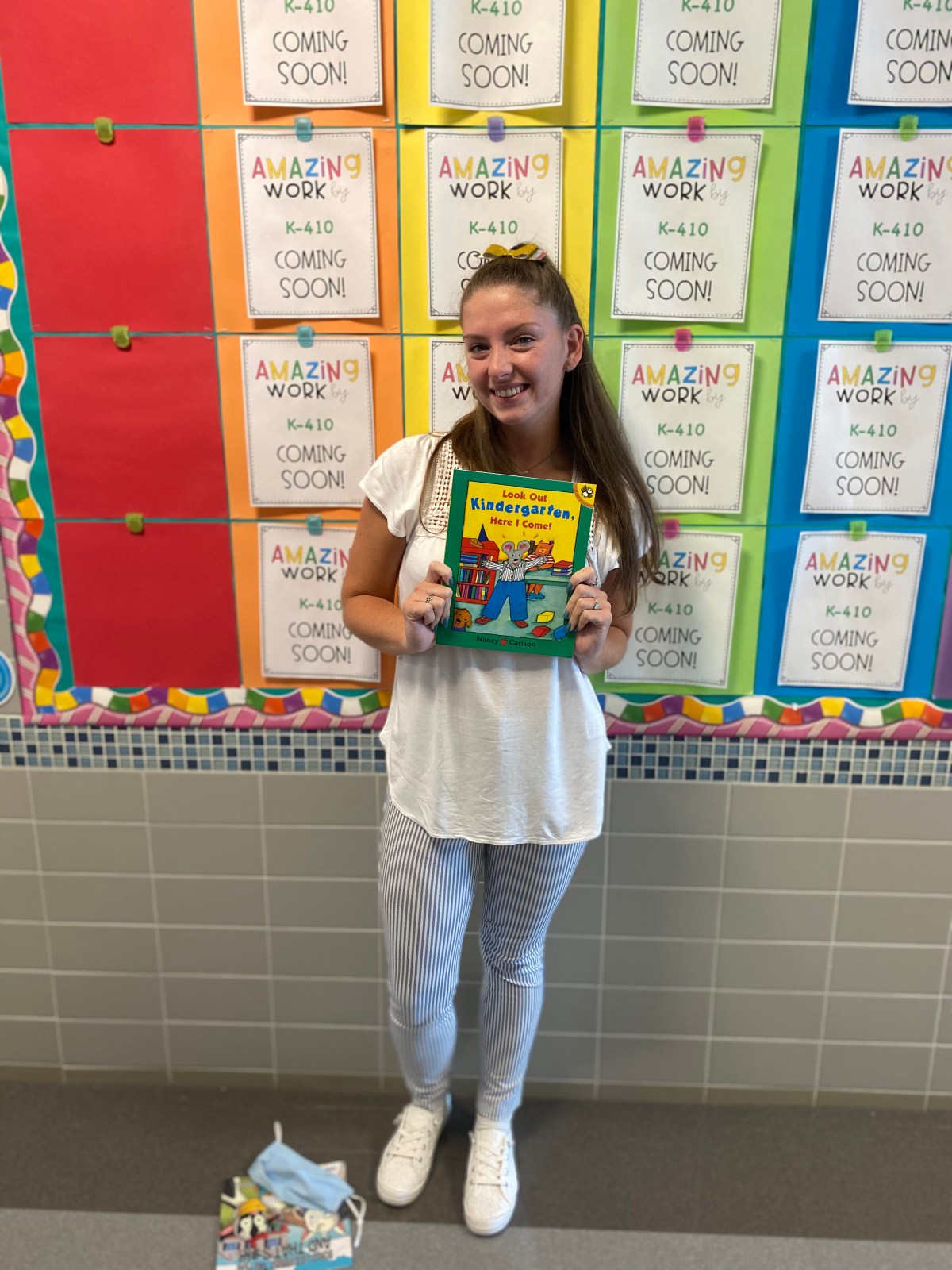
Kelly Broshears is a 3rd-semester student at Touro College as a member of the TESOL master’s program. She received her undergraduate degree at Salve Regina University in Newport RI in 2019 majoring in early childhood education. “This is where I found a passion for working with ENL students. Currently, I am a kindergarten teacher for the NYC DOE in District 27.”

Context games: One idea I thought of would be a game in regard to the context of the word. I would introduce a word and would read the definition of the word. Then, I would give 3 sentences with the word but two do not make sense in the context. Students would have to choose which sentence would make sense.

Kelly Broshears, Touro University, Graduate School of Education TESOL Teacher Candidate

Touro University’s Graduate School of Education TESOL Teacher Candidate Timothy Bura’s Linguistic Case Study for EDDN 636

EDDN 636 Linguistic Structure of the English Language – Sociolinguistic Perspective

Course Description
This course provides an understanding of basic linguistic concepts and their applications for TESOL instruction. Students will be introduced to the essential concepts of language development and modern linguistic components that are relevant to first and second language pedagogy. Specific concepts include: phonetics, phonology, morphology, semantics, syntax, pragmatics, discourse
analysis, and the nature of regional and social variations in English and the relationship between dialects and ethnic identity. Students will explore the origins, diversity, and functions of human languages, in addition to the relationship between language and society. Students will also study key concepts of sociolinguistics in order to gain a solid understanding of the social and cultural dimensions of language. Includes 10 hours of fieldwork. 3 credits

Michele Goldin is an Assistant Professor of Bilingual Education and TESOL at Touro University Graduate School of Education. She received her Ph.D. in Bilingualism and Second Language Acquisition from Rutgers University. Her research broadly focuses on child bilingualism. As a heritage speaker of Spanish herself, she strives to increase our understanding of bilingual development with direct implications for successful academic outcomes, language policy and pedagogy, as well as bilingual and dual-language education.

Touro University’s Graduate School of Education TESOL Teacher Candidate Timothy Bura received his Bachelor’s degree in Sociology/Anthropology from Long Island University Brooklyn. After completing his undergraduate studies, he joined the NYC Teaching Fellows and earned his Master’s degree in Teaching Urban Adolescents with Disabilities from Long Island University Brooklyn. “Currently, I am working on my second Master’s in Teaching English to Speakers of Other Languages at Touro University. I taught for four years at Midwood High School at Brooklyn College and transferred to Innovation Diploma Plus High School this year.”

I did some research into how to make and teach the phoneme /th/ and found a Chicago based speech therapist named Karen George’s website. She advises that you first teach the mouth movements and tongue placement for that sound. She writes that you place your tongue in between your teeth and breathe out. This will make an “unvoiced /th/ sound”. When David and I met to work on this, I had him do this exercise (George, 2012). Since we are required to wear masks, I separated myself from him to show him what I meant by placing one’s tongue in between their teeth.

TESOL Teacher Candidate Timothy Bura, Touro University – Graduate School of Education

Touro University’s Graduate School of Education TESOL Teacher Candidate Shannon Smith’s Text Analysis for EDDN 637, Second Language Learners and the Content Areas

EDDN 637 Second Language Learners and the Content Areas

Join the https://gse.touro.edu/academics/masters-programs/tesol/

Students will become acquainted with and practice effective approaches, methods, and strategies for teaching and evaluating English language learners in the content areas (ELA, social studies, math and science). Throughout the course, students will explore the impact of culture and language on classroom learning. Special challenges in teaching and assessment in each content area will also be discussed. Includes 15 hours of fieldwork.

Shannon Smith, a Touro University TESOL candidate pursues a degree in the TESOL program at Touro University, Graduate school of education. She is a certified general education and special education 1-6th grade. She is currently filling in as a leave replacement Kindergarten and First grade ENL

Text: American History, Unit 2: Creating a Nation

English language learners face a lot of challenges when the linguistic and cognitive demands of certain content areas are unaligned to their cultural background knowledge and perspectives. The academic standards recommended by the NYS for English language learners can be very overwhelming for both students and educators. Teachers play a critical role in ensuring that students are linked with available basic literature and prior knowledge whenever they are being guided to understand any of the general subjects(Haynes,2005).

The instruction begins with educators learning from the learners and putting ourselves in the place of our students with the frustrating, challenging factors they face on a daily basis so that we can learn and understand the way they do. As educators, we can find more engaging ways to help ELLs learn new material that draws on their own unique background knowledge and perspectives. I am currently a Kindergarten and first-grade ENL teacher. With some setbacks this year and a shortage of substitutes, I have been placed all over the school and do not see my ENL students as much as I would like to. I have not been able to cover the subjects I had planned to. When I do have the opportunity to see my students we are still working on letter and sound recognition which was difficult to find required texts and resources for since it is very simple and basic. I chose to use a resource that was provided in this course that will still be beneficial in my teaching since I am acting as a substitute majority of the time and work with students k-6. I chose to analyze and critique a chapter from a social studies textbook on the American Revolution. Chapter four of the American revolution is a relevant example of how English language learners face challenges when learning social studies, especially when relating to American history.

This American Revolution unit explores the major causes and people of the war, focusing on the importance of America and New York State during this period. The education system lacks efficiency in impacting new English learners to respond to cognitive needs because there is a lack of familiarity with the historical background being used. If a student is not from America or specifically New York State, but is expected to have prior background knowledge on New York State and information about America, students are not going to understand key ideas and details. A majority of ELLs do not have the same background knowledge that their peers have or that textbook authors take for granted, like knowing the 50 states and having them memorized. They also bring their own unique and valuable experiences and background to the classroom. Sometimes those experiences can be connected to the content to make the instruction meaningful and help them comprehend the material, but if they cannot make connections to their background knowledge and different points of view or ideas are expressed, they might miss important concepts and ideas in the lesson. A student might be a master in history about the country they are from, and know all about the regions and areas, and would be able to understand wars and battles that were fought where they were from, but cannot grasp or make connections to places like New York, Boston, Philadelphia, Massachusetts, etc. that this unit also places a huge emphasis on. The textbook states “The Treaty of Paris gave Britain most of Canada, all French lands east of the Mississippi River, and Spanish Florida.” (p.297). This could be very confusing to students who do not have background knowledge about these places. When a student hears “Spanish Florida” and does not know what state Florida is, what could it possibly mean to them by saying Spanish Florida? And how confusing could it be for them to talk about the French lands, but then also talk about Canada and Florida?

English Language Learners might have already learned about important historic moments in their own country, and now we are asking them to relearn something they learned about in a different way because what they have already learned is not correct or relevant to what they are learning in American history today in the classroom.  The first thing I would do prior to introducing the American Revolution is to pre-teach about America and introduce the 50 states. I would create engaging activities and games using visual representatives to help students recognize and eventually maybe memorize the 50 states so when they are reading and learning about them in this unit, they can make some connection to them or be familiar with Boston when it comes up, or New York.  Some ways to also engage ELLs in regards to this unit of the American Revolution to draw on their background knowledge and perspectives could be to hold a class discussion on where students are from and to show visual representations like maps to point out where they are from and then take that opportunity to compare it to America and relate it into the American Revolution and use this as a teaching point to teach about the states in America that they might see come up in lessons about the American Revolution. The more they see and learn about the states that are presented in the unit, the more they will start to recognize and memorize them and gain more knowledge about them.

This unit on the American Revolution has a lot of academic language and key vocabulary that is essential for students to know in order to understand concepts and ideas of the American Revolution. Two major ideas that come up a lot in this unit are cause and effect. The textbook states “Why It Matters Understanding cause and effect can help you see why events happen” (p.303). Pre-teaching the meaning of these words will eliminate any confusion when students are learning about a cause and effect of an aspect from the American Revolution. Explicitly explaining to students that a cause is an action or event that makes something happen, and an effect is what happens as the result of the action or event, is essential in this unit as a majority of the battles fought during the Revolution was a cause of something and always has an effect. This concept is also important to teach because a question on a state test might come up like “what was the cause of______” or “what was the effect of________”. It can be difficult for students to understand cause and effect especially on a topic that they do not connect to or understand. For example, the textbook states “In the mid-1600s, people began to leave the Massachusetts Bay Colony and start their own settlements. Some left because of religious reasons. Others left to find better economic opportunities” (p.304). In this statement, it is important for students to understand the cause and effect of people leaving the Massachusetts Bay Colony, but it might be difficult to understand if they do not have background knowledge of Massachusetts or know what that is, and also if they don’t understand the meaning of cause and effect it will be challenging to understand why wars in the revolution began and ended. Starting by having students find and share real-life examples of causes and effects that relate to their personal lives and backgrounds is a great start to introduce cause and effect of the American Revolution.

 In this unit of the American Revolution, there are also an incredible amount of unknown words for students and key vocabulary words that could be difficult to understand. Words like boycott, taxation, representation, parliament, proclamation, congress, protest, repeal appear a lot throughout the chapter and are important to be exposed to when learning about the different wars and battles of the American Revolution. For example, “In October 1765, representatives from nine colonies met in New York City in what became known as the Stamp Act Congress” (p.303). If students come across this excerpt, or it is read to them, and they do not know what congress means they are going to be very confused. The lines “no taxation without representation” also are repeated a lot throughout the chapter and is an important concept when learning about the American Revolution. Introducing these vocabulary words in depth is going to be beneficial to engage students in understanding the American Revolution. Some ways I would help my students is to pre-teach all of the important vocabulary words by utilizing word clouds and making sure I present a visual definition for each word. To begin a lesson on vocabulary, I would post a word cloud using wordsift containing the important vocabulary words for the unit. I would have the students on their own make a list of the words that they know and words that they do not know. After a few minutes of independent work, I would have the students turn and talk to a partner to compare their lists and learn from one another some of the words they did not know. After the partner talks I would move into the vocabulary instruction so that by the end of the lesson, every student would at least be exposed to and recognize every word.

To begin a lesson on vocabulary, I would post a word cloud using wordsift containing the important vocabulary words for the unit. I would have the students on their own make a list of the words that they know and words that they do not know. After a few minutes of independent work, I would have the students turn and talk to a partner to compare their lists and learn from one another some of the words they did not know

Shannon Smith, Touro University Graduate School of Education TESOL Teacher Candidate

References

 Open resource. America’s History. New York: Worth Publishers, 2022. PDF. Social Studies textbook Unit 4 637 (4).pdf Chapter 4: The American Revolution, 1754-1783 – Northern Local …

Haynes, J. (2005). Challenges for ELLs in content area learning. In TESOL annual convention, Baltimore, MD.

Touro University’s Graduate School of Education TESOL Teacher Candidate Meghan Schick on Figurative Language and Multilingual Learners

EDDN 637 Second Language Learners and the Content Areas

Students will become acquainted with and practice effective approaches, methods, and strategies for teaching and evaluating English language learners in the content areas (ELA, social studies, math and science). Throughout the course, students will explore the impact of culture and language on classroom learning. Special challenges in teaching and assessment in each content area will also be discussed. Includes 15 hours of fieldwork.

Join the https://gse.touro.edu/academics/masters-programs/tesol/

Text Analysis & Critique Assignment Description

Following a discussion on the cognitive and linguistic demands of the content areas, you will apply these ideas by closely analyzing a chapter, or an aspect of one content-area text currently in use or recommended by New York State/BOE. Upon analysis of underlying concepts, you will develop a thesis and the purpose of your analysis. You will sequence your ideas with evidence from the text supporting important points. Your critique will feature substantial, logical, and concrete development of ideas describing what makes that concept or section challenging for ELLs. Length: 3-4-page paper (typed, double spaced, 12-point font).

Learning Outcomes:

  • Demonstrate an understanding of various text analysis techniques in relation to educational content-area texts.
  • In written form effectively articulate, evaluate and critique educational content-area texts concepts using professional TESOL language, theory, and standards.
  • Ask questions from the view of an ELL/ESL learner that can be meaningfully answered using content-area text analysis.
  • Evaluate evidence; interpret data such as ELL students cannot glean meaning from context when they have too many words to decipher.
  • Express yourself effectively on graduate-level writing

Meghan Schick is a graduate student in the Masters of Education TESOL program at Touro University’s Graduate School of Education, TESOL/BLE program. “I am really enjoying learning more about how to support my students who are English Language Learners in this program. I hope to become a TESOL teacher one day in the future.”

I think that acting out similes and idioms is another effective strategy to support English language learners. One way I would teach my students about similes and idioms is by showing them visual representations from the text. I would also have the students create their own visual representation of each simile and idiom we find in the novel. For example, I would have the student copy down the sentence, “It was like having a chestful of bats”(Davies, 4). I would then encourage them to draw a visual representation of what they believe it means. I would have the students turn and talk to share their ideas with each other.

Meghan Schick, Touro University, Graduate School of Education TESOL Teacher Candidate 

Touro University’s Graduate School of Education Advanced Certificate in TESOL Candidate Marie-Nansie Victor on Morphology and Semantics for EDDN 636

EDDN 636 Linguistic Structure of the English Language – Sociolinguistic Perspective

Course Description
This course provides an understanding of basic linguistic concepts and their applications for TESOL instruction. Students will be introduced to the essential concepts of language development and modern linguistic components that are relevant to first and second language pedagogy. Specific concepts include: phonetics, phonology, morphology, semantics, syntax, pragmatics, discourse
analysis, and the nature of regional and social variations in English and the relationship between dialects and ethnic identity. Students will explore the origins, diversity, and functions of human languages, in addition to the relationship between language and society. Students will also study key concepts of sociolinguistics in order to gain a solid understanding of the social and cultural dimensions of language. Includes 10 hours of fieldwork. 3 credits

Join Touro University, GSE: Teaching English to Speakers of Other Languages (TESOL) and Bilingual Education and Services https://gse.touro.edu/academics/advanced-certificates/

Marie-Nansie Victor’s personal introduction: My name is Marie-Nansie Victor. I immigrated to the United States from Haiti about two decades ago. I am married and blessed with four children. Currently, I work as a paraprofessional for the New York City Board of Education. I received an associate degree in Liberal Arts from Kingsborough Community College, and I went to York College where I graduated with a bachelor’s degree in French. I am now working toward an Advanced Certificate in TESOL at Touro College after completing a master’s degree in Early Childhood Education (General and Special Education.)
Even though I have a busy life between work, school, and family, I manage to find time for some of my favorite hobbies like cooking, baking, and reading. With the help and support of my instructors, I successfully complete all my assignments. Soon I will be working as a teacher. I have a passion for teaching, and I hope to inspire all my students.

Michele Goldin is an Assistant Professor of Bilingual Education and TESOL at Touro University Graduate School of Education. She received her Ph.D. in Bilingualism and Second Language Acquisition from Rutgers University. Her research broadly focuses on child bilingualism. As a heritage speaker of Spanish herself, she strives to increase our understanding of bilingual development with direct implications for successful academic outcomes, language policy and pedagogy, as well as bilingual and dual-language education.

Difficult Words for Multilingual Learners

First, I will divide the class into four heterogeneous groups, and each group will discuss one of the words written on a different color card. Then a member of the group, most likely an ELL, will share with the class, while the other members will assist and support him/her.

Touro University’s Graduate School of Education Advanced Certificate in TESOL Candidate Marie-Nansie Victor