https://video214.com/play/IVyO6Jn78IjgR0khc0DvfA/s/dark


2018 Applied Linguistics Winter Conference (ALWC 2018) accepted Proposal Applied Linguistic Conference 2018 in New York City 2018
Prof. Dr. Jasmin Cowin Graduate School of Education – Touro College
Presentation Title:
From Russia with Love – Communicative TESOL Workshops at Plekhanov University
Presentation Abstract:
Plekhanov’s Winter University organized by the University’s Foreign Languages Department focused on “Current Global Trends in Teaching English.” Over the course of five days, the workshop attendees were challenged to incorporate new teaching approaches based on communicative, student-centered components and activities with a view towards culturally relevant pedagogy.
Presentation Summary:
This presentation is a report on the Plekhanov Russian University of Economics Winter University 2018 conference of the University of Tomorrow: Innovative Pedagogy and Methodology. Thematically, Plekhanov’s Winter University focused on “Current Global Trends in Teaching English.” The overarching conference theme was on the urgency to adapt to a rapidly changing world while creating agile mindsets in students and facilitators. The workshops presented were: Current Global Trends in Teaching English; Developing Materials and Resources in Teaching English – Methodology in Teaching English; and E-Resources Discovery and Analysis. As a final project, participants submitted online learning modules for their EFL courses focused on content-based instruction while incorporating the flipped classroom model. While designing the workshops, it became clear that many of the communicative activities and teaching approaches would require participants to step outside their comfort zone. Over the course of five days, the workshop attendees were challenged to incorporate new teaching approaches based on communicative, student-centered components and activities. Through using Harkness method strategies which encourage open classroom dialogue, the workshops were transformed into “Think Tanks” emphasizing a nurturing environment. This anxiety-free, collaborative approach supported risk-taking, opening-up within the group, and personal initiation of hands-on activities and projects. Upon reflection, the four pedagogical C’s: communication, cooperation, creativity and critical thinking are culturally transferable and as relevant as ever in engaging teachers and students to become agile thinkers, leveraging learning for continuous improvement within a culturally relevant pedagogical approach.
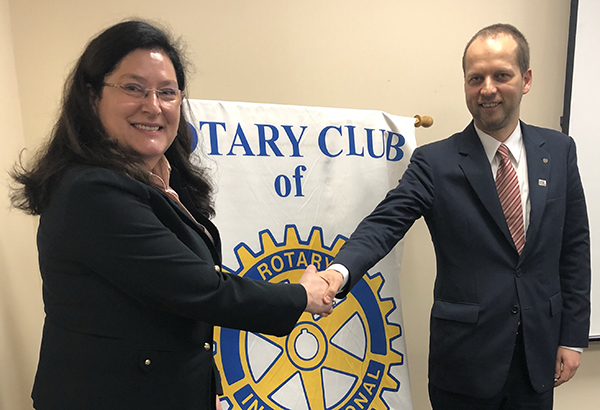
On February 21, 2018, the Rotary Club of New York, Host Club #6, hosted the Permanent Representative to the United Nations of the Republic of Latvia, Ambassador Jānis Mažeiks at the United Nations International Breakfast meeting. The honorable Ambassador also spoke about the Security challenges in the Baltic region and answered many questions about the status of Latvia in the region, its economic qualities and challenges with Russia and in general. In addition, the Ambassador spoke about Latvia’s promotion of multicultural educational integration to avoid minority ghettos. Latvia’s government sees language as a central element of identity and 60% of their classroom teaching is bilingual with 8 languages taught in their school system. RCNY’s newest member Laura Cristanelli, who also arranged for the Ambassador to speak at the RCNY meeting, was inducted at the beginning of the meeting.

 TRENDS AND CURRENT ISSUES IN SECOND LANGUAGE ACQUISITION
ONLINE COURSE EDDN 639
O: 212-463-0400 232 West 40th Street, Room 408 New York, NY 10018 |
|||
|
|
As an Assistant Professor at Touro College, Graduate School of Education some of my teaching is online. Part of the student-centered online learning experience are weekly discussion boards with questions and responses related to the assigned readings.
I believe discussion boards are reflective in nature as they provide students with “reflection and maturation time” to absorb and consider the required readings on a deeper level, see Reasons to Use Online Discussions. As courses move forward, student posts often mature in-depth and feature more thought-out commentaries on discussion boards.
In my opinion, the best online postings often personalize and connect the readings to their teaching experiences as is the case with the contribution of Mr. R.,a teacher candidate at the TESOL/ Bilingual Advanced Certificate Programs, Touro College, Graduate School of Education. Mr. R.’s contribution on chapter 3 – Crosslinguistic influences, Understanding Second language acquisition by L. Ortega is exemplary. Mr. R. interweaves his analysis and reflection of the chapter with personalized references to his classroom experiences as an educator. The following discussion board contributions are published with the express permission by Mr. R.
Understanding Second Language Acquisition by Lourdes Ortega
From reading Ortega and thinking about your own experience/observations as a teacher and a learner, how can an L1 negatively influence an L2 (e.g., L1 Mandarin Chinese and L2 English)? What about the other way around (e.g., L1 English and L2 Mandarin Chinese)? Are there any interesting asymmetries? (The Contrastive Analysis Hypothesis would predict reciprocal influences.) In your written response, please choose two languages to exemplify your discussion.
According to Ortega, Transferability can hold components that can negatively impact the L2’s development. This is represented by a study publicized in the Netherlands. It explains that learners both consciously and subconsciously have an intuition about how transferable certain phenomena are. One example provided in the text involves a study of the transitive and intransitive meaning of certain verbs in three different groups of L1 Dutch learners. The results showed that L1 learners who were more proficient in their L2 less likely accepted the intransitive verbs in comparison to the group of students who were beginners in the L2 language of English. The text suggests the reason why this may be the case is that the younger learners are more likely to rely on their L1 language when transferring both transitive and intransitive verbs, however, their older counterparts are more likely to mark those transfers as too similar to their L1 and therefore prevent themselves from transferring it. Ortega identifies this theory as “beyond success”, which was an expression created by Kellerman in 1985.
As an educator who has worked with ENL students of all levels, one phenomenon has presented itself over and over again. Students who I’ve provided instruction to during their beginner levels were always more likely to use cognates as indicators that would assist them when reading out loud during guided reading instruction. As several other students who held higher levels of proficiencies in their L2 were placed in my classroom, it was obvious that some, although at a higher reading level, in fact, demonstrate more mistakes when they were given a running record in relation to phonological mistakes of pronouncing prefixes correctly. My further analysis of their running records was able to provide me data that could support this theory mentioned in the text.
2. From reading Ortega and thinking about your own experience/observations as a teacher and a learner, how does L1 positively influence L2 (e.g., L1 Arabic and L2 English)? What about the other way around (e.g., L1 English and L2 Arabic)? Are there any interesting asymmetries? (Contrastive Analysis Hypothesis would predict reciprocal influences.) In your written response, please choose two languages to exemplify your discussion.
As per Ortega, L1 is able to positively influence L2 when the L1 holds certain similarities such as the ones mentioned in this chapter. According to Ortega, research that was collected amongst Finnish students who also spoke Swedish had fewer advantages when learning English as an L2 language when comparing them to Swedish students who also spoke Finnish and were learning English as an L2. Ortega explains that certain similarities in typological features that exist between the Swedish and English languages contributed to the advantage.
One of my own experiences in relation to this is not only knowledge-worthy but also gently humorous. In my first year of teaching, there was a student who arrived from Portugal and spoke no English whatsoever, therefore he was placed in a newcomer’s class with a majority of the students who spoke Spanish as their L1. As the year progressed the students became more familiarized both socially and academically, therefore at which point many of us noticed that this student began to grasp the Spanish language at a much faster rate than English. It was clear that the students’ L1 language of Portuguese had many similarities, including cognates that descended from a common language to that of the L1 of the other students. In addition, much of our focus has always been on identifying common roots between our students L1 and their L2, in this case, English having been their L2. Through this emphasis in our instruction, we may have inadvertently identified those same similarities between the L1’s of our students; therefore the students grasped Spanish much faster than English. It truly was one of those cases where the students learned from each other and at the time I found it very intriguing as a first-year teacher.
3. What other issues, such as language universals, complicate cross-linguistic influence? And how is it that sometimes, even if a negative transfer occurs, it does not result in ungrammaticality? Please give examples to support your claims.
One additional issue mentioned in the text, that complicates cross-linguistic influence is titled Markedness. This source of universal language influence is covered in the text between the distinction of voiced and voiceless final stops. According to the text, English and German languages have the same number of voiced and voiceless consonants, however, based on how they use it within the word differs and can produce performance difficulties in their L2 language, more precisely due to the influence of markedness.
In regards to negative transfer that does not result in ungrammaticality, Ortega identifies errors of omission, also titled avoidance. According to a study by Jacqueline Schachter, ungrammaticality was avoided due to the lessening in probability for when a language learner would use the specific transferable component of their L1, as opposed to having the opportunity when they could. The example most extensively mentioned in the text is when examining the use of relativization by Chinese and Japanese L1 learners in comparison to Persian and Arabic L1 learners. The latter of the two pairs attempted to use relative clauses much more often than the former, consequently producing more errors, and taking additional risks in the L2 usage. The former of the two pairs displayed the consequences of avoidance because the Chinese and Japanese languages differ much more in English than that of the Persian and Arabic languages.
4. Consider Ortega’s discussion of avoidance (particularly Schachter, 1974), underuse, and overuse. How can understanding these phenomena better inform our understanding of cross-linguistic influence? Please give examples to support your claims.
The understanding of Avoidance discussed in Ortega’s text can better inform our understanding of cross-linguistic influences by providing a more in-depth look at the influences of those avoidances. Ortega provides examples of misdirection when observing the results produced by Jacqueline Schachter’s study in 1974. Although on the surface, her study showed that Chinese and Japanese L2 writers were displaying fewer mistakes than that of the Arabic and Persian writers. However, when further analyzing the writing samples, it was clearly obvious that fewer mistakes actually went parallel with how many attempts were made that would result in such a mistake, this case being in relation to relative clauses.
This phenomenon attempts to explain the impacts that exist from the idea that “accuracy equals appropriate development”, and how this idea can affect an L2 learner in a negative way. Furthermore, the idea of overuse and underuse better frames a picture of how L2 learners from variously different L1 languages can actually underuse a specific rule, based on the equivalency of such usage in their L1 language. The motivators in Ortega’s text indicate that these language differences can be attributed to semantics as well as the morphological rules in the L1’s language. In a practical and relatable view, as an educator, one can learn to understand why it’s so important to understand the differences that exist within the L1 languages that many of our students possess. However, no matter the similarities in educational placements that several L2 learners receive within an educational system, it’s important that we understand the difference that may influence their success at developing their L2. This will provide us with a more individualized picture of each student, precisely focusing on his or her language differences and how they may provide support to their L2.
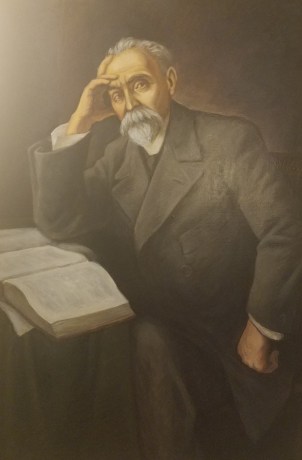 E-learning Ecologies for ELT Teachers, a keynote presentation for Plekhanov Russian University of Economics, Winter University.
Plekhanov Russian University of Economics Winter University 2018
University of Tomorrow: Innovative Pedagogy and Methodology

by Jasmin B. Cowin, Ed.D., Associate Professor of TESOL and Bilingual Studies
Graduate School of Education, Touro College, NY
It was a distinct honor to be the keynote speaker and workshop facilitator for the XIX Winter School, Plekhanov Russian University of Economics in Moscow. Thematically, Plekhanov’s Winter University focused on “Current Global Trends in Teaching English.” The Head of the Foreign Languages Department, Irina Ekareva, Ph.D., Associate Professor, a highly regarded scholar of historical sciences, founded the yearly conference in the spirit of the importance of lifelong learning. Collectively, the department instructors passed international professional exams and participate on a regular basis in international conferences and grants. The Foreign Languages Department is actively introducing and using the latest interactive technologies in teaching foreign languages through meetings and hiring international specialists for workshops and conference presentations.
Prof. Ekareva’s overarching conference theme was on the urgency to adapt to a rapidly  changing world while creating agile mindsets in students and facilitators. She opened the conference with her observations on the acceleration of change domestically and globally. Her remarks crystallize a common global theme on the far-reaching disruptors within the education landscape and the dynamic developments in regards to career pathways for the iGen and Gen Alpha generations. Both Generation Alpha and iGen are the first smartphone generations in our history to be immersed from birth in the super-connected social networking and gaming landscape.
The daily workshops designed and facilitated by Prof. Dr. Cowin were: Current Global Trends in Teaching English; Developing Materials and Resources in Teaching English – Methodology; E-learning & Micro-Methodology in Teaching English; and E-Resources Discovery and Analysis. As a final project, participants submitted online learning modules for their EFL courses focused on content-based instruction while incorporating the flipped classroom model.
 While designing the workshops, it became clear that many of the communicative activities and teaching approaches would require participants to step outside their comfort zone. Over the course of five days, the workshop attendees were challenged to incorporate new teaching approaches based on communicative, student-centered components and activities. Through using Harkness method strategies which encourage open classroom dialogue, the workshops were transformed into “Think Tanks” emphasizing a nurturing environment. This anxiety-free, collaborative approach supported risk-taking, opening up within the group, and personal initiation of hands-on activities and projects.
Upon reflection, the four C’s: communication, cooperation, creativity and critical thinking are culturally transferable and as relevant as ever in engaging teachers and students to become agile thinkers, leveraging learning for continuous improvement.

What does the future of public, private and corporate education hold for us? I believe Augmented Reality, Artificial Intelligence (AI), machine learning, natural language processing, neural nets and deep learning will be the catalysts for world-changing disruptions in fields such as medicine, education, and job creation. Google, Facebook, Amazon, Microsoft, Baidu, Ford, Tesla to name but a few are positioned to be leaders in this transformation. Questions on institutional pathways to success and viability need to be framed against the background of AI, super intelligent machines and the broader questions of humanity and human consciousness.
In The Gears of my Childhood, Seymour Papert states “What an individual can learn, and how he learns it, depends on what models he has available. These questions raise, recursively, the question of how he learned these models. Thus the “laws of learning” must be about how intellectual structures grow out of one another and about how, in the process, they acquire both logical and emotional form.” Papart sees the computer as the “proteus of machines,” the universal enabler, an instrument flexible enough so that “many children can create something” which assimilates new models of knowledge into their individual styles of learning. However, kindling the spark of “love” for learning and inquiry as the driving force in creating a “genesis of knowledge” is the dominant message of Papert’s essay and the universal message to and for educators.
For Ray Kurzweil “Technology goes beyond mere tool making; it is a process of creating ever more powerful technology using the tools from the previous round of innovation.” As a generation of students prepares for their future, they must be prepared for a fluid and lifetime assimilation of new technology and models of national and international coexistence. However, Luke Rhinehart aka George Cockcroft, a psychiatrist, university professor, and writer of the cult novel The Dice Man wrote: “Man must become comfortable in flowing from one role to another, one set of values to another, one life to another. Men must be free from boundaries, patterns, and consistencies in order to be free to think, feel and create in new ways. Men have admired Prometheus and Mars too long; our God must become Proteus.”
Thinking about the future of education and humanity brought forth the questions: Is the quest for AI a quest to create God? If yes, in whose image? Alternatively, is this quest for the ultimate AI the ultimate archetypical story on the search for immortality? After all, humans have fantasized about the possibility of bringing a loved one back from the dead ever since that fateful, everlasting separation of Eurydice and her husband Orpheus on their wedding day through the venom of a viper. In this light, Rhinehart’s words that “men must be free from boundaries” seem prophetic.


Virtual Worlds (VW’s) are bringing new challenges and a possible disruption of campus life as we know it to the forefront of higher education institutions via virtual campus creation. The quest for exceptional immersive learning spaces requires leaders in higher education and institutions to reflect on processes and practices into VW and 3D environments.
In their book E-Learning Ecologies: Principles for New Learning and Assessment, Bill Cope and Mary Kalantzis explore the role of new technologies in communication with learners, changing knowledge representation and the role of new technologies in transforming educational institutions. E-learning has created robust learning societies outside academia. I predict that in the near future, educators, students, and VW participants will spend considerable time in VW’s interacting with each other.
Exploring new technological resources such as VW’s and their unique environments opens new dimensions of the formative teaching and learning process. The landscape of these”multimodal” workspaces has a global reach. Pierre Baldi and Crista Lopez discuss in their article The Universal Campus: An open virtual 3-D world infrastructure for research and education the “Universal Campus”, providing a campus 3-D virtual world with multiple buildings featuring fully furnished laboratories, classrooms, meeting rooms, auditoriums, concert spaces, libraries ,and lecture halls enabling virtual meetings and interactions for faculty, students, visitors, and administration. In my opinion, VW together with 3 D technology such as the Oculus will create innovative, global, transformative knowledge spaces.
 Dr. J's Education Blog