Open Library – a Project of the non-profit Internet Archive

“Open Library is an open project: the software is open, the data are open, the documentation is open, and the team welcomes individual contributions. Whether fixing a typo, adding a book, or writing a widget – it’s all welcome.” from  Open Library

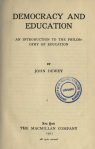
As an educator and Professor, I love this site.  Instead of asking students to buy classic textbooks such as John Dewy’s Democracy and Education, all my students need to do is sign-up for the free library, download the book as a PDF and read it for free.  A search function for keywords is incorporated and extremely helpful in pulling content up. Nearly three million books are available in digital form, some can be borrowed, some can be downloaded and read.  In addition, there are books in other languages than English such as Italien, Greek, Chinese, and German.  For example, one can find the complete Die Harzreise by Heinrich Heine. Johann Wolfgang von Goethe has 251 books in German dedicated to him. Pindar’s The Olympian and Pythian Odes are in this realm as is Gildersleeve’s Latin Grammar and Athenaze: an introduction to ancient Greek. Interested in learning Chinese? You can borrow: Conversational Chinese, with grammatical notes
prepared by Teng Ssŭ-yü.

It is possible to borrow up to five eBook titles for 2 weeks each, either in your browser or as a PDF or ePub. Reading is available in Adobe Digital Editions as a PDF or ePub.


Portcrash – a Digital Learning Enviroment

Maike Niemeier, the founder of Portcrash, believes that for effective learning children need to form an emotional and physical bond with real-life elements; teaching only digitally would be to abstract. This is why Portcrash is combining digital and analog content and aiming at bridging the gap between traditional childhood education and digital media. Through storytelling and gamification centered around the feisty intergalactic pirate girl Cap’n Portcrash and her crew, children can explore art, physics, chemistry, coding, math, and music in their spare time.

Maike is the creative mind behind Cap’n Portcrash and her crazy crew of pirates. She’s the one who creates the stories, thinks up the extraordinarily long words and wields the paintbrushes and pens. With twenty years of experience in elementary music pedagogy and instrumental teaching, together with her studies of Art and Music Pedagogy at Bielefeld University, she has a firm foundation for offering you a cool learning system.

Maike founded her own school of Art and Music ten years ago while she was still a student, and teaches children, teens and adults. She and her colleagues have run  projects in preschools and schools at all levels, with everything from small groups to entire schools of up to 400 children. She has also been teaching music at a secondary school, the Städtisches Gymnasium in Petershagen, for two years. Her father was an elementary school principal, so she’s well versed in formal education systems and knows what’s important to teachers.

PortCrash

Portcrash is her second company, and she runs it parallel to her music school. It uses books which feature QR-coded links to browse games, experiments, and additional materials to educate children in a playful, humorous way while being based on pedagogic principles. Design, haptics, and audio are tailored to provide children with the conditions they need to improve their focus and to strengthen effective learning.


The EdTech startup was founded late 2017 with the aim to make education fun for students, teachers, and parents alike. Alongside the educational games, the Portcrash engineering team also created a licensing system for educators: ‘Rock the Boat with Cap’n Portcrash’.

Apps – all themed around Cap’n Portcrash and her piratey pals – take children age four and up on a crazy, adventurous journey into distant galaxies and steer them towards the learning objectives. According to the website “The apps are based on our scientifically-underpinned learning system; that ensures an optimal learning environment.”

Source & Image: Portcrash UG & Co. KG

Portcrash Website


Sciterra, Innovation in the Academic Marketplace

sciterra
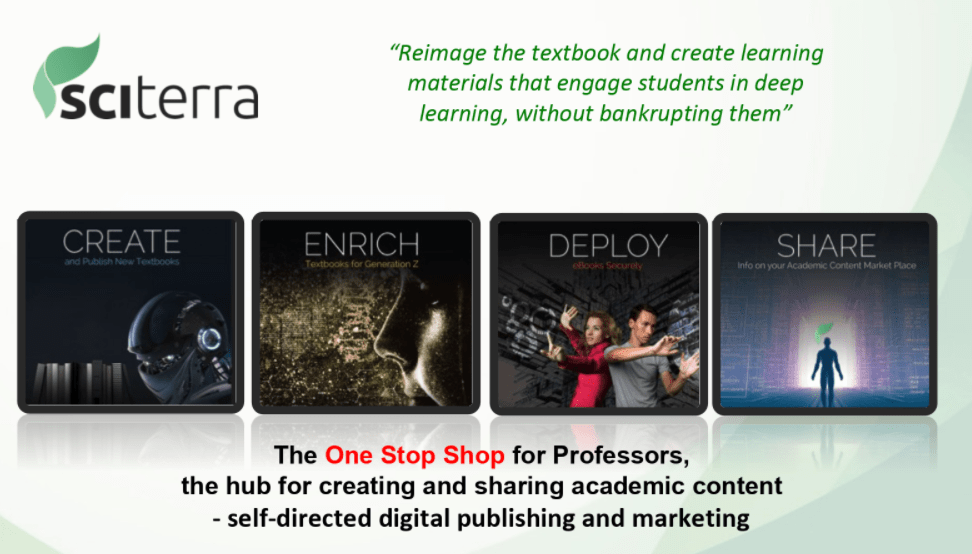
Sciterra is a long overdue online marketplace designed to streamline the gathering and sharing of learning content.  Academics, teachers, indeed anyone who writes and publishes now has an opportunity to promote their textbooks on Sciterra.  Sciterra is an easy to use academic content marketplace for content marketing and distribution. It also provides all the tools needed for content creators to create, customize, publish, promote, sell, share and distribute to professors and students.
Sciterra a welcome disrupter in the publishing landscape where the average publishing process of 2-3 years is way too slow to provide current and relevant content in this quickly shifting environment where our knowledge half life becomes ever shorter.  Many students, find traditional textbooks to be an expensive and nearly useless fact of life in college.  Ineffective learning ensues, with whole chapters skipped because the content is not engaging or features dated content.  In addition, the market is controlled by five large publishers and their printers. Sciterra technology reinvents publishing for the mobile, digital era by building engaging, interactive learning content combined with superior digital publishing and distribution solutions.
Here a summary of the modular Sciterra technology available for publishers which consists of:

A content creation platform that provides content creators and administrators a publishing platform with the features they need to create and distribute content to various digital channels. It allows content owners to reuse existing content to create customized books, course content, and learning materials—without going through extensive editorial processes. It gives content owners control over their content creation and distribution process. All content is stored in a central content management repository for easy access.

Production of high quality content with updated pagination, consistent look-and-feel, automatic updates of cross-references, automatic index creation, optimization for various devices, and many other advanced content features. Content owners can even add rich media like video, slideshows, and animations to engage the audience

Media Library: to easily create and manage dynamic QR Codes for multimedia content (eg. videos). Our platform provides all of the functionalities needed to manage and assign new content. QR Codes can be redirected to new content, performing of batch actions, designing of QR Codes and more.

Digital Rights Management (DRM System) to encrypt and securely distribute digital content. It controls rights management and encryption for content protection and secure content fulfillment for delivery to user (and mobile device).

Mobile eReader applications to allow users/readers to study.  A robust high-end reading app that really leverages the power of the new mobile and cloud technologies to bring reading back to its essence.

And yes, you will get an ISBN number!

These solutions are interesting for universities and professors  to create and instantly deploy content to readers. The technology can be used in modules or as a complete end-to-end solution. Sciterra also customizes books for clients to integrate specific and unique needs to their publication.

20180115_172631Here the link to set up your account on the Sciterra Homepage
Create your own web page and write that book you have always wanted to write!

Marlboro College News: Teaching with Technology Program Goes Fully Online

20161008_163312

Marlboro College’s popular Master of Arts in Teaching with Technology program will change from a low-residency format to a 100 percent online curriculum starting in Fall 2018. After extensive market research and ongoing interest from all over the United States, this transition is intended to make the program more accessible to prospective students outside of New England and internationally. To reflect the format change and current trends in the profession, Marlboro will also change the name of the program to Master of Arts in Teaching: Learning Design and Technology.

“I’m very excited about this transition,” said Caleb Clark, who has been faculty chair of the program for 10 years. “The program has been about 80 percent online since it started in 1998, so we have lots of experience making online learning a rich and effective experience that is human-centered.”

Since the low-residency program began two decades ago, many graduates have become leaders in educational technology and are working in Vermont schools as technology integration specialists, teachers, and thought leaders. In addition to the newly reimagined master’s degree, Marlboro also offers VT credits for the Educational Technology Specialist endorsement and continuing education courses.

“Technology has reached a level that makes online learning much more humane than in the past,” added Clark. “For example, we’ll have regular class meetings via video conferencing technologies that have matured to be very usable and consistent and our courses are hosted in a best-of-breed learning management system.”

The new Master of Arts in Learning Design and Technology program will provide skills that are in increasingly high demand, ideal for those who work with schools, colleges, businesses, and nonprofits to effectively integrate technology into their learning environment. The program will meet the needs of technologists, educators and educational technology coordinators who need to design or evaluate educationally valuable products and programs for their organizations.

The stated mission is to support responsive, innovative professional education of the highest standard. In the new online format, this master’s program will continue to foster small cohorts and classes as it has for two decades, with an emphasis on community.

“We’re designing this online program to be uniquely engaging and current in a human-centered way,” said Clark. “Each course encourages students to make in-person contact with local professionals to contextualize their studies in the offline world. To make the program more current we’ve updated the curriculum to focus more on learning experience design and the user experience.”

Marlboro has also increased advising support for the online program to weekly video conferences with students. Now the program will not only support K-12 technology integration, but higher education support and corporate or nonprofit instructional design as well.

“Our new online master’s program offers students the skills and experience to be innovators in this field, and to make valuable contributions on the cutting edge of education and training at their workplace, or in a new position,” said Bob Crowley, leadership team for graduate and professional studies. “What’s more, going fully online means people can gain these crucial skills and be a part of this innovative learning community from anywhere in the world.”

Larita Hudson on Trends and Current Issues in Second Language Acquisition

As a Professor at Touro College I teach EDDN 639-  Trends and Current Issues in Second Language Acquisition – an Online Course at Touro College, TESOL/ Bilingual Advanced Certificate Programs, Graduate School of Education.  Students move as a cohort through the online course and produce weekly writings on complex questions.  Highlighting some of these excellent contribution of students is a privilege and honor as an instructor and guide.  Here the writing of Larita Hudson, who gave express written permission to use her contribution in my blog.

Larita Hudson:

I am currently in my 17th year of teaching at public schools in the Bronx, New York. I currently work at PS 140, as a 5th grade ELA/Social Studies teacher, in a departmentalized setting. I teach two single-gender classes, an all girls class and an all boys class, including several students from Dominican Republic, Puerto Rico, Mexico, Colombia, Gambia, and Senegal. I started in Touro’s TESOL program in the early 2000s, but took a long hiatus. I started again last semester and am on track to graduate next winter.

Online Book: Understanding Second Language Acquisition by Lourdes Ortega

Question:

Considering both Ortega’s discussion of types of conversational modifications, your own experience/observations as an L2 learner, what kinds of interaction moves, interlocutor type, and contextual conditions have been the most effective for making input comprehensible, and what kinds have been the least effective?

Larita Hudson:

From my experience, asking clarifying questions and confirming have been effective interaction moves for negotiating meaning in language.  I think it’s extremely important for both interlocutors to engage in these techniques to ensure that each speaker’s utterances are valued and understood.  It boils down to respect for each other’s thoughts, ideas, and efforts.  As far as interlocutors, I think the least effective is one who is  “prejudiced”, exhibiting pre-existing or negative attitudes (Ortega).  For input to be comprehensible, Krashen says it must be delivered in a clear and safe way (as stated in Hamza, 2016).  One who is prejudiced will not be encouraging and praise successes, creating a hostile learning environment, which will result in the learner having high anxiety and low self-esteem (an affective filter to language acquisition development).

Question:

As by Ortega, the five factors of the linguistic environment that assist in L2 learning are: (a) acculturated attitudes, (b) comprehensible input, (c) interaction and negotiation of meaning, (d) pushed or comprehensible output, and (e) noticing. Ortega states that “these five ingredients were likely present in a case like Julie (see Chapter 2, section 2.2), the first of several exceptionally successful learners discovered since the mid-1990s” (p. 79). Revisit that article and discuss the ways in which these factors are evident or not evident in her language learning situation, and how positive attitudes alone were not sufficient for L2 language learning. You may compare Julie’s situation to that of Alberto and Wes, if applicable.

Larita Hudson:

Unlike Wes, Julie’s acculturation into Egyptian society was strong.  She had a husband and children there and was more invested in building a permanent life in Egypt.  Therefore, it was important for her to pay closer attention to the form of the language.  Wes only moved to Hawaii for business and career reasons.  This might explain why his drive to pay attention was missing (Schmidt, as cited in Ortega, 2009).  In addition, although Wes was interested in communicating with others, he didn’t have interest in negotiating meaning.  Schmidt (as cited in Ortega) noted that Wes was unwilling or unable to revise.  He didn’t explore checks for understanding.  For example, Schmidt “never caught Wes using the kinds of strategy that would foster longer-term learning, such as consulting a dictionary or asking his interlocutors metalinguistic questions about subtle differences or idiomatic appropriacy” (Ortega, 2009, p. 58). On the other hand, as a teacher of English to Arabic students, effective communication (comprehensible output) was probably very important to Julie as her career and livelihood depended on it.

Question:

Name and define the five components of Krashen’s Monitor Model. As teachers and language learners, what makes these components appealing or logical? Krashen5Hypothesis.pdf Click for more options

Please watch this YouTube Video of Krashen on Language Acquisition and Input. https://youtu.be/fnUc_W3xE1w

Larita Hudson:

The five components of Krashen’s Monitor Model are the Acquisition-Learning Hypothesis, the Natural Order Hypothesis, the Monitor Hypothesis, the Input Hypothesis, and the Affective Filter Hypothesis.  The Acquisition Learning Hypothesis explains the difference between acquisition (the “gist” of the language) and learning (more explicit and formal with explanations and lessons).  The Natural Order Hypothesis is a way of understanding that learners acquire grammar on their own at their own pace, in a predictable order.  The Monitor Hypothesis provides an explanation of how learners make conscious choices to edit and monitor their writing and/or speaking.  The Input Hypothesis pertains to how learners acquire language via the quality of the input (messages) they receive, which leads to understanding.  Finally, the Affective Filter Hypothesis stresses the importance of keeping anxiety low, and motivation and self-confidence high for language acquisition.  Krashen himself explained “We acquire language in one way, and only one way…when we get comprehensible input in a low-anxiety environment” (Hamza, 2016).

As teachers, it is critical to provide a safe learning environment, in which students are not afraid to take risks and feel free to make mistakes without ridicule or embarrassment.  It is only then that, according to Krashen, true learning can take place, which is the ultimate goal of education.

According to Krashen’s theory, learners should be able to take solace in the idea that language learning is not the same for every learner.  It is situational and happens in its own time, such as the Natural Order and Input hypotheses imply.

Question:

Ortega notes that while researchers have concluded that negative feedback is preferable to ignoring learner errors, “much less agreement has been reached as to when, how and why negative feedback works, when it does” (p. 80). Considering what you’ve read in the text and your own experiences teaching or learning language, what is negative feedback?  Give 2 examples.

Larita Hudson:

Based on the reading, negative feedback is simply providing cues to make the speaker aware of errors and prompting the speaker to make corrections.  For example, there is an entering ELL in my class this year.  Each day at dismissal, before I give her permission to leave I ask her to tell me the relation of the person picking her up.  Depending on the day, she responds, “My grandma”, “My uncle”, “My mother”, or “My aunt”.  For the first few months she used the words incorrectly, and I’d elicit the correct responses from her by asking her to try again.  Another example of negative feedback is recasting.  It’s when the interlocutor repeats what the learner has said, keeping the meaning intact, but providing a more suitable form of the utterance.  For example, Parker (2012) provides the example of a learner who says, “I want read”, and the facilitator responds, “Oh you want TO read.”

References:

Hamza, T. (2016, Jan. 28). Stephen Krashen: Language acquisition and comprehensible input [Video File]. Retrieved from https://www.youtube.com/watch?v=fnUc_W3xE1w&feature=youtu.be

Ortega, L. (2009). Second language acquisition. London. Routledge Taylor & Francis Group.

Parker, R. (2012).  Recasting: A language facilitation strategy.  Retrieve from:http://praacticalaac.org/strategy/recasting-a-language-facilitation-strategy/

Greek Independence Day

The speaker for the Rotary Club of New York’s Greek Independence Day Celebration was Senator Michael Gianaris who was elected to the State Senate in 2010 with over 81% of the vote after a decade of dedicated public service in the State Assembly. He is the first Greek-American to be elected to office from New York City and has served his community and state with unique effectiveness.


ALWC 2018 accepted Proposal: From Russia with Love

2018 Applied Linguistics Winter Conference (ALWC 2018) accepted Proposal Applied Linguistic Conference 2018 in New York City 2018

Prof. Dr. Jasmin Cowin Graduate School of Education – Touro College

Presentation Title:

From Russia with Love – Communicative TESOL Workshops at Plekhanov University

Presentation Abstract:

Plekhanov’s Winter University organized by the University’s Foreign Languages Department focused on “Current Global Trends in Teaching English.” Over the course of five days, the workshop attendees were challenged to incorporate new teaching approaches based on communicative, student-centered components and activities with a view towards culturally relevant pedagogy.

Presentation Summary:

This presentation is a report on the Plekhanov Russian University of Economics Winter University 2018 conference of the University of Tomorrow: Innovative Pedagogy and Methodology. Thematically, Plekhanov’s Winter University focused on “Current Global Trends in Teaching English.” The overarching conference theme was on the urgency to adapt to a rapidly changing world while creating agile mindsets in students and facilitators. The workshops presented were: Current Global Trends in Teaching English; Developing Materials and Resources in Teaching English – Methodology in Teaching English; and E-Resources Discovery and Analysis. As a final project, participants submitted online learning modules for their EFL courses focused on content-based instruction while incorporating the flipped classroom model. While designing the workshops, it became clear that many of the communicative activities and teaching approaches would require participants to step outside their comfort zone. Over the course of five days, the workshop attendees were challenged to incorporate new teaching approaches based on communicative, student-centered components and activities. Through using Harkness method strategies which encourage open classroom dialogue, the workshops were transformed into “Think Tanks” emphasizing a nurturing environment. This anxiety-free, collaborative approach supported risk-taking, opening-up within the group, and personal initiation of hands-on activities and projects. Upon reflection, the four pedagogical C’s: communication, cooperation, creativity and critical thinking are culturally transferable and as relevant as ever in engaging teachers and students to become agile thinkers, leveraging learning for continuous improvement within a culturally relevant pedagogical approach.

Touro College GSE – Online Discussions & Exemplary Student Contributions

Connections picTRENDS AND CURRENT ISSUES IN SECOND LANGUAGE ACQUISITION
ONLINE COURSE EDDN 639

Jasmin B. Cowin, Ed.D.


Assistant Professor of  TESOL/ Bilingual Advanced Certificate Programs

Graduate School of Education , Touro College


O: 212-463-0400

232 West 40th Street, Room 408

New York, NY 10018

jasmin.cowin@touro.edu

www.touro.edu

As an Assistant Professor at Touro College, Graduate School of Education some of my teaching is online.  Part of the student-centered online learning experience are weekly discussion boards with questions and responses related to the assigned readings.

I believe discussion boards are reflective in nature as they provide students with “reflection and maturation time” to absorb and consider the required readings on a deeper level, see Reasons to Use Online Discussions. As courses move forward, student posts often mature in-depth and feature more thought-out commentaries on discussion boards.

In my opinion, the best online postings often personalize and connect the readings to their teaching experiences as is the case with the contribution of Mr. R.,a teacher candidate at the TESOL/ Bilingual Advanced Certificate Programs, Touro College, Graduate School of Education. Mr. R.’s contribution on chapter 3 – Crosslinguistic influences, Understanding Second language acquisition by L. Ortega is exemplary.   Mr. R. interweaves his analysis and reflection of the chapter with personalized references to his classroom experiences as an educator. The following discussion board contributions are published with the express permission by Mr.  R.

Understanding Second Language Acquisition by Lourdes Ortega

From reading Ortega and thinking about your own experience/observations as a teacher and a learner, how can an L1 negatively influence an L2 (e.g., L1 Mandarin Chinese and L2 English)? What about the other way around (e.g., L1 English and L2 Mandarin Chinese)? Are there any interesting asymmetries? (The Contrastive Analysis Hypothesis would predict reciprocal influences.) In your written response, please choose two languages to exemplify your discussion.

According to Ortega, Transferability can hold components that can negatively impact the L2’s development. This is represented by a study publicized in the Netherlands. It explains that learners both consciously and subconsciously have an intuition about how transferable certain phenomena are. One example provided in the text involves a study of the transitive and intransitive meaning of certain verbs in three different groups of L1 Dutch learners. The results showed that L1 learners who were more proficient in their L2 less likely accepted the intransitive verbs in comparison to the group of students who were beginners in the L2 language of English. The text suggests the reason why this may be the case is that the younger learners are more likely to rely on their L1 language when transferring both transitive and intransitive verbs, however, their older counterparts are more likely to mark those transfers as too similar to their L1 and therefore prevent themselves from transferring it. Ortega identifies this theory as “beyond success”, which was an expression created by Kellerman in 1985.
As an educator who has worked with ENL students of all levels, one phenomenon has presented itself over and over again.  Students who I’ve provided instruction to during their beginner levels were always more likely to use cognates as indicators that would assist them when reading out loud during guided reading instruction. As several other students who held higher levels of proficiencies in their L2 were placed in my classroom, it was obvious that some, although at a higher reading level, in fact, demonstrate more mistakes when they were given a running record in relation to phonological mistakes of pronouncing prefixes correctly. My further analysis of their running records was able to provide me data that could support this theory mentioned in the text.

2. From reading Ortega and thinking about your own experience/observations as a teacher and a learner, how does L1 positively influence L2 (e.g., L1 Arabic and L2 English)? What about the other way around (e.g., L1 English and L2 Arabic)? Are there any interesting asymmetries? (Contrastive Analysis Hypothesis would predict reciprocal influences.) In your written response, please choose two languages to exemplify your discussion.

As per Ortega, L1 is able to positively influence L2 when the L1 holds certain similarities such as the ones mentioned in this chapter. According to Ortega, research that was collected amongst Finnish students who also spoke Swedish had fewer advantages when learning English as an L2 language when comparing them to Swedish students who also spoke Finnish and were learning English as an L2. Ortega explains that certain similarities in typological features that exist between the Swedish and English languages contributed to the advantage.
One of my own experiences in relation to this is not only knowledge-worthy but also gently humorous. In my first year of teaching, there was a student who arrived from Portugal and spoke no English whatsoever, therefore he was placed in a newcomer’s class with a majority of the students who spoke Spanish as their L1. As the year progressed the students became more familiarized both socially and academically, therefore at which point many of us noticed that this student began to grasp the Spanish language at a much faster rate than English. It was clear that the students’ L1 language of Portuguese had many similarities, including cognates that descended from a common language to that of the L1 of the other students. In addition, much of our focus has always been on identifying common roots between our students L1 and their L2, in this case, English having been their L2. Through this emphasis in our instruction, we may have inadvertently identified those same similarities between the L1’s of our students; therefore the students grasped Spanish much faster than English. It truly was one of those cases where the students learned from each other and at the time I found it very intriguing as a first-year teacher.

3. What other issues, such as language universals, complicate cross-linguistic influence? And how is it that sometimes, even if a negative transfer occurs, it does not result in ungrammaticality? Please give examples to support your claims.


One additional issue mentioned in the text, that complicates cross-linguistic influence is titled Markedness. This source of universal language influence is covered in the text between the distinction of voiced and voiceless final stops. According to the text, English and German languages have the same number of voiced and voiceless consonants, however, based on how they use it within the word differs and can produce performance difficulties in their L2 language, more precisely due to the influence of markedness.

In regards to negative transfer that does not result in ungrammaticality, Ortega identifies errors of omission, also titled avoidance. According to a study by Jacqueline Schachter, ungrammaticality was avoided due to the lessening in probability for when a language learner would use the specific transferable component of their L1, as opposed to having the opportunity when they could. The example most extensively mentioned in the text is when examining the use of relativization by Chinese and Japanese L1 learners in comparison to Persian and Arabic L1 learners. The latter of the two pairs attempted to use relative clauses much more often than the former, consequently producing more errors, and taking additional risks in the L2 usage. The former of the two pairs displayed the consequences of avoidance because the Chinese and Japanese languages differ much more in English than that of the Persian and Arabic languages.
4. Consider Ortega’s discussion of avoidance (particularly Schachter, 1974), underuse, and overuse. How can understanding these phenomena better inform our understanding of cross-linguistic influence? Please give examples to support your claims.

The understanding of Avoidance discussed in Ortega’s text can better inform our understanding of cross-linguistic influences by providing a more in-depth look at the influences of those avoidances. Ortega provides examples of misdirection when observing the results produced by Jacqueline Schachter’s study in 1974. Although on the surface, her study showed that Chinese and Japanese L2 writers were displaying fewer mistakes than that of the Arabic and Persian writers. However, when further analyzing the writing samples, it was clearly obvious that fewer mistakes actually went parallel with how many attempts were made that would result in such a mistake, this case being in relation to relative clauses.

This phenomenon attempts to explain the impacts that exist from the idea that “accuracy equals appropriate development”, and how this idea can affect an L2 learner in a negative way. Furthermore, the idea of overuse and underuse better frames a picture of how L2 learners from variously different L1 languages can actually underuse a specific rule, based on the equivalency of such usage in their L1 language. The motivators in Ortega’s text indicate that these language differences can be attributed to semantics as well as the morphological rules in the L1’s language. In a practical and relatable view, as an educator, one can learn to understand why it’s so important to understand the differences that exist within the L1 languages that many of our students possess. However, no matter the similarities in educational placements that several L2 learners receive within an educational system, it’s important that we understand the difference that may influence their success at developing their L2. This will provide us with a more individualized picture of each student, precisely focusing on his or her language differences and how they may provide support to their L2.

University of Tomorrow: Innovative Pedagogy and Methodology

20180115_135921-e1517674724512.jpgE-learning Ecologies for ELT Teachers, a keynote presentation for Plekhanov Russian University of Economics, Winter University.

Introduction Day Plekhanov University, keynote presentation