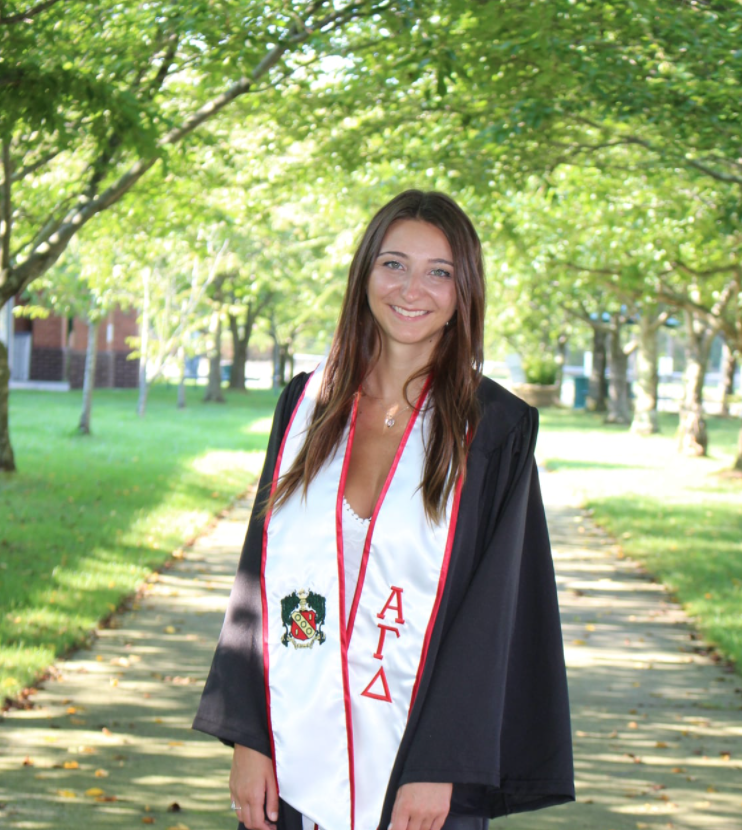
Touro TESOL Candidate Liana Ignarro on Social vs Academic language

Putting Theory Into Practice

Touro’s Teaching English to Speakers of Other Languages and advanced certificate programs reflect two core principles: Praxis and community.

Every one of our programs meets the U.S. Department of Education’s most current curricular standards, and include plenty of fieldwork and preparation for New York State Education Department (NYSED) certification exams. Many programs offer online, evening, and weekend courses. We’re leaders in educating educators and meeting the needs of our communities.

Discussion Boards offer the opportunity not only to reflect on readings but also contribute with peer responses to the learning process of the course cohort. As a facilitator and educator, I pursue a variety of strategies for fostering student engagement. One approach is to emphasize the quality and thoughtfulness of responses over quantity and frequency. Touro TESOL Candidate Liana Ignarro submitted thoughtful responses and analyses to the readings.

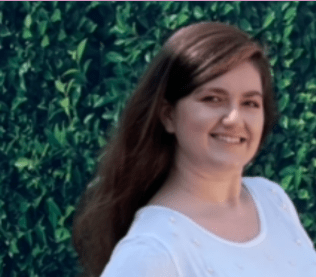
Touro TESOL Candidate Liana Ignarro is a graduate student at Touro College’s TESOL program. She had the opportunity to fill roles in the Eastport South Manor School District as a permanent substitute teacher. Ms. Ignarro teaches Pre-K through SCOPE’S Education Services. During her free time, she enjoys working out and spending time with her family.

  1. Have you had any students who were proficient in social language but struggled with academic language?
  2. If so, how did their social and academic language use differ?
  3. Did anything in their language abilities surprise you?
  4. What are some examples that could be used to compare social and academic language in your classroom?

I have had students who were proficient in social language but struggled with academic language. Their language uses differ because in social settings students were able to have conversations and form sentences using correct word structure. However, one particular student struggled with writing. The student often needed sentence starters to assist him. This was not surprising to me as I knew the primary home language was Spanish. A strategy that I learned from the article, Academic Language and ELLs: What Teachers Need to Know, explains how Dr. Robin Scarcella helps her students understand the difference between social and academic language. She does this by providing her students with similar sentences that portray the same meaning. They are just written in different styles. 

Celce-Murcia Chapter edition 4 Chapter 1: What changes have occurred regarding the teaching of:

  1. a) pronunciation- According to the text, it states that language learning is viewed as rule acquisition, not habit formation. When students speak, their pronunciation is deemphasized and perfection is viewed as unrealistic and unattainable. To help students, listening comprehension is important and a basic skill and it will allow speaking, reading, and writing to develop. 
  • b) grammar- There are key elements of the grammar-translation approach. For example, instruction is given in the native language of the students, there is little use of the target language for communication, the focus is on grammatical parsing. In other words, the forms and inflection of words. The result of this approach is usually an inability on the part of the student to use the language for communication. (Celce-Murcia, M., Brinton, D. M., & Snow, M. A. (2014)
  • c) vocabulary in the many approaches discussed in this chapter- Vocabulary learning is stressed at intermediate and advanced levels. When students work in groups or pairs they can discover the meaning in situations by engaging in role play or dramatization. 

Celce-Murcia Chapter edition 4 Chapter 2: How is Communicative Language Teaching (CLT) related to other proficiency-based approaches to language teaching?

Communicative language teaching is defined as an approach to language teaching that emphasizes learning a language first and foremost for the purpose of communicating with others.

A framework/model that arose alongside Communicative Language Teaching is the American Council on the Teaching of Foreign Languages (ACTFL). This model consisted of communication, cultures, connections, comparison, and communities. Each component represents an interlocking knowledge domain for language education.

Like CLT, learning theories informing the model underscored both top-down and bottom-up orientations to learning and processing language. 

References: 

Breiseth, Lydia. (2021, May 10). Academic language and ells: What teachers need to know.

Colorín Colorado. Retrieved February 2, 2022, from https://www.colorincolorado.org/article/academic-language-and-ells-what-teachers-need-know 

Celce-Murcia, M., Brinton, D. M., & Snow, M. A. (2014). Teaching English as a second or foreign language. Boston: National geographic learning.
Touro College GSE TESOL Graduate Annie Quach’s Digital Portfolio for EDDN 680

As the TESOL Practicum Coordinator, it is always exciting to showcase our Touro TESOL Graduates Digital Portfolios for EDDN 680. Touro College’s TESOL and Bilingual Program goal is to train teachers to create effective, responsive learning environments where all students can thrive. Online courses are available, and students can transfer up to twelve credits from previous graduate-level study toward our requirements. Students pursuing an Advanced Certificate in TESOL may apply their credits toward the Master’s degree. Completion of the program makes you eligible for New York State certification as a TESOL teacher for PreK-12.

The learning theory behind ePortfolios

According to Basken (2008), ePortfolios “are a way to generate learning as well as document learning”. Both generating learning and documenting or recording learning are important, but the process of generating learning sometimes gets overlooked. ePortfolios generate learning because they provide an opportunity and virtual space for students to critically assess their academic work, to reflect on that work, and make connections among different courses, assignments, and other activities, such as work experience, extracurricular pursuits, volunteering opportunities, and more. ePortfolios are effective learning tools because they support students’ own knowledge construction, make otherwise invisible aspects of the learning process visible, and place agency in the hands of students, which fosters learners’ motivation. (Basken, P. (2008, April). Electronic portfolios may answer calls for more accountability. (Links to an external site.) The Chronicle of Higher Education.)

For non- ESL educators, I would like them to know that you cannot just know a student based on their test data. You have to know what cultural differences may be influencing their learning styles and habits. Educators need to continue to modify their instruction that fits the needs of every individual. It is important for non- ESL educators to really know the importance of understanding the cultural background of their students. It can build a connection and relationship with the teacher and student, where it forms a trusting and nurturing learning environment.

ANNIE QUACH, Graduate of the Touro College TESOL Program, Graduate School of Education

Please enjoy Ms. Quach’s e-portfolio and website.

Touro TESOL Candidate John Bacci’s Digital Portfolio for EDDN 680

Touro College has taught me a variety of effective and reliable practices when it comes to assisting students in learning English as well as mastering their content areas while growing on their linguistic modalities.

John Bacci

The learning theory behind ePortfolios

According to Basken (2008), ePortfolios “are a way to generate learning as well as document learning”. Both generating learning and documenting or recording learning are important, but the process of generating learning sometimes gets overlooked. ePortfolios generate learning because they provide an opportunity and virtual space for students to critically assess their academic work, to reflect on that work, and make connections among different courses, assignments, and other activities, such as work experience, extracurricular pursuits, volunteering opportunities, and more. ePortfolios are effective learning tools because they support students’ own knowledge construction, make otherwise invisible aspects of the learning process visible, and place agency in the hands of students, which fosters learners’ motivation. (Basken, P. (2008, April). Electronic portfolios may answer calls for more accountability. (Links to an external site.) The Chronicle of Higher Education.)

Project Description

The purpose of creating and maintaining an electronic portfolio is for Touro TESOL/Bilingual teacher candidates to reflect on their course of study at Touro College and create a digital repository of their work done during the program. The portfolio includes a statement of the teacher candidates’ goals, philosophy of education, and files which showcase the candidates best work.

“Through my time at Touro College, my eyes were opened to where I limited my students as learners and growing minds. Touro College has introduced me to the necessity of equitable, authentic, and appropriate instruction for students of the most diverse populations this world has ever seen. Touro College has taught me a variety of effective and reliable practices when it comes to assisting students in learning English as well as mastering their content areas while growing on their linguistic modalities. The program at Touro College has also taught me the importance of opening my educational doors to incorporate all cultures and represent and appreciate all cultures and backgrounds that can be experienced, learned through, and understood as an important part of our interconnected society and world. Touro College has assisted me in understanding what classrooms need to look like and function nowadays in order to assure all students have an equal opportunity at a fair, effective, and authentic education.”

https://johnbacchitesol.weebly.com/

Touro TESOL Candidate Amanda Innamorato’s Digital Portfolio for EDDN 680

As the TESOL Practicum Coordinator it is always exciting to showcase Digital Portfolios for EDDN 680.

Project Description

The purpose of creating and maintaining an electronic portfolio is for Touro TESOL/Bilingual teacher candidates to reflect on their course of study at Touro College and create a digital repository of their work done during the program. The portfolio includes a statement of the teacher candidates’ goals, philosophy of education, and files which showcase the candidates best work.

Touro College TESOL faculty Dr. Ching-Ching Lin who prior to her Touro appointment, taught Social Studies (both general education and Chinese-bilingual) and ESL at the secondary levels for more than 14 years. As a transnational and multilingual learner herself, she embraces asset-based approaches and additive multilingualism in instructional designs. Her goal as a teacher as well as a teacher educator is to build and support a classroom environment where diversity in thought, culture, and traits is viewed as positive assets, where ample opportunities are created for students to share their learning experiences, strengths, backgrounds, interests, and needs and where real life/authentic connections and representations from diverse cultures and life experiences are deeply interwoven into student-centered cooperative learning.

Ms. Amanda Innamorato teaches at the elementary level for the NYC Department of Education in District 21. She got her Bachelor’s Degree in Childhood Education from St. Francis College and worked on getting her Masters in TESOL at Touro College. Her goal as a teacher is to support all students in reaching their individual goals. Ms. Innamorato wrote:

Looking at my graduation cap it reads “teaching is a work of heart.” This quote resonates deeply because teaching is not just a job, it’s a game changer. A teacher’s impact is significant to each individual student in their classroom. This leads to my first belief which is in the theory of Asset Approach to Learning. Students need to be viewed as an asset to the classroom with individual strengths and diverse cultural backgrounds.

Here the link to her Digital Portfolio:

Touro TESOL Candidate Amanda Innamorato’s Digital Portfolio for EDDN 680

Touro TESOL Candidate Jaclyn Esposito’s Digital Portfolio for EDDN 680

As the TESOL Practicum Coordinator it is always exciting to showcase Digital Portfolios for EDDN 680.

The learning theory behind ePortfolios

According to Basken (2008), ePortfolios “are a way to generate learning as well as document learning”. Both generating learning and documenting or recording learning are important, but the process of generating learning sometimes gets overlooked. ePortfolios generate learning because they provide an opportunity and virtual space for students to critically assess their academic work, to reflect on that work, and make connections among different courses, assignments, and other activities, such as work experience, extracurricular pursuits, volunteering opportunities, and more. ePortfolios are effective learning tools because they support students’ own knowledge construction, make otherwise invisible aspects of the learning process visible, and place agency in the hands of students, which fosters learners’ motivation. (Basken, P. (2008, April). Electronic portfolios may answer calls for more accountability. (Links to an external site.) The Chronicle of Higher Education.)

Project Description

The purpose of creating and maintaining an electronic portfolio is for Touro TESOL/Bilingual teacher candidates to reflect on their course of study at Touro College and create a digital repository of their work done during the program.  The portfolio includes a statement of the teacher candidates’ goals, philosophy of education, and files which showcase the candidates best work.

Touro College TESOL faculty Arlene Suarez Caporaso

Bilingual (Spanish/English) Touro TESOL faculty Arlene Suarez Caporaso, an experienced educator with Departmental Supervision IEP’s, ENL Part 15 and school leadership experience was the facilitator and course lead.

Jaclyn Esposito

Jaclyn Esposito wrote: “I wanted to be a teacher for as long as I could remember. I always wanted to follow in my grandpa’s footsteps and help students the same way he did.”

She further elaborated on her teaching philosophy: “As a teacher my desire to grow is because of my students. I want to make sure that I am doing everything I can to be the best teacher for my students. Depending on the students in my class, I might have to learn new ways or styles of teaching. As my years of teaching increase, there will be different standards to follow or how teaching is conducted. After this past year, my goal is to become more familiar with digital ways of teaching and how we can include technology into our every day of teaching. Technology can be a way that I can connect with my students and can be a way that they are able to understand with the world they are growing up in now. Another goal I would like to have as a teacher is to make sure I give every student a chance no matter what is said about them from the previous years.”

Jaclyn Esposito’s Digital Portfolio

Touro College, Bilingual Education – Pupil Personnel (Certificate) Candidate Melody Minaya’s Capstone Website focusing on Cultural Responsiveness, Best Practices & Working with Culturally Diverse Populations

Melody Minaya, Bilingual School Psychologist, has completed her capstone project for the Bilingual Education – Pupil Personnel (Certificate) at Touro College, GSE, New York City.

Her website is centered around cultural responsiveness and best practices that can be used within the education field. Throughout her website, a variety of resources are featured that educators can use to guide their professional practice when working with culturally diverse populations.

Ms. Minaya studied took as her final certification requirement PSGN 698 Field Experience In Bilingual School Psyc under the experienced facilitator and Touro faculty Dr. Giovanni Mendez, Psychologist at Touro College.

visit her website:

https://sites.google.com/view/mminayabilpsych/home

Touro College, Bilingual Education – Pupil Personnel (Certificate)is for school counselors, social workers and psychologists, who want to work with bilingual students.

TOURO COLLEGE
GRADUATE SCHOOL OF EDUCATION
320 WEST 31ST STREET
NEW YORK, NY 10001212-463-0400
PROSPECTIVE STUDENTS: INFO.GSE@TOURO.EDU

What You’ll Learn at Touror College, GSE

Each certificate includes coursework and a practicum which emphasizes the importance of understanding cultural context for child development and learning, and for effective assessment and delivery of services. Depending on your certification focus, you might examine various theories and classroom approaches, review case studies and explore how home life and community impact youth education, or learn about dynamic assessment, how to work with various disabilities, and effective strategies for teaching native language literacy. In all our courses our goal is always to increase your multicultural and linguistic fluency so you can provide the best possible service and education to all students.

Admissions Requirements

In addition to the general admission requirements, you must be able to document proficiency in the target language of instruction (Click here to download the Target Language Proficiency Verification Form).

To learn more about the program, contact us.

Dr. Cowin publishes in the Journal of Systemics, Cybernetics and Informatics on “The Fourth Industrial Revolution: Technology and Education.”

I am pleased to share that my latest article on The Fourth Industrial Revolution: Technology and Education was published:

Cowin, J. (2021). The Fourth Industrial Revolution: Technology and Education. Journal of Systemics, Cybernetics, and Informatics (2021) 19(8), 53 63,
https://doi.org/10.54808/JSCI.19.08.53

Dr. Cowin on “The Metaverse Wheel: Discovery, Terminology, and Context”, A WHERS Conference and Exhibition Speaker Invitation

I am honored to be invited to speak on “The Metaverse Wheel: Discovery, Terminology, and Context” at the World’s Largest Higher Education Ranking Summit which will bring together 10,000+ of the world’s brightest minds in higher education, leading global authorities like the United Nations, most prominent change-makers, government officials, and policymakers to implement best practices and adopt new technologies that will drive institutions forward.

I am honored to be invited to speak on “The Metaverse Wheel: Discovery, Terminology, and Context” at the World’s Largest Higher Education Ranking Summit which will bring together 10,000+ of the world’s brightest minds in higher education, leading global authorities like the United Nations, most prominent change-makers, government officials, and policymakers to implement best practices and adopt new technologies that will drive institutions forward.
The conference will take place in Dubai, UAE from the 22nd to the 24th of February 2022 in a hybrid format both physically in the Canadian University of Dubai and online with a total outreach of more than 500,000 academics, students and innovators.


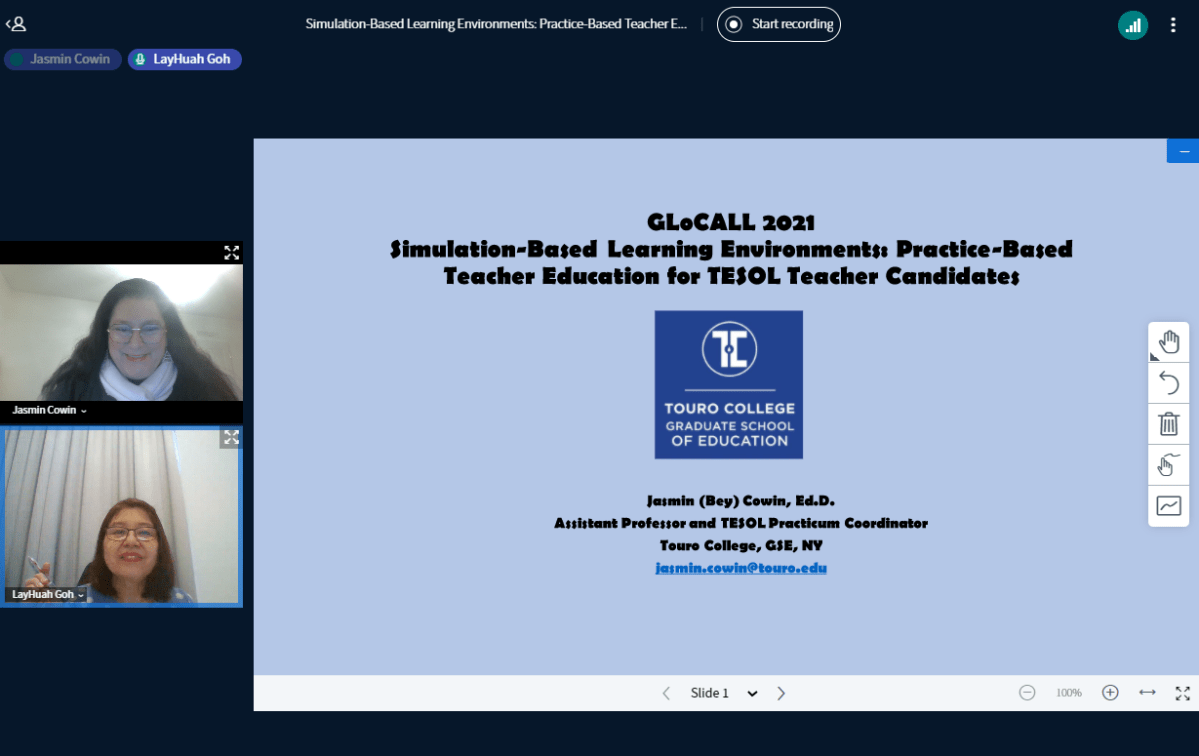
GLoCALL 2021 Conference Presentation on “Simulation-Based Learning Environments: Practice-Based Teacher Education for TESOL Teacher Candidates” by Dr. Jasmin (Bey) Cowin

It was a great pleasure to present today my research on “Simulation-Based Learning Environments: Practice-Based Teacher Education for TESOL Teacher Candidates” at the GLoCALL 2021 Conference. My presentation and research focused on reviewing, contrasting, and framing two different virtual training environments for TESOL educators searching for additional opportunities to offer interactive field and practicum experiences: simSchool and Mursion.

What is GLoCALL 2021?

GLoCALL 2021 is an international academic conference focused on the use of computer technology for language learning (CALL). GLoCALL conferences have been held annually since 2007 in various countries across Asia. When is GLoCALL 2021? The GLoCALL 2021 conference will be held 16th-18th December 2021. The GLoCALL 2021 conference is held online with online sessions presented via the website.

Plenary and Invited Speakers

Every GLoCALL conference features plenary presentations and workshops by internationally renowned CALL experts. This year the invited speakers are:

  1. Dr. Wong Su Luan (Universiti Putra Malaysia)
  2. Dr. Deborah Healey (University of Oregon, USA)
  3. Dr. Mark Pegrum (University of Western Australia)
  4. Dr. Pramela Krish (Universiti Kebangsaan, Malaysia)
  5. Prof. Gordon Bateson (Kochi University of Technology, Japan)

Touro College TESOL Teacher Candidate Jaclyn Kletchka’s SIOP Lesson Plan

Touro TESOL/Bilingual Teacher candidates are required to design a sheltered instruction lesson in course EDDN 637 following the Sheltered Instruction Observation Protocol (SIOP). Touro College TESOL Teacher Candidate Jaclyn Kletchka submitted an exemplary SIOP lesson plan on “Using the Five Senses & Adjectives to Describe Objects.”

In EDDN 637 Second Language Learners and the Content Areas Students will become acquainted with and practice effective approaches, methods, and strategies for teaching and evaluating English language learners in the content areas (ELA, Social Studies, Math and Science). Throughout the course, students will explore the impact of culture and language upon classroom learning. Special challenges in teaching and assessment in each content area will be discussed. Examination and analysis of curriculum materials and instructional strategies for creative teaching and learning in grades Pe-K-12. Includes content-specific lesson planning that addresses the New York State Student Content Learning Standards with emphasis on English Language Arts, English as a Second Language, and content-area instruction. Course content includes demonstrations, simulated activities, and field observations in Pre-K-12 classrooms. The course also examines how the teaching of English to non-native speakers can be integrated with the teaching of cognitive skills in all content areas. Students will be offered a variety of methods and materials to integrate ESL standards throughout all content areas for classroom use. Includes 15 hours of fieldwork. Includes 15 hours of fieldwork. 3 credits

The SIOP Model is a research-based and validated instructional model that has proven effective in addressing the academic needs of English learners throughout the United States. Candidates need to explain how and why they’ve decided on the specific lesson content and language needs to be addressed. Activities should focus on assessing student needs before, during, and upon lesson completion to enhance future instructional planning.

Jaclyn Kletchka is a graduate student at Touro College. Ms. Kletchka works as ENL teacher for the Brentwood School District. In her free time, she loves to read, go on walks, and play with her dogs!