Dr. Jasmin (Bey) Cowin publishes ‘Autonomous AI’s Spellbook and the Absent Necromancer’

The sorcerer, old necromancer
At last has gone, he’s out of haunt!
His sprites will give me loyal answer
Proudly I’ll my powers flaunt.

(1-4) Goethe, J. W. (1797). The sorcerer’s apprentice (L. Collins, Trans.)

Goethe wrote “Der Zauberlehrling” (The Sorcerer’s Apprentice) in 1797, long before AI concepts emerged. The ballad, like this author’s prior article for Stankevicus on Autonomous AI Agents – The Kraken Wakes? explores themes of human hubris and the challenges of controlling powerful forces, providing an analogy for exploring humanity’s relationship with tools and forces that exceed our understanding or control.

Cowin, J. (2024, December 9). Autonomous AI’s spellbook and the absent necromancer. Stankevicius. https://stankevicius.co/artificial-intelligence/autonomous-ais-spellbook-and-the-absent-necromancer

Touro University TESOL Candidate Hamida Abdalla’s Technology Integration Fieldwork Project for EDDN 635
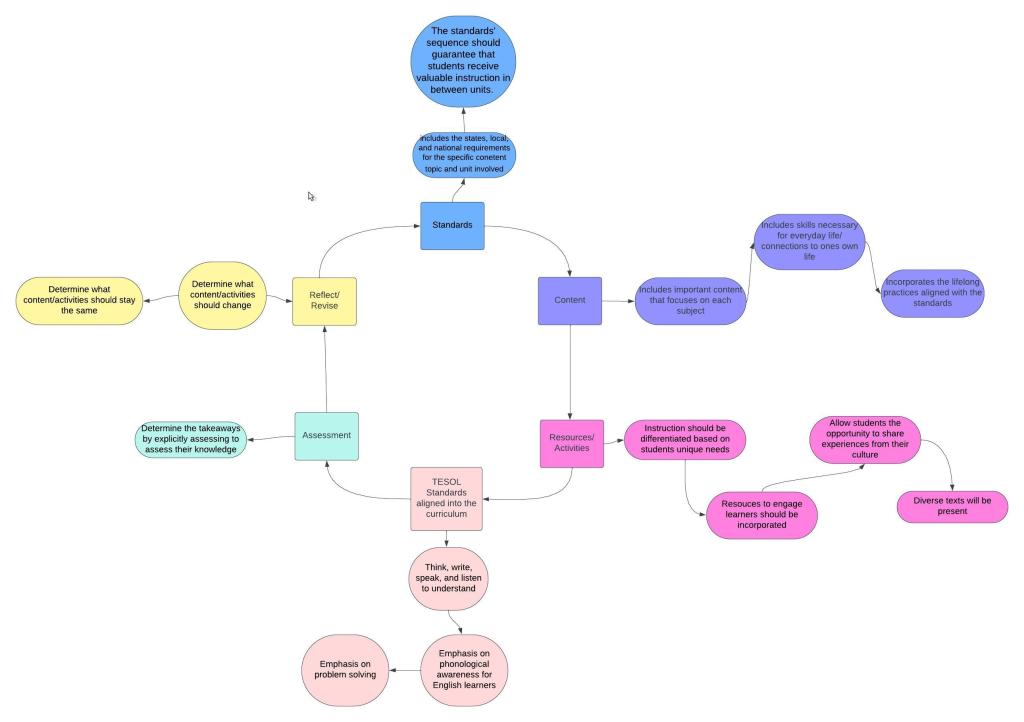
Teaching English to Speakers of Other Languages

New York is a state that speaks many languages. We need teachers who can find the common ground.

The MS in Teaching English to Speakers of Other Languages (TESOL) Program helps NYS-certified PreK-12 teachers more effectively teach and communicate with a diverse student population.

Academically rigorous and practice-intensive, the 33-credit program includes 5-15 hours of fieldwork embedded in each course

Hamida Abdalla is 22 and holds a bachelor’s degree in Childhood Education. She is pursuing a master’s degree in TESOL to help students develop their English language skills. Her goal is to create a supportive and accessible learning atmosphere that assists English language learners in improving their English language abilities, ensuring that every student can communicate effectively and achieve academic success.

Although this is only my first semester at Touro, I have gained valuable expertise to foster an inclusive learning environment where all students, regardless of their proficiency level, can thrive and reach their full potential. 

Hamida Abdalla, Touro University, TESOL Candidate

Ms. Abdalla submitted an exemplary and rich Field Experience for EDDN 635: Curriculum Development and Classroom Management in the Technology Era which required that”Candidates will engage in a dual observational role: in the classroom with English Language Learners (ELLs) or bilingual students, they will examine how educators integrate technology to enhance language instruction and manage a diverse classroom; in the school library, they will observe the role of technology in supporting literacy skills among linguistically diverse students.”

This field experience assignment is AI-proof because it demands direct personal observation and critical analysis of real-world classroom dynamics and personal interactions that cannot be fabricated by AI systems. The requirement for candidates to simultaneously examine classroom technology integration for ELL students and library-based literacy support creates a complex, interconnected observational task requiring authentic human presence and professional judgment. The rich, contextual details that emerge from observing how educators and librarians support linguistically diverse students through technology cannot be convincingly generated by AI, as these observations must draw from genuine human experiences, professional educational insights, and a nuanced understanding of how different learning environments complement each other.

Zeynep Yildirim – Touro University TESOL Candidate’s SIOP Lesson Plan on The Black Rabbit by Philippa Leathers

If you’re already certified to teach, we offer specialized Master’s and Advanced Certificate programs that can help make you a more marketable, knowledgeable, and well-rounded educator. Our advanced certificates lead to NYSED certification in specialized areas and an extension/annotation on your NYS teaching credentials.

Pursuing a specialized Masters or Advanced Certificate is an ideal—and affordable—way for experienced teachers and educational personnel to strengthen their expertise in a specific area. Upon successful completion, you’ll be eligible for an extension/annotation on your New York State teaching credentials, and your earned credits can apply to an additional salary differential.

Teaching English to Speakers of Other Languages (TESOL) [MS]
We offer a Master of Science in TESOL appropriate for NYS-certified PreK-12 teachers interested in expanding their teaching fields to ESL or strengthening their capacities to serve a diverse student body. Evening, Sunday, and online courses are available.
New York’s classrooms are some of the most culturally and linguistically diverse in the country. Our TESOL certificate program prepares NYS-certified teachers to provide responsive, comprehensive education to students of every background.

Zeynep Yildirim: As a dedicated general education teacher, she is passionate about fostering an inclusive classroom where all students can thrive. She is currently expanding her expertise in TESOL to better support English Language Learners and enhance their educational experience. Her goal is to integrate this specialized knowledge into her teaching practice to ensure every student has the opportunity to succeed.

I am delighted to showcase Ms. Yildirim’s outstanding work from summer 2024.

Touro University TESOL Candidate Lauren Martin’s Learning About the World

EDDN 635 Curriculum Development and Classroom Management in the Technology Era

This comprehensive course builds upon the foundation of curriculum development and classroom management in the context of teaching English language learners. Expanding its horizons to embrace the digital age, the course adeptly weaves innovative technology integration into the domain of Teaching English to Speakers of Other Languages (TESOL). Crafted to empower prospective TESOL/BLE educators, the course hones in on fostering competence in designing, implementing, assessing, and reflecting within diverse language learning environments, all while capitalizing on the potential of cutting-edge technology. With a strong focus on practical application and discerning appraisal of technological tools, this course primes upcoming educators to excel amidst the ever-evolving educational landscape. Includes 10 hours of fieldwork.

Touro University TESOL Candidate Lauren Martin: She is a first-grade teacher. She graduated from St. Joseph’s University-Brooklyn in 2023 with a Bachelor of Science in early childhood and childhood education in both general and special education. In September of 2023, she began teaching her first teaching job in a first-grade classroom. This is her first semester working towards her master’s degree in Teaching English to Speakers of Other Languages (TESOL). As a first-year teacher, she was inspired by her colleagues as to how they guide their ELL students. This helped her decide on what to receive her master’s degree in and made it an easy choice as she knew that this was what she was passionate about. Her journey at Touro has just begun, but she can’t wait to learn all of the ways to support her ELL students on their academic path. Her favorite quote:  ‘Far and away the best prize that life offers is the chance to work hard at work worth doing.’ —Theodore Roosevelt

I am proud to feature Touro University TESOL Candidate Lauren Martin’s Learning About the World
Click here for: Techtool Padlet link

Touro University TESOL Candidate Kenia Torres’ Tech Tools

EDDN 635 Curriculum Development and Classroom Management in the Technology Era

This comprehensive course builds upon the foundation of curriculum development and classroom management in the context of teaching English language learners. Expanding its horizons to embrace the digital age, the course adeptly weaves innovative technology integration into the domain of Teaching English to Speakers of Other Languages (TESOL). Crafted to empower prospective TESOL/BLE educators, the course hones in on fostering competence in designing, implementing, assessing, and reflecting within diverse language learning environments, all while capitalizing on the potential of cutting-edge technology. With a strong focus on practical application and discerning appraisal of technological tools, this course primes upcoming educators to excel amidst the ever-evolving educational landscape. Includes 10 hours of fieldwork.

Kenia Torres is a Bilingual Kindergarten teacher in the Brentwood Union Free School District. She received her Bachelor’s Degree in Child Studies with a concentration in Speech Communication from Saint Joseph’s University, a Bilingual Extension from Touro University, and is currently enrolled in a TESOL program at Touro University. Kenia is passionate about developing a classroom community that allows all children to achieve their academic and personal goals. In the future, she would like to pursue an educational leadership role to empower educators and students to catalyze school success. A quote that reflects Kenia’s vision of the educational field is: “Tell me and I forget, teach me and I remember, involve me and I learn.”- Benjamin Franklin

The assignment for EDDN 635 Curriculum Development and Classroom Management in the Technology Era was: To curate a list of technology tools that not only aid in instructional strategies and curriculum development but also facilitate community outreach and engagement.

Introduction: Briefly discuss the importance of integrating technology in education and its possible role in using it for community engagement.

Selection of Technology Tools: Choose 9 technology tools, ensuring a mix that includes tools for both educational purposes and community outreach. These tools could range from educational platforms and apps to communication and social media tools.

Tool Descriptions: Provide a concise description of each tool, highlighting its key features and the URL. Explain how each tool can be used in an educational context and for community engagement.

Practical Applications: Illustrate practical examples of how these tools can be integrated into teaching, curriculum design, and/or community outreach initiatives. Examples could include using social media for parent-teacher communication, blogs for student projects showcased to the community, or collaborative platforms for community-based projects.

Reflection and Analysis: Reflect on the potential impact of these tools on enhancing educational experiences and community relations.
Analyze any challenges or limitations in implementing these tools for both educational and outreach purposes.

Format and Submission: Choose of format of your choice – possibly a Storybook, Padlet, Flipgrid etc.

The EU AI Act: An Initial Cost Perspective for Global Higher Education Institutions by Dr. Jasmin (Bey) Cowin

This is the second blog I wrote exclusively for Stankevicius. Blog one covered The European AI Act 2024: A Threat to International Academic Collaboration for Higher Education Institutions?  With this series, I aim to highlight the critical aspects of the AI Act that Higher Education Institutions (HEIs) organizations need to analyze to ensure readiness for the upcoming regulatory changes, specifying important deadlines for meeting these new requirements. 

Cowin, J. (2024, July 26). The EU AI Act: An initial cost perspective for global higher education institutions. Stankevicius. retrieved from: https://stankevicius.co/artificial-intelligence/the-eu-ai-act-an-initial-cost-perspective-for-global-higher-education-institutions/

Dr. Jasmin (Bey) Cowin publishes: The European AI Act 2024: A Threat to International Academic Collaboration for Higher Education Institutions?

Fundamentals of The European AI Act 2024

by Dr. Jasmin (Bey) Cowin

On July 12, 2024, the EU issued Regulation (EU) 2024/1689, known as the EU AI Act, marking a significant milestone as the first extensive AI regulation globally. This regulation emerged over three years after its initial draft by the EU Commission in April 2021. The AI Act establishes a broad, sector-independent regulatory framework designed to set the standard for AI governance within the EU. This framework is expected to influence both local and global companies and global legislative approaches. Importantly, the AI Act’s scope extends beyond the EU; it applies to entities worldwide that might not be physically present in any EU member state but engage with the EU market. This represents the culmination of a lengthy legislative process, with the Act set to be enforced starting on August 2, 2024. Higher Education Institutions (HEIs) should familiarize themselves with the implications of this regulation, understand their responsibilities, and prepare for compliance by the designated date. This series of blogs exclusively written for Stankevicius by the author aims to highlight the critical aspects of the AI Act that HEI organizations need to grasp to ensure they are ready for the upcoming regulatory changes, specifying important deadlines for meeting these new requirements.

Click on the link below to read the complete article.

Cowin, J. (2024, July 17). The European AI Act 2024: A Threat to International Academic Collaboration for Higher Education Institutions? Stankevicius. retrieved from https://stankevicius.co/world/the-european-ai-act-2024-a-threat-to-international-academic-collaboration-for-higher-education-institutions/

Expanding my AI Knowledge with Google’s AI Essentials Course

Today, I completed Google’s AI Essentials course to build upon my existing AI knowledge. As someone who believes in continuous learning, I found the course to be a valuable resource for professionals looking to enhance their AI skill set.
The course content was comprehensive, covering a wide range of topics from foundational concepts to practical applications of AI in the workplace. The hands-on exercises and real-world examples helped reinforce the learning material and provided opportunities to apply newfound knowledge.
One notable aspect of the course was its emphasis on the responsible and ethical use of AI. It provided a framework for understanding potential biases, inaccuracies, and security risks associated with AI and offered guidance on mitigating these issues.

The course content was comprehensive, covering a wide range of topics from foundational concepts to practical applications of AI in the workplace, with many aspects directly transferable to higher education and my field: teacher preparation and second language acquisition. The hands-on exercises and real-world examples helped reinforce the learning material and provided opportunities to apply newfound knowledge. The course provided insights into prompt engineering and its potential to streamline workflows and inspire creative solutions. This skill can greatly augment tasks and improve efficiency in various industries.
Throughout the course, I acquired several key skills that are applicable to both my academic work and teaching:

  • Augmenting tasks with AI: Learning how to effectively integrate AI into my workflow to enhance productivity and performance.
  • Critical thinking: Developing the ability to critically evaluate AI tools and their potential impacts on projects and decision-making processes.
  • Iterative thinking: Understanding the importance of iterative problem-solving when working with AI, refining solutions based on feedback and results.
  • Prompt engineering: Mastering the art of crafting precise and effective prompts to guide AI models in generating desired outputs.
  • Confronting AI challenges: Gaining awareness of potential biases, inaccuracies, and security vulnerabilities associated with AI systems and developing strategies to mitigate these concerns.

However, it is essential to recognize that learning AI is an ongoing process. The field is constantly evolving, and staying up-to-date requires a personal commitment to continuous learning about and exploration of new AI tools. As AI technologies advance at a rapid pace, those of us who wish to remain competitive in the field must actively seek out opportunities to expand our knowledge and skill set. This may involve attending conferences, participating in online courses, engaging with AI communities, and experimenting with emerging AI platforms to stay at the forefront of this exponentially transformative industry. And in my case, this meant using the 4th of July to complete the course.

Dr. Jasmin (Bey) Cowin published Sentient AI or Modern Myth? Anthropic’s Claude 3 Opus, Talos and the Golem of Prague

Cowin, J. (2024, April 29). Sentient AI or Modern Myth? Anthropic’s Claude 3 Opus, Talos and the Golem of Prague. Stankevicius. https://stankevicius.co/tech/sentient-ai-or-modern-myth-anthropics-claude-3-opus-talos-and-the-golem-of-prague/

Daniel Dinello, in his apocalyptic book “Technophobia!” forecasts, “Like a viral infection, technology develops into an autonomous, invasive force that expands and fulfills its dangerous potential by flourishing in the societal medium of corporate, military, and religious sustenance. Voracious in its urge to possess and engulf, technology is a parasite that frequently undermines human integrity—invisibly infiltrating, manipulating, seizing control, and mutating its human host to support its own survival and evolution. Like a virus, technology metamorphoses itself, because of unintended and uncontrollable consequences, progressively transforming the human world in the wake of its own modern changing structure.” (Dinello, 2006, p. 247)

For more, click on my column and read!

Dinello, Daniel. Technophobia!: Science Fiction Visions of Posthuman Technology, New York, USA: University of Texas Press, 2006. https://doi.org/10.7560/709546

Celebrating My Completion of the April 2024 Singularity Executive Program

by Dr. Jasmin (Bey) Cowin

Keep tuned for more in my upcoming column for Stankevicius.

Last week, I embarked on a transformative five-day journey in Mountainview, Silicon Valley with the Singularity Executive program that reshaped my perspective on leadership in the age of exponential technology. Through an intensive and comprehensive curriculum led by expert faculty, I learned about, engaged with, and tried out exponential technologies and envisioned their profound implications for our collective future(s).

20240411_1741241535434815613112276

I am still working through my reservations on the quest for an artificial intelligence that one day will surpass the human mind which I will discuss in my upcoming column for Stankevicius.

Perhaps Frank Herbert’s words (Dune 1) frame my thoughts best: “Thou shalt not make a machine in the likeness of a human mind.” My cautionary stance is rooted in the fear of losing control over such technologies and the unpredictable consequences such technologies will have on humanity. I believe that aspects of our human experience should remain unique and sacred.

20240411_173456912074166272375141

Dr. Jasmin (Bey) Cowin

Engaging in hands-on workshops, thought-provoking presentations, and lively debates with my incredible cohort, we explored ethical considerations arising from technology’s exponential advancement. Together with our Singularity experts we discussed and debated what it means to be human, the value of human judgment, and the risks associated with blurring the line between human consciousness and artificial constructs.

Keep tuned for more in my upcoming column for Stankevicius.