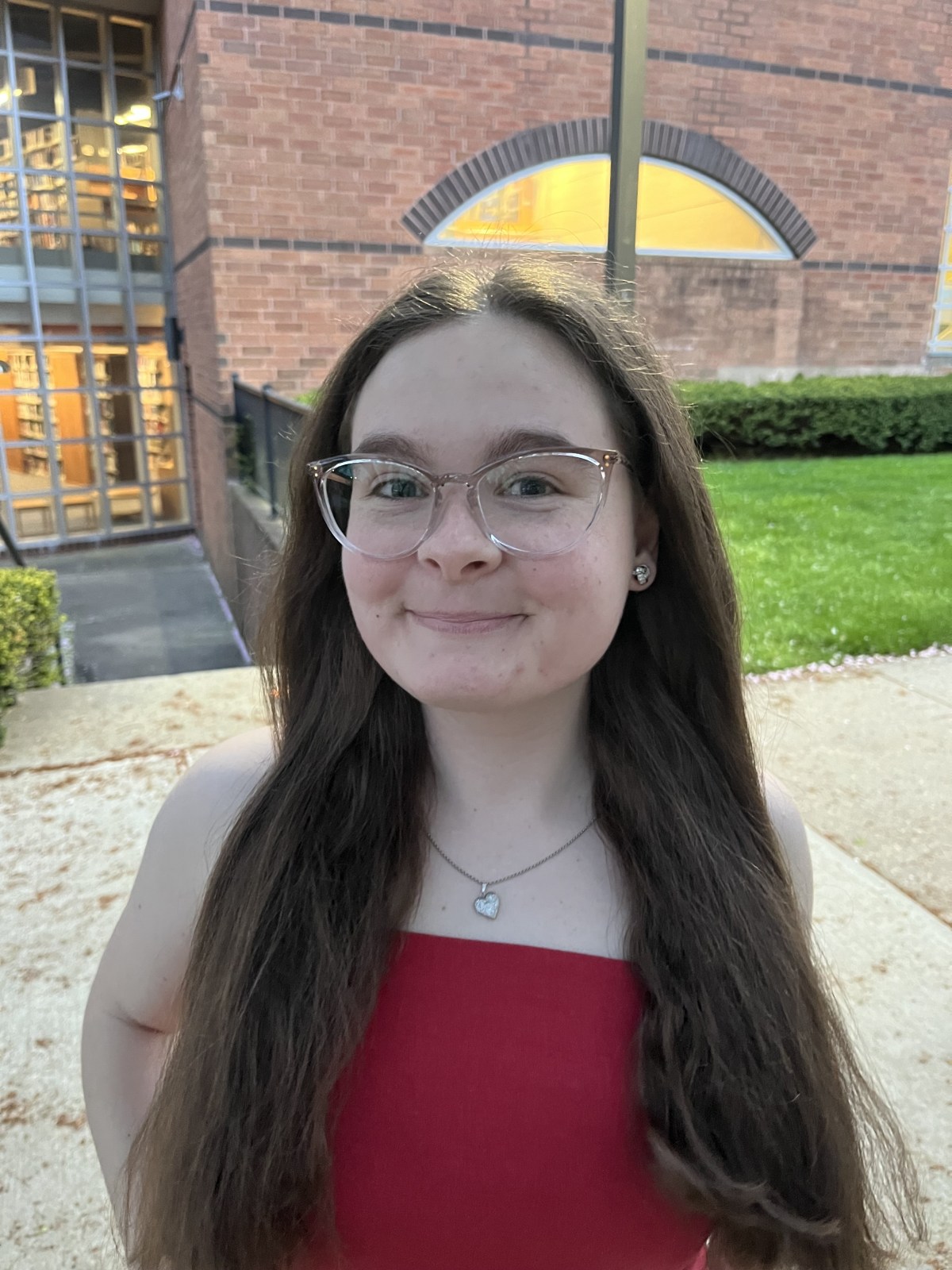
Joyann Castilletti, Touro University TESOL Candidate, on her experience working with structured prompt engineering and AI

MS in Teaching English to Speakers of Other Languages
TESOL
– New York is a state that speaks many languages. We need teachers who can find the common ground.

🏛️ As part of Touro University’s comprehensive initiative to introduce #AI #literacy to our students, I am engaged in a #Touro #University #grant focused on developing AI literacy in #TESOL candidates. My project-based approach empowers future educators to leverage AI as a strategic partner in curriculum design, bridging theoretical understanding with applied classroom practice.

Joyann Castilletti is a 7th–12th grade certified English teacher,  currently working as a permanent substitute teacher while pursuing her TESOL degree at Touro University. She is passionate about creating learning environments where every student feels seen, heard, and loved, and where each learner is supported in achieving success. She continues to inspire a love of learning in every English learner while equipping them with the skills to communicate confidently and effectively. 

Joyann Castilletti, Touro University TESOL Candidate, on her experience working with structured prompt engineering and AI:

Using this prompt showed me a few things about designing rubrics. For starters, specifics are key to a solid rubric. When I first started student teaching, every assignment I gave had some sort of rubric mainly to protect myself in case a student didn’t do too well. Since student teaching, I have still utilized rubrics but have worked towards making them more specific and rooted in whatever standard I was working on. The rubric that CoPilot and ChatGPT provided is a great jumping point if my students were doing this presentation. My biggest negative with this rubric is that since CoPilot is primarily analytic based, it does not allow for a holistic view of my students (especially since all of my key domains were also analytical). When I make my rubrics, I try to include some element that allows my students that may struggle with the assignment a chance to achieve highly in one category. Additionally, since this rubric was generated from a prompt it did not allow me to have student insight which I like to do (unless I took this rubric to the students and had a discussion about it with them for recommendations or suggested changes). I do like that CoPilot clearly establishes the format of “you do exactly this– you get this score”. When I make my rubrics, I tend to struggle with the verbiage to express exactly what I am looking for and to separate between each score point. With this said, by utilizing this format, I can create more efficient rubrics and change them as needed to make my accommodations.   

Touro University TESOL Candidate Anastasios Panagiotidis on Complex Texts and Addressing Challenges for ELLs/MLs in the Content Area

EDDN 637 Second Language Learners and the Content Areas

Students will become acquainted with and practice effective approaches, methods, and strategies for teaching and evaluating English language learners in the content areas (ELA, social studies, math and science). Throughout the course, students will explore the impact of culture and language on classroom learning. Special challenges in teaching and assessment in each content area will also be discussed. Includes 15 hours of field work.

Anastasios Panagiotidis states that he is “a high school Earth Science teacher who proudly serves the South Huntington Union Free School District. As I enter my tenure year at the age of 25 my love and compassion towards the culturally and academically diverse student population have inspired me to craft lessons that not only target individual student needs but make learning relatable to the world outside of school. This is all in hopes that each student, regardless of language or academic abilities, can reach their highest possible potential through my instruction. 

The assignment description: Text Analysis & Critique
Analyzing Complex Texts and Addressing Challenges for ELLs/MLs in the Content Area

Objective:

The objective of this assignment is to deepen your understanding of the cognitive and linguistic demands of complex texts in the content areas and to analyze a specific chapter or aspect of a content-area text currently used or recommended by the New York State/BOE. By closely examining the underlying concepts, you will develop a thesis and purpose for your analysis. You will critically evaluate the challenges that make the selected concept or section difficult for ELLs and provide substantial, logical, and concrete development of ideas in your critique.

Analyzing text complexity for English Language Learners (ELL) and Multilingual Learners (ML) requires a comprehensive approach that takes into account various factors. You can begin by examining the linguistic demands of the text, including vocabulary, sentence structure, and discourse patterns, ensuring they align with the proficiency levels of the students. Additionally, you, the teacher should consider the cultural and background knowledge necessary to comprehend the text, as well as the cognitive processes required, such as inference or critical thinking. Furthermore, evaluating the organization and coherence of the text, along with its purpose and intended audience, allows you, the teacher to gauge its appropriateness and relevance for ELL/ML learners. By conducting a thorough analysis of text complexity, you can make informed decisions about instructional strategies, adaptations, and scaffolding techniques to support their students’ language development and comprehension skills.

Deliverables:

Analysis of a Chapter or Aspect: Select a chapter or aspect of a content-area text and thoroughly analyze its complex nature. Identify and explain the quantitative elements, qualitative factors, and reader and task considerations that contribute to its complexity.

Development of Thesis and Purpose: Based on your analysis, develop a clear and concise thesis statement that reflects the main idea or argument of your analysis. State the purpose of your analysis, outlining the specific goals and objectives you aim to achieve.

Linguistic analysis which involves examining the linguistic features and demands of a text in order to determine its suitability for language learners. It focuses on various aspects of the text, including vocabulary, sentence structure, and discourse patterns, with the aim of aligning them with the proficiency levels of the students. Here’s a breakdown of these elements:

  1. Vocabulary: The analysis considers the range and complexity of words used in the text. It examines whether the vocabulary is appropriate for the students’ language proficiency level, taking into account factors such as word frequency, difficulty, and relevance to the topic. It also considers the presence of idiomatic expressions, figurative language, and specialized terminology that might pose challenges for learners.
  2. Sentence structure: The analysis looks at the complexity and variety of sentence structures employed in the text. It considers factors such as sentence length, grammatical structures (e.g., verb tenses, conditionals, relative clauses), and syntactic complexity. The aim is to ensure that the sentence structures are within the grasp of the students’ language proficiency level, allowing for gradual progression and challenges appropriate to their abilities.
  3. Discourse patterns: This aspect of linguistic analysis examines how ideas and information are organized and presented in the text. It includes analyzing discourse markers (e.g., conjunctions, transitional phrases) that indicate relationships between ideas, as well as cohesive devices (e.g., pronouns, repetition, referencing) that connect sentences and paragraphs. The analysis ensures that the text’s discourse patterns are comprehensible and aligned with the students’ proficiency levels, promoting their understanding of the text’s overall structure and coherence.

The Four-Part Functional Grammar Classification: A Practical Approach to Language Acquisition by Dr. Jasmin (Bey) Cowin

In the field of Second Language Acquisition (SLA), traditional approaches to teaching grammar often emphasize memorization of parts of speech and grammatical rules, without adequately connecting language structure to practical communication. My Four-Part Functional Grammar Classification infographic presents an alternative that transforms the conceptualization and teaching of grammar for language educators.

My framework shifts focus from viewing grammar as a set of abstract rules to understanding it as a functional system serving communication purposes. By categorizing grammatical elements according to their communicative functions rather than traditional parts of speech, my model creates a more intuitive approach to language learning and teaching. This aligns with contemporary methodologies like Task-Based Language Teaching (TBLT) and Communicative Language Teaching (CLT), prioritizing meaningful language use over memorization.

The model recognizes that languages vary in how they express grammatical relationships. Analytic languages such as Mandarin Chinese, Vietnamese, and to a significant degree English, rely primarily on word order, function words, and contextual cues to convey meaning. These languages exhibit minimal inflection, with words remaining relatively unchanged regardless of their grammatical roles. In contrast, synthetic languages like Latin, Russian, and Turkish employ morphological systems with prefixes, suffixes, and internal word changes to express grammatical relationships, allowing for flexibility in word order.

In my opinion, the framework accurately highlights how grammar operates in service of conveying ideas. It encourages learners to see language structures not as isolated rules but as tools for meaning-making. Such an approach can help students discern the interconnectedness of grammatical features and more readily apply them in authentic communicative contexts. However, as with any model, practical classroom application may require adjustments based on learners’ needs or language-specific nuances.

Each component serves a specific purpose:

  1. Terminal Elements comprise core lexical items that form the foundation of meaning in sentences. These include nouns, main verbs, and key adjectives—elements without which a sentence would lack substance. In the sentence “The dog runs,” “dog” (noun) and “runs” (verb) constitute the essential Terminal Elements carrying the fundamental meaning. Without either, the communicative purpose would be compromised.

2. Auxiliary Elements encompasses grammatical support structures that modify aspects of the Terminal Elements, such as tense, mood, voice, or aspect. These include helping verbs, modals, auxiliary verbs, and determiners. In “The dog has been running,” the auxiliary elements “has” and “been” create the present perfect progressive tense, adding temporal and aspectual information to the core meaning.

3. Modifiers consist of elements that refine or limit the meaning of Terminal Elements. These include adjectives, adverbs, participles, and modifying phrases. In “The small dog runs quickly,” the adjective “small” modifies the noun “dog,” while the adverb “quickly” modifies the verb “runs.” Modifiers enhance precision in communication without altering the fundamental meaning.

4. Connectors encompass relational elements that establish connections between words, phrases, or clauses. These include conjunctions, prepositions, and relative pronouns. In “I stayed home because it was raining,” the conjunction “because” establishes a causal relationship between two clauses, demonstrating how Connectors create coherence within and between sentences.

In implementing the Four-Part Functional Grammar Classification, educators can foster a deeper understanding of language by highlighting the interplay of its communicative elements. Instead of treating grammar as a discrete set of prescriptive rules, instructors integrate Terminal Elements, Auxiliary Elements, Modifiers, and Connectors into lesson designs that reflect authentic language use. This approach promotes increased learner engagement with meaning-making processes, as students actively observe how these functional categories intersect to convey nuanced ideas. By contextualizing grammar within real-world communication, educators encourage learners to perceive linguistic forms as interconnected tools that support coherent expression rather than isolated technicalities.

Moreover, the model’s applicability to both analytic and synthetic languages underscores its potential for unifying diverse linguistic backgrounds. Identifying functional similarities across distinct language systems can stimulate positive transfer, enabling learners to draw on their existing linguistic repertoires more strategically. Future pedagogical investigations may explore how this classification influences long-term language development, particularly in multilingual contexts where cross-linguistic awareness is vital. Emphasizing the functional essence of grammar aligns with contemporary SLA perspectives by foregrounding communication as the driving force behind language instruction, thereby challenging educators to replace traditional rule-based models with pedagogies that prioritize meaningful, context-rich engagement.

Encountering Complexity: Syntax Analysis in The Very Hungry Caterpillar for Educators by Dr. Jasmin (Bey) Cowin

Understanding the complexity of syntax in children’s texts is essential for TESOL educators, as it unbundles the cognitive load multilingual learners face when decoding seemingly simple sentences. The infographic Encountering Complexity: Syntax Analysis in The Very Hungry Caterpillar is designed to help educators appreciate the intricate linguistic demands embedded in a classic children’s text.

By analyzing the sentence, “One Sunday morning the warm sun came up and – pop! – out of the egg came a tiny and very hungry caterpillar,” this infographic unpacks the nuanced interplay of grammatical components that may challenge multilingual learners (MLs). My analysis underscores the sophistication hidden within children’s literature and its implications for language acquisition. I wanted to highlight the layered complexity of the sentence through a detailed syntactic breakdown.

Section 1 categorizes elements like adverbial phrases, noun phrases, and verb phrases, explaining their functions and interactions.

Section 2 visualizes the sentence’s structure using a “Sentence Tree,” mapping two interconnected clauses to reveal how they contribute to the sentence’s flow and meaning.

Section 3 offers a granular analysis of each phrase, employing color-coding to differentiate grammatical categories such as determiners, adjectives, nouns, and verbs. These insights allow teachers to see how even a brief sentence integrates multiple linguistic elements, requiring learners to simultaneously process temporal, spatial, and descriptive details.

Syntax analysis is critical for TESOL educators, as it emphasizes the cognitive demands placed on MLs when engaging with texts. For MLs, processing a sentence like this involves not only vocabulary comprehension but also navigating complex syntactic relationships, such as interjections, modifiers, and clause coordination. By recognizing the intricacies in children’s literature, TESOL teachers can better scaffold learning experiences, create targeted interventions, and develop strategies to reduce cognitive overload while fostering language development. My infographic serves as a reflective tool for my students at Touro University to approach children’s texts with a deeper awareness of the linguistic challenges faced by MLs.

Touro University TESOL Candidate Julianna Walter’s Text Analysis and Critique for EDDN 637 – “Marisol McDonald Doesn’t Match” by Monica Brown

Teaching English to Speakers of Other Languages

New York’s classrooms are some of the most culturally and linguistically diverse in the country. Our TESOL certificate program prepares NYS-certified teachers to provide responsive, comprehensive education to students of every background. 

EDDN 637 Second Language Learners and the Content Areas

Students will become acquainted with and practice effective approaches, methods, and strategies for teaching and evaluating English language learners in the content areas (ELA, social studies, math and science). Throughout the course, students will explore the impact of culture and language on classroom learning. Special challenges in teaching and assessment in each content area will also be discussed. Includes 15 hours of field work.

Julianna Walter, a 22-year-old graduate student in the TESOL program at Touro University holds an undergraduate degree in Elementary Education with a focus on both General and Special Education. Her passion for working with children and shaping young minds has always been a driving force in her career and studies.

“As a first-semester student in the TESOL program, I have already gained valuable strategies and tools for supporting English language learners, which I am eager to incorporate into my future classroom.”

Julianna Walter, TESOL program at Touro University

Excerpt by Julianna Walter, TESOL program at Touro University

Sentence Structure:

There are various sentence structures within the story ranging from short to long. The average sentence length in this story is 8 words. An example of a short sentence structure, with

minimal words, in the story is “Then I see him” (HMH, 31). This is one of the few short sentences in the story, as most sentences are longer and filled with detailed ideas that add to their length. An example of a longer sentence written in the story is “When I wake up on Saturday I put on my pink shirt, my favorite polka dot skirt, and my favorite hat— the one my abuelita brought me from Peru” (HMH, 30). Simple and complex sentence structures are also displayed throughout the story. The sentence “I like to wear polka dots” is an example of a simple sentence because it possesses a subject-verb-object structure. These types of sentences are more clear and straightforward making it more understandable for ELL students. Compound sentences “contain more than one independent clause” (Four Types of Sentences to Know). An example of a compound sentence in the story is “I am part Peruvian, and I am part Scottish” ( This sentence combines two related ideas with a conjunction. By basing this lesson on a story with various sentence lengths and structures it helps to build the students comprehension abilities. Second language learners will be able to improve their fluency and practice decoding words.

Proteus vs Papert – Musings by Dr. Jasmin B. Cowin

20171007_130903

What does the future of public, private and corporate education hold for us? I believe Augmented Reality, Artificial Intelligence (AI), machine learning, natural language processing, neural nets and deep learning will be the catalysts for world-changing disruptions in fields such as medicine, education, and job creation. Google, Facebook, Amazon, Microsoft, Baidu, Ford, Tesla to name but a few are positioned to be leaders in this transformation. Questions on institutional pathways to success and viability need to be framed against the background of AI, super intelligent machines and the broader questions of humanity and human consciousness.

In The Gears of my ChildhoodSeymour Papert states “What an individual can learn, and how he learns it, depends on what models he has available. These questions raise, recursively, the question of how he learned these models. Thus the “laws of learning” must be about how intellectual structures grow out of one another and about how, in the process, they acquire both logical and emotional form.” Papart sees the computer as the “proteus of machines,” the universal enabler, an instrument flexible enough so that “many children can create something” which assimilates new models of knowledge into their individual styles of learning. However, kindling the spark of “love” for learning and inquiry as the driving force in creating a “genesis of knowledge” is the dominant message of Papert’s essay and the universal message to and for educators.

For Ray Kurzweil “Technology goes beyond mere tool making; it is a process of creating ever more powerful technology using the tools from the previous round of innovation.” As a generation of students prepares for their future, they must be prepared for a fluid and lifetime assimilation of new technology and models of national and international coexistence.  However, Luke Rhinehart aka George Cockcroft, a psychiatrist, university professor, and writer of the cult novel The Dice Man wrote: “Man must become comfortable in flowing from one role to another, one set of values to another, one life to another. Men must be free from boundaries, patterns, and consistencies in order to be free to think, feel and create in new ways. Men have admired Prometheus and Mars too long; our God must become Proteus.”

Thinking about the future of education and humanity brought forth the questions: Is the quest for AI a quest to create God? If yes, in whose image? Alternatively, is this quest for the ultimate AI the ultimate archetypical story on the search for immortality? After all, humans have fantasized about the possibility of bringing a loved one back from the dead ever since that fateful, everlasting separation of Eurydice and her husband Orpheus on their wedding day through the venom of a viper. In this light, Rhinehart’s words that “men must be free from boundaries” seem prophetic.

Open Access, Author Rights, and SPARC by Jasmin B. Cowin, Ed.D.

Open Access, Author Rights, and SPARC publication model exploration.

20170617_113914

Open access allows researchers to access books and other items for free.  These resources are openly available to users with no requirements for authentication or payment:www.cs.cornell.edu/wya/DigLib/MS1999/Glossary.html. 

In this publication model neither readers nor a reader’s institution are charged for access to articles or other resources. Users are free to read, download, copy, distribute, print, search, or link to the full texts of these articles.  The free availability of scholarly research literature, without restrictions of price or permissions on the Internet, is an important research tool in the age of IoT. Open Access journals allow researchers self-archiving in a digital repository or publication.

Using Open Access does not mean giving up all copyrights of ones scholarly work since it is anchored in the U.S. copyright system. When publishing with traditional scholarly journals, authors typically sign an agreement that transfers all their copyrights to the publisher, retaining no rights for themselves to re-use or distribute their own work. However, with open access journals, authors retain their rights to re-use their work in teaching and further scholarship. (Information consolidated from Lloyd Sealy Library)

One of the best ways keeping scholarly work within one’s personal control is the SPARC Author Addendum. SPARCis a legal instrument that modifies the publisher’s agreement and allows authors to keep key rights to their articles. The Author Addendum is a free resource developed by SPARC in partnership with Creative Commons and Science Commons, established non-profit organizations that offer a range of copyright options for many different creative endeavors. (quoted from SPARC BROCHURE)

Ethical, Legal, and Fair Use Issues in Copyright or Can I do this?

20160831_134638An overview of Copyright and Fair Use Issues for Students Preparing to enter College by Dr. Jasmin Bey Cowin

Copyright issues are nothing new under the sun.  The Statute of Anne; April 10, 1710, shows that fair use and copyright issues started almost simultaneously with the proliferation of printing presses: “Whereas printers, booksellers, and other persons have of late frequently taken the liberty of printing, reprinting, and publishing, or causing to be printed, reprinted, and published, books and other writings, without the consent of the authors or proprietors of such books and writings, to their very great detriment, and too often to the ruin of them and their families: for preventing, therefore, such practices for the future…” The Statute of Anne complete text.

I am fascinated with fair use issues which directly relate to linking to other sites.  The question is why CNN, or Time, or Ticketmaster, would object to a link to their page.

“Isn’t the whole point of having a web page to attract users? These hyperlinks are like referrals — and one rarely hears of one party suing another for sending customers to their store. What’s going on here? In a word — advertising (and advertising dollars). In both suits, plaintiffs are asserting that the way that defendants link to their page deprives the plaintiffs of advertising revenue that is properly theirs. TotalNews, for example, surrounds its web page with a “frame” — a border that appears on the screen that contains advertising sold by TotalNews (or other messages that TotalNews wants you to see). Things get interesting now: if, say, you click on the link to ABC’s web page, you will indeed see the ABC page — but the TotalNews border continues to sit there, showing you the advertising that TotalNews has sold (which squeezes any advertising that ABC may contain into a smaller area on your screen). Similarly, Ticketmaster asserts that Microsoft, by linking to the Ticketmaster website, “has gained revenue from advertising made a part of Microsoft’s website, depriving Ticketmaster of favorable advertising business” and that its actions constitute “electronic piracy.” An Introduction to Copyright Law 

Yet, a process can not copy written. So, is CPR a process? When IS something a process? But the questions go deeper.

Works for Hire

Let’s take a look at the idea and concept of  Work For Hire. In An Introduction to Copyright Law, it is stated, “copyrightable material created by an individual in the course of employment is considered to be a work for hire. Ownership of the copyright vests automatically in the employer.”

What does this mean? Who owns the lessons or any original works that were developed for classes?  Are these lessons and creative output the property of the school or district one was employed by? Or if one is a Masters student researching at a college, is that research now the universities property and if one changes programs does that research now becomes untouchable by its creator?  Is a student researcher who pays for the privilege to study not allowed to share or even quote their work? What happens if the student or teacher puts a Creative Commons license on their work?

Reading Understanding Copyright Law by Marshall A. Leaffer will help you to either become more confused or gain a better understanding of the complexities regarding copyright issues.

What is the Creative Commons?

“A Creative Commons (CC) license is one of several public copyright licenses that enable the free distribution of an otherwise copyrighted work. A CC license is used when an author wants to give people the right to share, use, and build upon a work that they have created.” Creative Commons license – Wikipedia

This infographic is an excellent way to get an overview of the traditional copyright process and the Creative Common Process.

The Creative Commons gives everybody the power to select their own license and tag their materials. 

The Creative Commons feature various ways one can legally control one’s work without taking the “extreme” route of completely denying remix or reuse of their content.

Digital Rights Management

How does Digital Right Management work?

Digital rights management, or DRM, is the term to try and limit the copying of music and movies. With new technologies, especially the digitization of movies and music, it is almost effortless to copy and distribute music and movies. This is a major issue regarding copyright issues, and millions of dollars are being lost by companies or creators of music, films, etc. Companies have tried to restrict the copying of their materials by putting code onto their CDs to confuse copying software. Instead of trying to find people who have violated the law, companies are seeking to make it harder to copy materials. The problem, of course, is the consumer might want to make copies of the material just for his/her own use. It is relatively easy to restrict the number of copies of a song, but what if the owner buys a new iPod. That owner has the right to that song, after all, they bought it! Sometimes the file can only be copied from the computer it was originally downloaded on to, but what if the computer got infected, or died?

Copyright issues are laws within a country, but the copying and distribution of materials happen across borders. International treaties, like the Digital Millennium Copyright Act (DMCA), try to address these complex issues.

Writing a paper and in need of public domain resources?

The  Digital Public Library of America (DPLA) offers plenty of resources and mimics some in-person museum experiences in a virtual setting.

The home page is divided into multiple components that help the viewer to get oriented to the site quickly and able to determine which option will get the viewer further into the website content. Drop down menus, and content links are well labeled and make choices clear and easily understood.

The central section on the HOME page in the top left is dedicated to advertising the newest exhibition which currently is the American Empire. It offers a scrolling slideshow of maps and other content that catch the viewer’s eye and encourage further exploration. Below it is a search box that boasts content of over 16,000,000 items. Currently, there are 32 different Exhibition topics to explore. The website states that:

“Digital Public Library of America (DPLA) Exhibitions are designed to tell stories of national significance using source materials from libraries, archives, and museums across the United States, including letters, photographs, posters, oral histories, video clips, sheet music, and more.” The Home page also offers News and Twitter feeds and provides examples of Apps that others have created using the data collections on the website.”

When looking for non-copyright pictures the following short video will help guide you:

Steven Davis Video: Finding “Free-to-Use” Pictures

Open Educational Resources – for everybody!

“Open educational resources (OER) are freely accessible, openly licensed text, media, and other digital assets that are useful for teaching, learning, and assessing as well as for research purposes. It is the leading trend in distance education/open and distance learning domain as a consequence of the openness movement.”
Open educational resources – Wikipedia

Erica Zimmer, a graduate student at Marlboro College for Professional and Graduate Studies explains OER’s in a short video.

Open Educational Resources Video by Erica Zimmer

Creative Commons – The more you know by Dr. Jasmin Bey Cowin

What does it all mean for Me? (The Student)

I believe everybody should make choices from Wikimedia and other CC sources. It is important to respect the work of others.   Taking the time and effort to use one’s own images whenever possible will add several layers of work.  Yet, the whole point of going to college is to create competency in writing, presentations, and knowledge. Copying others work is Plagiarism, not flattery!

Related image


What is a Pandemic?


PeoplePrepLogo2

What is a Pandemic?

All pandemics have the potential to cause serious illness, death, and large-scale social and economic disruption.The flu (influenza) is a highly contagious illness caused by influenza viruses infecting nose, throat, and lungs. There are two main factors used to determine the impact of a pandemic. The first is the seriousness of illness associated with infection. The second factor is how easily the pandemic virus spreads from person-to-person.


How does infection happen?

When people with a flu cough, sneeze or talk tiny droplets, loaded with the flu virus, escape. These droplets can fly far land settle on nearby people. Droplets loaded with the flu virus also land on objects and a person might also get flu by touching a surface or object that has flu virus on it and then touching their own mouth, eyes or their nose. Since flu is an airborne virus, meaning it can be transmitted through the air, it is especially contagious.


How long can you infect someone?
You can infect others before know you are sick and while you are sick. Infecting others starts 1 day before symptoms develop and up to 5 to 7 days after becoming sick. Some people, especially young children and people with weakened immune systems, might be able to infect others for an even longer time. Symptoms begin in about 1 to 4 days, with an average of about 2 days.


Complications of Flu
Complications of flu can include bacterial pneumonia, ear infections, sinus infections, dehydration, and worsening of chronic medical conditions, such as congestive heart failure, asthma, or diabetes.


Who is at high risk getting the flu?
Anyone can get the flu. At higher risk are people 65 years and older, anyone in a long-term care facility, anyone with certain chronic medical conditions, such as asthma, diabetes, heart disease, cancer patients, HIV-positive patients, Lupus and any other autoimmune compromised person, pregnant women, people with body mass index (BMI) of 40 or greater, American Indian or Alaska Natives and young children.


Symptoms

People who have the flu often feel some or all of these signs and symptoms:

  • Fever* or feeling feverish/chills
  • Cough
  • Sore throat
  • Runny or stuffy nose
  • Muscle or body aches
  • Headaches
  • Fatigue (very tired)
  • Some people may have vomiting and diarrhea, though this is more common in children than adults

*It’s important to note that not everyone with flu will have a fever


Flu prevention

  • Get a flu shot. It’s the No. 1 thing you can do to prevent the flu
  • Wash your hands a lot. If you come in contact with people who are contagious, you have to wash your hands with soap. To completely get rid of viruses from your skin, you need to scrub hard for 20 seconds or more. A good way to time yourself is to sing “Happy Birthday” twice while scrubbing the backs of your hands, between your fingers, and under your nails. It doesn’t matter if the water’s hot or cold, the very act of scrubbing will physically remove the germs.
  • Use alcohol-based hand sanitizer on your hands as that kills cold and flu germs. Spread the sanitizer over the front, back and between the fingers and nails of your hand.
  • Avoid getting close to people who are sick.  Don’t stand close to someone who is ill and avoid shaking hands
  • Keep your surroundings clean, do not share dishes, glasses and wash clothing, bedspreads, and towels of sick family members.
  • Household, social and workplace viral touchpoints

Biggest Challenges

    • Shared dishes at a bar such as candy, peanut or chip bowls – DO NOT touch or eat from those
    • Dirty doorknobs and touch points – wipe frequently with disinfectant, especially when entering and leaving bathrooms
    • Germy linens, couch pillows, and throws – wash and dry
    • Used dishes, toothbrushes, and tissues – DO NOT share, discard tissues immediately and don’t touch them – they are loaded with the virus

Use:

    • Disinfecting spray
    • Rubbing alcohol
    • Washer, dryer
    • Household bleach
    • Dishwasher

Flu Infographic Cowin

Take the Quiz and check your knowledge!

The Flu and You


Swiss-Russian import of Medical Products Policy Memo by International Affairs Student Eugene Kolesnikov

Here an excellent policy memo which grew out of my International Affairs Class at EF – Education First.

Policy Memo
To: Dr. Jasmin B. Cowin, International Affairs class
From: Eugene Kolesnikov
RE: Swiss-Russian import of medical products policy

Current situation in Russian-Swiss relations

The Russian-Swiss Joint Intergovernmental Commission on Trade and Economic Cooperation was established in January 1994. In July 2009, with the support of the Russian Chamber of Commerce and Industry, a business council on cooperation with Switzerland was established.[3]
Nowadays, the state of Russian-Swiss relations is characterized by positive dynamics, having continuous support from political dialogue at the highest levels.[3]
Russia is a priority country of Swiss foreign policy. The two countries share many interests. As a member of the UN Security Council and the G-20, Russia is a major international player. Since the signing of a memorandum of understanding (MoU) in 2007, bilateral relations have developed significantly. The MoU defines the framework for systematic and closer cooperation in the areas of:
  • Foreign policy and security;
  • Justice, police, and migration;
  • Economics and science;
  • Education and cultural affairs.
Representatives of both foreign ministries meet regularly for consultations. There are close contacts at the parliamentary level too, with active parliamentary friendships groups in both countries. Since 2009, Switzerland has represented Russia’s interests in Georgia and Georgia’s interests in Russia, after the two countries broke off diplomatic relations.[2]
At the same time, the ties linking the business communities of both states are expanding and strengthening. It is quite evident from a large number of bilateral events such as meetings, forums, and conferences held at the trade mission level. Such events have already become traditional and are usually held in an atmosphere of mutual respect and desire to expand the frontiers of bilateral partnership.[3]
Russia’s exports to Switzerland primarily consist of minerals (50.5 percent), gemstones and precious metals (38.7 percent), chemical products (6.3 percent) and metals and metal products (2.5 percent). Imports from Switzerland include cars, equipment and vehicles (42.1 percent), chemicals (33.0 percent), food and agricultural raw materials (9.6 percent) and other products, mainly watches (9.0 percent), metals and metal goods (3.7 percent).[1]
Major Swiss investors in Russia include Nestlé (food industry), Asea Brown Boveri (high-voltage and low-voltage equipment for industrial production, construction, housing, and utilities) and Schindler (elevators and escalators). Over 600 companies with Swiss capital are registered in Russia. Some major Russian investors in Switzerland include the Renova Group, Rusal, and the SUAL Group.[1]
Currently, more than 600 companies with Swiss capital are operating in Russia, on the other hand, many Russian companies are working on the Swiss market. However, the volume of bilateral trade has been constantly growing, and this suggests that the potential for bilateral cooperation is far from exhausted. Russia and Switzerland are also brought together by a number of major investment projects, designed to be implemented in the years to come.[3]
First of all, we are talking about projects in such important spheres as science-intensive high-tech industries including energy, space, medicine, nuclear and IT-technology. In particular, the most well-known and highly advocated bilateral projects deal with innovation and nanotechnology issues.[3]
In the last several years experts observe increased imports to Russia of Swiss machinery and equipment, electronic goods, which is encouraged by the economic growth and stable demand on the Russian market.[3]
In 2014, relations between Russia and the West deteriorated due to the crisis in Ukraine. In late July, the EU and the US moved from targeted sanctions against specific individuals and companies toward measures against whole sectors of the Russian economy. Switzerland did not join the EU sanctions.[1]

Russian’s Ban on Medical Imports

Medvedev told Russian journalists a suggested bill to restrict imported medical devices and supplies would not be supported by his government unless treatment quality for patients could be maintained.[4]
The list of items suggested for the ban included everything from X-ray machines, defibrillators, incubators for newborns and prosthetic devices to crutches, bandages, and condoms.[4]
Russia’s medical community criticized the proposal for failing to first consult doctors and medical experts as Russian producers can not make the same quality of products or do not make them at all.[4]
Russia’s “import substitution” policy aims to encourage Russia’s domestic producers to develop supplies for markets now dependent on foreign imports. It was accelerated after western sanctions were put in place following Russia’s annexation of Crimea in neighboring Ukraine in 2014.[4]
Although the Ban on Medical Imports is not accepted yet, there is a positive dynamics in this direction, which indicates that it can happen in the nearest future. Before it happens, Russia has to be prepared for such a drastic change.

Proposal

Russia is a large market with great potential for Swiss companies. Switzerland is committed to creating optimal conditions for Swiss businesses and has an action plan on developing economic relations to achieve this. A bilateral mixed economic commission meets on an annual basis. The Swiss Business Hub, which is integrated within the Swiss embassy, advises Swiss companies intending to enter the Russian market and promotes Switzerland as a business location.[2]
According to Russian laws “Goods are considered to be of Russian origin if they are made or have been sufficiently processed in the country according to customs regulations that are applicable in Russia. A supplier is considered Russian if it is a legal entity registered in Russia (which can be fully foreign-owned, except in cases of specifically regulated sectors, such as media) or a Russian citizen.”[5]
Taking into consideration these two facts and the necessity of developing the Russian sector of medicine, I propose such Swiss companies like Novartis (Sandoz), Hoffmann-La Roche, Basilea Pharmaceutica, Actelion and Straumann to create assembly factories on the territory of Russia and, therefore, to gain a foothold in the Russian market.
Both Switzerland and Russia will benefit from it, which means that it is a win-win proposal:
  • Switzerland: Swiss pharmaceutical industry will be expanded to Russian territory and, therefore, bring more profit and improve international relations between countries;
  • Russia: not mentioning the increase in the number of workplaces, Russia will improve the quality of the medical product which will allow Russia to finally accept the Ban on Medical Imports and not to depend on other countries in the field of medicine. Moreover, the Russian government will increase its budget with the taxes from new pharmaceutical companies.

REFERENCES 

[1]  Sputnik, “Russian-Swiss Relations: Facts and Details”, 8 Dec 2014,
[2] FDFA,“BilateralrelationsSwitzerland–Russia”, 8 Apr 2016,
[3]  MiroshnichenkoV., “Russian-Swisstraderelations”, Business Mir #22, Aug 2012,
[4]  VoaNews, “Russia’s PM Halts Ban on Medical Imports”, 3 Sep 2015,
 http://www.voanews.com/a/ russia-pm-halts-ban-on-medical-imports/2944103.html.
[5]  GoncharoffP., “AsTrumpPushes’MadeinUSA’, PutinPromotes Products ’Made 
in Russia’”, 16 Jan 2017, http://russia-insider.com/en/business/ri18556.
Attribution-NonCommercial-NoDerivs 
 
CC BY-NC-ND
Posted 28th March by