Dr. Jasmin (Bey) Cowin, an Associate Professor at Touro University, received the 2024 Touro University CETL Faculty Fellowship for Excellence in Teaching and the Rockefeller Institute of Government awarded her the prestigious Richard P. Nathan Public Policy Fellowship (2024-2025). As a Fulbright Scholar and SIT Graduate, she was selected to be a U.S. Department of State English Language Specialist. Her expertise in AI in education is underscored by her role as an AI trainer and former Education Policy Fellow (EPFP™) at Columbia University's Teachers College. As a columnist for Stankevicius, she explores Nicomachean Ethics at the intersection of AI and education. She has contributed to initiatives like Computers for Schools Burundi, served as a resource specialist for Amity University in Uttar Pradesh, India, and participated in TESOL "Train the Trainer" programs in Yemen and Morocco. Her research interests include simulations and metaverse for educators-in-training, AI applications in education and language acquisition and teaching, and distributed ledger technologies, with a focus on her 'Education for 2060' theme.
In conclusion, my commitment extends beyond transactional interactions, focusing instead on utilizing my skills and privileges to make a positive, enduring impact on the world.
The last few weeks I reflected on several questions.
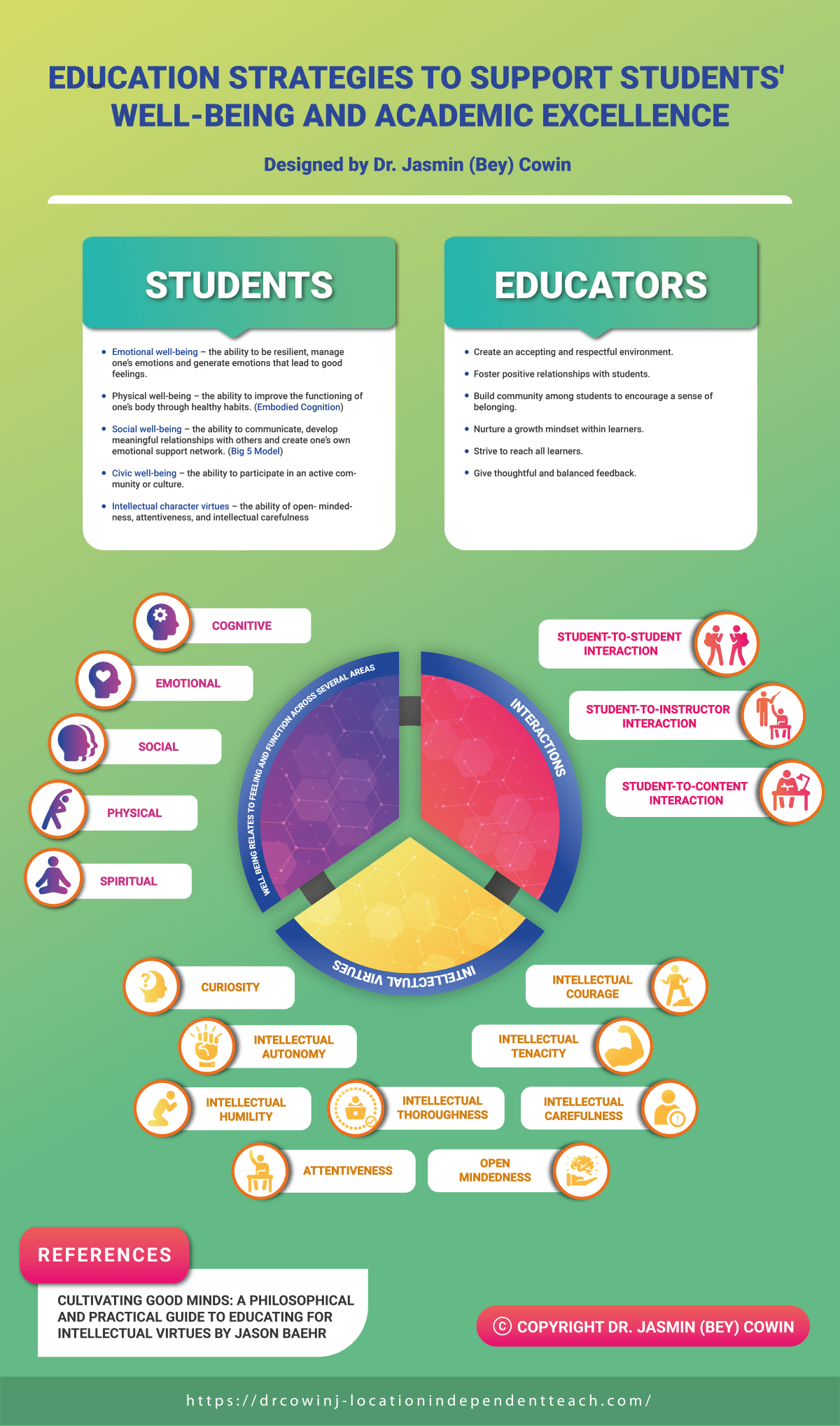
How can educators support and nurture students’ well-being and academic excellence?
What are student needs and educators responsibilities?
Where do experiences and needs of both educators and students overlap?
In this infographic, I juxtaposed students and educators and connected their perspectives and common needs within multiple contexts. The PDF has links to resources for educators wishing to explore the topics.
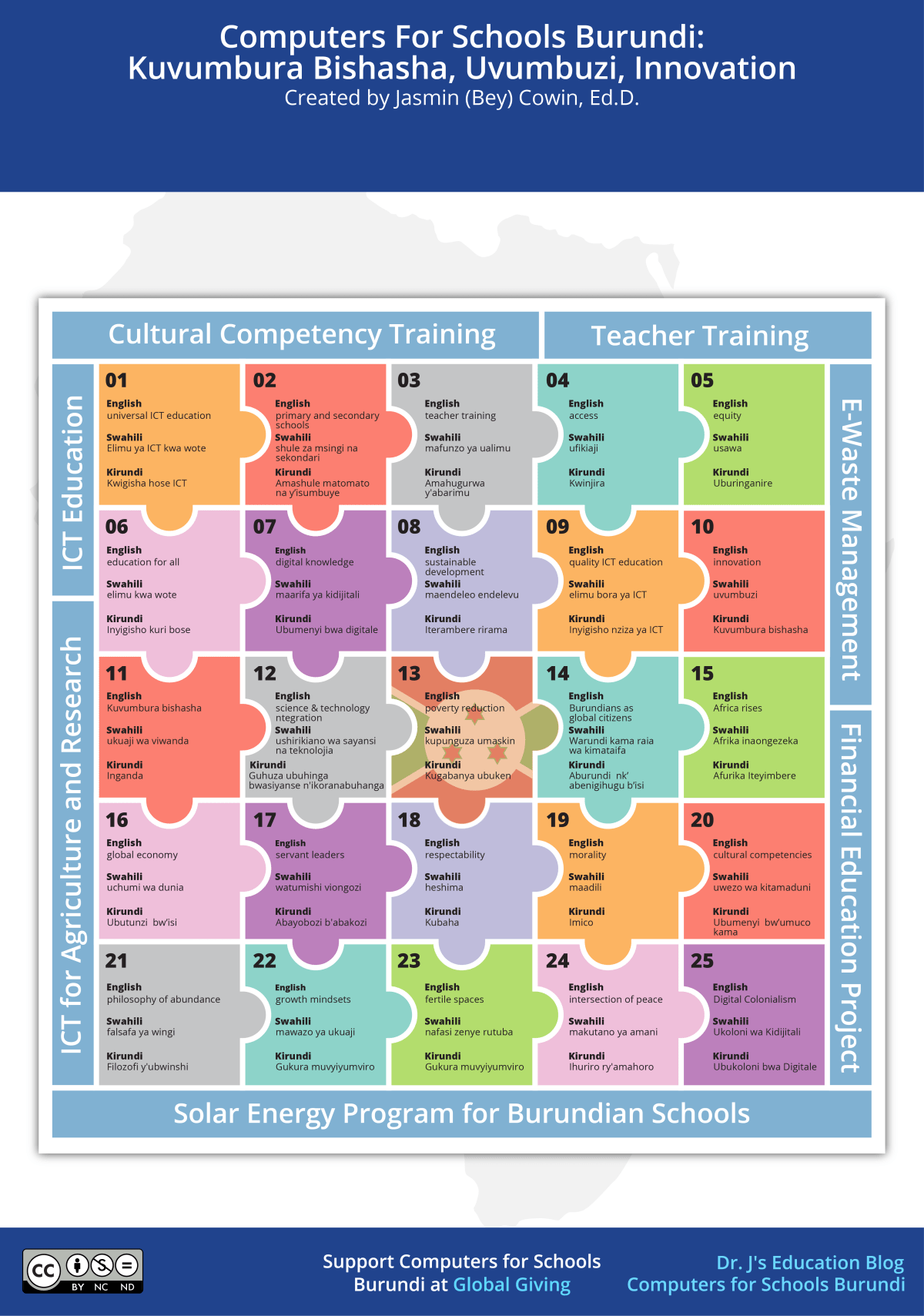
Emmanuel Ngendakuriyo, Founder and Executive Director of Computers for Schools Burundi (CfSB) believes that ICT integration into the Burundian education system and focused education for innovation in e-waste management are the keys to capitalize on Fourth Industrial Revolution opportunities.
Prof. Jasmin (Bey) Cowin, is part of the CfSB team and contributes as a Global Impact & Sustainability Analyst. Shen created the infographic to integrate three major language spoken in Burundi: Kirundi, Swahili, and English to showcase the differences of cultural meanings of general ideas, concepts and ICT vocabulary. In addition, Prof. Cowin hopes to promote intercultural and plurilingual competences through the trilingual infographic.
A principal goal of CfSB is to modernize the Burundi education system through universal ICT education in primary and secondary schools, thereby creating access to and equity in digital skills for Burundian youth. The vision is to promote and integrate the use of ICT and 21st Century skills into primary and secondary schools as the main engine of sustainable development in Burundi. The mission focuses on delivering quality ICT education to all Burundian school-age youth, thereby creating a solid foundation for the development of future innovation, industrialization, science, technology integration; eventually resulting in poverty reduction and allowing Burundi’s citizens to participate in and join as global citizens in the global economy.
I believe that in alignment with SDG 4.c that teachers are the change agents for the future.
4.c By 2030, substantially increase the supply of qualified teachers, including through international cooperation for teacher training in developing countries, especially least developed countries and small island developing States.
Dr. Jasmin (Bey) Cowin Assistant Professor and TESOL Practicum Coordinator Touro University Graduate School of Education, New York, NY
This workshop covered:
The Philosophy of Abundance Understanding Trauma and Its Impact The Stress Response System Words Matter Teaching materials on refugees, asylum and migration for primary and secondary education UNHCR Teaching About Refugees 2021 – Language Learning Guidebook Teaching Techniques for Multilingual Learners The Teacher Tech Tool Wheel Google Resources The Internet Archive Open Educational Resources Q&A
I am sharing the workshop with all the global conference participants and educators who support displaced learners. I believe that in alignment with SDG 4.c that “teachers are the change agents for the future. “
Both PDF’s feature embedded links to resources you can click on – go ahead, download and use the abundant resources available to YOU.
Let us move away from deficit thinking and the scarcity education model where education providers together with a group of experts use expensive resources such as required purchases for materials, texts etc., and paid access to platforms which in essence constitute a social justice issue.
Instead, let us embrace the social and situated nature of learning while embracing and developing an asset-based approach to teaching and learning.
Dr. Jasmin (Bey) Cowin Assistant Professor and TESOL Practicum Coordinator Touro University Graduate School of Education, New York, NY
This course provides a historical overview of second language acquisition theories and teaching methods. Students learn how to apply current approaches, methods and techniques, with attention to the effective use of materials, in teaching English as a second language. Students will engage in the planning and implementation of standards-based ESL instruction which includes differentiated learning experiences geared to students’ needs. Emphasis is placed on creating culturally responsive learning environments. Includes 15 hours of fieldwork.
Bianca Soto-King is an NYC Public School teacher who currently works in Bensonhurst, Brooklyn. She teaches 6th grade ELA and is completing her master’s degree in TESOL at Touro University. She is a native Brooklynite and a lover of all things literary.
During my fieldwork hours, I learned how to plan standards-based ESL instruction and how to implement differentiated learning experiences in order to meet my students’ needs. By observing others and working on the assignments given by Professor Cowin, I was able to create a more culturally responsive learning environment for my students.
Bianca Soto-King, Touro University TESOL Candidate
When designing rich and meaningful online courses discussion boards (DBs) are an opportunity to increase the social presence of students and facilitator. Vlogs instead of text-based DBs create a social presence for students and faculty, thereby allowing connectedness and group cohesion to develop.
Dr. Jasmin (Bey) Cowin, Assistant Professor and TESOL Practicum Coordinator, Touro University, GSE
DBs are an important vehicle to measure growth, connect with students beyond text-based contributions, introduce new technology, and interact using different modalities and media. I find that varying the format and giving students the ability to express themselves through different media introduces spaces of discovery, communication, and peer-to-peer learning while giving diverse learning styles various ways to shine.
This Discussion Board focused on a deep dive and exploration of early interventions as well as the RTI system. Touro TESOL candidates were asked to reflect on the importance of providing Multilingual Learners the support and interventions they may need. Candidates also reflected on assessing students in their native language in order to differentiate between academic or language issues.
Luz Chavarrio currently attends Touro College. This is her first year as a public school teacher. She is currently working as a Spanish teacher in an elementary school on the Lower East Side.
Ariza, E. N., & Coady, M. R. (2018). Why Tesol?: Theories and issues in teaching English to speakers of other languages in K-12 classrooms (5th ed.). Kendall Hunt Pub Co.
Echevarría Jana, Vogt, M. E., & Short, D. (2017). Making content comprehensible for English learners: The Siop model. Pearson.
John Zurschmiede: “I am originally from South Africa where I graduated from the University of the Witwatersrand with a Batchelor’s in Primary Education. Since came to the United States, I have worked at private ESL institutions as an instructor and as an Academic Lead. I have also completed a Master’s in Adult Education and am currently studying at Touro college pursuing NYS TESOL certification.”
New York is a state that speaks many languages. We need teachers who can find the common ground.
The MS in Teaching English to Speakers of Other Languages (TESOL) Program helps NYS-certified PreK-12 teachers more effectively teach and communicate with a diverse student population.
Academically rigorous and practice-intensive, the 33-credit program includes 50 hours of fieldwork and at least 20 days or 100 hours of supervised student teaching experience. Candidates that complete all coursework, fieldwork, and student teaching requirements are eligible for recommendation for ESL certification.
NYS TESOL Webinar Event📣FREE to ALL Interested.Join #NYSTESOL’s president Dr. Ching-Ching Lin, Nicole Bell, and Dr. Jasmin Cowin for an interactive webinar event that reimagines digital storytelling as a tool for community asset mapping. The purpose of this webinar is multifold:
1.Provide a very brief review of digital storytelling as a classroom community building strategy
2. Introduce a simple, easy-to-follow model of implementing digital storytelling
3. Analyze a variety of model texts as well as early practitioners’ samples4. Participants will have the opportunities to create your digital stories and seek feedback from each other.
🔹 NYS TESOL Event: No app needed. Digital storytelling and community assets mapping🔹Presenters: Dr. Ching-Ching Lin, Nicole Bell and Dr. Jasmin Cowin
🔹Date: Thursday, May 5, 2022
🔹Time: 4:00-5:15PM Eastern 🔹Event Registration & Information: https://lnkd.in/evfUC98R is required, no later than 1 hour prior to the start of the session. (1 CTLE credit for NYS TESOL members)#bilingual#NYSTESOL2022, #ENL#TESOL
Cowin, J. (. (2022, April 27). Computers for Schools Burundi: Gukorera Hamwe through Cultural Competency Training. Retrieved from Africa Leader: https://www.africaleader.com/newsr/15023
When designing rich and meaningful online courses discussion boards (DBs) are an opportunity to increase both the facilitators’ teaching and the social presence of the students and facilitator. Video DBs create a social presence for students and facilitators, thereby allowing connectedness and group cohesion to develop.
DBs are an important vehicle to measure growth, connect with students beyond text-based contributions, introduce new technology, and interact using different modalities and media. I find that varying the format and giving students the ability to express themselves through different media introduces spaces of discovery, communication, and peer-to-peer learning while giving diverse learning styles various ways to shine.
To gain a further understanding of early interventions as well as the RTI system Touro TESOL candidates were asked to reflect on the importance of providing Multilingual Learners the support and interventions they may need. Candidates also reflected on assessing this student in their native language in order to tell if it is an academic or a language issue.
Video contributions increase “the ability of participants…to project their personal characteristics into the community, thereby presenting themselves to the other participants as real people”
Garrison, Anderson, & Archer, 2000, p. 89.
Meghan Schick is completing her second semester at Touro Univerity, Graduate School of Education, TESOL & BLE Department and working towards her Master’s in TESOL.
I feel that I have already learned a lot of valuable information that will help me in my career.
Meghan Schick, Touro University TESOL candidate
Meghan Schick: “I thoroughly enjoyed reading Chapter 10 in “Making Content Comprehensible for English Learners.” I am very passionate when it comes to the topics of issues with Reading, RTI, and Special Education for English Learners. As an educator who has the opportunity to work with English learners, I have to be aware of their language proficiency levels. We have to be aware that a student’s difficulty to learn reading might just be from their limited English Proficiency and not mislabel them as special needs.
References: Echevarria Jana,Vogt,M.E., & Short, D.(2017). Making Content Comprehensible for English Learners: The SIOP Model. Pearson
Meghan Schick, Touro University TESOL candidate
Questions:
How would you avoid the trap of confusing and labeling an entering ESL student with a student with special needs?
What is RIT and how might it be useful to you as a TESOL professional?
How might you use the RTI-Based Specific Learning Disability Determination Worksheet?
References:
Garrison, R., Anderson, T., & Archer, W. (2000). Critical inquiry in a text-based environment: Computer conferencing in higher education. The Internet and Higher Education, 2(2 – 3), 87-105. doi: 10.1016/S1096-7516(00)00016-6
It was my honor to serve as a peer- reviewer for the Journal of Interdisciplinary Studies in Education, “which is aimed at those in the academic world who are dedicated to advancing the field of education through their research. JISE provides a range of articles that speak to the major issues in education across all content areas and disciplines. The Journal is peer-reviewed through a blind review process that utilizes a national and international editorial board and peer reviewers. JISE aspires to advance research in the field of education through a collection of quality, relevant, and advanced interdisciplinary articles in the field of education.
Publication Ethics Publication Ethics and Publication Malpractice Statement
Journal of Interdisciplinary Studies in Education (JISE) and its Publisher, STAR Scholars, are committed to publishing and widely disseminating high-quality content. members of the Committee on Publication Ethics (COPE). It is critical that the editorial operations of this journal be governed by rigorous ethical standards that are both transparent and fair. We recognize that the scholarly publishing ecosystem is complex and includes editors, authors, reviewers, and publishers. As such, this journal follows the COPE Code of Conduct and Best Practice Guidelines for Journal Editors and the Code of Conduct for Journal Publishers. In this journal, it is expected of authors, reviewers, and editors that they follow the best-practice guidelines on ethical behavior contained therein.”
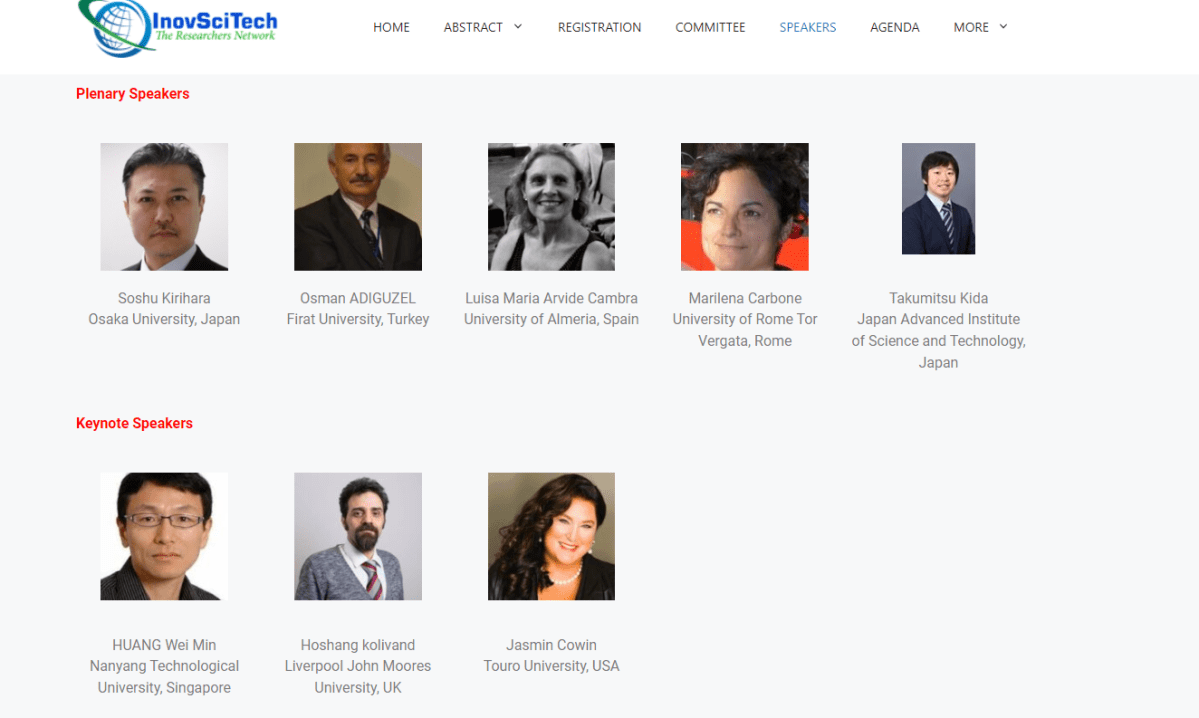
WEBAS-2022 will focus on the theme: Contemporary Challenges and Practical solutions in Applied Science, Engineering and Technology. The online conference aims to bring together leading scientists, researchers and research scholars to exchange and share their experiences and research results on all aspects of Applied Science, Engineering and Technology.
The online conference provides a premier interdisciplinary platform for eminent scientists, researchers, educators, students, and professionals in related fields to present and discuss current trends, challenges, and solutions in these fields. It further aims to create a global platform for researchers, scientists, engineers, and industrial experts in the field of Applied Science, Engineering and Technology to exchange and share their experiences, ideas, and research results on different aspects of Applied Science, Engineering, and Technology.





 Dr. J's Education Blog