

Why EDDN 637 Now Integrates the Science of Reading
Jasmin Cowin, Associate Professor, Touro University, GRE, TESOL/BLE Department | Path Forward Grant | PI: Dr. Seong Kim
New York is moving evidence-based literacy from professional judgment into regulatory expectation. Education Law §818 requires an annual review of district curriculum and instructional practices in reading for prekindergarten through grade three, with attestation to the Commissioner. In December 2024 the Board of Regents amended Section 100.3 of the Commissioner’s Regulations, and districts verified alignment by September 1, 2025. In July 2026 the Department introduced a proposed amendment of Sections 52.21 and 80-3.7 at the Board of Regents meeting. Teacher preparation programs in early childhood education, bilingual education, English language learners, literacy, and students with disabilities would be required to align their instruction with the State’s science of reading framework. Candidates would devote a portion of field experience and student teaching to evidence-based literacy instruction and to assessing students with reading challenges. A public comment period is underway and Board approval is anticipated in November.
Sources: NYSED, Elementary Requirements (Section 100.3): districts shall verify alignment of prekindergarten through grade three reading curriculum and instructional practices with the Commissioner’s instructional best practices on or before September 1, 2025, pursuant to Education Law §818
New York State Education Department
NYSED, Prekindergarten-3rd Grade Literacy Instructional Best Practices Guide (§818 attestation)
WXXI News, December 17, 2024: Board of Regents approval of the pre-K through grade three reading amendment
Chalkbeat New York, July 20, 2026: proposed amendment of Sections 52.21 and 80-3.7 (https://lnkd.in/e3Pg9dQM)
EDDN 637 Second Language Learners and the Content Areas
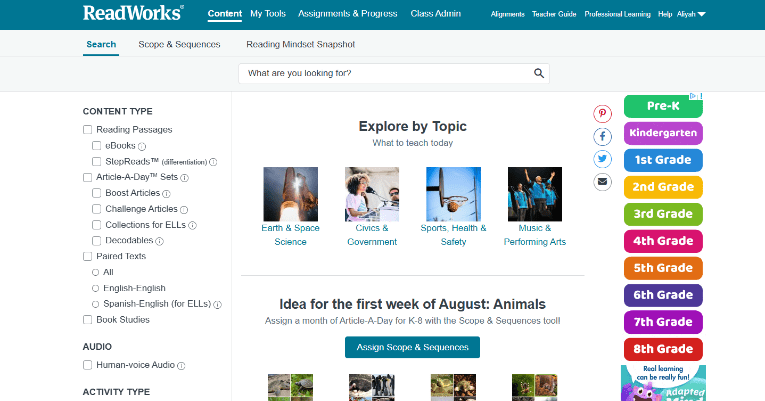
EDDN 637 – TESOL/BLE Department at Touro University responded through the Path Forward Grant with a module-by-module revision that preserves the SIOP architecture of the original Spring 2026 course while embedding reading research at each component. Module 1 opens with a mandatory Science of Reading survey establishing candidates’ baseline knowledge, which informs Lesson Preparation. Modules 2 and 4 add structured literacy to content and language objectives and to Comprehensible Input. Module 3 foregrounds oral language development and pathways to skilled reading under Building Background. Module 7 introduces phoneme segmentation, blending, and structured literacy assessment within Practice and Application. Module 9 adds Scarborough’s Reading Rope, ReadWorks resources, and a Diagnostic Decoding Survey so candidates can determine whether a reading difficulty originates in decoding, vocabulary, fluency, or language comprehension.
The alignment is deliberate since SIOP offers a framework for making content and academic language accessible, while the Science of Reading (SoR) explains the cognitive architecture that makes reading possible. Module 10 helps candidates distinguish second language acquisition needs from reading difficulties and disability-related needs, Module 11 introduces tiered instruction and infographic reflection, and Module 12 closes with a research reflection on skilled reading pathways. Candidates leave EDDN 637 prepared to plan, assess, and intervene using evidence, which is what New York now expects of them.
Conclusion via Candidate Evidence
Candidate work supplies the clearest measure of whether integration reached practice. In Discussion Board 5, Touro University TESOL Candidate Aliyah Giana Martinez in exemplary analysis of an informational text on trees built content and language objectives around the Big 6 components, vocabulary, and reading comprehension. She identified brick words carrying the domain-specific load of the text, including roots, trunk, branches, bark, crown, leaves, sap, stomata, flowers, and seeds, together with mortar words such as alive, grow, anchor, support, protect, and instead. The observation driving the plan was that brick words appear rarely outside scientific contexts, while mortar words surface across many contexts with shifting meaning, so both categories require explicit instruction before students encounter the text. Her differentiation plan drew on sentence frames, total physical response, shades of meaning, picture and audio support, and structured partner and whole-class discussion. Drawing on Herr’s The Sourcebook for Teaching Science, she designed labeled diagrams, comparison organizers connecting tree survival to human survival, a cumulative word wall, and a hands-on construction paper tree.
That construction paper tree is the realia outcome the course intends. Aliyah Giana Martinez moved from explicit vocabulary work toward comprehension of the text, then produced a tangible artifact that makes literacy learning visible and assessable. That construction paper tree is the realia outcome the course intends. Moving from explicit vocabulary work toward comprehension of the text, then producing a tangible artifact that makes literacy learning visible and assessable. The same theoretical learning carried into the fieldwork strands housed in Modules 10 and 11. Reporting from a placement classroom, a candidate documented lessons in which students reread familiar texts, read aloud individually, answered comprehension questions, discussed characters and events, and worked through new texts with teacher support. Her analysis was that word level skills and meaningful reading were being taught in connection with one another, so decoding work and comprehension work occupied the same instructional space. Ms. Martinez mapped these observations onto the SoR Pathways to Skilled Reading infographic introduced in Module 3, noting that skilled reading depends on word recognition together with language comprehension, and that students require explicit instruction in phonemic awareness, phonics, decoding, spelling, morphology, vocabulary, background knowledge, syntax, and comprehension. Locating each observed activity within that framework allowed her to read a single lesson as a set of identifiable components working together. Integration at the course level yielded observation, analysis, and application at the classroom level.
Aliyah Giana Martinez is of Chilean and Greek descent. She loves to travel, cook, and spend time outside going on adventures with her family and friends. She is a newly hired teacher who strives to support her students while learning from her colleagues in order to grow into the best educator she can be.
I am proud to feature her exemplary work in my blog!
Reading doesn’t just come to you, you have to be surrounded by people who believe in you and who will try a number of learning strategies with you to help you be the best reader you can be.
Aliyah Giana Martinez, Touro University TESOL Candidate
Slideshow DB 9: Diagnostic Decoding Assessment and Its Relationship to Reading Instruction

