Touro GSE At Work features Assistant Professor Jasmin Cowin in Faculty Spotlight

It is an honor to be chosen as featured faculty at Touro GSE.

Jasmin Cowin, assistant professor and TESOL practicum coordinator for TESOL and Bilingual Programs at the Touro College Graduate School of Education, has brought innovation to the educator preparation program by presenting virtual, augmented and mixed reality e-learning platforms. Her students use avatars to explore a variety of simulation-based settings in ways that facilitate active knowledge in multi-modal ways, which enhance candidates’ understanding of  diverse learners’ educational needs. The student avatars in simulations are controlled by artificial emotional intelligence software. As intensive web applications, these environments provide a safe, risk-free virtual space to explore a range of teaching strategies, while offering immediate feedback as a training tool for teacher candidates during clinical experiences. Cowin’s latest research on e-learning was published in the International Research and Review Journal of Phi Beta Delta Honor Society of International Scholars Fall 2020 edition. She also serves as chair of the New York State Teaching English as a Second Language 51st Annual

https://mailchi.mp/c9e0aa3148d6/touro-college-ranks-in-top-100-best-online-graduate-education-programs-4926338?e=0597240d44

NYS TESOL Journal published Dr. Cowin’s “Simulation-Based Learning Environment: A Training Tool for TESOL Teacher Candidates”

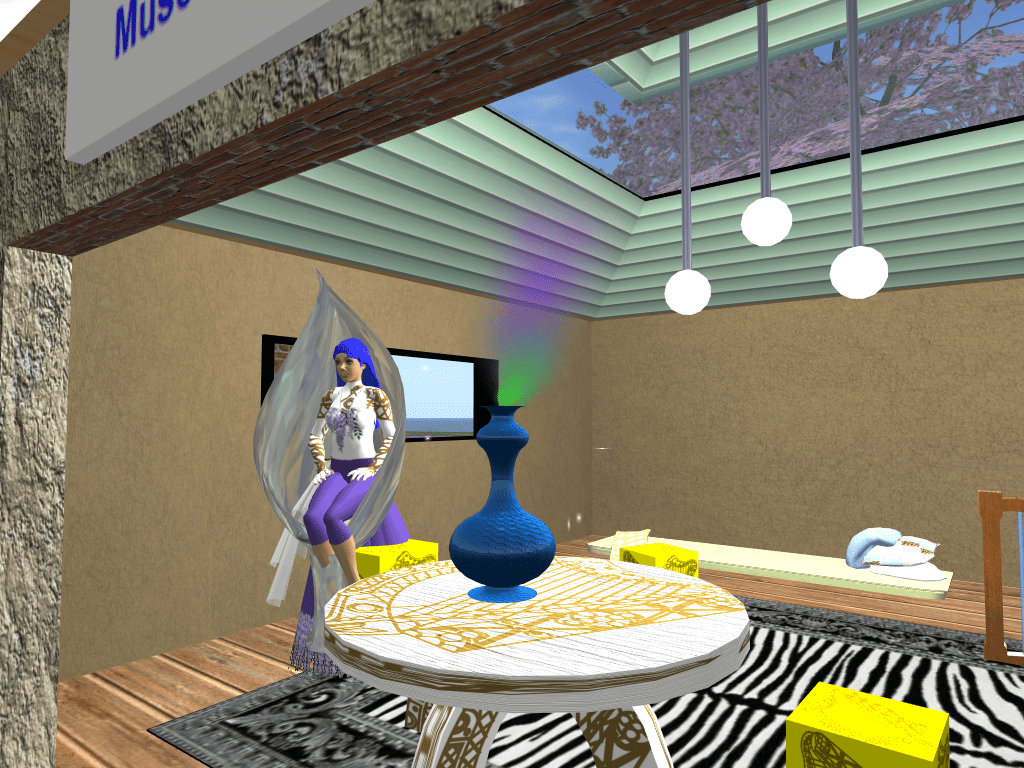
simSchool screenshot of virtual classroom

simSchool: screenshot of virtual classroom environment training module.

I am pleased to announce the publication of my Materials Review:

Cowin, J. B. (2020). simSchool’s Simulation-Based Learning Environment: A Training Tool for TESOL Teacher Candidates. NYS TESOL Journal, 7(2), 44-46. Retrieved 2020, from http://journal.nystesol.org/currentissue.html

Many thanks to the helpful direction of the Editor-in-Chief Lubie Grujicic-Alatriste, New York City, College of Technology, City University of New York.

Dr. Jasmin Bey Cowin Presents “Tips and Resources on Teaching Math Online to English Learners”, a NYS TESOL Webinar

NYS TESOL Webinars

All are welcome to participate in our webinars! 

  • All webinars are listed in Eastern time (NYC time zone)
  • Pre-registration is required, no later than 1 hour prior to the start of the session. 
  • 30 minutes before the session begins, you will receive an email with a join link.  Please do not share this link on any social media platforms to preserve the integrity of the sessions. 
  • Members will be prioritized when the session reaches capacity
  • Only members can apply for CTLE. Follow this link to apply for CTLE.  Join now for these benefits!
  • To register for any upcoming webinars, click here: https://bit.ly/nystesolwebinar.

Dr. Jasmin Bey Cowin presents “Tips and Resources on Teaching Math Online to English Learners” on 8/20/2020 at 2 pm

Explore different online tools such as Desmos Activities .

Key Math vocabulary for ELLs in Preproduction, Early Production, Speech Emergence, (Krashen & Terrell, 1983).
• Number words, including cardinal (three) and ordinal (third) form
• Words related to basic mathematical operations:
• Addition, add, sum, plus
• Subtraction, subtract, difference, minus
• Multiplication, multiply, product, times
• Division, divide, quotient
• Equals

Accepted Conference Proposal: Simulation-Based Learning Environments for the Twenty-seventh International Conference on Learning July 13 – 15, 2020

Accepted Conference Proposal: Simulation-Based Learning Environments for the Twenty-seventh International Conference on Learning July 13 – 15, 2020. A virtual poster presentation with a focus on epistic game theory.

A virtual poster presentation with a focus on epistic game theory

letter_of_invitation_jasmin-cowin

Online, web-based virtual classroom environments, populated with student avatars, use simulation-based learning to increase teacher candidates’ understanding of the educational needs of diverse learners. The student avatars in simulations are controlled by artificial emotional intelligence software. As intensive web applications, these environments can provide a safe, risk-free virtual space to explore a range of teaching strategies, while offering immediate feedback as a training tool for teacher candidates during interrupted practicum experiences, fully online pedagogy courses and virtual fieldwork experiences.

Keywords: Simulation-Based Learning, Virtual Reality, Artificial Intelligence, Epistic Game Theory, Virtual Teacher Practicum

For whom: Twenty-Seventh International Conference on Learning July 13 – 15, 2020 Universitat de València – Facultat de Magisteri, Av. dels Tarongers, 4, València, Spain


Resources from the Webinar: NYS TESOL Resources for Supporting English Learners and their Parents- Prof. Jasmin Bey Cowin, Ed.D.

Dear Participants,

I hope my post finds you well and safe.

Here the promised Zoom recording and slides Resources for Supporting English Learners and their Parents.

Zoom recording of Webinar

 Resources for Supporting English Learners and their Parents by Prof Jasmin Cowin EdD

The Collaborative for Inclusive Education Workshop by Dr. Jasmin Cowin: Transcending Boundaries through Family Literacy: An Exploration of ENL Learning and Teaching with Technology

The Collaborative for Inclusive Education envisions a time when all public schools welcome and successfully educate all students, regardless of their abilities or background. To achieve this goal, they empower NYC charter schools to develop high quality inclusive educational environments by providing professional development opportunities, resources, school-based guidance and access to local and national best practices and renowned special populations’ experts. Here my workshop presentation as a share to anyone interested in Family Literacy: An Exploration of ENL Learning and Teaching with Technology.

The Collaborative for Inclusive Education envisions a time when all public schools welcome and successfully educate all students, regardless of their abilities or background. To achieve this goal, they empower NYC charter schools to develop high quality inclusive educational environments by providing professional development opportunities, resources, school-based guidance and access to local and national best practices and renowned special populations’ experts. Here my workshop presentation as a share to anyone interested in Family Literacy: An Exploration of ENL Learning and Teaching with Technology.

Workshop Collaborative for Inclusive Education Public

Teaching as an Act of Love by Prof. Jasmin Bey Cowin, Ed.D.

Touro College, Graduate School of Education featured my philosophy on teaching via a video clip with the following observation: Touro’s Graduate School of Education Professor Jasmin Cowin’s Lessons Go Beyond the Classroom:

Jasmin Cowin, Ed.D., wants the students in her Teaching English as a Second Language (TESL) program to know that language isn’t only grammar and vocabulary.

“My focus is not just on the acquisition of grammar and vocabulary, but also the understanding that language is a culture,” explained Dr. Cowin, an assistant professor at Touro’s Graduate School of Education (GSE). “You have to meet people where they are and help guide them so that they can fulfill their potential.”

“I’ve always thought of teaching as an act of love,” continued Dr. Cowin. “The students are coming here for something that is important to them, not only professionally, but also personally.”

Watch the video:

Teaching as an Act of Love


Larita Hudson on Trends and Current Issues in Second Language Acquisition

As a Professor at Touro College I teach EDDN 639-  Trends and Current Issues in Second Language Acquisition – an Online Course at Touro College, TESOL/ Bilingual Advanced Certificate Programs, Graduate School of Education.  Students move as a cohort through the online course and produce weekly writings on complex questions.  Highlighting some of these excellent contribution of students is a privilege and honor as an instructor and guide.  Here the writing of Larita Hudson, who gave express written permission to use her contribution in my blog.

Larita Hudson:

I am currently in my 17th year of teaching at public schools in the Bronx, New York. I currently work at PS 140, as a 5th grade ELA/Social Studies teacher, in a departmentalized setting. I teach two single-gender classes, an all girls class and an all boys class, including several students from Dominican Republic, Puerto Rico, Mexico, Colombia, Gambia, and Senegal. I started in Touro’s TESOL program in the early 2000s, but took a long hiatus. I started again last semester and am on track to graduate next winter.

Online Book: Understanding Second Language Acquisition by Lourdes Ortega

Question:

Considering both Ortega’s discussion of types of conversational modifications, your own experience/observations as an L2 learner, what kinds of interaction moves, interlocutor type, and contextual conditions have been the most effective for making input comprehensible, and what kinds have been the least effective?

Larita Hudson:

From my experience, asking clarifying questions and confirming have been effective interaction moves for negotiating meaning in language.  I think it’s extremely important for both interlocutors to engage in these techniques to ensure that each speaker’s utterances are valued and understood.  It boils down to respect for each other’s thoughts, ideas, and efforts.  As far as interlocutors, I think the least effective is one who is  “prejudiced”, exhibiting pre-existing or negative attitudes (Ortega).  For input to be comprehensible, Krashen says it must be delivered in a clear and safe way (as stated in Hamza, 2016).  One who is prejudiced will not be encouraging and praise successes, creating a hostile learning environment, which will result in the learner having high anxiety and low self-esteem (an affective filter to language acquisition development).

Question:

As by Ortega, the five factors of the linguistic environment that assist in L2 learning are: (a) acculturated attitudes, (b) comprehensible input, (c) interaction and negotiation of meaning, (d) pushed or comprehensible output, and (e) noticing. Ortega states that “these five ingredients were likely present in a case like Julie (see Chapter 2, section 2.2), the first of several exceptionally successful learners discovered since the mid-1990s” (p. 79). Revisit that article and discuss the ways in which these factors are evident or not evident in her language learning situation, and how positive attitudes alone were not sufficient for L2 language learning. You may compare Julie’s situation to that of Alberto and Wes, if applicable.

Larita Hudson:

Unlike Wes, Julie’s acculturation into Egyptian society was strong.  She had a husband and children there and was more invested in building a permanent life in Egypt.  Therefore, it was important for her to pay closer attention to the form of the language.  Wes only moved to Hawaii for business and career reasons.  This might explain why his drive to pay attention was missing (Schmidt, as cited in Ortega, 2009).  In addition, although Wes was interested in communicating with others, he didn’t have interest in negotiating meaning.  Schmidt (as cited in Ortega) noted that Wes was unwilling or unable to revise.  He didn’t explore checks for understanding.  For example, Schmidt “never caught Wes using the kinds of strategy that would foster longer-term learning, such as consulting a dictionary or asking his interlocutors metalinguistic questions about subtle differences or idiomatic appropriacy” (Ortega, 2009, p. 58). On the other hand, as a teacher of English to Arabic students, effective communication (comprehensible output) was probably very important to Julie as her career and livelihood depended on it.

Question:

Name and define the five components of Krashen’s Monitor Model. As teachers and language learners, what makes these components appealing or logical? Krashen5Hypothesis.pdf Click for more options

Please watch this YouTube Video of Krashen on Language Acquisition and Input. https://youtu.be/fnUc_W3xE1w

Larita Hudson:

The five components of Krashen’s Monitor Model are the Acquisition-Learning Hypothesis, the Natural Order Hypothesis, the Monitor Hypothesis, the Input Hypothesis, and the Affective Filter Hypothesis.  The Acquisition Learning Hypothesis explains the difference between acquisition (the “gist” of the language) and learning (more explicit and formal with explanations and lessons).  The Natural Order Hypothesis is a way of understanding that learners acquire grammar on their own at their own pace, in a predictable order.  The Monitor Hypothesis provides an explanation of how learners make conscious choices to edit and monitor their writing and/or speaking.  The Input Hypothesis pertains to how learners acquire language via the quality of the input (messages) they receive, which leads to understanding.  Finally, the Affective Filter Hypothesis stresses the importance of keeping anxiety low, and motivation and self-confidence high for language acquisition.  Krashen himself explained “We acquire language in one way, and only one way…when we get comprehensible input in a low-anxiety environment” (Hamza, 2016).

As teachers, it is critical to provide a safe learning environment, in which students are not afraid to take risks and feel free to make mistakes without ridicule or embarrassment.  It is only then that, according to Krashen, true learning can take place, which is the ultimate goal of education.

According to Krashen’s theory, learners should be able to take solace in the idea that language learning is not the same for every learner.  It is situational and happens in its own time, such as the Natural Order and Input hypotheses imply.

Question:

Ortega notes that while researchers have concluded that negative feedback is preferable to ignoring learner errors, “much less agreement has been reached as to when, how and why negative feedback works, when it does” (p. 80). Considering what you’ve read in the text and your own experiences teaching or learning language, what is negative feedback?  Give 2 examples.

Larita Hudson:

Based on the reading, negative feedback is simply providing cues to make the speaker aware of errors and prompting the speaker to make corrections.  For example, there is an entering ELL in my class this year.  Each day at dismissal, before I give her permission to leave I ask her to tell me the relation of the person picking her up.  Depending on the day, she responds, “My grandma”, “My uncle”, “My mother”, or “My aunt”.  For the first few months she used the words incorrectly, and I’d elicit the correct responses from her by asking her to try again.  Another example of negative feedback is recasting.  It’s when the interlocutor repeats what the learner has said, keeping the meaning intact, but providing a more suitable form of the utterance.  For example, Parker (2012) provides the example of a learner who says, “I want read”, and the facilitator responds, “Oh you want TO read.”

References:

Hamza, T. (2016, Jan. 28). Stephen Krashen: Language acquisition and comprehensible input [Video File]. Retrieved from https://www.youtube.com/watch?v=fnUc_W3xE1w&feature=youtu.be

Ortega, L. (2009). Second language acquisition. London. Routledge Taylor & Francis Group.

Parker, R. (2012).  Recasting: A language facilitation strategy.  Retrieve from:http://praacticalaac.org/strategy/recasting-a-language-facilitation-strategy/

ALWC 2018 accepted Proposal: From Russia with Love

2018 Applied Linguistics Winter Conference (ALWC 2018) accepted Proposal Applied Linguistic Conference 2018 in New York City 2018

Prof. Dr. Jasmin Cowin Graduate School of Education – Touro College

Presentation Title:

From Russia with Love – Communicative TESOL Workshops at Plekhanov University

Presentation Abstract:

Plekhanov’s Winter University organized by the University’s Foreign Languages Department focused on “Current Global Trends in Teaching English.” Over the course of five days, the workshop attendees were challenged to incorporate new teaching approaches based on communicative, student-centered components and activities with a view towards culturally relevant pedagogy.

Presentation Summary:

This presentation is a report on the Plekhanov Russian University of Economics Winter University 2018 conference of the University of Tomorrow: Innovative Pedagogy and Methodology. Thematically, Plekhanov’s Winter University focused on “Current Global Trends in Teaching English.” The overarching conference theme was on the urgency to adapt to a rapidly changing world while creating agile mindsets in students and facilitators. The workshops presented were: Current Global Trends in Teaching English; Developing Materials and Resources in Teaching English – Methodology in Teaching English; and E-Resources Discovery and Analysis. As a final project, participants submitted online learning modules for their EFL courses focused on content-based instruction while incorporating the flipped classroom model. While designing the workshops, it became clear that many of the communicative activities and teaching approaches would require participants to step outside their comfort zone. Over the course of five days, the workshop attendees were challenged to incorporate new teaching approaches based on communicative, student-centered components and activities. Through using Harkness method strategies which encourage open classroom dialogue, the workshops were transformed into “Think Tanks” emphasizing a nurturing environment. This anxiety-free, collaborative approach supported risk-taking, opening-up within the group, and personal initiation of hands-on activities and projects. Upon reflection, the four pedagogical C’s: communication, cooperation, creativity and critical thinking are culturally transferable and as relevant as ever in engaging teachers and students to become agile thinkers, leveraging learning for continuous improvement within a culturally relevant pedagogical approach.